


In The Epic of Gilgamesh, written some 4,000 years ago, the king of the city of Uruk is portrayed as a hero who battles monsters and accomplishes seemingly impossible feats. But when his friend Enkidu dies, Gilgamesh realizes something that even his greatest victories had not prepared him for: One day, he too will die. For the first time, Gilgamesh confronts a truth he cannot bear. He leaves his city and sets out in search of the one thing he lacks. Yet after a long and dangerous journey, he returns home defeated, having failed to discover a way to live forever.
Gilgamesh or no Gilgamesh, several thousand years later, we're still in much the same place. Running away. Somewhere in a hidden corner of our minds, we know that life will eventually end, whether we like it or not, but we struggle to truly grasp what that means. After all, there are still things to do: visit the Galápagos Islands, go to that concert we've always promised ourselves we'd attend, make peace with an old friend after a falling-out over something utterly trivial.
Death appears in the news, in conversations and in announcements about people we once knew, certainly here in our little corner of the world. But most of the time, we manage to carry on. Until, at some point, that abstract knowledge becomes intensely personal. Throughout history, humanity has searched for almost every imaginable way to live with that thought, or somehow escape it.
"When we exist, death has not yet arrived, and when death arrives, we no longer exist," wrote the ancient Greek philosopher Epicurus, attempting to soften the blow by pointing out that we will never actually be there to experience the thing that frightens us so much.
Nearly 2,000 years later, the 16th-century French writer and philosopher Michel de Montaigne offered a different, more practical solution. "I want death to find me planting my cabbages," he wrote. If we must die, we might as well be productive until the final moment. Two very different ways of coping with the same knowledge.
Woody Allen managed to compress the entire debate into a single joke: "I'm not afraid of death. I just don't want to be there when it happens." Television host Larry King was equally reluctant to accept that the life he had already lived would be enough.
"My biggest fear is death," King said in 2011, explaining that he wanted his body frozen in the hope that future technology might bring him back to life. Asked what would happen if he returned 200 years later and no longer knew anyone, he had a ready answer: "I'll meet new people."
Meanwhile, as Israeli singer Yuval Banai sang in Mashina's song "The Society for the Study of Mortality," everyone must die eventually. The question is what we do with that knowledge until then. How do we keep making plans, getting angry, swearing in traffic and thinking about what to cook for dinner when somewhere in the back of our minds sits the thought that one day, all of this will end?
How do we live with the knowledge that life will end?
(Photo: Shutterstock/Pressmaster)
What will the last day of your life look like?
"When human beings ate from the Tree of Knowledge, something terrible happened to them," says Prof. Yoram Yovell, a psychiatrist and brain researcher at the Hebrew University of Jerusalem. "After all, their choice was between eating from the Tree of Knowledge and eating from the Tree of Life. They lost the possibility of living forever and understood, for the first time, something that apparently only human beings understand in the entire animal kingdom: that our lives will end."
Animals are familiar with death too, he emphasizes. "Social animals, both mammals and birds, are not indifferent to it. We know of elephants that remain beside the bodies of dead members of their herds. We know that animals can recognize when death is approaching. But there's a difference between that and an understanding that, as far as we know, no other creature in the history of the Earth shares with us: that we ourselves are going to die and will no longer exist."
Now try making plans for next year with that realization hanging over your head. According to Yovell, the effort to live with this knowledge explains far more than the moments when we consciously think about death.
"A great deal of human behavior can be explained by our attempts to cope with this terrible fact, which we understand, which makes us feel awful, and which we somehow have to live with," he says.
The problem is that we invest considerable effort, and suffer considerable anguish, in finding that "somehow."
"There are some very famous experiments in which ordinary people are asked to imagine the final moments of their lives: What will the last day of your life look like? Write a few sentences about it," Yovell explains.
"What we see is that many measures of distress increase. When you ask people to perform this small mental exercise, you see some interesting patterns that repeat themselves. Their anxiety levels rise, their hostility toward people outside their social group increases, and they develop a stronger sense of closeness to the people nearest to them.
"We're extremely sensitive to this issue. Usually, we manage to repress it successfully. I don't wake up in the morning thinking about the fact that I'm going to die either. But when it enters our consciousness, it doesn't make us feel good."
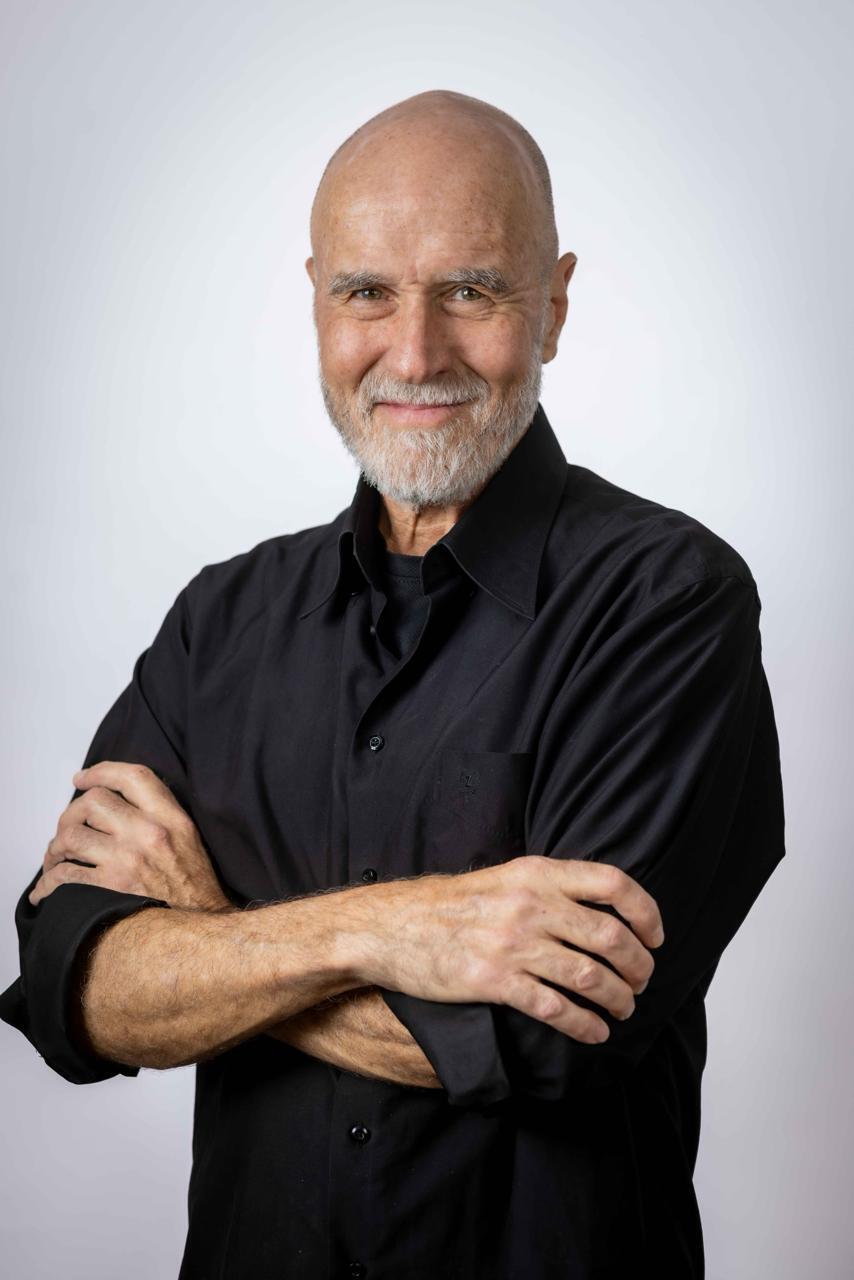
Prof. Yoram Yovell
(Photo: Erik Sultan)
What are we actually afraid of? The pain, the separation, the loss of consciousness, or the life we won't get to live?
"I think that, as is often the case in psychology, all of the answers are correct. Many of us are afraid of pain, but the fact is that today, the possibility of a painless death is within reach through a few simple internet searches, and yet most of us don't choose it. We keep living, and we keep living even when things are difficult and painful. To do that, we need something that gives us hope. Something that provides motivation or comfort, so we can go on."
Today there are many biohackers, people who try to improve their health, brains and longevity through self-experimentation and technology, as well as people who declare that they will achieve immortality. Do you think this comes from that fear?
"Of course. Absolutely. And by the way, it won't work. That's completely clear. Let's say, for the sake of argument, that somebody manages to extend their life by a thousand years. So what? Eventually, it will still end. You're postponing the problem, which isn't such a bad thing either."
The immense power of religion
Human beings know how to draw conclusions, but we also know how to avoid them when necessary. When it comes to death, we have good reason to want to look away. And so, being the sophisticated creatures we are, we have developed our own ways of living alongside the deeply unpleasant knowledge that one day, someone will switch off the lights on this whole celebration we call life. Most of the time, it works.
"When a particular fact is unbearable for us, the most basic psychological mechanism is to deny its existence," Yovell says. "When small children hear or see something frightening, they often close their eyes. You can tell them, 'Wait a minute, you do understand that closing your eyes doesn't mean the monster stops existing, or that whatever is frightening you disappears.' But at a very basic level, that's a psychological mechanism.
"As we grow older, we develop more sophisticated and less harmful mechanisms for doing this, because ignoring danger is not a good thing."
But denial also has a disadvantage: Reality is under no obligation to cooperate. And when it insists on reminding us how fragile everything is, as it did on October 7, we also need a story that allows us to keep going. Preferably one in which separation is not final, and there is still a chance of seeing the people we love again.
"Our ability to tell ourselves stories that bring us comfort is important and powerful, and that is the immense power of religions," Yovell says. "Religion tells us that the end of life is not the end of the story. Something continues after death. And that knowledge, or that thought, or what some people might call that illusion, is tremendously comforting. We mustn't dismiss it. It's something very important."

'We don't have even a shred of evidence that consciousness continues after death'
(Photo: Shutterstock/Motortion Films)
And not only does it offer comfort, but this is apparently not an invention exclusive to our species.
"We, Homo sapiens, aren't the only ones who had this form of consolation," Yovell explains. "We share it with the Neanderthals. How do we know? Archaeological findings, some of them discovered in the Land of Israel, show that Neanderthals buried their dead with provisions for the journey: food, weapons, things they would need in the world beyond.
"It's clear that the Neanderthals believed they could do something to make life easier for the people they loved in the world awaiting them after death."
And yet, Yovell himself finds it difficult to accept the promise of an existence beyond death. "Religion is important, and it gives strength to many people, but I'll tell you my personal opinion: It doesn't stand up to the test of reality," he explains.
"Nobody has ever come back from the afterlife and said, 'Yes, yes, it's true. This is only the beginning.' There are all those cases of people who nearly died and then came back saying they saw a great light. With all due respect, they didn't actually die.
"When I look at things through the scientific lens, we don't have even a shred of evidence that consciousness continues after death. The impression is that it doesn't."
Doing the right thing
Not exactly the answer most of us would want to hear, if we're being truthful. But Yovell offers another solution. Instead of asking, "Will we still be here?" he suggests beginning with the question, "What will we do while we're here?"
It may be less exciting than a promise of eternal life, but at least it's something we can get up tomorrow morning and act on, rather than clinging to things that may or may not exist. Quite practical, really.
"I think that religions, and not only religions, also offer an approach that says: Given that your life is going to end, what are you doing with the life you've been given, here and now, today, to do the right thing, to feel that you've contributed, to feel that you've accomplished something?" he asks. From there, he outlines two different approaches.
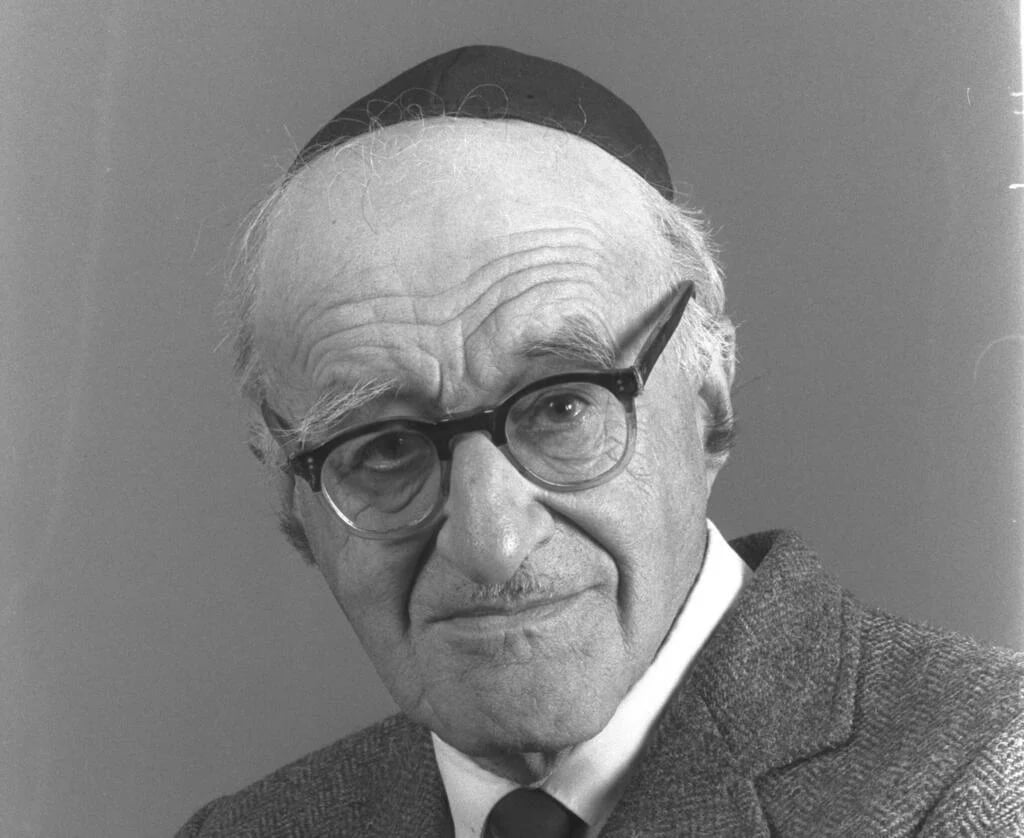
The late Prof. Yeshayahu Leibowitz
(Photo: GPO)
"You can see it in Maimonides' Guide for the Perplexed, in the great distinction between faith for its own sake and faith that is not for its own sake," he explains.
"Faith that is not for its own sake says: I believe in God and observe the commandments because I hope that if I do so, God will look after me. We mustn't dismiss that. Maimonides didn't dismiss it, and neither do I.
"If you want to see it in our own society, think of the words, 'God always loves me, and everything will always be good for me.' That is the essence of faith that is not for its own sake. You believe in God, and you believe that God will take care of you, protect you and make sure everything turns out well for you.
"But Maimonides says there is another kind of faith, one practiced by only a few, and that is faith for its own sake. It says: I believe in God not because of what God will do for me, but because of what I will do to make this world a better place.
"My faith moves from the bottom upward. I do something for the God I believe in, something I think God wants from me. I don't sit around wondering how God will pamper me, save me or what he will do for me."
Meaning?
"Come, let me tell you a story about my grandfather," Yovell says, referring to the late Prof. Yeshayahu Leibowitz, the religious scientist and philosopher known for his sharp tongue.
"My grandfather wrote extensively about these matters and, of course, thought about them very much like Maimonides," he says.
"He told me about a conversation he had with a very senior figure in Israel's legal world, a Supreme Court justice. He was a moral and decent man who had thought deeply about these questions.
"The man told him that after Auschwitz and World War II, he had lost the ability to believe in God.
"And then my grandfather said to him, 'You know, I think that if that's the case, then before Auschwitz you didn't believe in God. You believed in God's help. You believed that God was watching over us and would help us, and at Auschwitz God neither watched over us nor helped us.
"'But if you don't expect that in the first place, if your faith is such that you don't ask what God will do for me, but instead ask what my duty is in this world, what I need to do and how I should behave, given that my life is so short and will end, what am I supposed to do right now? If that's the question you're asking, then that is faith for its own sake.'"

Mount of Olives
(Photo: Shutterstock/salajean)
We can continue arguing about what awaits us in the next world. In this one, meanwhile, there is more than enough work to do. And the sense of meaning Yovell finds in that work is something he also offers to people who have no religious faith to rely on.
"I think this idea is very important," he says. "It's what Albert Camus proposed, and what Viktor Frankl, who was also in Auschwitz, proposes in Man's Search for Meaning. It's also what the Buddha taught, if you look at Buddhism not as a religion, but at what the Buddha told his followers:
"Use this life to leave the world a slightly better place than you found it. That's the challenge. I think that's the answer. And especially now, for us here, during these difficult days we're all going through, that's what should guide us."