

At 4:30 in the morning, Ben Gurion Airport is still half-asleep. Near the check-in counters, parents begin to arrive. Some already know each other; others stand quietly to the side with their suitcases, trying to understand who else is part of the journey. A few exchange names, units, or dates. Others avoid questions for now.
The delegation to Milan includes 36 bereaved families—some couples traveling together, others represented by one parent. They come from different cities, different IDF units, and different stories of loss, but all join the journey organized by Or L’Mishpachot, an organization dedicated to honoring parents who have lost children in Israel’s military and defense operations. Irit Oren Gunders, chairwoman, later explains that every journey begins with fear—not of flights, schedules, or hotels, but of the emotional weight within the group.
Gallery
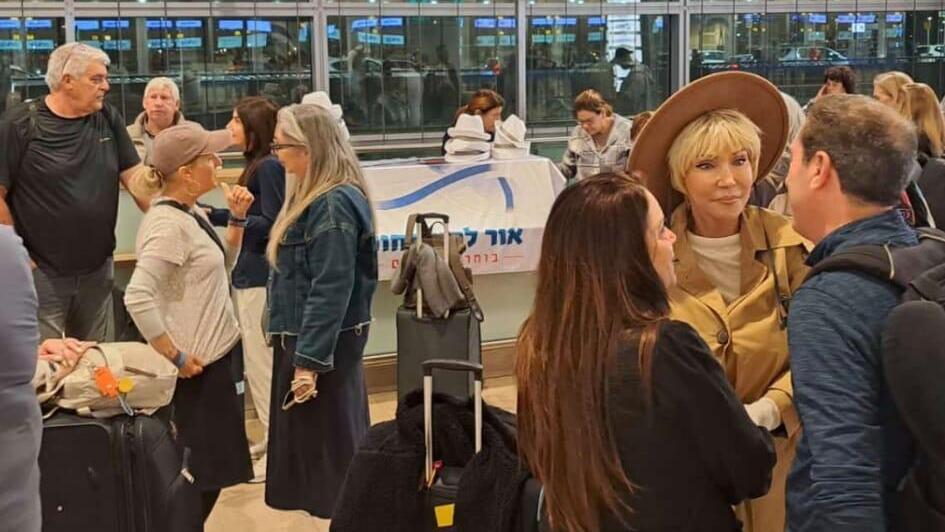
Irit Oren Gunders, chairwoman of Or L’Mishpachot (right) talks to the parents at the Ben Gurion Airport
The delegation staff hands out caps, hoodies, and shirts. Within minutes, what looked like strangers begins to take shape as a delegation. The same colors, the same logo, the same destination—Milan—and behind every face, the same absence. Irit moves between the parents, hugging some, introducing herself to others, and quietly asking how they are. Some smile; some wipe away tears; others show visible hesitation.
Before boarding, Irit gathers the parents in a circle. “You don’t know each other yet,” she says, “but you will become a family. You will fall in love with one another.”
Irit Oren Gunders, chairwoman of Or L'Mishpachot


A few moments later, as the group waits to move toward the flight, Michael Shushan, father of Capt. Yair Yaakov Shushan, whose son fell in the northern Gaza Strip, takes out a saxophone. The first notes fill the terminal before sunrise. Parents stand in silence—some filming, some simply listening—as the journey begins.
Michael Shushan, father of Capt. Yair Yaakov Shushan plays the saxophone
(אור למשפחות)
At the gate, I sat beside Kobi Firshtein, father of Staff Sgt. Omri Niv Firshtein, who was killed on October 7 during the battle for the Zikim base. Kobi returns again and again to those minutes of fighting, not only with pain but with great pride. He recounts how Omri fought for about 50 minutes, ran to bring magazines under fire and helped save recruits at the base. Alongside the grief, Kobi speaks of a sense of calling: he believes Omri did exactly what he was meant to do, at the moment he was needed. His daughter Maya now serves at Zikim in the same company as her brother, something Kobi speaks about with visible pride. He brought personal items connected to Omri on the journey, including a book about his son that he gave me, so that even far from home, Omri’s presence would continue to accompany him.
On the plane, I sat beside Oshrit and Avi Tery, parents of Lt. Afik Tery, who fell in southern Gaza. They say it took them nearly two years to agree to join a journey like this. On the morning of the flight, before arriving at Ben Gurion Airport, they first visited the cemetery. Oshrit visits Afik’s grave every day, sometimes twice; Avi comes less often. Oshrit still sends Afik daily WhatsApp messages, even after his death. It is a small ritual that helps her feel close to him.
Before speaking of Afik’s death, they speak of who he was: his love of football, his connection to Rehovot and the memorial matches held in his name. Avi says he has watched footage from the battle many times, including parts he uses in lectures. Each time, he returns to the same moment and relives it. Alongside the pain, he also speaks about the choice to rise from grief and remain strong, not as a slogan but as a daily decision for his family. He says he does it for Oshrit, who he says carries the loss more heavily than he does, and for their other children. On his first birthday after Afik fell, they told him they were proud of him, of the strength he found and the way he continues to stand for them. That sentence, he says, has stayed with him.
After landing, the parents gather for a group photo at the airport. The matching shirts and hats now make them look like one delegation. Buses take them into Milan’s Jewish quarter, to the Carmel restaurant, where members of the local Jewish community are waiting. Families sit down for lunch, and stories begin to move from table to table: names of sons, units, dates, places, fragments of battles, fragments of lives.
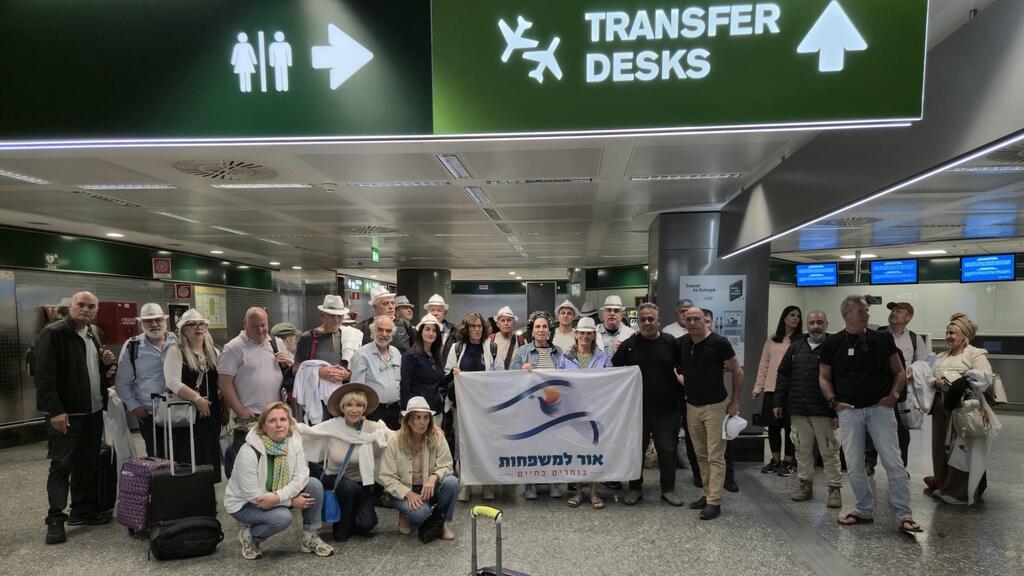
After landing in Milan
Later, bereaved parents stand to thank the local community. Dov Oster, father of Capt. Eitan Itzhak Oster, who fell in southern Lebanon, speaks about a sentence his son told soldiers: “When we are called, we come. It’s in our DNA.” He turns the sentence toward the parents, who agreed to join the journey after being called.
Outside the restaurant, I speak with three fathers—Meir, Shimon, and Moshe, fathers of Staff Sgt. Michael Ben Hamo, Sgt. Shaked Dahan, and Staff Sgt. Ronel Ben-Moshe. I ask what they hope to get from the trip. Escapism, they say. A chance to breathe, maybe even forget bereavement for a moment. Even the attempt to escape occurs inside grief.
The next morning, the buses take the delegation to Lake Maggiore. Parents stand up to speak, and almost all begin naturally with their children. Irit gently presses them to also speak about themselves: how they continue, how they get up after the loss. “The disaster cannot be what represents you,” she says. A bereaved parent is also a spouse, a parent to living children, someone with a job to return to, and a person with a life that still requires meaning. The trip is meant to remind parents that their lives have not ended.
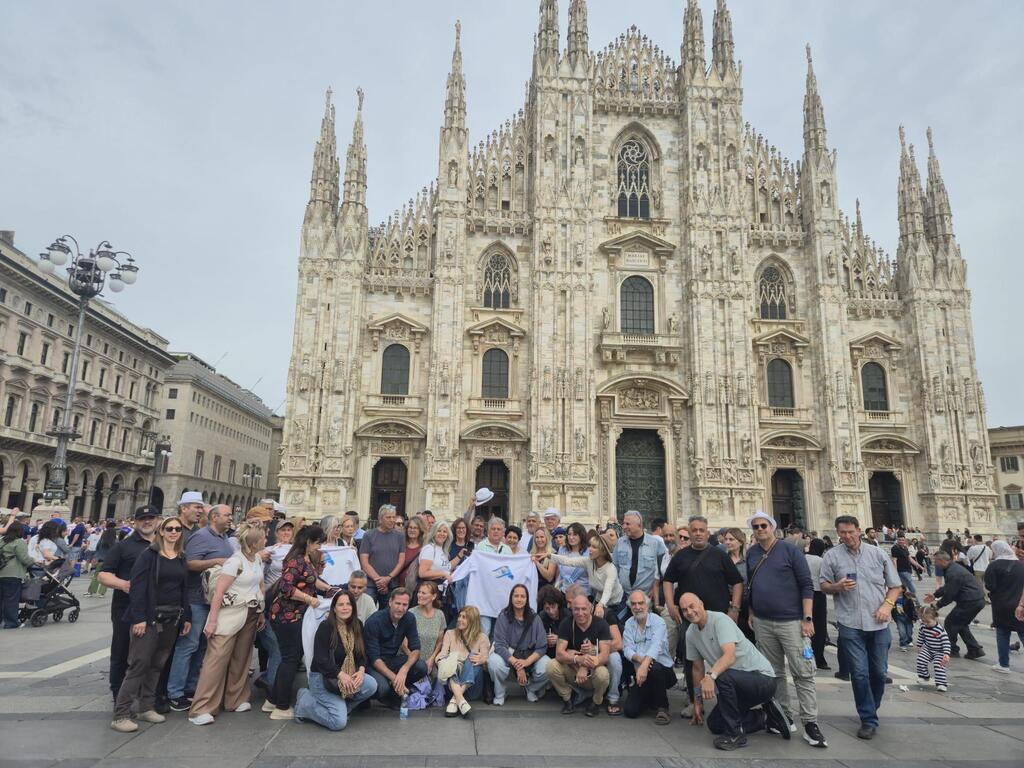
At the Piazza del Duomo
On the short boat ride across Lake Maggiore to Isola dei Pescatori, families scatter for coffee, photographs, and quiet moments by the water. I sit with Yudith Yavetz, mother of Warrant Officer (res.) Ran Yavetz. It is her first trip with the organization. She had tried a similar experience before, but it had not worked; on another trip, she broke down. It felt too early or wrong for her grief at the time. Here, something feels different. Yudith says grief does not pass; it lives beside her. It is there when she wakes, travels, laughs, or hears a song that brings Ran back. Musicians had played “Kanfei Ruach” the night before, and she felt him near. Surrounded by other bereaved families, she experiences a little more air—a momentary ability to smile genuinely.
Shlomo, Irit’s husband, explains that the organization’s work is not only about commemoration but about “choosing life.” Many bereaved parents feel that social expectations dictate staying home, mourning visibly, and avoiding enjoyment. Or L’Mishpachot challenges that code through movement—trips, performances, meals, conversations, laughter, and moments of beauty. Pain is present, but it is not the only acceptable proof of love. For Irit, the mission is simple: to get parents out of cemeteries and back into life, alongside memory and pain. “Now there are many years to be dead,” she tells parents. “There is not much time to live.”
I also spoke briefly with Yosef and Michal Shiloni, parents of Staff Sergeant Almog, killed in 2014 at the Tel Aviv–HaHagana railway station. Eight years into their bereavement, Yosef speaks about action born out of loss: after Almog was killed, he helped establish a home for lone soldiers, building relationships that continued long after their service. He also asks in lectures why people must wait for tragedy before they give, build, volunteer, or show up for others.
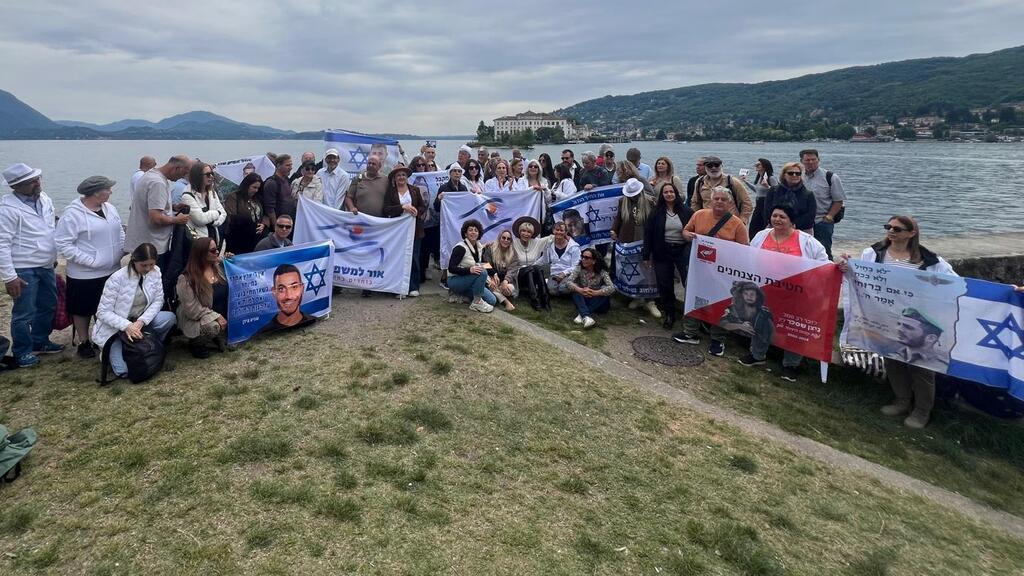
After the short boat ride across Lake Maggiore to Isola dei Pescatori
After Lake Maggiore, the buses return to Milan. The day had briefly opened into water, sun, and tourist scenery, but by the time the group reached a local Jewish ice cream and coffee shop, the familiar rhythm of the trip had returned. Inside, Irit once again gives parents the stage. While the conversation continues, I sit outside with Esti, the mother of Sgt. Maj. Yorai Eliyahu Cohen, killed on October 7 while fighting with terrorists in the south. She describes what happened after the loss as emotional emptying: joy, appetite, desire to go out, and participation in ordinary life disappeared. “The only thing you feel is your loss,” she says.
One thing still makes her feel something: daily calls from Yorai’s wife, Hadar, and their child, Niv. It does not make her happy, but it gives her energy she otherwise lacks. At first, she stopped going out almost entirely—not as punishment, not to suffer, but because she felt no need. “When you try to speed up a process like this,” she says, “you damage its wholeness.” For her, the trip makes sense because of who is on it; outside bereaved circles, she often feels like an observer, watching the world while others return to routine. Here, she does not have to explain herself. “When someone tells me, ‘I get you,’ I want to tell them: I’m glad you don’t. I hope you never truly understand what this feels like.”
As we are speaking, Andrea, Yorai’s former CrossFit trainer, walks into the café. Andrea had lived in Israel, trained Yorai, and returned to Italy amid the war with Iran. He had come to meet Esti. For a moment, the interview ends; the trip becomes something else entirely: not only bereaved families speaking among themselves, but another person from Yorai’s life stepping back into hers. Later, Irit asks Esti to stand before the group and share the moment. The private experience becomes communal, shared across parents.
Outside the café, Diana, the mother of Sgt. First Class Nicholas Berger describes a nearly opposite approach to grief: movement. Before October 7, she had worked for years in physically demanding jobs, raising children. Nicholas contacted friends from his unit, arranged family safety, and only then left for combat. Two weeks before his death, Nicholas called Diana and insisted they meet. He told her, “Mom, you gave me more than everyone. You gave me life.” That evening, before he left, they hugged; his daughters happened to film it. Nicholas closed his eyes and held her. Diana began to cry into his chest, without knowing why.
After the shiva, Diana began speaking about Nicholas: his childhood, his values, the respect people said he showed, his service in Jerusalem’s light rail security unit, and the last coffee they shared. Within days, she began driving lessons; she passed everything on the first try, bought a car with the grant received after Nicholas’ death, and began driving extensively. She also began taking care of herself: eyelashes, facial treatments, Pilates, and small neglected routines. It was a return to life, not vanity.
Strength is not constant. Sometimes, the scar burns; sometimes she can live normally, speak, laugh, and appear fine. Then, without warning, her emotions surge intensely, and she has to step away, break down, release, and recover. On this trip, she says, she found friends. She can manage alone, but among other mothers, something is easier. “I can manage anywhere,” she says, “but here, I found friends.”
After ice cream and coffee, the delegation continues to a ceremony with the local Jewish community, centered around a Torah scroll housed in a special Torah case engraved with the IDF symbol and the names of soldiers who fell in the war. The community leader has promised that a second case will be made to include the names of the latest fallen IDF troops. The ceremony is followed by a Lag BaOmer celebration and barbecue. Food, music and conversation provide lighter moments, but parents continue discussing memorial projects, coping and the children they lost.
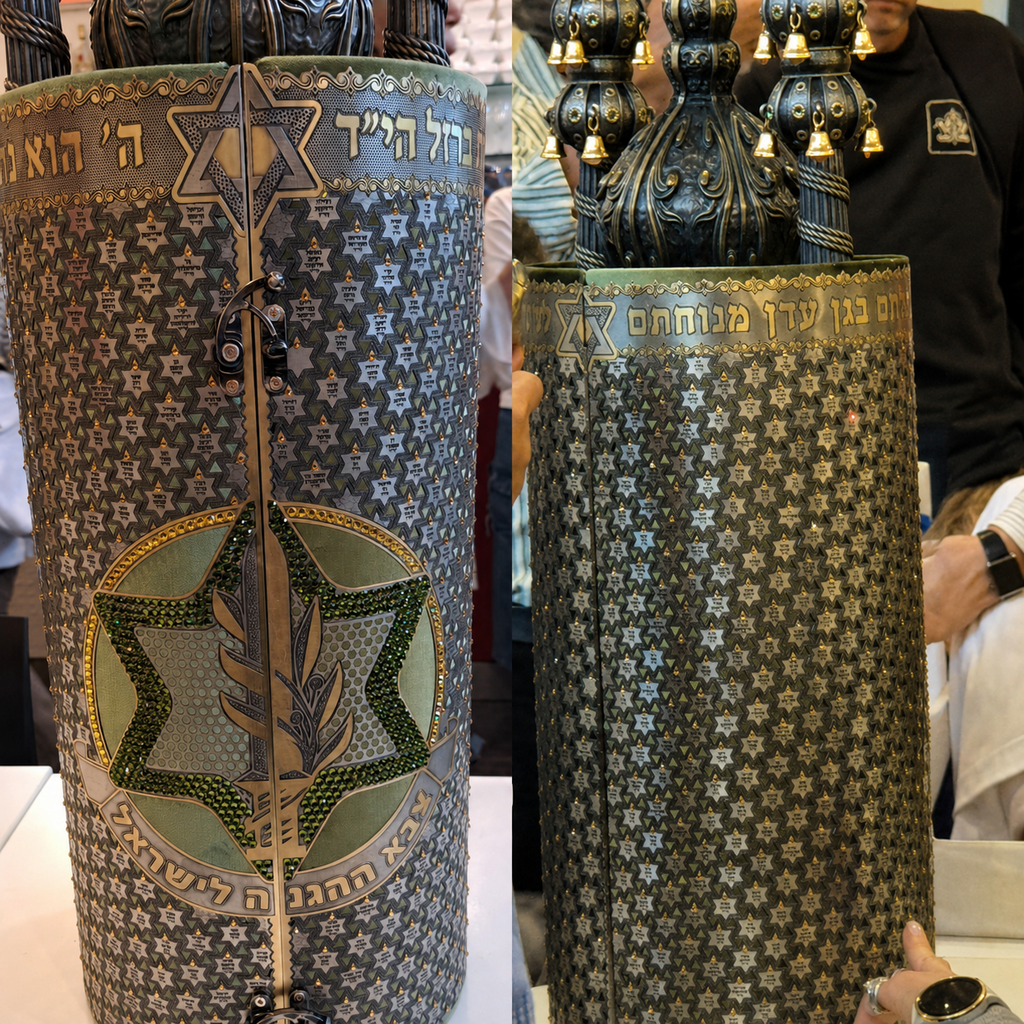
A Torah scroll housed in a special Torah case engraved with the IDF symbol and the names of soldiers who fell in the war
Marching with the special Torah case to the local Jewish school for the ceremony
During the barbecue, Perach, the mother of Sgt. First Class Nitzan Schessler speaks about how bereaved parents gradually feel less embarrassed around one another. “At first, people are shy,” she says. “But as you get to know the parents, and as Irit calls them to speak, slowly, there is less embarrassment. People have more courage to ask questions, to speak about the son.” Meeting Milan’s Jewish community adds another layer: parents feel support from people who do not live in Israel but understand their pain. “When we speak about Nitzan, he is alive,” she says.
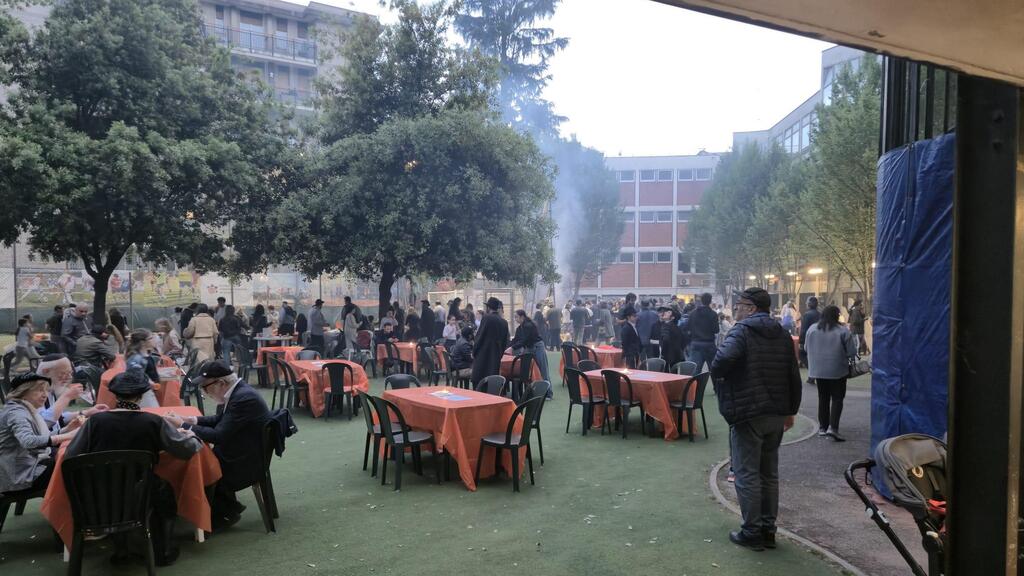
Lag BaOmer event with the Jewish community in Milan
She believes routine, however partial, helps parents live while remembering their child. Time does not shrink the pain. “People say time does its work,” she says. “Time does not do its work. As time passes, the longing only grows.” Nitzan would want them to function, to live, and to be happy when possible. Parents try not to spend every moment at the cemetery, considering the needs of living children. “You have to remember there are living daughters who need a father and mother,” Perach says.
On the following morning, the delegation drives toward a port near Venice to board a boat. On the bus to Venice, Hadas Shushan spoke about her son, Capt. Yair Yaakov Shushan, and about learning to live beside grief. A previous Or L’Mishpachot trip to Vienna had been more intense, closer to the date on which Yair fell, but here she felt something different.
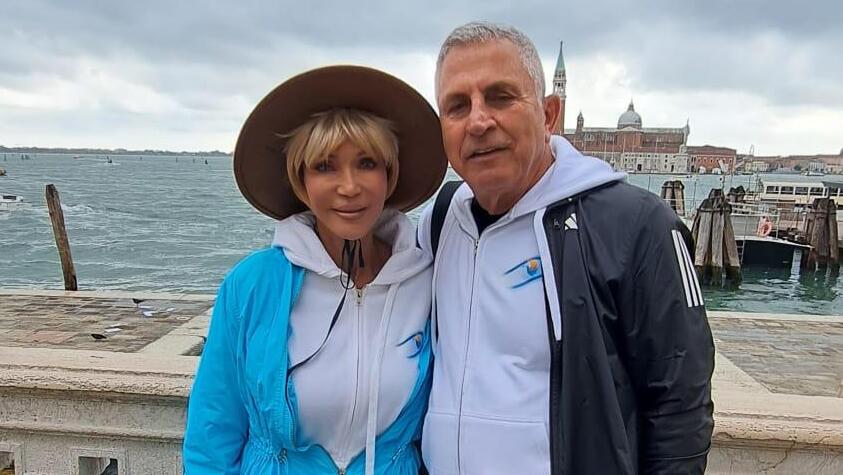
Irit and her husband Shlomo
From the moment he fell, she said, the family chose to continue and to choose life. Around other bereaved parents, she does not need to explain every silence, tear or sudden withdrawal. That shared understanding gives her relief, and even brief moments of distance from the bereavement, because everyone already knows it is there. On the flight, she also felt a sign from Yair when a girl walked by wearing a hoodie from his pre-military academy, from his own class year, later traced to his roommate and friend.
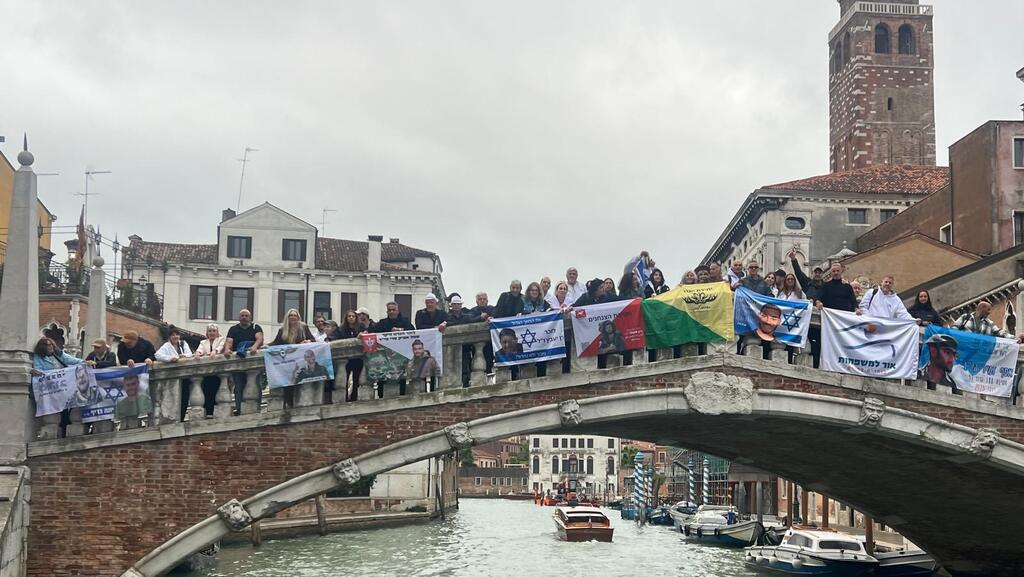
Taking a group photo in Venice
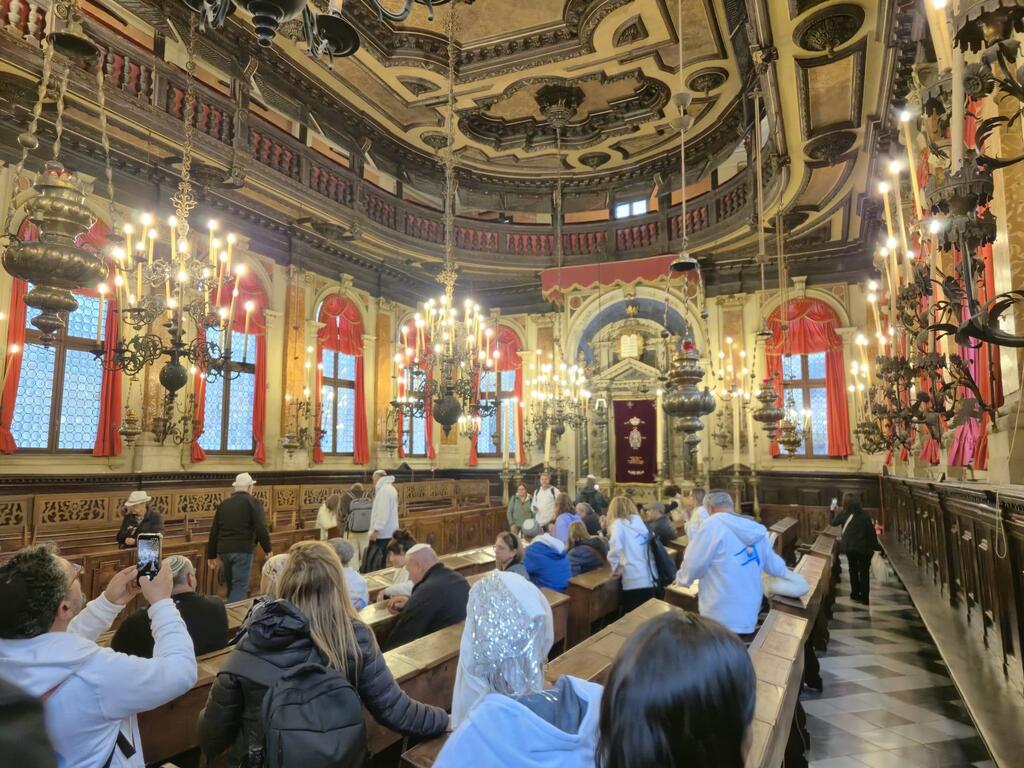
At the oldest synagogue in Venice, the Scuola Grande Tedesca
During one boat ride, I spoke again with Kobi Firshtein. He says the trip gives him a breather, not an escape from Omri, but a little room to breathe inside grief. He is able, he says, to enjoy himself at moments, to smile. The delegation moves through the city, visiting the Jewish quarter and the oldest synagogue in Venice before returning.
On the bus ride back from Venice, I sit with Irena, the mother of Sgt. Maj. Valeri Chefonov, who fell on July 11. The conversation is quieter and heavier. She speaks about grief and its effects on her body, sleep, sense of self, and her role in the family. Her grandchildren help her, she says, giving her moments of relief. “That day, I forgot what hurts me,” she explains.
One granddaughter, already 15, no longer needs her in the same way. Irena emphasizes that only other bereaved families truly understand. People tell her to go to the beach, but she tries and soon remembers her loss. She loves the sea, but the sadness rises, and she leaves. Her body hurts, and her health has declined. At one point, she feared for her own well-being and sought private medical care to adjust medication and help her sleep. She recently bought a small puppy, which brought her brief joy, but seeing its birth date reminded her of Valeri’s passing.
By the next morning, the final day arrives. At breakfast, suitcases begin appearing near the lobby. The journey that started before dawn at Ben Gurion is nearing its end. I sit with Ilanit and Ofer, parents of Staff Sgt. Noam Aharon Musgadian. They returned to work after their son fell, but Ilanit describes that decision not as a return to routine, but as a daily battle.
“Every day, getting up for work is a war in itself,” she says. The fear is not only of failing to get up that day but of what follows in the days after. Noam’s absence is felt in the smallest parts of the house. He had been the kind of son who did things without being asked, who called, helped, and filled spaces now empty. “He left a huge void,” she says. The trip provides unexpected confirmation that they are not losing their minds; seeing the grief of others helps normalize their own experiences. “When you see it with everyone, you say, okay, I’m normal,” Ilanit says. Ofer had even asked a rabbi whether they should join. By the final morning, they do not regret it. The journey gave them tools and a little more air.
The buses leave the hotel for the day’s final program: an activity with Irit, followed by a ceremony at the Jewish school in Milan. On the ride, Katya Davidov speaks about her son, Staff Sgt. Alon Davidov, who fell in southern Gaza. Her story often makes other parents cry: she is a single mother, an only child, and repeatedly questioned why she signed the parental consent that allowed him to serve in a combat unit. Coming to Italy allows her to enter a space she had not chosen but now belongs to. She reflects on the small shocks of reality: walking into a mall and realizing she no longer needs to buy clothes for her son, returning to a quiet house, and discovering that what feels like an ending is also the start of a different life.
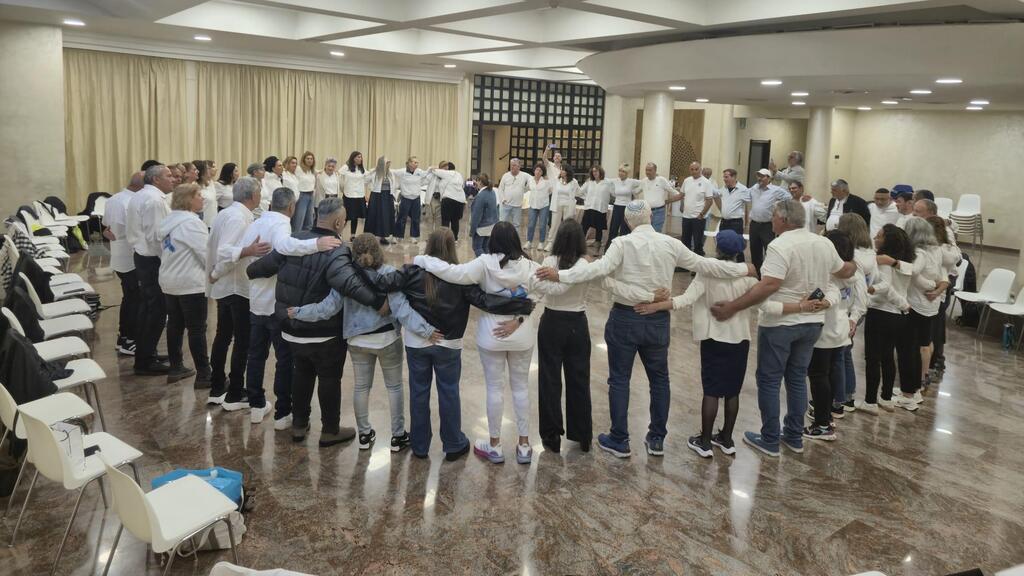
During the activity with Irit
Singing Lu Yehi during the final activity with Irit
Listening to other parents, she thinks about the children themselves. One by one, she says, they all seemed to share the same force: strength, will, and a decision to go, do, and protect. She calls it “the spirit of life.” Now, she tries to carry that spirit herself. Sport has become one of the things that keeps her standing. Alon used to tell her, “Mom, stop working so hard. Try to enjoy life too.”
After he fell, she went to Wingate Institute and completed a gym instructor course. Now she wants to open a training group in Kiryat Haim and work with older adults. Difficult moments still come, but she does not allow them to knock her down completely. Doing, moving, training, and helping others have become part of the way she keeps going. Before he fell, Alon often asked why she did not travel more. She understands now that he would have wanted her to go. “What can I do?” she says. “I travel. That is what he would want.”
At the Jewish school in Milan, the final ceremony brings the trip back to what had been present from the first morning at Ben Gurion: names. Together with KKL-JNF and members of the local Jewish community, families gather for a tree-planting ceremony in memory of the fallen sons. Some parents hold photographs; others stand quietly, arms folded, listening as the names are spoken far from Israel, in a place their sons had never known but where, for a few minutes, they are being remembered.
A tree-planting ceremony in memory of the fallen sons
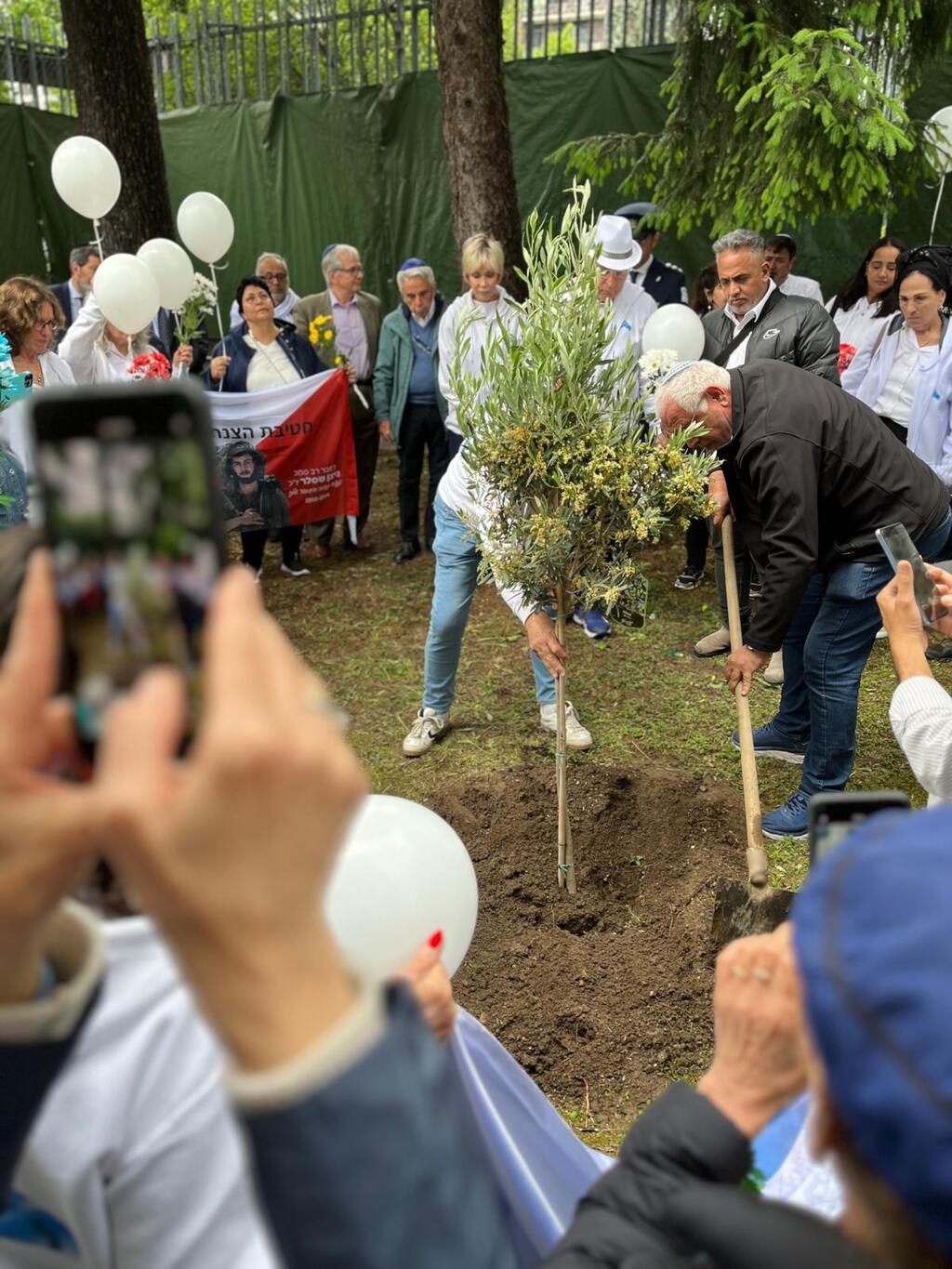
The tree-planting ceremony
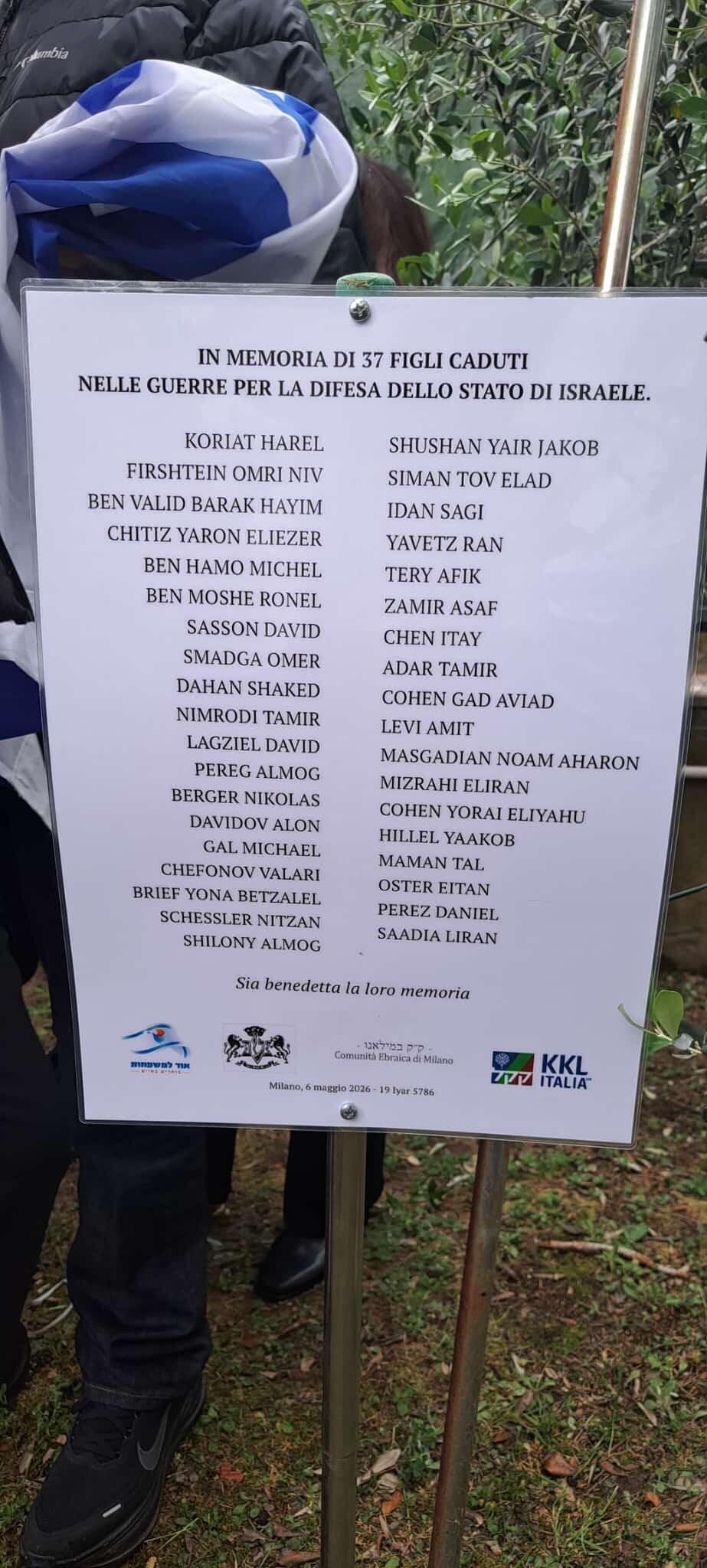
The names of the fallen
For Irit, this is part of the journey’s purpose. The families are not only being taken away from home; they are being shown that their children’s names can travel beyond it—to another Jewish community, another language, another group of people willing to stop and listen.
The flight back to Israel leaves late. By the time we reach Ben Gurion again, it is the middle of the night—the same hour at which the journey began. Nothing has been solved in Milan. The empty rooms are still waiting. The cemeteries remain. The WhatsApp messages will still be sent to sons who cannot answer. The photographs, birthdays, uniforms, and last conversations—all of it returns with them.
But something else returns, too. Parents come home with new phone numbers, new faces, and the knowledge that somewhere between the airport, buses, meals, Lake Maggiore, Venice, and the tree planted at a Jewish school in Milan, their grief had been carried for a few days by more than one pair of hands.
At Ben Gurion, before sunrise, Irit had told them: “You don’t know each other yet, but you will become a family.” On the way back, that sentence no longer sounded like a promise. It sounded like something that had already begun.
- The writer was a guest of Or L’Mishpachot.