

On October 13, 1963, Samuel Feiner’s grocery store on Remez Street in Givatayim was packed. Not with shoppers, but with neighbors, acquaintances and friends who had come to hear about the extraordinary adventure of his daughter, Bina.
Feiner and her childhood friend Ora Yosha, both 20, had returned from Europe that morning. About two weeks earlier, they had been splashed across the French media. Their photographs and names appeared on radio, television and in newspapers, which described them as “two Israeli soldiers” whose testimony had helped police arrest a man they had been hunting for months.
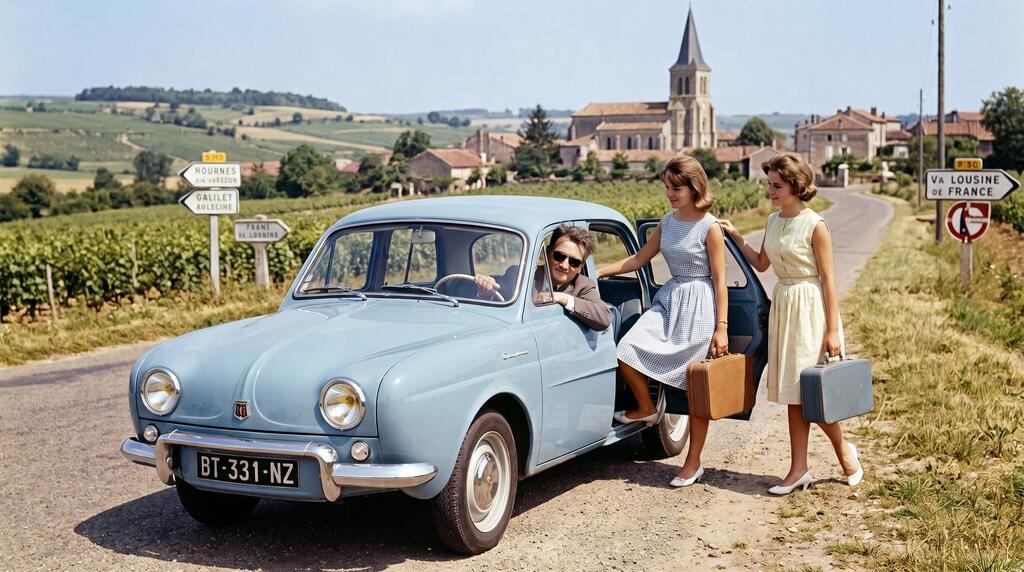
(AI-generated illustration)
A trip between childhood friends
The story began a month earlier, after Feiner and Yosha completed their military service and decided to set out on an adventure through Britain, France and Switzerland.
They sailed to Britain on a French ship and spent a week volunteering at a youth camp east of London alongside young people from Britain and Scotland. From there they hitchhiked north to Scotland.
A brutal murder that had taken place in the same area, in which a young man killed a female hitchhiker riding in his car, did not deter them. They later crossed the Channel by ferry and reached France, once again relying on hitchhiking.
The ‘monster’
That summer, French police were searching for a man the press had dubbed the “monster of the Bois de Boulogne.”
According to reports from the time, he would offer rides to young women, usually tourists. During the journey he would find an excuse to leave the main road, claiming he knew a shortcut through the woods.
In an isolated spot, he would attack his passengers. Terrified, the women would flee, leaving their belongings behind. That, according to the reports, was exactly what the robber wanted. He would take their possessions and disappear.
Over the months he operated, he successfully robbed about 20 young tourists from Norway, Germany, Britain and the United States. None had been able to give police enough information to find him. Investigators knew only that they were looking for the owner of a blue Renault Dauphine.
‘In France, we make love’
Feiner and Yosha spent three days in Paris before deciding to continue toward Lyon, Geneva and Switzerland.
They had been warned in Paris not to hitchhike, but did not take the warning seriously. A Chevrolet drove them out of central Paris, where they stood by the roadside with their backpacks and a shoulder bag containing everything important: passports, tickets for the ship home and their money.
Then a blue Dauphine pulled over.
The driver was tall, wore a cap and dirty work clothes, and offered them a ride “very courteously.” Yosha sat in the back while Feiner sat beside the driver.
The trip quickly turned frightening. The driver claimed there were roadworks on the main road and drove into the forest. There, he suddenly stopped, turned toward Feiner, reached out to embrace her and said: “In France, we make love.”
Terrified, Feiner remembered stories of girls murdered while hitchhiking. She screamed, and she and Yosha opened the doors and ran from the car.
The number
The driver did not try to stop them. He simply drove off with all their belongings.
As the car disappeared, Yosha looked at the license plate.
It did not help them immediately. They were stranded in the middle of the woods without passports, money or even a comb. They sat on the ground and cried.
“We felt as though our world had collapsed,” they later recalled.
A passing cyclist took them to a nearby village, where the local mayor called police. At the station, Yosha gave investigators the license plate number, but the head of the criminal investigations department did not believe her because the registration belonged to another region of France.
Yosha insisted she had seen it correctly. Eventually, police discovered that she had.
Villagers hosted the two women overnight. The next morning, the mayor gave them some money and they traveled to the Israeli Embassy in Paris.
‘Hitchhike’
What happened at the embassy depends on whom you ask.
Immediately after the incident, Israeli Consul Levi Locker said the consulate had lent them “a little money until things calmed down” and asked the shipping company to provide copies of their tickets.
The women gave a different account after returning to Israel. They said they had been received at the embassy with “complete indifference.”
Officials suggested they send a telegram to their parents and ask them for money, but they refused. When they asked the consul for enough money to reach Marseille and obtain replacement ship tickets, they said he replied: “Hitchhike.”
Only after considerable effort did they receive a $20 loan from the consulate. The money had to last them two weeks until their ship sailed for Israel.
A Jewish family in Paris heard what had happened and hosted them until their departure.
Printer, husband and father of three
According to a report in Yedioth Ahronoth, police arrested the suspect 48 hours after the encounter with the two Israelis.
The man was not a mysterious underworld figure. He was a printer, married and the father of three daughters.
Feiner and Yosha were brought in to identify him: Albert Thibault, 42.
They never recovered most of what had been stolen. The man described by the press as the “monster” had burned their passports and taken the money from the bag. The only item returned to them was Feiner’s empty bag.
The French press seized on the story, publishing their photographs under headlines declaring that “two Israeli soldiers” had brought about the arrest of the “monster.”
France-Soir added its own flourish: “Anyone who picks on two young Israeli women who have just completed their military service can expect to get stung himself.”
The two women, meanwhile, apparently did not realize just how famous they had become. When a Yedioth Ahronoth reporter in Paris tried to reach them at their youth hostel, the manager told him simply: “They went out sightseeing.”