

Sarah Cohen waited for the war with Iran and Hezbollah to end before opening her small business. Coffee carts are popping up across Israel, and Cohen wanted one of her own, to be stationed in the small grove beside the entrance to Kibbutz Rosh Hanikra, where she lives. She already had a name — “The Refet" (Dairy Barn) — along with a professional espresso machine, a refrigerator and 17 Jewish National Fund picnic tables. Everything she needed.
In peacetime, this is one of the most beautiful areas in Israel. Betzet Beach is nearby, as is the Rosh Hanikra marine reserve, while a short drive up Route 4 leads to the region’s main tourist attraction: the Rosh Hanikra grottoes, with their dramatic lookout point and cable car descending steeply to the sea. Cohen speaks enthusiastically about her plans. She even bought a smoker, imagining the weekends that would follow the war. In quieter times, the area fills with runners, cyclists, families and hiking groups, and her coffee cart would transform into a barbecue stand serving brisket and beef ribs beneath the shade of the pine trees.
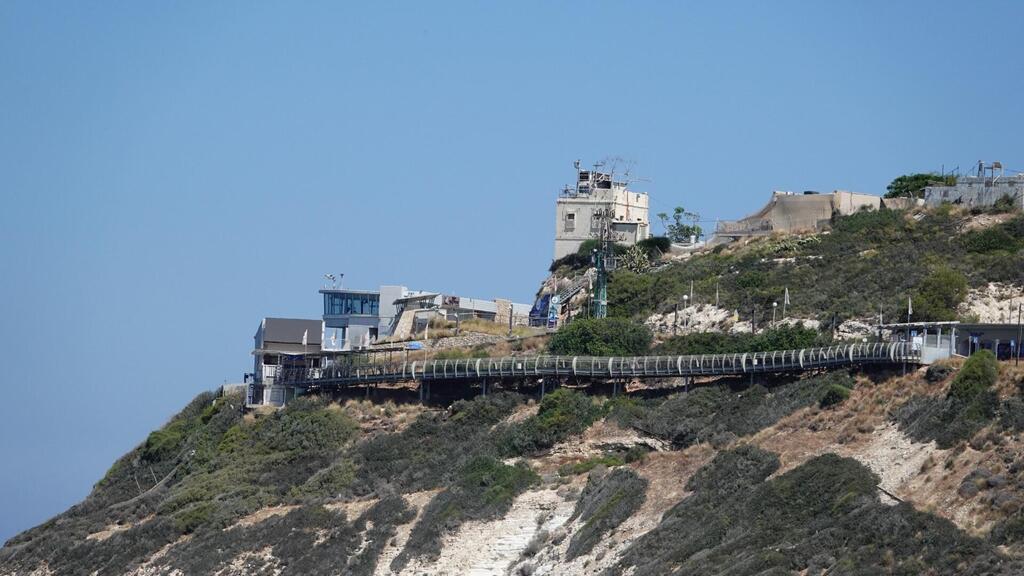
That was the dream. The cart opened on May 1, three weeks into the official ceasefire. There is little need to elaborate on what has happened since. The fighting never really stopped.
Not only did it continue, but a new threat emerged along the border: FPV drones guided by fiber-optic cables, thin strands stretching for miles. There is no warning system for such drones. Flying at low altitude, they hunt for targets through onboard cameras. Once someone appears in the frame, the operator can crash the explosive-laden drone directly into them.
Twelve soldiers have been killed since the ceasefire began, two of them this week, most of them in FPV drone attacks. Dozens more people, including civilians, have been wounded by Hezbollah drones. The Rosh Hanikra area has not been spared. Four civilians were wounded two weeks ago when an FPV drone struck near Cohen’s cart at the grottoes tourist site. One of them remains hospitalized in serious condition. On the day we visited Rosh Hanikra, Tuesday, the 40th day of the ceasefire, 15 FPV drones detonated inside Israeli territory along the border sector. One sparked a brush fire above the kibbutz, not far from where another drone ignited a fire the previous day.
Given that reality, there is little point in asking how business is going.
“I’m open, but you can see for yourselves,” Cohen says as she pours coffee. “This drone situation is awful. People tell me to say the pine trees protect the area, that they provide cover and hide anyone sitting here, but I won’t say that. I’m not going to take responsibility for people coming here because who knows what could happen. These drones are extremely dangerous.
“My entire business plan was tied to the tourist site up there,” she says, pointing toward the ridge. “That’s what brings people here. When it’s closed because of the security situation, this whole area is deserted.”
Jogging in the Chouf mountains
Standing here, you find yourself listening intently, alert to every sound that resembles a drone’s buzz. More than perhaps any other point along Israel’s northern border, this place illustrates the scale of the tragedy gripping the region. Route 4 climbs from sea level up the chalk cliffs and ends at a large iron gate. Beyond it lies Lebanon.
It may seem detached from reality to write now about this border crossing, established by the British in 1918 between Mandatory Palestine and Lebanon, at a time when the Israeli military is deepening its presence in southern Lebanon beyond the Blue Line, roughly six miles from the border. Hezbollah launches drones and unmanned aircraft daily, striking soldiers and civilians, while on the other side of the border Lebanese civilians are killed almost every day in Israeli airstrikes.
At the same time, Hezbollah threatens mass protests aimed at toppling the government in Beirut, while Israeli and Lebanese representatives are expected to meet in Washington this weekend to discuss a possible arrangement between the two countries.
Moshik Givati
(Photo: Shaul Golan)
The depth of the tragedy is matched only by the scale of the unrealized potential.
Tyre is just 20 minutes from the border. Beirut is about an hour and a half away by car. Cohen, a marathon runner, dreams of one day running the Beirut Marathon.
“To put on my running clothes early in the morning, get in the car and drive to Beirut to run,” she says. “The crossing is two meters from here. Or maybe instead of Beirut, it would be enough just to drive to the beaches of Tyre and run there. I also love trail running in the mountains. I’ve run in Bulgaria, Italy, Norway and Greece. I saw photos of Lebanon online and thought it would be a dream to run in the Chouf Mountains.”
Karni Am-Ad of nearby Kibbutz Metzuba says he heard stories from the kibbutz founders about their trips to Lebanon.
“The kibbutz was established in February 1940, and the border crossing was open to civilian traffic at the time,” he says. “They told us they would travel, mostly on weekends, to visit Tyre and Sidon. Day trips. The way people today drive to Wadi Nisnas in Haifa to eat, that’s how they used to drive to Tyre for lunch and shopping.”
The cliff at Rosh Hanikra once hosted more than a border crossing. Beneath it, passing through the grottoes themselves, ran a railway linking Haifa and Beirut and continuing north to Tripoli. The line stretched 142 miles.
Visitors to the grottoes can still see remnants of the railway. A photograph preserved in the Rosh Hanikra archive shows a train racing along the coastal track. It was an ambitious engineering project, requiring hundreds of engineers and soldiers from across the British Empire, including New Zealand, Australia and South Africa. In a more normal neighborhood, Cohen could have traveled not only by car to Beirut, but by train as well.
The surprise train
Chen Melling, director of the Israel Railways Museum, says the construction pace of the Haifa-Beirut-Tripoli railway was astonishing.
“Work began at the end of 1941, and by August 1942 the line from Haifa to Beirut was inaugurated,” he says. “Four months later it was extended to Tripoli. It’s a pace that’s unimaginable today.
“The British wanted a land-based logistical supply route connecting Egypt and Europe through Mandatory Palestine, Lebanon, Syria and Turkey. This line was part of a broader railway network they were building. They blasted two tunnels through the Rosh Hanikra cliffs and built a bridge over the sea before the line crossed into Lebanon. They simply followed the coastline. Where they needed a tunnel, they dug a tunnel. Where they needed a bridge, they built one.”
Although the railway served the British military, civilian travel between Haifa and Beirut was later permitted once fears of a German conquest of North Africa and Egypt subsided.
“The line was also used to rescue Jews from Nazi-controlled Europe,” Melling says. “In 1944, during the war, the British transported hundreds of Jewish refugees to Palestine through Turkey as part of an exchange agreement. They were brought by train in return for the release of hundreds of German Templers living in Palestine whose relatives were fighting in the German army.”
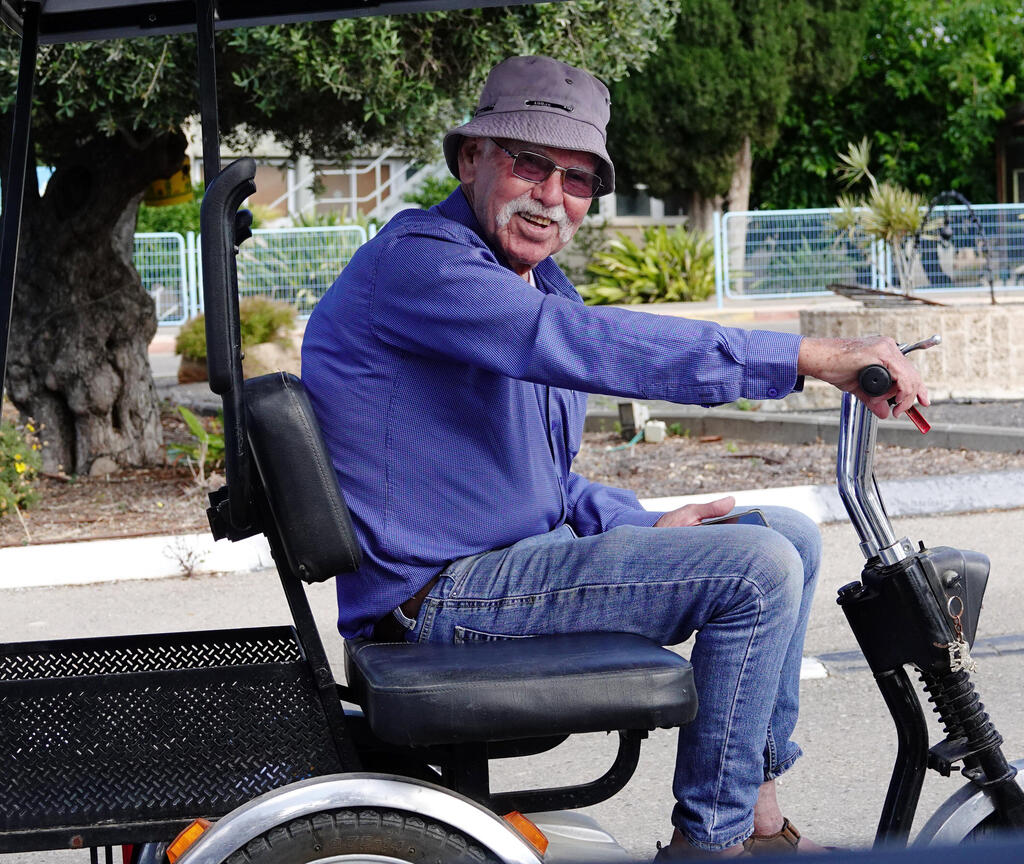
Now we are sitting in the home of Moshe “Moshik” Givati, 84, a member of Kibbutz Rosh Hanikra. He managed the grottoes tourist site for 24 years, until 2013.
“One day,” he recalls, “an elderly man approached me and said, ‘I have a story for you.’ He was very emotional and asked to sit down. He told me, ‘I’m a Holocaust survivor, and I arrived in Palestine on the train that passed through here.’ It was the first and only time I met someone who had actually traveled on the Haifa-Beirut line.” The creation of the Rosh Hanikra tourist site, he says, also has an unlikely origin story.
The border crossing atop the cliff served for years after Israel’s establishment as a scenic lookout over Haifa Bay and the western Galilee. Although the crossing itself was closed, visitors could approach the cliff edge. Crowds flocked there on weekends.
“One Saturday in the summer of 1964, some kibbutz members loaded popsicles and soft drinks onto a pickup truck and went up there to sell them,” Givati says. “They came back with a shoebox full of cash.”
That success led to plans for a formal lookout. A parking lot was built, the kibbutz opened a kiosk and thousands of visitors arrived every Saturday. Eventually came a more ambitious proposal: carve a walking path through the grottoes and build a cable car descending at a 67-degree angle from the cliff top to the sea caves below.

Sarah Cohen
(Photo: Shaul Golan )
The path and cable car opened in 1968. Over the years, the kiosk became a restaurant, a souvenir shop was added and a bus parking lot was built. The site grew into the most visited tourist attraction in the western Galilee, drawing more than half a million visitors annually.
Meanwhile, although the adjacent border crossing remained closed to civilians, military personnel and U.N. representatives regularly passed through. Meetings between Lebanese and Israeli officers were held at the site’s restaurant under U.N. auspices.
“There were also quite a few secret meetings that required us to close the site to visitors,” Givati says. “We’ve seen everything here — until the FPV drones arrived. Those we had never seen before two weeks ago.”
The thickness of the wire
A loud explosion on the ridge abruptly returns us to the present.
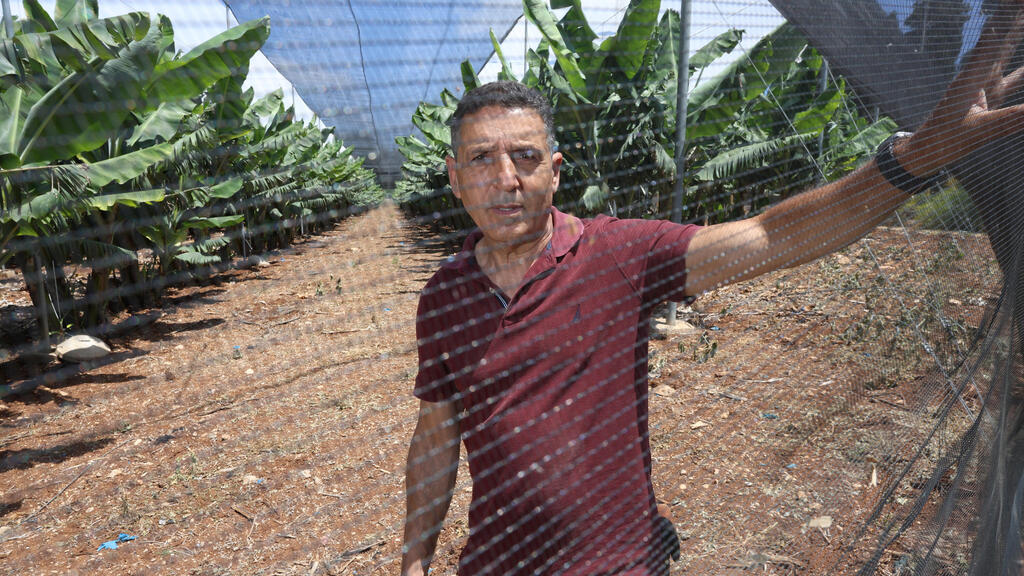
Two weeks ago, an attack drone detonated among a group of people at the tourist site near the closed border crossing. Moti Cohen, manager of Rosh Hanikra’s banana and citrus orchards, says one of the wounded men, the site’s maintenance manager, told him he heard a buzzing sound overhead and looked up.
“He saw the drone and managed to dive behind a vehicle,” Cohen says. “That’s what saved him from more serious injuries. The others didn’t have time.”
Moti Cohen
(Photo: Shaul Golan)
Since that incident, Hezbollah’s drones have struck the area around Rosh Hanikra roughly once a day. Cohen shows us a message circulating in a WhatsApp group for banana growers in the western Galilee: “Urgent request from the army for banana nets for protection against drones. They save lives. Let’s try to help.”
“There was a message in the kibbutz WhatsApp group too,” he says, lifting a net so we can follow him into the banana grove near the entrance. “This is called a Crystal net, a very strong polyethylene net. I supplied the army with several rolls. Each roll covers several thousand square meters.”
Is it strong enough to stop an FPV drone?
“I don’t know,” he says. “I use it to protect banana plants from strong winds that can tear the leaves. It wasn’t designed for drones. But people say it helps, so who am I to argue?” He suggests fishing nets may be even stronger.
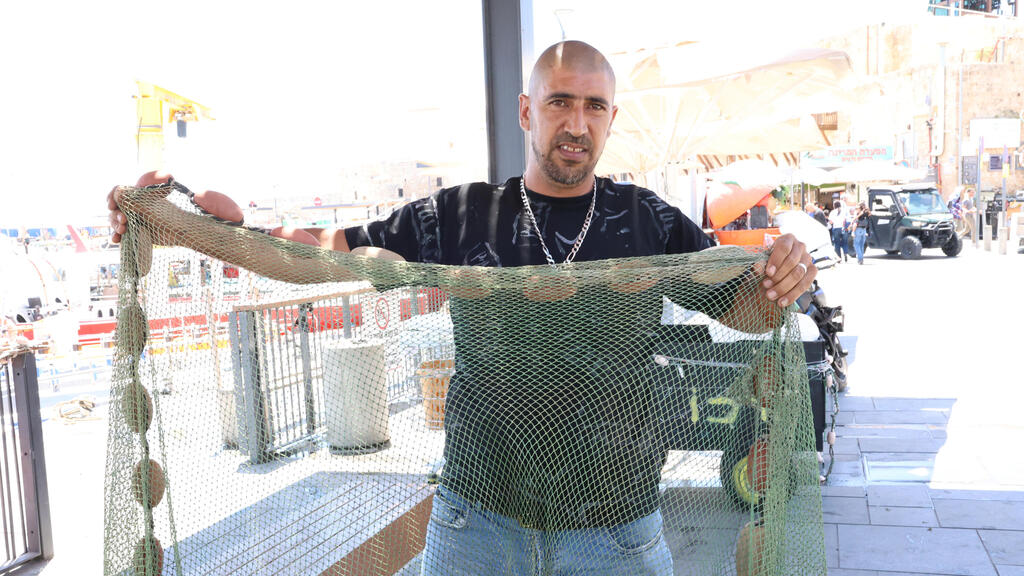
So we drive to Acre’s fishing port, where fourth-generation fisherman Kari Z’akur says the military has contacted him as well.
“They told me, ‘Bring whatever you have,’” he says. “But fishing nets are expensive. They’re how I support my family. Still, whatever I can spare, I’ll give.” The strongest net, he says, is known as a chinchola net, a large purse seine used to encircle schools of fish.
“It’s extremely strong,” he says. “This one has a four-millimeter cord, and there are others with cords up to 15 millimeters thick. Those are meant for very large fish in huge quantities. I think the 15-millimeter nets are best against drones. A drone won’t tear through them.”
So far, the Israeli military has deployed about 2.7 million square feet of protective netting above troop positions and forward headquarters in Lebanon, and reports this week indicate it needs roughly 3 million more square feet.
Like a helpless mother
Sitting at one of the picnic tables outside Cohen’s cart, we call Melling, the railway museum director. After checking the archives, he tells us the trip from Haifa to Beirut, a rail distance of 82 miles, took about four hours.
“It was essentially a freight train with passenger cars attached,” he says. “At best it could reach about 50 miles per hour on straight stretches, but the route was full of curves, so most of the journey was much slower.” The final train ran in November 1947.
“Sir Arthur Kirby, then general manager of the Palestine Railways, traveled from Haifa to Istanbul for a railway conference he helped organize,” Melling says. “A locomotive pulled a single luxury passenger car. He went to Istanbul and came back. That was it. The story of the line ended there.”
The War of Independence soon broke out, and Israeli forces sealed the northern tunnel at Rosh Hanikra with a concrete wall.
“The passenger car Kirby traveled in is now in our museum,” Melling says.
Kari Z’akur
(Photo: Shaul Golan)
We look toward the sky. Like birdwatchers scanning for migrating birds, we are searching for drones.
“I swear to you, I’m a tough person,” Cohen says. “This war has put us through difficult things. I really am tough. But with this drone threat, I don’t know how to cope.
“A week ago I drove out to bring pastries to soldiers stationed nearby. Every day I give them whatever food is left over at the end of the day. As soon as I got there, they started shouting, ‘There’s a drone in the sky! There’s a drone in the sky!’ and ran in every direction.
“The female soldiers were shaking with fear, and I was shaking with them. I felt like a helpless mother. Completely powerless. You don’t know where it’s coming from. You don’t know whether it sees you or not. You don’t know anything.
“You just hear that cursed buzzing sound.”