


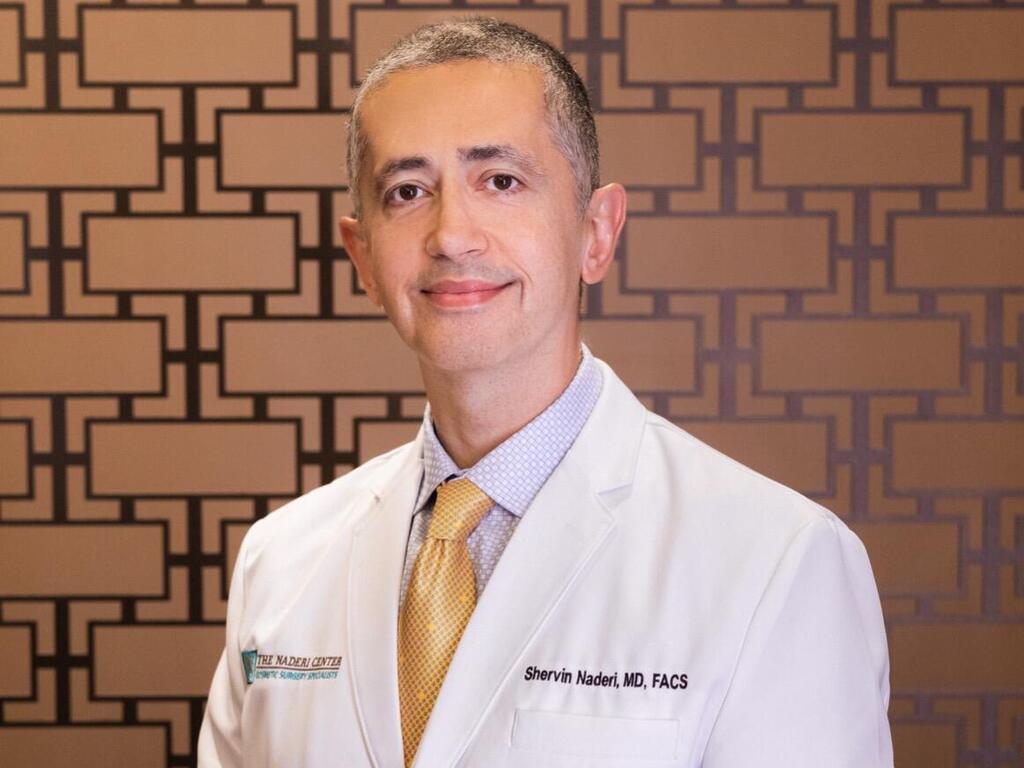
When he watches the reports about the bombings in Iran, Dr. Shervin Naderi, a successful facial plastic surgeon in the United States, finds it hard to remain indifferent, especially after losing a family member during a protest in the streets of Tehran.
The country where he was born still holds a special place in his heart, even decades after he left it as a teenager. In an interview with Ynet, he speaks about the complicated emotions stirred by the war and about a lesser-known side of Iranian society: its beauty culture and long-standing obsession with nose jobs.
A tragedy back home
Dr. Naderi left Iran 42 years ago, yet part of him remains there. Although he has not returned since the age of 13, he still hopes that one day, perhaps under a different regime or in a more peaceful Middle East, he will be able to visit the relatives who still live there.
For now, that hope must wait. Only a few weeks ago, events in the country he left as a boy turned into a personal tragedy.
“My cousin was killed a few weeks ago while protesting in the streets of Tehran,” Naderi said in a Zoom interview from his home in Maryland. “He was a young and very successful professional, and he was shot in the back.”
He said it took several days before the man’s father managed to locate the body.
“Even then, he had to pay a large sum of money, because the government charges families for the bullets it uses to kill its own people.”
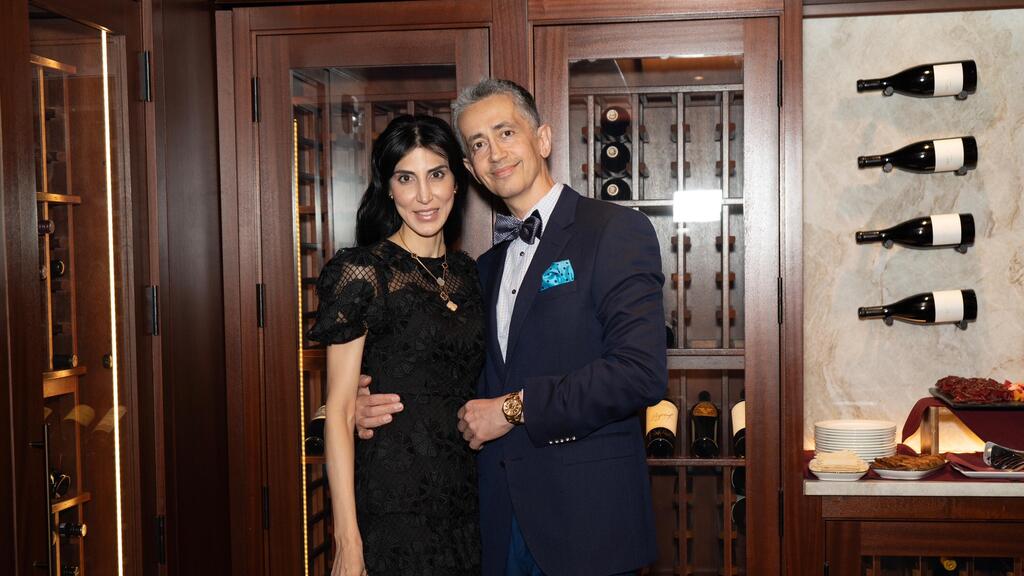
Dr. Shervin Naderi
Meanwhile, Naderi follows the fate of relatives still living in Iran with concern. With nearly 10,000 kilometers separating them, there is little he can do beyond watching events unfold from afar.
“I have uncles and cousins who still live there,” he said. “At the beginning of the war they were very excited, but now they are much more tense. My uncle had to move because a building next to his apartment complex was hit by missiles.”
According to Naderi, many relatives were initially pleased to see senior leaders fall, leaders they believe turned their lives into suffering for decades.
“But they are also very afraid as the scale of the bombings increases,” he said.
Between Iran and Israel
Iran and Israel have a long and complicated history, yet beyond the political conflict stand ordinary people on both sides who simply want peace.
“We all saw the videos online of Iranians celebrating the possibility of change,” Naderi said. “Before 1979, Iran was Israel’s closest ally. Unfortunately, the new regime changed that.”
He believes many Iranians abroad, and perhaps some inside Iran as well, see U.S. President Donald Trump and Israeli Prime Minister Benjamin Netanyahu as figures who could help bring change.
“But this is also a very worrying time,” he said. “Iran could move in many different directions.”
In the best-case scenario, he said, the current regime could fall and be replaced by a democratic government that eventually brings stability and peace to the region.
“But there is also the fear that the war will drag on, that many innocent Iranians will die, that infrastructure will be destroyed and that a civil war could break out, with ethnic groups beginning to break the country apart.”
As an Iranian who enjoys the safety and prosperity of the West, Naderi says it is difficult to determine what is truly best for those still living in Iran.
“It is even harder to watch the country being bombed by an external force,” he said.
At the same time, he said he is aware that for 47 years Iranians have lived under a regime that suppressed them internally.
“Many of my people have suffocated under their own government and tens of thousands were killed by a regime that considered being Muslim more important than being Iranian or even human,” he said.
“Some see this war as a form of liberation, but only time will tell what the future holds.”
The boy who fled war and built a career
Naderi was born in Shiraz to a family deeply connected to medicine. Both of his parents were surgeons.
He left Iran around the age of 13. Soon afterward, the Islamic regime banned boys from leaving the country once they turned 14.
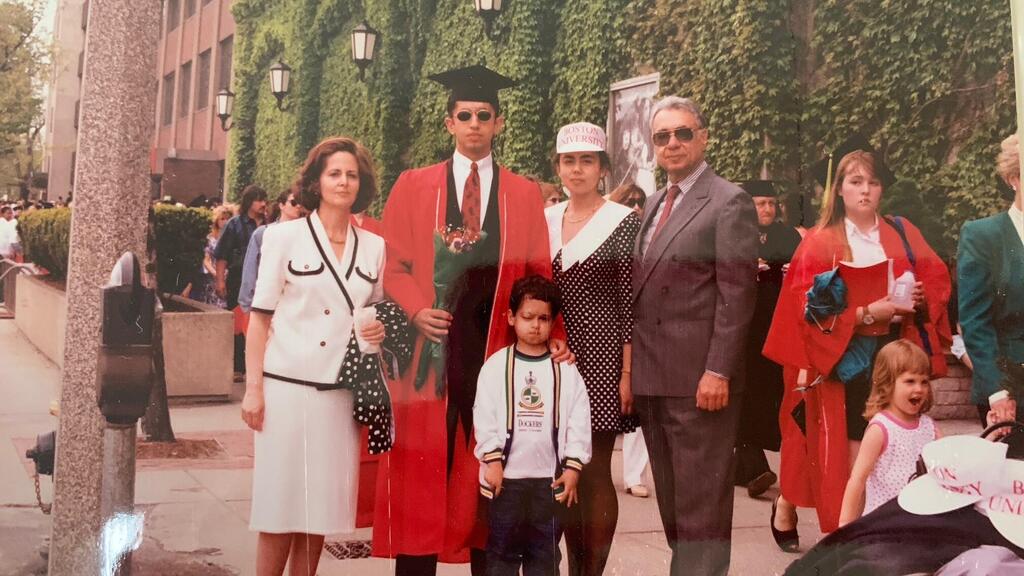
With his parents at his graduation ceremony
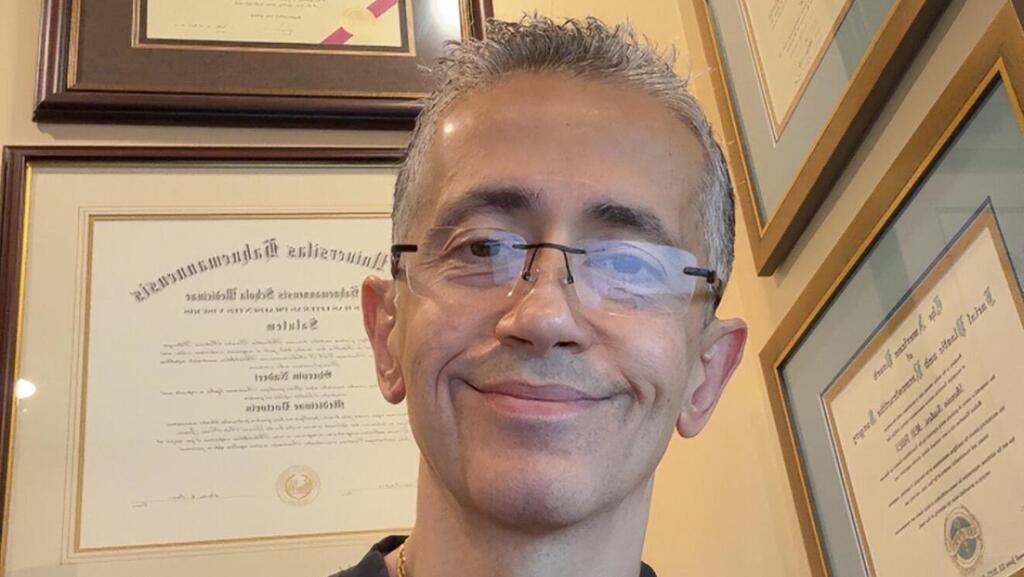
Some of his family members still live in Iran
“Shortly after that, they were sending boys to the Iran-Iraq war with almost no training, which was essentially a death sentence,” he said.
His family eventually moved to the United States in 1984. Like many Iranian refugees of that era, they had to start their lives from scratch.
“The first generation of immigrants had a very hard life,” he said. “My parents had to give up very comfortable lives in Iran, where they were highly respected and financially stable.”
Both had been department heads and held prestigious university positions. After arriving in the United States, they had to pass difficult licensing exams.
“My mother had to repeat her residency from the beginning at the age of 50.”
The family first arrived in New York. Later, Naderi moved to Toronto, Canada, to live with relatives before eventually settling in Boston, where he completed high school, college and medical training.
Like many children of Persian families, he eventually followed his parents into medicine.
He earned his medical degree from Drexel University in Philadelphia, then completed a demanding training path including a general surgery internship and a competitive head and neck surgery residency in Indianapolis.
Later, he completed a fellowship in facial plastic surgery, the field in which he would build his reputation. For more than two decades, he has specialized in reconstructive and aesthetic facial plastic surgery, particularly rhinoplasty.
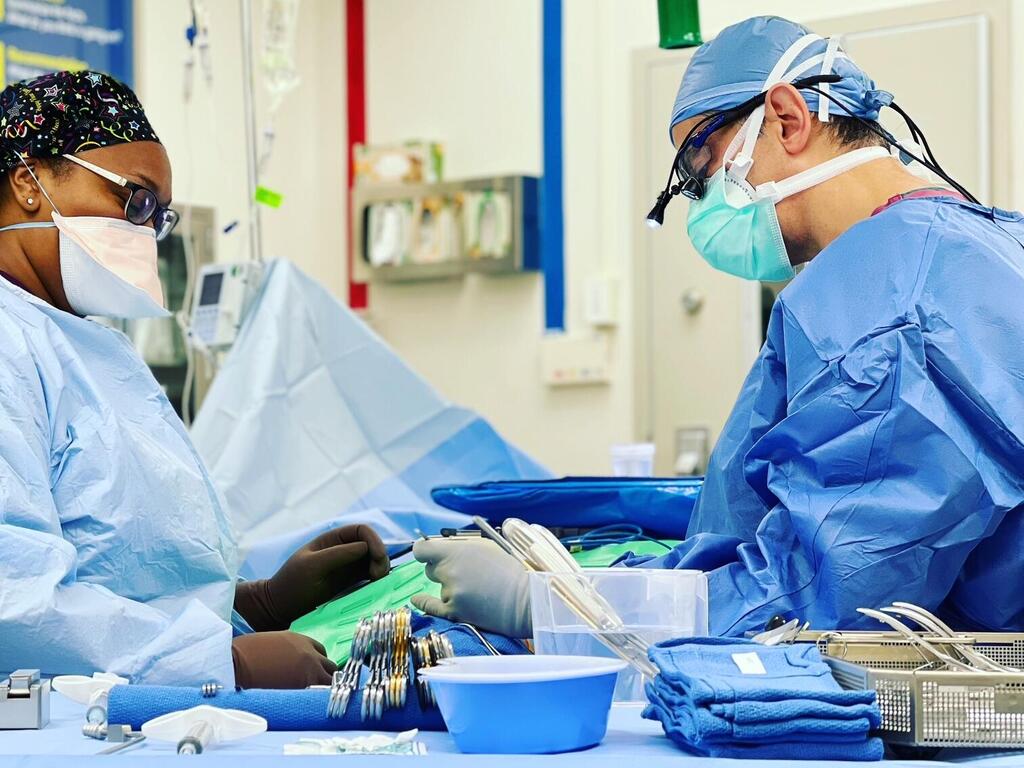
He knew from a young age this would be his profession. Dr. Naderi at work
His popularity extends beyond the operating room. His Instagram account has more than 130,000 followers.
Looking back, he says medicine felt almost inevitable.
“When you grow up with two surgeon parents, you are surrounded by doctors your whole life,” he said. “From a very young age I knew I wanted to become a surgeon.”
Identity and community
Despite the decades abroad, Naderi says his Iranian identity remains central to his life.
“It’s not just about being Iranian, but about growing up in Iran during that period and in the family I grew up in,” he said. “It shaped my character, my manners and the way I see life.”
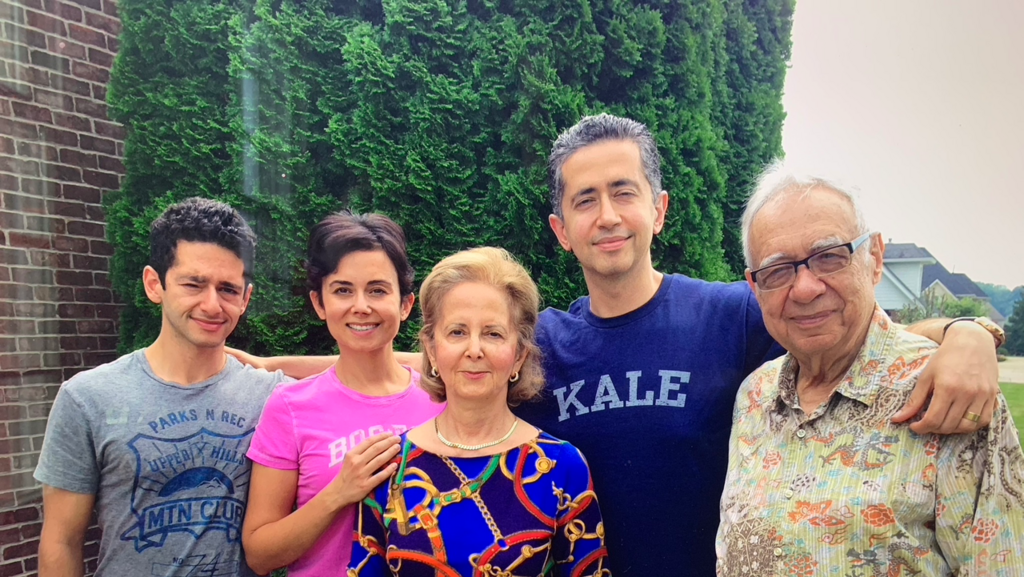
Naderi with his family
He credits that upbringing with instilling an appreciation for family, culture, food, fashion, beauty and poetry.
Although he integrated quickly into Western culture, he says he also maintained his Persian heritage.
Today he treats patients in the Washington area, including many Iranians as well as Jewish and Israeli patients.
“I live and practice near Washington, D.C., in an area with large Iranian and Jewish communities,” he said. “The relationships are excellent.”
He says everyday interactions between individuals rarely reflect the political conflicts between countries.
“When people meet face to face, they usually set politics aside,” he said. “But in larger groups politics often returns, especially influenced by social media and mainstream media.”
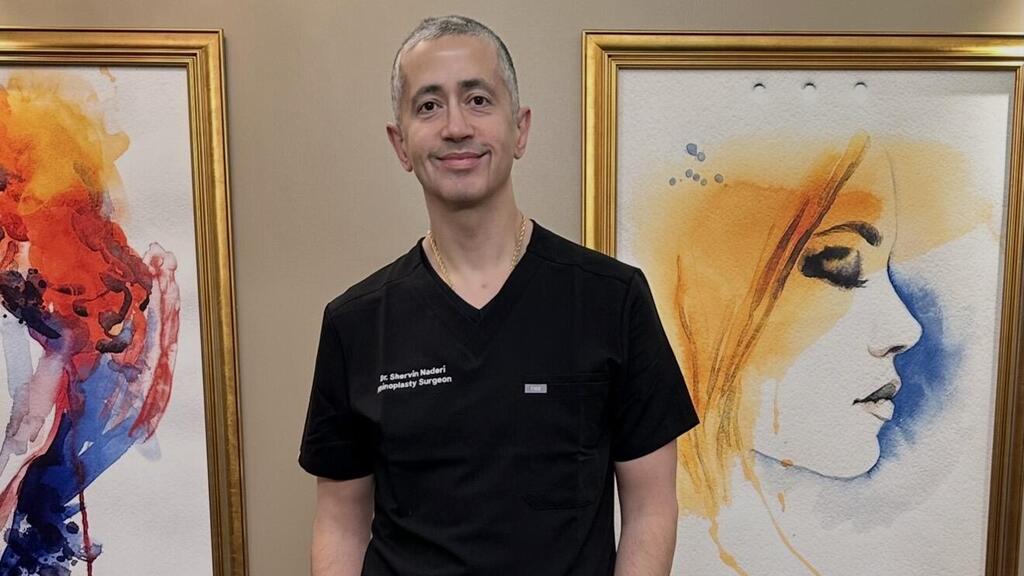
Iran’s beauty obsession
For many Israelis, it may come as a surprise, but Iran has long been considered one of the world’s capitals of plastic surgery.
Beneath the hijab and conservative laws lies a vibrant beauty culture in which cosmetic procedures, particularly nose jobs, are extremely common.
“When Iran was under the Shah, it attracted tourists from all over the world, long before Dubai and the Emirates,” Naderi said.
“At that time, it was considered one of the cosmetic surgery capitals along with Lebanon and Brazil.”
While countries such as Turkey and South Korea now dominate the field, plastic surgery remains highly popular in Iran.
Rhinoplasty in particular holds a unique place in Iranian culture.
“Nose surgery has always been the most popular cosmetic procedure in Iran,” Naderi said.
“Iranians have always seen themselves as Western-oriented and they try to balance their 2,500-year-old heritage with modern Western aesthetics.”
“For many, a small, cute or more Western-style nose compared with a traditional Middle Eastern nose was something people aspired to.”
The desire for change does not stop there, he said. Fuller lips, cat-shaped eyes, lifted eyebrows and lighter skin are also commonly sought features.
However, Naderi warns that the aesthetic medicine industry has become increasingly unregulated.
“In the last 15 years nurses, family doctors, pediatricians, chiropractors and others who are not plastic surgeons have entered the field,” he said.
Companies selling injectable materials such as Botox and fillers welcomed the influx of providers, which helped expand the market but also produced many negative outcomes now circulating on social media.
“When an industry grows without proper regulation, you inevitably see bad results,” he said.
Natural beauty versus extreme change
Over time, Naderi says he has learned to recognize two distinct types of patients within Persian culture.
Some want natural, subtle results. Others seek dramatic transformations.
“I refuse patients who want extreme changes,” he said. “Those kinds of results often lead to very unnatural faces.”
He sometimes compares such outcomes to the overly altered appearance associated with late pop star Michael Jackson.
His goal, he said, is to show patients that plastic surgery can be done tastefully and naturally, without visible signs of intervention.
The celebrity effect
Plastic surgery discussions often extend beyond the clinic to the entertainment world and social media.
Celebrities frequently face intense scrutiny over changes in their appearance. The latest example, he said, is actor Jim Carrey, who recently appeared at the Cesar Awards in Paris to receive a lifetime achievement award.
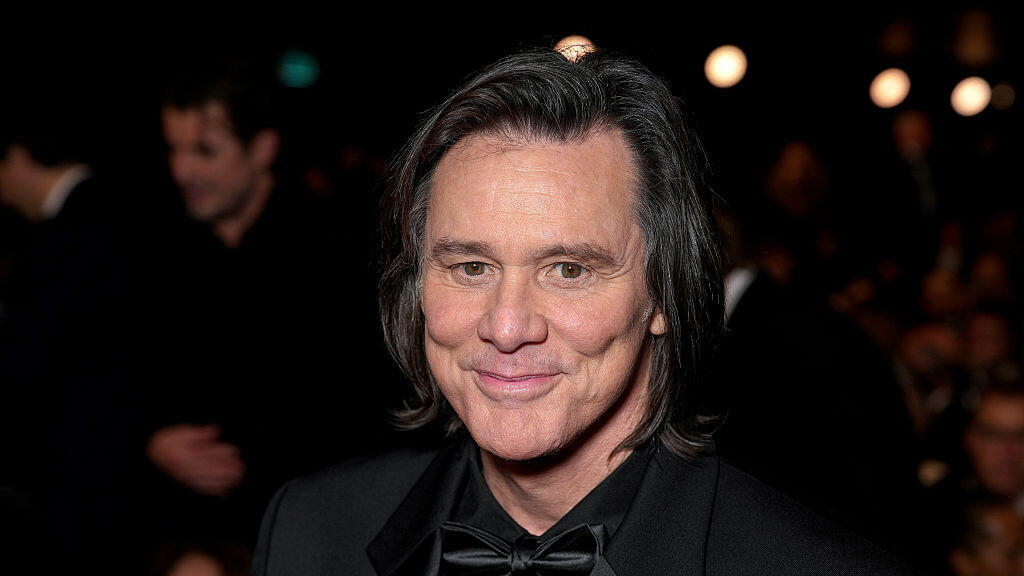
Jim Carrey
(Photo: Francois Durand/Getty Images)
Instead of discussing his career, social media users focused almost entirely on how his face looked.
“Celebrities like Jim Carrey are judged in ways the average patient never will be,” Naderi said.
“When regular patients have facial surgery done by the right surgeon, they simply look better. Friends and family often assume they rested more or lost weight.”
In Carrey’s case, he believes the result was not a failure but also not ideal.
“The new face of Jim Carrey is acceptable, but the problem with male facial surgery is that less is often more,” he said.
“When the face becomes too tight, especially around the eyes, it can look unnatural. Carrey is one of the most expressive people on earth. When you smooth the face too much, you erase that expressiveness.”
A hope for the future
Although he has never visited Israel, Naderi says he would like to.
“I’ve seen beautiful photos and heard wonderful things about Israel,” he said.
But travel has not been a major part of his life in recent decades. Since leaving Iran in 1984 he has never returned.
“I hope that one day the world and the region will be safer and more peaceful for all of us,” he said, “so we can visit places like Iran and Israel again.”