


At the beginning of next week, a retirement party will be held at the home of Shuki Madanes, founder and owner of Madanes Insurance Agency, for one of the company’s employees. One detail stands out: the employee is 95.
“He is the oldest of the company’s 400 employees, and he asked to retire after decades with us. Of course we approved it, and he will also receive an adjustment year,” Madanes said. “If an employee wants to continue working and is contributing to the company, why force him to retire? Just because of the arbitrary age set by law? I am 76 myself, still working and active as usual, with no intention of stopping.”
Gallery

Benjamin Netanyahu and Donald Trump: When is old too old to lead?
(Photo: AP Photo/Alex Brandon)
In Israel, the legal retirement age ranges from 62 to 65 for women and is 67 for men. Under Israeli law, 67 is also defined as the mandatory retirement age for both women and men, meaning an employer may require an employee to retire at that age. If the employee asks to continue working, the employer must examine the request individually. At the same time, eligibility for early retirement in Israel begins at 60, and even earlier in some companies and organizations.
About a month ago, it emerged that the Finance Ministry was examining a gradual increase of the retirement age to 70, and possibly the abolition of mandatory retirement altogether. The argument in favor is that a higher retirement age could benefit older adults physically, mentally and financially, increase monthly pension payments and raise productivity and growth across the economy.
The downside is the potential harm to older workers who feel worn out, as well as those who may struggle to find work. For comparison, the retirement age in Denmark is 70, in Italy and Estonia it is 71, and in Finland any worker may continue part-time at any age if they are healthy and want to keep working.
‘At 65, the employee should become a mentor’
The question of retirement age has gained force in recent years. Advances in technology and medicine have helped push average life expectancy beyond 80, while many older adults want to keep working, remain relevant and feel that their lives still have purpose.
To this should be added one of the most talked-about fields in medicine: longevity, or optimal healthy aging. At its core is the idea not only of extending life, but of extending the years lived with good quality of life.

Age is just a number?
(Photo:SAUL LOEB / AFP)
“In my opinion, it is right to keep someone who is about to retire in the system, if they want to, until age 70,” said Aviva Shemer, former vice president for marketing, communications and service at Tel Aviv’s Sourasky Medical Center. Shemer, who retired voluntarily about five years ago after 26 years in the role, was referring mainly to senior managers.
“In orderly public systems, they begin preparing the senior employee’s retirement file about a year before retirement, and at the same time look for a replacement,” she said. “What a serious system should do is extend the retirement age to 70, while from age 65 the senior employee becomes a mentor to the person who will replace them, even on a part-time basis.”
Shemer retired at 65. Asked how justified that decision was cognitively and emotionally, she said age does matter.
“There is importance to chronological age. I admit that. In the final year before retirement, I felt a little more tired, but it did not interfere with my daily functioning for a moment. I could have stayed until age 67 without any problem,” she said.
 Aviva Shemer, former vice president for marketing, communications and service at Tel Aviv’s Sourasky Medical Center
She said she had known doctors and nurses who functioned exceptionally well until retirement and could have continued working. Others, she noted, were sent into retirement earlier for medical and other reasons.
“In principle, there is an age and a moment when one has to say, ‘Enough,’ if one feels the fatigue and heaviness,” she said. “At the same time, I know quite a few doctors who continued working after retirement age as private physicians or in private systems, and they are still very busy today.”
‘The question of until what age one can work is outdated’
The labor market can be divided, somewhat artificially, into “simple” and “complex” professions in terms of the responsibility required of workers. The work of a production-line employee or a supermarket cashier, with every job deserving respect, is not the same as that of a doctor or judge, whose actions or decisions may affect human lives.
This is where the question of aging leaders also enters the discussion. U.S. President Donald Trump, who turned 80 this month, repeatedly claimed that his rival, former president Joe Biden, was too old, although Biden was only three years older than him. But Trump’s own physical and mental fitness has also been the subject of public scrutiny.
Despite a statement from his personal physician saying he was healthy and had the heart of a 65-year-old, questions have been raised over bruises seen on Trump’s hands, public moments in which he appeared to have difficulty hearing, and occasions when he was photographed with his eyes closed during public events.
When discussing presidents, it is also worth recalling the late Shimon Peres, who was elected Israel’s president at 84 and functioned without apparent difficulty until age 91. In the case of prime ministers, rumors about the health and physical fitness of Prime Minister Benjamin Netanyahu, 76, have persisted. Public questions remain about issues such as his treatment for prostate cancer and his overall fitness while he is also a defendant in criminal proceedings.
In Israel’s next election, voters are expected to weigh other candidates for prime minister, some of whom have also crossed retirement age, including Avigdor Liberman, 68, and Gadi Eisenkot, 67. Naftali Bennett, at 54, is the youngest among them. Nor can one ignore the fact that Rabbi Dov Lando, the 96-year-old leader of the Lithuanian ultra-Orthodox community, continues to influence political moves and public decisions.
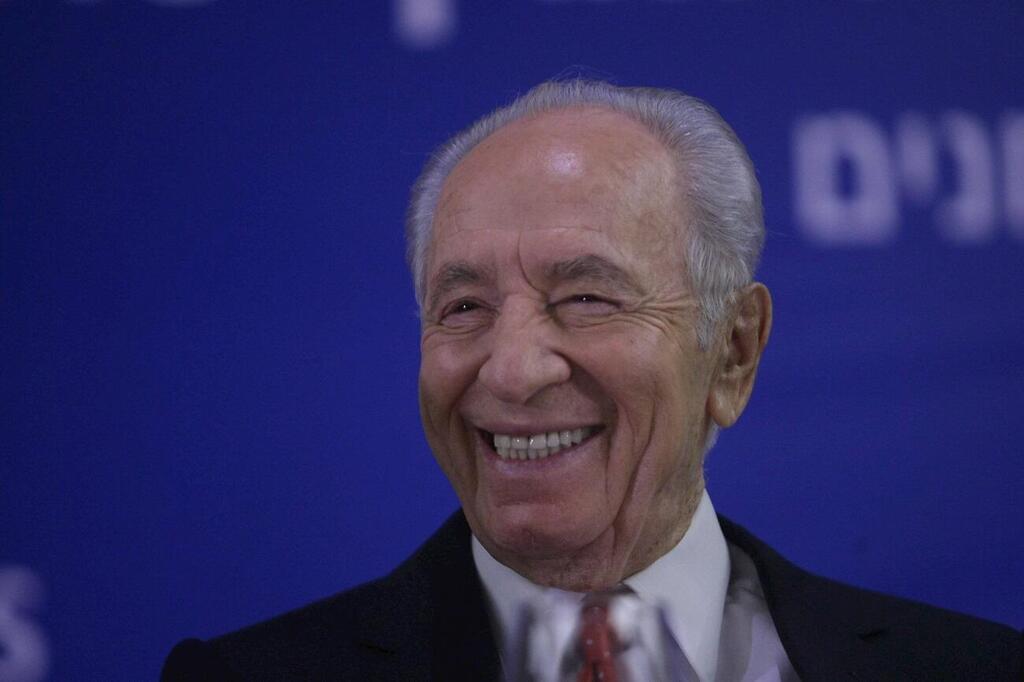
Shimon Peres. Elected president at 84
(Photo: Alex Kolomoisky)
“The story is not retirement age but a shift from thinking about chronological age to thinking about functional age,” said Dr. Nitzan Anu, director of longevity at Maccabi Healthcare Services and founder of Lonjourney. Anu turned to medical studies after already holding degrees in philosophy, economics and political science, after concluding that one of humanity’s most significant challenges is extending life expectancy while improving quality of life.
“The question of until what age one can continue working is outdated,” he said. “There is no single age at which a person becomes unfit, just as there is no single age at which everyone is healthy or sick. Retirement age is ultimately a legal and economic number, not a medical concept.
“What interests us as doctors is function: to see and understand how a person moves and sleeps, how they cope with stress or chronic illness, and whether the work they do suits their current abilities. There are 70-year-olds who can keep working, and there are those who cannot. The question is whether they can continue working and contributing without the work harming their health or the health of those around them, or harming the company they work for or the country they lead. That is why the future debate should revolve around functional fitness and employment flexibility.”
Asked what happens cognitively in old age, Anu said the answer is not uniform.
“In the end, the brain stops working at a certain age, but one must not generalize on this issue,” he said. “In older age, we often see a decline in reaction speed and working memory, but that decline also exists at age 40, so each case must be assessed individually. Alongside declines in those measures, there are qualities such as mature judgment, professional knowledge, proper perspective and the ability to understand complex things, which are well preserved in the human brain and constitute an advantage in older age.
 Dr. Nitzan AnavPhoto: Ofer Hajayov
“That is why it is wrong to ask in general whether a person is sharp or not. The right question is whether they are fit for a specific role, under a specific workload and in a specific work environment.”
Anu said he does not believe every older person who wants to work should undergo a fitness test merely because of age.
“There is a need to distinguish between ‘simple’ jobs and jobs involving responsibility and risk, such as security work, work with heavy machinery or public positions with exceptional responsibility,” he said. “There, there may be room for periodic fitness mechanisms, but not because of age. In the end, we also do not blindly trust a 40-year-old in a sensitive role. A young person can also be ill, unfocused, under too much stress or even using drugs, and be unsuitable for the job.
“The model should be based on tests that are not age-related, but on professional and functional fitness assessments for roles that involve genuine responsibility and risk.”
The financial consideration
Naama Henig, director of international relations at the Communications Ministry, continues working even though she could have retired under the law about two years ago. Henig holds a demanding position in terms of time and ability, and previously served as spokesperson for the Economy and Planning Ministry and chair of the Cable and Satellite Broadcasting Council.
“When I was asked whether I wanted to retire, because most people retire as soon as they can, I considered it and said no,” she said. “As someone who represents the state’s interests abroad, I meet many colleagues who continue working despite their advanced age. I have several colleagues, from Italy and Canada for example, who continue working as usual in their 80s.
 Naama Henig, director of international relations at the Communications MinistryPhoto: Arza Levana
“Age has meaning in terms of acquiring knowledge and experience over the years. In the organizations I work with, they value the knowledge, experience and abilities of older people who stay in the system even after age 70. My experience helps me represent Israel with uncompromising professionalism and the ability to build meaningful relationships for the state. I feel as sharp as ever. I do not feel any decline in my motivation or cognitive ability.”
She acknowledged that she gets more tired than in the past, but said it does not harm her work.
“Quite a few people younger than me would not keep up with my pace,” she said. “I feel that I have not even reached the peak of my abilities. I feel that I am still learning. I work around the clock.”
Henig said the decision also has an economic dimension.
“If I retired, I would live on 70% of my salary, which is the pension. So in effect, today I am working for the remaining 30%. As a woman who lives alone, I need that,” she said.
Asked whether she would work at the same pace if she were married, she said financial independence remains a value for her.
“Even if I were married today, I would continue working, but probably at a lower volume,” she said. “There is no doubt that as a breadwinner I think differently.”
Yehuda Leshman, 76, co-chairman of the infrastructure company Lesico, said people often ask why he keeps working.
“People say to me: ‘You have financial abundance, you reached the place you wanted, go enjoy life.’ I ask, what does it mean to enjoy life, lying on the beach? After a week I would go crazy,” he said. “‘Enjoying life’ for me means continuing to work and create new things.”
Leshman also serves as vice president of the Israel Builders Association, as a member of the executive committee of the Association for the Wellbeing of Israel’s Soldiers and on the board of trustees of Ruppin Academic Center.
“Quite a few roles, yes, but someone who is busy always finds time,” he said.
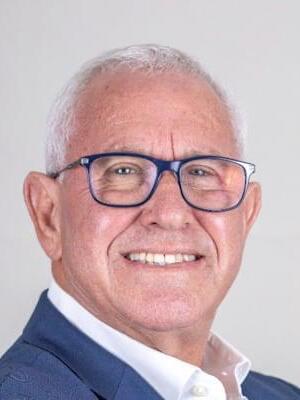 Yehuda LeshmanPhoto: Israel Builders Association
At 76, Leshman said, he sees himself as one of the most creative people in his 500-employee company and as someone who understands innovation processes. He was elected to his role at the Israel Builders Association at age 75.
“I devote a considerable part of my time to passing on the experience and insights I have gained at work to the younger generation,” he said. “It is part of the stage in life you reach when you no longer think only of yourself but also of others. It is a pity the state ignores the change that has taken place in the world when it comes to biological age.”
Asked whether he is as sharp as he was a decade ago, Leshman said he is attentive to his own warning signs.
“If one day I feel that I am becoming someone who lectures people and turns into a tedious old man, I will immediately hand over the keys,” he said. “I know many people who work after retirement age. At Lesico, the head of the tenders department has passed retirement age, and the human resources manager retired at 78. Older workers are also national resilience. It helps preserve the country’s intellectual capital, part of its ability to deal with the reality it faces.”
Iris Dagan, an organizational and career consultant who accompanies retirement and early-retirement processes, said the labor market has changed significantly.
“If the market was once ageist toward society, especially in high-tech, today there is recruitment of workers over 60, both in high-tech companies and in more formal companies such as the defense industry,” she said. “As someone who helps laid-off employees reach companies, and knows whether they sign or not, I see the number of people over 65 integrating into work growing. I also see retirees returning to the labor market after they have already retired. Even those who have no financial problem are looking for meaning and quality of life, and therefore usually seek part-time work.”
Dagan said the key question is whether the worker provides added value.
 Iris DaganPhoto: Maya Dror
“Those who succeed in giving added value to the organization will stay there regardless of age,” she said. “One of my close friends, who is 59 today, previously worked at Intel, joined a voluntary retirement process and retired at age 50. A few years later he returned to work. Now he works at Nvidia, and I have no doubt he will not retire even at 70. His father, who is now a little over 80, stopped working at 76. The desire of the new generation is to continue working at any age.”
Still, Dagan said, age is not the only reason some employees lose effectiveness.
“In the past, I ran workshops for people from the Civil Service Commission. In places like that, people fall asleep,” she said. “Employees who entered an organization at least 20 years ago, sat in the same chair or at most moved it one floor up and did not move, will fall asleep. That is burnout. Usually they are also the ones who will not want to hear about volunteering or social activity and will ask to rest.
“Once people used to say, ‘Don’t write the age,’ and today they write it, and there are employers who are looking for older ages.”