

The internet and social media can become devastating digital weapons. The case of Ronen Sheikh, a former Haifa municipal employee sentenced in April 2021 to 50 months in prison, remains one of Israel’s clearest examples.
Sheikh was convicted of running a network of Telegram groups and channels where tens of thousands of intimate photos and videos were distributed without consent, alongside the personal details of 187 women and girls. The court described the mass violation as unprecedented in scope, with the abusive content exposed to an audience of more than 100,000 users.
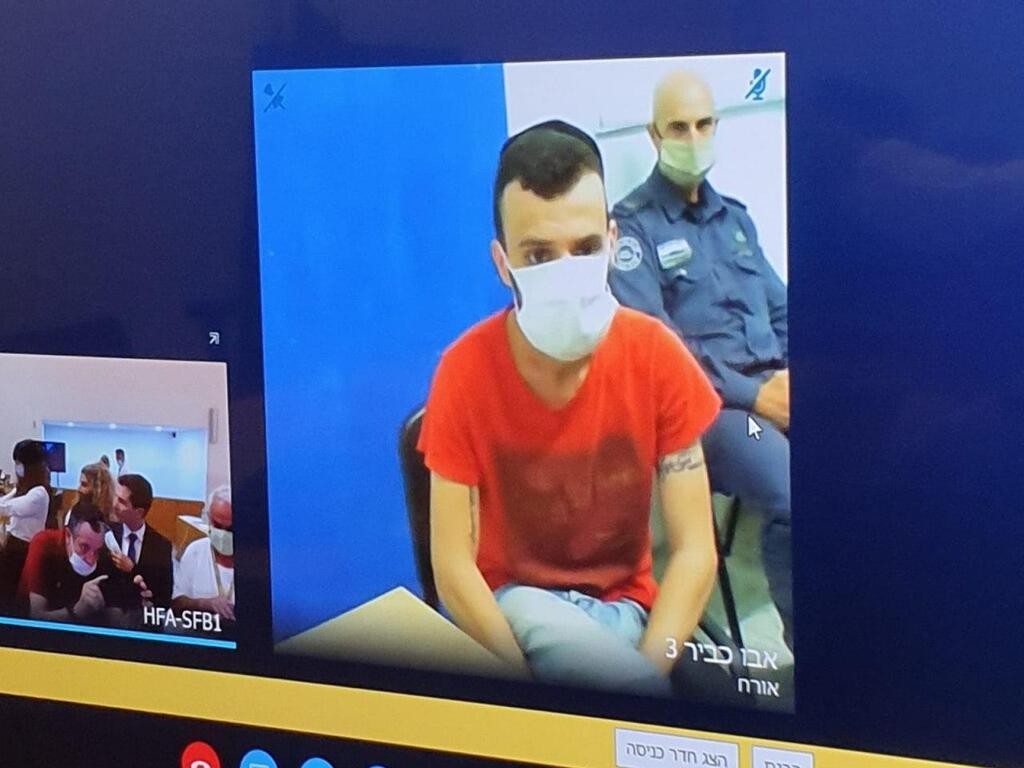
“It wasn’t the first major case we had handled, but from the moment we opened this file, it was clear it was the most significant,” says attorney Itai Gohar, a prosecutor in the State Attorney’s Office Cyber Department who led the case.
Gohar says the case was not only vast in scope but also changed how Israeli authorities handle the nonconsensual distribution of intimate content. “This case was a real turning point in the handling of offenses under the so-called video law,” he says. “Even today, we have not seen another case on this scale. It marked a watershed in enforcement and in the criminal treatment of this phenomenon.”
‘A new monster had grown’
The Sheikh case grew out of a separate investigation into administrators of Telegram groups that distributed intimate content. One of them, Oren Uziel, agreed to meet a victim at a café, unaware that she had coordinated the meeting with an Israeli investigative television program. When Uziel realized he was being filmed, he fled, was caught after a chase, and his phone was turned over to the police.
“We were told he had been caught almost by chance,” Att. Gohar recalls. “He did not see it coming, which meant he had no time to tamper with the evidence. After a deep forensic examination of his phone, investigators uncovered groups used by Telegram channel administrators. We found several of them working together to distribute sexual content, obtain new material and trade it, almost like playing cards.”
That image of intimate material being traded as cards runs through the entire case. Investigators found this was not a one-time leak, but a hidden economy built on demand, exchange, control and humiliation. “Send me that one, and I’ll send you this one,” Att. Gohar says, describing the pattern investigators uncovered. Women’s intimate photos and videos had become a form of currency among users and group administrators.
After Uziel’s arrest, investigators realized the problem was far bigger than one case. “By the time we finished his case, we understood we were dealing with a mega-event, much larger than anything we had seen at the start,” Att. Gohar says.
As investigators worked through the first suspects, prosecutors and police began tracking a much larger network of people distributing intimate content. But one key question remained unanswered: who was running it? Inside the group, users openly mocked police, claimed investigators had failed to catch the real distributors and acted as if they were untouchable.
“Suddenly, from one group with about 30,000 users, we uncovered nearly 20 more,” he says. “What began as several smaller groups had grown into a massive network with an enormous user base. We had entered a field that had been wide open and had never been handled systematically. Suddenly, a new monster had emerged, and we still did not know who was behind it.”
‘Bingo. He opened the phone’
At first, investigators assumed several administrators were involved. The covert investigation continued for several months and eventually led them to several suspects. One of them was initially identified as the central figure, but on the day of the arrest, investigators realized that the assessment was wrong.
“When they got to him, they understood he had no role in managing the groups,” Att. Gohar says. “In fact, Sheikh, who had initially appeared to be a marginal figure in the investigation, was the one who led investigators to believe that this other man was the central figure. That man did have a connection to Sheikh, but he had no connection to the publication of the victims’ content.”
Sheikh was arrested at the Haifa municipality before investigators understood the full extent of his involvement. “He was on a phone call with a resident, while also doing something on his mobile phone that appeared relevant to the case,” Gohar says. “Investigators seized the phone and then took him to his home for a search.”
There, Att. Gohar says investigators found a computer with a Telegram control panel, several mobile phones and a large number of SIM cards. They later uncovered dozens of social media and email accounts on his computer.
Investigators were struck by the gap between Sheikh’s appearance and the scale of the network he was accused of running. “He was the last person you would expect to be behind such aggressive, brazen groups,” Gohar says. “He was calm, not combative.”
But according to the indictment and sentencing, that image concealed a vast, carefully planned operation. Sheikh used untraceable SIM cards, digital currency and other tools to hide his activity.
At first, Sheikh denied any involvement. “He said he had no idea why we had come to him,” Att. Gohar says. “He claimed that if he were ever added to such a group, he would leave, and that the whole thing was a mistake. He played very innocent.”

The women were scorned, humiliated and objectified
(Photo: Billion Photos/shutterstock, DenPhotos/shutterstock)
The main obstacle was Sheikh’s phone, which investigators believed had been used to manage the network. Unable to access it, one police investigator built a password-guessing strategy, compiling possible combinations and entering them one by one. After four or five days in custody, the breakthrough came.
“Bingo, he opened the phone,” Att. Gohar says. “And that was the main phone through which we could reach and control all the groups.”
The unlocked phone revealed the scale of Sheikh’s role. “Until then, we feared we would not be able to attribute the full operation to him, and would have to tie him to an unidentified partner,” Gohar says.
The breakthrough also allowed authorities to address the ongoing harm: even after Sheikh’s arrest, the intimate content remained accessible in the groups. With approval from the State Attorney’s Office, police deleted the material, shut down the groups and seized the evidence.
The video was distributed on her wedding day
The distribution was vast. Although the indictment and sentencing referred to more than 100,000 users, Gohar says the groups were effectively open to anyone who wanted to view the content. “The distribution was insane,” he says. “Every victim in the Sheikh case says this was the most significant wave of harassment she experienced.”
Att. Gohar stresses that the harm was driven not only by Sheikh but by the audience he served. “Yes, Ronen distributed it, but there was demand,” he says. “Many people did not just watch the content. They registered and followed his groups.”
For the victims, the abuse did not end with the initial publication. It continued through messages, harassment and the knowledge that strangers had seen, saved and shared their most intimate images.
Haifa Magistrate’s Court Judge Shlomo Benjo described the harm in especially severe terms. “There was no prior relationship between the defendant and the victims, and he neither sought nor received their consent, explicitly or implicitly,” the judge wrote in the sentencing. “He showed complete indifference to the harm these women would suffer and treated them as sexual objects for his own purposes.”
Benjo said Sheikh’s actions caused “enormous harm” that words could scarcely capture, exposing the women in the crowded “virtual town square” of social media before more than 100,000 users. “They were scorned, humiliated and objectified,” he wrote. “Their personal details were published online. Their dignity as women and as human beings was crushed.”
One victim, according to the sentencing, struggled so deeply after the distribution that she underwent plastic surgery to alter her facial features so she would not be recognized in public.
Att. Gohar still remembers the case. “She could not bear seeing herself as the person whose image had been distributed,” he says. “It was a major operation with a long recovery, but she was willing to go through it so people would not recognize her afterward.”
Another victim, he says, discovered that her content was distributed on her wedding day. “Messages were sent to her family members,” he says.
A different victim, he says, was seen in an intimate video filmed before her marriage but distributed after she had already married and had children. “Her relationship did not survive the upheaval caused by the distribution, and she divorced,” he says. Other victims developed severe anxiety, he says, including obsessive pulling of eyebrows and hair.
The women harmed by the case preferred to leave it behind and not be interviewed. But one of them agreed to speak years after Sheikh was sent to prison.
“Since the photos were distributed, I felt I had no control over my life,” she says. “Every time I leave the house, I’m afraid someone will recognize me. On every date I go on, I fear he has seen the pictures. I don’t know who saw them, who saved them and who will send them again. I lost trust in people, distanced myself from social media, and every new message on my phone can take me back to the moment everything collapsed.”

A Telegram group previously seized by police
(Photo: Israel Police)
Att. Gohar says the public often struggles to grasp the lasting damage caused by the online distribution of intimate content. “Every victim is an entire world, and each is harmed differently,” he says. “One may withdraw or disappear, another may fight back, file civil proceedings and demand her rights. Each has a different response.”
In the Sheikh case, many victims submitted affidavits describing the harm in their own words, which Gohar says had a major impact on the court. The sentencing stressed that the damage was not a one-time injury, citing mental distress, social isolation, loss of trust and other lasting effects.
Judge Benjo wrote that the “shame, insult and profound humiliation” caused by the widespread publication could not be measured.
The defense claim that enraged prosecutors
One of the defense’s most controversial arguments was that the victims bore “contributory fault” because the images had been taken or shared privately in the first place.
Gohar says he did not relay everything said in court to the victims. “Many of them already carry shame for trusting someone they later realized they should not have trusted,” he says. “Voices that blame them, or suggest that consent to one person means consent to everyone, have no place. There is no contributory fault in criminal law, and morally, it is a shame the argument was raised.”
He adds that Sheikh never sought the women’s consent or created a way to remove the content. Instead, he hid behind bots, control panels and other technological tools “because he knew he was doing something illegal.”
The court rejected the defense’s claim, ruling that the women’s decision to photograph themselves did not lessen the severity of Sheikh’s actions. They were, the sentencing said, “the victims, not the victimizers.”
The precedent and the message to distributors
The case also set a precedent on detention. At the time, Gohar says, it was not clear that offenses under the video law justified holding a suspect until the end of proceedings.
“With Ronen, that was central,” he says. “We sought detention because of the risk that he would redistribute the content online. Given his dangerousness and technological abilities, he could not be effectively supervised.”
After the Magistrate’s Court ordered Sheikh released to an alternative detention arrangement, prosecutors appealed, and the Haifa District Court accepted their position. Gohar describes the ruling as the first to reshape how courts viewed dangerousness in such cases.
Prosecutors later sought a six-year prison sentence, compensation for the victims and a fine. Sheikh was sentenced to 50 months in prison and has since been released. Gohar says prosecutors did not appeal because, at the time, it was the harshest sentence imposed for this type of offense and marked a precedential step in gradually increasing punishment.
Gohar says the case mattered beyond the length of the prison sentence. “In 2019, there were not enough reasoned decisions to guide us on key questions: what counts as identification, what qualifies as sexual content, what is consent and what is not,” he says. “To give real force to a criminal prohibition, you also need to shape its legal interpretation. That was what mattered to us.”
Today, he says, that foundation is in place. “We are no longer in a field where the rules of the battlefield are unclear,” he says. “The Ronen Sheikh case created the legal infrastructure and reasoning. Since then, we have gained many tools, and today we can deal with the phenomenon much better.”
Despite the professional achievement, Gohar is careful not to sound overly optimistic. Even when a perpetrator is imprisoned, he says, the content can still resurface.
“Those are the hardest conversations,” he says. “To tell a victim that justice was done, but that she will still have to live with the consequences. To explain that there may be more waves of distribution, some small, some large, and that she cannot expect it to stop completely, because stopping it is extremely difficult.”
Still, he says, there are moments of hope: victims who, years later, can say the case is behind them and that the publication no longer controls their lives. “That is amazing,” he says. “Because that is the goal: to restore their trust and allow them to return to normal life.”
His message is clear: distributors can be found, and the punishment is serious. But he also addresses the audience.
“To consumers: do not create demand for this content,” he says. “To distributors: the punishment is severe, and we do not compromise on this offense. And to women and girls: be careful before sending intimate content, even to people you trust, because things can change in the future.”