

The Swords of Iron war has produced countless stories of heroism. But inside homes, far from the headlines, a quieter and more corrosive drama has often unfolded. Many women who waited months for their partners to return from hundreds of days of reserve duty discovered that the man who came back was not the one who had left.
Inside a phone, in deleted messages or late-night calls, a painful truth was hidden: betrayal.

“He told me there were parts of his life I didn’t know,” says Dalit, a graphic designer and mother of three who waited nearly a year for her husband, a reserve officer. “I felt him pulling away, but I lied to myself and blamed the operational pressure.
“When he came home for a weekend, I caught him texting at three in the morning. When I confronted him, he didn’t cry. He just said, coldly: ‘A lot of things happened to me there that you will never understand, and I have a whole life you are not part of.’ Suddenly I remembered how, during his reserve service, he insisted on getting tested for sexually transmitted diseases. Today I understand how naive I was. The trust shattered into pieces.”
Detachment, splitting and dissociation
Renowned couples therapist Esther Perel defines an extramarital affair through three parameters: secrecy, emotional connection and sexual chemistry. Infidelity is not only physical contact. It can take the form of flirting on apps, deep emotional intimacy with another person, erotic chats, paid sex or a stormy, passion-filled affair. In the digital age, infidelity is “death by a thousand cuts.” Everything is documented, and each small revelation crushes the soul anew.

Esther Perel
(Photo: AFP)
Noa, a religious lawyer married for eight years, illustrates the complex link between trauma and infidelity.
“My husband came back after months of intense service. Suddenly he started going out to bars and parties until dawn, something he had never done as part of our lifestyle. When I asked what he was looking for, he admitted he felt ‘dead inside’ and needed external stimulation to feel alive. He said it wasn’t a betrayal of our values, but a desperate attempt not to sink into the depression of the war.”
To understand how a normative, loving and devoted man betrays the most basic trust, one must look deep into the psyche of a reservist. During prolonged service, whether under fire at the front or in intelligence and identification units, the psyche cannot remain open and exposed. It must activate three survival defense mechanisms: detachment, splitting and dissociation.
Under exposure to horror, difficult sights or constant danger, these mechanisms are not merely useful. They are essential for mental health and functioning. Dissociation is a kind of psychological circuit breaker, allowing a person to disconnect from overwhelming emotions such as fear, shock or compassion in real time.
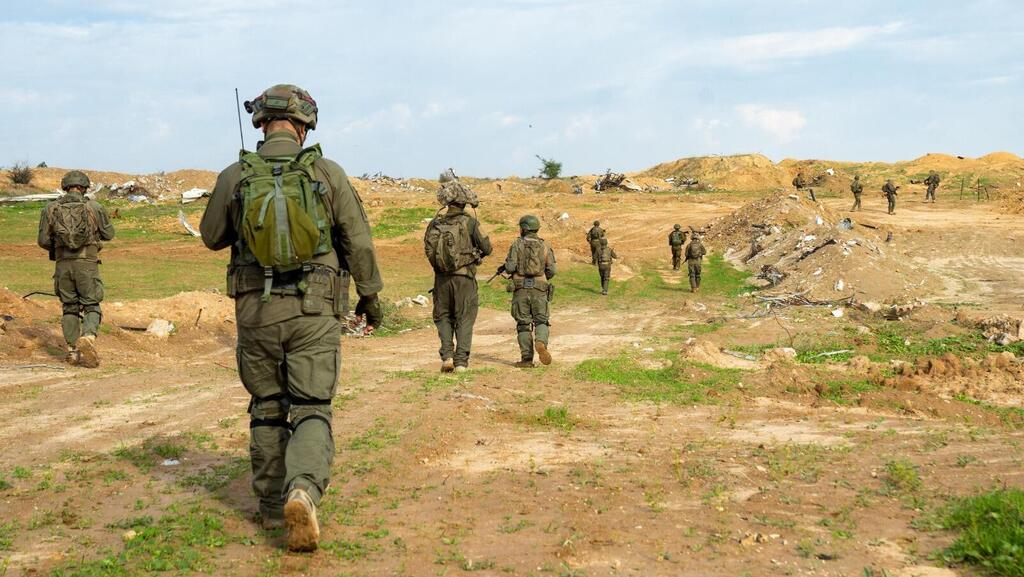
(Photo: IDF)
Moral values and empathy toward one’s partner are perceived as belonging to “another planet,” to the distant home. In this state, infidelity is not experienced in the man’s psyche as a crime, but as an activity taking place inside a disconnected “reserve duty bubble,” one that has no connection to domestic reality.
Emotional detachment allows him to view graphic destruction, handle the identification of bodies or witness death without collapsing. Splitting creates a rigid internal separation. He locks away the “home self,” the soft, loving husband and father, in a sealed box, and sends into service the “operational self,” a cold, alert and goal-focused man.
Sometimes, at the core of the affair is a desire to protect the partner from the violent and brutal parts exposed within him, parts he redirects toward another woman.
In service, splitting is a sign of resilience. It is a normal response to an abnormal situation. It enables survival and continued functioning. The serious problem begins when these mechanisms spill into civilian and marital life. When the reservist cannot “switch off” the detachment upon returning home, he remains trapped in dissociation. The same splitting that saved him in uniform becomes a wall at home, preventing him from feeling the depth of the harm he causes.
We all wish to leave the images of war behind, deep in the combat zones, along with encounters with death, violence, boundary-crossing and moral questions. In reality, these experiences continue to live inside the returning soldier, in the basements and corridors of the psyche, often beyond conscious awareness.
Infidelity as a desperate grasp at life in the face of death
Despite the piercing pain, it is important to understand these psychological roots. Infidelity during reserve service is often a distorted expression of profound loss. For a reservist exposed daily to destruction, death, injuries, bodies or disturbing intelligence material, war becomes a reality of ongoing annihilation. Within this hell, infidelity sometimes becomes a desperate, harmful attempt to feel alive again.
A combat soldier prepares mentally for the possibility of killing or being killed. That encounter can have devastating psychological consequences. As one man told us: “You have to understand, in those situations emotion is the most dangerous thing. You can’t enter a terrorist house you may have to clear with an open heart.”
The problem is that even after leaving, the open heart still feels dangerous. Sometimes the feeling is that acknowledging what one has done or seen would make life impossible. The result is emotional numbness and inner death.

Shulamit Sheferber
(Photo: Elad Lifshitz)
Perel notes that death and mortality often lurk in the shadow of infidelity. Loss and grief provoke existential questions such as: “Is this all life has to offer?” In this sense, infidelity is not a search for new love, but a psychological attempt to defeat and silence loss. War is the angel of death, and the affair becomes a temporary anti-anxiety drug. It is not romantic, but a trauma-driven response.
When people seek themselves in the gaze of a stranger, they are trying to escape the person they became in uniform, someone who has seen death and destruction. Secrecy and desire create an illusion of intense vitality, an internal rebellion against the knowledge that life can end or collapse at any moment.
Alongside these dynamics, there are also concrete contexts. Relationships form among those serving together, especially during long, tense hours between operations. Shared understanding can become a gateway to intimacy.
'He lived a parallel life in uniform'
For Yael, the discovery was shattering.
“My husband works in high tech. He’s the most stable person I know. Still, I found out that during reserve duty he had a second phone. While I was juggling work and kids under existential anxiety, he built an entire world of relationships with women he met on base or on apps. He even volunteered to stay over weekends just to continue them. When he was caught, he said he simply didn’t know how to go back to being ‘the husband at home,’ and detachment was easier than facing it.”
In many cases, infidelity during reserve duty does not stand alone. It is woven into untreated post-traumatic experience. When a reservist suffers trauma symptoms, detachment and splitting become chronic survival strategies that block renewed intimacy.
Rebuilding trust often requires a dual path: individual therapy to process war experiences, and couples therapy to bridge the broken languages and reconnect the operational language to the language of partnership.
It is crucial to say this clearly: understanding that infidelity grew out of trauma does not absolve responsibility. But it allows both partners to recognize the shared “enemy” that entered their home and, if they choose repair, to face it together.
The path back to healing and hope
Discovering that the person closest to you betrayed your trust is a moment when the ground collapses beneath your feet. The instinctive response is often to flee the pain and the person who caused it. Yet it is important to know: these fractures do not have to be the end.
Give yourself permission to breathe. In the moment of discovery, the heart pushes for irreversible decisions. The most important advice is to wait. Separation will still be an option later. Do not make life-altering choices in the storm. Give yourself time to regulate emotions and understand that what happened was not your fault.
On the other side, the betraying partner must understand that the mechanisms that served him in service became destructive at home. His responsibility is not only to express remorse, but to be present with your pain, take responsibility, listen without defensiveness and prove through actions that he chooses you again.
Real healing does not come from technical details, but from asking deeper questions: “What did you lose there that you sought outside?” “How can we create a space where you don’t need to disconnect?” “How can I trust you again?”
Infidelity during reserve duty is a deep wound, made sharper by the loneliness at home. Some find it unforgivable, and separation follows. Yet many couples not only survive such crises, but grow from them. The marriage you had before the war may have ended on the day of discovery. Now you are offered the chance to build a new chapter together, one based on awareness, radical honesty and renewed choice.
There is a way back. It requires time, hard work and professional guidance, but it can lead to a place where love is not taken for granted, but fought for and reclaimed.