

Even veterans of Israel’s intellectual property enforcement community, people who have seen almost everything in the Sisyphean war on counterfeits, were stunned two months ago.
Acting on intelligence, large police and military forces raided a three-story building in Hebron and uncovered a vast cache of counterfeit goods: hundreds of pairs of fake shoes at various stages of production, packed showrooms and nonstop assembly lines churning out sneakers branded Adidas, Nike, Under Armour, Puma and Reebok.
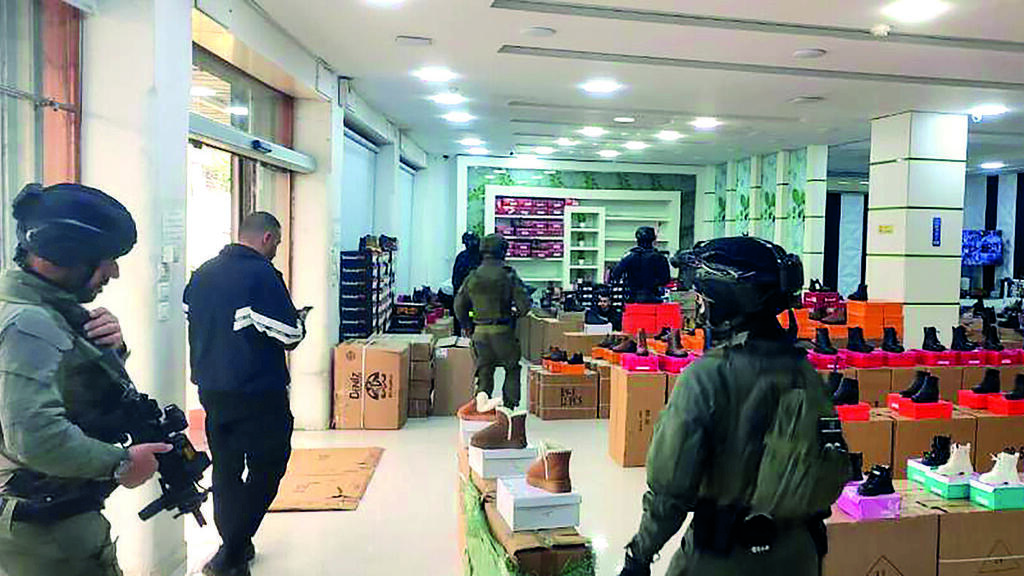
Thousands of shoes produced at the factory were smuggled into Israel every month as part of an annual sales cycle estimated in the millions of shekels. And this, officials stress, was far from an isolated or exceptional case.
Security officials warn that a significant portion of the profits from the flourishing counterfeit industry in the territories flows directly to organized crime and terrorist organizations. Hebron has long since become the capital of fake footwear.
“In the past two years, we’ve seen a dramatic surge in both the volume and variety of counterfeits,” said Yigal Wein, CEO of the Federation Against Copyright Theft. “For Palestinian Authority residents, working in Israel has become extremely difficult, sometimes impossible. So they sit at home and manufacture counterfeits. The goods are pushed into the Israeli market through legal crossings.”
While shoe production is largely local, the textile sector operates with far greater sophistication. Mati Pollak, CEO of Polymod 1994 and importer of the Diesel brand, describes a modular system of disassembly and reassembly.
“The jeans mostly arrive from China completely unbranded,” he said. “Sometimes the importer is a small grocery store owner with no connection to fashion. The main destinations are cities like Nablus, Hebron or Bethlehem, where enforcement access is extremely difficult. Even if the importer is caught, it’s hard to prove a connection to counterfeit goods.”
Authorities have seized large shipments of accessories — buttons, rivets and labels — arriving separately, later attached to turn otherwise generic pants into fake designer jeans.
A criminal economy worth billions
The scale of the phenomenon is staggering. This is a parallel criminal economy generating billions of shekels annually, strengthening criminal networks, financing terror organizations and inflicting massive economic damage.
In 2020, the state comptroller estimated tax revenue losses at 1.7 billion shekels annually. Today, Wein estimates losses approaching 4 billion shekels a year.
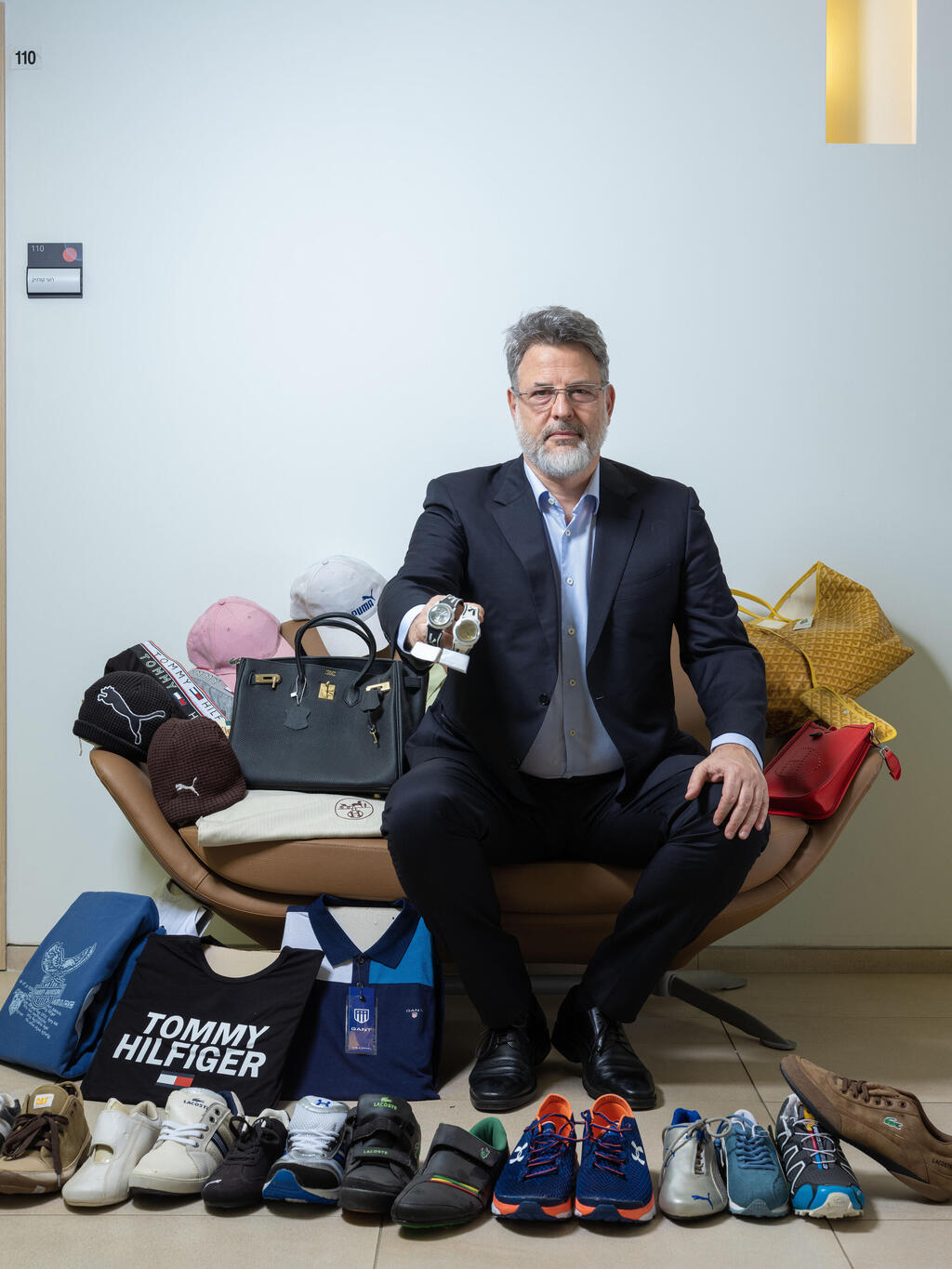
Attorney Roi Kornick
(Photo: Yuval Chen)
“It’s impossible to assess the full scope of counterfeit trade in Israel,” said attorney Roi Kornick, head of enforcement and counterfeit detection at Reinhold Cohn Group, who has fought counterfeiting for two decades. “What gets seized represents maybe 10% to 20% of what’s actually circulating.”
The brand list is extensive and upscale: Hermes, Lacoste, Under Armour, Tommy Hilfiger, Puma, Gant, MAC, Estee Lauder and more.
AI and the ease of forgery
Technology is accelerating the problem. Artificial intelligence enables near-perfect copying of designs, while rising living costs push consumers toward shortcuts and erode moral barriers. Counterfeiting offers profit margins of 70% to 80% with minimal legal risk.
“During COVID, everything shut down, people sat online and realized how easy it was to make money,” Wein said.
“People hear ‘counterfeit goods’ and think luxury cosmetics or clothing,” said attorney Ariel Dubinsky, an intellectual property expert who represents, among others, the popular car air freshener brand X. “But that’s not the whole picture.”
In the past year alone, tens of thousands of fake air fresheners from China were seized. “They sell for five shekels. The counterfeiter invested 10 agorot and cashed in,” Dubinsky said.
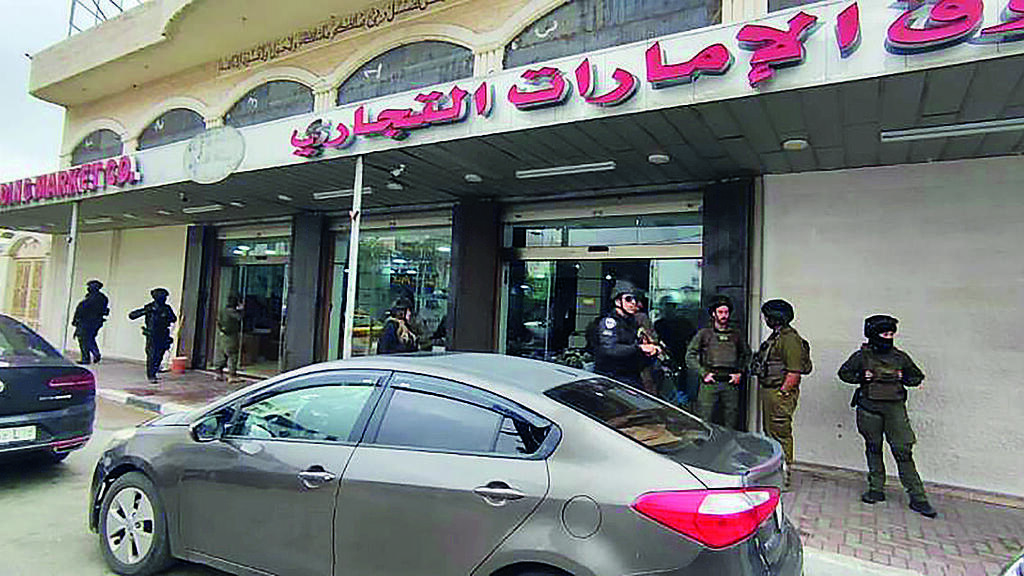
Security forces raid the compound
Yoav Keren, founder and CEO of BrandShield, which monitors online fraud, reports sharp growth in counterfeit pharmaceuticals, cosmetics, supplements and even airline tickets.
“These are global networks operating pop-up online stores that vanish within days or weeks,” he said. “AI makes it easy to generate multilingual content, images and videos that look authentic at almost no cost.”
Cigarettes, candy and cannabis
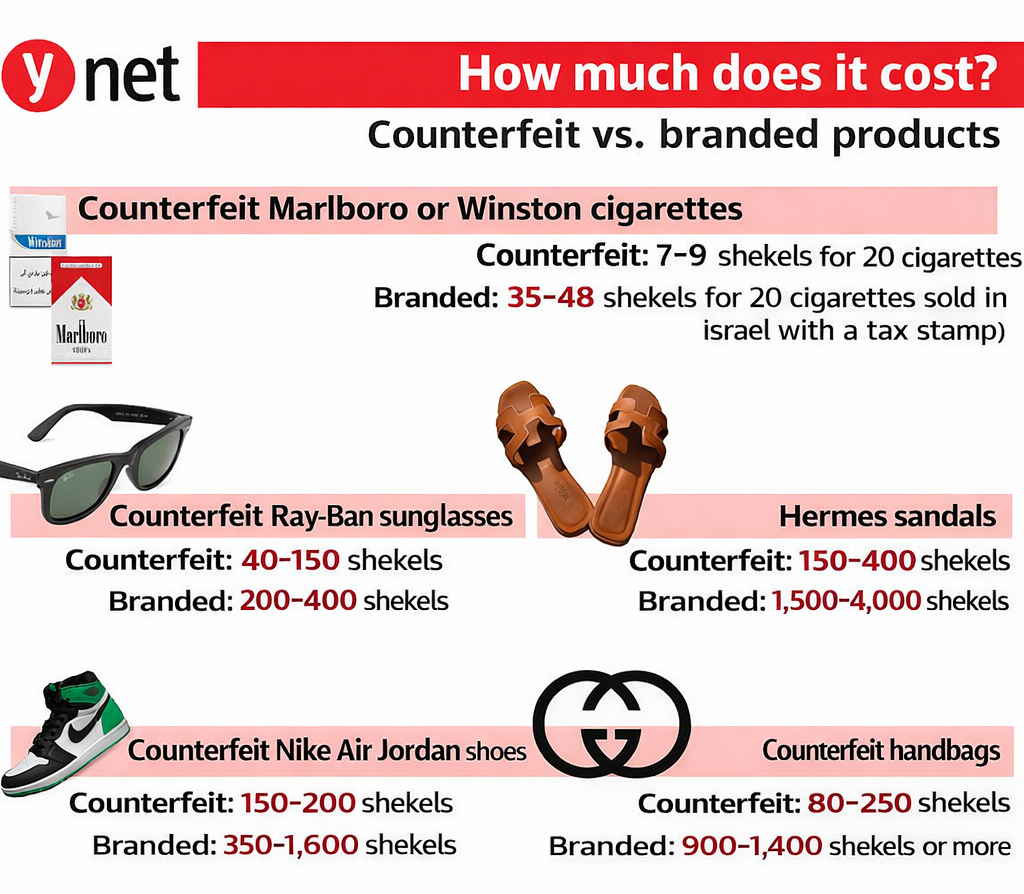
Counterfeit cigarettes now make up roughly half of illegal cigarettes entering Israel, Wein said, a dramatic shift since the outbreak of the war.
“No brand is spared,” he said, including Capital cigarettes, a Palestinian brand owned by the sons of Mahmoud Abbas that should not be sold in Israel.
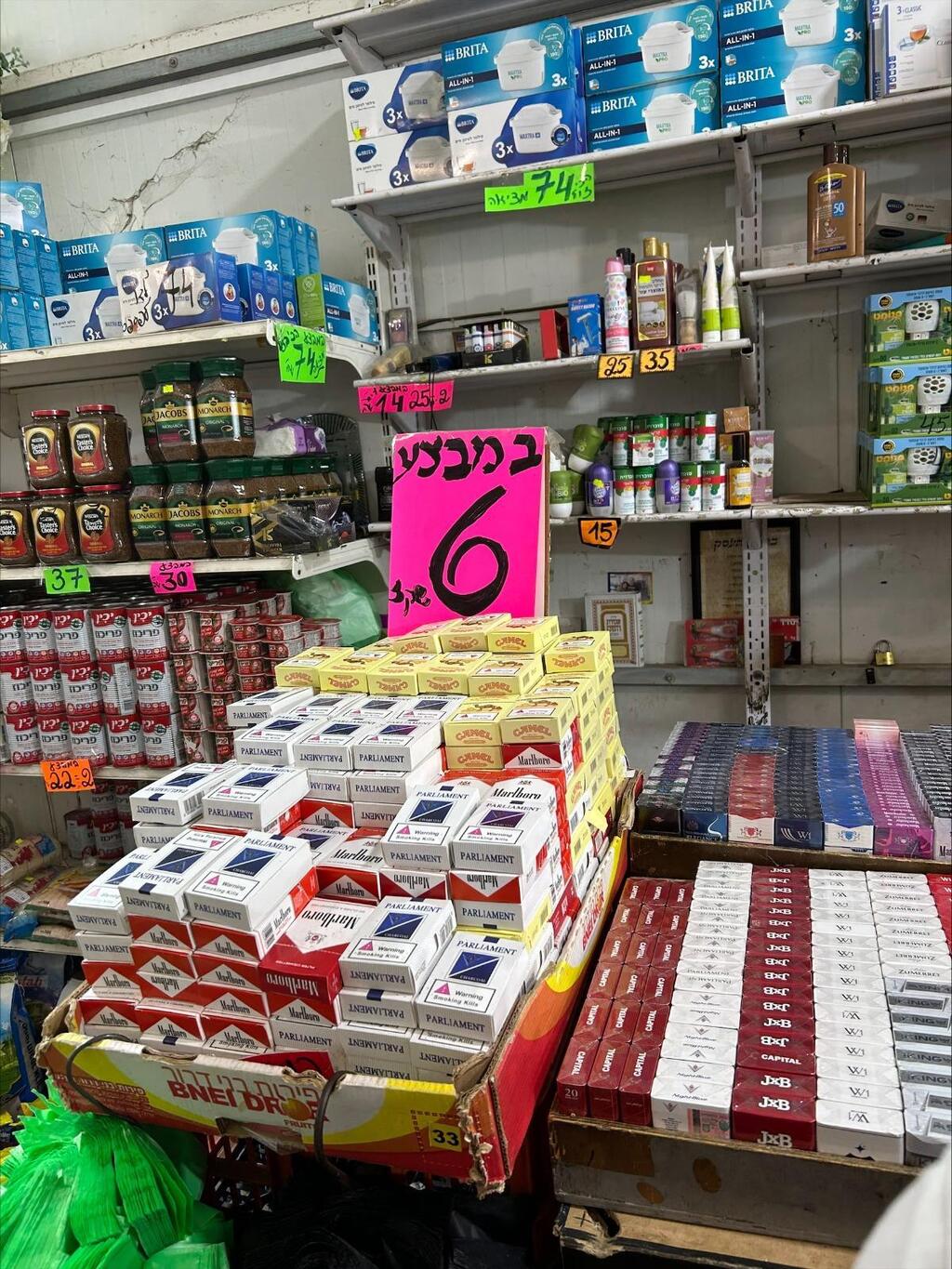
Counterfeit cigarettes
Keren also uncovered fake gummy candies infused with marijuana, sold under the branding of Ferrero, one of the world’s best-known confectionery companies. It remains unclear whether the cannabis-laced candy reached Israeli stores.
Customs authorities recently intercepted shipments of fake Kinder chocolate eggs and destroyed them.
Last week, Kornick received notice that a man was detained at the Allenby Bridge crossing with 1,000 Hermes labels in his suitcase, likely intended to complete the production of fake Hermes slides — now one of the most counterfeited fashion items in Israel.
Generation Z and the normalization of fakes
Counterfeiting is increasingly normalized among consumers, especially young people.
Academic research shows that people seeking social approval are more likely to buy counterfeits to project status at low cost. Surveys in the U.S. and Europe indicate that more than half of Generation Z views buying fakes as “morally acceptable” if “everyone does it.”
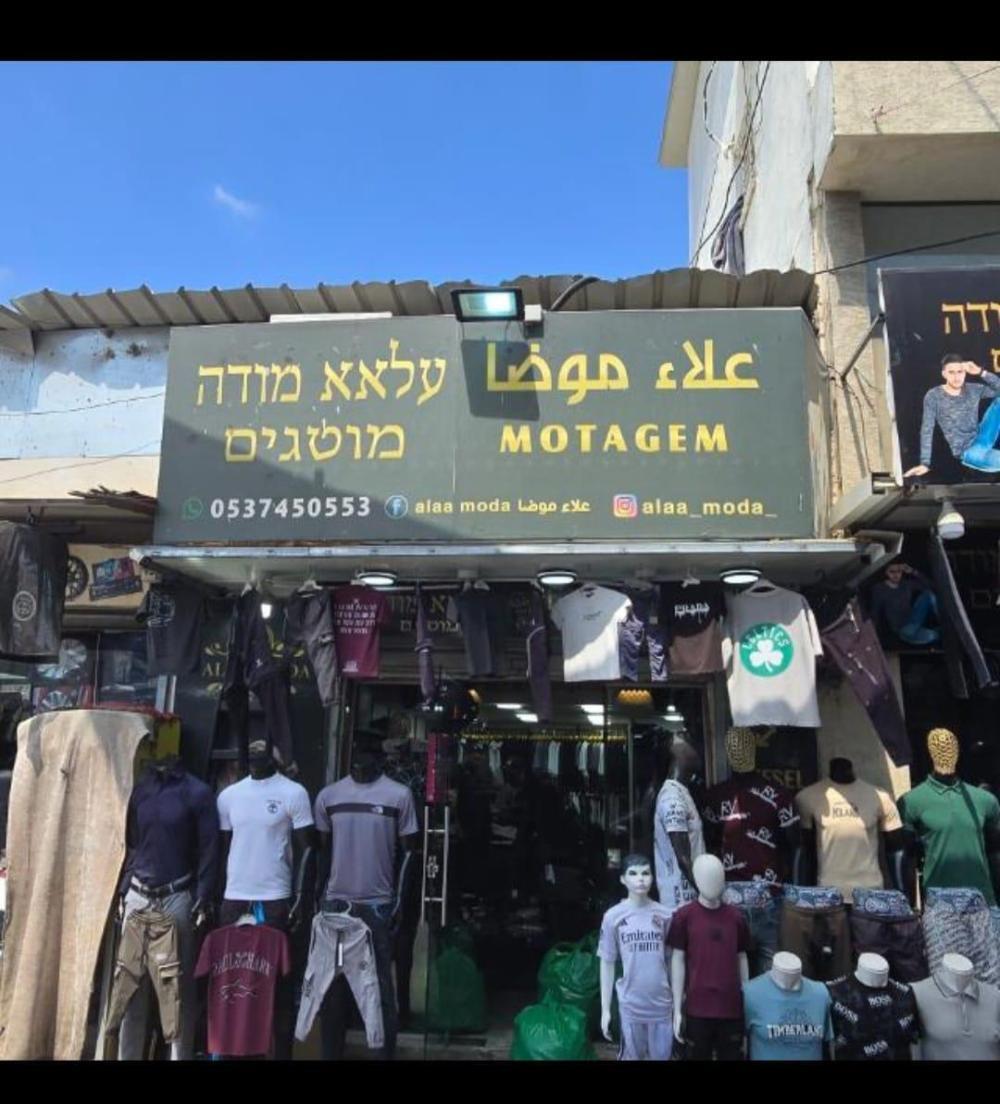
A clothing store in Barta’a
A 2022 European study found that 34% of people aged 15 to 24 purchased at least one counterfeit item that year, up from 14% in 2019, a surge attributed to TikTok and Instagram.
“People tell me, ‘I don’t care if it’s fake — I want it to look like the brand and cost less,’” Keren said.
Consumption itself is not illegal in Israel, only selling and distributing. “But everyone pays the price — retailers, consumers, manufacturers and the state,” Wein said.
Health risks and influencer marketing
Beyond economics, counterfeits pose serious health and safety risks: car parts, motor oil, pharmaceuticals, baby products, alcohol, cosmetics and sunglasses.
“Dark lenses without UV protection are dangerous,” said Elroi Turgeman, CEO of Opticana Group. “They dilate the pupil and let more harmful radiation into the eye.”
Luxury eyewear brands like Cartier are frequently counterfeited and sold through influencers, sometimes unknowingly to consumers.
Globally, brands have sued influencers for promoting fake goods. In Israel, most cases end quietly with content removal or settlements, without public rulings.
Weak enforcement
The Palestinian Authority remains a major production and distribution hub, with virtually no oversight of manufacturing in the West Bank.
China supplies raw materials, while platforms such as AliExpress, Redbubble, Walmart, Shopee and eBay are major online counterfeit channels.
Enforcement in Israel is fragmented across seven agencies. Intellectual property police units are understaffed and overwhelmed, prosecutors rarely pursue indictments, and consumer education is minimal.
Meanwhile, criminal and terror organizations continue to reap enormous profits.
“This isn’t a victimless crime,” Kornick said. “It’s a system that harms everyone — and funds some of the most dangerous actors in the region.”