


The history of sperm donation began long before modern fertility clinics, with a practice first developed in animals and later adapted to humans.
“Like many things, it started with animals,” says Dr. Eran Gold, a gynecologist and fertility specialist. “Doctors copied the insemination methods humans were already using with animals, mostly cattle. Insemination was actually born out of the desire to improve genes. If you had a cow and wanted to increase her milk production, you would inseminate her with the highest-quality bull.” From cattle, the practice spread to other animals, including horses. “Slowly, people said, okay, if this works in animals, why shouldn’t it work in humans?” Gold says.
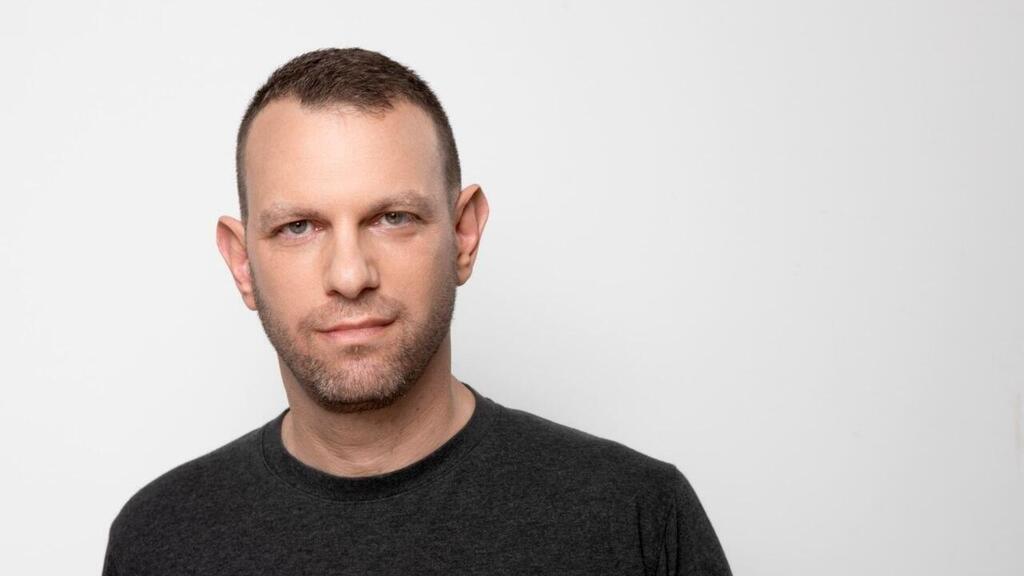
Gold returned to the “Sex Appeal” podcast to discuss some of the world’s most notorious sperm donors, the risks created by unregulated donation and how Israeli authorities are trying to bring order to what was long a medical and ethical gray area.
One of the earliest stories associated with artificial insemination dates back to the 15th century and Henry IV of Castile, who was nicknamed “the Impotent” because he struggled for 13 years to get his wife pregnant and produce an heir. According to legend, she eventually did become pregnant, but gave birth to a daughter who did not resemble him, fueling rumors that a doctor had used another man’s sperm.
Another early case involved Scottish surgeon John Hunter, who in the 18th century is believed to have carried out one of the first successful artificial inseminations known to medicine. He reportedly advised a London cloth merchant to collect his semen in a warmed syringe and inject it into his wife’s vagina, leading to a successful pregnancy.
Gold says it is important to understand the secrecy and shame that surrounded the practice at the time.
“Even today, a man dealing with fertility problems has to cope with a blow to his sense of masculinity,” he says. “Just imagine how men who faced those difficulties in previous centuries were viewed. It’s no wonder they had to hide the procedure and do it without the woman’s knowledge.”
The Catholic Church, he adds, strongly opposed artificial insemination, viewing it as an act that undermined the foundations of the family. By the early 20th century, doctors were using artificial insemination in a more organized and legal way. Couples knew what procedure they were undergoing, but medicine was still highly paternalistic.
“The doctor decided for the couple who their donor would be,” Gold says. “You would arrive with your partner and the doctor would say, ‘I have a sperm donor for you.’ They took donations from students and soldiers, based on appearance, education and character, and the donation was completely anonymous. There was no real option to choose the donor, and of course there were no limits. One donor could donate to hundreds of women.”
At the time, sperm could not yet be frozen, meaning the donation had to be used immediately. Conditions were not always sterile, and the screening for sexually transmitted diseases that exists today was not in place.
The major change began in the 1960s and continued through the 1980s, when sperm freezing became possible. That development helped create a commercial sperm bank industry, turning fertility treatment into a lucrative market for couples struggling to conceive.

The dark side of sperm donation
(Photo: chat GPT)
By the 1990s, sperm banks were more established and better supervised. At the same time, women began asking why sperm donation should be available only to married women, and why single women and lesbian couples should not also be allowed to use it. That shift helped drive a broader revolution in single motherhood and lesbian parenthood.
Sperm bank for geniuses only
One of the most controversial chapters in the industry’s history was a sperm bank founded in California by millionaire Robert Klark Graham, which operated from 1980 to 1999 and claimed to accept donations only from Nobel Prize winners.
The goal was to create exceptionally intelligent children by matching sperm from Nobel laureates with women who had especially high IQs.
“In the end, only one of the bank’s donors was publicly known to be a Nobel Prize winner, though there were said to be two others who asked to remain anonymous,” Gold says. “The idea behind the project was that very intelligent people often reproduce less, and out of concern that the population was becoming less intelligent, the founder wanted to establish a sperm bank that would help create super-genius children.”

Nobel Prize winners’ DNA was used in an attempt to create a new generation of geniuses
(Photo: Jonathan NACKSTRAND / AFP)
About 220 children were born through the project. “When they were studied over the years to see whether they were geniuses, no proof was found,” Gold says.
The world’s most extreme sperm donors
Since around 2010, the most disruptive change in the world of sperm donation has been the rise of cheap and increasingly advanced home DNA testing.
“In 2010, very affordable DNA tests began to be marketed, and they helped many women who had children through sperm donation discover the identity of the father,” Gold says. “Since then, there has also been a growing understanding that sperm donation can no longer be completely anonymous, because genetic tracing is always possible.”
Those tests have exposed the phenomenon of “super donors,” men whose sperm has led to the birth of hundreds, and in some cases possibly more than 1,000, children.
“When one person becomes a super donor, he can affect the demographic balance, because dozens or even hundreds of children are born carrying the same genetic structure,” Gold says. “Sometimes that donor may be a carrier of a genetic mutation, and then there is concern that those offspring may also carry it.”

DNA tests are making sperm donor anonymity harder to protect
(Photo: shutterstock)
Israel saw such a case in 2025, when the Health Ministry announced that a sperm donor who had recently died, and who apparently donated to dozens of women between 1974 and 1985, had been found to carry a genetic mutation linked to Lynch syndrome, an inherited condition that raises the risk of several cancers, especially colon and uterine cancer. Families who had received donations during those years were asked to inform their children and contact their health funds for counseling and further testing.
One of the best-known modern sperm donors, Gold says, is Telegram founder Pavel Durov.
“He began donating after a friend sent him a message saying he and his wife were having fertility problems and were looking for a sperm donor, and asked if he would help,” Gold says. “At first, Pavel thought he was joking, but once he realized he was serious, he decided to help his friend.”
According to media reports, Durov later became the biological father of more than 100 children through anonymous sperm donations over about 15 years in 12 countries.
“He became a kind of fertility altruist and promised women in Moscow free IVF treatments on condition that they became pregnant from his sperm,” Gold says. “He has more than $17 million in the bank, and he has declared that after he dies, the money will be divided equally among all his offspring.”
Another notorious case is Jonathan Jacob Meijer, a Dutch sperm donor who was the subject of the Netflix documentary “The Man With 1000 Kids.” He donated through many private clinics in the Netherlands and abroad, and is believed to have fathered more than 550 children he acknowledges, with estimates suggesting the true number could be far higher.
At one stage, a court ordered remaining sperm samples from him to be destroyed.
“If there are 1,000 children from the same person walking around in a country like the Netherlands, there is a real fear that some of them could fall in love with one another without knowing they have the same biological father,” Gold says. “And then there are the genetic mutations that can be passed on. Every year, more diseases and syndromes are discovered that we didn’t know about before, and that puts many people at health risk.”

Jewish mathematics professor Ari Nagel was barred by Israel’s Health Ministry from donating sperm to women in Israel
Another well-known figure is Ari Nagel, a Jewish American mathematics professor nicknamed “The Sperminator.” According to various reports, he has fathered between 100 and 120 children and became a familiar figure in stories about informal sperm donation, especially among single women and female couples.
Nagel also has an Israeli connection. At one point, he came to Israel and tried to donate sperm to six women. But in Israel, sperm donation must be either anonymous or part of a formal co-parenting agreement, and his arrangement did not meet either definition.
“What happened is that he tried to sign a co-parenting agreement to bypass the restrictions, and the court caught on and prevented it,” Gold says.
There have also been darker cases involving doctors who used their own sperm without patients’ knowledge. One of the most infamous is Dr. Donald Cline, a fertility doctor from Indiana who worked in the 1970s and 1980s and was later found to have used his own sperm instead of donor sperm in fertility treatments.
More than 90 children were eventually found to have been born from his sperm. The truth emerged decades later, after home DNA tests revealed dozens of half-siblings who had never known of one another’s existence.
Gold agrees that such cases amount to a severe violation. “I agree,” he says. “In the end, his license was taken away, and Netflix also made a film about him called ‘Our Father.’”
In Israel, Gold says, there are currently 17 sperm banks. After 19 years, the Health Ministry issued a new director-general’s circular that significantly tightened regulation of the field. Donations are now limited to up to 12 families per donor.
At the same time, because of a shortage of donors, the maximum donation age was raised to 38, and married men are now allowed to donate subject to their wife’s approval.
Genetic screening requirements have also been expanded, and sperm banks must keep donor DNA so that if new genetic information emerges in the future, there will be a central system that can notify recipients.
For Gold, that is the core lesson of the DNA era: sperm donation is no longer a world where anonymity can be guaranteed, and without strict oversight, one donor’s decisions can affect hundreds of lives.