

Tamir Goodman, the red-haired, kippah-wearing teen from Baltimore, became a sensation before he ever stepped onto a college basketball court. Sports Illustrated dubbed him the “Jewish Jordan,” and Jerry Seinfeld even portrayed him in a “Saturday Night Live” sketch alongside Will Ferrell and Molly Shannon, who played a Catholic woman with a crush on the Jewish player. Goodman was just 17 at the time, a student at Yeshiva Chofetz Chaim with extraordinary talent on the court.
Top college programs courted him, including the University of Maryland, whose representatives watched him play and quickly offered a full four-year scholarship. Goodman agreed, with one non-negotiable condition: he would not play on Shabbat.
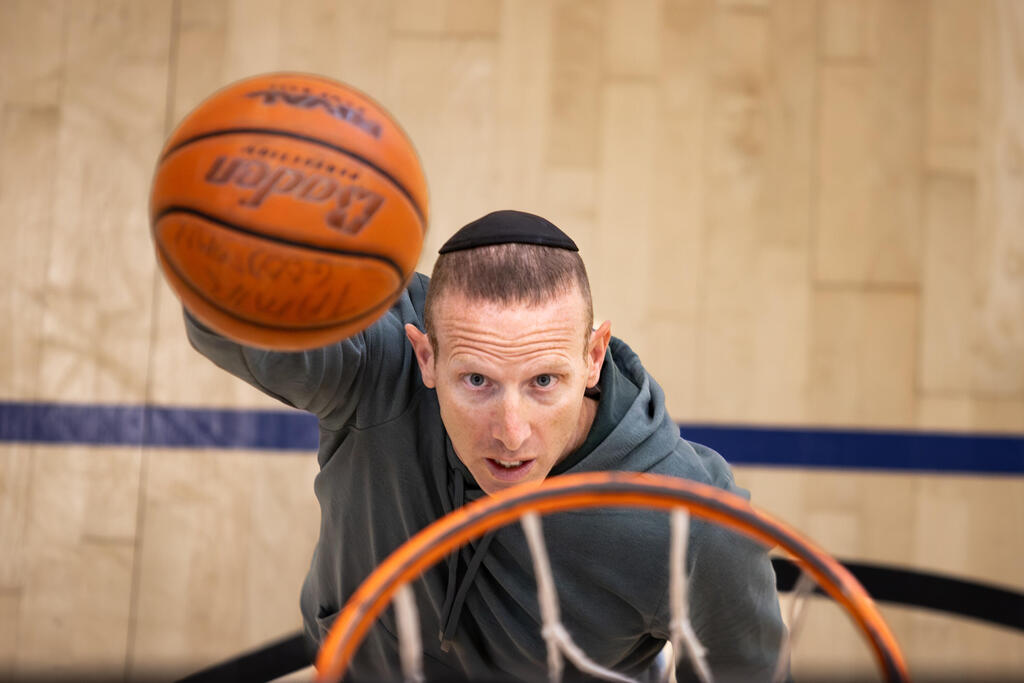
“They said, ‘No problem, we’ll try to work it out,’” he recalled. But before the school year began, he was told he would still be required to play on Shabbat. Goodman declined, returned the scholarship and went home.
By then, most other programs had already filled their rosters. Towson University stepped in and agreed to his terms, an unprecedented move that required adjusting game schedules, broadcasts, travel and accommodations.
His freshman year went smoothly, but in his second year, everything changed. The coach was fired and replaced by a new one who, Goodman said, made things difficult for him. A serious locker room incident became the turning point in his career.
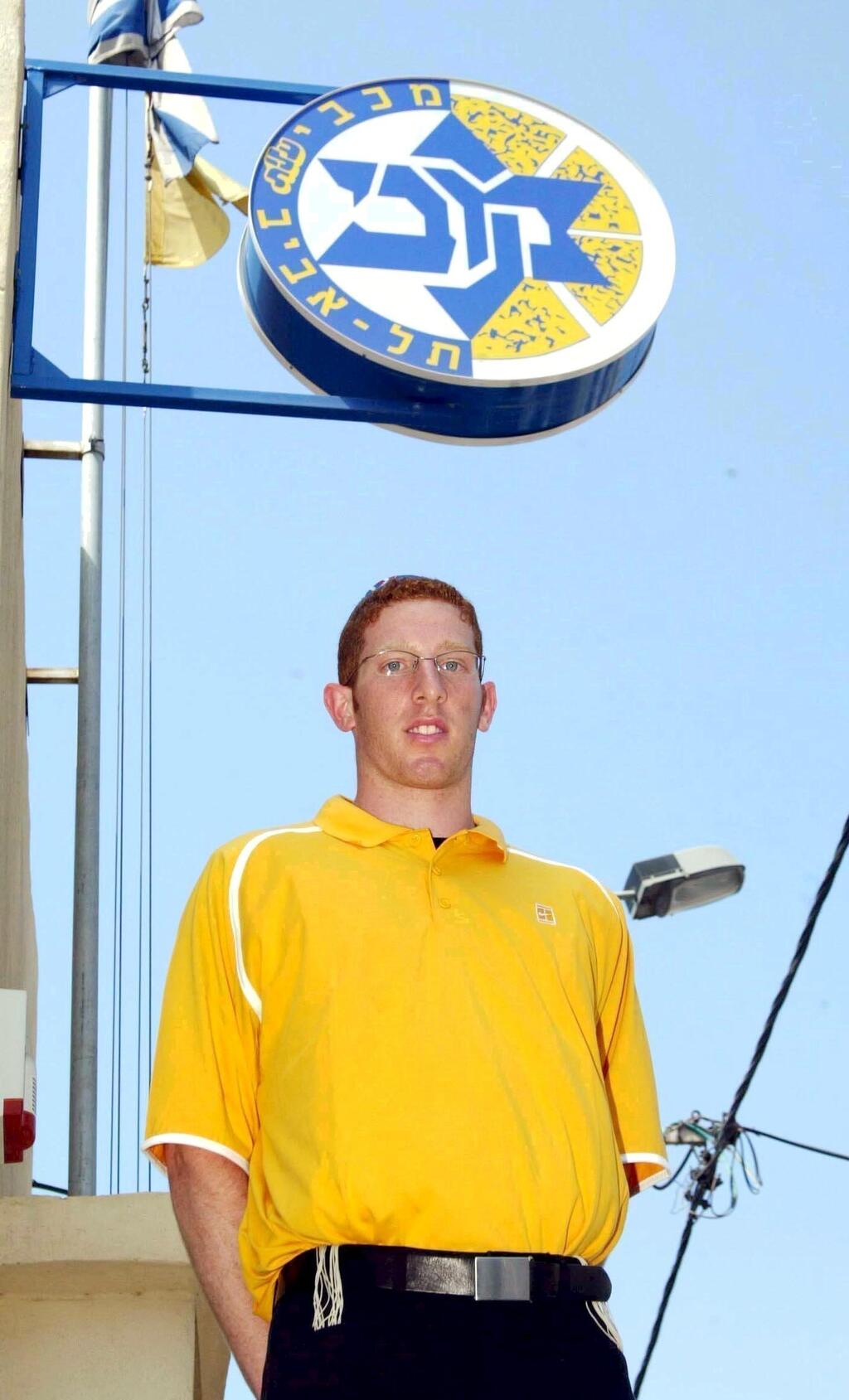
Those were the days. Tamir Goodman in Maccabi Tel Aviv colors
(Photo: Yosi Rot)
“The new coach was very violent toward me and, I believe, antisemitic,” Goodman said. “He tried to throw a chair at my head. When he failed, he kicked it at my leg and injured me. Police who heard the shouting came into the locker room. I went home and fell into a depression. I couldn’t believe that after everything I had been through for so many years, and finally reaching my dream, this coach took it all away from me. It was too much for me, I couldn’t handle it.”
The incident marked a turning point. Goodman chose not to return to the team. His father, a lawyer, wanted to sue, but Goodman refused and just wanted to move on.
Many players would not walk away from what seemed like a clear path to the NBA. Goodman did, staying true to his principles. At 44, he reflects on the decisions, the cost and the meaning of choosing principles over fame.
Today, Goodman works in sports technology. He was in Los Angeles recently representing an Israeli mixed-reality company that develops real-time digital experiences for sports and fan engagement, technology that has already been sold to NBA teams.
He has also developed additional products used in basketball, including a net that absorbs moisture from the ball and removes bacteria, and a basketball training device called Zone 190, designed to improve ball handling.
Inspired by the Lubavitcher Rebbe
Goodman arrived in Los Angeles while Israeli NBA player Deni Avdija was in town ahead of All-Star events. “He’s a great player, we’re very proud of him,” Goodman said. “He’s made history.”
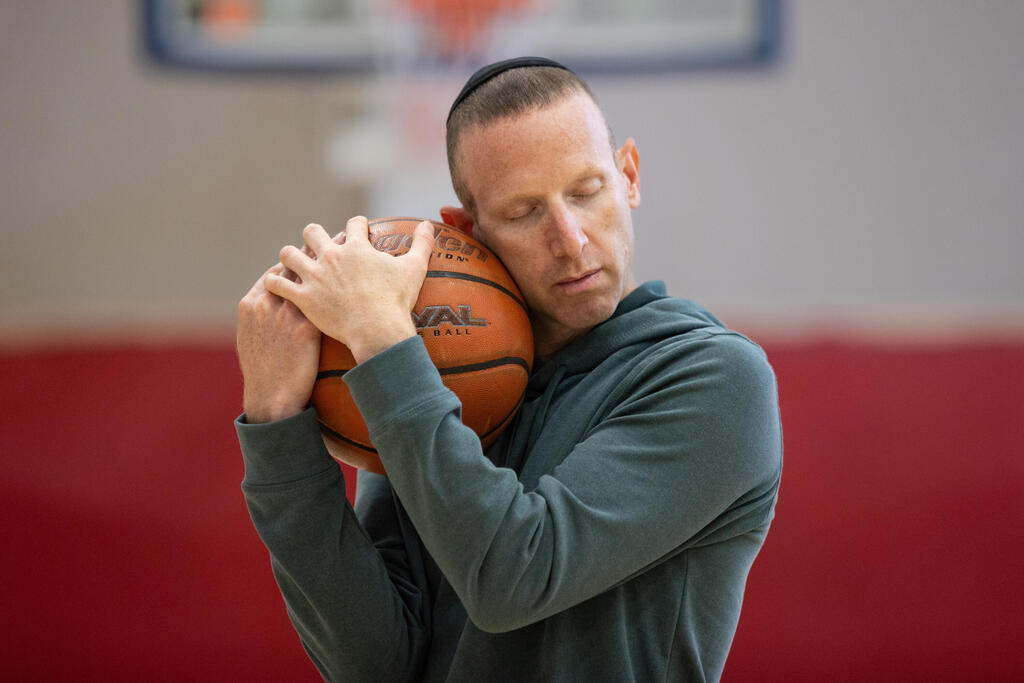
(Photo: Alex Kolomoisky)
And when you watch him play, doesn’t it sting a little that you missed the opportunity to get there?
“There’s a part of my soul that will always struggle with it. I miss the game,” he said. “After what happened with that coach, I was completely broken. But I told myself, ‘This happened, now what? My mission is basketball, I can’t let this break me.’ I went back to training, and then I got a call from Maccabi Tel Aviv inviting me to a tryout.”
And you didn’t stay long at Maccabi either.
“After one season, I was loaned to Givat Shmuel, and we reached the State Cup final and the playoff semifinals, but later I got injured. I did everything I could to come back, but I couldn’t,” he said. “After seven years, I understood I couldn’t continue.”
A call to his wife helped shift his perspective. “She told me, ‘Don’t worry, just keep doing the same thing, only without the uniform.’ She was right,” he said. “Basketball was always my way to represent Israel and my faith. I still do that today. I may not be able to play, but I coach, and we market the products we develop to many basketball teams around the world, and everyone knows they come from Israel.”
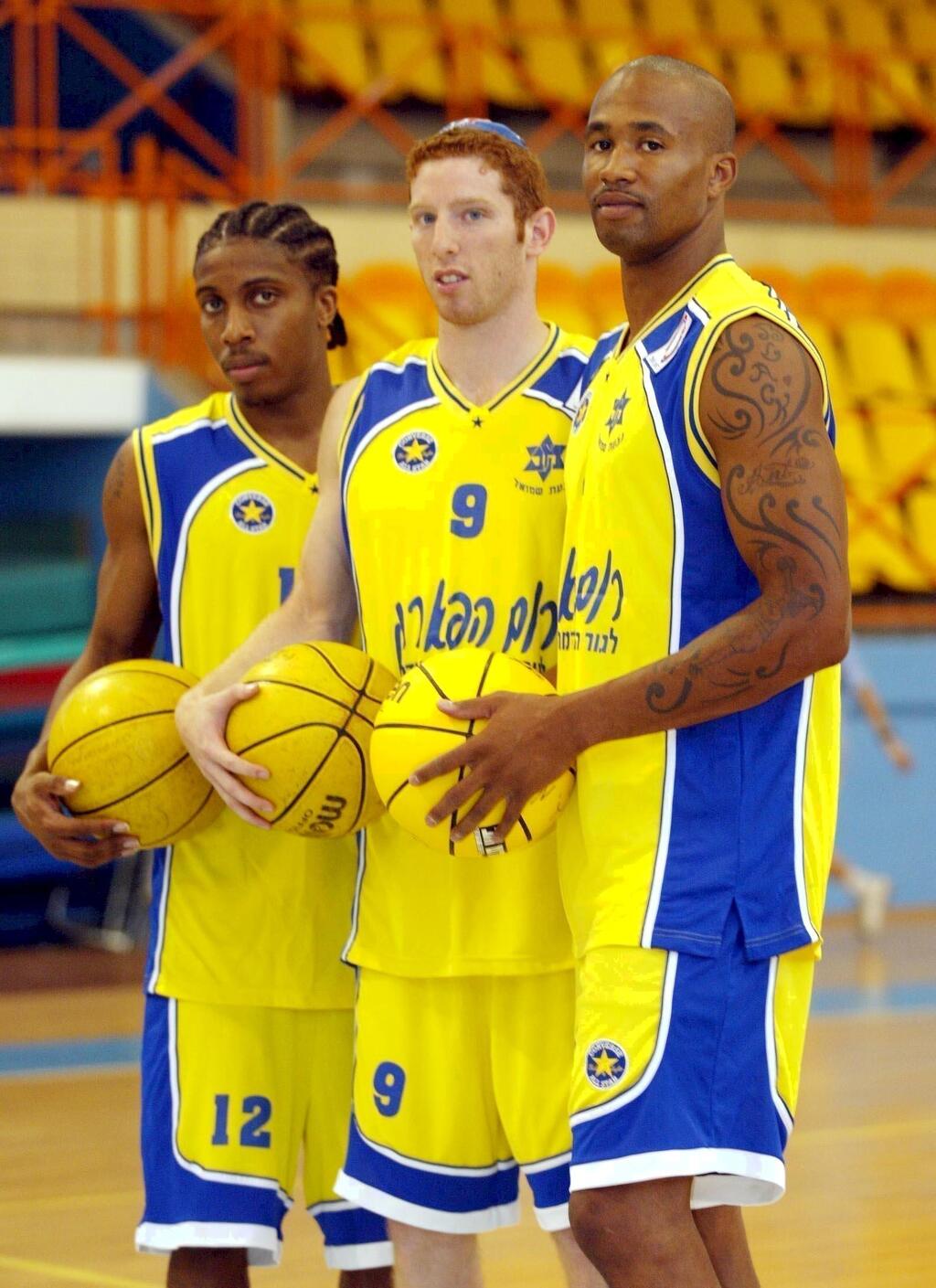
Retired too soon. Goodman during his brief stint with Givat Shmuel
(Photo: Yosi Rot)
Who do you coach?
“I run camps and workshops for kids in Israel. I invite former NBA players who come to the camp every year, then return to the U.S. and help with hasbara. I’m also invited to coach children around the world.
"I’ve led bridge camps between Christian and Jewish kids, intending to connect them through sports. I estimate I’ve worked with 20,000 to 30,000 children and teens so far.
“What happened to me made me a better person,” he said. “I know what frustration feels like, and I give everything to the kids I coach.”
Do you ever think about where you might have gone if not for the injury, if your college coach hadn’t treated you the way he did?
“Yes, but I have faith, and I work on it every day. Part of the soul is the divine soul. There’s one side that is optimistic and full of faith, that knows everything happens for the best, and another side that keeps asking questions. I’ve trained myself not to think that way. Whenever those thoughts come up, you have to acknowledge them and move forward with faith and positive thinking.”
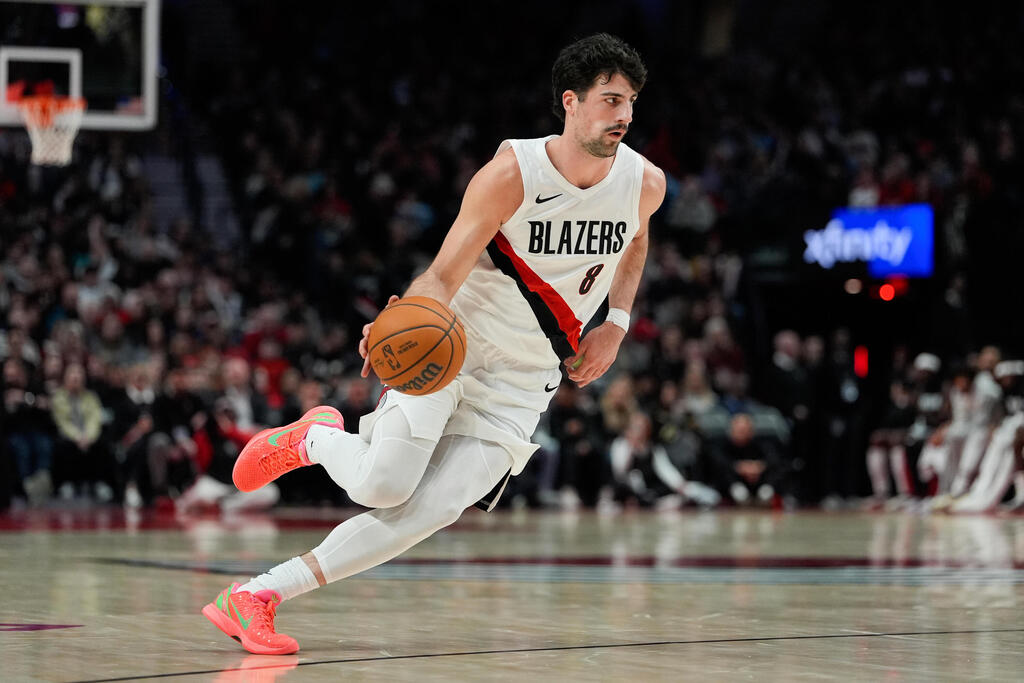
Avdija. Goodman: “He’s a great player, we’re very proud of him”
(Photo: AP Photo/Jenny Kane)
You were 17 when you stood by your principles and refused to play on Shabbat despite the consequences. Where did that come from?
“I was very close to my grandmother, a Holocaust survivor, and I knew what she went through. She was born in Yugoslavia and was in Bergen-Belsen and another concentration camp. To this day, I feel connected to that generation, to their stories and their sacrifice.
"After WWII, she came to Migdal in northern Israel, and she and my grandfather had two children, Reuven and then my mother, Chava. Reuven was diagnosed with a stomach illness and was hospitalized from age 14 to 16 before dying during surgery. My mother says I take after him a lot.
"I grew up on the stories of those Holocaust survivors, how they came to Israel and built it, and how others went to the U.S. and had to look for work but refused to work on Shabbat, even when they desperately needed the money.
"As a child, my father used to take me to the Lubavitcher Rebbe, who spoke about being proud Jews and not being ashamed. I attended his Lag BaOmer parade, and there were signs everywhere about observing Shabbat and lighting candles. That strengthened me a lot. So when they asked me to play on Shabbat, I immediately said I couldn’t do it.”
On par with LeBron James
Goodman was born in Baltimore and began playing basketball under coach Chaim Katz, who promised his parents when he was nine that the boy would become the first Orthodox player to compete in college on a full scholarship, a prediction that ultimately came true. The two remain close to this day.
Goodman overcame dyslexia as a student while excelling in basketball. Determined to meet academic requirements for college, he worked with tutors he paid for by coaching younger players. It paid off. The University of Maryland signed him, and newspapers across the U.S. quickly picked up the story of the Orthodox teen who joined a top basketball program on the condition that he would not play on Shabbat.
His rise drew intense media attention. At one point, his parents received 700 interview requests, and Goodman became a national story. One of the requests came from Sports Illustrated. When the photographer arrived at the family home, Goodman explained that for him, it was not just about basketball; he was representing the Jewish people and Israel.
He then invited the photographer into his room, put on his tzitzit and tefillin, took a prayer book and posed for the feature in the prestigious sports magazine.
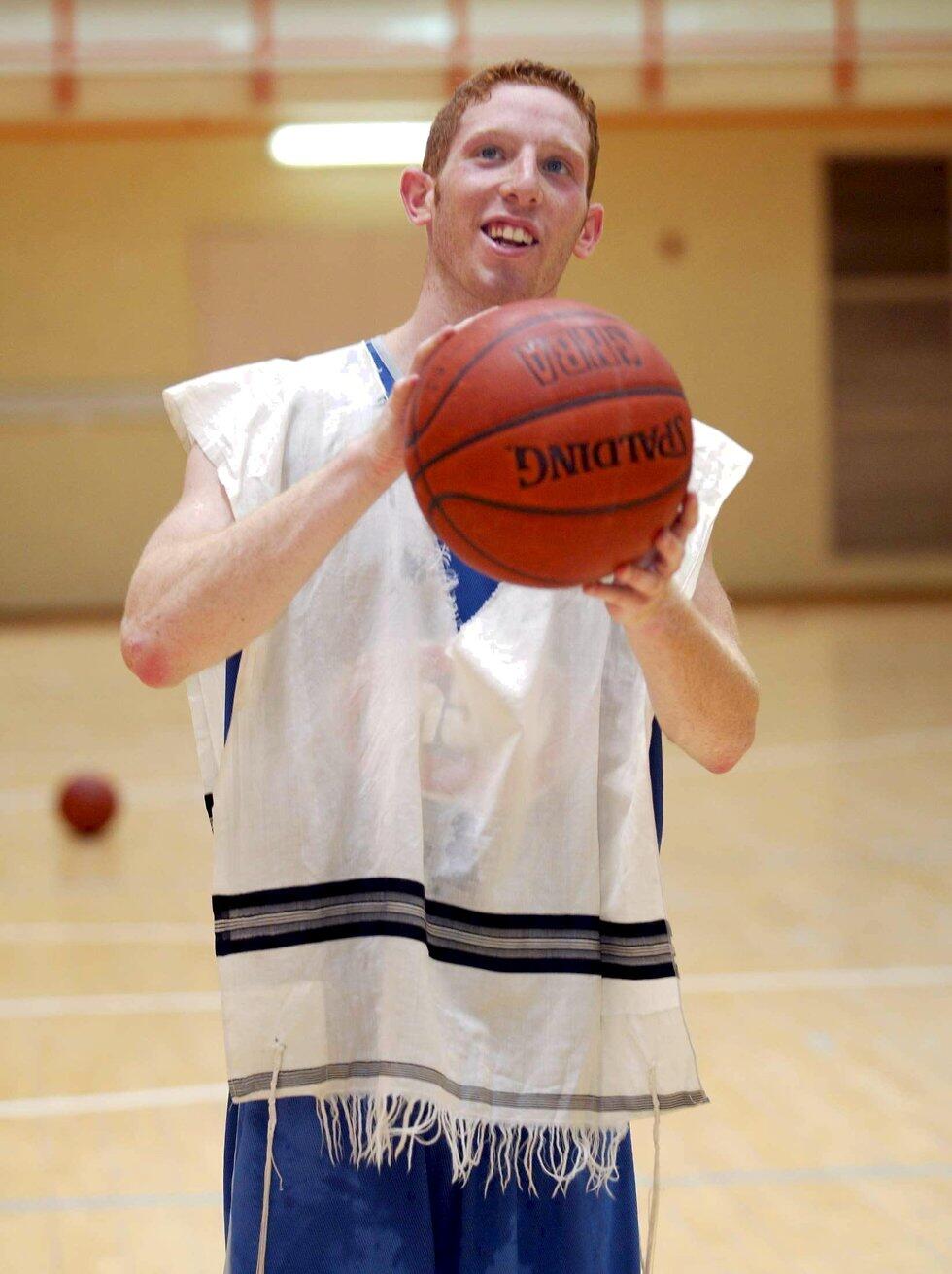
Goodman early in his career
(Photo: Yosi Rot)
The article brought him significant attention, but his yeshiva’s head was less enthusiastic about the spotlight and, at the end of 11th grade, asked him to leave. Goodman already had a contract in hand, but he still needed to complete his senior year. He tried to find a Jewish school willing to take him in, but without success.
“One day I got a call from a pastor who told me he ran a school with African American Christian students and a very strong basketball team, and he invited me to finish high school there,” Goodman said.
“I told him, ‘How? I’m Jewish.’ But then he explained they belong to the Seventh-day Adventist Church, a Christian denomination that observes the Sabbath. So I transferred to the Christian school. We had a really strong team, and thanks to that I made the U.S. high school All-Star team and was named MVP.”
After the disappointing incident at Towson, he moved to Israel in 2002. He played one season with Maccabi Tel Aviv, then went on to Givat Shmuel and later to Elitzur Kiryat Ata, Maccabi Shoham, and Maccabi Haifa, with a one-year stint with the Maryland Nighthawks. Along the way, he enlisted in the IDF and served in the technology and maintenance Corps.
Goodman met his wife, Judy, also a new immigrant, and the two got engaged within two weeks. They now have five children, ages 8 to 21. His son Matanel, a talented basketball player himself, recently received an attractive college offer but turned it down after being told he would have to play on Shabbat. Like father, like son.
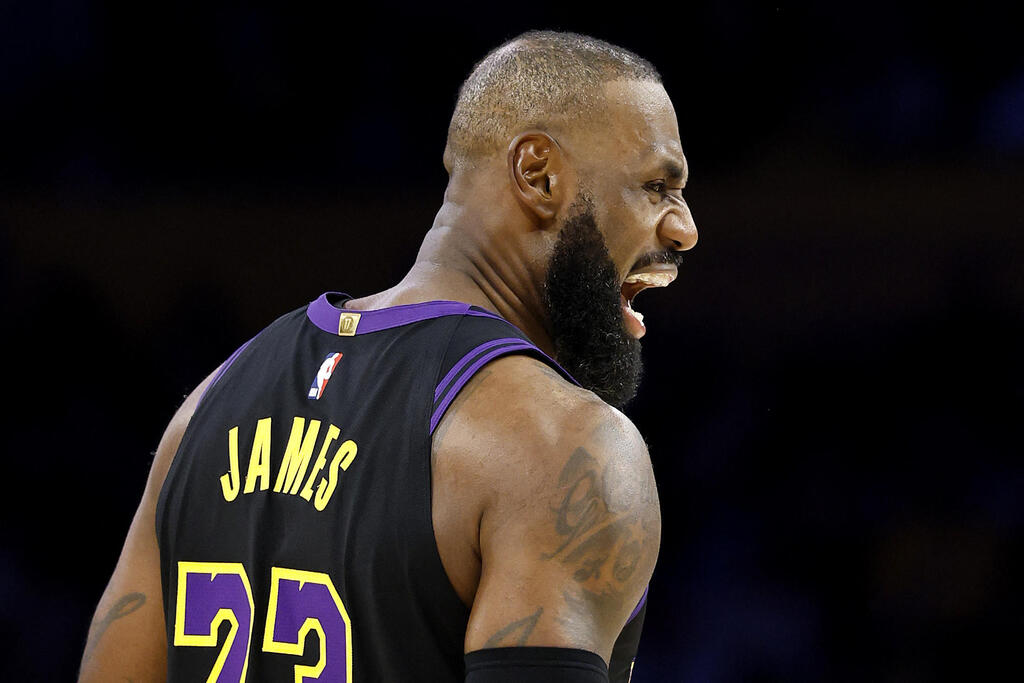
Aside from LeBron James, no high school player got more media attention than Goodman
(Photo: RONALD MARTINEZ / GETTY IMAGES NORTH AMERICA / AFP)
Do people still recognize you?
“Yes, everywhere, in Israel and in the U.S. People stop me on the street, in almost every restaurant, at the airport. They want photos, they talk to me about Israel, business, sports, startups, and that Sports Illustrated article. A lot of people still remember it.”
What did all that attention do to your ego, with headlines everywhere and Jerry Seinfeld playing you?
“After that sketch, I couldn’t leave the house. It was embarrassing. One person who specializes in sports and marketing told me, ‘You should know that aside from LeBron James, no high school player got more media attention than you.’ When they nicknamed me ‘the Jewish Jordan,’ I asked myself how I could use that to help people honor God’s name.”
A documentary about Goodman is currently in production. He cannot share details beyond saying it is an American film that will tell his life story. It will also address his struggle with dyslexia, which he says ultimately helped him both on the court and in business.
Last year, a children’s book about his life, “Live Your Dream,” was published as part of the PJ Library series, telling the story of a Jewish All-Star basketball player. “I’m getting great feedback on the book from kids and parents around the world,” he said. “That makes me very happy, because I wrote it to encourage children who struggle with learning.”
What advice would you give your younger self?
“I’d say, ‘Don’t worry. In the end, everything will be OK. You’ll achieve your dream. You’ll have the best wife and the best family,’” he said. “That’s what I needed to hear back then because what happened with that coach was really hard for me.”