

“If only you knew what it’s like not to be healthy,” the patient on the other end of the line snapped angrily, not waiting for a response. Tzahi Kanevsky, on the receiving end, ignored the barb, opened the computerized scheduling system and began searching for the nearest available appointment for the man, who continued venting his anger.
Beneath the desk at the appointment call center where he works stood the oxygen concentrator that has accompanied Kanevsky, 28, since birth. As often happened when he exerted himself, the tank began to empty. Kanevsky was born in 1996 with an extremely rare and severe heart defect and pulmonary hypertension, known as Eisenmenger syndrome, a condition in which a long-standing heart defect leads to high blood pressure in the lungs. For years, he was tethered to the oxygen device while waiting for a lung transplant. Each day he traveled by public transportation, struggling for every breath on his way to his job at Assuta Medical Center, counting the hours to ensure the tank would not run out while he was away from home.
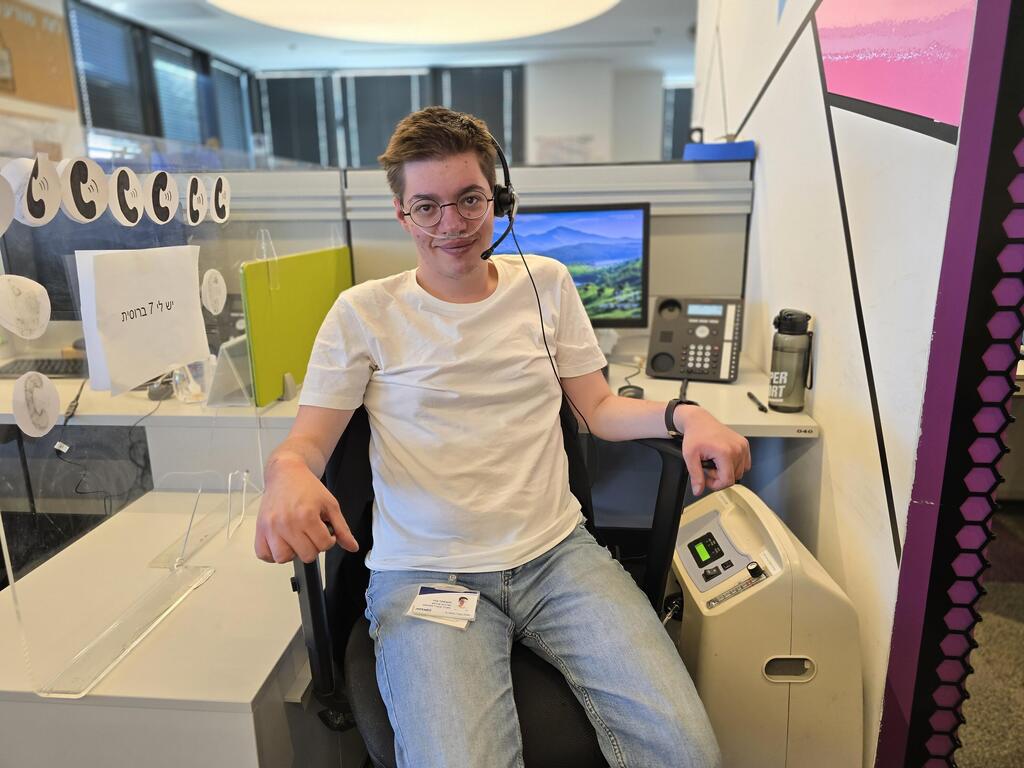
For as long as he can remember, he dreamed of the day he could breathe on his own, without a machine or a tank. He imagined playing sports, flying to an exotic destination overseas and, above all, living a life no longer hanging by a thread that could snap at any moment. This past January, on his way home from work, his phone rang. On the line was a familiar voice — the transplant department secretary at Rabin Medical Center’s Beilinson Hospital.
“Tzahi, come quickly. A suitable lung has been found for you. You’re going into surgery tonight.”
What he had long awaited — the ability to breathe on his own — was about to come true in an instant. Yet despite years of imagining that moment, he was nearly speechless when it arrived.
How did you react?
“It was so fast and surprising that I didn’t even have time to feel excited or scared, like I thought I would,” he later wrote from his room in the rehabilitation ward at Sheba Medical Center, three months after successfully undergoing surgery. “I told only the people closest to me. I’ve known disappointment, and I was afraid of another one.”
Did you have doubts before the surgery?
“I didn’t have doubts, but of course I was afraid. It’s a complex operation with a difficult recovery. Still, I decided the time had come to finally do it.”
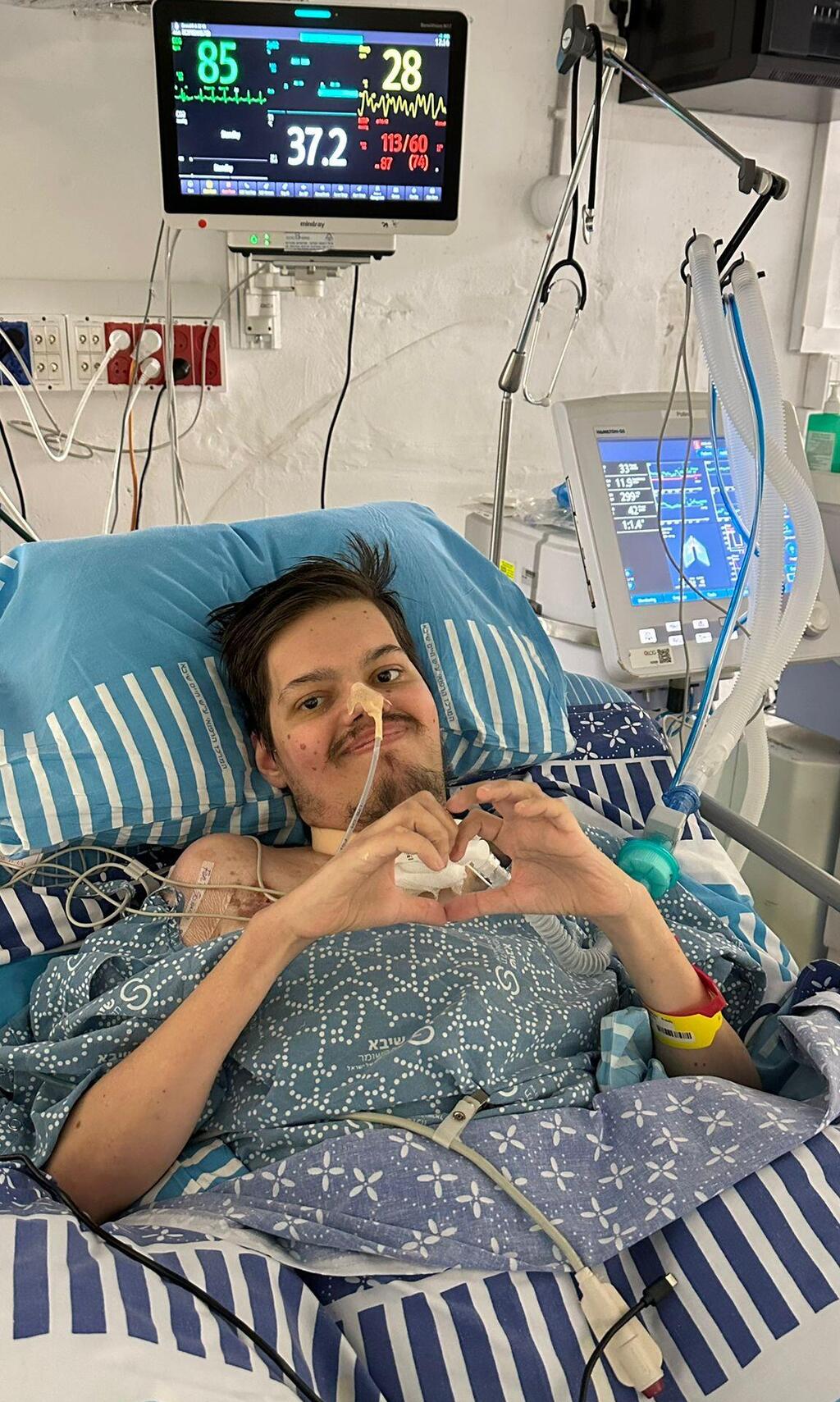
Tzahi after the surgery
The surgery lasted more than 10 hours. At its end, his diseased lungs were removed, but the transplant could not be completed after his body went into systemic collapse. Kanevsky was classified as the most critical and complex patient in the hospital: without lungs, connected to an ECMO machine, sedated and on a ventilator. Still, he refused to give up. “I’m optimistic by nature. That’s what keeps me alive,” he said.
Five days later, another lung was found. This time the surgery succeeded. But the danger had not passed. In the days that followed, Kanevsky developed a life-threatening bloodstream infection. His body again began to fail, but the determined young man — for whom despair is not part of the lexicon — overcame that hurdle as well.
'The ward’s child'
Kanevsky’s story did not begin last January. It began much earlier, in a hospital in central Israel, where he was abandoned by his mother on the day he was born. Days later, she left the country without looking back.
His first six years were spent within the walls of Schneider Children’s Medical Center, where nurses cared for his every need. They called him “the ward’s child.” He grew up loved and cared for, but without a home or family of his own. His medical condition and legal status prevented adoption or placement with a foster family, and the oxygen device limited even the simplest activities.
“I couldn’t go on trips, jump or even play hide-and-seek. Everything kids my age do easily could have put my life at risk. They had to handle me with extreme care.”
As if that were not enough, the state did not make things easier. His yearslong struggles with government authorities over financial support and finding a home could fill an entire book.
At age 2, a magistrate’s court refused to approve a life-saving surgery without hearing his doctors’ opinions. Only an urgent appeal reversed the decision. At age 4, the Interior Ministry sought to deport him — a sick child no authority was willing to take responsibility for. Only after the threat of media exposure did Kanevsky finally receive Israeli citizenship.
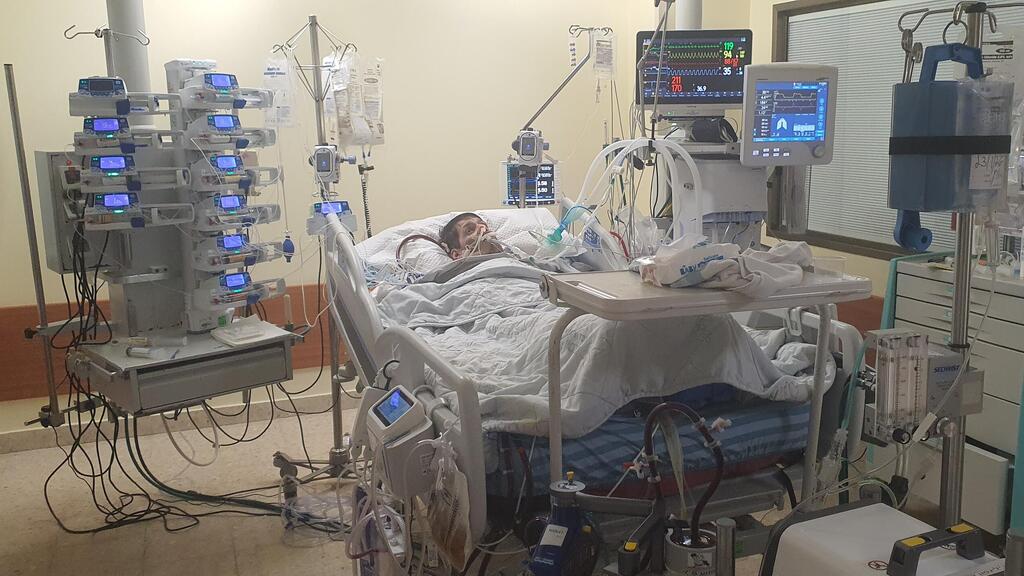
Tzahi Kanevsky shortly before the start of the surgery
Amid all this, one of his caregivers at Schneider refused to give up on him. Larisa Kanevsky, a recent immigrant who cared for the young boy left alone, grew attached to him and sought to raise him herself, even though it was clear his life expectancy was uncertain. After a prolonged legal struggle, she was granted custody and raised him until her death in 2023. After she died, Kanevsky once again had no immediate family. Still, he was not alone. Close friends he gathered over the years have remained by his side, supporting him like family.
Fighting for every breath
Three months after the surgery, Kanevsky is hospitalized in the respiratory rehabilitation ward at Sheba, seven floors underground. He still cannot speak or produce sound, but communicates by writing with close friends who visit daily.
He has recently returned to eating solid food, and each day medical staff disconnect him from the ventilator for longer periods.
“Every day I breathe on my own for three to four hours,” he said. “During those hours, I use all the energy and strength I have to train the new lung that was successfully transplanted.”
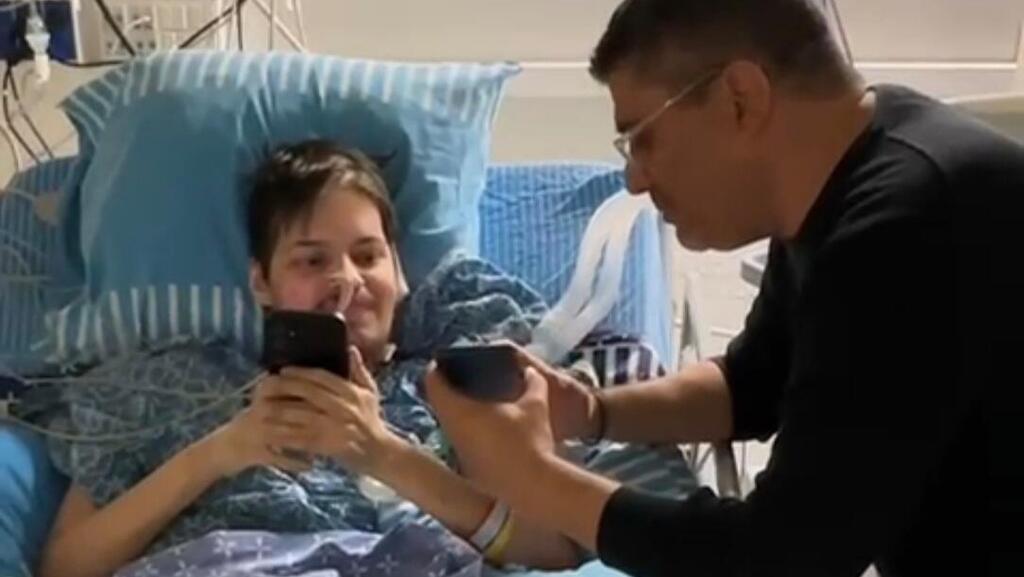
When will you be released home?
“There’s no discharge date,” he wrote. “It depends on my progress.”
Between rehabilitation sessions, he is also dealing with a chapter that began about a year ago and remains unresolved. Kanevsky traveled to Moldova in search of his roots, accompanied by Tzachi Bardugo, a lecturer on personal development who discovered his own biological parents at age 47 and now helps adoptees do the same.
What he found was not simple. He learned he has three siblings he never knew existed — one in Ireland, one in Germany and one living with their mother in Moldova. His mother, who was located, asked to speak with the son she abandoned 27 years ago.
In November 2025, they met for the first time in a video call. He was in his hospital room at Beilinson. She was in Moldova, barred from entering Israel due to suspicions of involvement in child trafficking — the same trafficking scheme through which, it emerged, she had come to Israel while pregnant with him. His severe medical condition ultimately prevented the sale that had been planned in advance.
During the call, she asked for forgiveness.
“I regret leaving you in the hospital,” she said, adding that she is ill and needs money. He had already made his decision. Since that conversation, he has refused to respond to her repeated requests.
“I have no interest in her!” he wrote, punctuating the sentence with an exclamation point that left little doubt the matter was closed.
“Today I feel wonderful,” he quickly added, changing the subject. “There are setbacks and difficult days, but I never stop dreaming about the moment I can fulfill my dreams — to travel to places that move me in Israel and abroad, enroll in a photography course, finally get a driver’s license, study information systems management and start a family of my own.”
What is the first thing you will do when you can breathe on your own and speak again?
“I’ll tell my story to anyone who wants to hear it. I want to inspire people who feel hopeless — to remind them it’s human to break, and then to get up and move forward.”