

She was born into a Haredi Jerusalem family, studied in the most prestigious Lithuanian-Ashkenazi institutions, and had never sat next to a strange man until she was 24. Today, Zohara Treistman is a sexual and couples therapist who trains professionals in male sexuality and speaks with ease and openness about testicles and premature ejaculation. “Sexuality isn’t just about orgasms and fun,” she says. “It also has a lot of dark sides.”
If you had told fifteen-year-old Zohara Treistman that one day she would be teaching women how to handle testicles, she would likely have stared at you in utter disbelief — mostly because she had no idea what testicles even were. It’s hard to explain just how far sex and pleasure were from her world at that time.
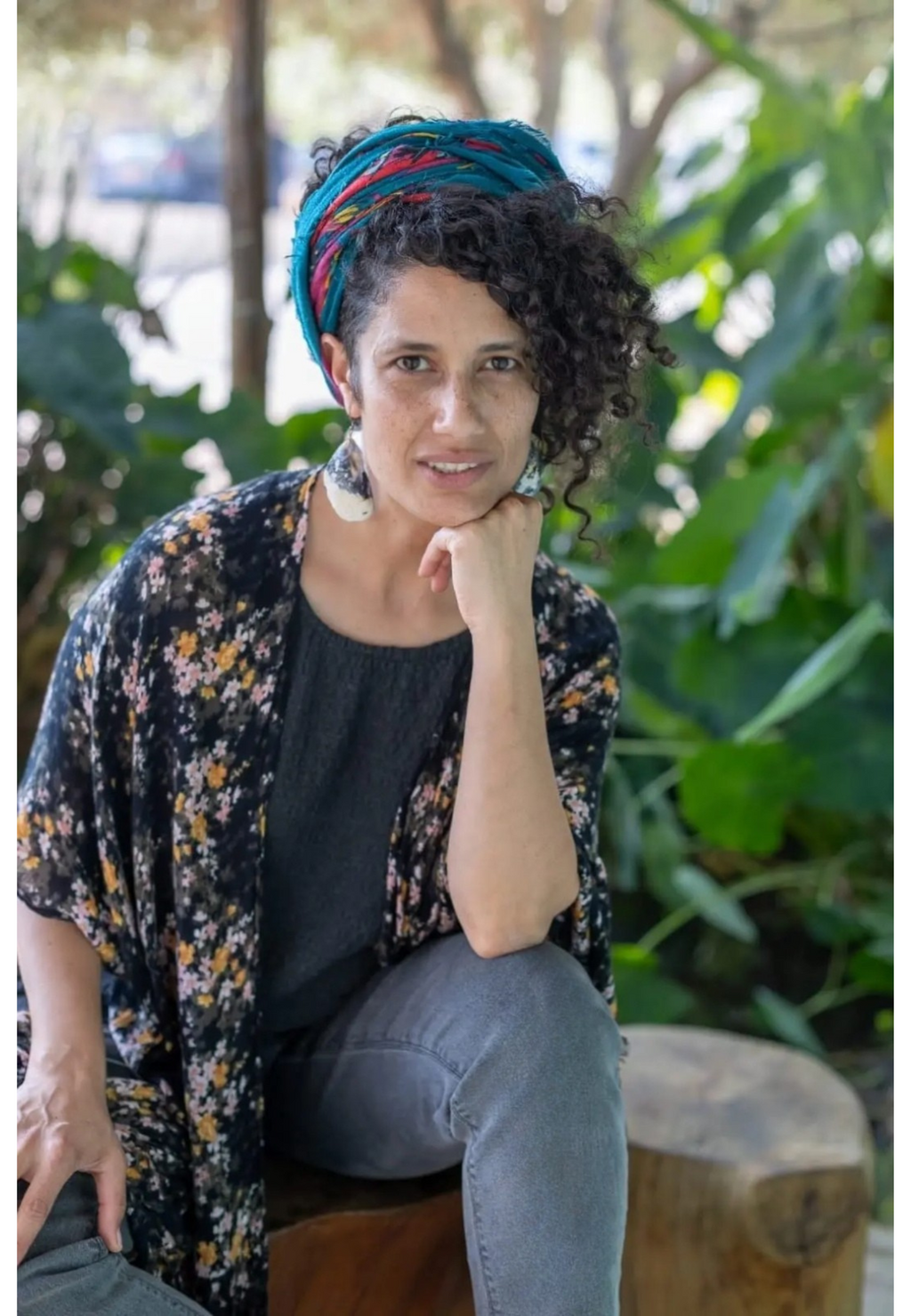
Treistman was born to a family of ba’alei teshuva — those who became newly religious — who did everything in their power to integrate into the Haredi community. She was the second of six siblings.
“My parents adopted the entire cultural and religious framework of the ultra-Orthodox sector,” she says. “For my mother, it was extremely important that I study in the best place, and ‘good education’ meant the Lithuanian-Ashkenazi institutions. We’re Mizrahi, so getting accepted was a long, exhausting process, but my mother was a fighter. She endured many humiliations from those in power — rabbis, principals — just to get her children into those schools. She felt it was the right thing to do for us. I studied in the strictest, most black-and-white, and also most elitist place there was.”
“I was completely Haredi, did everything by the book. My goal was to behave properly and not stand out too much. I obeyed every dress code rule — a very specific skirt, a light-blue blouse, very particular shoes. I listened to the teachers, the rabbis, and the administrators. I didn’t question anything. But I never really felt I belonged. All the girls around me were white; I had these Afro-Yemeni curls. I remember once being told that my hair blocked the blackboard. It didn’t matter that I’d studied with them since kindergarten — I was still never equal. In the social hierarchy, I was the lowest tier: Mizrahi, daughter of ba’alei teshuva, and not from a wealthy family. They always made me feel that I was there by grace, not by right. That they were doing me a favor.”
“It was really important to me to get top grades, and I worked very hard for that. When I succeeded, I wanted a teacher to say, ‘Good for you, you’re wonderful,’ to get some recognition — but it never came. In those institutions, no one really cares about grades. They want righteous girls.”
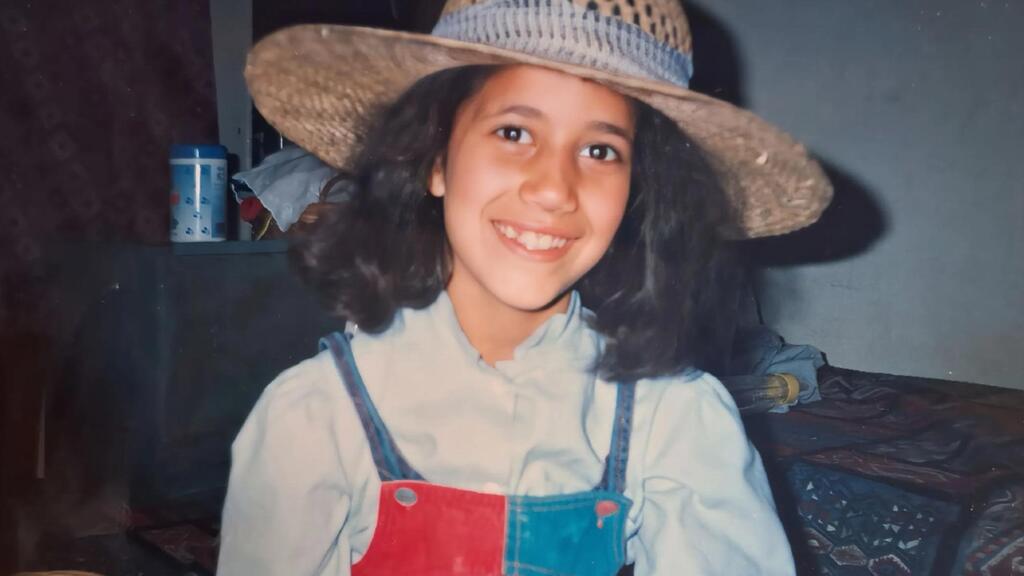
Zohara Treistman during her childhood
As part of the effort to produce “righteous girls,” any discussion of sex or sexuality simply didn’t exist. “Sexuality was not part of the conversation at all,” she says. “Any contact with the opposite sex was forbidden — not just physical contact, even talking to a boy was off-limits. I didn’t grow up around boys. The only men I knew were my father and my brother. That’s it. Other males I saw were my friends’ fathers, who never said hello to me; the principal, who yelled; and rabbis, who only talked about what was modest and what wasn’t. Not only was touch forbidden — it felt like the body itself didn’t exist. The school uniform was deliberately ugly. You weren’t allowed to be pretty. Makeup was forbidden unless you were going on a shidduch date. The whole goal was to get you to marriage and childbearing. No one said outright, ‘You’re a vessel for producing children,’ but everyone knew that was your essence.”
“I really wanted to be Haredi. I felt suffocated by it, but at the same time believed they held the truth. And if I chose something else, it meant I was giving up on the truth.”
Secret studies
Today, Treistman is 40 years old, married, a mother of four, and lives in Jerusalem. She is a teacher of sexual development, a certified sex and couples therapist-in-training, and runs a clinic for couples. She is also the creator and founder of Lada’at Gever (“To Know a Man”), a professional training program on male sexuality. But the road to all those titles was long and unconventional.
At the Haredi institution where she studied, no one went on to university. The administrators and students scorned higher education. Still, for some reason, education mattered deeply to her.
“I wanted knowledge,” she recalls. “I couldn’t become a rabbi — I’m a woman. So, where can I be a kind of rabbi? In academia.”
At 18, while completing the internal Haredi exams — which she also finished with honors — she secretly enrolled in external matriculation studies. Her learning became her secret life.
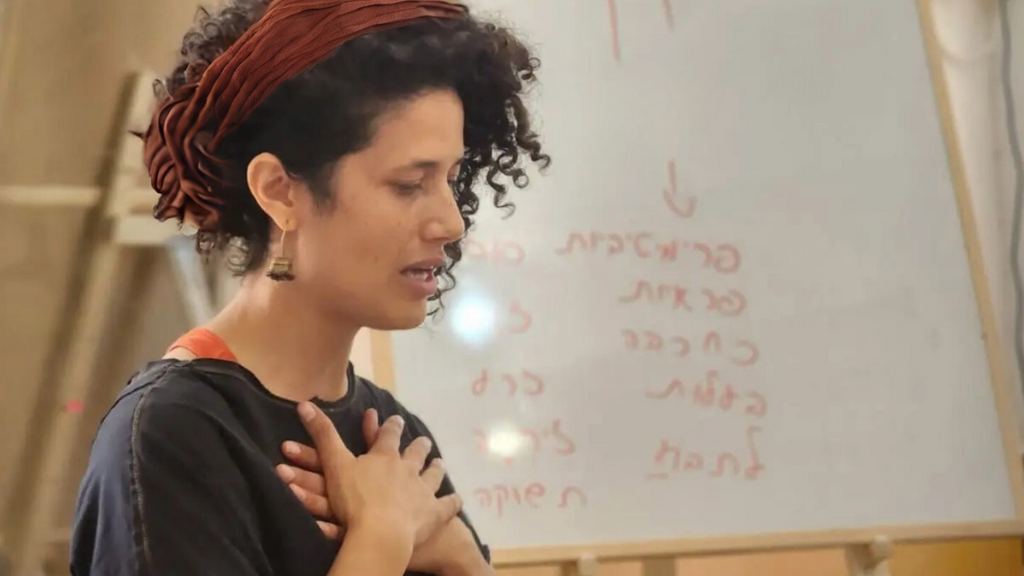
(Photo: Tamar Kinarti)
“I bought textbooks, sat for hours in the Jerusalem library, and taught myself piles of material that was completely foreign to me. Around me were many sweet Haredim doing the same — studying in secret. I didn’t tell anyone. It’s not legitimate in that society to take matriculation exams, because it means you might go to university, and university means you’ll become secular. They don’t want you leaving the ghetto.”
But she left.
At 22, after completing her matriculations, she enrolled for a bachelor’s degree in special education at a religious-Zionist college, where, for the first time in her life, she met women who weren’t Haredi, just religious. From there, she wanted to continue to a master’s degree in educational counseling at the Hebrew University. There was just one problem: she didn’t have a psychometric score.
“I don’t know where I got the nerve, but I wrote a letter to the head of the School of Education, begging him to give me a chance. I told him I was amazing, that I would succeed. He saw my potential and accepted me. I was the only Haredi woman in class, surrounded by secular and religious women — and men. It was the first time in my life that I had ever really met men. I remember deliberately sitting next to male students because I wanted to know what it felt like to be near one. It was mind-blowing.”
Throughout that time, she still lived at home, taught as a young teacher in the Haredi system, and studied in secret twice a week. She finished her studies as a dean’s list student, but no one knew. Now she had two academic degrees, but in the most important mission for any young Haredi woman — finding a husband — she hadn’t progressed at all.
Then came Adam
Treistman wanted a relationship but found it hard to find the right match.
“Girls start getting married around 19,” she says. “I dreamed about my engagement party, but luckily I didn’t marry that young. If I had, I think I would have died in that marriage. It was such a confusing time — I didn’t know which community I belonged to or who would accept me with all my contradictions. I went on shidduch dates; the guys were sweet, but I was terrified of them. Probably because of the rigid gender separation I’d grown up with.”
Then came Adam. They met at the Carlebach synagogue in Jerusalem — a “lively and happy” place, as she describes it. Adam had grown up secular in northern Israel and was then taking his first steps toward becoming religious. She was immediately drawn to him.
“I felt he respected women, that he’d protect me. But at the same time, I freaked out. He wasn’t Haredi! He wore jeans in public — and jeans symbolized secularism. It was almost like converting to Christianity. I told him, ‘Listen, if you want to live with me, know that our children will study in Talmud Torah and jeans are off-limits. That’s hefkerut — depravity.’ For me, becoming secular meant total failure, like losing the game. I still lived in that mindset.”
They began dating, following all halachic laws and observing shmirat negiah — no physical contact. Soon she realized he might be “the one.”
“I wanted things to work between us, but I felt I was there only with my head, not my body. My sexuality intrigued me but also scared me. I had no one to talk to about it and felt defective. I didn’t want him to discover that I was ‘broken.’ I wanted us to have love and healthy sexuality. I felt there was potential, and I couldn’t ruin it.”
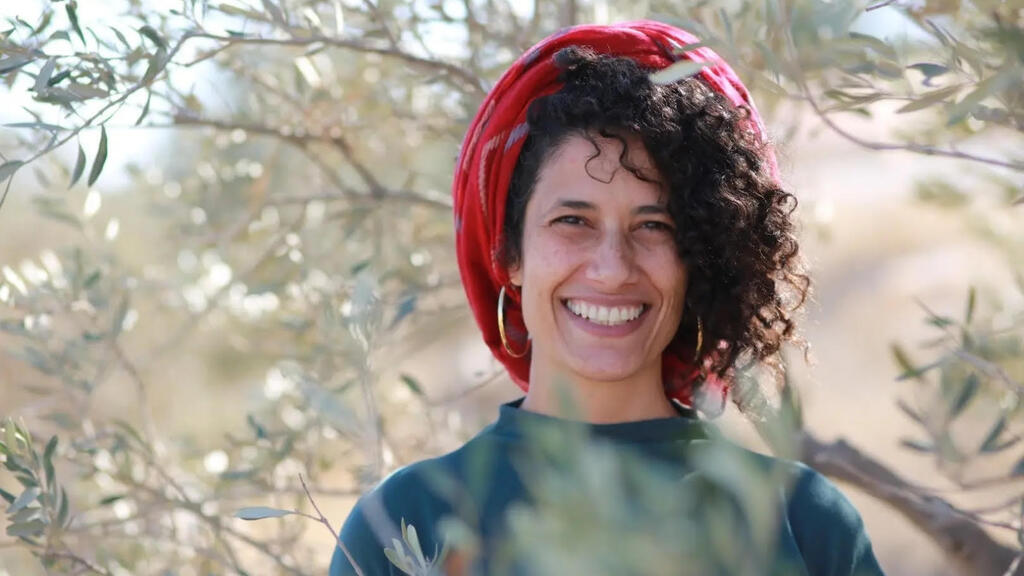
(Photo: Keren Shalev)
What did you know then about ‘healthy sexuality’?
“When I thought about sex, I wanted to kiss and touch — I had no idea what came after that. At that point there were no movies or internet in my world. Everything was completely innocent. I wanted to make my body connect, to stop being afraid, to prepare myself. I heard from a religious friend about Tantra therapy. She said it helped her.”
What did you know about Tantra?
“I didn’t know the word, but I was excited that it helped her. I already knew what psychological therapy was — I’d tried some — and I had one session with a sexologist at the health clinic. But therapy takes years, and I felt I needed healing fast. In my mind, I had a deadline: we were getting engaged in about two months, and I had to be ‘fixed.’ I was 24, but really still a baby.”
She found a couple who described themselves as “sacred sexuality healers.” The word “Tantra” had only just begun circulating in Israel; few had heard of it.
“I called them, and they praised my courage. I felt like the most radical, coolest woman in the world. At first, we only talked. I told them I was terrified to get married because you have to have sex on the wedding night. Even though I’d never done it, I knew that going from no touch at all to full touch was an insane leap, and I didn’t want that. I wanted connection. They were very supportive — told me if he loves me, he’ll be gentle, that it would be a process. The man was clearly dominant, the lead therapist. I felt it was good they were a couple — like mom and dad. I went home and told no one. A few weeks passed, and I still felt I wasn’t healed. Adam and I were talking about engagement, and I knew I had to hurry. Each session cost a fortune, and I was a poor Haredi teacher, but I had no choice. I told them I didn’t feel progress, and they suggested a touch-based session.”
She pauses. “I went for a four-hand massage. They both touched me. I wondered if it was a sin but convinced myself it wasn’t, because it was like going to a doctor. I just lay there, wondering, Is it working? Am I changing? The massage ended; I paid them and left. Two more weeks passed, and I felt exactly the same. I called him and said, ‘Listen, I’m still terrified of a sexual encounter. My body is still scared.’ He said, ‘Then come for a real Tantra session — just you and me.’”
Terrible.
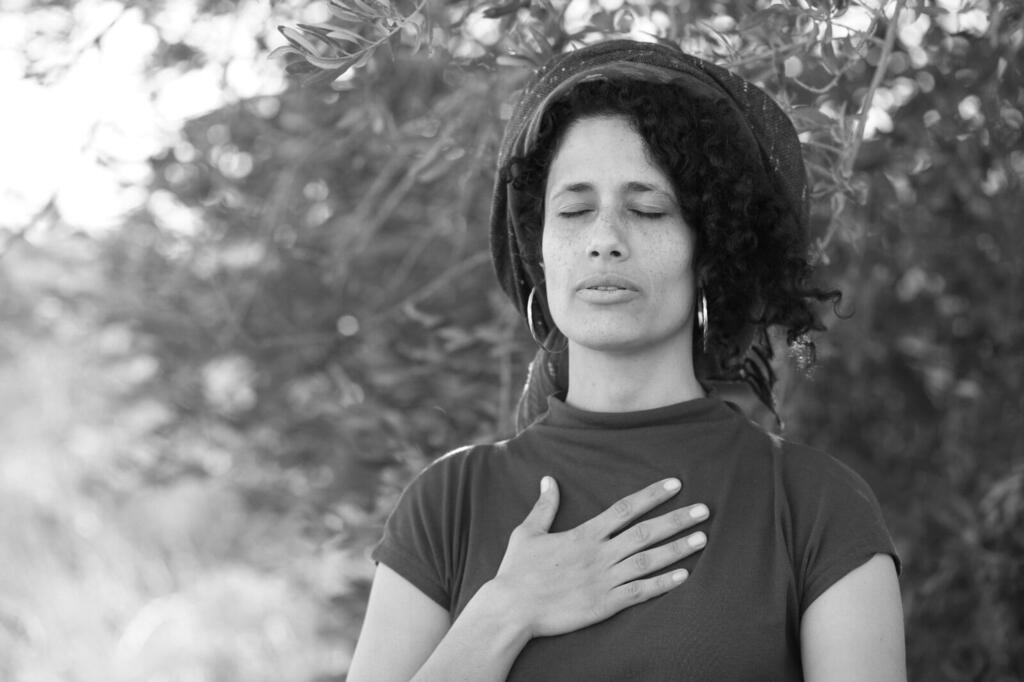
“I hadn’t even been to a gynecologist yet, but my friends had. I knew you’re exposed there — but hey, it’s medical. I knew he wasn’t a doctor, but deep inside I expanded the definition to make it fit. I so badly wanted to be healed. I came, lay there tense. No man had ever seen me naked. I felt myself disconnecting from my body and from my values, but the desire to be ‘fixed’ overpowered everything. He was very invested in the ‘treatment.’ I don’t think he wanted to harm me — I think he was just stupid. Before the session, I signed a document saying I was doing this voluntarily and releasing him from any responsibility. I paid him and even thanked him. I remember the end — he came up behind me, a man in his fifties, leaned in, and kissed my forehead. That moment shattered something inside me. Until then, I convinced myself he was a doctor, that it was technical, that we had no personal connection, that I’d never see him again. And suddenly, he kissed me.”
(Photo: Tamar Kinarti)
So you didn’t see the massage as a problem, but the kiss was? Explain.
“You’re supposed to be a doctor. There’s no relationship between us. Do your job and let me go. What’s a kiss got to do with it? A kiss expresses emotion and tenderness. It confused everything. I didn’t talk about that experience for years. At first, I was scared it might count as betrayal of my fiancé. Later, I was just ashamed — how could I have been so stupid? I was angry at the Haredi world that pushed us to extremes: either total separation from women, or visiting prostitutes. I see the same pattern in my clinic now — young Haredi men who have never kissed a girl but have gone to cheap ‘Tantra therapists’ and slept with them, because that supposedly isn’t a sin. In therapy or prostitution, it’s ‘okay.’ This black-and-white education leads to harm.”
The trauma resurfaces
She buried the memory of the abusive “therapy” and married Adam. The wedding night was far less terrifying than she had imagined.
“On the first night, there was intimacy — not full sex, but closeness. We took our time, and I’m so glad we did. It used to be radical to do that; today, many couples in the community allow themselves to take it slow.”
For two years, their relationship flowed peacefully. They discovered each other’s bodies with joy, fell in love, became parents, and maintained strict adherence to halacha. One day, Treistman came across an article about a man exploiting a woman emotionally and mentally. She finished reading it shaking and in tears, and realized she was still afraid of sexuality.
“What happened was that I thought I’d beaten the game. I had a husband, we had sex, we were friends — and suddenly everything collapsed. I think the article triggered the trauma. I realized every sexual encounter began with fear. It hit me that even though I was with a man I loved, who had never hurt me, I was suffering from what’s called penetration anxiety.”
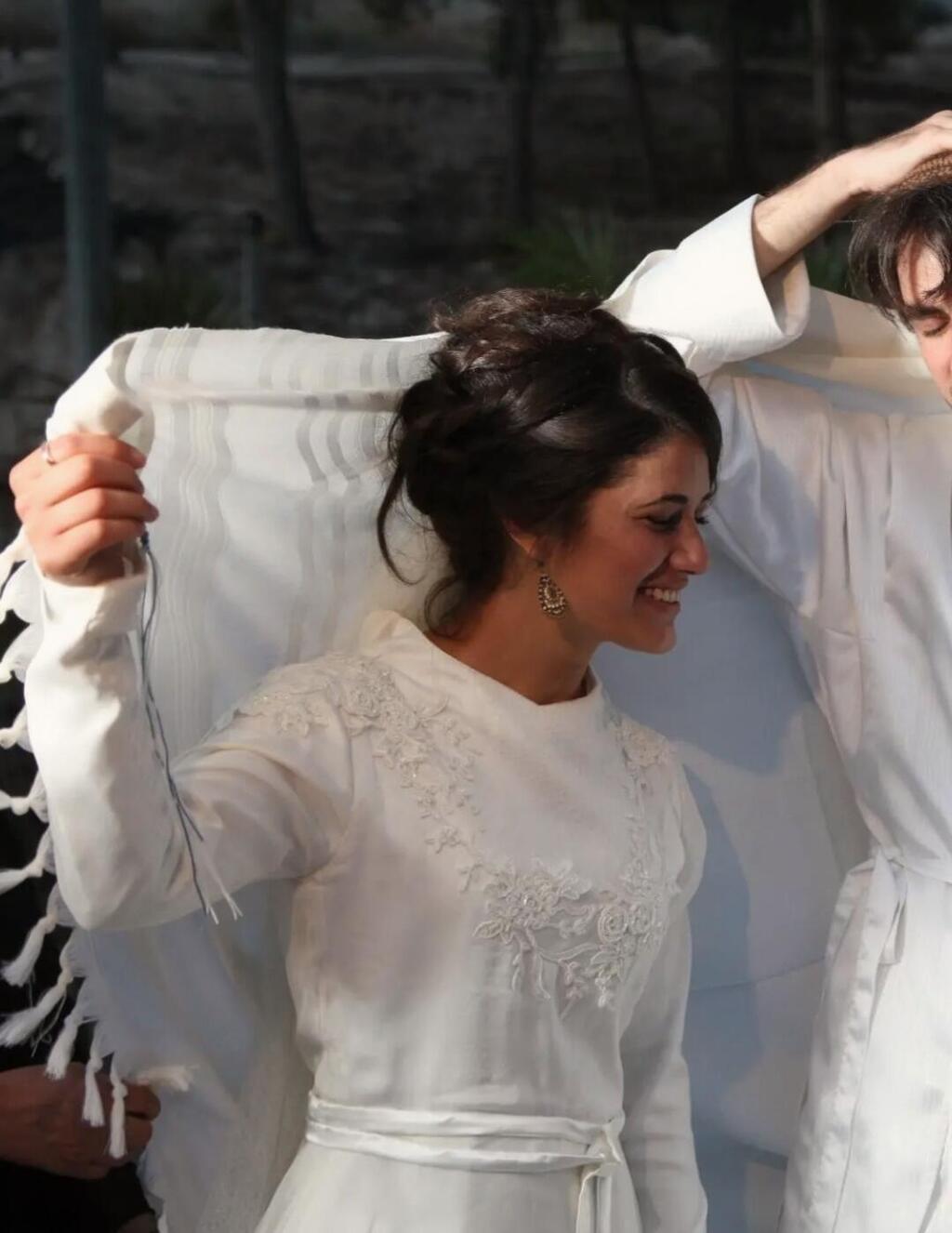
Zohara Treistman during her wedding
Their sex life faded, and questions started gnawing: “What does it mean not to have sex? What makes us a married couple if there’s no sexuality? What does it mean if his sexual body scares me?”
“In the religious mindset,” she explains, “a couple must have penetrative sex. Otherwise, we’re sinning. I was making my husband sin. It’s hard to explain to someone who isn’t Haredi what a catastrophe that is. It felt like everything that tied us together as a couple was gone, and all that was left was mutual disappointment and confusion.”
How did Adam handle it?
“I think it was terrifying for both of us, because what defines us as adults and as a couple was unraveling. Then there’s the halacha screaming at you: ‘You’re not okay!’ I realized I had no desire for explicit sex — everything related to semen or erection terrified me. I wanted to make out but nothing beyond that. We stopped having full relations and started practicing soft intimacy. I basically conducted a self-guided sexual rehabilitation.”
What does that mean?
“It meant no penetration, no nudity. At the same time, I started studying male sexuality — reading beautiful stories about men, searching for positive expressions of sexuality in Torah and art, flooding myself with positive male imagery. I learned everything from scratch: what a safe space is, what my pace is, what my fears are. I learned to talk about my anxieties — and saw that he stayed with me. It took two years that felt like eternity, but I saved myself. If I’d kept having sex automatically ‘because I had to,’ I would’ve completely dissociated.”
What happened after two years?
“We broke out of that pattern. We found new games, new boldness, learned that penetration isn’t mandatory. There was freedom. And beyond that, friendship — real friendship. I’m your friend, I love you, you didn’t hurt me, you didn’t take by force. That journey strengthened us — and then my heart opened.”
Back to school
Her exploration of her own sexuality made her realize she wanted to study the subject deeply and professionally.
“I started talking about sexuality in closed Facebook groups for religious women, writing insights from my personal healing. Women began responding — some criticized me for being immodest, but I felt I was carrying a message. From those closed groups I moved to writing publicly, and then decided to study sexual therapy. My degrees were in education, so I had to apply through special committees. I knew it would be a long academic road, but that didn’t scare me. I wanted the long way — not to become a ‘cheap therapist.’ I always had in mind that couple who gave me the so-called ‘Tantra therapy’ that healed nothing. I wanted to go through every stage properly, to truly help future patients.”
At that stage, she was still working as a special-education teacher, while also running workshops for religious women on female sexuality: connecting to the body, sexual healing, and safe climates. She taught only with words, no physical touch. “I avoided touch because I was afraid of harming anyone the way I’d been harmed.”
What did you teach there?
“I talked about the possibility of healing from fear, of being connected within sexuality — not about orgasms and squirting. That’s not my thing. I want healing, I want to talk about pain, about fear of penetration, about women who never reach orgasm, about frustrated men, about everything no one talks about.”
The fear and its roots
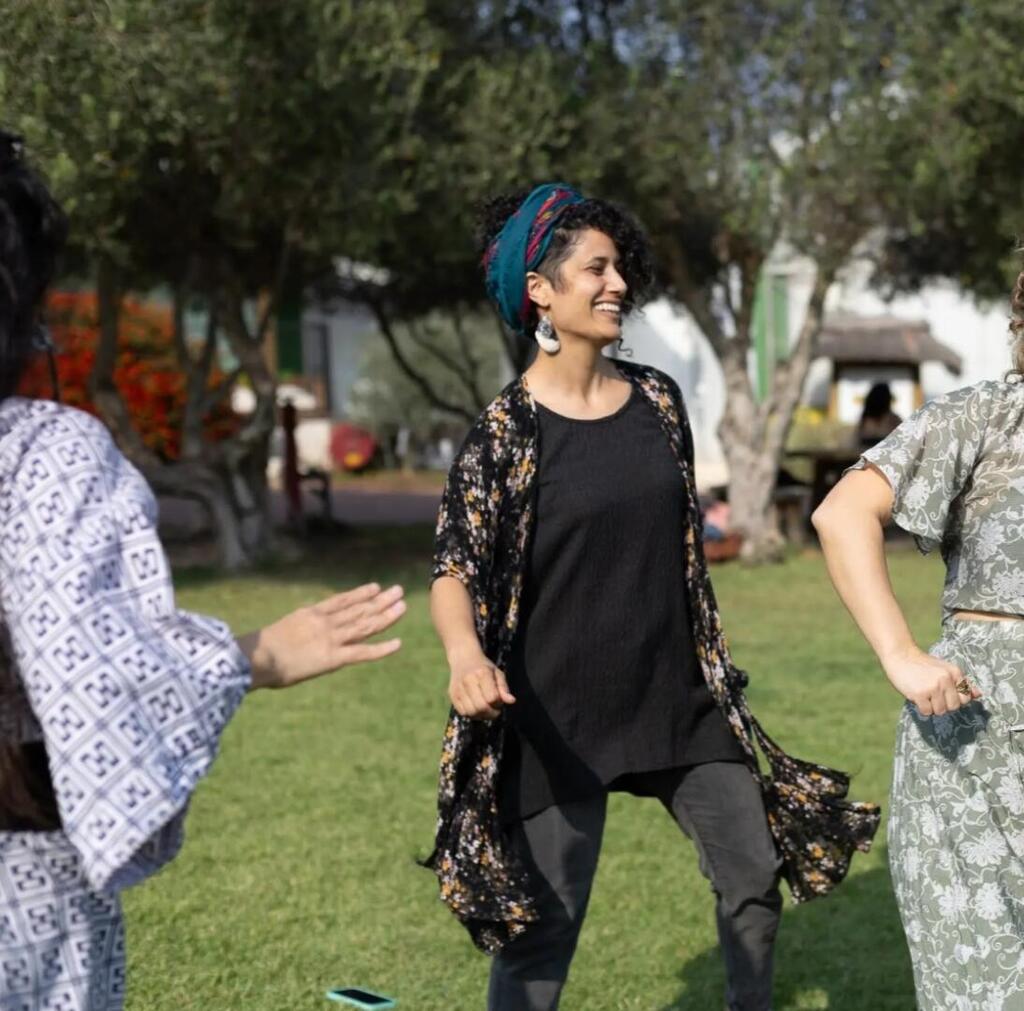
“You hear me use the word ‘fear’ a lot,” she says. “Every woman I work with has experienced something. Some women are lucky — they love male bodies — but for many, sexuality isn’t just pleasure; it’s danger. We’ve all experienced danger there. Many women have endured non-consensual touch, men who were supposed to protect them turning out to be harmful. Even in the safest places, women have been hurt. Look at me — I went to therapy to heal myself, and that’s where I was harmed. So when a woman meets a kind, loving man, her body still remembers. She lies with him, pleasures him, everything looks fine on paper — but not inside.”
(Photo: Tamar Kinarti)
“Sex is a dangerous space not necessarily because of this man, but because of other men — or even just from reading too many articles about sexual assault. When I was younger, I’d sit in a café every day, open the paper, and start crying. Another disgusting headline about a man — another rape, another assault. It’s important to talk about it, but it also creates secondary trauma. Women carry fear constantly. A woman might tell me, ‘I was never raped,’ yet her body reacts as if she was.”
She cites psychoanalyst Sabina Spielrein, one of Freud’s forgotten students: “She wrote that sexuality is a space of becoming — meaning, I can grow and flourish there — but it’s also a space of destruction. Every sexual encounter holds danger. Men tell me they fear being abandoned, or that they’ll unknowingly force themselves on someone. Women fear not being heard, being erased. Sexuality isn’t just orgasms and fun — it has a lot of dark sides.”
The 'testicle storm'
For eight years, while studying conventional sex therapy, she taught female sexuality and built a community of thousands of students, most of them formerly religious. Then she felt she’d reached her limit.
“I realized I was no longer in trauma, that I was friends with my sexuality. Then it hit me — the trauma had swallowed Adam. It put me and my healing at the center. I was allowed everything: to be angry, disappointed, to accuse him. But when I healed, I realized there was another person here I didn’t know well enough. I became curious about his sexuality. I wanted to listen, to understand. I want to make peace — sexual peace.”
What do you mean by ‘sexual peace’?
“It means realizing that as long as we, the female therapists, keep talking only about female sexuality, there’s a disconnect. It’s nice for a straight woman to explore her sexuality — but at the end of the day, she’s in bed with a man. Heterosexual relationships — which still make up most of the population — are neglected and wounded.”
She developed a course called Mahevet (“Lover”), which around 600 women have taken.
“It’s about befriending male sexuality — shifting the story from fear to playfulness with a man, learning to give, to be active rather than passive. There’s even a whole section about testicles.”
Testicles?
“For some women, the penis is hard to handle because it represents masculinity — including its negative aspects. If a woman has been hurt, it’s intense. So at some point, I discovered the testicles. They’re round, soft, even feminine in a way. No testicle ever hurt a woman. I put the penis aside and focused on the testicles. I talk about them for six hours — tell their story, celebrate them. Men actually wrote to thank me for talking about their anatomy in a beautiful, non-sleazy way.”
But not everyone appreciated her open discussion. In an interview on Kan 11, she spoke freely about testicles — and the storm followed.
“I was naïve. I couldn’t imagine what would happen. For me, it was about gentle sexuality and healing. Suddenly people recognized me in the street — ‘Hey, you’re the woman who talked about testicles on TV!’ Two days later I went to the special-ed school where I teach, and they told me: ‘Your students saw the clip, they’re sharing it — you’re exposing them to sexuality!’ These are teens aged 14 to 17, some already in relationships. I exposed them? I was publicly shamed. They treated me like I’d been in porn. They forbade me to speak openly about sexuality or attend professional conferences. I was summoned to an urgent meeting with several principals, sat there, and they basically lynched me verbally: ‘You’re harming students. You’re abusive.’”
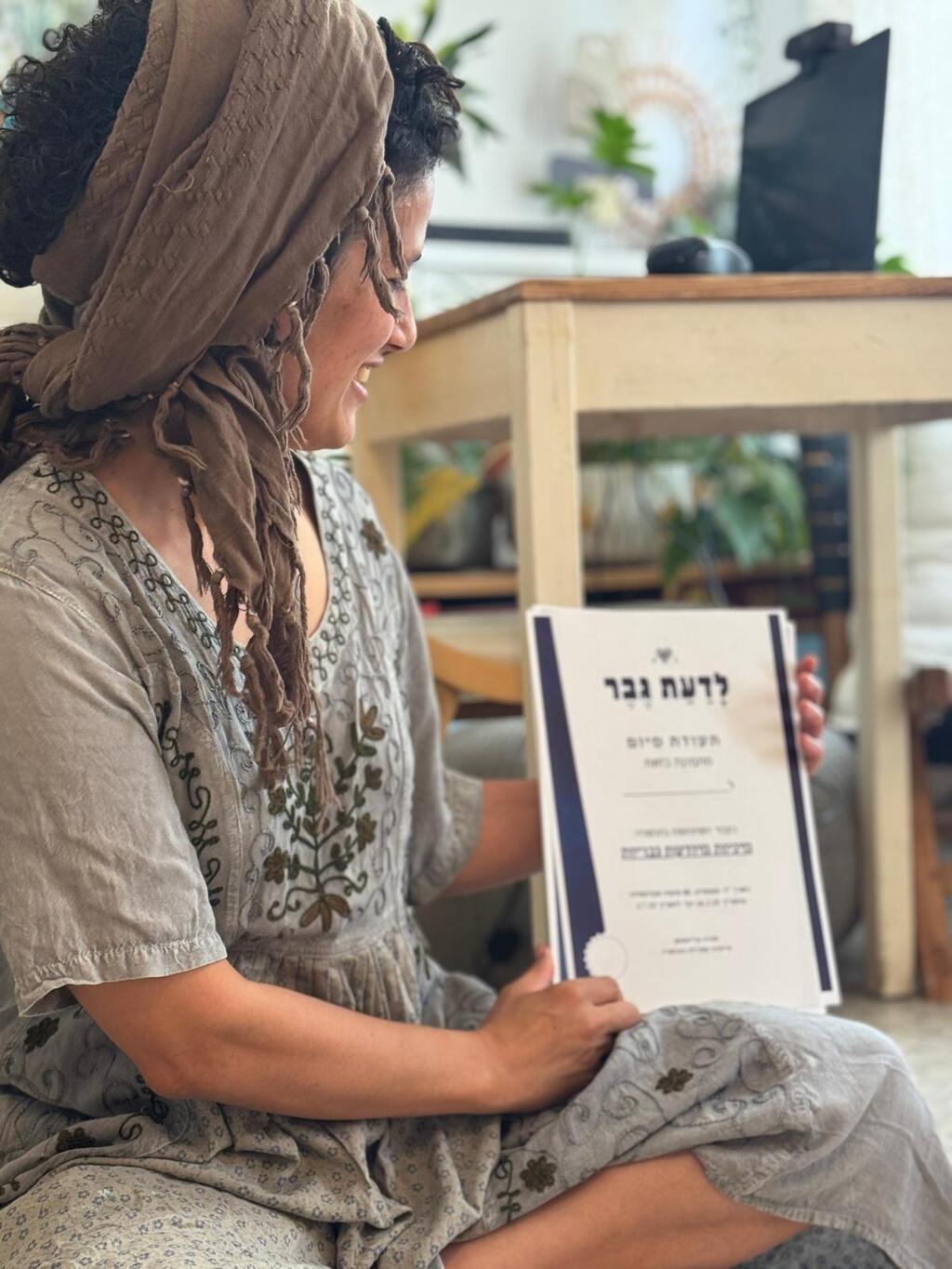
“I’m abusive? I studied sexual therapy for ten years to make sure I never harm anyone. I spoke respectfully. And besides, these teens are exposed to far worse stuff online — so what are you pretending? I’m their problem? For six months I heard whispers in the hallway. I didn’t want to quit — I needed the income; I have four kids. But eventually, I had no choice but to accept their silencing. I signed a paper promising to stay quiet. But I couldn’t. I’m a woman who speaks — that’s what I was born for. After 17 years in the Education Ministry, I resigned during the pandemic, then the war. Financially, it wasn’t smart. But this is my calling. I paid a heavy price for my openness.”
The Education Ministry later stated: “According to our records, Ms. Zohara Treistman resigned voluntarily after maternity leave. Her file contains no complaints, disciplinary actions, or unusual agreements of any kind.”
To know a man
At some point, she realized that many of the women in her courses were therapists themselves seeking to deepen their knowledge. That’s how Lada’at Gever — “To Know a Man” — was born, a professional program on male sexuality.
“It’s not some spiritual thing — it’s a serious, professional training,” she explains. “I worked hard on it. It’s built from 13 years of study and practice. The target audience is female therapists, educators, and counselors who want to specialize in male sexuality and learn about men’s culture and spirituality. There are a lot of ‘truths’ we tell women in therapy. For example, if a woman says she avoids sex because it hurts, we focus only on her. If the man dares to speak up, they tell him, ‘Be mature, shut up, can’t you see she’s in pain?’ And I ask — what about him? No one deals with his pain. It’s important to raise the volume on the male experience, because men usually silence their suffering.”
In the end, you’re a woman who’s only slept with one man. Who are you to heal others’ sexual lives?
“That’s a good question. Everything I teach, I’ve lived through myself — within a relationship, within life. We’ve gone through a lot together, in every area. That’s what lets me understand couples’ experiences — from the body and the heart. True, we’re not in an open relationship, but we are in an evolving one — and that’s huge and not simple. I know people get angry at me, raise eyebrows, but I’m done asking permission. If I start wondering, Oh, maybe I can’t do this because I’ve only slept with one person, I’ll never move forward. I feel this is my life’s work. I help so many people. My purpose in this life is to create connection. For me, connection happens in long-term partnership with someone who stays with you through the ugly moments too. A safe bond is one where each becomes the other’s healer — and you can do that only with one person. Still, I work with all kinds of women — some in open relationships. I’m a trained professional, with years of study. Ethically, I’m fully authorized to work with both men and women. The diplomas are on the wall.”