


In most accounts of IDF operations, attention naturally gravitates toward infantry troops on the front line, tank crews, or pilots in the air. But deep inside the “red zone” of the ground maneuver in Lebanon, a far less visible force operates, one that keeps the entire battlefield moving.
These are the silent backbone of the campaign, or more precisely, the silent female backbone. Armed not only with weapons, but with wrenches, heavy towing cables, and advanced diagnostic systems, they are female officers and soldiers of the IDF Technology and Maintenance Corps (TAN”A). Their mission is singular but decisive: maintaining the operational readiness of Israel’s heaviest combat platforms under fire.
Gallery
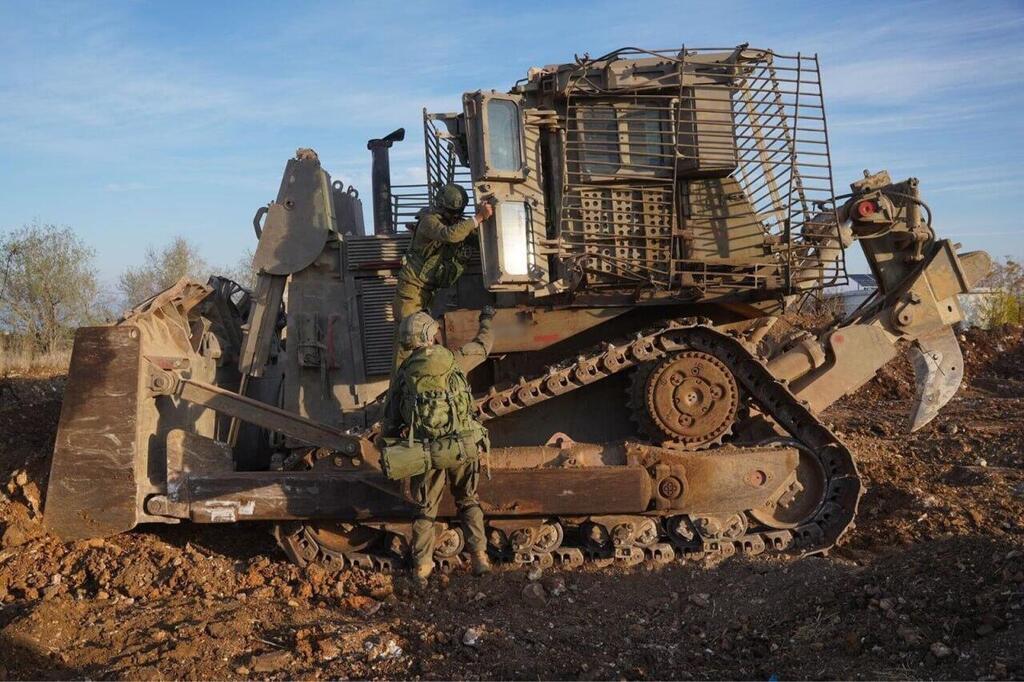
Focus on the mission not fear. Female IDF maintenance soldiers operating in the field
(Photo: IDF Spokesperson's unit)
Debates over the integration of women in the IDF often play out in studio discussions, but on the ground, the reality has long been settled. These female soldiers and officers are not engaged in gender politics; they are repairing heavy combat equipment under fire, sometimes through entire nights, under constant threat.
“When a vehicle is stuck, there is no garage you can take it to,” one female officer said. “There’s no such privilege. You simply solve it in the field to complete the mission.”
The journey of Lieutenant A., assistant maintenance officer in the Binyamin regional brigade, into the heart of technological and operational work was far from straightforward. Born in Tashkent, Uzbekistan, she moved to Kiryat Bialik at the age of 12 and experienced a difficult childhood.
“I hit rock bottom, surrounded by drugs, alcohol and violence, and was even arrested as a troubled teenager,” she said. “At 16, I decided to change course. I enrolled at Otzma High School, where I began studying mechanics, later earned a practical engineering diploma in smart systems, and eventually enlisted in the IDF Technology and Maintenance Corps.”
Today, A. is responsible for the largest sector in the West Bank, overseeing around four battalions of both regular and reserve forces. She works around the clock preparing armored and protected vehicles, including “David,” “Tiger,” and “Panther” platforms.
“The reality in the West Bank is different from Gaza and Lebanon,” she said. “There are no armored combat vehicles here, but we are still inside the ‘red zone’ together with the forces, in the same way and with the same intensity.”
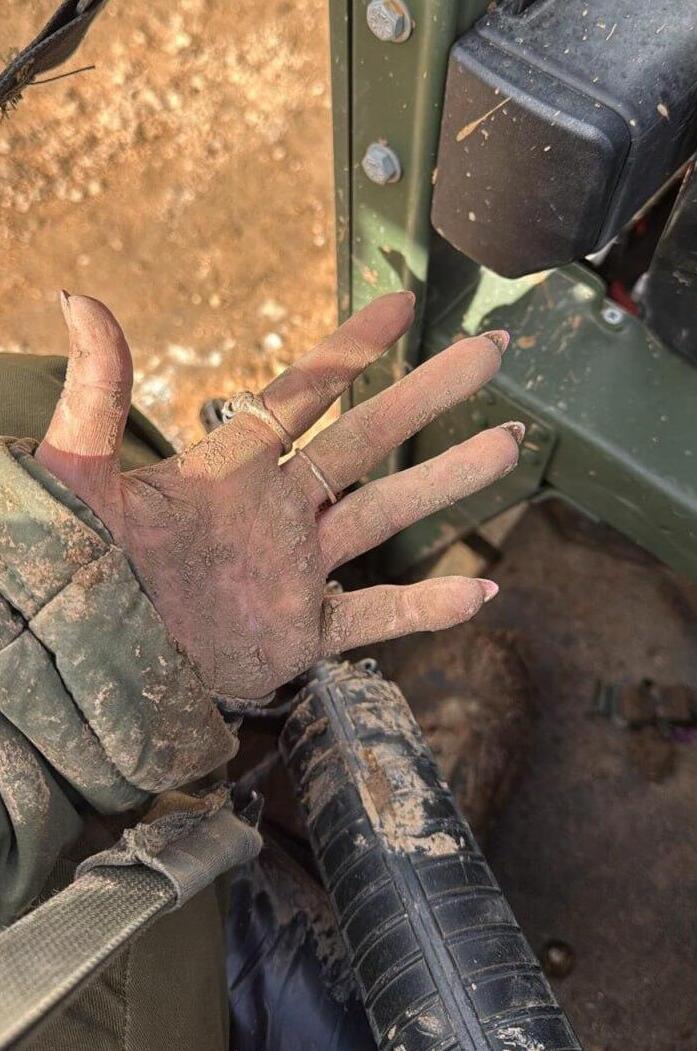
“The driver said, ‘What do you know?’ I pulled him out”
(Photo: IDF Spokesperson's unit)
In a highly male-dominated environment, A. says she has long since proven her place. “During regular service I arrived to recover a vehicle during an operation. The driver looked at me and said dismissively, ‘What would a woman know?’ I just pulled the vehicle out,” she said. “Not long ago I entered a village to recover a vehicle; the battalion deputy commander came down with me from the ‘Tiger’ and the soldiers were with me. We operate like combat soldiers in every sense.”
Looking ahead, she says she plans to remain in the field. “I’ve been in the automotive field for eight years and I will clearly continue. After maintaining vehicles weighing tons, switching to a small 1.2-ton SEAT Ibiza feels almost funny,” she said. “I see a clear trend of more women entering the field; they are fighters and do excellent work. My commander gives space to everyone and does not diminish anyone’s value.”
Crossing the northern border, the threats change. Lt. A., commander of a maintenance platoon in the IDF’s 601st Engineering Battalion, has experienced firsthand the complexity of maneuvering in southern Lebanon. “Many vehicles are getting stuck in enemy territory,” she said. The Lebanese terrain includes steep ascents and descents, valleys, rivers, and winter mud that turns every malfunction into a major operational incident.
“If the engineering battalion doesn’t operate to clear the route, the soldiers are stuck. The work of the bulldozers and excavators is critical to the movement of forces.”
One of the most complex cases involved a bulldozer from the 603rd Battalion, which was struck by an FPV drone in the Litani sector. After the wounded were evacuated and the vehicle cleared, maintenance teams entered at night alongside specialists and external heavy-equipment experts brought in to diagnose the damage. Even after partial repair, the machine suffered catastrophic track failure.
“My soldier repaired the vehicle inside,” Lt. A added, “but about 200 meters before reaching the border, the entire track came off. The excavator continued on a single track, and it turned into another complex recovery operation on a transporter. We don’t leave any vehicle behind in the field.”
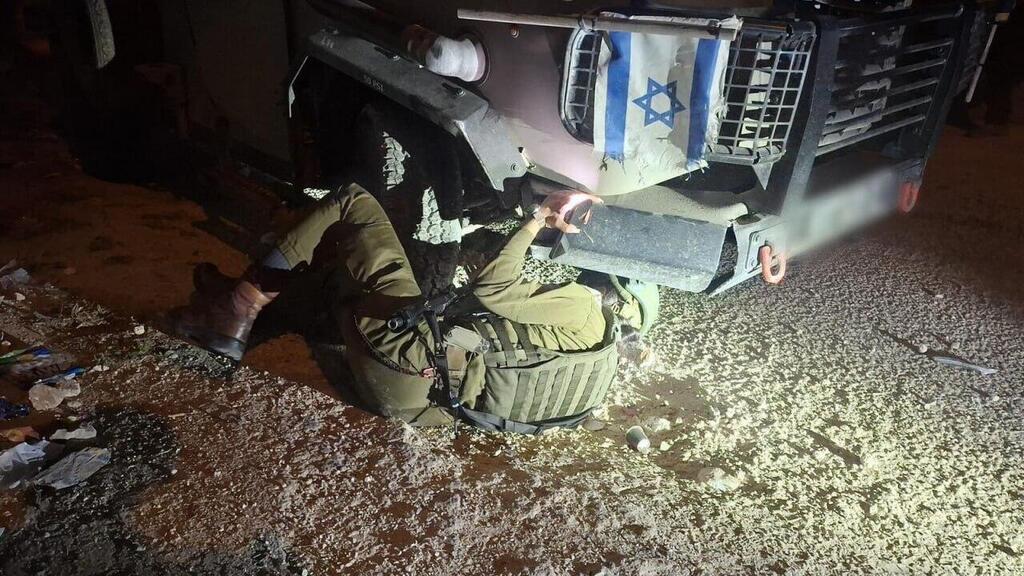
The entire operational activity can be halted because of a stuck vehicle
(Photo: IDF Spokesperson's unit)
In another case, teams had to recover a heavy vehicle near Beaufort. “It’s a dream to see Beaufort with your own eyes, but the routes there are extremely narrow and there is no room to maneuver,” Lt. A. said. "The team went in twice under drone threats, managed to start the vehicle, and drove it out over 30 kilometers of difficult terrain. It was an incredible victory.”
'If I don’t fix the bulldozer, my battalion is out of action'
For Lt. D., commander of a maintenance platoon in Armored Battalion 53, tanks are not just vehicles; they are the soldiers’ home on the battlefield.
Her battalion took part in the encirclement of Bint Jbeil and crossed the Litani River under harsh winter and muddy conditions. “If a tank is not operational, the soldier has no way to advance,” she explained. “The entire operational activity can be stopped because of a stuck vehicle.”
In one incident, a complex malfunction grounded the battalion’s activity for two days, until maintenance teams arrived with cranes and restored full operational capability within hours.
The work is carried out in grueling overnight shifts, often from 8 pm to 7 am straight, under fire or drone threats.
“When you go in to fix something, you don’t feel fear. You only feel the mission, and that’s what matters,” said Lt. D. “You need mental strength, but fear is not the issue here. If I don’t fix the bulldozer or the Namer APC, my battalion is out of action.”
Beyond recovery operations, the female officers and soldiers of the IDF Technology and Maintenance Corps (formerly Ordnance Corps) also take part in dismantling infrastructure along the first and second lines of villages in Lebanon, pushing the enemy back, and often go months without returning home.
“We give our soldiers across the border the calm and the ability to operate, so that residents of the north can sleep in peace,” Lt. D. concluded.