


“I saw that they had been fighting for a long time, and I felt I wanted to be part of it too,” says Shlomit, 48, a nurse in the surgical company of the IDF’s 401st Armored Brigade, describing her bold decision to join the reserves. “I have all the tools—why not give what I can?”
Shlomit lives in Rehelim, a settlement in the northern West Bank, and works as a nurse at Meir Medical Center in central Israel. When the war broke out nearly two years ago, her husband, identified only as S. for security reasons, and two of their five sons, Y., 28, and M., 24, were immediately called up for reserve duty.
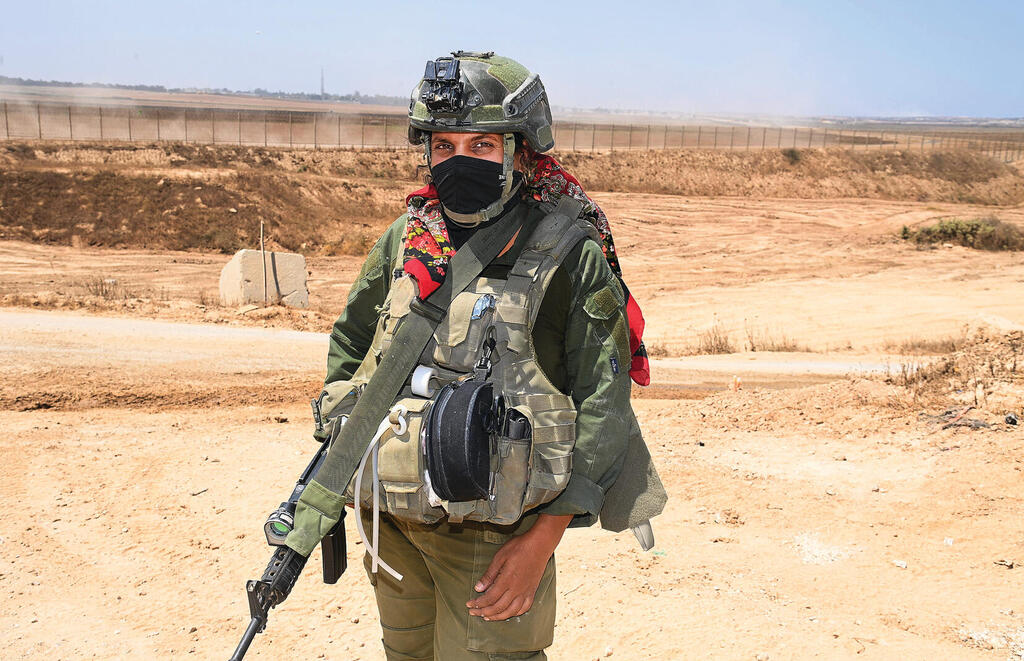
S. served as a liaison officer in the Paratroopers Brigade command post, while the two sons were assigned as tank crew members—Y. to the 460th Armored Brigade and M. to the 7th Armored Brigade.
“As soon as the news reports started coming in, Y., who was on a trip, packed a bag for reserve duty. The moment he got home, he received an emergency call-up order,” she recalls. “M. was traveling in Nepal after his army service. He’s observant and doesn’t use his phone on Shabbat, but he saw his friends packing up and heard from them that war had broken out. They didn’t know how they’d get back to Israel, but they knew they were needed. In the end, they returned on a rescue flight via Dubai, along with hundreds of other young people.”
A week later, her husband S. was also drafted. Since then, he has completed roughly 600 days of reserve duty, while their sons have served a combined total of about 10 months in uniform.
“They know this is our mission—and if we’re needed, we’ll be there. That’s how they were raised,” the proud mother says. “Even though they lost a year of studies, they’re still full of motivation.”
'I had this feeling of, 'Why am I not there?''
A month and a half into Israel’s ground operation in Gaza, a devastating incident propelled Shlomit toward the front lines.
“Y. was caught in a clash with terrorists in the northern Gaza Strip, during a highly complex maneuver,” she says. “Thirteen soldiers—half of the unit—were wounded, and Staff Sgt. Noam Yosef Abou was killed. He had been with my son Y. day and night. They fought side by side.”
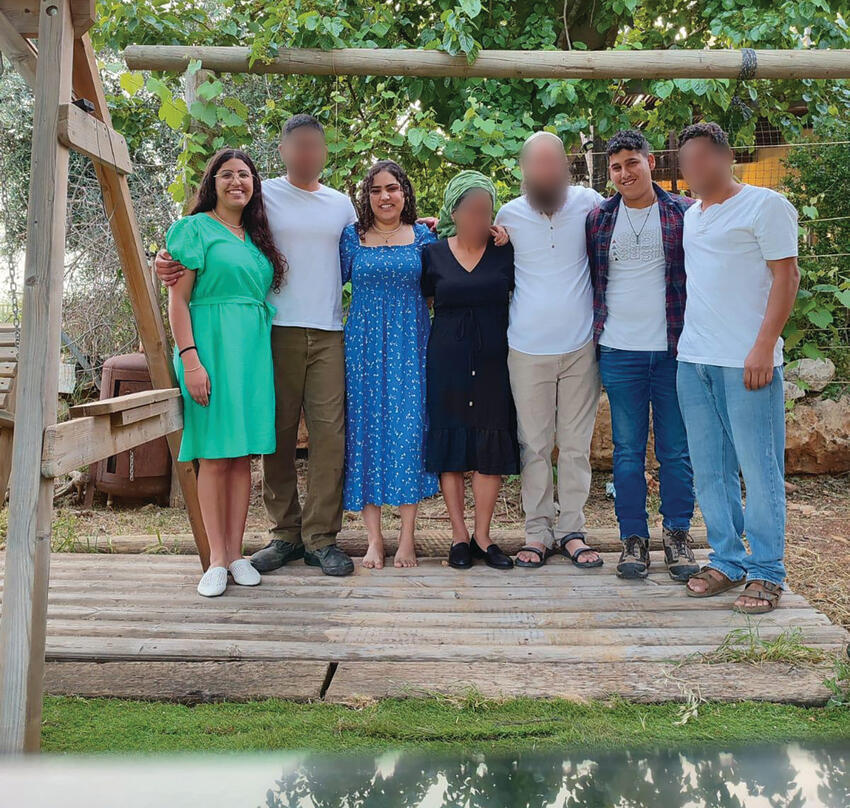
From left to right: Rachel, M., Morasha, Shlomit, S., Yehonatan and Y.
(Photo: Courtesy)
Shaken by the loss, Shlomit spoke with her son and asked how she could help. “I had this feeling of, ‘Why am I not there? Why shouldn’t I give and help when I’m needed?’ If I could have, I would have joined the fighting that very moment.”
Although she had never served in the military, Shlomit was determined to do whatever it took to contribute to the war effort. A graduate of national service, in December 2024, she enlisted through a special track for women who had not previously served but held relevant professional training for military roles.
“I went through the full enlistment process—basic training, the intake chain, living in a room with strangers, being commanded by 18-year-olds. It was an unforgettable experience,” she says. “But now I’m here, and this is my mission—to lend a hand and help however I can.”
The woman in the tank will prevail
In April, Shlomit was assigned to the surgical company of the 401st Armored Brigade. In addition to playing a vital role in the brigade’s medical corps, she now serves alongside the same armored corps in which her two sons also fight.
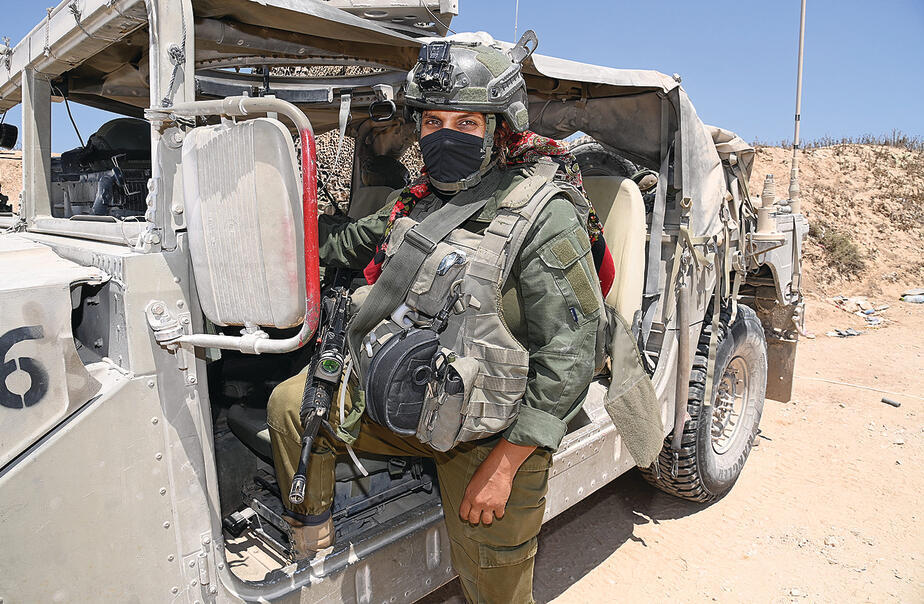
Shlomit in the heart of Gaza
(Photo: Herzl Yosef)
“I’m thrilled. We really love the Armored Corps. I’m proud of my boys, and of the corps itself. The tank is so powerful—you fall in love with it. Everyone here works incredibly hard, but they love what they do.”
She praises her company’s professionalism and care. “It’s a fantastic team, handpicked. You can see how skilled and sensitive they are.”
Shlomit operates in a medevac Humvee with a team consisting of a doctor, a nurse, a medic and a field operations coordinator. Besides her, only two other women serve in the unit—a deputy company commander and another nurse.
“We’ve responded when the brigade was hit, provided life-saving treatments, and evacuated wounded soldiers to hospitals—most of them urgent cases,” she says.
“I also come to them as a mother. I ask if they want to call someone, if they need anything else. I feel like each one of them is my child. That I need to protect, care for and help them recover.”
Shlomit says the pain of loss is also part of her new reality. “Sadly, we’ve also had to accompany fallen soldiers. These are heroes. In those moments, I know how to lay a hand on their heads and escort them, until they are buried in our homeland.”
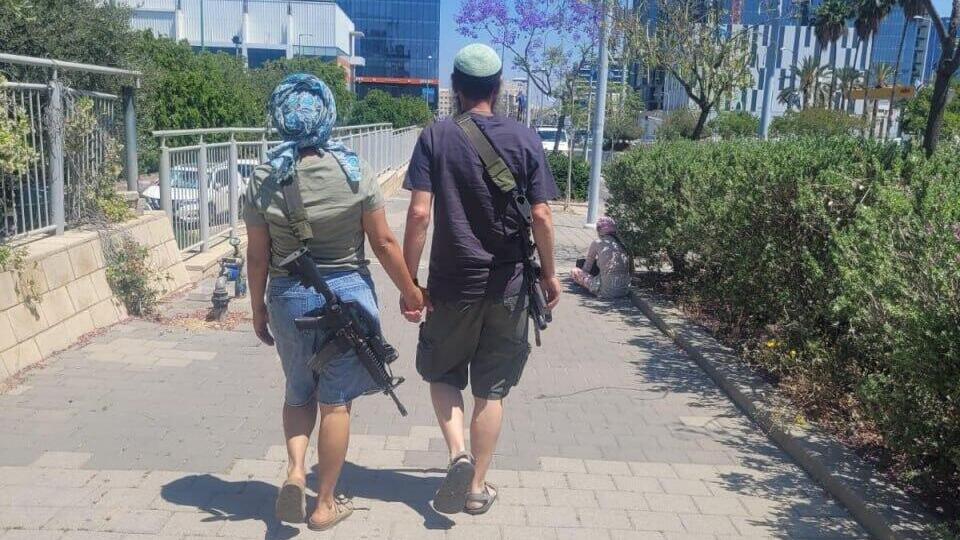
Shlomit and her husband on leave
Now serving in the reserves, Shlomit splits her time between a week in IDF uniform and a week in her nurse’s uniform at Meir Medical Center.
“My children and family are very proud, and not surprised that I’m here. The soldiers around me work hard, but they do it with a smile. You can see their spirit. Whatever’s needed—they’re there. I give as much as I can. It’s the least I can contribute to the war.”
At least for the coming week, she is stationed with her unit on the outskirts of Jabaliya in northern Gaza. There are no showers, just chemical toilets, and the nearby reinforced shelter has been turned into a makeshift bedroom.
Despite the harsh conditions, she is grateful for the opportunity to serve. “I can’t complain—I don’t have the right. I see the soldiers here, giving everything they’ve got. And I’m happy to be here. It’s a duty that is also a privilege—to be here, to protect and to fight.”