

From as far back as she can remember, Noa Schwartz knew she was the daughter of a single mother. “My mother and I were always a single unit. I had a wonderful childhood. My mother was enough for me. She was, and still is, my best friend. She was always an anchor, a safe place, and I trust her completely,” she says. Her grandfather, her mother’s father, had been married twice, and both grandmothers were very present in her life. Since her mother is also an only child, second cousins became a large, warm, enveloping family. There was also a family friend who was part of her life. “Only after his death did I find out that he was my father,” says Schwartz, 26, a Tel Aviv resident who is currently in a relationship.
These days, her debut book, “To the Man With Hazel Eyes” (Catharsis Publishing), has just been released. Half of it is devoted to a novella written as a series of letters to her deceased father. The second half includes two short stories, one rooted in her own life and the other inspired by her grandmother.
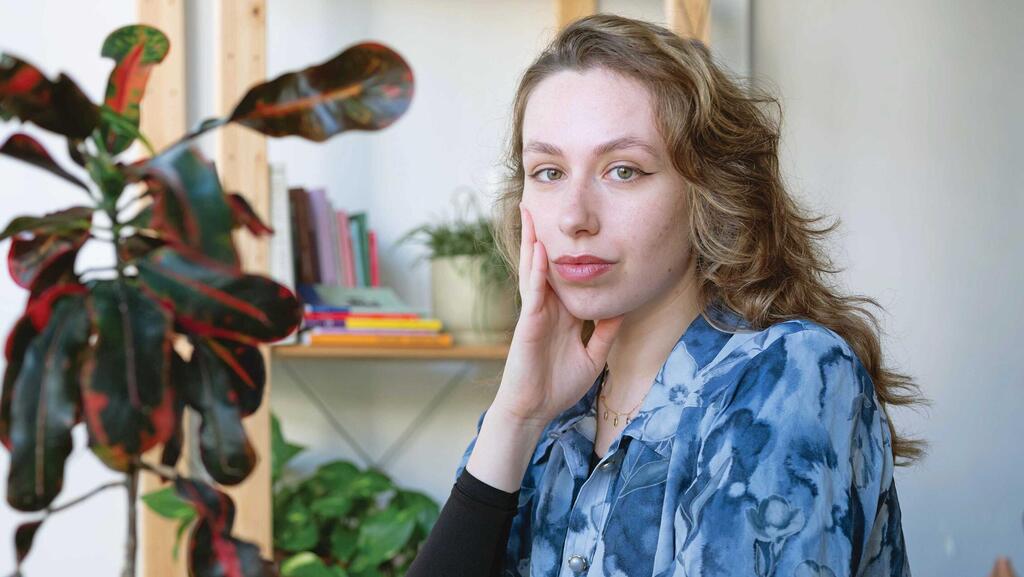
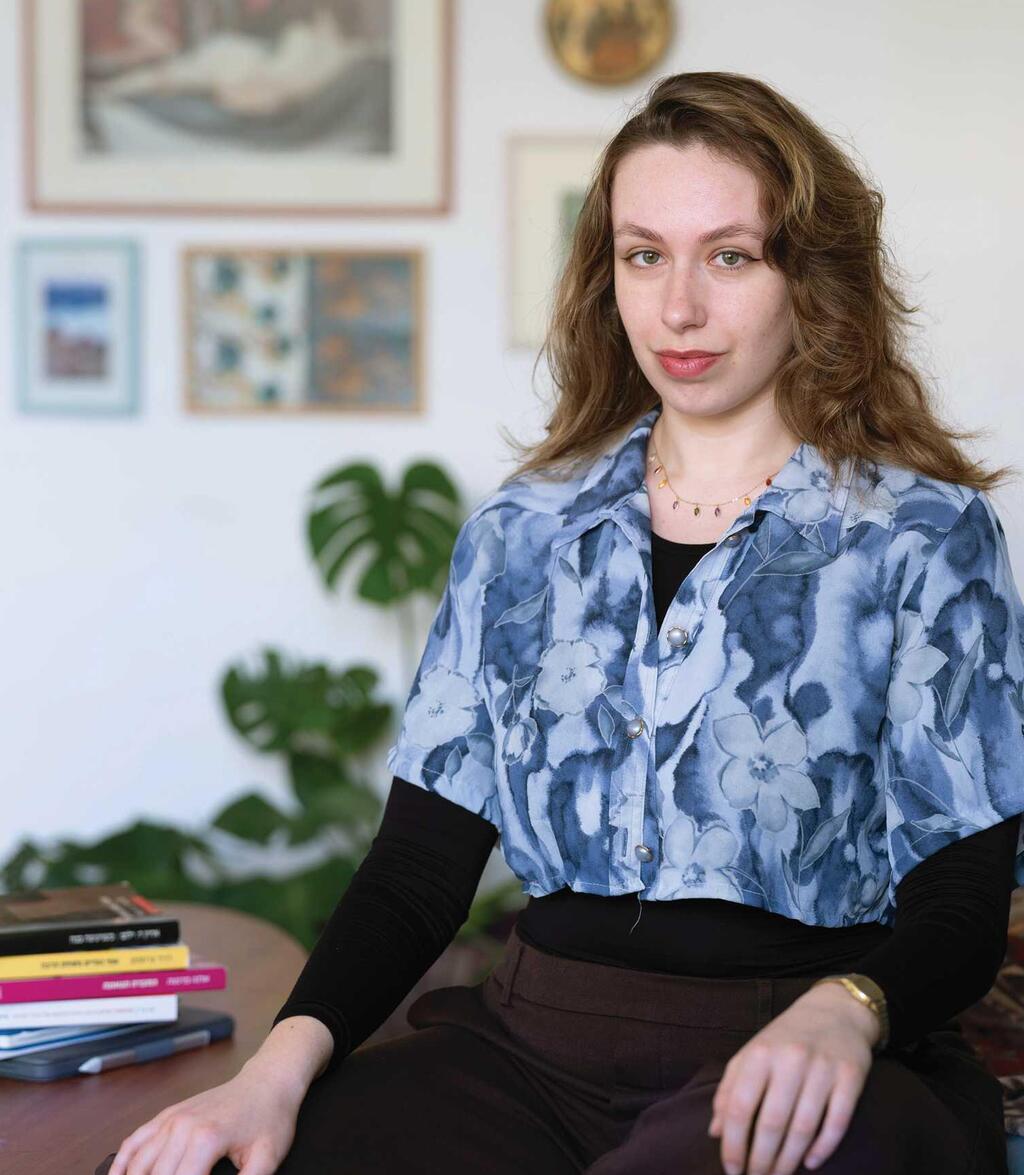
Noa Schwartz. 'Pieces came together that I did not even know were unresolved'
(Photo: Yuval chen)
Three voices appear in the book: a teenage girl writing to a father she never knew, a mature woman who leaves her home and marriage, and an elderly woman whose life was full of adventures. They are woven into a rich, emotionally charged mosaic that seeks to touch on questions of identity, creation and memory.
Schwartz was born in Ganei Tikva and moved with her mother to Kiryat Ono at age 14. She attended middle school and high school at Hakfar Hayarok. “Every now and then people would ask me if I had a father, and the answer was always short: ‘I don’t.’ I don’t remember ever asking my mother why I didn’t have a father. My grandfather, who died when I was 13, was an important male figure in my life, and so was the family friend I had known since birth. I felt connected to him. He was part of the landscape of my childhood, and that continued for years.”
You say you did not really wonder about your father, but it must have been working somewhere inside you. “From early childhood I felt that beneath the reality I knew there was another layer, that something in the picture was incomplete. Still, I did not ask my mother and did not think I needed to investigate it.”
How did those feelings manifest?
“I was an anxious child and teenager, but I did not connect it to being raised by a single mother. No one connected it. My mother knew about the anxiety attacks, took me to doctors and psychologists. I was always in treatment and never raised the issue. I only connect it now, in hindsight.”
She received an exemption from military service because of anxiety attacks, and immediately after finishing high school she enrolled in theater directing studies at Seminar Hakibbutzim College. During her first academic year, the man she insists on calling “the family friend” died.
“Until then, he was very present in my life. He came to our home, we sat together at cafes, I told him about my studies. I shared my life with him, my dilemmas, joys and disappointments. He knew my first boyfriend. He was definitely a close figure, a kind of parental figure I got as a bonus. I loved him very much. I knew he had a family. We spoke about them the way close people talk about their lives.”
“I sat with him alone, and he told me he believed in me, was proud of me and loved me. I told him I loved him, not knowing it would be our last conversation.”
When she was 17, he told her he was ill.
“At first I was very sad, but I did not have the tools to deal with it. Toward the end of his life I visited him in the hospital. I sat with him alone and he told me he believed in me, was proud of me and loved me. I told him I loved him, and I did not know that would be our last conversation.”
Did he ever hint that he was more than a family friend?
“No. He said he loved me like a daughter, and I felt close to him like to a father, but not a word hinted at any other connection.”
Did you ever think he might be your father?
“The truth is, I did have that fantasy. I played with the idea. After he died, I felt a huge sense of loss. A few months later my mother said she wanted to talk to me. I was not expecting anything dramatic, but I remember the image clearly. We were sitting in the living room, and then she said: ‘He is your biological father.’ I felt like everything was spinning. I fell apart a bit, and suddenly everything that had been vague was laid out in front of me. Pieces connected that I did not even know were loose. That place in my identity that had so much uncertainty, that I did not even know existed, suddenly became clear.”
Did you regret not knowing while he was alive?
“Not immediately. It took me quite a long time to be able to separate and feel the different emotions that come with such a discovery. It changed the way I see myself. Today it is a very central component of my identity. It affected everything I have created and worked on since. All my theater studies revolved around the need to try to process and understand my identity as his daughter, and things I had no way of experiencing with him. Today I understand better the place he held in our lives and in mine.”
Did the anxiety attacks improve after the discovery?
“Not overnight, but there was significant improvement.”
Lost in Berlin
After finishing her studies, Schwartz taught at the Democratic School in Kiryat Ono and moved with her former partner to Berlin. “I never imagined myself living abroad, but he was a pianist who went to study there, and I wanted to be with him. I was 21 and dreamed of writing a book and a play and studying arts therapy. At first I was a bit lost. There was a gap between me and my partner, who had a social circle of musicians. He flourished, and I could not find my place. I had no starting point to build a life.”
“I missed him, I was angry, and above all I was proud to be his daughter. Today I have a mother I admire and a father I was fortunate to have as part of my identity.”
After three months she returned to Israel to think, then went back to Berlin to study psychology. “That was the first step in feeling that I could build a life in the new place. After two years we separated by mutual decision. I thought I would return immediately to Israel, but I discovered I was sorry to leave what I had built there. At that stage I was also studying psychodrama, had friends and an apartment I loved, and began to understand the language. I stayed another year.”
About six months ago she returned home. “To my family, to my language, to my place, and I began a master’s degree in drama therapy at the University of Haifa.”
When did you start writing the book?
“Each part began at a different point in my life. At 18 I started writing ‘The Man With Hazel Eyes.’ At first it was fragments of thoughts and ideas of things I wanted to say to my father. Over the years it took on a narrative shape about a girl who leaves home to search for a man she remembers from childhood but does not know who he is, and she writes him letters in the hope they will reach him. Writing helped me process the longing, the sense of missed opportunity, the uncertainty and the anger that he did not reveal the truth during the years of our relationship.”
Were you angry at your mother?
“No. I was able to understand fairly quickly why she did not tell me. With him, there remained a kind of open account. He was no longer there, and I could not talk to him, ask, process. I missed him, I was angry, and above all I was proud to be his daughter. Today I have a mother I admire and a father who I was fortunate to have as part of my identity.”
Shrinking myself
She wrote the story “The Composer’s Wife” before moving to Germany with her partner. “I think from the beginning of the relationship there was a fear in me that I would disappear within it. Writing allowed me to experience that fear, because I projected it onto a character who was not me. I could deal with all my fears without it threatening my life or my relationship. “My partner, by the way, read the manuscript from the beginning. Neither of us related to it as something that required attention in our relationship. Even I only understood after we separated how much I had shrunk myself to give him all the space in my world.”
The third story centers on a 70-year-old woman whose life was full of wild stories she collected in order to tell them in old age and leave them as a legacy. She is now in the stage of losing her memory. “The story is not autobiographical, but it reminds me of many conversations I had with my grandmother, may she live a long life, about clarity, about the fear of losing her and about what life is worth without her. The three women in the book are different incarnations of the same woman, dealing with questions of identity, loss and creation. Together they create something whole.”
What did you feel when you held the book in your hands?
“A lot of pride, and fear. It deals with things that I am used to keeping secret. For me, the repair and healing is releasing myself from the prison of the secret, but it is also terribly frightening.”
First published: 19:29, 01.14.26