

A phenomenon that usually unfolds far from public view: closed groups, spiritual leaders wielding near-absolute power and victims who often realize only years later that the relationship presented to them as a path to salvation, healing, faith or a higher way of life had in fact become a system of control, one that frequently involved exploitation, subjugation and abuse in nearly every area of life.
It often begins with emotional harm and financial exploitation and can escalate into physical and sexual abuse. Cults and abusive groups no longer necessarily look like isolated compounds led by a guru screaming at followers. They can begin with a yoga class, a religious community, a charismatic teacher or a healer promising meaning and recovery. Sometimes, only years later, does the embrace reveal itself as a cage, and even then, it is unclear how much help victims will receive from the state.

According to the Israeli Center for Cult Victims, at least 200 abusive groups are currently active in Israel, involving some 10,000 children. “There has been a very sharp rise in inquiries,” said Rachel Lichtenstein, CEO of the Israeli Center for Cult Victims. “I can’t say it’s only an increase in the number of groups, because many inquiries also come from groups that have existed for 15 or 20 years and are only now beginning to generate testimonies. There’s greater awareness, and the security and economic distress are also drawing more people into these kinds of frameworks.”
Faith is not the problem. Control is.
The word “cult” almost always provokes a visceral reaction and sounds like something distant and extreme. But people who have worked with victims for years warn that this very image is part of the problem: an abusive cult is not defined by its beliefs, but by the way it exercises power.
“When we talk about an abusive cult,” Lichtenstein explained, “we’re talking about a group with a leader and an ideology. Up to that point, it can be legitimate. The abuse begins in the relationship between the leader and the followers — a relationship based on deep dependency and severe control that enables harm against members of the group.”
An abusive cult can appear in almost any “disguise”: religious, spiritual, therapeutic, business-related, political and more. Not every spiritual group is a cult, and not every framework with a leader is abusive. The difference lies in the patterns: Are members allowed to question and leave without punishment? Do they maintain ties with family and friends? Is there a life outside the group, or is the outside world portrayed as a threat?
From 'love bombing' to 'humiliation rituals'
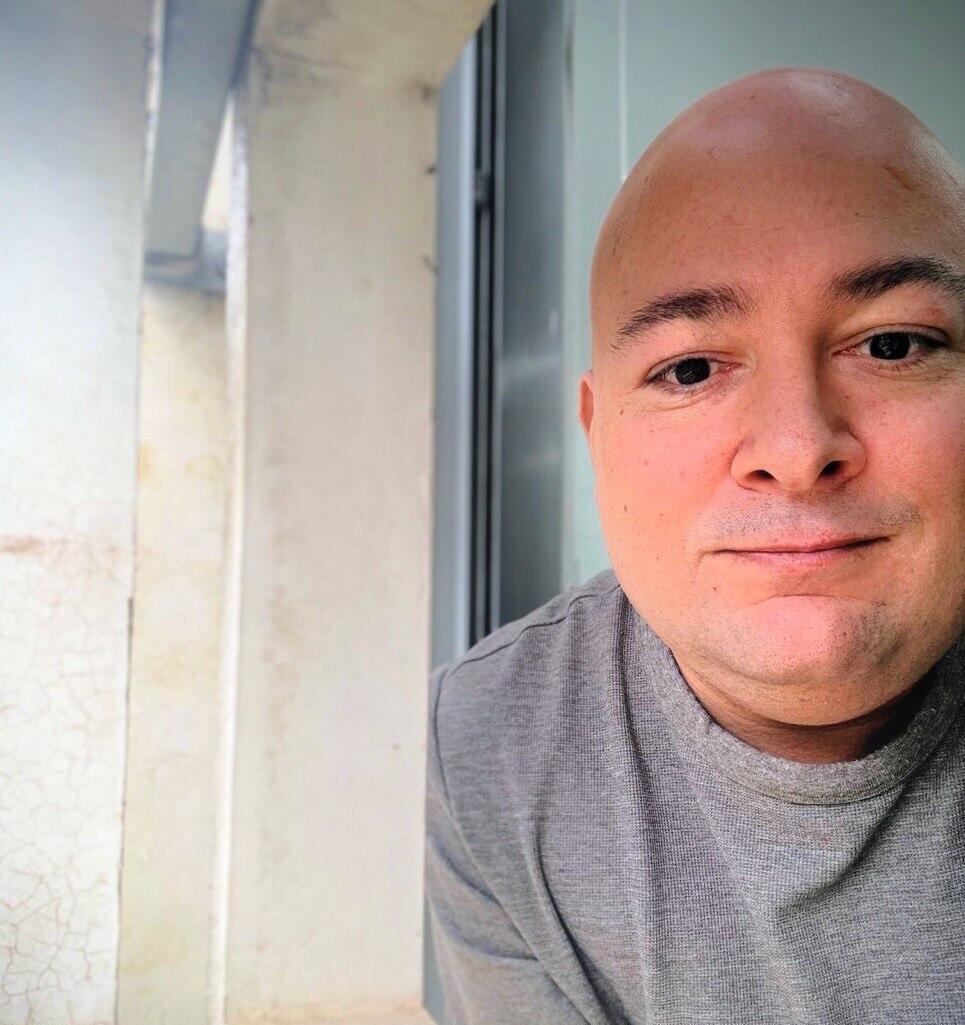
Nissim Nahum, 42, was 15 when his parents divorced. Around that time, two women from a Christian messianic organization came to the family home and offered his mother “comfort from the Bible.” Once she realized it was a Christian movement, she cut off contact — but Nissim continued secretly and remained in the group for 22 years.
“There were two things that drew me in,” Nissim said. “I was deeply in the closet, and I read an article about someone who had been gay, studied with them, received the Holy Spirit, changed, married a woman and had children. I thought: How wonderful, I can do that too. The second thing was the feeling that I had discovered the truth. I found the absolute truth. There is truth and there is falsehood, there is God and there is Satan. Suddenly everything had meaning.”
Nissim Nahum
The entry into the group, he said, was wrapped in warmth. “I got the affection I needed. It was endless love. Warmth, care, concern. Love bombing.”
But alongside that affection, the outside world gradually became painted in threatening colors. “You learn that the whole world is evil, that it belongs to Satan and that you have to beware of its influence. I was even afraid of my mother’s influence on me.”
When outsiders told him it was a cult, he always had a ready answer. “People told me that many times. But you learn what to say. You say: ‘According to the dictionary definition, a cult is a small group following a leader, and we don’t have a leader — our leader is God.’ And you also know that the world doesn’t understand.”
The control, he said, did not take the form of physical violence, but of deep social discipline. “There are sanctions,” he said. “For example, being forbidden from answering questions during gatherings. To someone outside it might sound like nothing, but inside it’s a terrible punishment because everyone notices.”
There were also internal judicial committees and “marking speeches,” in which leaders publicly singled out someone negatively in front of the entire community — essentially a “humiliation ritual.”
The harshest punishment was shunning. “No one is allowed to speak to you, not even family members. That’s the greatest fear. You always know that if you leave, you lose your entire world.”
For eight years, he wanted to leave, but not because he believed something was wrong with the group. “I wanted to leave because I thought I was sinful. I didn’t think they were wrong. I thought I was wrong.”
He worked in the organization’s translation office without pay, savings, pension or work experience outside the group. “I reached 30 and I had nothing. No job, no money, no education beyond high school, no connections. If I leave, where will I live?”
His exit came during the coronavirus pandemic. Because of medical treatment, he was separated from the group and living alone, and a connection with someone outside eventually led him to the Israeli Center for Cult Victims.
“I went there only so I could keep meeting him,” he admitted. “I sat across from the social worker and said, ‘I don’t know what I’m doing here, this isn’t a cult.’ And she asked me: ‘Then why are you here?’ Suddenly I said: ‘I’m afraid.’ And I started crying.”
From there, he began an exit process that he said was almost like a covert operation: saving money for rent at night while continuing to work within the organization during the day. Later, he received assistance from Israel’s National Insurance Institute.
“It was an unbelievable lifeline,” he said. Even five years after leaving, he said he is still relearning language, identity and community. “To this day, I feel like I’m learning what it means to be Israeli.”
Today, Nissim gives lectures about cults and abusive groups, sharing his life story, and runs an Instagram page titled “Confessions of a Cult Survivor.”
'Sex with the leader was presented as a mission and spiritual purification'
Ilana, a pseudonym, is in her 50s and spent more than 20 years in an international spiritual group that also operated in Israel. Due to legal restrictions, identifying details about the group, its leader and the country in which it operated cannot be published.
Her story highlights one of the classic mechanisms of abusive cults: how a group gradually becomes someone’s entire world.
“It was my whole world. My whole life, really,” she said. “That’s what the guru created — that it would become our whole lives. I had no life outside the cult. There were meetings four times a week, seminars five times a year, and I also worked there, so I was there every day. There was no time for anything else. He made us believe he had supernatural powers.”
She met the leader in India and was drawn in by his charisma. Later she moved abroad and joined a group with hundreds of followers.
“No one joins because they say, ‘I want to join a cult,’” she said. “You think it’s something good. Then slowly, through brainwashing, you begin to think that if you have doubts, you are the problem. Doubting is wrong.”

(Photo: Tero Vesalainen, Shutterstock)
Like Nissim, Ilana also worked in the leader’s company for a minimal salary and without benefits, often for long hours.
She described how sexual abuse was framed as part of spiritual teaching. According to her, only years into the group did the leader begin intensively introducing ideas about sexuality as something “holy” and profound. Later, she said, sexual relations with him were presented as acts of mission, transcendence and inner purification.
“He talked constantly about his mission. Then he said this was the deepest revelation he had received, that he didn’t even want it, but it was for the mission. He knows, and we need to trust him. If I say no — I’m saying no to the entire reason I’m there.”
She said intense psychological pressure was exerted both on women and on their partners, and everything was kept secret.
“They would say it was an opportunity to transcend, to purify yourself, to become a person whose self had undergone a ‘transformation.’ Everything was secret. No one knew about anyone else. And if a woman told someone, she was in trouble.”
Control was also based on the leader’s attention, whether he looked at someone, spoke to them, mocked them or ignored them.
“Everything in the group was built around whether he looked at you, whether he didn’t look at you, whether he spoke to you, whether he put you down. Everything revolved around his attitude toward you.”
Those who did not cooperate, she said, could be punished with silence. “He simply stopped giving attention. He ignored her as if she were air.”
For years, every feeling of discomfort was turned back on her as proof that she was the problem. “Many times I felt something wasn’t right,” she said. “But according to the teachings, it was because I wasn’t right. Because I wasn’t devoted enough, didn’t believe enough, wasn’t genuine or authentic enough. If I were honest enough, I would see that he was God.”
Her awakening also came during the coronavirus pandemic, when meetings moved online rather than in person. After discovering what had been happening behind the scenes, she began investigating on her own.
“I realized I had been living one giant lie. He preached a life of truth, never lying to the world, honesty. The moment I realized he wasn’t like that, I understood something here was wrong.”
The moment of awakening was not only liberation, but collapse. “I wanted to run away as fast as possible. But I had no money, my body was damaged, I could barely move. There were nights I stayed awake just processing everything that had happened. I felt horrible, completely alone in the world, and mostly that I had wasted years of my life.”
Her husband, whom she met at the beginning of her time in the group, remained inside after she left. “I tried to convince him. I showed him things, but there was no one to talk to. The moment he met with them, he became like a completely different person,” she said.
Returning to Israel was difficult. “I came back with no money, no profession I could work in here, physically damaged, in terrible pain, without my husband, and my father had just died. It was awful. But I was so happy about the freedom. That was always the main thing: first of all, I’m free.”
For her, salvation came through the Israeli Center for Cult Victims. “It literally saved my life. Truly,” she said. She was recognized as disabled and unable to work, and now receives a stipend. “It’s not enough to live on, but it’s a safety net.”
Ilana wants the public to understand that cult victims cannot be judged through the logic of people outside such groups. “People think, ‘That could never happen to me.’ So what does that say about me — that I was stupid for more than 20 years? No. These people know how to exploit vulnerabilities, read people and manipulate them in the most sophisticated ways. It can happen to anyone.”
When the yoga group becomes a cult
Like Ilana, Uri, also a pseudonym, spent time in India and returned at 25 after a journey of self-discovery. While Nissim’s story began in a religious framework, Uri’s started somewhere entirely different: a yoga group.
Today he is 50, and for years he told almost no one what he experienced during 11 years in the group.
“It’s important for people to understand that cults can be the most ordinary things imaginable,” he said. “Even a yoga group can ultimately become a cult, and who doesn’t go to yoga today? It doesn’t look like a cult.”
After returning from India, a friend recommended a particular teacher. “There were people there of all ages, highly educated people. Lawyers, accountants, people who had seen a thing or two. I arrived at a place where people understood me, saw me, embraced me.”
The teacher, he said, was charismatic and talented. “It was impossible not to be captivated by her.” At first, it was a normal yoga group, but over time it evolved into something else.

(Photo: shutterstock)
“It started as yoga, and over the years developed more and more cult-like characteristics, to the point of subjugation and exploitation,” he recalled.
The turning point came when the leader convinced him to shut down the café he owned in Tel Aviv in order to work with her at a café and center she had opened.
“The moment we started working for her, that’s when the chaos began. The place shifted from a yoga group focused on benefit and joy to something increasingly cult-like.”
He said he and other members worked from morning until night. “We were slaves. We worked from 7 a.m. until midnight and beyond.”
What began as a café with a yoga center expanded into catering, events and broader business operations, but for those inside, there were no clear boundaries between work, belief, loyalty and dependence.
The cost was also social. “I completely disconnected from friends and from my social circle. It was a total disappearance from the outside world,” he said.
He was not entirely cut off from his immediate family because, according to him, the teacher “knew that was a red line.” In retrospect, he sees that as one of his greatest strokes of luck.
He did not realize in real time that he was in a cult, not even after leaving. “I didn’t know I had been in a cult even after I left. I understood there was some kind of lie I couldn’t live with anymore, but I didn’t understand it was a cult. Me? In a cult? Are you kidding? Absurd.”
What ultimately saved him, he said, was a car accident. After working extremely long hours, he fell asleep at the wheel and crashed under a truck. It was the third accident in which he had fallen asleep under similar circumstances, but this time he was forced to stay home for an extended period.
“It was the most blessed car accident I could have had. Otherwise I probably would have died or stayed there.”
As with the others, physical distance allowed him to see things he could not see from within. His wife also gave him an ultimatum: “Either we get divorced or you stop working there.”
“She said she would rather be divorced than widowed,” he recalled.
Gradually, more signs clicked into place: lies, hidden relationships, the leader’s behavior after he was injured and “tests” meant to see whether he would resume obeying. Only months after leaving, after another former member urged him to hear a lecture by a different cult survivor, did he finally understand. “That’s when the penny dropped.”
Even after nearly 15 years outside, he says it never fully ends. “I call myself post-traumatic. It meets you at every point, every moment,” he said.
A yoga class with a substitute teacher, a sentence about “thanking our teachers,” a song on the radio or even a comedic TV scene involving cult elements can trigger him. “You shrink in your chair. My daughter sits beside me and has no idea.”
In his view, the state must treat the phenomenon as a national scourge. “There needs to be an investigative unit,” he said. “Even if a group has 30 people, it affects 30 nuclear families, parents, siblings, friends. My friends knew I was in a cult, but they had nowhere to turn. They prayed that one day I’d understand. The state needs a mechanism to investigate, expose and help free people. It’s not only figures like Goel Ratzon, it’s also everyday things like yoga.”
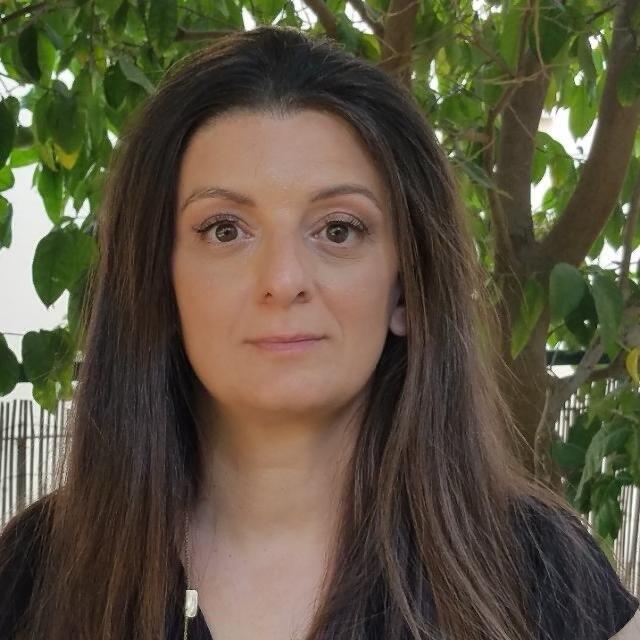
Sharon Doni, the clinical director of the Israeli Center for Cult Victims, said the psychological damage is the deepest common denominator.
“There isn’t a single person who leaves a cult without having suffered profound psychological harm,” she said. “When people come to us, we see financial harm, physical harm, sexual abuse, neglect, psychological violence and spiritual abuse. There is almost no area left untouched.”
Sharon Doni
She distinguishes between people who joined cults as adults and those raised within them. Adults had previously known the outside world, school, the military, work, family, friends, and have some earlier identity to reconnect with. But those raised in cults had their very personalities shaped under systems of control.
The damage also affects functioning: work, relationships, parenting, attitudes toward authority and trust. It is no coincidence that Nissim, Uri and Ilana all describe not merely leaving a group, but rebuilding entire lives.
“Cult abuse is like a cluster bomb,” Doni said. “It’s not one event. There isn’t a single area of life that isn’t damaged. You can’t dismantle a person’s entire internal foundation and then say: ‘But nobody beat them, so what’s the problem?’”
She added that even arriving at the Center for Cult Victims is often a dramatic moment. “Not everyone comes in saying, ‘I was in a cult.’ Some say: ‘I’m not sure I’m in the right place. Maybe the problem is me.’”
'It can happen to anyone'
The stories of Nissim, Uri and Ilana are very different. One entered a religious framework as a teenager, another joined a yoga group as an adult and the third spent more than 20 years in an international spiritual group. But the patterns repeat themselves: the search for meaning, the initial embrace, gradual isolation, absolute authority, doubt reframed as personal failure, difficulty leaving and a long process of rebuilding afterward.
“Very quickly, we understood at the center that you can’t call something a cult only when there are brutal beatings, rape or blood,” Doni said. “It can happen without anyone ever raising a hand against someone. Because the soul is always exploited.”
Lichtenstein said the most important thing for the public to understand is that this is happening here, in plain sight — not only on the margins, not only in extreme cases and not only to “other people.”
“These are ordinary people, people searching for something,” she said.
Uri put it simply: “Anyone can be brought down at the right moment, when something is missing in their life.”
Nissim described his life today: “Every day I wake up happy because I’m free. It’s hard, but freedom has no price.”
And Ilana added: “People think, ‘That could never happen to me.’ But it can happen to anyone.”
For now, Israel still lacks a clear legal definition, a dedicated investigative unit, sufficient training and adequate resources. The Israeli Center for Cult Victims and other civil society organizations are trying to fill the gap, but even they say that as long as the state looks only for clear criminal acts and not for processes, as long as psychological abuse remains outside the legal vocabulary and as long as children in closed groups remain dependent on an overburdened welfare system — the door inward will remain open.
First published: 11:47, 05.16.26