

It was one of the low points for Israel’s defense industry since October 7. Just before the opening of a prestigious weapons expo in Paris, organizers unexpectedly blocked the Israeli booth with black panels, barring displays of “offensive weapons.”
Yoav Turgeman, CEO of Rafael Advanced Defense Systems, told Ynet's Yedioth Ahronoth magazine that while the incident was unpleasant, it should be kept in perspective. “They’re not banning us from all exhibitions. We just presented in London,” he said. “In the end, we got even more exposure than usual. We told visitors: ‘They won’t let us show our systems here, so we showcased them in Tehran instead.’”
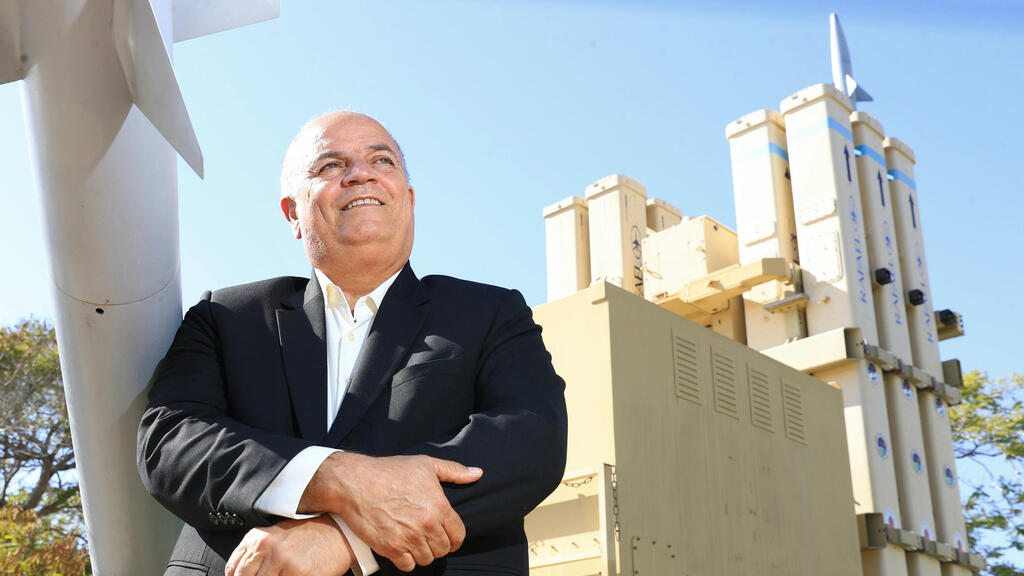
The impact of Israel’s image abroad
Turgeman admits that Israel’s collapsing image abroad poses a serious risk to defense exports. Spain recently canceled contracts worth about €600 million with Rafael and Elbit Systems, including a €200 million deal for dozens of “Litening 5” targeting pods and a €250 million order for Spike anti-tank missiles. Spanish Prime Minister Pedro Sánchez has been one of Europe’s harshest critics of Israel’s actions in Gaza.
With the new cease-fire agreement between Israel and Hamas, Turgeman hopes the tide will turn. “We were concerned that Spain’s boycott would spread,” he said. “The anti-Israel sentiment definitely hurt our business, but I believe it will subside now. The cease-fire is good for Rafael, but first and foremost, it’s good for the country, for the hostages, for our soldiers returning home.”
“We’re not dependent on the IDF”
Asked whether the end of the war would shrink demand for munitions, Turgeman explained that Rafael’s contracts are long-term and diversified. “Half our market is international. We don’t stop producing weapons the day a war ends,” he said. “Most of our systems are designed for much broader threats, like an Iranian missile barrage. We already have a four-year backlog worth 67 billion shekels, even without new deals.” He added that while political boycotts are worrying, Israel’s advanced technology continues to attract buyers. “Some countries impose arms embargoes on us but still buy our systems,” he noted.
The “Iron Beam” revolution
Rafael’s success in developing cutting-edge defense systems, like Iron Dome, David’s Sling, and Trophy Active Protective System, has placed Israel among the world’s leaders in missile interception. Now the company is about to deploy its most ambitious system yet: the Iron Beam laser, known in Hebrew as “Or Eitan.” “This is a real game-changer,” Turgeman said. “The laser adds another layer of defense and dramatically reduces costs. A single interception costs just two or three shekels, the price of electricity, compared to tens of thousands of dollars for a missile.”
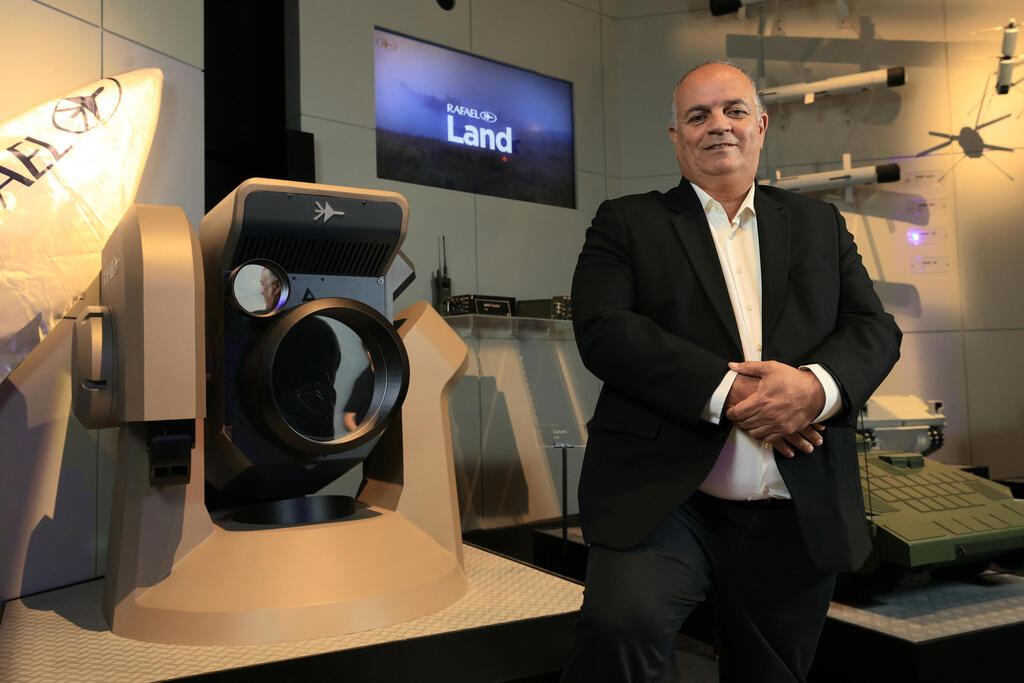
Yoav Turgeman, Rafael CEO, with the new laser defense system
(Photo: Elad Gershgoren)
Critics say lasers work only in ideal weather, but Turgeman insists Rafael’s optics can operate even in poor conditions. “Iron Beam will change the economics of warfare. Instead of shooting down $100 drones with $50,000 missiles, we’ll do it for the price of a cup of coffee.”
He revealed that Rafael increased its R&D budget by 35% last year to prepare for new Iranian technologies. “Our engineering and air defense capabilities are almost unmatched globally,” he said. “We’re in high school—while the rest of the world is still in elementary school.”
Facing Iran’s hypersonic challenge
Iran’s recent tests of hypersonic missiles, traveling five times the speed of sound, have raised global alarm. “It’s a legitimate concern,” Turgeman said. “We’re working on a next-generation interceptor called ‘Sharp Arrow,’ which will provide a breakthrough solution. Even our Arrow system is capable of countering some hypersonic threats.” He compared Israel’s military performance favorably to world powers: “Russia has been at war in Ukraine for three years and still hasn’t achieved air superiority a hundred kilometers from its border. We achieved it over Iran, 1,500 kilometers away, in just 24 hours.”
From a working-class childhood to leading Rafael
Turgeman, 63, grew up in Hadera, the son of Moroccan immigrants. His father worked at the Alliance tire factory, and his mother was a kindergarten teacher. He now lives in a moshav in the Jezreel Valley with his wife Sharon, a speech therapist. He has five children, three of whom serve in the IDF. Before joining Rafael, Turgeman spent decades at Israel Aerospace Industries (IAI), where he led the Arrow missile program and served as CEO of Elta Systems. His move to Rafael, IAI’s longtime rival, ruffled feathers. “I would have left IAI anyway,” he said. “I’d been CEO of Elta for over five years, and I wasn’t going to wait indefinitely for the top job.”
On the future of Rafael
Although Rafael remains a state-owned company, Turgeman supports its eventual privatization. “A public company is more agile and better positioned for global competition,” he said. “In most Western countries, even classified defense firms are publicly traded. With proper regulation, security secrets will remain protected.”
As for his personal aspirations once his demanding role ends? “My plan was to study medicine with my daughter,” he smiled. “It hasn’t happened yet, but I haven’t given up.”