

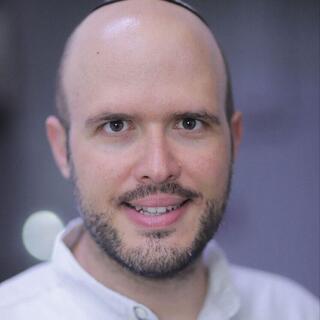
About four kilometers from the Israeli border fence, in the heart of the Syrian village of Khader, Dr. Daabous Najm takes a short break from a busy day at the local clinic that the IDF helped establish. He treats about 19 patients a day free of charge, earning only about $100 a month.
Najm was born in Ein Qiniyye, a Druze village in the Israeli Golan Heights. He crossed into Syria in 2004 to pursue doctoral studies, married and remained there. “On the day the Assad regime fell in December 2024, when the Israeli army entered here, I came from As-Suwayda and I have been here ever since,” he tells ynet and Yedioth Ahronoth. “I had a home and a job there, but I miss home in Ein Qiniyye very much. At the time, I thought I would be able to come and visit.”
Gallery
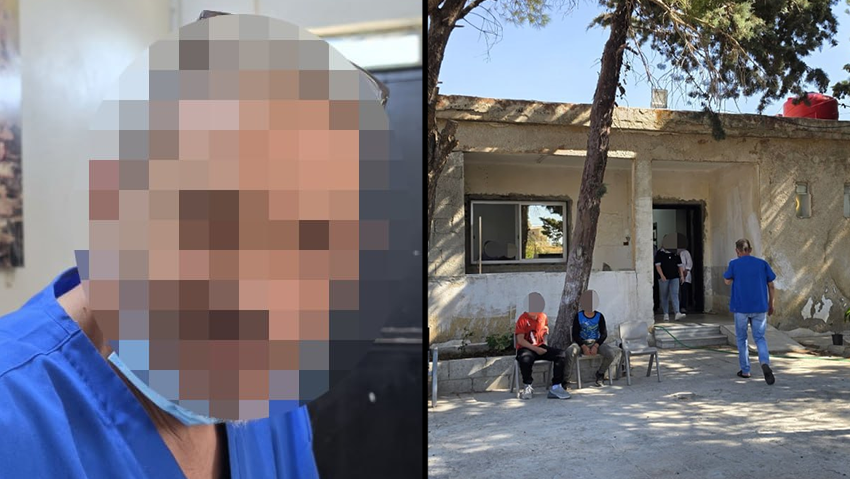
Najm and patients waiting at the local clinic established with IDF assistance to treat the wounded
(Photo: Yair Kraus)
(Photo: Yair Kraus)
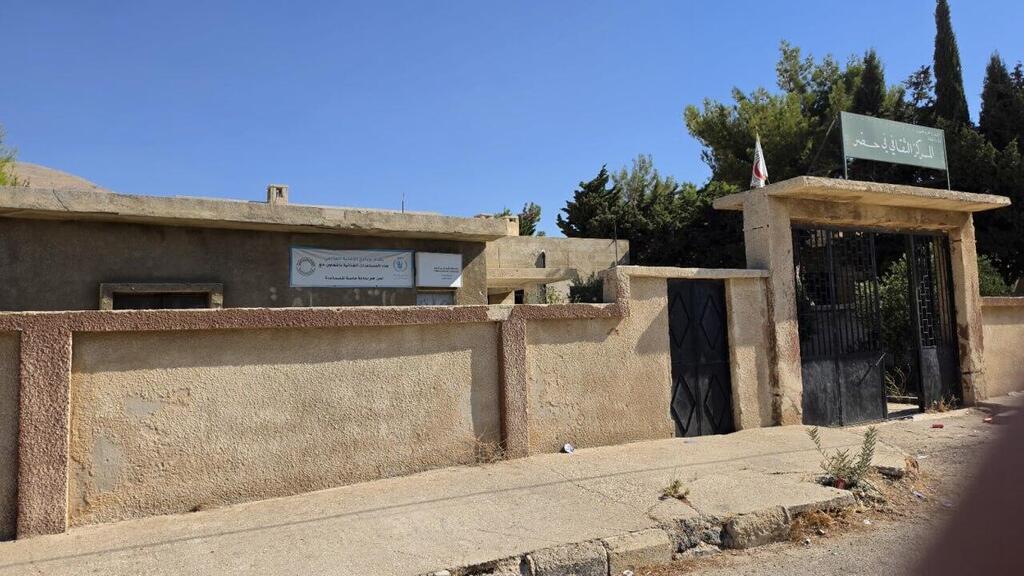
The clinic where Najm works, now being revealed for the first time, is one of five medical facilities the IDF initiated and helped establish in the area: one in the Khader sector and four others in Druze villages around Mount Hermon.
The IDF transferred advanced equipment, medicine and even an ambulance to strengthen evacuation and emergency-treatment capabilities. Some of the clinics have also been equipped with delivery rooms.
When Israeli soldiers occasionally arrive at the clinic, Najm serves as a translator. He has asked the military to provide laboratory equipment for analyzing blood tests, explaining that sending samples to Khan Arnaba requires travel along difficult and dangerous roads.
‘We remember the alliance’
Najm and his colleagues host us over Syrian black coffee, bitter but remarkably flavorful, heavily spiced with cardamom and without sugar. For Najm, staying in Khader is a matter of survival. Returning to As-Suwayda offers no guarantee of safety for him or his wife.
“I can’t leave here for Damascus because they know there that I speak Hebrew, and they’ll slaughter me,” he says. “I’m safe here. Everyone in Syria is dangerous to the Druze. They see us as traitors.”
Since the fall of the Assad regime, the IDF has strengthened its hold on strategic positions in southern Syria, areas seized almost overnight in a military operation whose scale few had imagined.
Not far away, on Mount Hermon, the military has completed preparations for the coming winter, which some expect to be snowier and stormier than usual under the influence of El Niño. At the Mount Hermon summit outposts, formerly the Syrian Hermon, troops can remain under heavy snow for as long as three weeks.
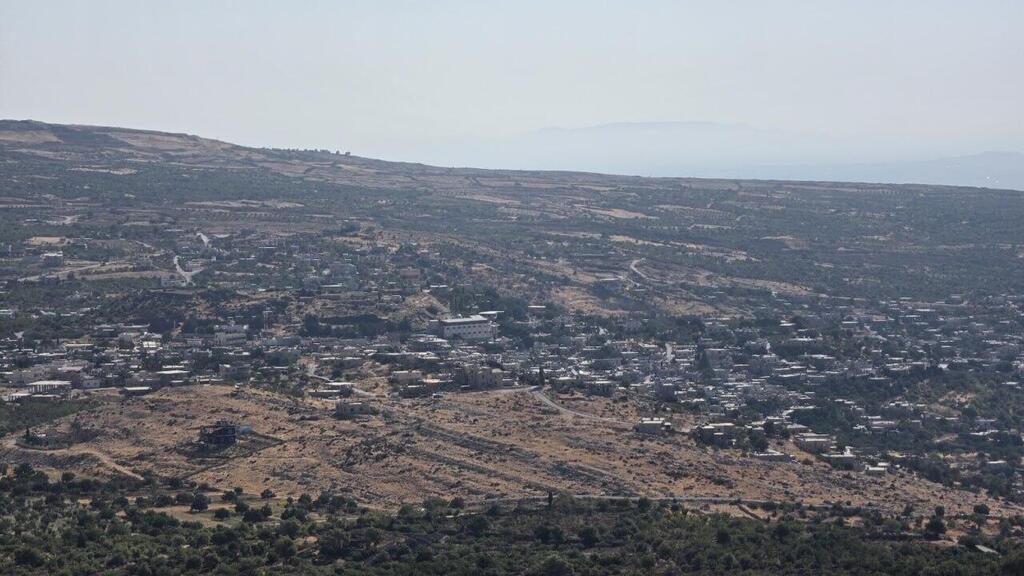
View of Israel from Syria. If al-Sharaa’s forces reach the border, defending the area will be difficult
(Photo: Yair Kraus)
Mount Hermon and the Khader area are of major strategic importance to the defense of Israeli communities in the Golan Heights, and the day when Israel can leave these positions and hand them over to another regime still appears distant.
That is especially true, in the Israeli view, when the alternative is the government of Ahmed al-Sharaa, Syria’s leader, who has gained growing international acceptance but rose through the ranks of al-Qaeda and has a violent past.
Even after U.S. President Donald Trump last week removed Syria from the list of state sponsors of terrorism, Israeli officials remain wary of al-Sharaa despite his polished appearance and authoritative manner.
At the same time, contacts are taking place. Last month, Syrian Foreign Minister Asaad al-Shaibani met Mossad chief Roman Gofman following an unusual IDF strike on a Syrian military base where, according to the Prime Minister’s Office, Turkish forces were expected to deploy.
A land of chaos
Across the Bashan region, vast spaces are crowded with violent actors and competing forces. They include Syria’s new government, ISIS, Hamas, Palestinian terrorist organizations, Iranian elements, Hezbollah, the former al-Nusra Front, Turkey and others seeking influence in a fragile arena.
IDF forces operating in the area detain and question suspects. In the middle of this uncertainty are the Druze communities in villages around Mount Hermon, facing what many increasingly see as a fundamental choice between Israel and Syria.
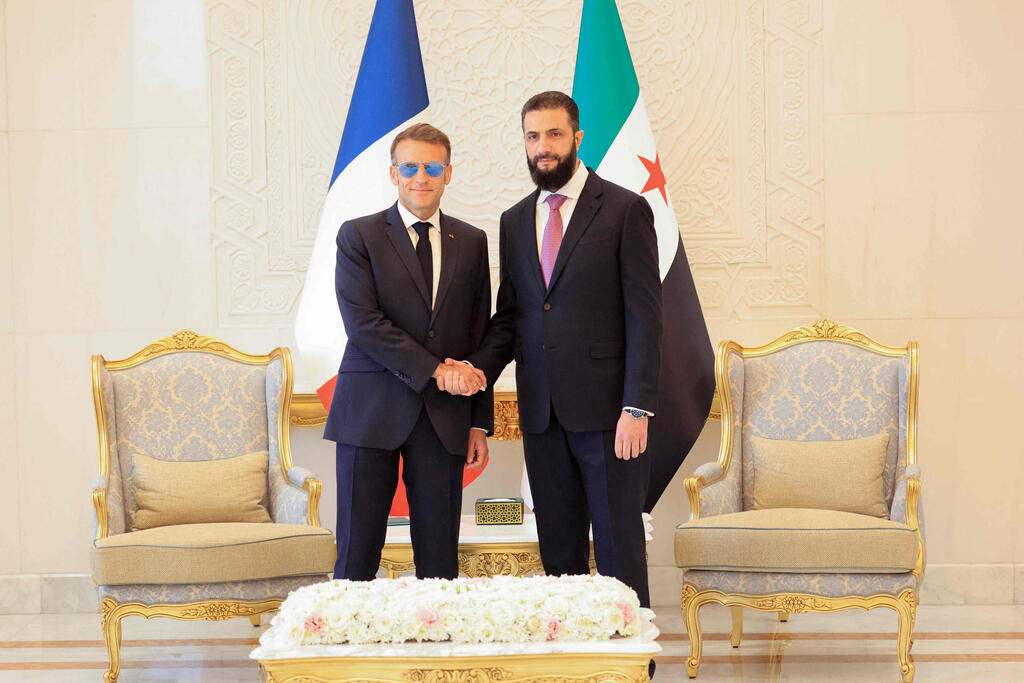
Syria’s leader alongside Macron
(Photo: Ludovic MARIN / POOL / AFP)
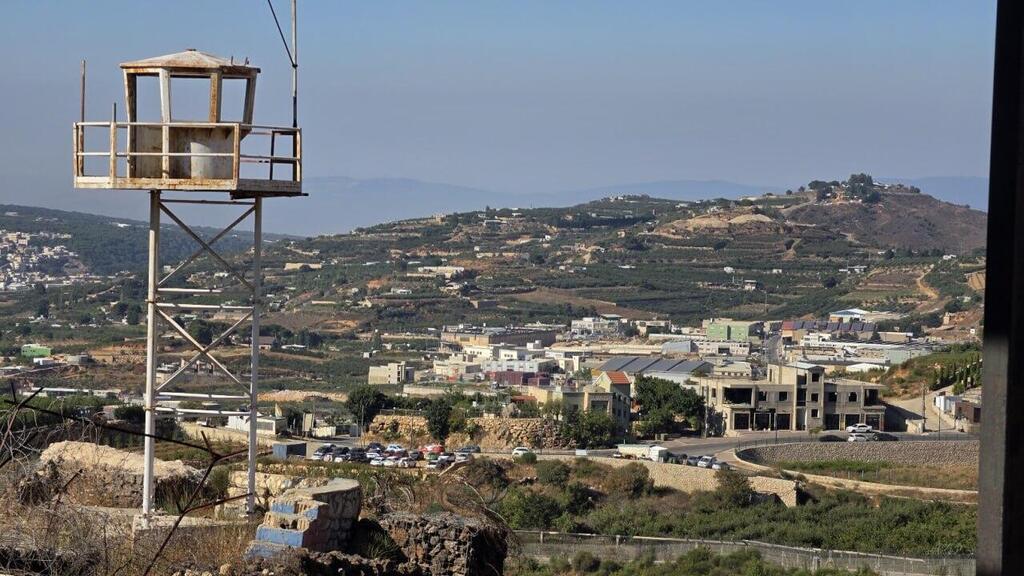
View from Shouting Hill. Former Syrian regime outpost above the village of Majdal Shams
(Photo: Yair Kraus)
On our way to Khader, we passed a symbolic and historic point where I had for years covered emotional encounters between Druze families separated by the border.
They gathered at the so-called Shouting Hill, calling across the divide to relatives on the other side, marking Mother’s Day and Syrian national events together and holding loud demonstrations despite the physical separation.
From the Syrian side, the homes of Nimrod and all the Druze villages of the northern Golan Heights are clearly visible.
The higher one climbs, the deeper the view into Israel. From the Israeli military perspective, defending the north from the fence itself would be far more difficult if al-Sharaa’s forces were positioned immediately across the border.
Khader is believed to have about 15,000 residents, making it the largest Druze village near the border in the northern sector of the IDF’s 210th Division. That sector stretches from Mount Dov in the north to the border triangle with Jordan near Hamat Gader in the south.
Since the Six-Day War and the Israel-Syria ceasefire arrangements, many residents of Khader had supported the Assad regime and Hezbollah and were hardly regarded as friendly toward Israel.
The village also produced Druze militants who, according to Israel, acted under Hezbollah and Iranian direction in attempts to carry out attacks along and beyond the border.
But in the Middle East, scenarios change quickly. Today, many in the village appear to be hoping for closer ties with Israel and the protection they believe it can provide.
Mutual responsibility on a tightrope
Israel has strong interests in strengthening ties with Syria’s Druze, particularly around Mount Hermon, but every step carries potentially far-reaching consequences. The considerations are not only security-related but also social.
Druze families in Israel, the Golan Heights and the Galilee have relatives in Syria. Like the relatively small Jewish community, the Druze place great importance on mutual responsibility within the community.
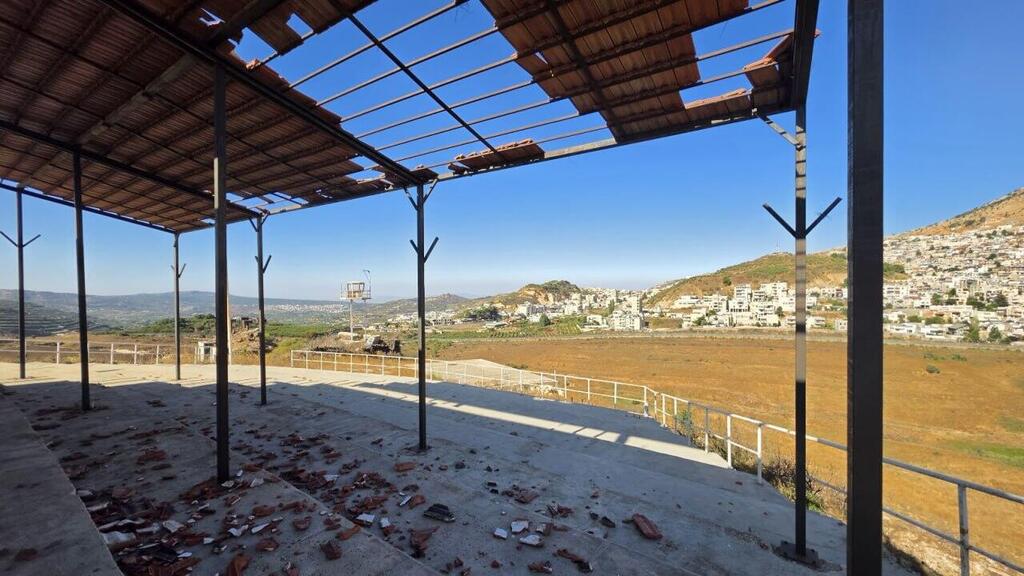
Shouting Hill, on the Syrian side
(Photo: Yair Kraus)
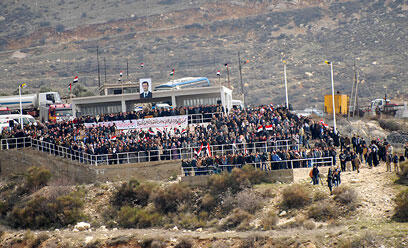
Shouting Hill, 2007
(Photo: Avihu Shapira)
The IDF itself has difficulty predicting where the Syrian arena is heading, including the future of relations with the new government.
The military wants to deepen strategic ties with neighboring Druze communities without forcing them to cut themselves off from Syria and without making them dependent on Israeli rule.
Israel currently controls the area from a security standpoint but does not want to assume civilian responsibility for it, particularly amid international criticism of the Israeli military presence.
In May 2025, the 210th Division and the IDF Medical Corps established a forward clinic near Khader to screen and treat wounded and sick Syrians.
Reservist medical teams, led by Prof. Ofer Merin, director-general of Shaare Zedek Medical Center in Jerusalem, treated thousands of patients there. More serious cases were transferred to hospitals in Israel. The Israeli military medical facility closed in March 2026, and the army’s policy was reshaped.
The current approach is significantly different from the “Good Neighbor” program that operated from 2016 to 2018 and inspired the clinic opened on the outskirts of Khader last year. At the time, the local population relied heavily on Israel. Now, with Syria no longer in a full-scale civil war, the Druze are not confined to their villages and can travel to other towns.
Israel wants to help them without creating dependence or disconnecting them from Syrian society. Israeli officials fear that if the Druze are perceived as having cut themselves off and aligned fully with Israel, rival actors could retaliate against them.
The network of locally managed clinics also reduces security risks. An Israeli-run clinic creates significant friction and exposure when dozens of Syrian patients, or more, come into direct contact with Israeli soldiers.
Where an Iranian informant can be bought
Back at the clinic in Khader, we meet more Syrian residents, curious about an encounter with an Israeli journalist that neither they nor we had ever imagined.
“Give the people of Israel a message that all of us want Israel,” Najm asks me. “All Druze are close to one another, just like you Jews, and we are proud of Israel. Everyone here is dangerous to the Druze. They see us as traitors. They don’t know our history with the Jews and how it goes back to Jethro and Moses. But we know, and we remember the alliance.”
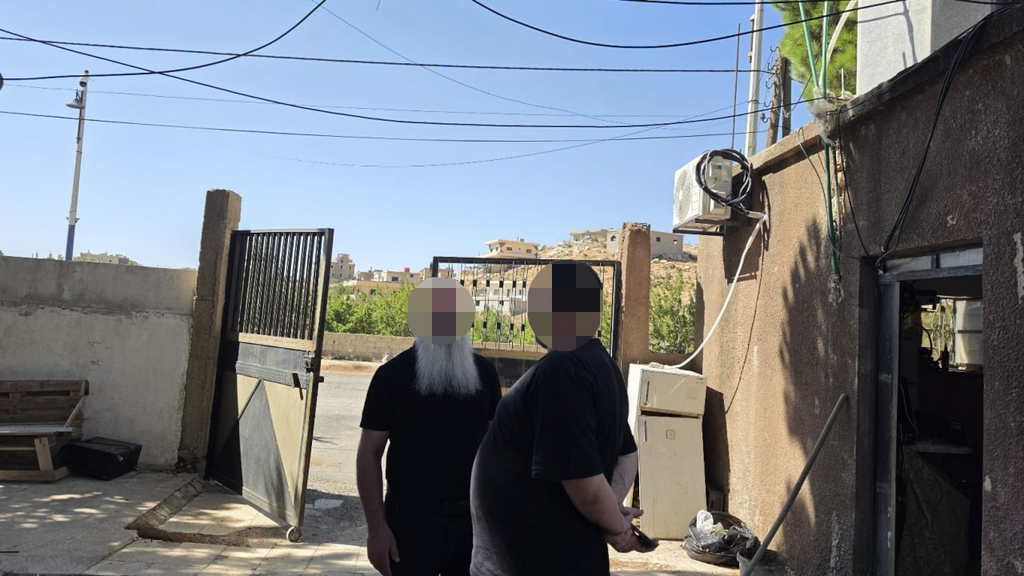
Outside the clinic in the village of Khader
(Photo: Yair Kraus)
Taysir, a pseudonym, offers another example of the close family ties spanning the border. His brother is married to a woman from Kisra in the Galilee, and they live in Finland.
He asks the IDF for firewood and diesel ahead of winter. The soldiers are reluctant to provide them, expecting the local population to meet its own needs as it did in the past. “The clinic is yours anyway, so bring us the winter supplies too,” he tries to persuade them.
Suspicion hangs even over warm greetings. IDF forces in the area understand that the Syrian government or Iran may be paying local residents to gather intelligence on Israeli troops.
The soldiers bring clothing, baby food and humanitarian supplies donated by Druze villages in Israel. But in a place where an informant can allegedly be bought for a few dollars, the military believes caution is necessary with everyone.
Israel, for its part, is not remaining passive. It is trying to build a reciprocal relationship based partly on economic interests until the regional situation changes again.
Political leaders are moving slowly and cautiously. The officer overseeing many of the defense, security and cross-border civilian issues is Brig. Gen. Yair Palai, commander of the 210th Division, who is expected to leave his post next month after more than two years marked by historic events that reshaped the region.
Palai took command in May 2024 after serving as commander of the Golani Brigade. About six months later, the Assad regime collapsed. Palai led the ground operation in the Syrian buffer zone that pushed back al-Sharaa’s forces. He established 10 positions described as temporary, from Mount Hermon in the north through old Quneitra and the villages of Qahtaniya and al-Madariya, down to the border triangle with Jordan.
Instead of watching from the ridge as ISIS, al-Qaeda, Hezbollah and Iranian cells became entrenched, division troops moved into a grinding defensive mission inside Syrian villages themselves, seeking to keep hostile forces away from Israeli civilians in the Golan Heights.
In February 2026, Maj. Gen. Ghassan Alian, a senior Druze officer, was appointed coordinator in the Northern Command for relations with Druze communities across the Middle East, with particular emphasis on Syria and Lebanon.
Among the initiatives he is leading is a proposal to establish factories in Syria’s buffer zone, modeled on a joint industrial area such as Nitzanei Shalom near Tulkarm.
The military is also examining the possibility of allowing Syrian Druze workers to work in Israeli agriculture and offering vocational training in agriculture, medicine and emergency response in Israel.
The economic gap across the border is enormous. A single day’s work in Israel can be worth roughly three months of wages in Syria, while Syrian labor could help fill shortages in Israeli orchards.
‘We want to understand: Are you here for good?’
Driving through the Druze villages near the border, a surprising construction boom is visible. The IDF is monitoring it closely and checking the people operating in the area.
At a grocery store in Majdal Shams, residents told me that local Israeli investors from Druze villages in the Golan Heights have also bought land across the border and are building homes there as investments.
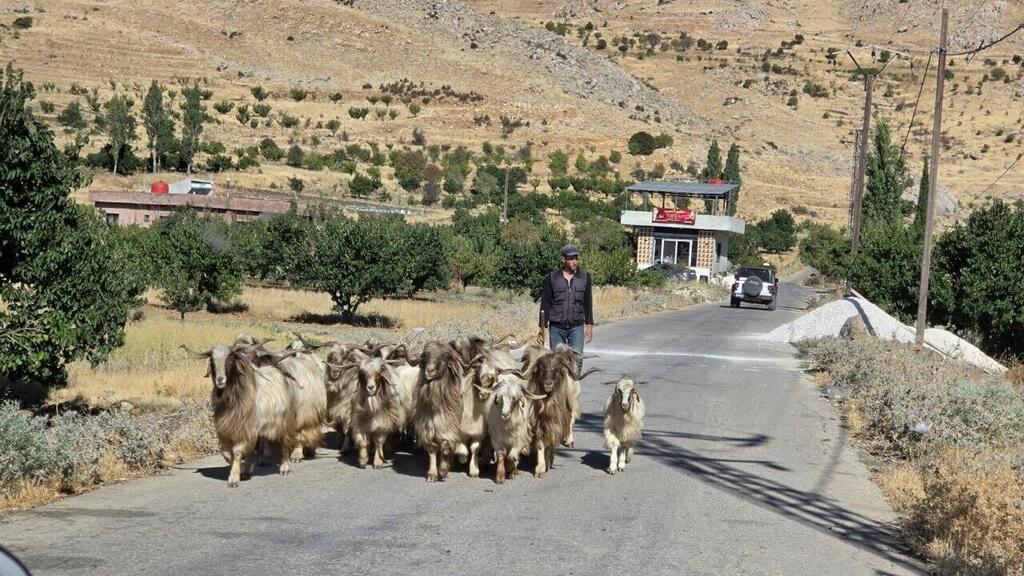
The Syrian village of Khader
(Photo: Yair Kraus)
Before the Assad regime fell, a dunam of land sold for about $1,000. Prices have since risen to about $20,000. “That is still very cheap and a very worthwhile investment,” one Majdal Shams resident said.
Druze from As-Suwayda and even Damascus, where roughly 150,000 members of the community live, are also seeking to buy or rent homes near Israeli military positions in Syrian territory as potential shelters in a future emergency.
They fear the new government could turn against them and carry out massacres. Abu Saleh, a pseudonym, says that among Khader residents, who have long feared a government that views them as heretics and traitors, there is now broad support for choosing the Israeli side. “But we have a problem because right now we are neither here nor there,” he explains in broken English and Arabic.
“If we say, ‘We want Israel,’ they will close the road to Syria and we won’t be able to get wheat and food. They’ll tell us, ‘Go to Israel.’
“If we say we want al-Sharaa, Israel will leave us in his hands, and he will abduct us, steal from us and slaughter us. But you should know that all of us here want the Israeli flag. We just can’t say it out loud.
“We want to understand what your intentions are. Are you here for good?”