

In September 1967, three months after the Six-Day War, stories began to emerge that the war itself had left untold. Behind the headlines about the great victory were countless personal stories: split-second decisions, acts of heroism, mistakes, loss and incidents that sounded as though they had been written for a movie.
One such story appeared 59 years ago this week on the front page of Yedioth Ahronoth. Its protagonist was a 19-year-old female officer whose identity was not disclosed. She boarded a half-track without permission, went into battle with an armored unit, disappeared as far as the IDF was concerned, survived an anti-tank shell strike and, when the war was over, was sentenced to 35 days in military detention.
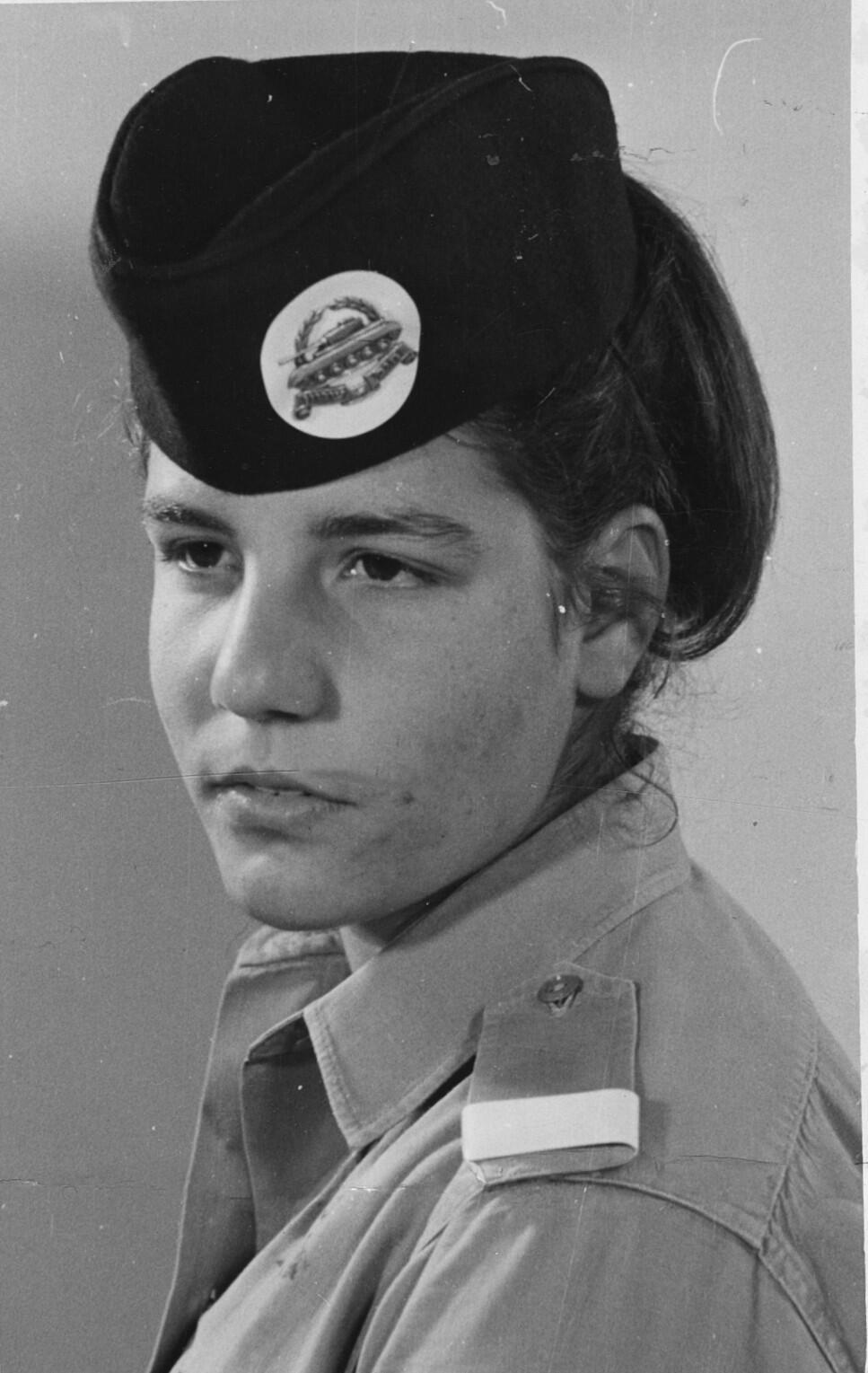
Six days later, the young woman had a name and a face: Second Lt. Anat Kirshner of Netanya. Before long, her story and photograph had appeared in newspapers around the world.
The war caught her on a bus
Kirshner came from a longtime Netanya family. She was a graduate of Tchernichovsky High School and a former member of the Scouts youth movement. Even her name carried a military legacy: Her father, Ezra, who had been a commander in the Irgun, named her Anat in memory of David Raziel, the organization’s commander, who was known by the alias “Maj. Gen. Ben-Anat.”
She served in an armored brigade made up of reservists. Around Israel’s Independence Day in 1967, she completed officers’ training and was sent on leave until she was due to report to her new unit in the IDF Southern Command.
On the morning of June 5, she was due to report for duty in the south. She boarded a bus and set out for her new unit. Midway through the journey, regular radio programming was interrupted. An excited announcer reported that war had broken out.
Anat later said she engaged in a brief “soul-searching.” She decided that at that moment she could be of greater use to the IDF in the unit she already knew. At the first stop, she got off the bus, turned around and headed north, back to the armored brigade.
A helmet, trousers and a half-track
By the time she reached the unit, only about 15 minutes remained before the force was due to depart. The commotion of war was all around her: Engines were running, soldiers were loading equipment and commanders were trying to get the vehicles moving.
One of the soldiers gave her a pair of trousers and a helmet. Anat put them on and climbed aboard one of the half-tracks.
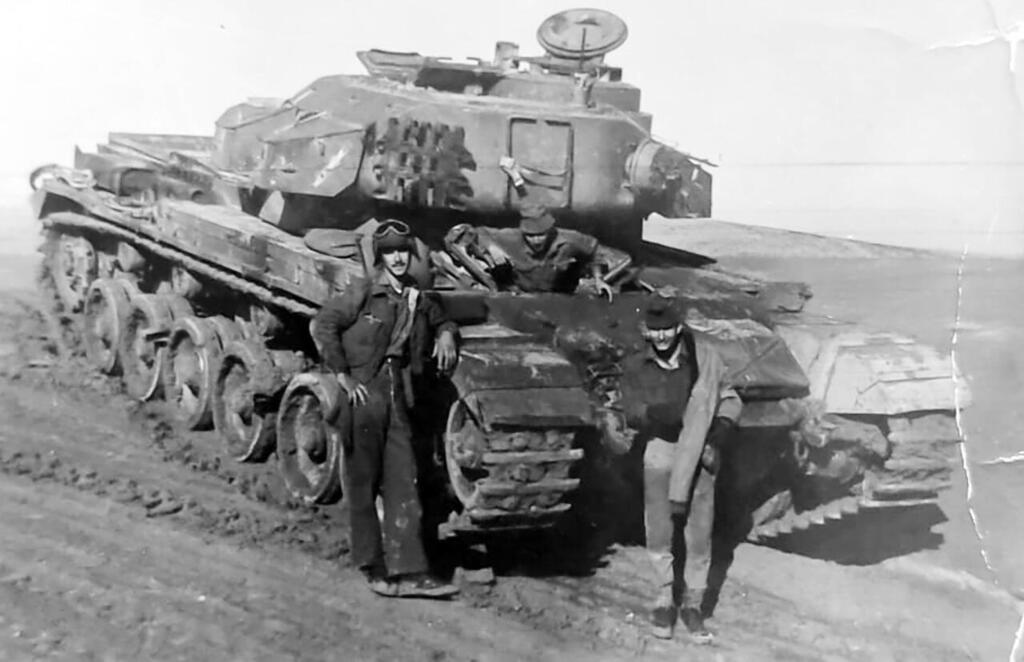
IDF forces during the Six-Day War
(Photo: Ammunition Hill Archive)
The commanders spotted her and ordered her to get off immediately and report to the unit to which she had been assigned in the Southern Command. It was an explicit order. Anat simply did not obey it. Amid the chaos, no one checked whether she had actually left. The soldiers sitting with her in the half-track chose to remain silent, and the armored column set off with the young officer still aboard.
During the night, the half-tracks and tanks advanced toward the Jordanian border in the Jenin area. By morning, Jordanian forces began firing artillery and mortars at the convoy. In the half-track carrying Anat, one of the soldiers stood up. His steel helmet slipped from his head, and seconds later he was hit and fell. He was the brigade’s first fatality.
The shelling intensified. Soldiers were killed and wounded, and Anat jumped over the side of the half-track and ran with the troops to take cover behind a stone wall. The sights overwhelmed her. She burst into tears but managed to regain her composure and began helping bandage the wounded. One of them, whose hand had been severed, refused to let her treat him. He feared the sight would shock her.
When the battle ended, Anat discovered that Eitan, the brigade’s operations sergeant and one of her close friends, had been killed and that his body was lying by the roadside. She took a gold chain from his body and continued with the force. Her clothes were stained with blood, so she changed into Jordanian military fatigues found in a captured army depot.
'I didn’t want to die'
Later, the unit left one of the cities it had captured and came under heavy shelling. The half-track Anat was riding in was struck by an anti-tank shell. She and another officer jumped out. The officer was killed, while Anat emerged unhurt.
She ran with the surviving soldiers toward a nearby hill. This time, she could no longer hold herself together. “I didn’t want to die,” she later recalled. She went into shock and began to cry.
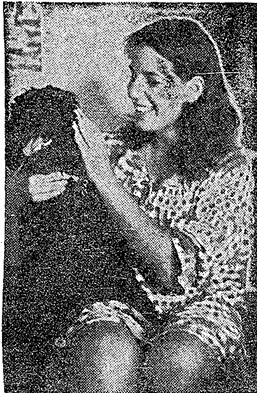
She barely slept for three days. Anat Kirshner
(Photo: Yedioth Ahronoth)
It was the soldiers around her who helped her recover. They told her that having her in the half-track helped them cope with the horrors they were witnessing and continue fighting. If her presence was helping them hold on, they told her, she had to pull herself together as well.
Anat calmed down and returned to duty. For three days and nights, she barely slept. She continued with the unit, watched forces blow up a bridge over the Jordan River and was then sent north with the brigade to the Golan Heights. At one point, exhaustion finally overcame her. She fell asleep inside the half-track and did not realize that the unit was taking part in the battles to capture the Golan Heights. She woke only after the fighting in the area had ended.
While she was fighting, the IDF was looking for her
No one in the Southern Command knew where the officer who was supposed to have reported for duty on the first morning of the war had gone. At the headquarters of the IDF’s chief women’s officer, concern mounted as attempts to locate her proved unsuccessful. According to the newspaper report, throughout the war no one could even bring themselves to call her parents and ask whether they had heard from her.
Only several days after the fighting ended did military personnel call the Kirshner family in Netanya. Her parents were horrified. Until then, they had no idea their daughter was considered missing. Her mother remembered Anat’s deep attachment to her former unit and called the armored brigade. They reassured her: Anat was alive and well.
On the eve of Shavuot, her mother left home and walked along Herzl Street in Netanya. Suddenly, she saw her daughter coming toward her, dressed in the Jordanian military fatigues she had worn during the fighting. Their reunion in the street was emotional. At home, Anat told her parents and sisters everything she had been through.
Her mother was angry. Not because she had gone into battle, but because of her lack of discipline.
From the battlefield to military detention
Several days later, Anat returned to her unit in the Southern Command. This time, a military policewoman was waiting for her.
She had been absent without leave, ignored an explicit order and participated in battles she was not authorized to take part in. She faced disciplinary proceedings and was sentenced to 35 days in military detention.
Before long, the young woman who had survived shelling, treated wounded soldiers and traveled with armored forces from Jenin to the Golan Heights found herself changing clothes once again, this time to enter a military prison.
Her mother called the commander of the armored brigade. According to the article, he tried to reassure her, saying: “Mrs. Kirshner, you can be proud to have a daughter like that.”
Senior military officials also apparently understood that the case was more complicated than an ordinary disciplinary offense. On the recommendation of the IDF’s chief women’s officer, Col. Stella Levy, Southern Command chief Maj. Gen. Yeshayahu Gavish decided to reduce her punishment. Within about a week, Anat was released from prison and returned to service as an officer in an IDF unit in the Gaza Strip.