

In the years following World War II, as Europe tried to bury the wreckage of Nazism, another war was picking up thousands of miles away. France, humiliated by occupation and struggling to rebuild, was trying to reclaim control of Indochina, its colonial possession in Southeast Asia. What followed was one of the strangest and darkest footnotes of the early Cold War: German veterans, French collaborators and some former Waffen-SS men ended up fighting under the French flag in Vietnam.
The myth is dramatic: entire battalions of Nazi soldiers, escaped from justice, marching through the jungles of Indochina in the uniform of the French Foreign Legion. Like many wartime legends, it contains a kernel of truth, but the reality is more complicated and far murkier.
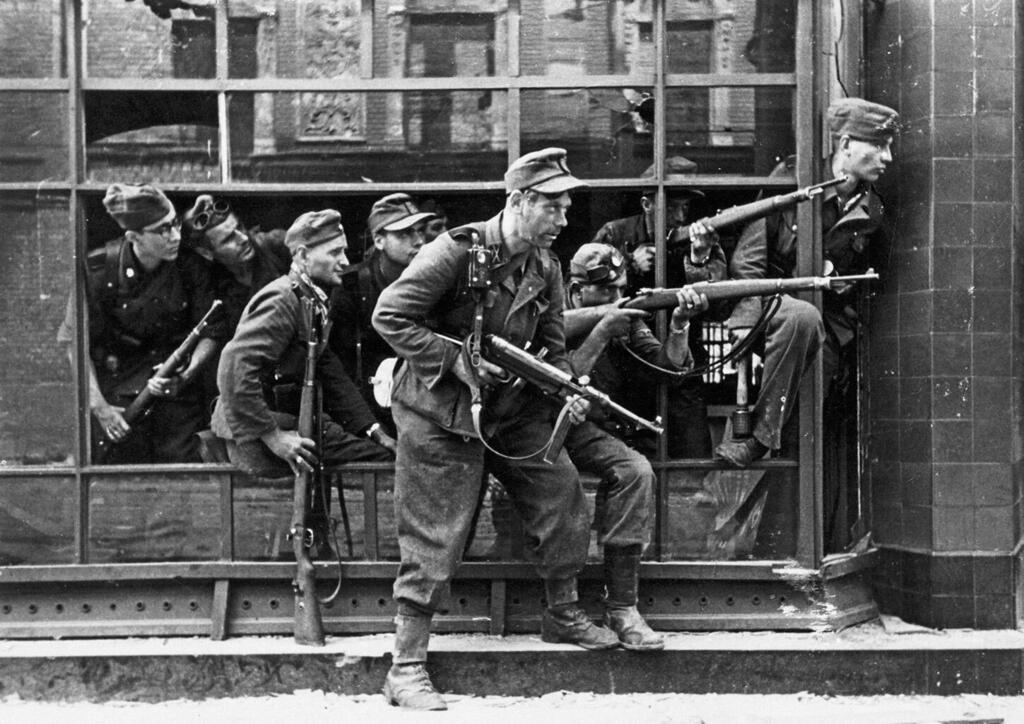
There were indeed thousands of Germans in French service during the First Indochina War. Some were ordinary former Wehrmacht soldiers. Some were desperate young men from a decimated country. Some were prisoners of war looking for a way out. Some were former Waffen-SS members who slipped through the cracks. And in one obscure French unit, the BILOM, wartime collaborators and former German-uniformed French fascists were deliberately offered a path from prison to colonial combat.
What is less clear is how many real Nazi war criminals escaped punishment this way. The answer depends on where one draws the line between German soldier, Nazi loyalist, Waffen-SS veteran, French collaborator and convicted criminal. That uncertainty is exactly what allowed the legend to grow.
France’s desperate war after Hitler’s defeat
By 1945, France was technically among the victors, but it emerged from the war exhausted. The country had endured defeat, occupation, collaboration, resistance, liberation and political purges. Its army had been rebuilt with Allied help, but the country was still recovering when crisis erupted in Indochina.
French Indochina, roughly modern Vietnam, Laos and Cambodia, had been under Japanese occupation during much of World War II. When Japan collapsed, a power vacuum opened. Ho Chi Minh and the Viet Minh moved quickly, seizing weapons, mobilizing nationalist and communist forces, and declaring Vietnamese independence.
France wanted its colony back. But wanting an empire and having the troops to restore one were different things. The French army was overstretched, politically fragile and short of experienced manpower. The fighting soon evolved into a grinding colonial war against the Viet Minh, who knew the terrain, enjoyed nationalist legitimacy and were increasingly capable of confronting French forces.
France needed soldiers, and it needed them fast.
One solution was obvious: expand the French Foreign Legion.
The Legion: a place to disappear
The French Foreign Legion had long been built around men who wanted a second life. Since the 19th century, it had recruited non-French nationals, though French citizens could also join under certain conditions. It became famous as a military refuge for adventurers, criminals, exiles, broken men, fugitives and those who preferred not to answer questions about their past.
The Legion’s mythology was built on anonymity. Recruits traditionally enlisted under assumed names. The institution did not ask much about who a man had been before he arrived. What mattered was whether he could march, fight, obey orders and survive.
That made the Legion attractive after World War II to men with much to hide. Europe was full of displaced people, prisoners, defeated soldiers, fascist collaborators and former members of German military formations. For many Germans, joining the Legion offered escape from poverty, imprisonment, hunger or revenge. For some, it may also have offered a way to avoid prosecution.
Germans were not new to the Legion. They had served in it for generations. But after 1945, their numbers surged. Contemporary accounts described a major influx of German recruits, many drawn from prisoner-of-war camps or from the ruins of occupied Germany.
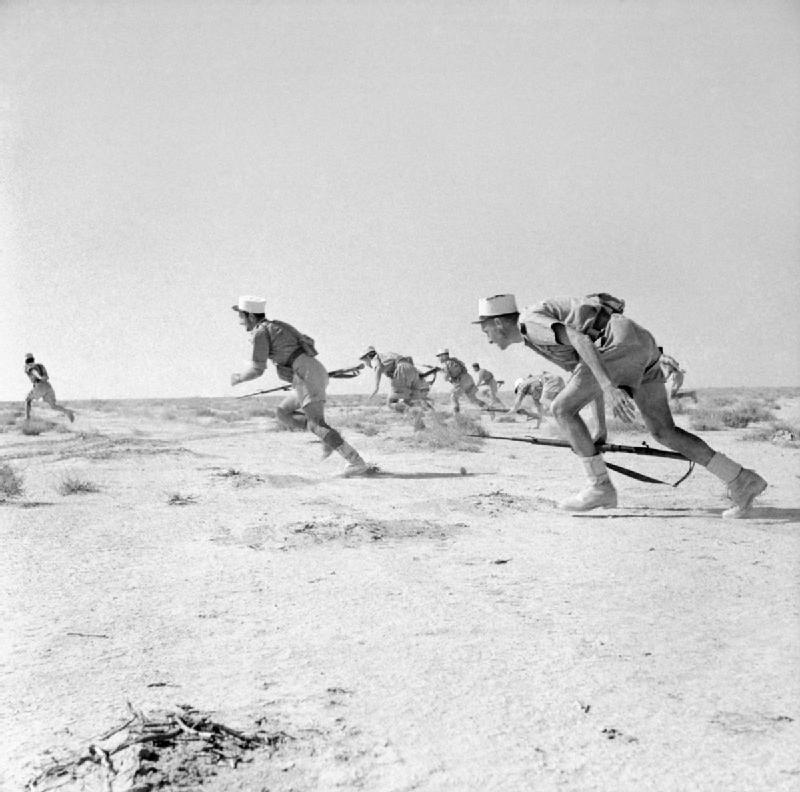
Free French Legionnaires assaulting an Axis strong point at the battle of Bir Hakeim, 1942
Some estimates place the number of Germans who served in Indochina at tens of thousands. According to one contemporary account, as many as 80% of a 5,000-man Legion unit sent to Indochina in 1947 were Germans, many of them recruited from POW camps. Other estimates put the total number of Germans in French service during the war at 35,000 to 50,000.
The larger picture is clear: Germans formed a major part of the Foreign Legion in Indochina. The more explosive claim, that vast numbers were former Waffen-SS men, is much harder to prove.
The Waffen-SS problem
The Waffen-SS was the armed wing of the Nazi SS. It fought alongside the German army but was deeply tied to the Nazi racial project and to war crimes, especially in Eastern Europe. After 1945, Waffen-SS veterans faced danger. Some were prosecuted. Others were hunted. Many tried to blend in with the millions of other defeated German soldiers.
The Legion’s culture of anonymity created an obvious opening. A former SS man could claim to have been an ordinary Wehrmacht soldier, take on a new name and board a ship to Indochina.
But the French were not completely blind to this problem. Recruiters knew that former SS men might try to join the Legion. One physical clue was the blood-type tattoo that many Waffen-SS members carried under the left arm. It had been intended for medical use if identification tags were lost. After the war, it could become evidence of SS membership.
The system was imperfect. Not every Waffen-SS man had the tattoo. Some non-SS soldiers had similar marks, especially if they had been treated in SS hospitals. Some men removed the tattoo, leaving scars that could themselves arouse suspicion. French recruiters were reportedly alert to both the tattoo and suspicious scarring.
Still, some former Waffen-SS men almost certainly got through. The question is scale.
The most sensational version says thousands of SS veterans fought in Indochina. A more cautious reading says many Germans served in the Legion, a smaller number had Waffen-SS backgrounds, and the precise number is impossible to determine because many enlisted under assumed names, while records were destroyed, incomplete or deliberately obscured.
That ambiguity became fertile ground for legend.
The book that turned rumor into myth
One of the biggest sources for the “SS battalion in Vietnam” legend was Devil’s Guard, published in 1971 by George Robert Elford. The book presents itself as the story of a former Waffen-SS officer who escapes postwar Europe, joins the French Foreign Legion and leads an all-German battalion of former Nazi soldiers in a brutal guerrilla campaign against the Viet Minh.
It is a gripping story, but its historical reliability is widely disputed. The book helped transform scattered rumors into a powerful image: Nazi veterans, hidden inside the Legion, continuing their war against communism in Asia.
The myth was reinforced by Viet Minh propaganda. After the battle of Dien Bien Phu in 1954, where French forces suffered their decisive defeat, the Viet Minh captured thousands of French troops. They claimed that large numbers of Waffen-SS men were among them. But they did not produce convincing evidence, and it is possible that communist propagandists treated German Legionnaires broadly as Nazis, regardless of whether they had served in the SS.
That distinction mattered historically, but not necessarily politically. To the Viet Minh, a German fighting for France in Vietnam less than a decade after Hitler’s defeat was an easy symbol: colonialism and fascism, joined together in the jungle.
The real 'battalion of the damned'
If the story of a giant SS Foreign Legion is exaggerated, there was another unit whose history is more concrete and almost as strange: the BILOM, the Bataillon d’Infanterie légère d’Outre-Mer, or Overseas Light Infantry Battalion.
Unlike the Foreign Legion, BILOM was not a legendary corps of anonymous foreign volunteers. It was a postwar French formation drawn from convicted collaborators, political prisoners and men with compromised wartime pasts. It included former German-uniformed French fighters and collaborators, among them men linked to Vichy security forces, the Milice, the Legion of French Volunteers Against Bolshevism and the Waffen-SS Charlemagne formation.
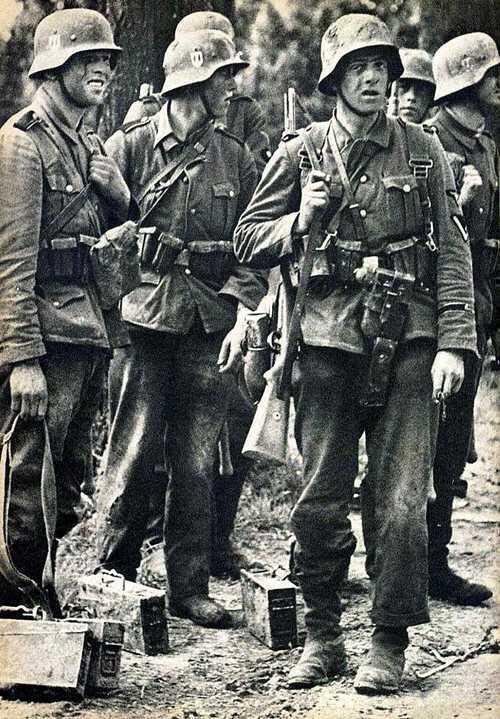
Soldiers of the SS Charlemagne Regiment
The idea was brutally pragmatic. French prisons were holding men convicted of collaboration and related wartime crimes. France needed manpower overseas. Why not allow condemned men to “redeem” themselves through service in the colonies?
In May 1948, French authorities explored how many prisoners would volunteer. Thousands reportedly asked to return to uniform. The offer was not open-ended. Men with sentences longer than 15 years were excluded, as were those above 40. Service would correspond to the remaining prison term.
They were not granted full amnesty at the outset, but rather a kind of suspended punishment or path toward rehabilitation. BILOM members were not allowed to provide their own officers, despite the fact that some had extensive combat experience. Officers came from regular French colonial forces. The unit had no proud insignia, no colors and no public mythology.
This was not a romantic new beginning. It was a penal bargain: fight for France, far from France, and perhaps earn your way back into the nation you had betrayed.
From collaborators to colonial soldiers
The men who filled BILOM were not all the same. Some had served Vichy France, including in the Milice, the feared paramilitary force that fought the French Resistance and participated in repression. Others had worn German uniforms in the LVF, a French volunteer force raised to fight the Soviet Union on the Eastern Front. Some later passed into the Waffen-SS Charlemagne formation, whose remnants fought in the final defense of Berlin in 1945.
To the French postwar state, these men were traitors. To themselves, many were anti-communists who could claim that fighting Ho Chi Minh’s forces in Indochina was a continuation of their war against Bolshevism, this time under a French flag rather than a German one.
The political optics were explosive. The French Communist Party opposed the unit and helped stir public hostility toward the idea of collaborators being sent overseas instead of being punished at home. The government itself seems to have wanted utility without publicity. BILOM was useful precisely because it was meant to be obscure.
The first BILOM company was sent to Southeast Asia in late 1948. It was initially used in Cambodia for sector security: guarding convoys, clearing guerrillas, protecting positions and fighting skirmishes. Later, its men operated in southern Annam, in central Vietnam, holding isolated posts and helping train pro-French local forces.
By July 1949, BILOM was formally dissolved, but its personnel did not simply vanish. Many continued serving in smaller detachments attached to locally recruited units in southern Annam. Some later transferred elsewhere in the French military, including to later conflicts such as Algeria.
In effect, France took some of the men it had condemned after World War II and recycled them into the next war.
A war before America’s war
To modern readers, the Vietnam War usually means the American war of the 1960s and early 1970s. But before the United States became trapped in Vietnam, France had already fought and lost there.
The First Indochina War, from 1946 to 1954, was both a colonial war and an early Cold War conflict. France saw itself as restoring sovereignty over its empire. The Viet Minh saw themselves as fighting for national liberation. As the Cold War hardened, the conflict gained ideological weight: anti-communism on one side, communist-backed nationalist revolution on the other.
For former German soldiers and collaborators, Indochina offered a brutal form of continuity. Men who had fought on the Eastern Front, or who had served fascist regimes in Europe, now fought communist guerrillas in Asia. The uniforms had changed. The cause had been repackaged. But the logic of anti-communist war remained familiar.
This did not mean the French army was a Nazi refuge by design. The French state had strong reasons to keep former Waffen-SS men out. But it also had manpower needs, colonial ambitions and a military system that could absorb men whose pasts were murky, false or inconvenient.
Dien Bien Phu and the collapse of the French dream
The Foreign Legion played a major role in the French war effort in Indochina. Its units fought in some of the conflict’s most brutal campaigns, including the climactic siege of Dien Bien Phu in 1954.
Dien Bien Phu was supposed to be a trap for the Viet Minh. France established a fortified base in a remote valley, hoping to draw Viet Minh forces into a conventional battle where French firepower would dominate. Instead, the Viet Minh surrounded the base, dragged artillery through the mountains and pounded the garrison into submission.
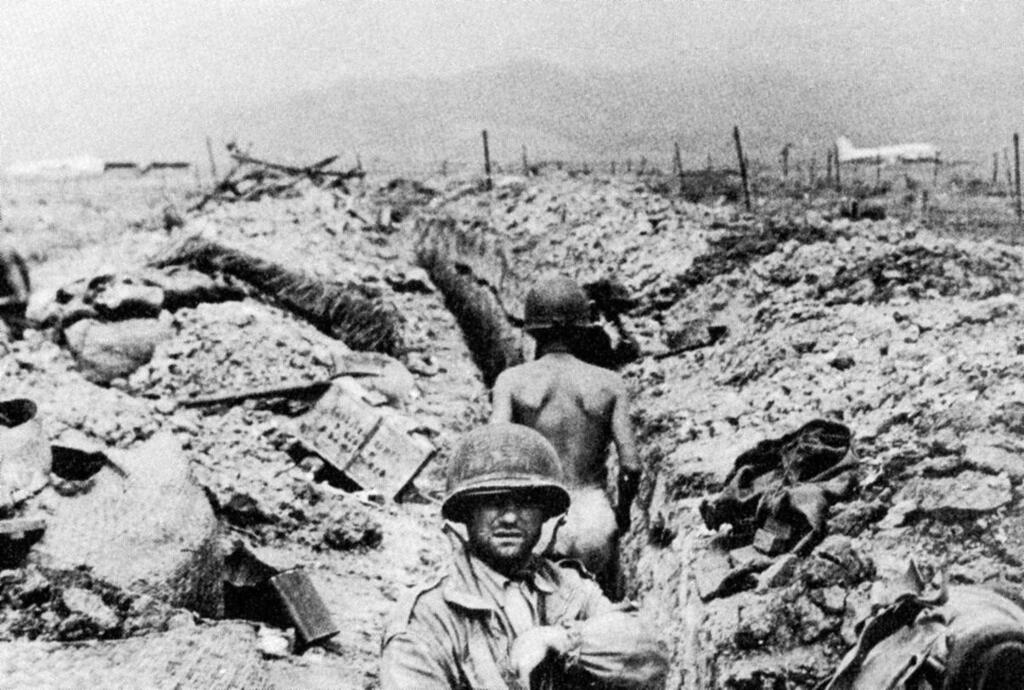
Dien Bien Phu
The fall of Dien Bien Phu shattered French hopes of holding Indochina. It also froze the image of the Foreign Legion in Vietnam: doomed men, cut off in the jungle, fighting a war that France itself no longer had the will to sustain.
Among the captured French forces were many Legionnaires, including Germans. The presence of Germans helped fuel claims that France had filled its Indochina army with ex-Nazis. But German did not automatically mean Waffen-SS, and Waffen-SS did not automatically mean convicted war criminal. The truth was not clear-cut enough for propaganda or myth.
Why the legend survived
The legend of Nazis fighting in Vietnam survived because it made narrative sense. It connected three enormous historical forces: the aftermath of World War II, the collapse of European empires and the beginning of Cold War anti-communism.
It also had cinematic power. The idea of former SS soldiers hiding in the French Foreign Legion, fighting in Asian jungles against communist guerrillas, feels almost too dramatic to resist. Books, propaganda and later retellings fed the image.
But the real story is less like a clean conspiracy and more like a postwar moral swamp.
France had been occupied by Nazi Germany. French citizens had collaborated with the occupier. Some had fought for Hitler. After liberation, France punished collaborators, but it also needed soldiers. The Foreign Legion offered anonymity. BILOM offered condemned men a chance to exchange prison for combat. German prisoners and veterans saw service in Indochina as a way out of the ruins of Europe. A small but real number of former Waffen-SS men likely entered French service, while the number of supposed SS veterans grew with each retelling.
The myth says France knowingly built an army of Nazis in Vietnam. The evidence suggests something subtler: France built a desperate colonial army from whatever manpower it could find, and in the chaos of postwar Europe, that manpower included former enemies, collaborators and some men with SS pasts.
How many were actually SS?
The honest answer is that no one knows with precision.
There were large numbers of Germans in the French Foreign Legion during the Indochina War. There were former Waffen-SS men among postwar German military populations. Some joined or attempted to join the Legion. French recruiters looked for SS markers and tried to screen them out, particularly as awareness grew. Some slipped through.
BILOM, separate from the Legion, did include men from collaborationist and Waffen-SS-linked backgrounds.
But claims of vast SS formations fighting as organized Nazi units in Vietnam are probably exaggerated. The most famous source for the image, Devil’s Guard, is not reliable as history. Viet Minh claims were politically useful but weakly evidenced. Later retellings often blurred Wehrmacht soldiers, Waffen-SS veterans, German POWs, French collaborators and foreign anti-communists into one sinister category.
The result is a story trapped between fact and legend.
There were Nazi-linked men in French service in Vietnam. There were no, based on the available evidence, proven massive SS armies secretly fighting for France.
The exact number of former Waffen-SS men who entered French service in Indochina remains impossible to determine. The Legion’s anonymity, postwar chaos and later propaganda all blurred the record. What is clear is that thousands of Germans fought for France in Vietnam, while a smaller number of former SS men and French collaborators also found their way into the colonial war.
Some entered through the Foreign Legion under new identities. Others served through BILOM, the obscure overseas battalion created from prisoners and convicted collaborators who were offered a chance to trade their sentences for combat service.
By the time France’s war in Indochina ended at Dien Bien Phu in 1954, the myth had already begun to grow: defeated Nazis, hidden in French uniforms, fighting communists in the jungles of Vietnam. The full truth was messier — a mixture of German veterans, postwar fugitives, French traitors, colonial desperation and a military system willing to look away when it needed men.