

“Every time I climb that mountain, something in me just opens up,” says Israel Moshe, standing on the ridge where Kibbutz Misgav Am faces the Lebanese border. “The air here is unlike anywhere else—so clean, so wide open. From here, you see the whole valley, and straight into Lebanon.”
This fall, Israel will lead Kedma’s new student village that will operate both in Misgav Am and nearby Manara. In Manara, students will work in informal education programs for local kids; in Misgav Am, they’ll mentor, farm, and run community projects.
For him, it’s a full circle. On October 7, he was still living in Kedma’s student house in Misgav Am. That day, like all residents along the front-line border, they were evacuated south. “Half the house we lived in was damaged. Things were shattered. From what I understood, a tunnel explosion nearby shook the mountain and hit the building,” he recalls.
It’s hard to reconcile the social entrepreneur today with the boy who grew up in an ultra-Orthodox Jerusalem neighborhood. He moved through small Religious-Zionist yeshivas, then on to Tel Aviv—where he shed his kippah but not his faith. Eventually, he found himself in the Galilee. “I landed in Misgav Am. In that moment, I fell in love with the place, the people, and the energy here.”
Kedma’s student village was famously close-knit. “Four couples came out of it,” he says with a smile.
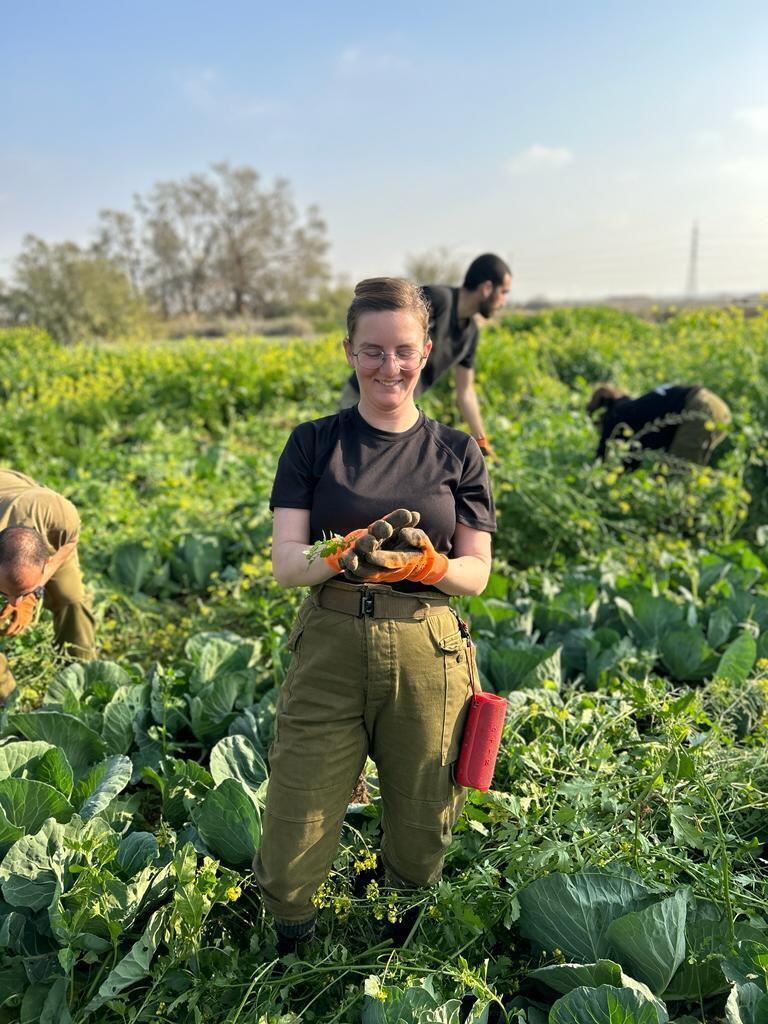
Then came the war. The students scattered, and Israel built a new Kedma village in Tel Aviv, which he called ‘Swords of Iron.’ “Mornings we’d go out to help farmers, afternoons to hotels full of evacuees. Amid all that uncertainty, a new community was born.” Later he started a village in Tiberias to support northern evacuees, but his heart kept pulling him back to the Galilee. “The moment I returned to Kiryat Shmona, I felt a deep relief—like I had come home.”
Now he’s recruiting new students to join him. “I’m a social entrepreneur, a Galilee activist—that’s how I define myself. My goal is to bring fresh energy and new people north through Kedma.”
He doesn’t shy from criticism either: “This region is huge, with dozens of small municipalities and a population spread across a wide area, but there’s no public transportation, and jobs are scarce. Even where they exist, wages are low. Why would anyone move all the way to Kiryat Shmona when Yokneam, right off Highway 6, offers the same benefits? If the state doesn’t provide real solutions, young people won’t stay.”
While Israel found his calling in the north, Tamar’s path led her south.
Model Student from Mevaseret
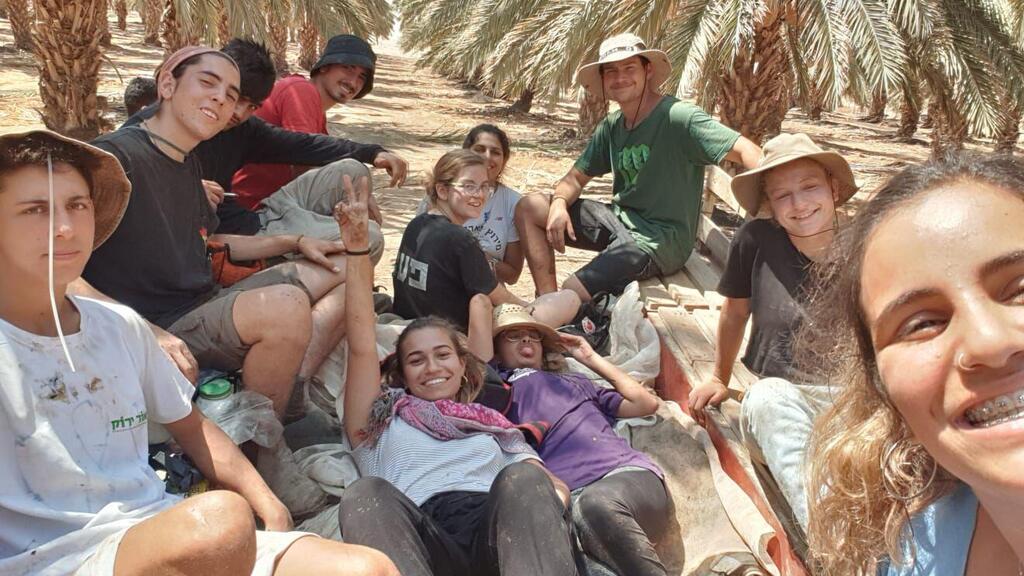
By 18, Tamar Benyan already knew she didn’t want to run the classic Israeli track of school, army, travel, and back to school. Instead, she chose a Kedma gap year program and moved to Ma’ale Ephraim. “There were nine of us in the commune—one full year of friendships, challenges, and joy,” she recalls. While COVID shut down the world, Tamar and her friends lived in a kind of agricultural bubble. So while most Israelis were locked indoors, they spent their days in date groves, olive harvests, and mango fields.
Like many Kedma volunteers, Tamar combined farm work with youth education. “I worked in Nofim, in eastern Samaria. It’s a mixed community of religious and secular families, but only the religious kids had a youth group. So we started one for the secular kids. I worked with grades 4–6—kids with hearts of gold who were hungry for a framework. In the end, they even joined us on a Kedma trip.”
Her service year led her to enlist as a combat soldier in the IDF’s search-and-rescue unit. “It was the best decision I ever made—to push myself to the edge. I felt on a mission, to protect and to act.”
She finished her service in July 2023, unsure what came next. The war pulled her back into reserve duty. Afterward, she realized she couldn’t just take off on the classic post-army trip. “I felt I couldn’t just fly away or work just to save up for a flight.”
With a fellow reservist, Tamar headed to Eilat, staying in hotels full of evacuees from the Gaza border and helping however they could. By July 2024, even before the community had returned, she moved into Kibbutz Gevulot in the Eshkol region.
“When I arrived at Gevulot, there was nothing. I went straight into the kibbutz’s social education program and worked with elementary kids. Very quickly I felt part of it—everyone looked after each other, even newcomers. After a year and a half, I didn’t want to leave the border region.”
Nearly two years later, she found her way back to Kedma—this time not as a volunteer but as a coordinator. “It’s an opportunity to work with young people who aren’t kids anymore—more mentoring, more guidance—and to return to the organization that felt like home.” Today Tamar oversees 12 Kedma gap-year volunteers in Moshav Yated, where they spend mornings in the fields and afternoons with local children.
“Kedma was home for me,” she says. “Now I’ve come back to help build a new home for others. And when I see the volunteers sitting with the kids of the community, I know I made the right choice.”
“The stories of Israel and Tamar show what community-building means today,” says Lt. Col. (Res.) Lior Kinan, CEO of Kedma. “It’s not about maps or borders—it’s about young people choosing where to put their hearts. Whether in the north or south, among ultra-Orthodox or secular, combat soldiers or educators, Kedma is a home for them. But what they’re building is even bigger: new communities rising from the ruins.”