

Ten days before Oct. 7, we came to report on border protests and life beside Gaza; three years later, we returned to the people we met, the friends they lost and the lives the massacre changed forever
The sky above Nahal Oz was gray this week, just as it had been that morning in late September 2023. That is our first memory of the visit, 10 days before the catastrophe: gray skies hanging over the kibbutz fields and stretching toward the border fence and beyond it, into the crowded neighborhoods of Shejaiya. The weather was mild, carrying the first hint of autumn.
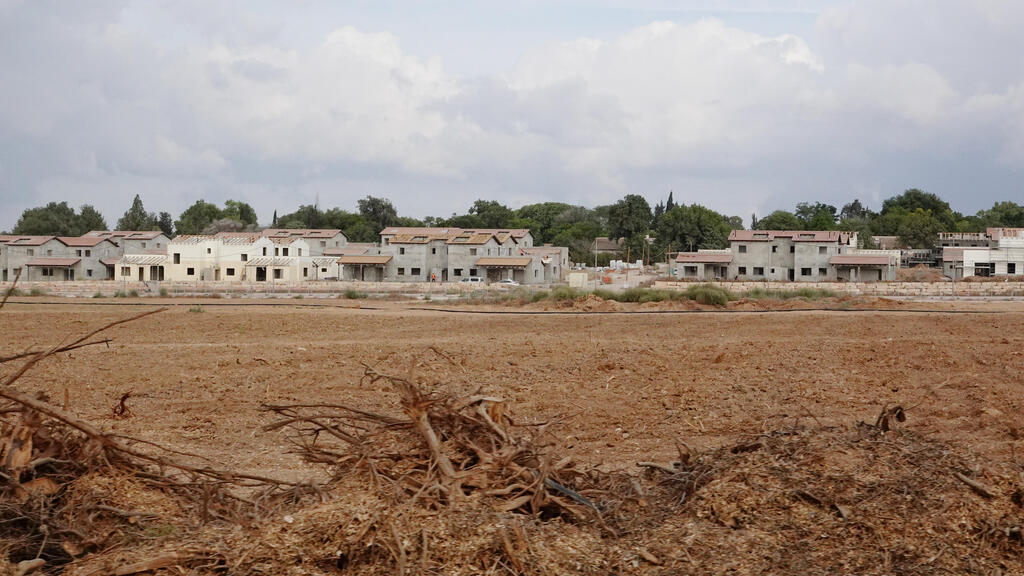
We drove alongside the high concrete wall placed on a bend in the road to protect people traveling to the kibbutz from sniper fire from Gaza and stopped just after passing through the yellow gate. This week, we tried to remember whether someone had been sitting in the guard booth, whether the gate had been closed and happened to open because a resident was driving out. We could not remember. Who noticed such small, seemingly insignificant details in the days before the massacre? The gate was open. That was all.
Our first real memory from that morning is of Yaniv Zohar. The meeting was accidental. We had stopped inside the kibbutz, trying to work out where to go, when he suddenly appeared along one of the paths on his morning walk. Shaul, the photographer, recognized him immediately. Zohar, a Nahal Oz resident and former Associated Press photographer, was then covering southern Israel for Israel Hayom, and Shaul knew him from the frequent rounds of fighting with Gaza. He leaned toward the car window, pleased to see us.
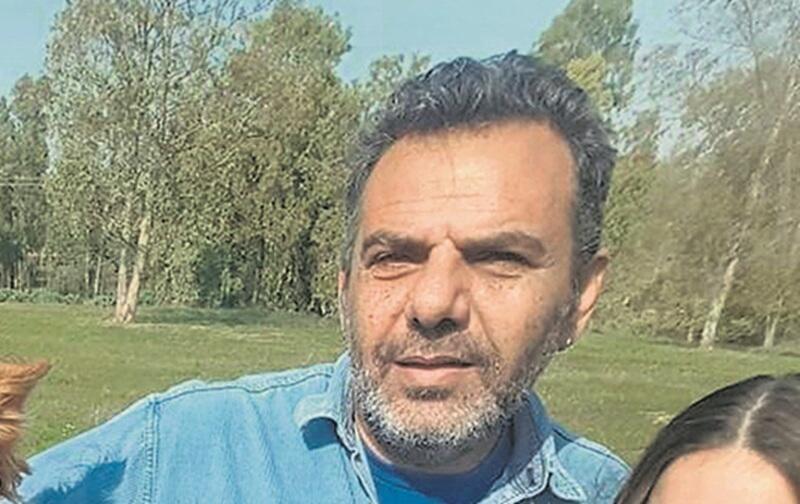
Yaniv Zohar
Maybe we got out to speak to him; maybe he stood there while we remained in the car. Three years later, who remembers? What we do remember is that he was warm and collegial. In the two weeks before the war, Palestinians in Gaza had resumed demonstrations close to the border, burning tires and throwing explosive devices toward the fence. They were not on the scale of the major border protests of 2018, but the daily events near Nahal Oz were raising tensions and worrying some residents. That was why we had come: another story about the Gaza border communities, about working the carrot and potato fields with the smell of burning tires in the air, about anxious parents and children, about how people lived while always carrying the possibility that everything might erupt again.
Zohar listened and suggested we speak to Ilan Fiorentino, the kibbutz security coordinator. “He’s a great guy, but just so you know, there’s no drama here. Everything is calm,” he said, or perhaps that is what memory, deceptive after everything that followed, wants us to believe he said. What we remember for certain is how calm he seemed.
He smiled the small smile of a veteran news photographer who had already seen just about everything, gave us Fiorentino’s number and suggested that perhaps we could meet again later near a mound overlooking the border, where the Gaza protests could be photographed. We said goodbye and he continued his walk, through the kibbutz gate and toward the open fields. Fiorentino answered immediately. “I’m just leaving the house,” he told us.
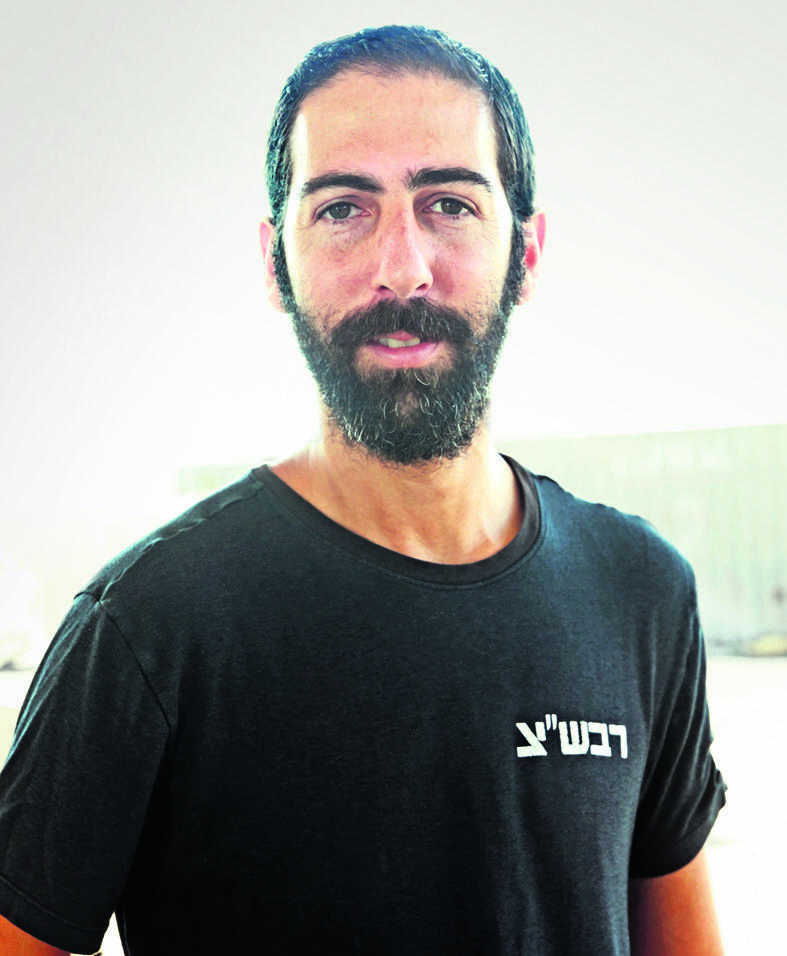
Ilan Fiorentino
(Photo: Shaul Golan)
“Meet me outside the field-crops garage. I’m fueling the pickup there. We’ll sit and talk.” In my notebook from that assignment, beneath the heading “Another round in the Gaza border area,” underlined twice, I wrote: “Ilan Fiorentino, 38, born on the kibbutz. Smiling. Made coffee.”
‘We only stop in a war’
We had arrived the day after Yom Kippur, three days before the first evening of Sukkot. From three years away, what remains most clearly are the faces of the people we met, their small gestures and the short moments we shared. The conversations were written down in a notebook in the dry shorthand required for reporting, to be turned later into an article. Reading those notes now, it is impossible not to search them for warning signs.
Did any of the people we met fear the brutal fate that would reach them only days later? There were worries. There were questions about where the region was heading. But nothing that seemed exceptional. Then came the other memory attached to that story: the horror, a week after it was published, of discovering that many of the people we had only just met were gone, murdered in their homes or killed fighting to defend their communities. Returning to Nahal Oz now makes clear just how cruelly the lives we encountered that morning were torn apart.
We had asked Fiorentino about daily life with the demonstrations taking place only 780 meters from the kibbutz. “The work in the fields hasn’t stopped for a moment since the protests began,” he told us. “Like the sign you saw at the entrance says, we work here as usual until the last furrow. We only stop in a war. In the afternoon we smell a little tire smoke, a little tear gas, and we carry on.” Ten days later, shortly after 6:30 a.m. on Oct. 7, as the massive rocket barrage began, Fiorentino’s phone rang.
This week, we sat in the home of his sister, Yifat Fiorentino-Kessler, who lived one house away in the kibbutz’s southern neighborhood, close to the gate leading toward the fields and Gaza. “On the line was Yasmin, Yaniv Zohar’s wife,” she said. “Ariel, their son, who was 13 at the time, had gone out alone for a morning run. Yasmin asked Ilan to go get him because there were so many sirens and so much shooting and it was dangerous outside.”
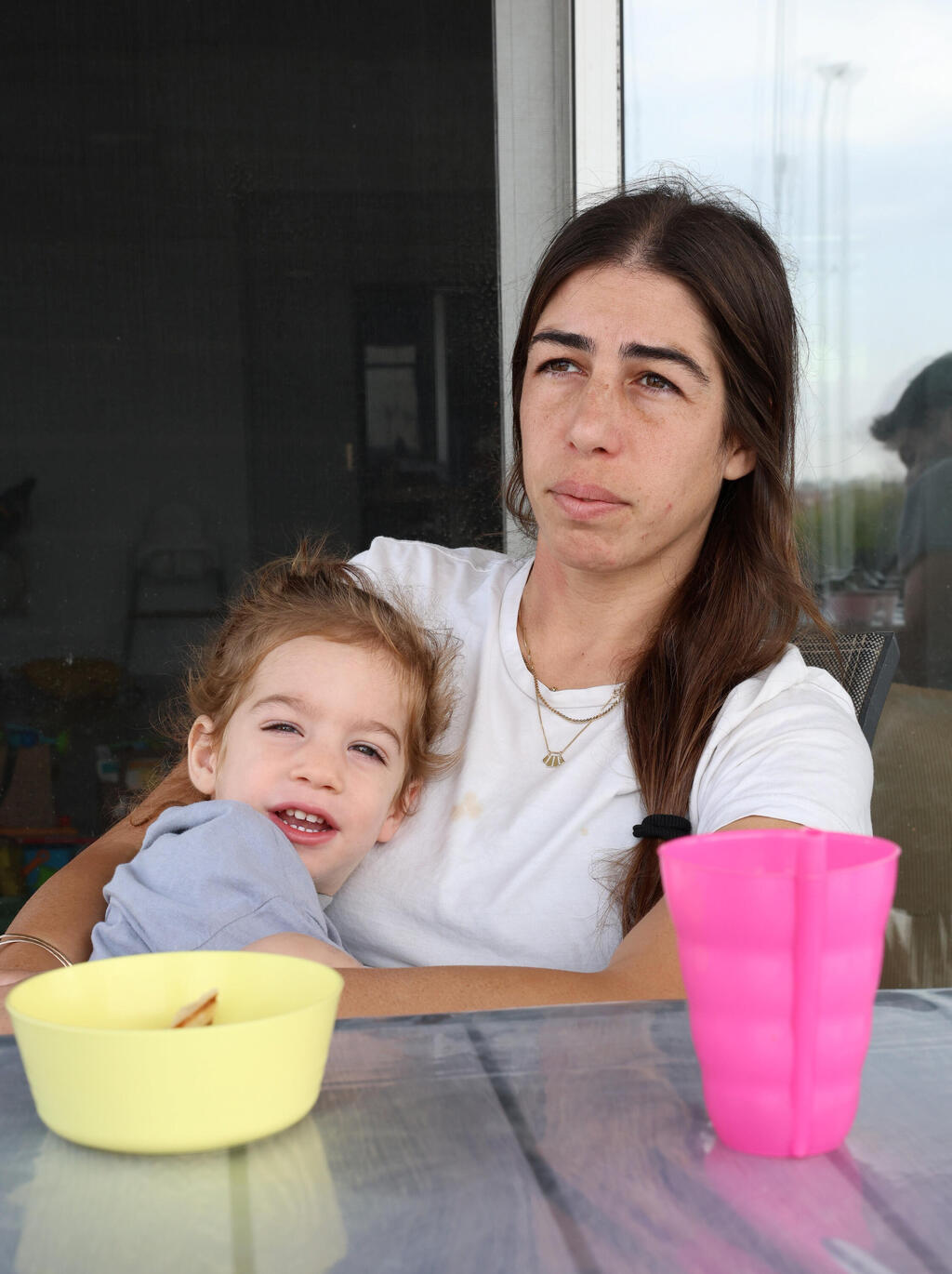
Yifat Fiorentino-Kessler
(Photo: Shaul Golan)
Fiorentino immediately went looking for him. “He found him on the perimeter road near the rear yellow gate, right there,” she said, pointing from her porch. “The Zohars lived at the other end, near the main gate, where you had met Yaniv, and Ilan apparently realized there was no point running under fire with the boy all the way across the kibbutz.” He brought Ariel into his own home, where his wife Sharon and their three daughters were sheltering in the safe room. “He stays with you. I’m going out,” he told them. Then he left to fight.
Ten days earlier, after folding away the camping stove and putting it back in his pickup, Fiorentino had sent us to see a friend he described as being like a brother: Amir Poterman, a Nahal Oz farmer preparing a large plot for carrot planting just 200 meters from the border. Poterman explained the work that went into preparing the field and talked about living in the kibbutz amid wars, sirens and the smell of burning tires drifting toward the houses each evening. When we called him this week, he remembered our meeting immediately.
“I remember it very well. You asked if I was afraid of the demonstrations, and to this day I remember what I answered. I said I wasn’t afraid of the protests, but of what might come afterward. I lived and breathed that border every day, and it was clear to me that before long the whole area would explode. That was exactly how I felt.” Before the final days of Sukkot, Poterman abruptly booked a holiday in Eilat for himself, his wife and their three daughters. “All I wanted was to get out of the kibbutz for the second holiday,” he said. “Call it fate.”
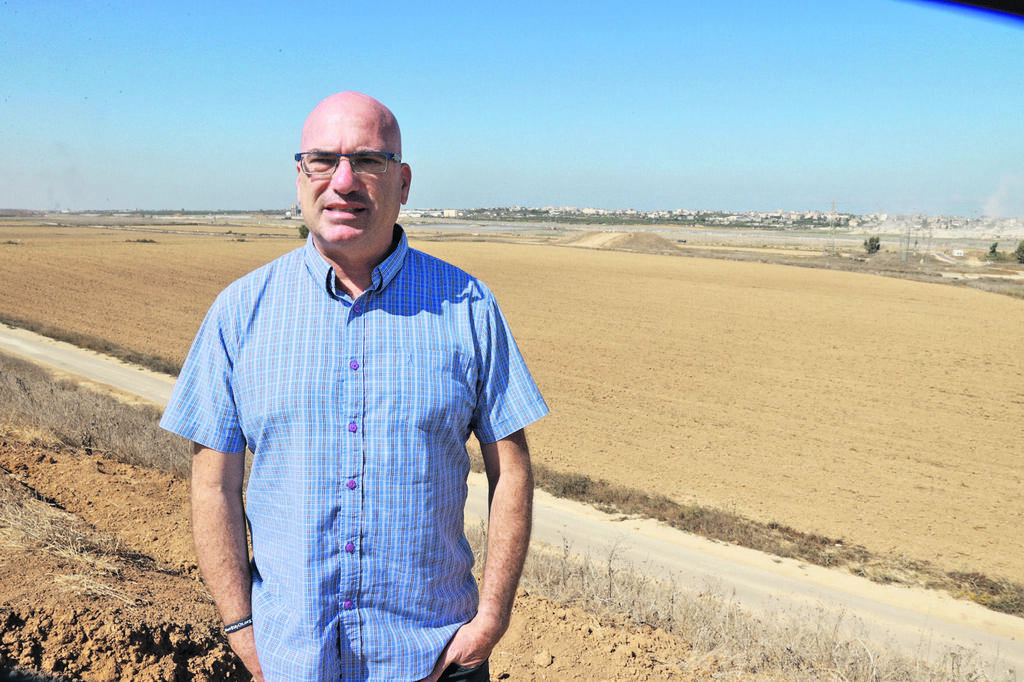
Ofir Libstein
(Photo: Shaul Golan)
From Poterman’s carrot field, we went to an observation hill west of Nahal Oz, where members of the national infrastructure planning committee had come to see the proposed site of what was intended to become Israel’s largest solar field and one of the largest in the world. It was to be built where carrots and potatoes grew alongside Gaza. Fiorentino gave the officials a security briefing, followed by Sha’ar Hanegev Regional Council head Ofir Libstein.
In our original article, we described Libstein standing on top of a mound completely exposed toward Gaza as Eshkol Regional Council head Gadi Yarkoni scolded him: “Don’t be a hero for us. Do us a favor and get down from there.” Libstein then presented a plan full of good intentions, almost a fantasy in retrospect. He and Yarkoni envisioned solar panels replacing the fields and producing electricity not only for the Israeli communities around Gaza but for their neighbors across the border.
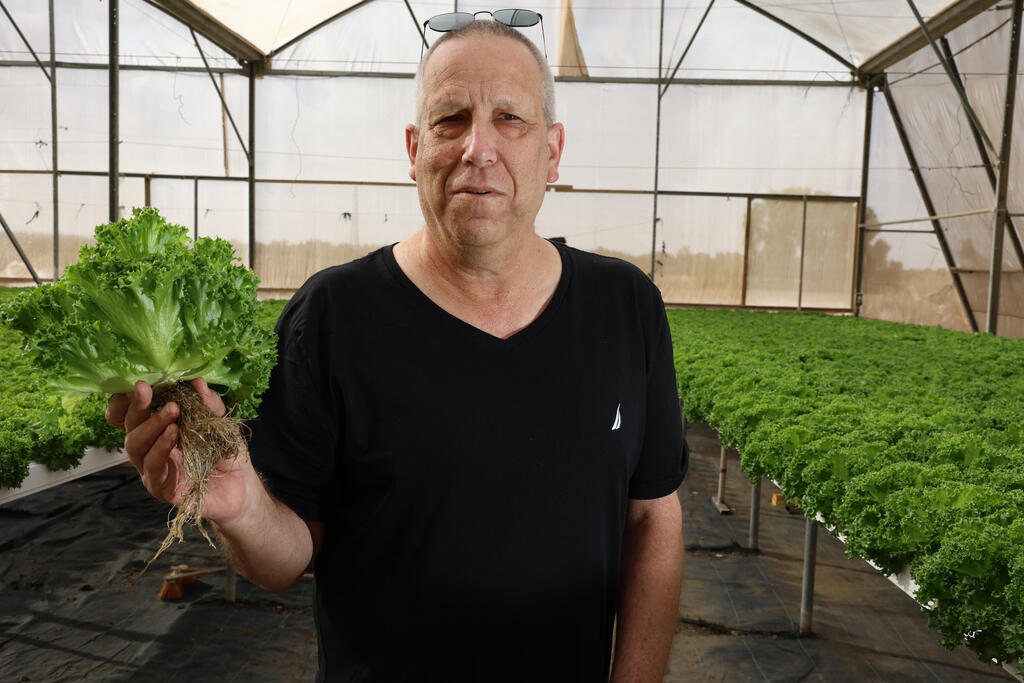
Gadi Yarkoni
(Photo: Shaul Golan)
“They are not going anywhere, and neither are we,” Libstein told us. “So we have to think about projects that benefit both sides and improve the quality of life for us and for our neighbors. This is planting a dream, that in about 15 years the land beside the border will become the country’s largest energy producer.” It sounded almost too good. There was a reason the headline of that article was: “Fire will be answered with sunshine.”
‘I was done living there’
Fifteen residents of Nahal Oz were murdered on Oct. 7 and eight were abducted. Fiorentino was killed fighting dozens of terrorists who stormed the kibbutz, just outside his home. His wife Sharon and their three daughters survived in the safe room together with Ariel Zohar. Ariel’s parents, Yaniv and Yasmin, were murdered in their home together with their daughters Keshet and Tehelet. His grandfather Haim Livne, Yasmin’s father, was murdered that day in his own home nearby. Ariel now lives with a relative in central Israel.
Poterman did not return to Nahal Oz with his wife and daughters. “I decided I was done with living there,” he told us this week from his new home in Kibbutz Beit Nir. “I have family there, friends and so many memories, especially with Ilan. We grew up together from the age of zero, the same class. A friend who was like a brother.” They supported Maccabi Tel Aviv, held season tickets and traveled together to matches at Bloomfield Stadium. Fiorentino supported Fiorentina in Italy, and Poterman supported AC Milan partly so they would have something to argue about. “I miss him terribly,” he said.
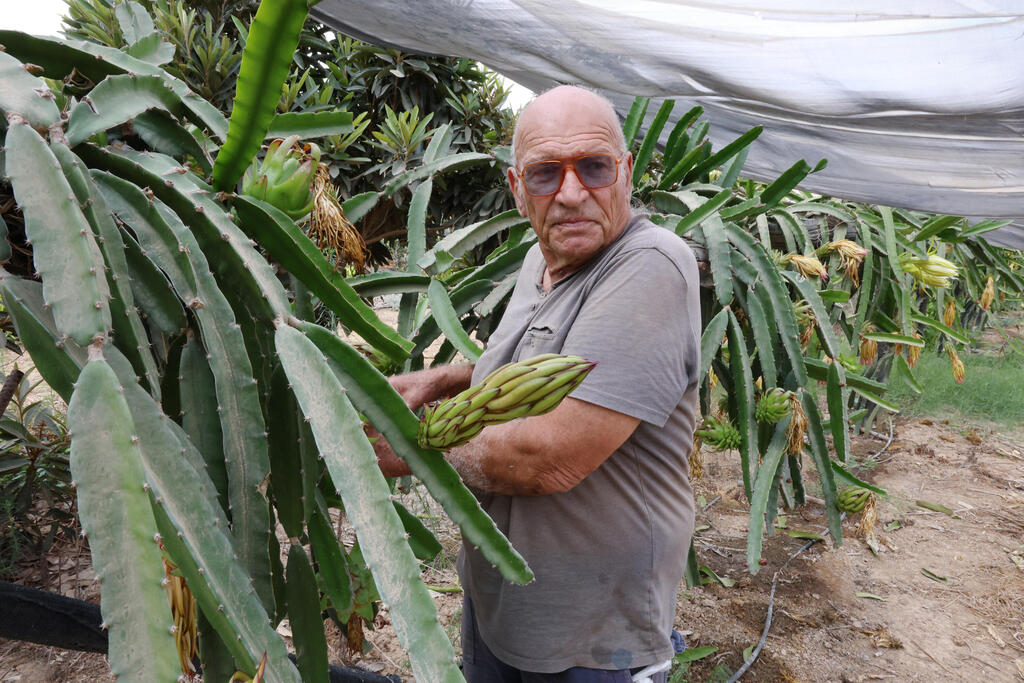
Shlomo Abarbanel
(Photo: Shaul Golan)
Libstein, head of the Sha’ar Hanegev Regional Council, was also killed fighting terrorists in his own community of Kfar Aza, just outside his home. Yarkoni, his counterpart in neighboring Eshkol, is no longer council head but continues to pursue the solar-field project. He now grows hydroponic lettuce in Kibbutz Nirim and is preparing a detailed proposal for the next government. But the idea driving him has fundamentally changed. “Ofir and I both believed in cooperation with Gaza, based on the idea that things needed to be good for them so they could be good for us too,” Yarkoni said. “I don’t operate from that place anymore. I don’t think about Gaza anymore. Today I think only about what is good for us.”
On that reporting trip we also met two Palestinian laborers from Gaza working on Shlomo Abarbanel’s farm in Moshav Ta’ashur, near Netivot. One of them, Amin Baraka from Deir al-Balah, said the money he earned in Israel supported his family and the families of his two brothers. “Twenty people, can you believe it? But thank God, no complaints.” This week, Abarbanel said he still does not know for certain what became of the two men. Israeli police collected Palestinian workers employed on farms across southern Israel after the war began, and after several weeks in detention they were returned to Gaza. “I tried to find out what happened to them, but I couldn’t,” Abarbanel said. “I only heard that they are alive.”
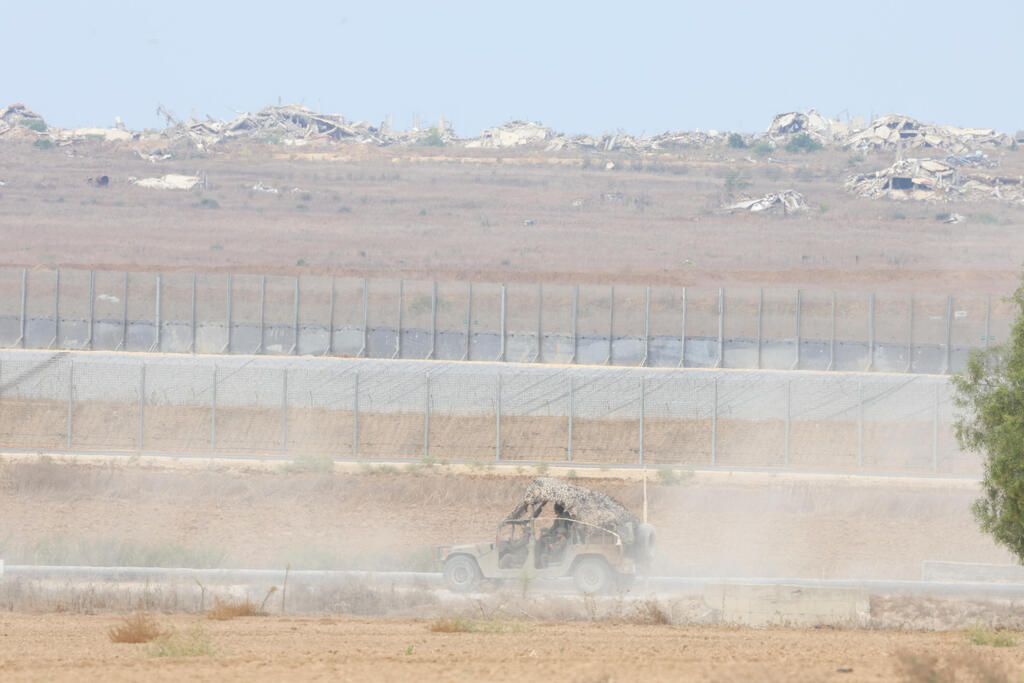
Gaza border fence
(Photo: Shaul Golan)
Fiorentino’s wife and daughters did not return to live in Nahal Oz. He was initially buried in the cemetery at Sde Ilan in the Lower Galilee and, on April 10 this year, was reburied in the cemetery of his kibbutz, facing the Gaza border. Security coordinators from communities across the border area accompanied his coffin, and the funeral procession passed the home he had left on the morning of Oct. 7 to defend. His sister Yifat did return to Nahal Oz with her husband and their three children. “Ilan and I really lived almost like a commune,” she said through tears. “Look how close our houses are. We raised our children together. Dinner together, baths together, activities together, everything together until bedtime. To tell you I feel completely calm living here again would not be true. I’m not calm. It is also hard to be here when Ilan isn’t here. I trusted him. He made me feel safe. I miss him terribly.”