

How do they deal with overdrafts, how much do they pay for housing and what dream did they fulfill amid the war? People from across Israel speak candidly about everyday life, both before and during the war. This time: The Weintraub family from Kibbutz Holit.
How did you meet?
Gallery
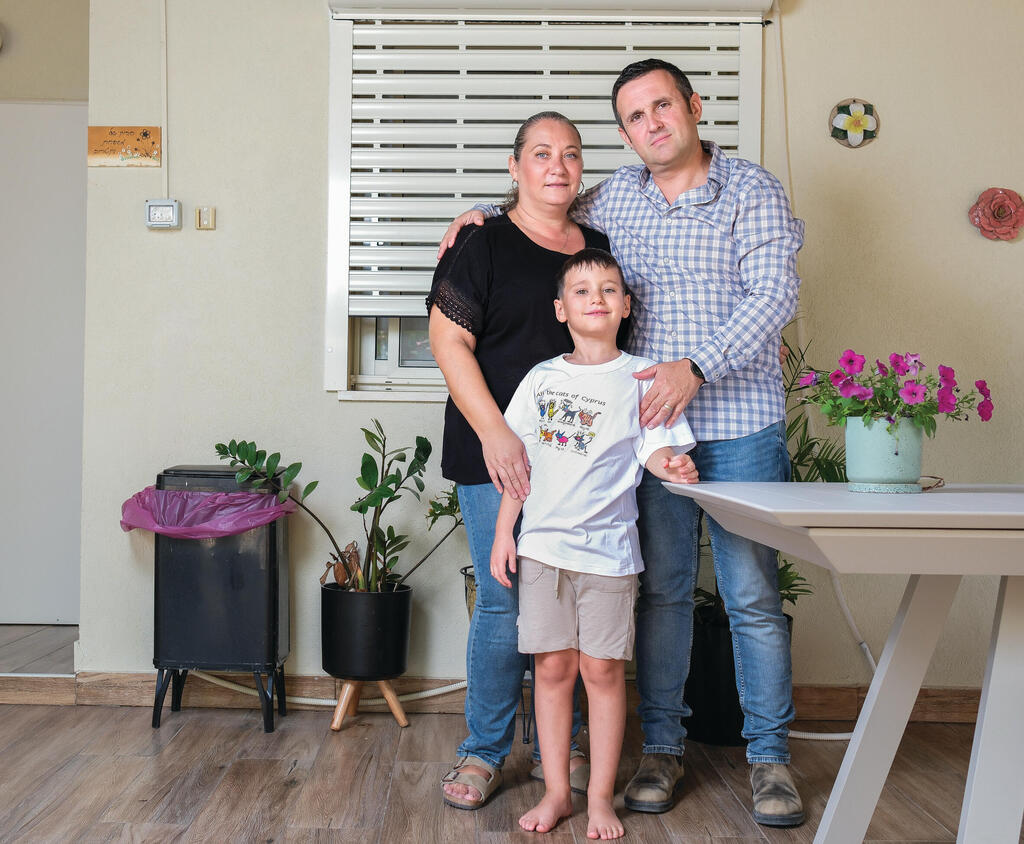
In the photo: Yulia (45), Alex (46) and Harel (8). Not pictured: Michal (16) and Lia (18)
(Photo: Assi Haim)
Alex: "We both immigrated to Israel. I'm from Ukraine and Yulia is from Uzbekistan. We met at Gadna [a pre-military training program for Israeli teenagers] when we were in 11th grade. We've been together ever since."
Why Holit?
Yulia: "We've been here for 13 years. We moved from Beersheba after deciding we wanted our children to have a kibbutz education."
Alex: "We were looking for a sense of purpose. I wanted to make a meaningful change in my life and was looking for a place with a community we could become part of. We ended up here because of the late Ofir Libstein, who was killed on October 7. At the time, he was the head of the kibbutz, before becoming head of the Sha'ar HaNegev Regional Council."
What was it like in the beginning?
Yulia: "There were 21 members and seven children at the time. It was a tiny place. Once you're accepted as a member, you can buy a home. Today, houses here range from 1 million to 1.7 million shekels. We're starting new construction here."
Alex: "Surprisingly, demand for housing in the Gaza border communities now exceeds supply. There are no vacant homes. Even though we're in the southern part of the Gaza border region, which makes it challenging to attract new families because we're far from central Israel, there are still almost no available homes. It's true that if you walk around here, the place looks empty, but that's because we're still recovering from October 7 and most members haven't returned yet."
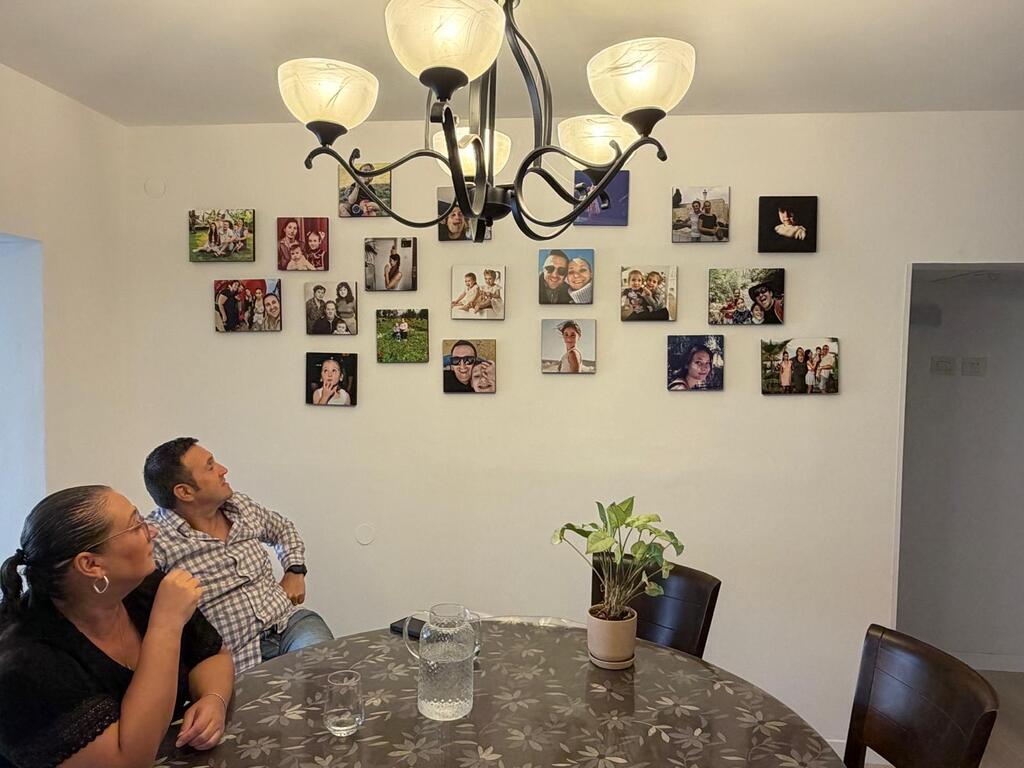
The Weintraub family
(Photo: Assi Haim)
When did you return?
Yulia: "We came back just two and a half months ago, exactly 1,000 days after we were evacuated. We hadn't been here for three years. After October 7, the entire kibbutz was evacuated to Ein Gedi for a year. We didn't stay the whole time because Alex was serving in the reserves, so I moved to Ofakim to be closer to my family and the base where he was stationed. After a year, we settled in Revivim, where we spent two years."
What happened on October 7?
Alex: "Sixteen members of our community were murdered, along with four soldiers. This is a small community of just 200 residents, so it was devastating. As a family, we spent 14 hours in our safe room. I was outside during the first few minutes and immediately realized this was no ordinary attack..
"Unfortunately, we're familiar with the sounds in this area and the different types of gunfire. You develop a sharp ear for these things. I had complete faith in the military and was certain the incident would be over within 10 minutes, so the shock was enormous. We were fighting to survive."
Fighting to survive?
Alex: "While we were in the safe room, we were reading the messages and witnessing the murders of our friends unfold. At the same time, I was trying to contact people I knew in the military, but none of them could tell me what was happening. One of them told me, 'Alex, you're on your own. Nobody is coming. You need to take care of yourselves.'"
Yulia: "Our youngest was hiding in a closet the entire time, and I tried to distract the older girls. The house across the street burned to the ground. We were probably supposed to be next, but somehow we were spared."
What happened to your house?
Yulia: "The house sustained bullet damage, but most of the destruction came from the years we were away. There was moisture damage, roots, overgrown vegetation and cracks. We had to completely renovate the house before we could move back in."
Alex: "There are emotional and physical aspects to the recovery. Emotionally, it's a very long process, and I know some people will decide not to return.
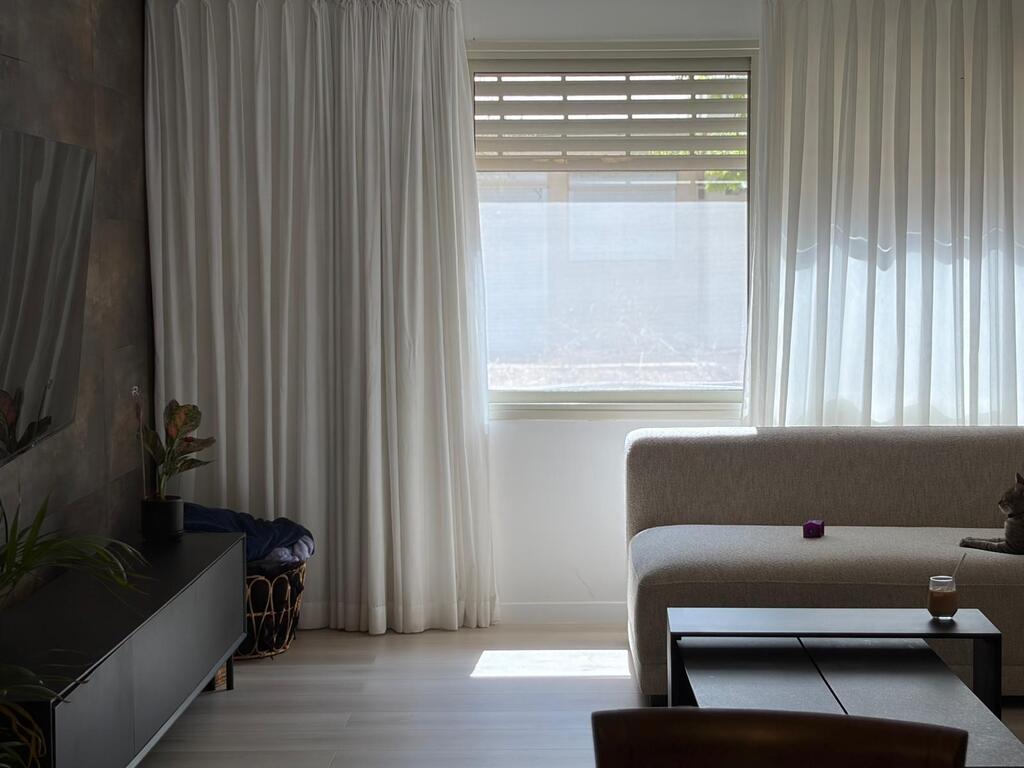
The Weintraub's home
(Photo: Assi Haim)
"Then there's the physical reconstruction. We're classified as a 'red kibbutz,' like Be'eri and Kfar Aza, because of the high number of people killed and the extensive damage to the community. Tanks drove through the kibbutz, many homes were burned down and need to be rebuilt, and all the infrastructure has to be replaced. It's a massive project."
Yulia: "There was never any question about whether we'd return. Even if it means living amid excavations, dust and holes in the ground, this is home."
"Emotionally, recovery is a very long process, and I know some people will decide not to return. Then there's the physical reconstruction. We're classified as a 'red kibbutz,' like Be'eri and Kfar Aza, because of the high number of people killed and the extensive damage to the community."
What's it like living on a construction site?
Yulia: "What bothers me most is that our friends' homes are empty. We're almost alone on the kibbutz, and it's frustrating. I hope that by next summer, we'll finally know who's coming back."
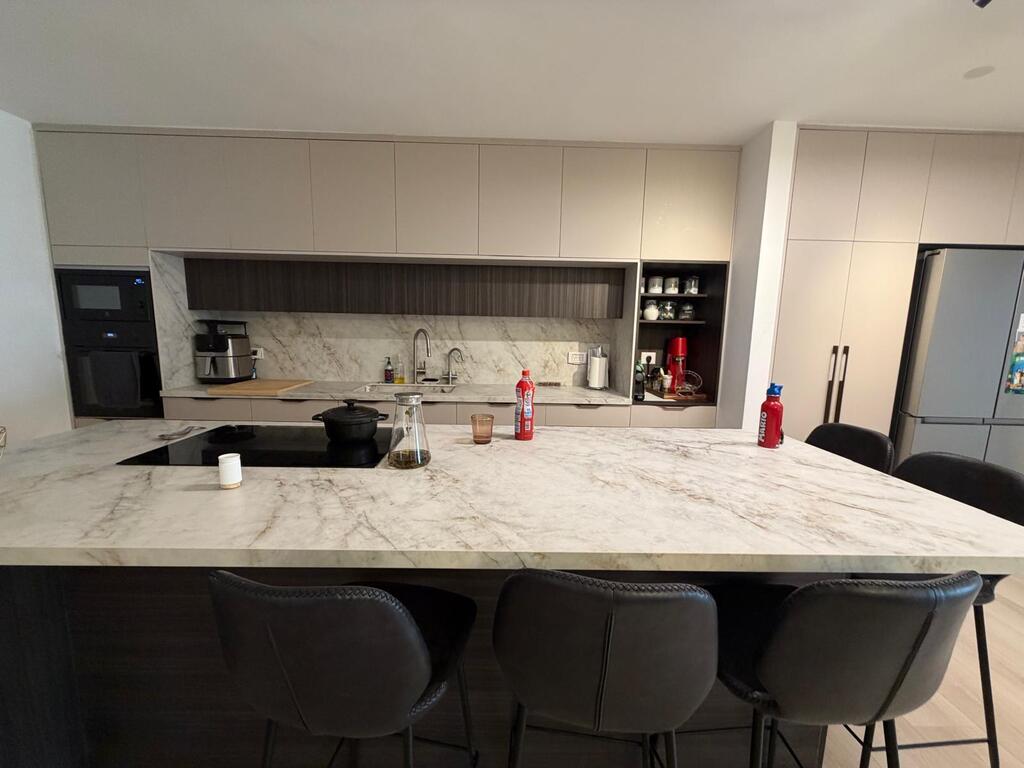
The Weintraub's home
(Photo: Assi Haim)
What do you do?
Yulia: "I'm the head of the kibbutz's new-member admissions committee. I'm working to bring families here and breathe new life into the community. I have eight families going through the admissions process, and we're building another 15 homes."
And you, Alex?
Alex: "I own an organizational development company. I work in strategy and management development, specializing in emergency preparedness, resilience and welfare. I work mainly with government ministries and local authorities.
"Over the past three years, I've spent a lot of time on reserve duty. I went from being a company commander in a battalion to serving as an organizational consultant in the reserves as well."
How has reserve duty affected your work?
Alex: "For the first two years after October 7, my business practically came to a standstill. Clients left, and I was focused entirely on reserve duty. Over the past year, I've slowly been getting back to work.
"Beyond that, I'm socially active and involved in various initiatives in the south. I was among the founders of the 'Future for the OTEF' movement, which focuses on rehabilitating the region. I'm also a member of the regional council. I try to find time for everything."
What's life like in the Gaza border region?
Yulia: "The nearest cities are Ofakim, which is 25 minutes away, and Beersheba."
Alex: "Life here is good. We have a strong sense of community, plenty of social activities and a good quality of life. We have a swimming pool and plenty of open space."
Yulia: "There's a lot of potential here, and when a place is small, everyone has a much more meaningful role to play. It might not look particularly beautiful or thriving right now. We're going through a difficult period, but it's also an opportunity."
How are you doing financially?
Alex: "We're doing OK. There's a myth that residents of the Gaza border communities received a lot of money. That's partly true, but the expenses we faced as a family during this period were enormous. There was the home renovation, the treatments and other costs."
What do you do for fun?
Yulia: "We like sitting on the porch. There's an excellent Thai restaurant in a neighboring kibbutz, and we also have a cultural committee here that organizes events."