

At 11,000 feet above Sicily, inside a tiny two-seat ultralight plane with a luggage compartment barely big enough for a small carry-on, Nir Levy, 27, a flight instructor living in the United States, and her father, Gil Levy, 62, a farmer from the Arava, looked into the mouth of an active volcano. Carefully. The column of volcanic ash showed them which direction not to approach from.
It was a particularly cramped father-daughter flight, an airborne road trip that lasted 18 days and included 55 flight hours. The Levy family turned an old dream into reality, with six kilos of personal luggage each, countless permits and fuel calculations, grass strips and private airfields, Italian food and nights when sleep did not come before the next day’s flights were finalized. It was not a beach vacation, and not a regular family trip. It was a tense, moving journey, a family dream inside a cockpit.
The airborne road trip that fulfilled an old dream


A few hours before takeoff from home in Moshav Paran, the big dream nearly stayed on the ground, and not because of extreme weather. “We had planned to spend our first night in Rhodes,” Nir tells ynet. “At 2 a.m., they told us they had no parking space for us. You have to understand the pressure. It changes the whole route.”
On a car trip, in such a situation, you simply look for another parking lot and keep going. In a small ultralight plane, in the middle of a cross-continental journey, it is a different story entirely. “There are not many landing options on the way to Europe,” Nir explains. “And you need an airfield that also has passport control.”
The two began sending emails, making calls and searching for airfield operators and service providers. “Crete told us no. It was really stressful right before the flight. In the end, we managed to find another company in Rhodes that agreed to take us.”
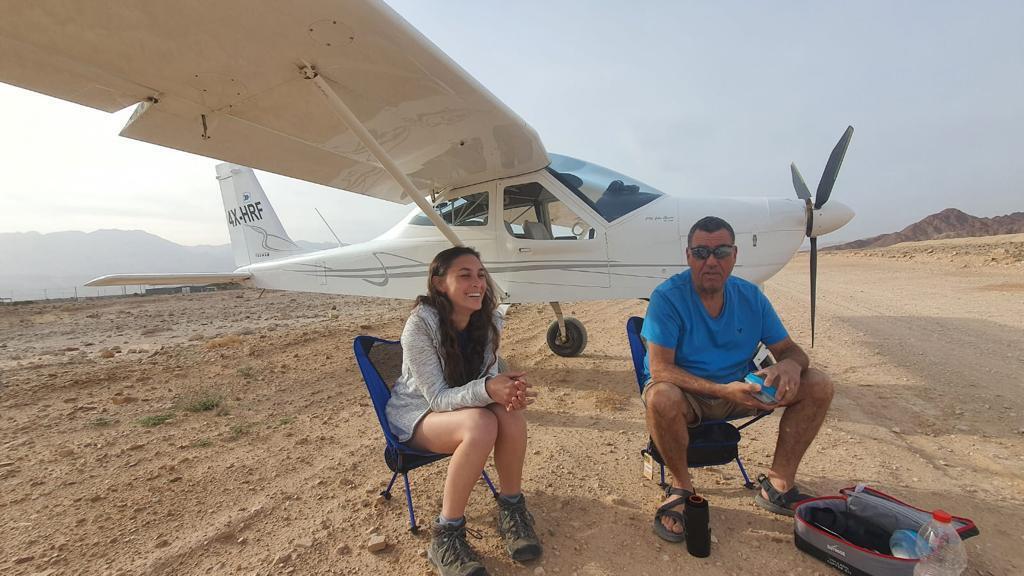
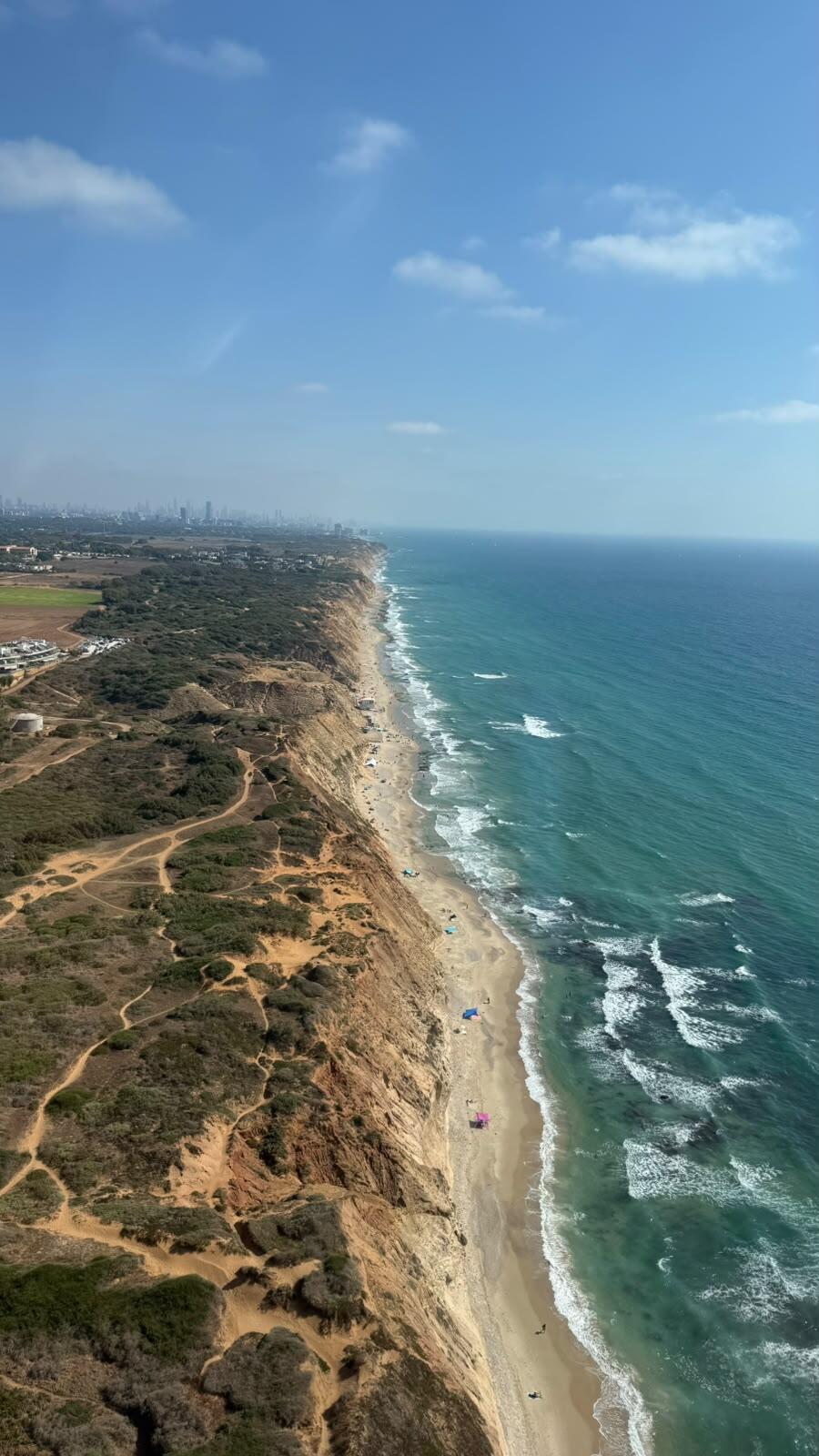
Day one: crossing Israel northward
(Photo: Nir Levy)
Then the first morning of the airborne road trip began. “We flew from Paran to Haifa, got our passports stamped, and from there to Italy through a refueling stop in Paphos and then through Greece,” Gil says. “We did an 18-day trip. There were two nights in Greece, and we crossed all of Italy from south to north. On the way back, we also passed through Slovenia, Croatia and Montenegro.”
From the ground, it sounds like a romantic fantasy: father and daughter, open skies, Europe from above, beaches, mountains and small airfields. In practice, the journey had other sides too.
“You are allowed to put 20 kilos in the plane’s luggage compartment,” Gil says. “We brought emergency equipment, an inflatable raft and all kinds of waterproof bags with radios and things like that. That was eight kilos, so we had six kilos each left for 18 days.” He laughs.
The first two days of the journey, above the Mediterranean, the part that sounds most dramatic on paper, were, according to the Israeli flight instructor, fairly monotonous. “The first two days were relatively boring,” she says. “For a very long time, you simply fly in a straight line and see nothing below except water.”
Then Europe opened up. “The views became amazing,” Nir says. “Greece is stunning, and so is Italy. There are so many special places there that sometimes we flew the same route twice just because we were so excited by the view. We did Amalfi three times: there, back and there again.”
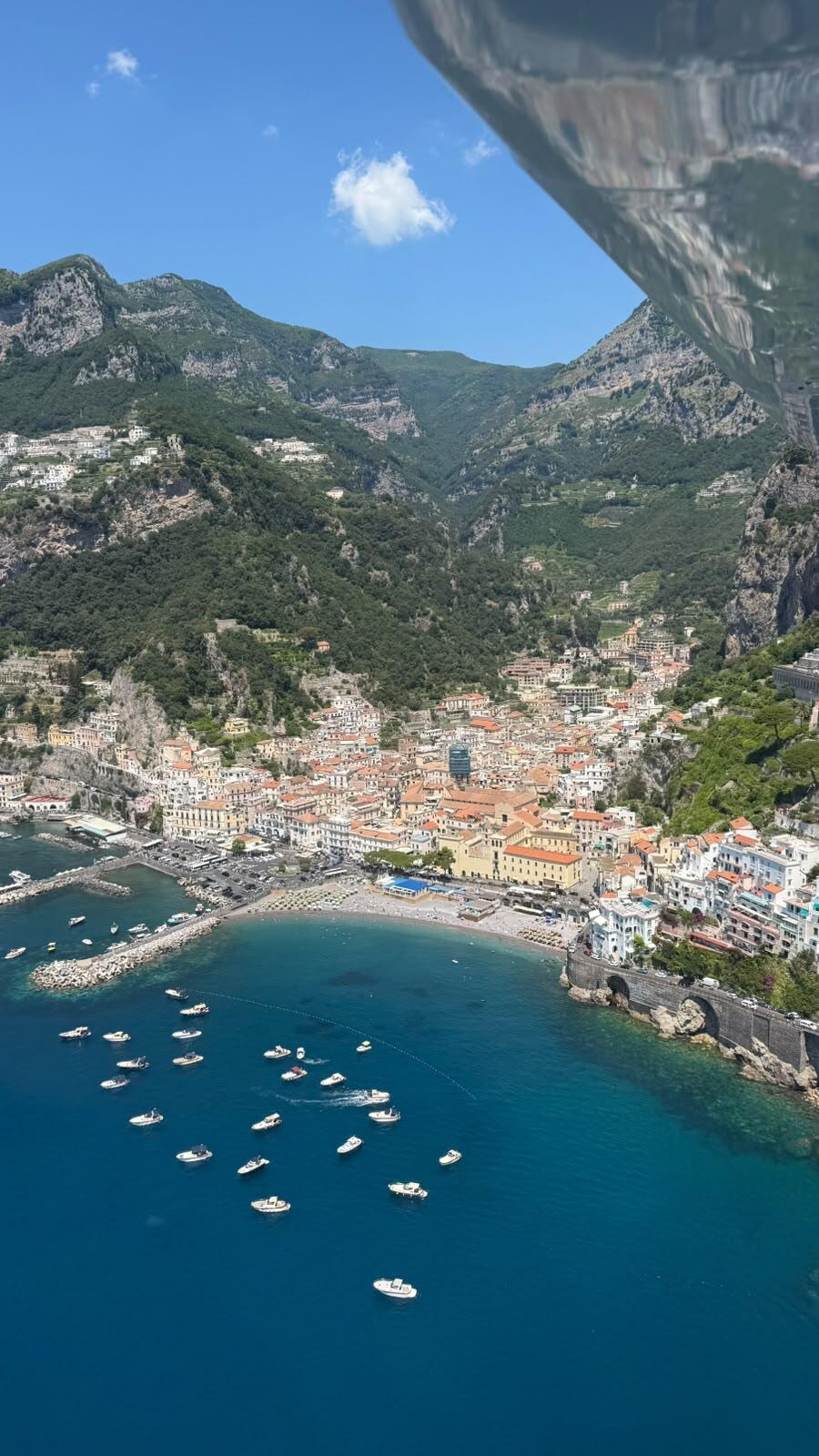
Flying over Amalfi
(Photo: Nir Levy)
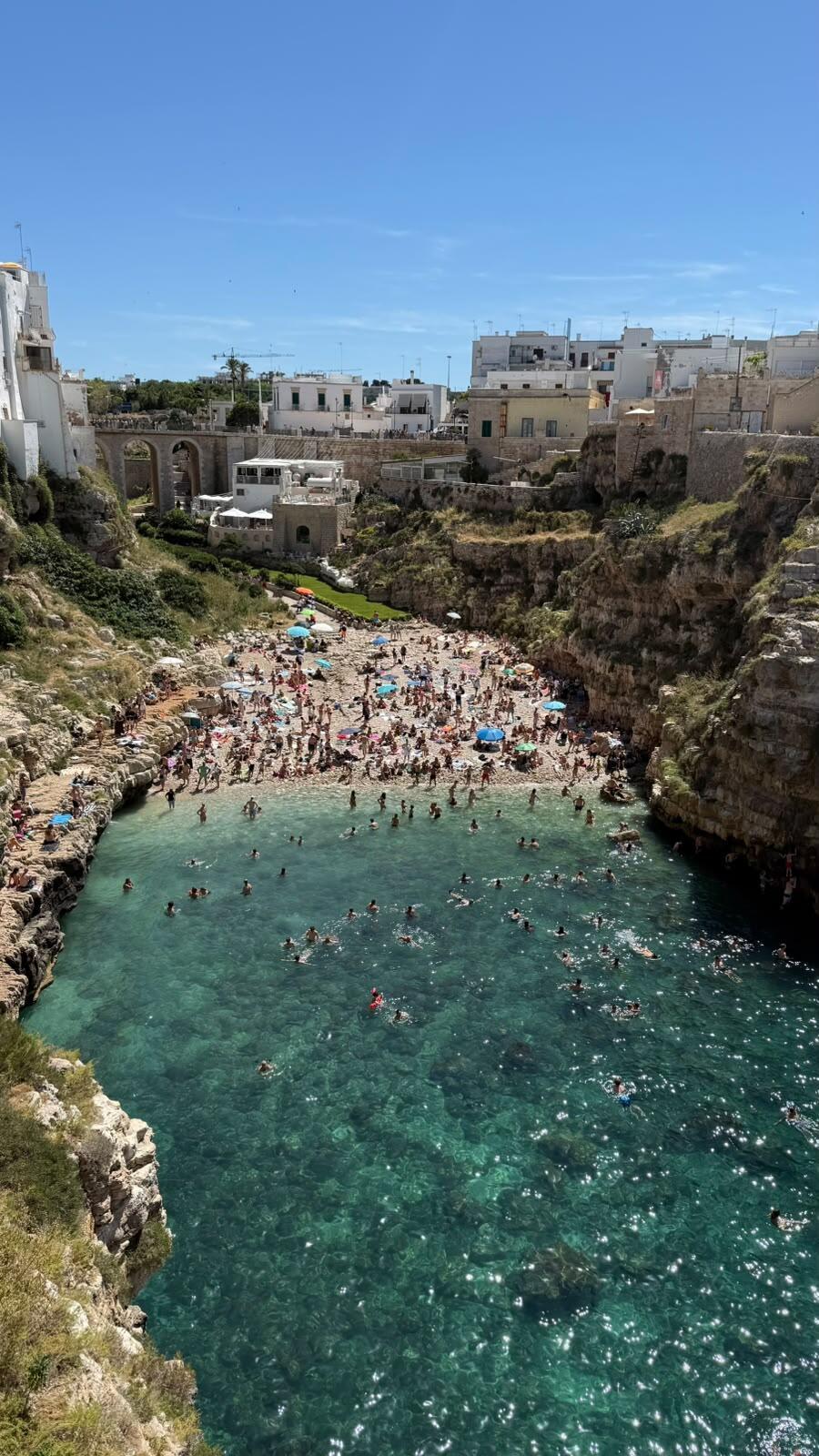
The iconic beach in Polignano a Mare
(Photo: Nir Levy)
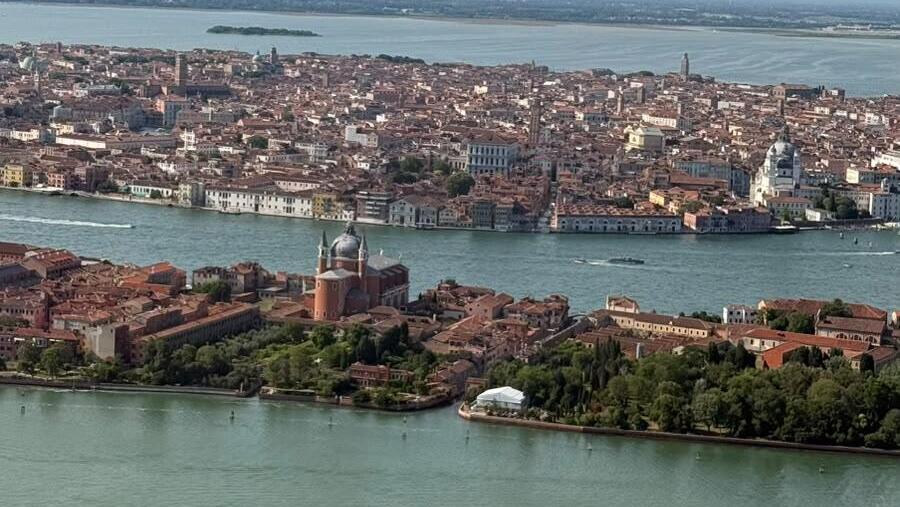
Above Venice
(Photo: Nir Levy)
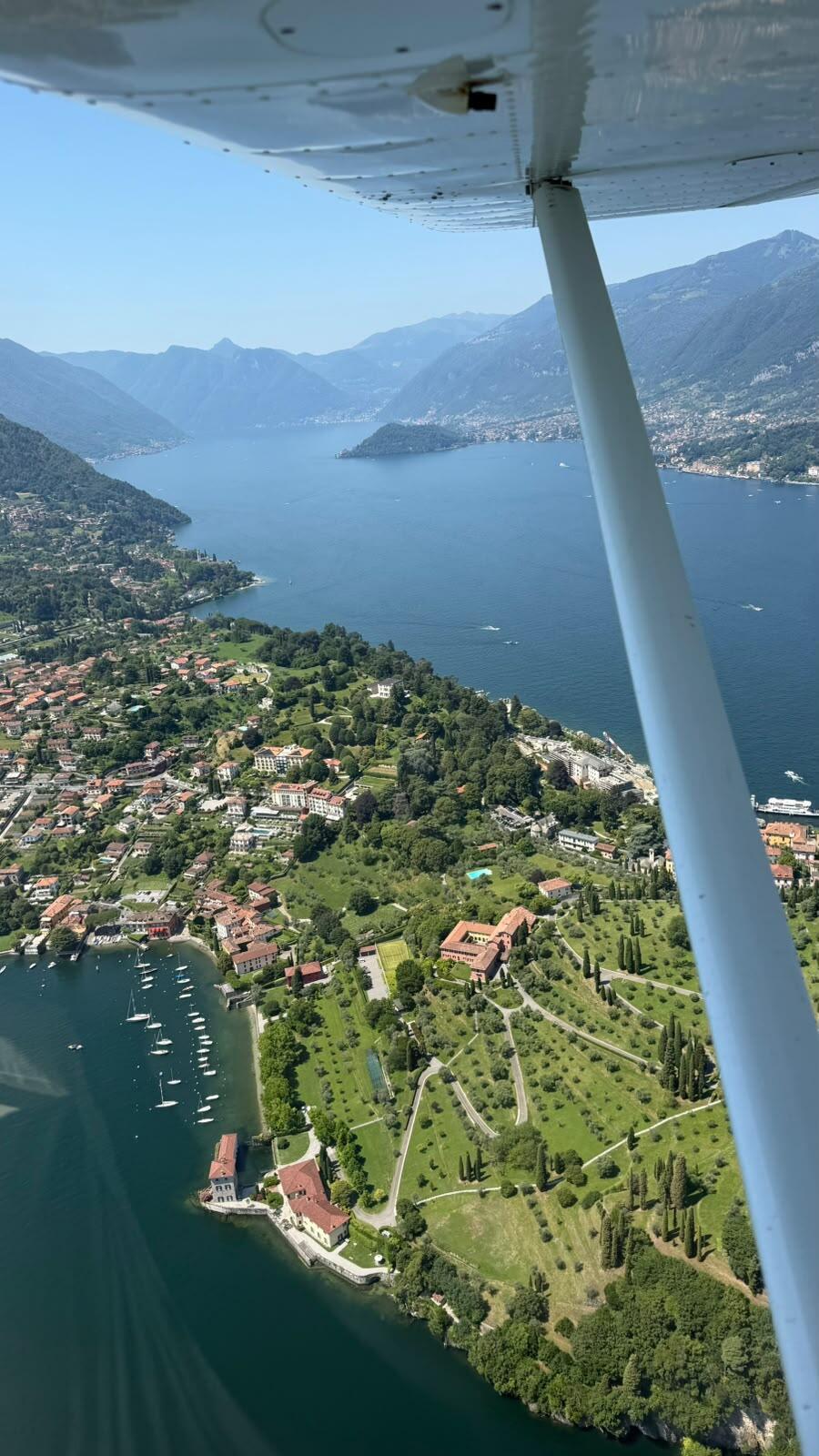
Flying above Lake Como
(Photo: Nir Levy)
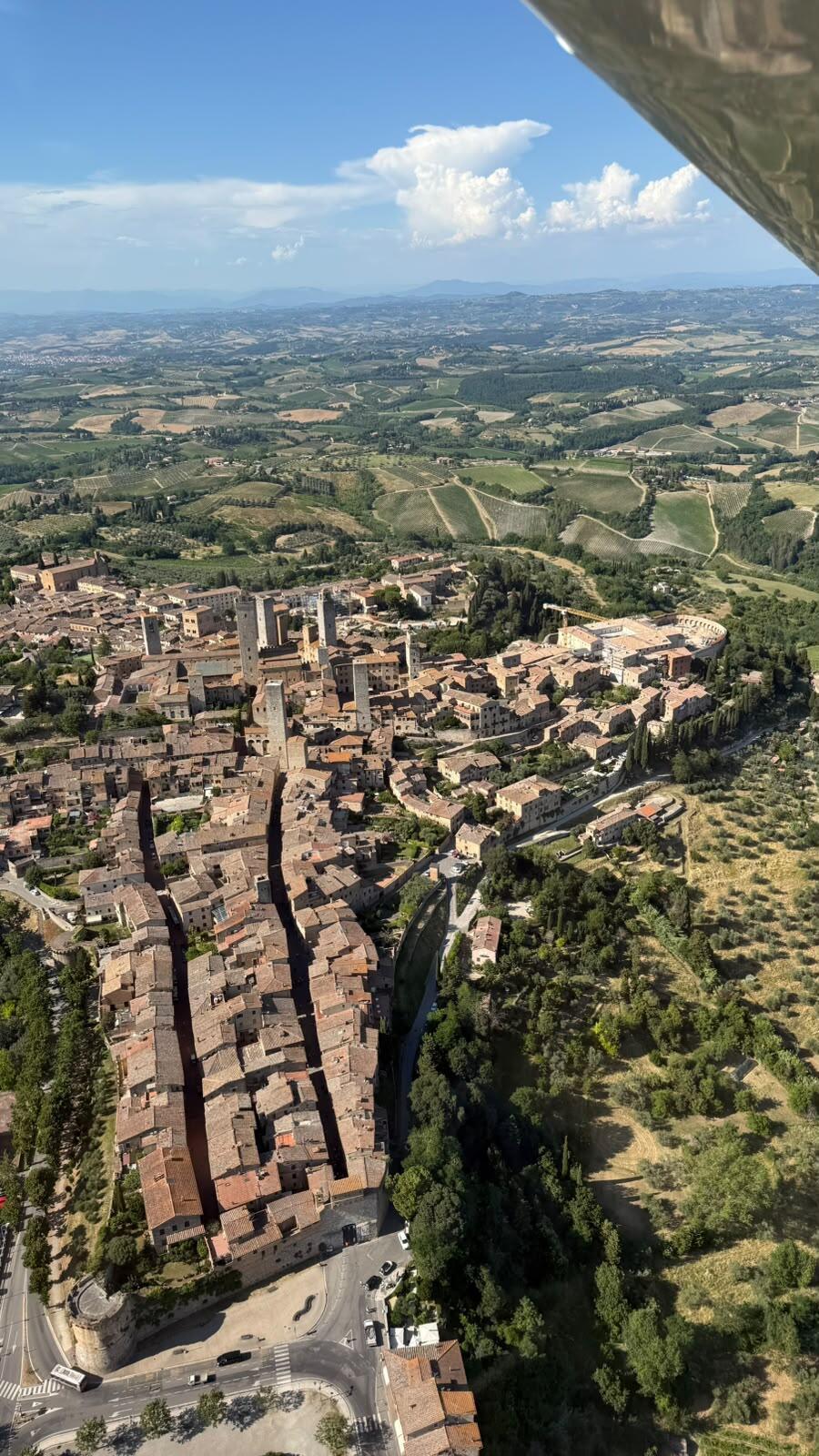
San Gimignano, Italy
(Photo: Nir Levy)
Amalfi, one of Italy’s most iconic regions, became one of the highlights for them. “Exactly a year earlier I was there on the ground, looking at the planes and saying, ‘Wow, I wish I were up there right now,’” Nir says. “It is a very beautiful place from the ground too, don’t get me wrong, Amalfi is amazing. But there is a kind of freedom in seeing it from the air, and it is an incredible feeling.”
The Levy family’s airborne journey did not pass through gleaming terminals or boarding gates. “Most of the airfields were small,” Nir says. “Sometimes even a grass strip in someone’s yard, but usually the people there are so nice. They took care of us and helped us with a hotel or a ride somewhere.”
It turns out that Europe’s skies have their own warm community of amateur pilots, airfield operators and owners of small aircraft. “Every time you arrive at an airfield, you connect with the locals,” Gil says.
Later, they were invited to an ultralight aircraft festival by people they met along the way. “We expected to see 10, maybe 20 planes, and I think there were about 200 planes there,” Gil says. “There were also lots of people we had met along the way, and even people who did not know us had already heard about us and asked, ‘Are you the father and daughter who came here in a small ultralight plane from Israel?’ It was really nice.”
One of the best stops on the airborne road trip, in central Italy, was at a small airfield south of Bologna, with a hotel, restaurant and pool next to it. “We landed there and they welcomed us very nicely,” Nir recalls. “There was a hotel literally two meters from where the plane was parked, and from the hotel pool you could see the plane’s parking spot.”
(Photo: Nir Levy)
For an ordinary tourist, a hotel near an airport is usually a compromise. For the Levy family, it was perfect. “No taxi is needed, and you do not have to worry about where the plane is. It is simply there, in front of your eyes. It is a tiny airport for light planes, they do not fly there at night, and there was almost no noise. It was actually nice to sit by the pool and watch planes landing above you. Noise does not bother us. We are pilots.”
If Amalfi was the visual high point, San Marino, the tiny country hidden inside the Italian peninsula, was a surprising and emotional highlight. Gil describes its tiny airstrip as one of the most beautiful in the world.
“On one side of the airfield there is a mountain, and on the other side there is an abyss,” he says. “The view is amazing. You see Rimini, you see the sea. I was very surprised there was an airstrip there at all, and I said, ‘We have to land in another country.’”
According to Nir, the locals were also excited by their arrival. “The pilots there were really excited,” she says. “They told me there was a chance I was the first woman to land in that country. Think about it: It is a very tiny field, there are few landings, maybe one, two or three planes a day, and they do not get many guests in general. So suddenly, a plane from Israel. There is a pretty good chance we were the first Israeli plane to land in the state of San Marino.”
In the tiny country, they stayed with a family Nir knew through a friend from Israel. “Her father is Italian,” she says of the connection. “And they welcomed us very, very nicely.” Afterward, the Israeli pilot took members of the family on a short flight. “I took both her cousin and her uncle for a little ride over the house. It was really nice.”
At 11,000 feet above Sicily, inside a small ultralight plane, Nir and her father Gil looked down at one of the most dramatic sights that can be seen from the air: an active volcano. They flew toward Mount Etna, climbed to about 3,500 meters and circled the crater. “It is not dangerous,” Gil explains. “It is not smoke coming out of the mountain, but volcanic ash. You see where it is going and come from the opposite direction so it does not reach you.”
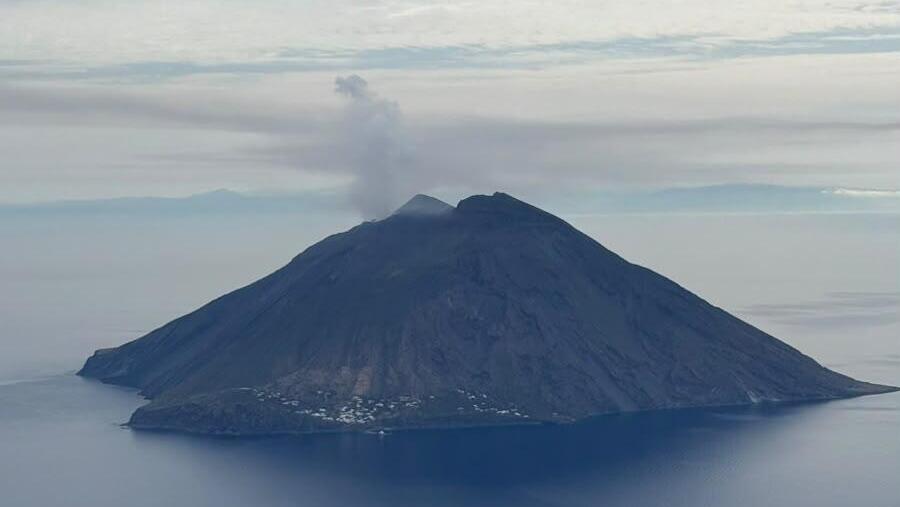
An active volcano
(Photo: Nir Levy)
Nir, the flight instructor, adds the professional explanation. “In any case, you do not fly directly over the crater because there is a no-fly zone there, so we flew around it. It was an experience to get our plane to that altitude. It is something we had never done before.”
On the same flight, they continued north from Sicily toward the Stromboli area. “There are many islands there, each of them an active volcano,” Nir says. “That was also an amazing flight. And it was all in the same round.”
Father and daughter, in a small plane, floating above active volcanoes in southern Italy. “Many times during the trip we said, ‘Wow, how amazing it is that we have this father-daughter experience, which not many people get to have,’” Nir says.
Inside the small cockpit, the division of roles was clear. “On most flights, 95% of the time, I flew,” the father says proudly. “And she did the rest: communication with air traffic controllers, flight planning. I was the dad auto-pilot.” In the Levy family, aviation is not a random hobby. “I am not the only pilot in the family,” Gil says. “My father was a pilot, and my two brothers are pilots. It is a pleasure to fly with my daughter and see how she handles things better than I would have.”
The role reversal between them is one of the most beautiful parts of the journey. Once, the father taught his daughter. Now Nir instructs him, and not only symbolically: checklists, procedures, cockpit comments and the strictness of an instructor.
“Suddenly there is this role reversal, where he does something wrong and you have to correct him,” Nir says. “I do not think every father would accept a comment like that. Sometimes I even had to raise my voice a little, like, ‘What are you doing, Dad?’ In the end, it is an instructor and a trainee, and not every father would be willing to accept comments like that from his child.” Her father does not argue. In the air, as far as he is concerned, there is no room for ego. “You have to understand that in a plane, there is one captain. There are not two.”
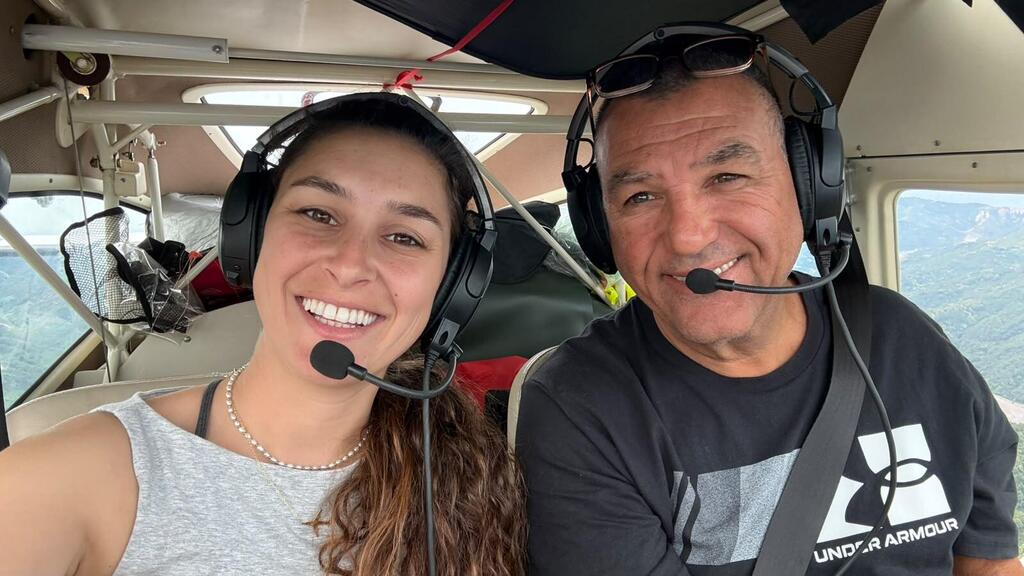
There is one captain, not two
(Photo: Nir Levy)
As expected on an airborne road trip, not everything went according to plan. “In Corfu, they did not approve our landing date,” Gil says.
Sometimes, a small disruption creates the best gift. The day born from that change took them to the lakes of northern Italy. “Lake Garda and Como, it is amazing there. And I have friends from cycling in Bergamo. So we flew to Bergamo, had lunch with them, and then continued to the lakes. The view there is insane.”
The scene sounds almost cinematic: landing a small plane in a picturesque city, having lunch with local cycling friends and continuing over the famous lakes of northern Italy. But Gil quickly reminds us that this was not a business jet or sterile luxury. “We are talking about 55 flight hours in 18 days. Try to understand what it means to sit so many hours in a plane.”
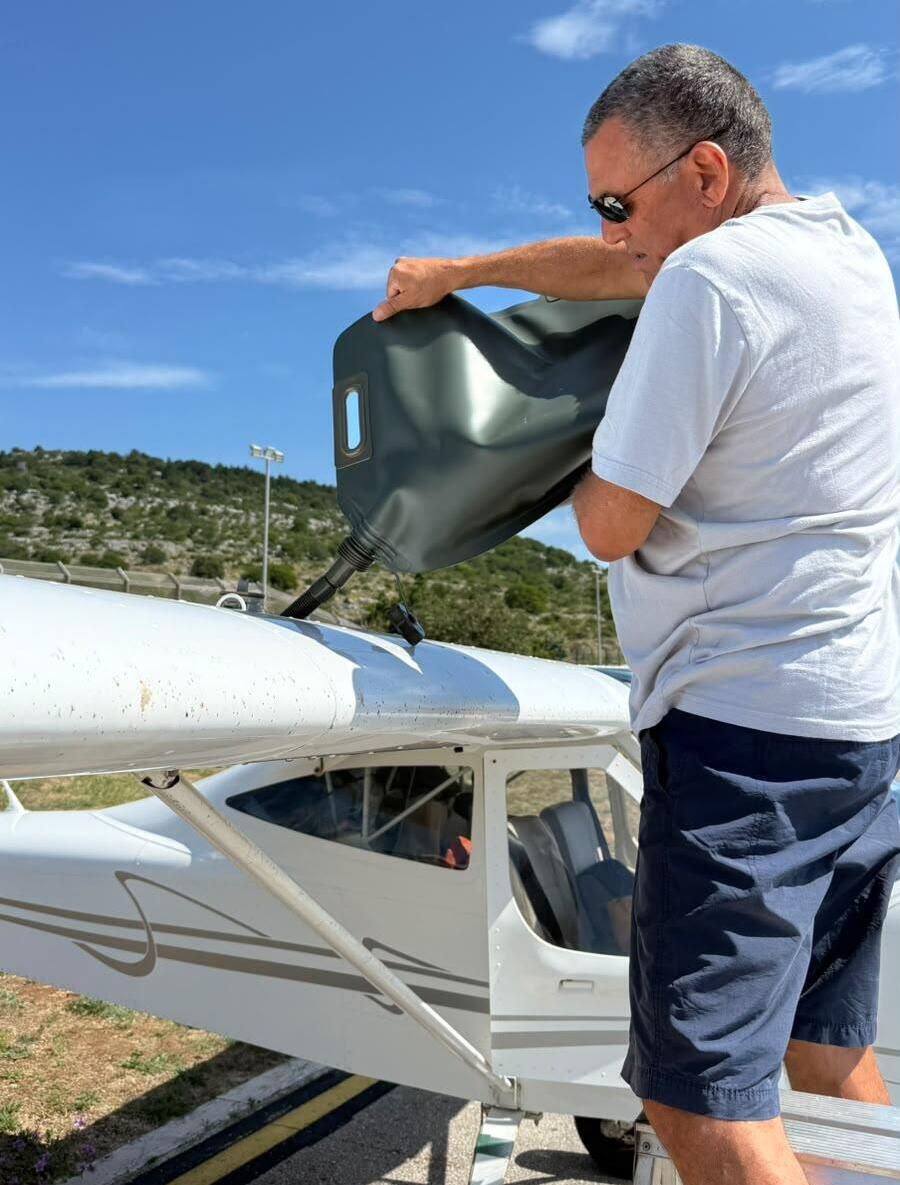
And what about the bathroom? There is a simple operational answer to that too. “Every three hours we stop to refuel, and then we go to the bathroom.” Nir adds that the plane can last about four and a half to five hours without refueling, but they did not want to push it.
From northern Italy, the Levy family flew to the island of Lido, near Venice. “From there you can take a boat to the city,” Nir explains, describing the choice of the unusual airfield. Later they also passed through Slovenia, Croatia and Montenegro: another landing, another coffee, bathroom, fuel and takeoff.
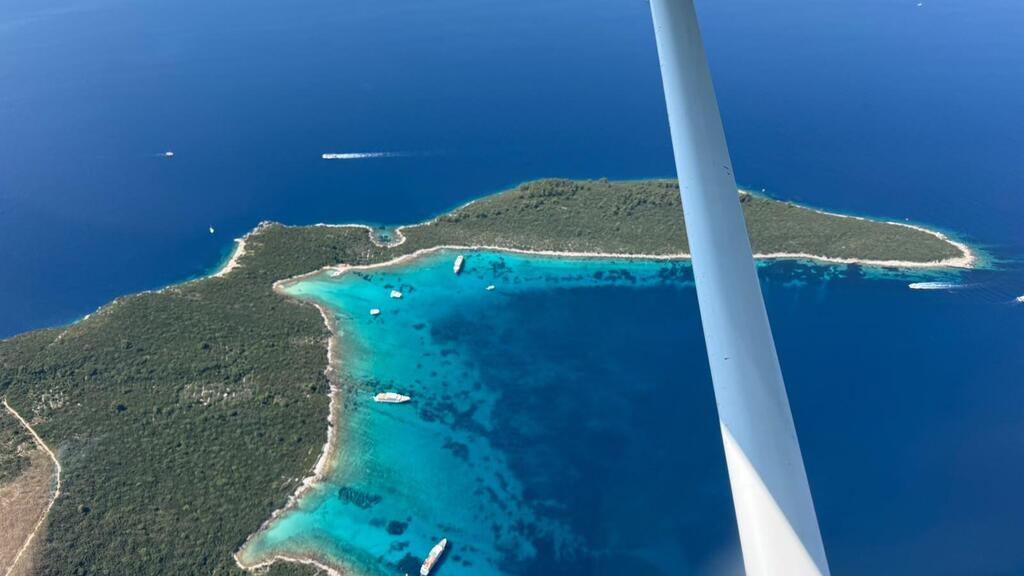
Brač Island, Croatia
(Photo: Nir Levy)
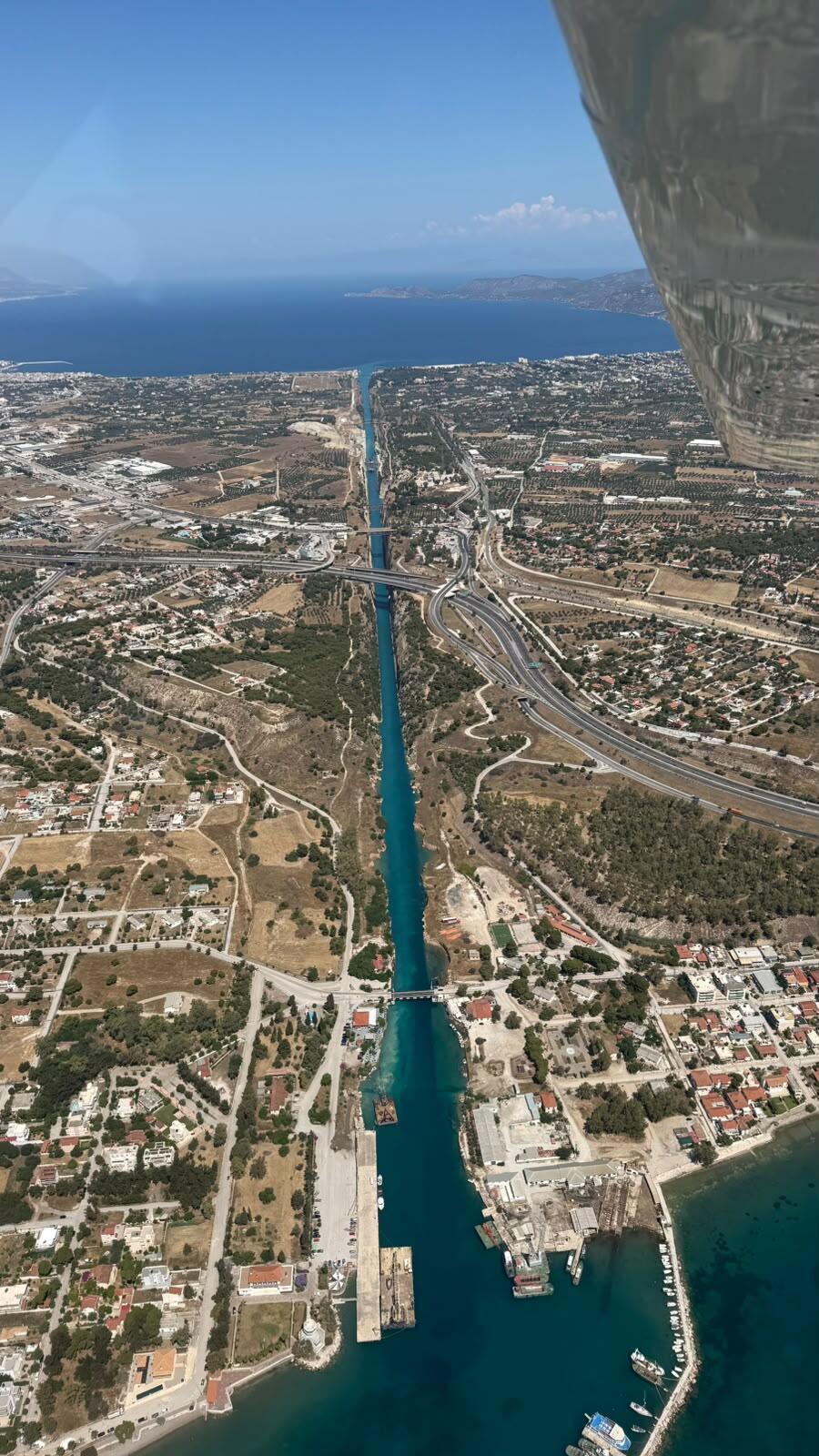
Corinth Canal
(Photo: Nir Levy)
On the way back to Israel, between Corfu and Rhodes, the Levy family needed fuel, urgently. The solution was a local private airfield. “We corresponded with him the night before in Greek using Google Translate,” Gil says.
The place sounded like the end of the world in aviation form: a 600-meter runway, a shed with planes, a private home, very little English and a lot of goodwill. “He picked us an apricot from his tree,” Nir recalls with a smile.
After speaking with the family of pilots, it becomes clearer what really makes such a unique trip possible: not only a plane and a pilot’s license, but also a network of locals and small airfields, owners of landing strips, pilots, friends and service providers.
“Italy is really equipped for ultralight trips. It is unbelievable,” Gil says. Nir adds that Italy has several ultralight aircraft factories. “So I suppose that also adds to it, and Dad and I are already waiting for our next trip together.”
In the end, the biggest memories from the journey were not only the views, the volcanoes or the tiny airfields. They were 18 days in which a father and daughter shared one cockpit, and fulfilled an old dream together.