

On the evening of January 12, 1981, a security guard outside Jerusalem's Holyland Hotel heard gunfire. Looking toward the entrance, he saw a military jeep speeding away against the direction of traffic. Nearby, inside a bullet-riddled Peugeot 504, Israeli lawmaker Hamad Abu Rabia lay dead. He had been struck by five bullets.
The killing made him the first serving member of Israel's Knesset to be assassinated. The motive was extraordinary: Abu Rabia had refused to surrender his parliamentary seat under a political rotation agreement, and the men responsible for his murder were the sons of the politician who stood to replace him.
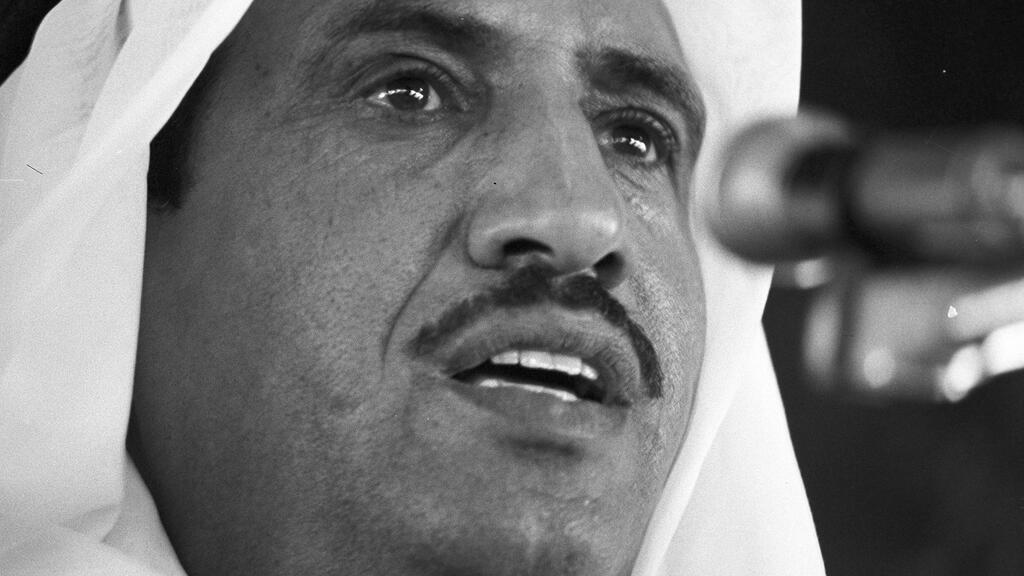
Abu Rabia's life had begun far from the corridors of the Knesset. Born in 1929 in a Bedouin tent near Tel Malhata, in what is now the southern Negev between Arad and Dimona, he attended elementary school in Beersheba and later studied in Hebron. At just 18, he became sheikh of the Abu Rabia tribe and worked to expand educational opportunities for its children. In the 1973 election, he headed the Arab List for Bedouins and Villagers, becoming the first Bedouin elected to Israel's parliament when the eighth Knesset convened in 1974. His election was celebrated with a gathering of some 2,000 guests at his tribe's encampment. Among those attending were senior politician Yigal Allon and Druze lawmaker Jaber Muadi, who would later become his political rival.
Abu Rabia's early parliamentary career was closely tied to the political representation of Israel's Bedouin population. His faction joined the Labor Alignment before breaking away and eventually becoming part of the United Arab List, a small Arab party affiliated with the Alignment, then led by Shimon Peres. In the 1977 election, the United Arab List won just one seat, prompting its three senior figures to agree to share it through a rotation arrangement. Saif al-Din al-Zoubi, a former mayor of Nazareth, served first, resigning after approximately two years. Abu Rabia replaced him in April 1979, with Muadi, from the northern Druze village of Yarka, next in line.
But when Abu Rabia's allotted time expired, he refused to step aside. His decision was not simply a dispute over political status. Following the peace treaty with Egypt, Israel planned new military airfields in the Negev to replace installations in Sinai, raising concerns over the displacement of Bedouin communities and the expropriation of their land. Abu Rabia argued that he needed to remain in parliament to defend his community's interests. "I must continue being a member of the Knesset to protect the Bedouins," he explained at the time. Muadi, however, insisted that the rotation agreement obligated Abu Rabia to resign. He pursued the matter through parliamentary channels and the courts, but efforts to compel the resignation failed.
The dispute grew increasingly bitter. In the months before his murder, Abu Rabia feared for his safety and was occasionally accompanied by armed bodyguards. He also carried a pistol, which was found in his possession after the assassination. On January 12, he spent the day at the Knesset, briefly speaking with Labor politicians Shimon Peres and Moshe Shahal before driving to the Holyland Hotel in Jerusalem's Bayit Vegan neighborhood, where lawmakers frequently stayed during parliamentary sessions. At approximately 8:30 p.m., attackers waiting near the hotel opened fire as he arrived, killing him inside his car before escaping in a jeep.
Muadi initially denied any connection to the killing. He acknowledged that he and Abu Rabia had quarreled but maintained that they had reconciled. Asked whether he knew who might have murdered his colleague, he replied: "How could I know? It hurts me very much." As suspicion increasingly focused on his family, Muadi rejected suggestions that he had been involved. "Would I kill a man just to get into the Knesset?" he asked, according to contemporary reporting in Yedioth Ahronoth. He nevertheless continued to criticize Abu Rabia for breaking their agreement, saying the murdered lawmaker had sworn on the Quran to honor it. Muadi acknowledged telling him that God would take revenge on him and his children, but insisted the remark had not been a threat.
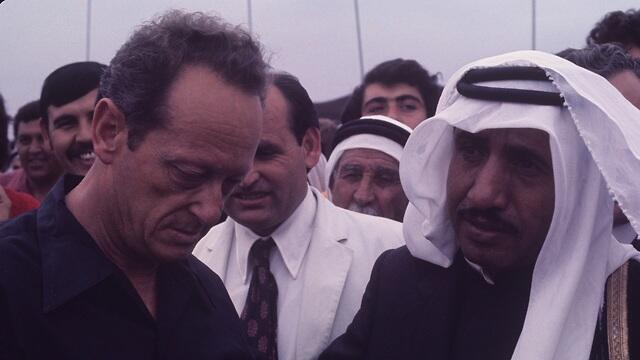
Yigal Alon and Abu Rabia
(Photo: David Rubinger)
Police arrested six suspects, several of them members of Muadi's family. Investigators established that three of his sons had traveled to Jerusalem and waited near the Holyland Hotel for Abu Rabia to arrive. According to the reconstruction presented during the investigation, Saif Muadi fired the fatal shots before fleeing with his brothers. In January 1982, all three brothers were convicted of murder and sentenced to life imprisonment. The court accepted the prosecution's account that they had acted to secure their father's place in the Knesset, regarding Abu Rabia's refusal to honor the agreement as an affront to their family's honor. In 1984, however, the Supreme Court overturned the murder conviction of the third brother, Dahash Muadi, who had served as deputy commander of Nablus Prison. He was released after being acquitted of murder, although he had been convicted of other offenses.
The assassination also had an immediate political consequence. Muadi took Abu Rabia's place in the Knesset just days after the killing, in a swearing-in ceremony held under heavy security. He remained in parliament until the ninth Knesset was dissolved about six months later but did not regain his seat in the subsequent election. Throughout the investigation and trial, he maintained that he had no involvement in the murder, despite acknowledging the bitter dispute with Abu Rabia and the exchanges that had preceded it.
The two convicted brothers remained imprisoned until January 10, 1991, when President Chaim Herzog granted them pardons following sustained political pressure from members of the Druze community. Their release was celebrated in Yarka with a large gathering. According to reports from the time, 130 sheep were slaughtered and half a ton of baklava and other sweets were served to guests welcoming the brothers home.