

Had this been a TV drama, someone would probably have asked the writers to tone it down. In 1956, a little boy disappeared from Tirosh, a farming community between Beit Shemesh and Kiryat Malachi. His mother had left him playing in the yard with a neighbor while she went to the clinic. When she returned, he was gone.
The boy was Yitzhak Gabay, 2. His brother David was 7 and his sister Aliza was 4. “We were going for tetanus shots,” David, now 78, recalled this week. “Mom told the neighbor, ‘I’m taking David and Aliza to get vaccinated. Keep an eye on Yitzhak.’ We were gone seven minutes. When we came back, Yitzhak wasn’t there. We asked the neighbor where he was. She said, ‘I gave him a tomato, and he headed back toward the house.’”
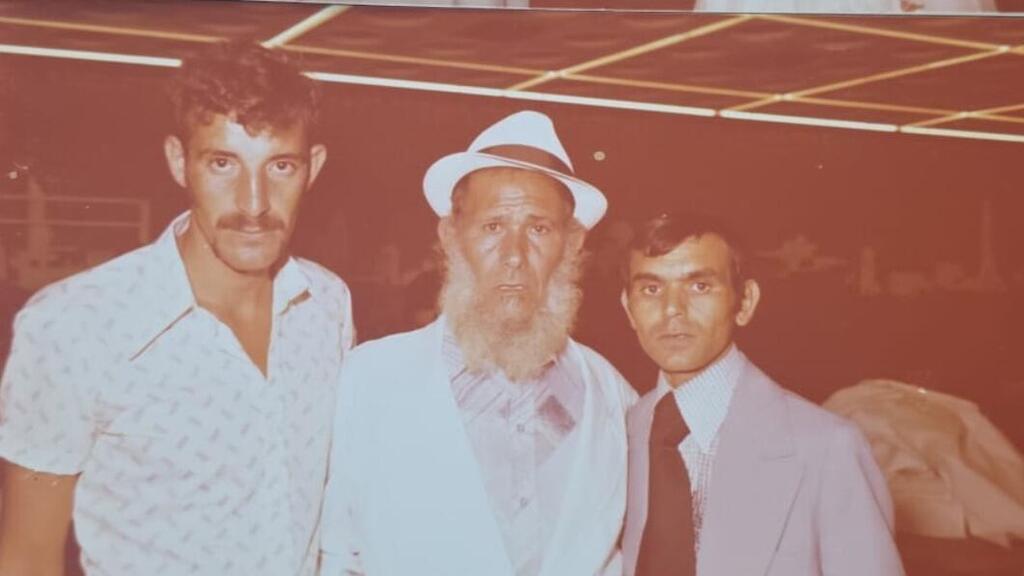
Relatives, neighbors and police searched for the child, but found no trace of him. “There were dozens of police officers and even a tracking dog, which died after a snake bit it,” David said. His parents spent years looking. “There wasn’t a rabbi, a sorcerer or a medium we didn’t go to.”
Of all those visits, David remembers one in particular, to the rabbi known as the Baba Sali. “We went to him right after the kidnapping,” he said. “He told us exactly when we would find Yitzhak. How many years, how many months, how many days. Even how many hours.” David remains convinced that the prediction came true.
Their mother, Zohara, had been pregnant 16 times; only David, Aliza and Yitzhak had survived. Nine years after her youngest son vanished, she died at 32. The family says she died of a broken heart. Her husband, Yisrael, stayed in Tirosh while David and Aliza married and moved to Tel Aviv. As the years passed, the family kept hoping someone would come forward with information, or recognize the boy and bring him home.
About two decades after the disappearance, an argument broke out in a Bedouin family. A young shepherd named Abdullah was quarreling with a relative when the relative snapped: “Who asked you? You’re not even Bedouin. Your mother is Jewish.” Abdullah could not forget it. He began to wonder whether the people who had raised him were his parents, and whether they had kept something from him.
He later said he began dreaming of an elderly Jewish man who told him he was Jewish. Eventually, Abdullah left his family and went to the home of Rabbi Yitzhak David Grossman in Migdal HaEmek, in northern Israel. He told Grossman he believed he was Jewish and had grown up with a family that was not his own. He wanted the rabbi’s help finding out who he was.
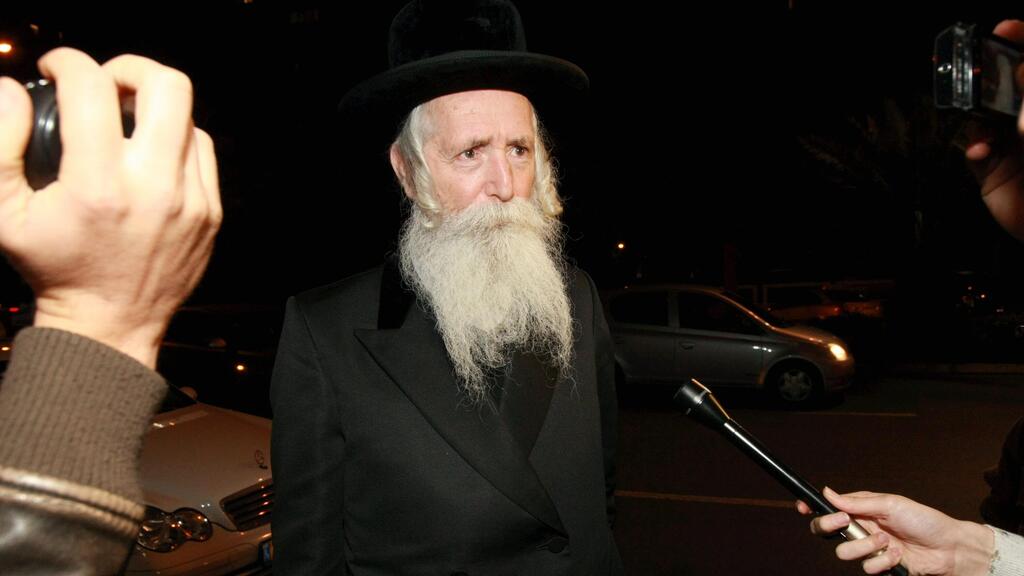
Rabbi Yitzhak David Grossman
(Photo: Shaul Golan)
Word spread, and the story appeared in Yedioth Ahronoth. Families with missing children began arriving at Grossman’s door. Among those who heard about the shepherd was Yisrael Gabay. Twenty-one years had passed since his son’s disappearance.
David was then serving as an army personnel officer in Sharm el-Sheikh. “One day I got a call from the police: ‘Where are you? Get on the first flight. We need you back in Israel,’” he recalled. “As soon as I landed, Dad said, ‘We need to go to Migdal HaEmek.’” His father told him about the newspaper report and the shepherd who claimed his mother was Jewish.
“Thousands came to the rabbi, all saying he was their son,” David said. “The line stretched from Tel Aviv to Petah Tikva. Everyone had identifying marks. We arrived on Thursday, almost at the end, and we had the clearest signs. My brother had had treatments on his back as a child, and they’d left scars.” Abdullah had scars on his back, too.
Grossman had invited Yisrael to come with two friends from Tirosh. The family stayed through the Sabbath, and on Saturday night the rabbi arranged an informal identification lineup. David remembers a larger group taking part. “They brought in six or 10 men who looked more or less like Dad, but this young man went straight to him. He didn’t even look at the others. And I said, ‘That’s my brother.’ He was huge, like Dad.”
For Yisrael and Abdullah, that settled it. Abdullah began calling himself Yitzhak and moved into Yisrael’s home in Tirosh. He was also known as Abdullah-Yitzhak or Ovadia Ben Yisrael. “I remember we had a party, and Bedouin families came carrying weapons,” David said. “Then he stayed with us in Tirosh, where my father lived.”
Newspaper reports from 1977, however, said a police investigation had found no family connection. They cited a new blood test that had ruled out a biological relationship between Abdullah and the Gabays. Nearly half a century later, relatives interviewed this week dispute those reports. The story is still vividly remembered by the family and by Grossman’s assistant, who first brought it to public attention.
Abdullah tried to adjust to Jewish life with the Gabays, and they tried to help him settle in. But living together was difficult. “Abdullah was bored at Yisrael’s,” said Bracha, David’s wife. “He spoke only Arabic, and the father spoke only Hebrew. There was nothing for them to do at home in Tirosh. Back in his village, there were horses and sheep.”
David said Abdullah’s Bedouin family never explained how he had come to live with them, and the Gabays never asked. “My father died knowing he had found his son, and that this was the right child,” he said. Abdullah began spending time with the people he now regarded as his brother and sister. After a serious argument with David, he moved in with Aliza, who was raising five children.
Aliza has since died, but her son, Shimon Ben Khalifa, remembers Abdullah-Yitzhak well. To him, he was simply his uncle. “I was a baby when they found him, so I grew up with the whole story,” he said. “My mother was sure he was her brother. Nobody ever thought otherwise.”
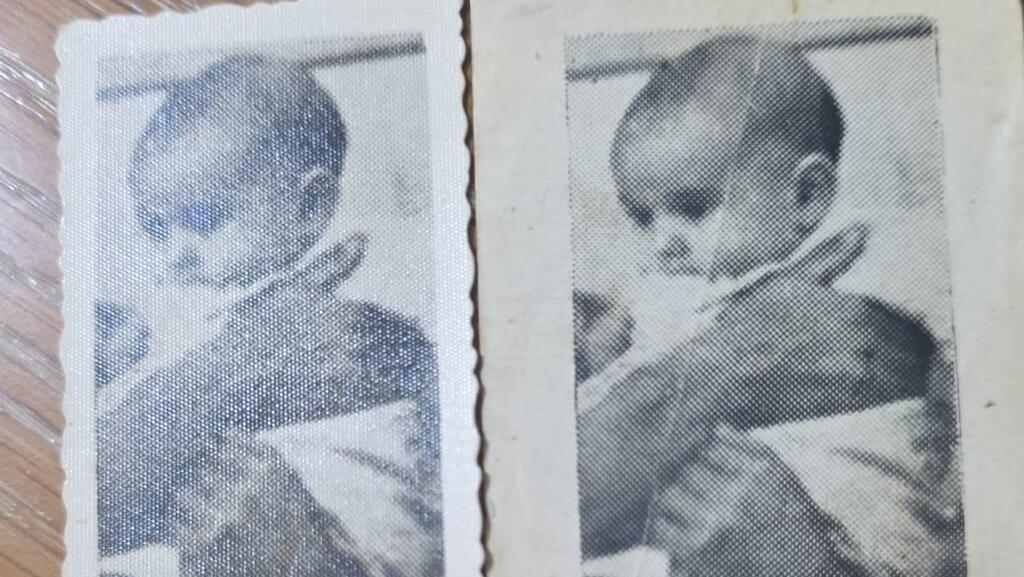
Yitzhak Gabay, the toddler who disappeared
(Photo: courtesy of the family)
Asked about the blood-test reports, Ben Khalifa said: “I never heard of a test like that. On the contrary, I think they did another test that showed he was my mother’s brother. There was also an older aunt, his mother’s sister, who always said that was the child. That was Yitzhak.”
Life in Tel Aviv did not suit Abdullah. By then, he had married a woman from the village where he had grown up. Relatives say she was a teacher and had even considered converting to Judaism for him. The couple tried living in Tirosh, but they were far from the families who had raised them. They eventually returned to Zarzir, where Abdullah did well raising calves and tending olive groves.
He stayed in touch with Aliza’s family. “We visited his home several times,” Ben Khalifa said. “His son was at my house two months ago. My younger brother got married two years ago, and he was at the wedding.”
“To this day, I’m sure he’s my brother,” David said. “He named his eldest daughter after our mother. Once he told me he lived between two worlds, Jewish and Bedouin.” Yisrael died 12 years ago, still carrying a childhood photograph of Yitzhak in his wallet. “Until the day he died,” David said, “he believed he had found his child.”