

The tank crew moves through the devastated northern Gaza neighborhood of Tuffah. On the screen inside the tank, showing the moving reality outside, apocalyptic images slowly change. Like in a 2025 silent film, the visuals alone scream. Outside is a land shattered in a thousand shades of despair. Shards of civilization lie folded in piles of concrete and steel.
The tank, belonging to Israel’s 52nd Battalion, part of the 401st Armored Division, climbs and descends confidently over what were once shops, low-rise houses, power poles, and wide streets. You close your eyes for a moment, try to imagine, and fail. Even in thought, time does not move backward here. In this place, there is no time.
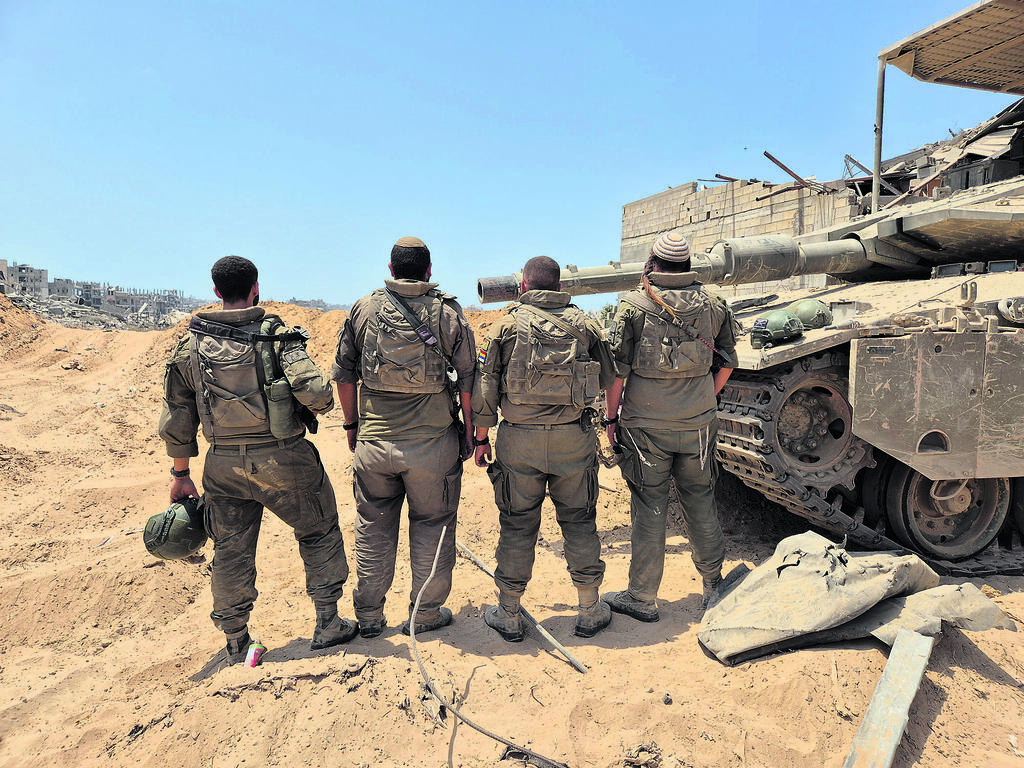
The tank engine roars and churns. The ground beneath trembles. Radio chatter fills the cabin. And it is unbearably hot. Outside, the sun blazes freely. Inside this metal box, it feels like an oven. The “air conditioning” barely moves a breath of air.
I glance around:
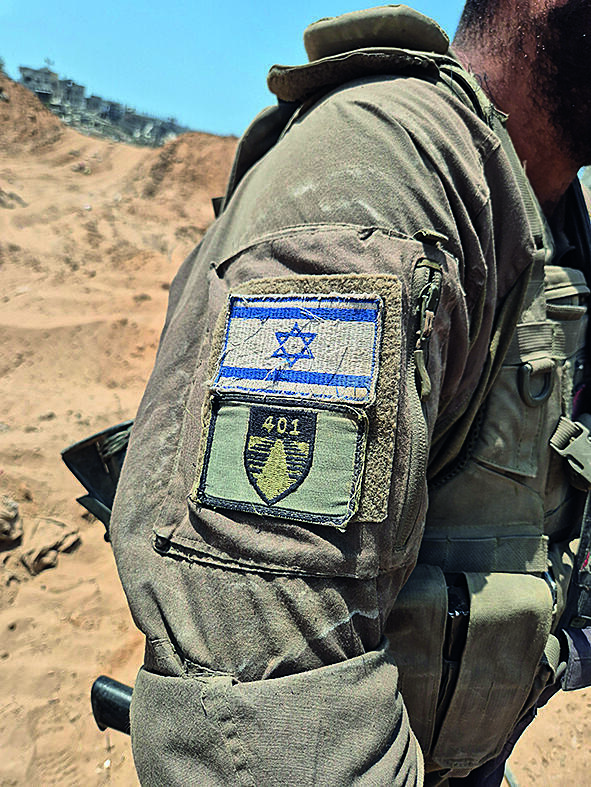
On my right, in the turret, is Lieutenant Maor, 21, secular, from Petah Tikva, tank commander. Slim, serious, focused, sweat dripping. He has two sisters and enjoys soccer and video games. His patch bears the 401st Brigade emblem.
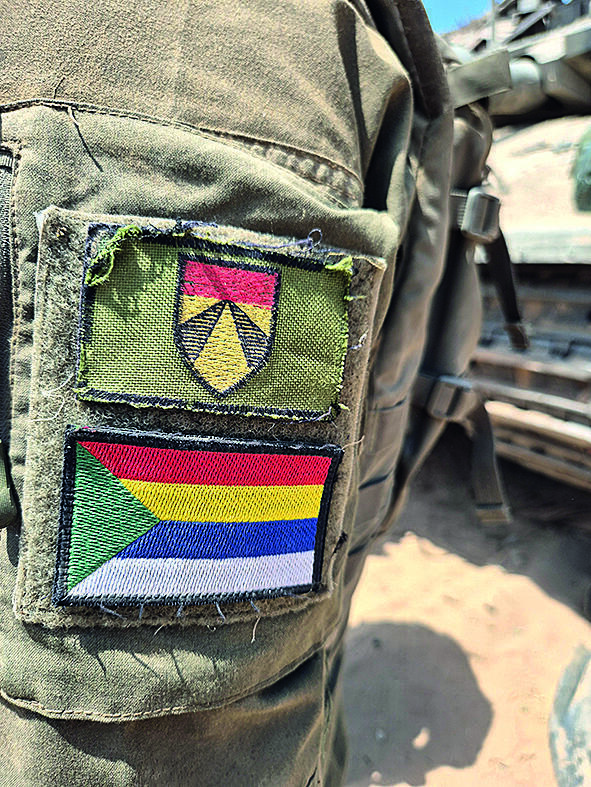
In front of him is the gunner, Private Omri, 20, Druze, from Peki’in. He sits at the firing station. Two brothers, a year of service each. Cheerful, enjoys video games and hiking. If Omri annoys the commander, Maor can nudge his seat forward in a trick called a “gunner sandwich.” Omri’s patch shows the Druze flag.
(Photo: Lior Ben Ami)
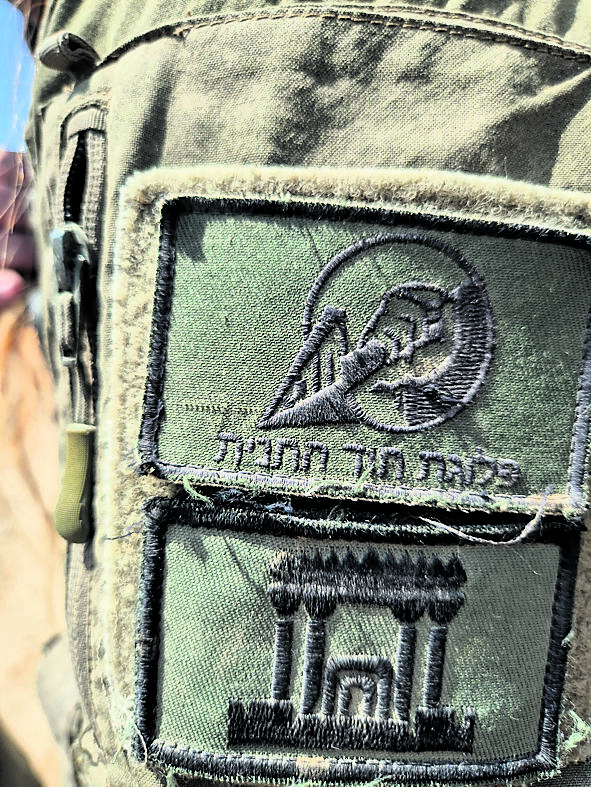
On the left, in a slightly larger space called the “tank lounge,” is the loader, Sergeant Yehonatan, 22, from Ramat Gan. Glasses, long sidelocks, a large kippah. Five sisters. Loves music. Studied in a yeshiva in Beit She’an. Religiously between traditional and Haredi. His patch bears a Temple emblem.
(Photo: Lior Ben Ami)
At the front, in the driver’s compartment, is Sergeant Bnaya, 23, from Kibbutz Shomriya in the northern Negev. A religious Zionist, seven siblings. Likes carving stone and drawing. Originally from Netzer, evacuated during the disengagement at age three. His first memory is from a temporary tent near Netivot. His patch displays the Israeli flag.
(Photo: Lior Ben Ami)
Each of the four crew members represents a different piece of Israel’s mosaic. Each holds different ideologies, homes, beliefs, and traditions. So many gaps. So many reasons things might not work. Yet the tank moves efficiently through the apocalypse.
Looking through the screen at the foreign ground, it is impossible not to think of your homeland, a beloved country struggling to move forward together, a Tower of Babel with no one at the wheel. Everyone shouts and pulls. Who are you anyway? Back where you came from.
If only we could be this tank. A place with almost no politics. Barely any quarrels. Respectful. And there’s a driver, gunner, loader, and commander. In 20 minutes, the crew will go on a mission at one of the outposts. To succeed, they know they must first hold tight to each other. In the country beyond the border — Israel — this principle is often forgotten.
A time capsule of Israeli life
Crossing the border, entering the end of humanity and suffering in Gaza, you encounter, unexpectedly, a time capsule of Israeli life. Soldiers living for each other, regardless of differences. A remnant of Israel from calmer, nostalgic days when disputes did not immediately turn into hatred.
The tank has operated in Gaza since the start of the war. The crew sits in what was once a semi-luxurious living room in Tuffah, with broken walls, smashed cabinets, Qur’ans, and graffiti.
Today, nothing grows. The terrain is subjective; even barren land can be seen differently by each soldier.
For driver Bnaya, evacuated as a toddler from Gush Katif, Gaza feels like a return. “We’re here with tanks and armored personnel carriers, as if we never left,” he says. “Everyone who said ‘we’ll return’ — it’s happening. Physically, the IDF is here, no going back.”
Commander Maor: “We are a team, under the same mission, wanting to succeed and return home safely. Around us are many opinions, each passionately defended. But first, we are humans.”
Omri, the gunner, looks at Gaza through the sights but thinks of Syria, where members of his Druze community were massacred. “Not long ago,” Bnaya says, “Omri was in a cast for a sprained ankle. At the same time in Syria, people were dying.”
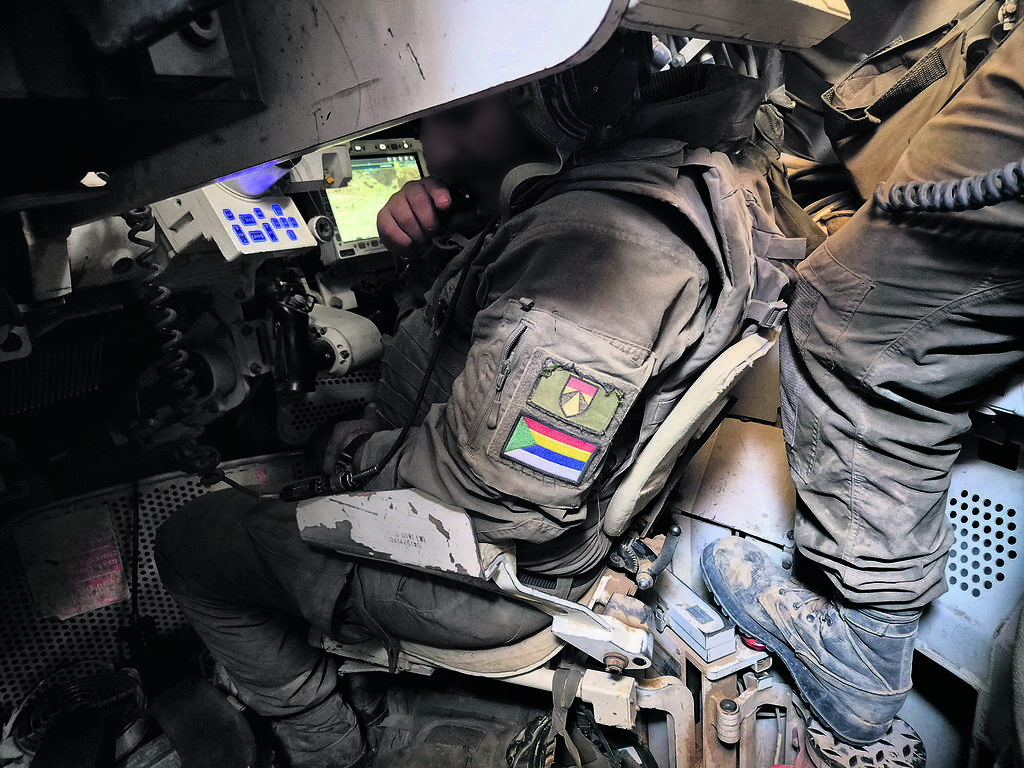
(Photo: Lior Ben Ami)
The crew laughs, then grows serious. Omri describes learning of the killings. After days of fighting without phone contact, a video appeared showing a shaved-beard Druze from southern Syria. “You are here, fighting with your brothers, the Jews, and you wish you could fight with your brothers in Syria,” he says quietly. “You feel powerless because you can’t protect them.”
Life inside the tank
Inside the tank, the four soldiers create routines to cope with intense emotions. Yehonatan curates music playlists for every mood, using songs to manage fear and grief. Maor finds solace in letters from home. Bnaya enjoys nights in the open air, while Omri reflects on fallen comrades.
The crew also reflects on the deaths of their fallen comrades — Captain Eden Provisor, Staff Sergeant Itay Saadon, Major Guy Yaakov Nazari, Sergeant Elishai Young, and Staff Sergeant Ofir Berkovich. “Even if we didn’t know all personally, we fight in their memory,” Yehonatan says. “It’s passed down from generation to generation,” Bnaya adds.
Food is carefully organized. Yehonatan prepares meals in limited space, accommodating everyone’s preferences. A small ritual of spraying deodorant on socks before sleep provides a sense of home.
Recent combat and experiences
The crew recounts recent incidents. Omri fired on a suspicious figure on a roof at 1,800 meters. The team also reacted to a report of a tank explosion, only to discover a mechanical failure. They recall nights of waiting to evacuate forward observers and rescuing other units in urban firefights.
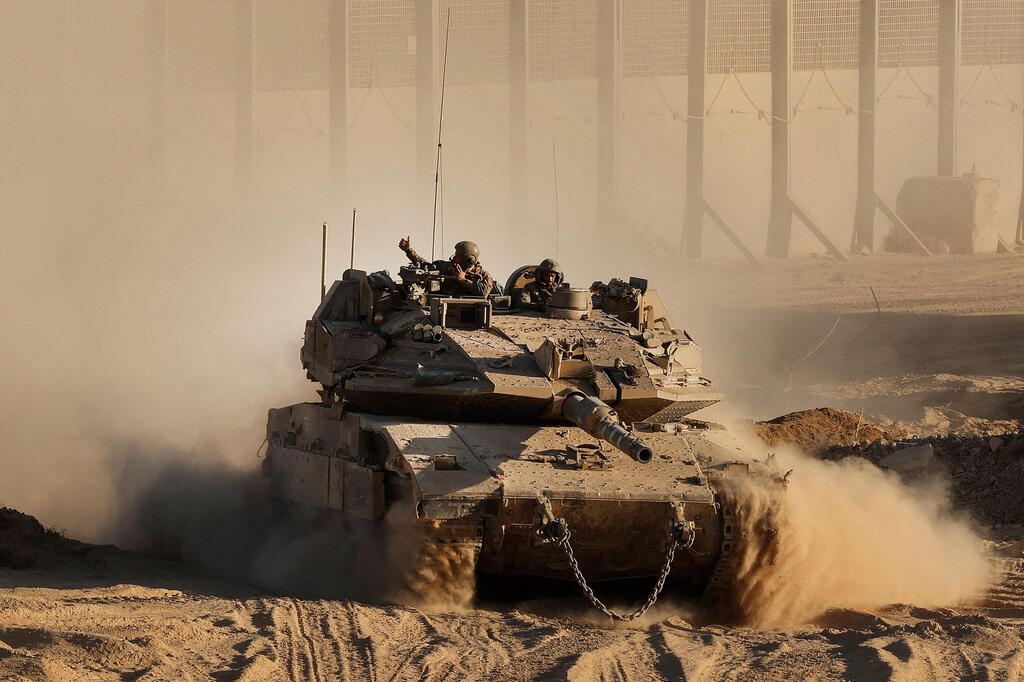
(Photo: Jack GUEZ / AFP)
Eight anti-tank missiles hit tanks in their area during the war, none penetrating fully, but each strike is a terrifying reminder of vulnerability. Maor reflects on divine providence and the protective prayers of their families.
Lessons from the crew
The four soldiers embody cooperation despite differences — secular, Druze, religious Zionist, and between religious and Haredi. “Being different allows space and prevents boredom,” Yehonatan says. “If everyone were the same, it would be harder.”
Bnaya adds: “In the army, protecting the country is the highest value. But equally important is connecting with fellow Israelis from different backgrounds. True friendship makes everything smaller.”
Omri emphasizes unity over political division: “Right, left — forget it. Be cohesive.” Yehonatan agrees: “Even if someone annoys you, being friends makes it work. That’s the point.”
Through Gaza’s devastation, the tank crew demonstrates the resilience of teamwork, diversity, and shared purpose in the face of war.