


Jonathan Betesh, founder and owner of The Betesh Group, which provides services to ultra‑high‑net‑worth clients in the U.S., Europe and Israel, could have become a musician, security professional, diplomat or lawyer. But when he asked himself what he really wanted to be when he grew up, he chose the hospitality and tourism sector. “I’ve only not been a waiter yet,” he says with a smile. “Maybe, soon, when I have my own hotel, I’ll do that too.”
One of his company’s core services is organizing bespoke luxury vacations tailored to the top 1 percent. The cost of these trips often runs into the hundreds of thousands of dollars — and sometimes over a million. “Recently we had a group of five families from Europe who flew to Japan for 24 days,” he says. “They stayed in the best hotels, in rooms that cost more than €3,000 per night. Overall, the holiday cost more than US $1 million. I serve my clients with the experience I want for myself when I go on holiday. When I arrive at a hotel, I don’t want to check in or check out or deal with bills and bags and questions. It’s not about snobbery.”
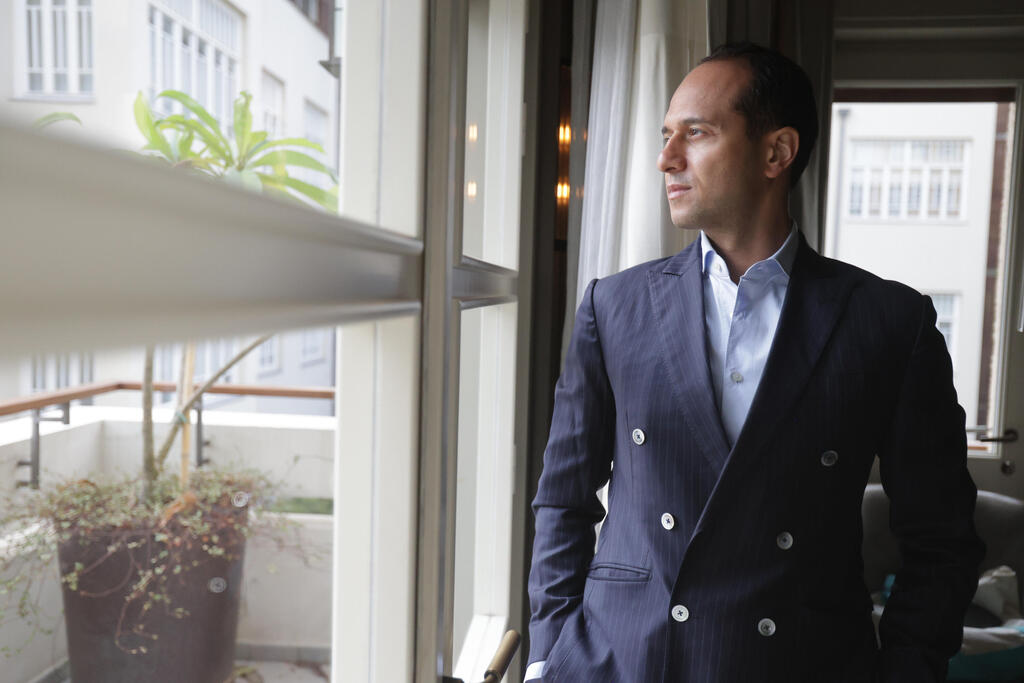
“I want the vacation and the hotel stay to flow. I saw the gap in this field. People usually book a holiday via a website or travel agent, whereas I interview each client before they pick the holiday, and understand their personality and preferences. When they arrive, all is settled in advance.”
Betesh was born 40 years ago in Brooklyn, and speaks of a happy childhood in a neighborhood of Syrian expatriates from Aleppo. When his sister was 18 and he was 12, his father Roni made aliyah to Israel. “We settled in Tel‑Aviv, in the northern old neighborhood. I studied at the School of the Arts and considered a musical path — I was a prodigy pianist.” But half a year after his arrival in Israel, his father died. “With hindsight, the move to Israel was probably closure my father needed to make,” he reflects, adding that his father’s death ended his dreams of continuing in music: “Since then, I could not play well.” His mother, Orly, still lives in the same apartment in that city.
He completed military service in a special unit that conducts joint drills with the U.S. Army for scenarios such as a confrontation with Iran and infiltration by terrorists. After discharge, he considered staying in the security establishment, but after a few months, decided it was not for him and moved to London. “I sent emails to about 100 embassies and consulates around the world, offering what I had. Replies came from Singapore, New York and London. I chose London.”
While living in Britain’s capital, he worked in the public diplomacy sector writing speeches, first under Ambassador Zvi Heifetz and then under Ron Prosor. “I explained to audiences in England about the Israeli‑Palestinian conflict and about the conflict with the Iranians. It was especially important during the disengagement era.” He returned to Israel in 2008 and decided he wanted to remain in diplomacy, so he studied law. His internship was at the law firm of the late Ram Caspi. “I admired him. He was amazing, smart and witty, working from early morning until night without pause. I arrived at five a.m. just to watch him. On my first day, when he asked whether I wanted to be a ‘deal maker’ or a ‘deal breaker,’ I chose the former — I believe in arrangements and compromise. I was hungry for success and wanted to be a litigator, but when I finished my internship, I decided to forgo that path too.”
As he explains, once he realized that being a lawyer in Israel would not satisfy him, he returned to London to practice law and expand his services. “Because I most of all love to provide service, and I deduced that the area of hospitality is for me. I also realized that London had what I had always dreamed of — focus on the ultra‑rich. Even during my embassy work, I encountered especially wealthy people; I knew the market, I knew the clients who understand, want and need the right service that is always missing.” Thus, The Betesh Group was born to serve the wealthy in matters of finance, tax and planning. “Working in trusts is sensitive and complex, I know I’m young and I must prove myself; I mustn’t disappoint them,” he says. “For them, I’m their lawyer and trusted person, the last thing I want is to be their friend. Admittedly, I attend dinners, Shabbat services, mark holidays and birthdays with them, invest in relationships — but I am their person, not their buddy.” In parallel to the family‑office arm, the company also entered luxury travel and tailor‑made holidays.
Why London and not Israel?
“In Israel, there is a lot of money and the number of wealthy people is growing, but it does not compare to London — there is a different level of wealth. People who know and want to enjoy the money they have.”
How do you combine the family‑office work with luxury travel?
“Some of the travel clients are family offices, but not all. Today, the company has some 300 clients, including nine family‑office families in London. The rest are travel clients, from abroad and Israel.”
Betesh emphasises the confidentiality he owes his clients regarding names and assets, but reveals that one of his special clients in Israel is chef and entrepreneur Assaf Granit.
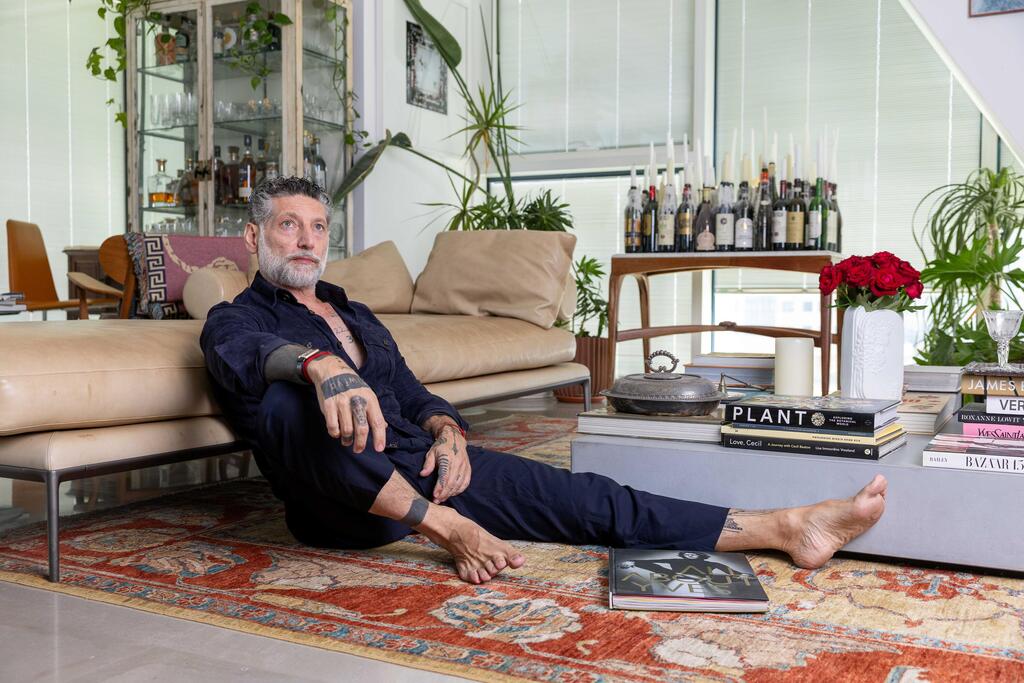
Assaf Granit, one of Betesh's clients
(Photo: Tal Shahar)
How do you juggle your identity among all these clients?
“Today I live in Tel‑Aviv, married to Nofar, a lawyer I met during a joint deal when she represented the opposite side. We are parents to Leon, aged 14 months. In New York, I’m seen as the ‘pompous European,’ in Europe I am known as the ‘American,’ and in Israel they label me as an entrepreneur and businessman.”
'Every Vacation Is Custom-Built for Them'
There are other family offices and luxury travel firms catering to the elite.
“True, but what sets me apart is how I work and relate to each individual client. My clients know I genuinely understand them. They don’t get automated service — every vacation is tailor-made. I have representatives in 150 countries, including lawyers and doctors available 24/7, ready to fulfill requests and provide exclusive, real-time experiences. My clients want someone to guide them, and by nature, they tend to be skeptical. They need someone they trust. As far as I know, no one else in the field does it the way I do.”
Betesh wants to expand into events. “In London, I used to host gourmet dinner parties for friends, with bottles of wine costing thousands of euros. Each guest paid a fixed amount, and we’d go until 6 a.m., eating well and networking. Eventually, I became a kind of producer — with my own stock of plates and cutlery at home.”
What about pricing?
“There’s a wide range. A weekend getaway for two might cost €5,000–€7,000, while family vacations can run into the hundreds of thousands — or more than $1 million, like the recent Japan trip.”
And your fee?
“You’d be surprised, but I do things differently. I charge for service. For the Japan trip, the fee was around $5,500. My commission comes from that — not from tour guides or restaurants. I charge for my time, like a lawyer or accountant. Each client receives a detailed spreadsheet showing what each element of the vacation costs and what my fee is. Sometimes it’s €250, sometimes much more. But in the end, I save the client money. If my service costs $10,000 and I save them $100,000, that’s worth it.”

The Betesh family: Leon (right), Orly, Nofar and Jonathan
(Photo: Family album)
“In my view, luxury travel is a lifestyle. It’s not about how many vacations you take, but their quality. Better to travel twice a year in top-tier style. One of my clients, an 88-year-old American billionaire who came to Israel five years ago for a custom vacation I arranged, told me he’d never received such service in his life.”
'Israelis want a mix of shopping and experiences'
In addition to international clients, Betesh says demand is growing in Israel for tailor-made vacations, though the war has shifted preferences. “I have a few dozen Israeli clients. Most now avoid London and prefer ‘friendlier’ destinations like Milan, Montenegro or Miami. Still, many continue to request London despite the hostile atmosphere and pro-Palestinian protests.
“Israelis love London and will keep going, even if a bit less. Generally, Israelis want a mix of shopping and experiences. We build the vacation around their preferences, and everyone wants to be pampered. There’s a lot of money in Israel, especially from tech and exits. Israelis like to spend, to live in the moment. The war has accelerated that, but the mindset existed before.”
Is there a difference between Jewish and Israeli clients when it comes to destinations?
“Since the war, American Jews prefer exotic places like the Caribbean, much less so Europe. Europe hasn’t felt friendly to Jews or Israel for a while. And in the past two years, requests to travel to Israel have dropped significantly. I believe that as the war winds down, tourism to Israel will bounce back — with no hotel vacancies and six-month-ahead bookings.”
Next stop: Lifestyle brands and fitness clubs
Although Betesh has built the career he dreamed of, he’s not slowing down. He recently secured the exclusive Israeli franchise for Barry’s, the global fitness brand. The first location is set to open in 2026, with plans for five branches total. He also aims to bring global lifestyle brands to Israel, which he says the local market lacks.

Pro-Palestinian demonstration in London
(Photo: REUTERS/Jack Taylor)
That kid from Brooklyn who once dreamed of being a pianist or a diplomat — did he also dream of being rich?
“I haven’t gotten there yet. I don’t have high-profile clients every day. I work hard for each one. My dream isn’t about wealth — it’s about influence. Over the years, I’ve gained experience and connections that help me move toward becoming someone with real impact. I want to be an entrepreneur — someone who builds and creates things that improve people’s lives. I can’t picture myself sitting at home watching TV.”
What’s next?
“I want to expand the travel company globally while growing our Israeli clientele. I also want to strengthen the events arm. In London, I used to host dinner parties with fine wines and gourmet food that would go on until dawn. I became a kind of event producer. I want to replicate that in Israel.
“One way is to map our audience and gather data to understand what they want. We opened a WhatsApp community where each client has their own chat, and we send offers directly. We’ve begun organizing events and parties for up to 250 guests around specific themes — watches, wine collectors, cigars. I also plan to launch group trips to new hotels abroad or fashion-themed tours for women, without kids. In a competitive market, you need creative ways to retain clients and attract new ones. If we’re not proactive, we’ll fall off the radar — and never get there.”