


"Before we continue, I have an announcement," Prime Minister Yitzhak Rabin told ministers during a Cabinet meeting. "An Air France aircraft has apparently been hijacked."
Fifty years have passed since June 27, 1976. The Israel State Archives, under the Prime Minister's Office, released, for the first time on Friday, the classified protocols from Cabinet meetings, Security Cabinet discussions and the special ministerial team established to manage the crisis.
Gallery
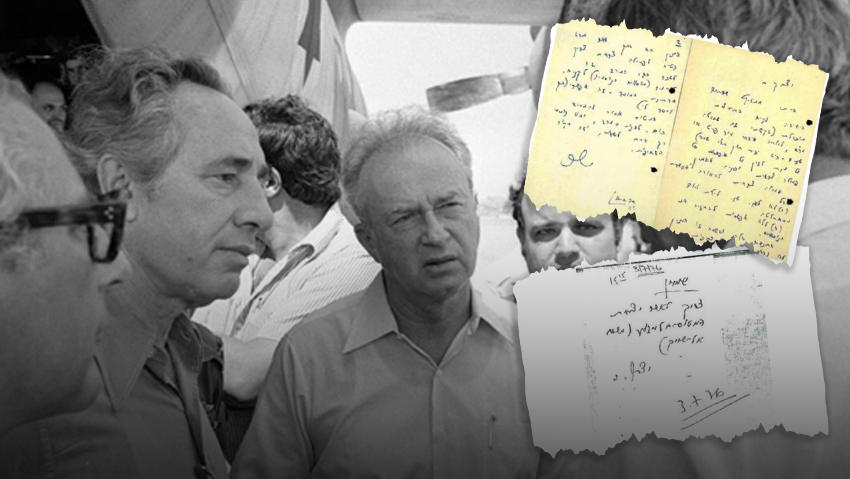
Defense Minister Shimon Peres and Prime Minister Yitzhak Rabin
(Photo: The State Archives, Defense Ministry Archives)
They reveal the dramatic debate over whether to negotiate with the hijackers, Israel's deception and diplomatic maneuvering ahead of Operation Entebbe, the detailed presentation of the rescue plan to ministers, as well as rare recordings of Rabin's conversations with senior officials and transcripts of Col. Baruch Bar-Lev's ("Burka") talks with Uganda's unpredictable ruler, Idi Amin.
Editor's note: The material released by the State Archives includes thousands of documents, photographs and recordings. We have selected some of the highlights.
Background: Operation Entebbe
Operation Entebbe—known officially as Operation Thunderbolt, or as Operation Yonatan, after Yonatan ("Yoni") Netanyahu—was one of the boldest and most famous commando operations in history.
It was carried out on July 4, 1976, following the hijacking of an Air France flight by Palestinian terrorists from the Popular Front for the Liberation of Palestine (PFLP) and German members of the Marxist terrorist group Revolutionary Cells.
The aircraft, which was en route from Tel Aviv to Paris, was flown to Entebbe, Uganda, after a brief stop in Libya. There, the hijackers carried out a notorious selection, releasing most of the foreign passengers while holding 105 passengers and crew members hostage—most of them Israelis and Jews—from the approximately 250 people originally aboard.
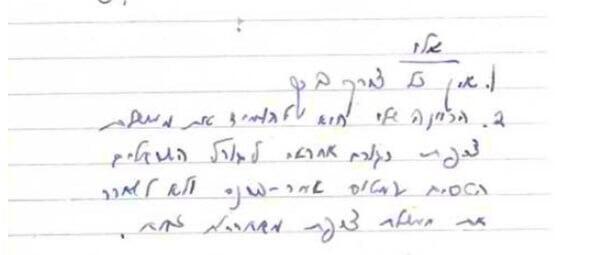
Rabin's response to Eli Mizrahi's recommendation regarding the ministers on the day of the hijacking
(Photo: The State Archives)
The hijackers demanded the release of 53 terrorists and anarchists imprisoned in Israel and around the world, along with a ransom payment, in exchange for the hostages. They issued an ultimatum threatening to execute two hostages every hour if their demands were not met by July 1. They later agreed to extend the deadline until July 4 after Israel agreed to enter negotiations.
But on the day the ultimatum was due to expire, IDF commandos flew nearly 4,000 kilometers aboard C-130 Hercules aircraft, stormed the terminal at Entebbe Airport, killed the hijackers within minutes and rescued 102 hostages in an unprecedented operation.
Three hostages were killed during the rescue. Another hostage, 73-year-old Dora Bloch, who had been taken to a hospital before the operation, was murdered afterward. Lt. Col. Yonatan ("Yoni") Netanyahu, commander of the Sayeret Matkal assault force, was also killed during the rescue.
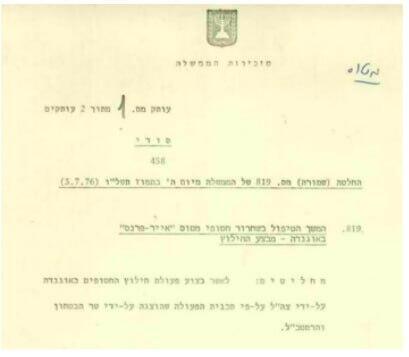
Cabinet approves the rescue operation
(Photo: The State Archives)
The days leading up to the operation were no less dramatic. The newly released protocols show that in the first moments of the crisis, Rabin had one primary address: France, whose aircraft had been hijacked.
During the same Cabinet meeting that he interrupted to announce the hijacking to ministers, his chief of staff, Eli Mizrahi, suggested that ministers update the Cabinet secretary throughout the day on any actions they were taking regarding the crisis.
"There is no need for that," Rabin replied. "My intention is to hold the French government responsible for the fate of the Israelis aboard the aircraft—not to absolve the French government from that responsibility."
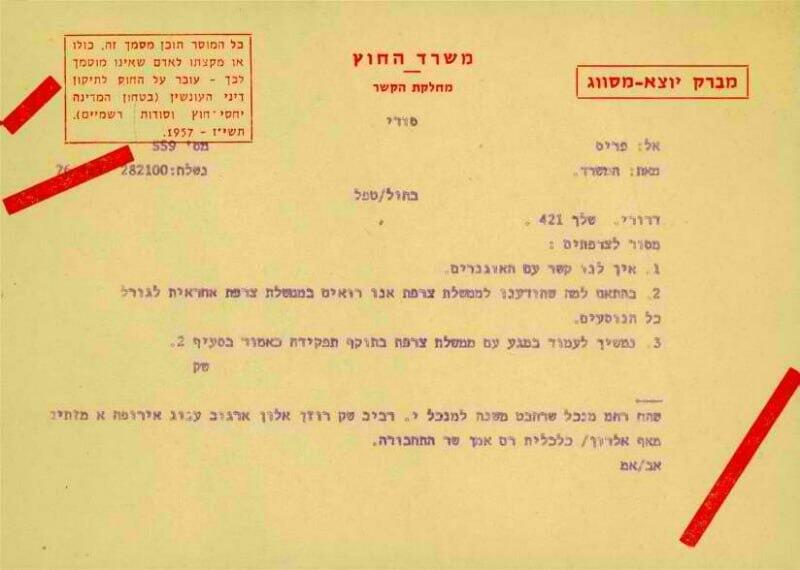
Message to the French: 'We hold you responsible for the fate of all the passengers'
(Photo: The State Archives)
Meanwhile, however, Israel was operating through additional secret channels, conducting diplomatic maneuvering that bought it valuable time.
On July 1, at the very last moment before the hijackers' ultimatum expired, the government announced that it was prepared to enter negotiations—even though until then it had adhered to the principle of not negotiating with terrorists. In response, the other side postponed the ultimatum, ultimately allowing Israel to complete preparations for the operation.
'The French are scumbags'
About two hours after Rabin announced the hijacking, at 2:30 p.m., the Air France aircraft landed in Benghazi, Libya.
Rabin convened a special ministerial team to oversee the crisis. The team was headed by the prime minister and included Defense Minister Shimon Peres, Foreign Minister Yigal Allon, Justice Minister Haim Zadok, Transportation Minister Gad Yaacobi and Minister Without Portfolio Yisrael Galili. During the week leading up to the operation, the team held 18 meetings.
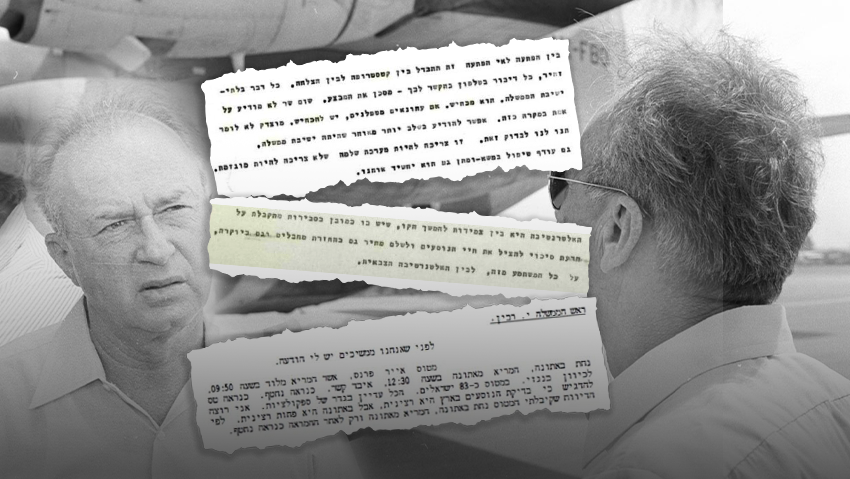
Rabin interrupts Cabinet meeting: 'The plane has apparently been hijacked'
(Photo: The State Archives, IDF, Defense Ministry Archives, Alex Rozkovsky)
That same evening, the Israeli government sent a message to the French government saying it expected France to guarantee the safety and immediate release of all the passengers. The French replied that their position was the same—that they were responsible for the safety of the Israeli passengers.
The recordings released today include conversations between Prime Minister's Office Director Eli Mizrahi, Rabin and other senior officials.
One of the recordings documents a conversation between Mizrahi and Foreign Ministry Director General Shlomo Avineri, in which Mizrahi can be heard expressing concern that the message Israel had sent France regarding the hijacking might be published before it reached the appropriate officials in Paris.
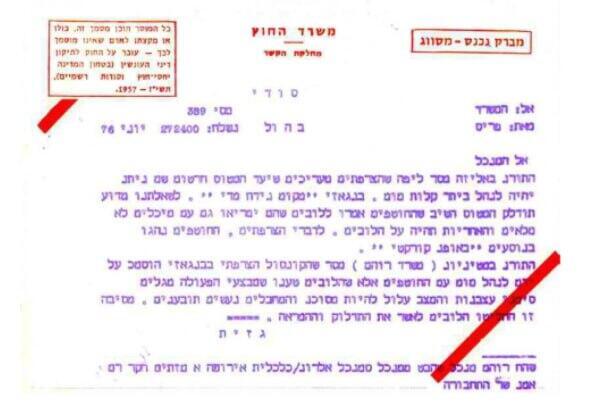
'Israel expects France to take all necessary steps to ensure the safety and immediate release of all the passengers.' The first message conveyed
(Photo: The State Archives)
Mizrahi suggested that Israel's ambassador in Paris notify him that the message had been received in France before it was released to the media, citing the lessons learned from the 1974 Ma'alot massacre, when terrorists took Israeli schoolchildren hostage and demanded French and Romanian mediation.
"We got into trouble then with the French and the Romanians over various messages they heard first on the radio, and it created complications and unpleasantness," Mizrahi explained. "Let's not create another situation in which the French can later claim they couldn't act properly, or that it prevented them from putting pressure on the Libyans or doing things like that. When it comes to human lives and hostages, it's something I'll never forget because I remember very well what happened in Ma'alot."
Referring to publication in Israel, Mizrahi said: "I'd wait until there's confirmation that it has been delivered to the French president or to the highest responsible level. We shouldn't give them a case afterward. Listen—they're scumbags." Avineri replied: "That's true."
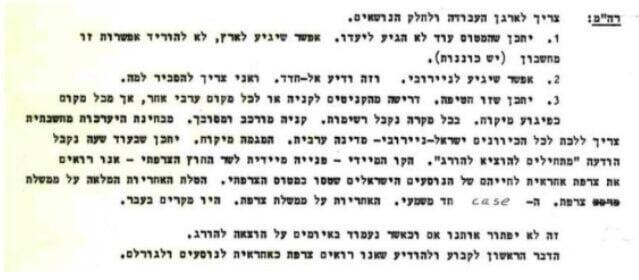
Prime Minister Rabin's remarks at the first meeting of the special ministerial committee
(Photo: The State Archives)
Mizrahi then called Rabin and told him, "The passenger list is on its way to you." He explained that he was concerned France would claim Israel had disrupted its efforts at "quiet diplomacy" to secure the hostages' release if the message was published before it had officially reached the French authorities.
The prime minister instructed him to inform the French that Israel intended to publish the message it had sent them. Mizrahi then relayed Rabin's request to Avineri.
Later, Avineri informed Mizrahi that the French response was that Paris accepted responsibility for the safety of everyone aboard the aircraft, including passengers who were not French citizens. He added that France had instructed its embassy in Tripoli, Libya, to establish the identities of the hijackers.
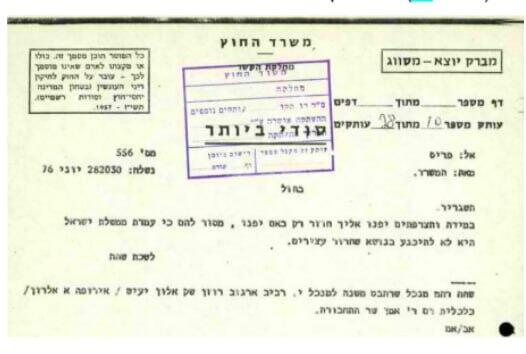
'Israel's position: No concessions on this issue.'
(Photo: The State Archives)
Rabin again asked that it be confirmed the French had no objection to publication, telling Mizrahi: "We shouldn't rush with publication. God forbid it creates bad blood with the French."
Mizrahi passed the instruction on to Avineri, and the message was published only after Avineri confirmed that "everything has been coordinated with the French, and they agree. We'll publish the fact that the message was sent, not its wording."
The hijackers identified
The phone conversations also reflect the considerable confusion in Israel during the first hours after the hijacking regarding the identity of the terrorists. Justice Minister Haim Zadok told Mizrahi that he had heard a radio report identifying the hijackers. "Some radical Palestinian liberation organization," he said. "I'm not sure which one. I remember the word 'radical.'"
In another conversation, Rabin's military secretary, Ephraim "Freuka" Poran, told Mizrahi that Reuters had reported the Popular Front for the Liberation of Palestine—"George Habash in parentheses"—had claimed responsibility for the hijacking. "That was reported to Reuters by telephone at its Damascus office," Poran said. Mizrahi replied that Wadie Haddad belonged to that organization. "He's one of its branches," Poran answered. "Not necessarily, but it could be."
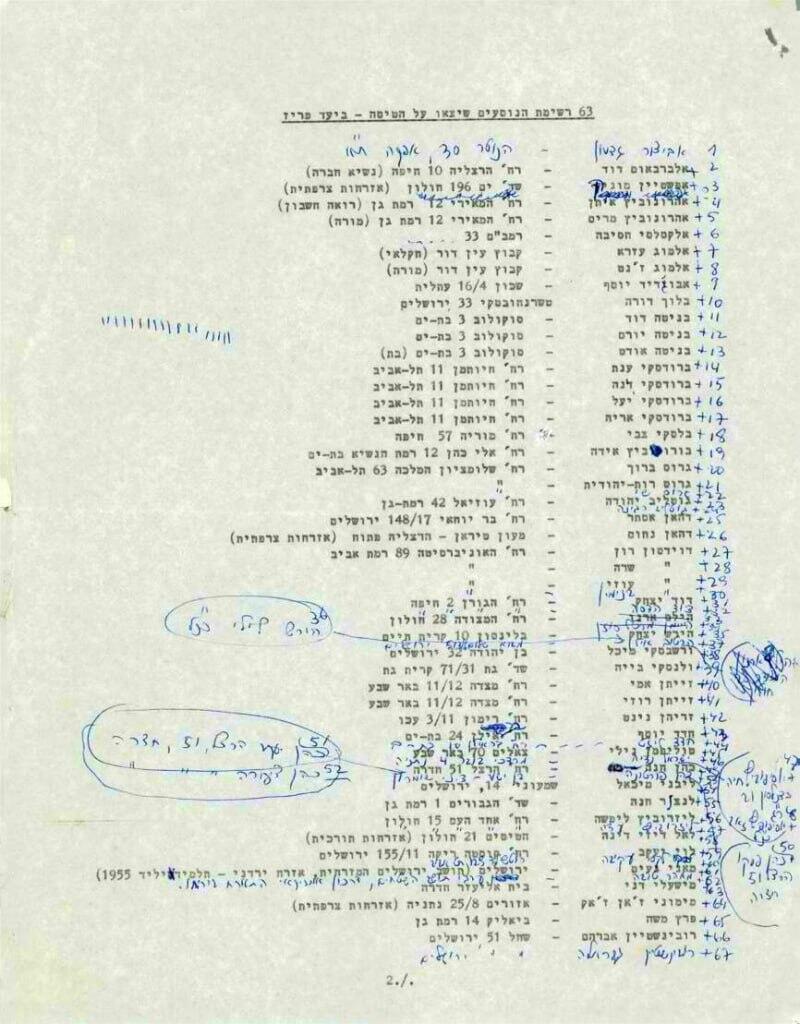
Partial list of the passengers aboard the plane
(Photo: The State Archives)
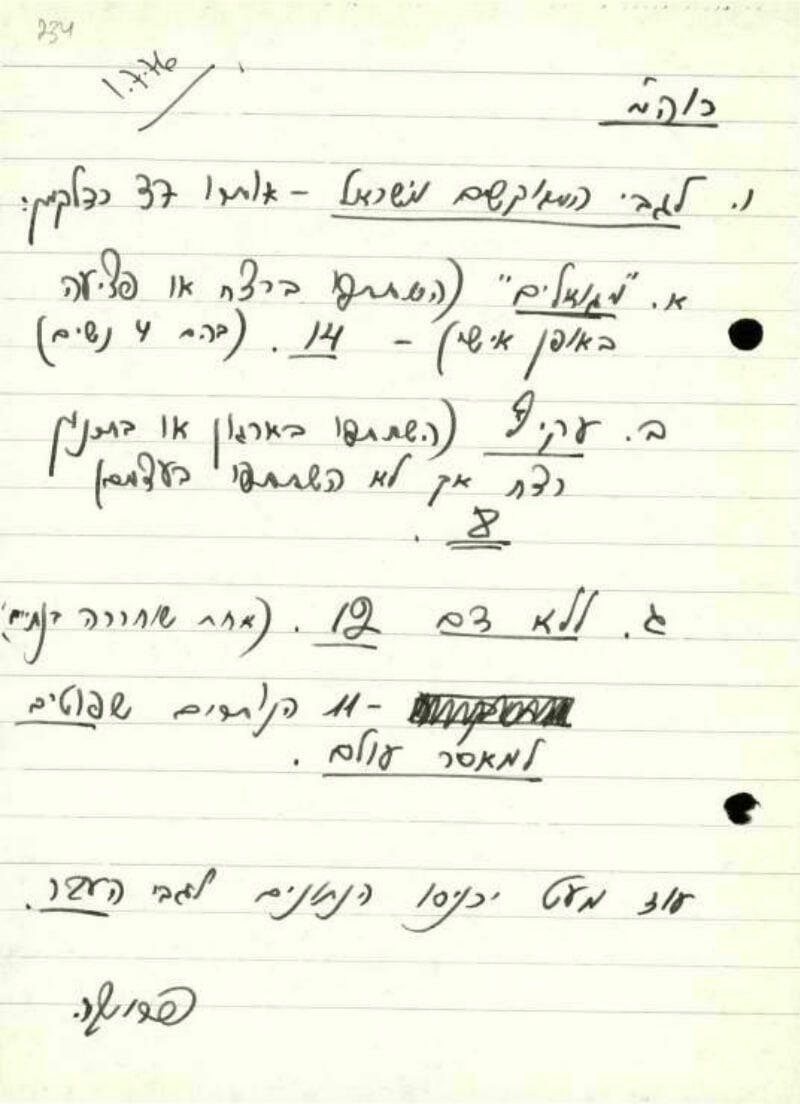
Letter delivered to the prime minister on the day the first ultimatum expired
(Photo: The State Archives)
Immediately afterward, Mizrahi updated Rabin. "The organization behind the operation is George Habash's Popular Front for the Liberation of Palestine," he said. "I'm telling you, Wadie Haddad is a branch of George Habash." "I know," Rabin replied. "I always use that expression."
Mizrahi added that Haddad and Habash were in conflict and had "quarreled from time to time," but concluded: "In any case, that's where things stand." Rabin asked whether there was any news from Benghazi, Libya. "There isn't," Mizrahi replied. "If there is, I'll let you know."
'Idi Amin is completely insane'
At 9:30 p.m. that same day, the hijacked plane departed Libya and headed south. After Sudan refused to allow it to land, it continued to Entebbe, Uganda. "There are apparently 76 Israelis on board," Avineri told Mizrahi.
At 4 a.m., the aircraft landed in Entebbe, and the passengers were taken to the old terminal, where they were surrounded by Ugandan soldiers. Throughout the day, the hijackers, led by the PLO representative in Uganda, held talks with Ugandan President Idi Amin. At 8:30 p.m., the French informed Israel they had received a message from the terrorists stating that they wanted to avoid bloodshed.
In a conversation with the prime minister, Mizrahi updated Rabin on an "urgent telegram from Paris," adding that "it seems things are beginning to move." The Prime Minister's Office director said France believed that once final instructions arrived, negotiations over the terrorists' demands would begin, and Israel would have to be informed of those demands.
"They're asking whether we've established contact with the Ugandans," Mizrahi told Rabin.
"No!" Rabin replied. "Tell them we have no contact." That was despite the fact that, as later revealed, the government did in fact have a direct channel to Uganda's ruler and held several conversations with him.
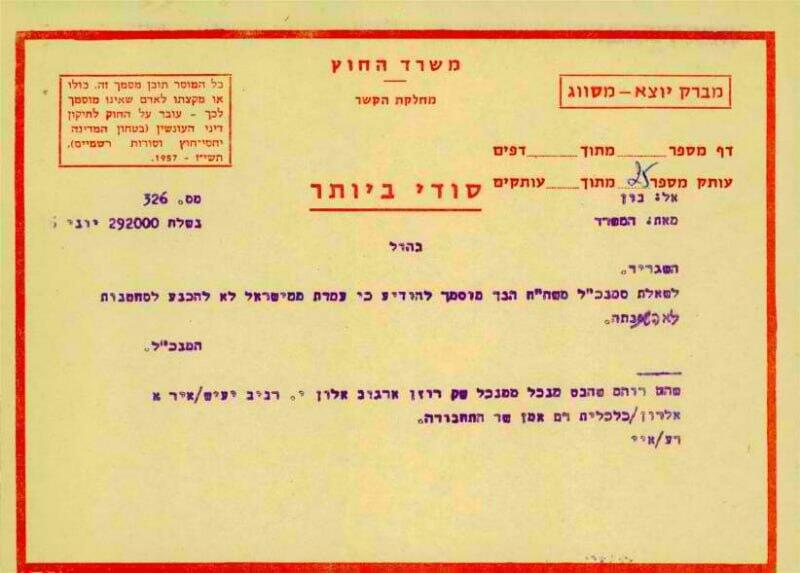
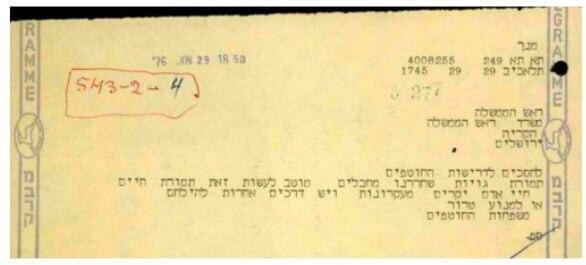
Another cable to France: 'Israel's position against yielding to blackmail remains unchanged'
(Photo: The State Archives)
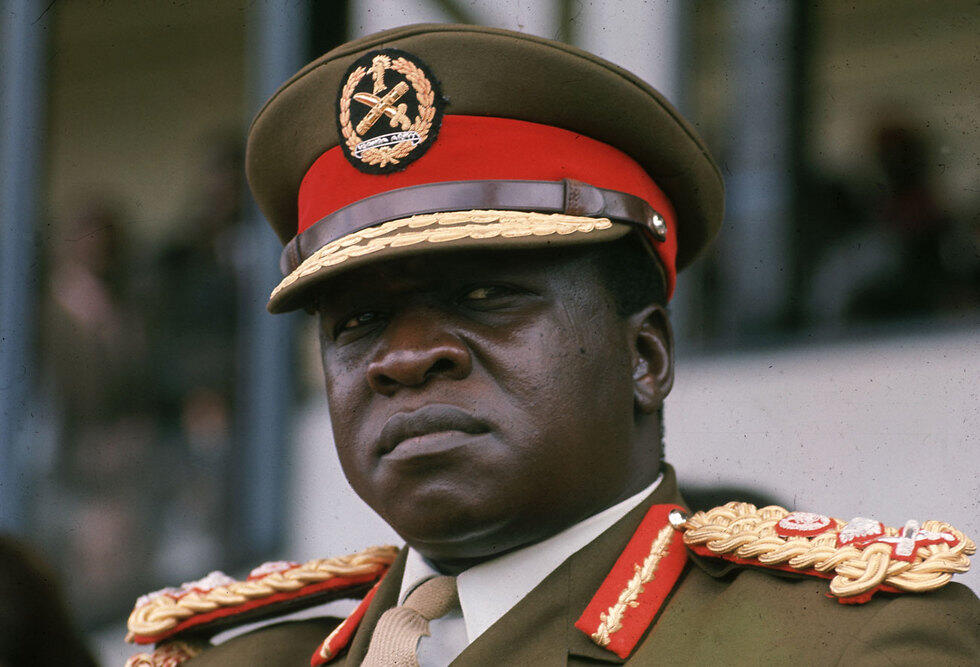
Idi Amin
(Photo: gettyimages)
Mizrahi presented Rabin with a proposal from Foreign Minister Allon for Israel's response to the French, saying they should be told that "it would not serve the matter if we became a party" to the negotiations, "and it is preferable that you maintain the contact."
Rabin replied: "In accordance with what the government decided. We regard the French as responsible for the safety of the passengers. Whether it's diplomatic or not doesn't matter, because Idi Amin may want to establish contact with us. I don't want to commit."
Mizrahi responded: "You never know. He's completely insane. If he sidelines the French, why close that door in advance?" "We shouldn't close any doors," Rabin replied.
Later, the French reported that the passengers and crew were in the airport terminal, had received medical treatment, food and water, and that the Ugandans were negotiating with the hijackers. Paris also reported that the terrorists were waiting for instructions.
"It is assumed to be George Habash's organization, but there is no proof," Mizrahi told Ze'ev Shek, then deputy director general of the Foreign Ministry. Another diplomatic channel Israel pursued was with the West German government, whose citizens were among the hijackers. Germany proposed that an Israeli representative travel to Uganda alongside a German envoy.
Rabin insisted on two conditions before responding. The first was that, because Jerusalem's public position was that France bore responsibility, the Israeli representative would not be a diplomat but "a doctor or someone similar," whose purpose would be "to attend to the humanitarian aspect and maintain contact" with the Israeli civilians. The second condition was that Germany guarantee his safety.
"They know who Idi Amin is," Rabin said. "Given everything we know and the nature of our relationship, are they prepared to take responsibility for this man?"
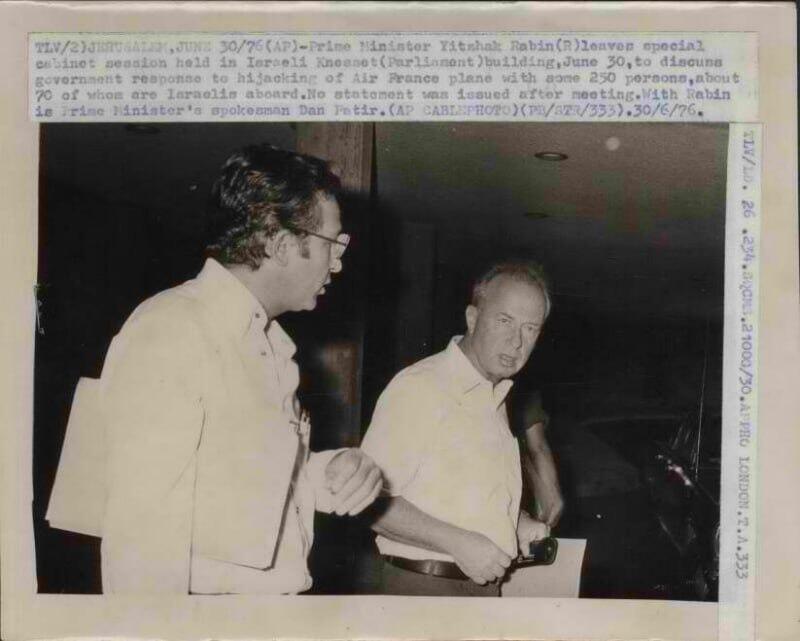
Prime Minister Yitzhak Rabin and his spokesman, Dan Patir, after a meeting of the special ministerial committee
(Photo: The State Archives)
Avineri was equally alarmed. "The Germans may not realize that this man, Idi Amin, is unpredictable—and that we're sending an Israeli into the lion's den," he told Mizrahi.
When Rabin was told that Foreign Minister Allon wanted to send Israel's ambassador because the flight from Germany was leaving within two hours, he reacted angrily. "No! Not the ambassador. Yigal is making a mistake. I'm not prepared to agree." The government later learned that the same proposal had also been made to the United States and the Netherlands, both of which declined. The idea was ultimately dropped.
'How are we supposed to get to Uganda?'
It was only on the third day of the hijacking that Radio Uganda broadcast the terrorists' demands. They called for the release of 53 "freedom fighters" imprisoned in five different countries: 40 in Israel, six in Germany, five in Kenya and one each in Switzerland and France.
At a meeting of the special ministerial team, IDF Chief of Staff Lt. Gen. Mordechai ("Motta") Gur said that even before a final decision was made on whether to negotiate or launch a military operation, certain steps already needed to be taken.
"We have to prepare the force," he said. "In my opinion, someone—presumably from the Mossad—should leave and get as close as possible to the scene. That needs to happen tonight."
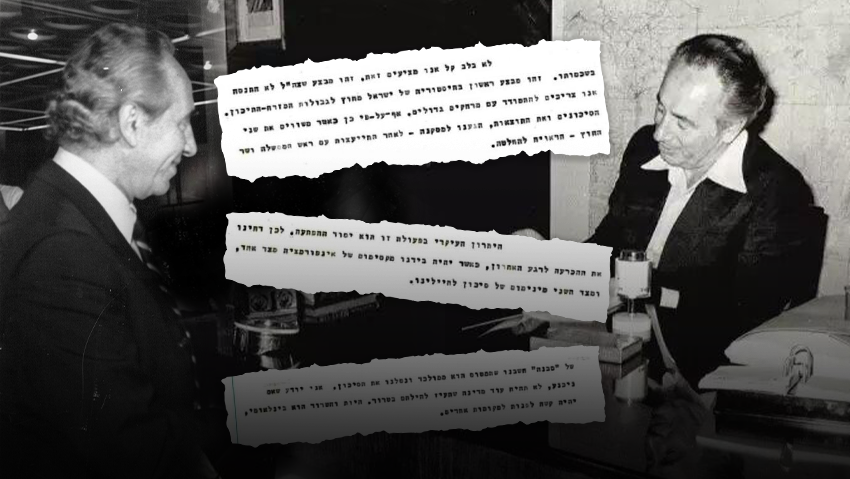
'The first operation of its kind in Israel's history' — Peres
(Photo: The State Archives, Yossi Roth)
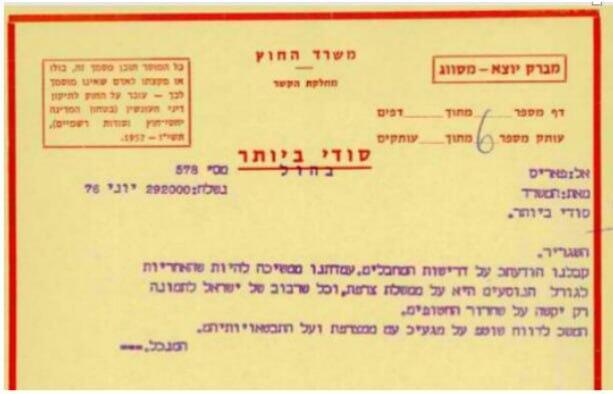
'The French government bears responsibility for the fate of the passengers' — message sent by the Foreign Ministry
(Photo: The State Archives)
Gur also recommended establishing contact with Uganda's ruler as quickly as possible. "I think we should play on his vanity and send someone who will flatter him," he said. "That will also serve us from an intelligence standpoint for the operation, and that's important."
Some ministers objected, but the following day Col. Bar-Lev, who had previously served as the IDF and Defense Ministry attaché in Uganda, received official approval to speak with Amin in an attempt to use their personal relationship to help resolve the crisis.
At the Cabinet meeting on the fourth day of the hijacking, the foreign minister reviewed the chain of events and again stressed that responsibility rested with the French government.
Rabin had also met with opposition leaders and emphasized that it was essential "to avoid a national dispute and preserve consensus."
Addressing the Cabinet, Rabin said: "We are dealing with one of the toughest and most extreme terrorist organizations. Even though nothing has yet been said, I would not want anyone here to harbor any illusions about that organization, or about the man leading it, and their willingness to carry out acts that are difficult even to put into words at this stage."
At that point, Rabin made it clear that he saw no military option. "We have no way of acting without the agreement of the countries concerned. What are we supposed to do—attack Uganda? How are we supposed to get to Uganda? The objective is not to carry out a military action but to save the people. If an opportunity presents itself, we'll discuss it. At the moment, I don't see a way."
Rabin's warning to newspaper editors
France, Germany, the United States and Canada—like Israel—publicly called for standing firm against the terrorists' blackmail and refusing to give in to their demands.
At midday, at Amin's request, the hijackers released 47 hostages—women, the elderly and children—"on humanitarian grounds."
At the same time, they threatened to blow up the aircraft and execute the remaining hostages unless their demands were met by 2 p.m. the following day, July 1. Later, during a meeting of the special ministerial team, ministers were informed that the families of the hostages intended to protest outside the prime minister's residence or office. "Why aren't we meeting with them?" Rabin asked. "We have to." The task was assigned to Transportation Minister Gad Yaacobi, whom Rabin later also asked to serve as the government's spokesman to the media.
Families of the hostages urge the prime minister to accept the hijackers' demands
(Photo: The State Archives)
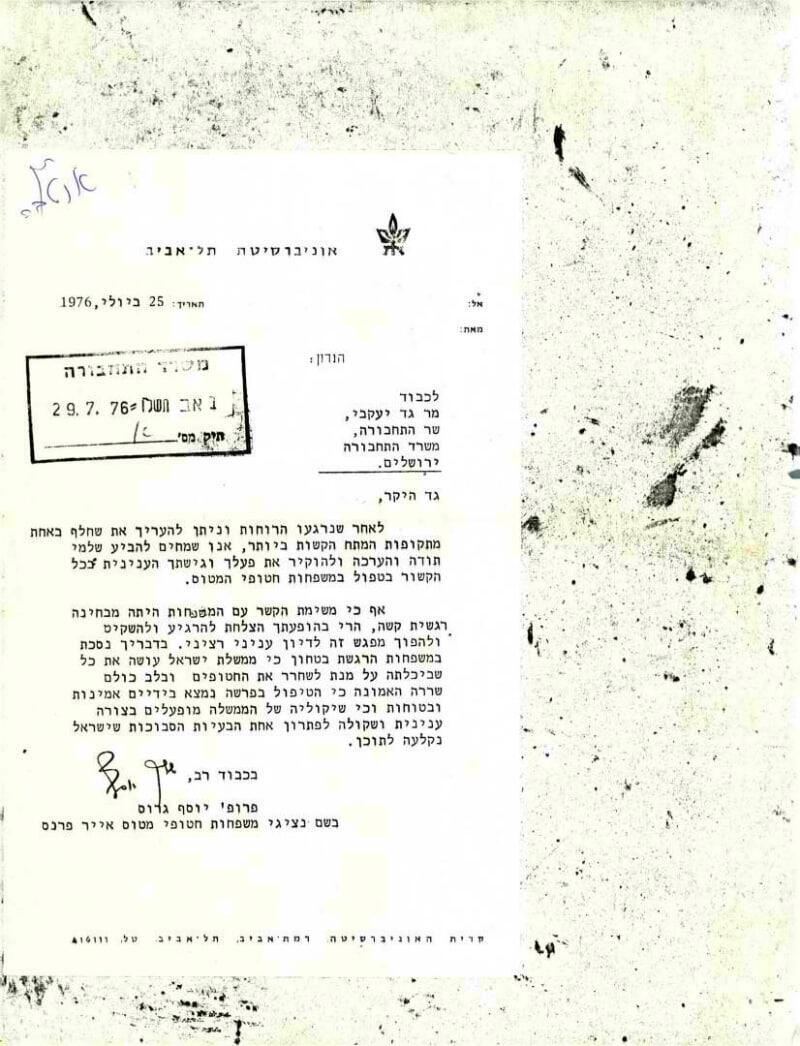
Letter from the hostages' families' representative to Minister Yaacobi
(Photo: The State Archives)
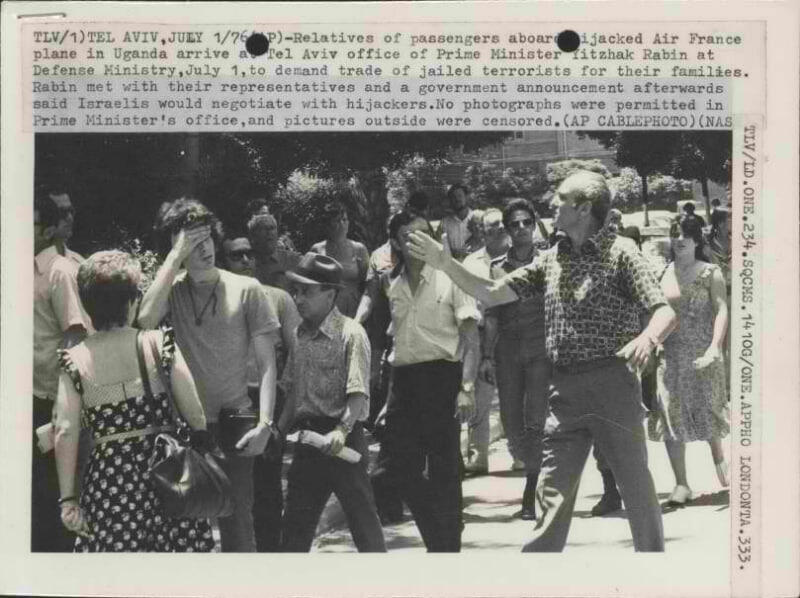
Families of the hostages protest outside the prime minister's office in Tel Aviv
(Photo: The State Archives)
Rabin also met with newspaper editors, revealing details of a secret operation carried out in March 1975, the details of which were only made public decades later.
In that operation, Israel foiled an attempt to shoot down an El Al aircraft that was about to land in Nairobi, Kenya. Five terrorists—two West German citizens and others from the Popular Front for the Liberation of Palestine—were arrested by Kenyan security forces, interrogated, drugged and secretly flown to Israel aboard a special aircraft. In Israel, they were classified as Prisoners X, and their detention was kept secret.
The hijackers holding the Israelis in Entebbe were now demanding their release. "Because of Israeli loose talk, I've reached the point where I have no choice but to appeal to newspaper editors and to their national conscience," Rabin told them. "What I'm telling you here—if it gets out—could become one of the gravest complications the State of Israel has ever faced." "The lives of 77 Israelis could be affected by this information." "The Kenyans may not be able to withstand it. At the moment, I trust them more than I trust some Israeli sources."
He added that if the operation became public, Kenya would announce that Israel had abducted the terrorists from its territory. "The danger is not only a crisis in relations with Kenya," he said. "If this becomes part of the current crisis, no country in the world will cooperate with us in the future. In that case, the blood of Israelis will be on the hands of whoever publishes this information."
An intelligence summary circulated later that day quoted Kenya as saying it was not holding any Palestinian prisoners, but did not reveal that Israel had secretly taken them.
Peres to Rabin: 'Possible, but not today'
Rabin reviewed developments in the Security Cabinet and convened another meeting of the special ministerial team that evening. Defense Minister Shimon Peres updated ministers on the conversation that had taken place between Bar-Lev and Idi Amin.
Rabin stressed that a decision would have to be made before the ultimatum expired.
During the discussion, the chief of staff explained that the IDF needed more time to prepare for the operation. The possibility of examining a joint rescue operation with France was also raised.
Peres handed Rabin a note that read: "Yitzhak, a military operation appears possible, but not before two nights and one day from the decision, and without any certainty that the passengers can be brought back. Under these conditions, and at this stage, I don't think it is feasible. However, because of the urgency, if there is any inclination toward a military operation, 12 fighters should already be sent this evening to Kenya, disguised as passengers."
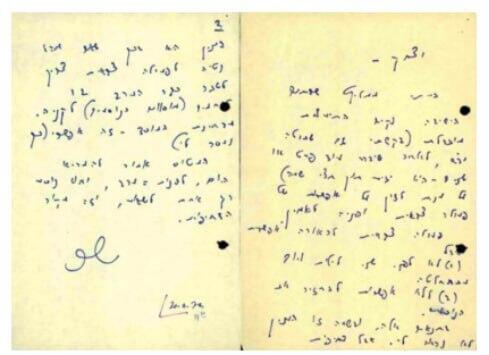
Defense Minister Peres' note to Prime Minister Rabin on the option of launching a military operation
(Photo: The State Archives)
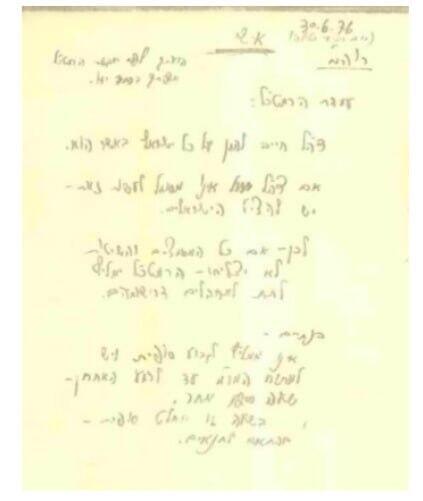
The note the army chief sent to the prime minister on Wednesday night
(Photo: The State Archives)
He added: "According to the Mossad, this is possible. The aircraft is due to depart this evening, and it flies only once a week. That's the source of the urgency." Later, the prime minister was updated on another conversation between Bar-Lev and Amin. Uganda's ruler insisted that the only way to save the hostages was to release the prisoners demanded by the terrorists.
Israel updated France on the conversation, adding that the information pointed to cooperation between Uganda and the hijackers, and that the hostages were being guarded not only by the terrorists but also by Ugandan soldiers.
That night, the chief of staff sent Rabin another note. If the IDF proved unable to rescue the hostages in Entebbe, he recommended accepting the terrorists' demands. At the same time, he proposed dragging out the negotiations until the very last moment—until noon the following day, and only then making a final decision.
Uganda's role
During those days, the IDF Intelligence Directorate sent Rabin a series of urgent memoranda. One document, classified Top Secret, stated: "From the picture emerging so far, it appears that the attack was initiated by Wadie Haddad, head of the Popular Front/Habash overseas operations apparatus, in close cooperation with various elements, including Uganda's ruler, who apparently coordinated assistance for the operation."
Another memorandum, sent later, stated: "Information from various sources indicates direct Ugandan involvement in assisting the operation—and possibly even in planning it. The hostages are being guarded by armed Ugandan soldiers, and the terrorists received logistical assistance in Entebbe, including weapons."
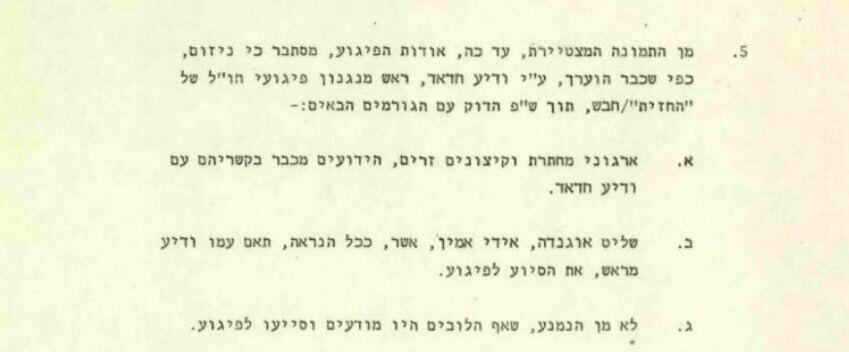
Urgent letter from the IDF to Prime Minister Rabin in the days before the operation
(Photo: The State Archives)
It also stated that Amin and senior Ugandan military officers had met several times with the hijackers, and that on the night of June 29-30, Europeans staying in Ugandan hotels had been detained out of concern they might be involved in an attempt to rescue the passengers.
At a meeting of the special ministerial team on Thursday morning, Rabin's adviser Rehavam "Gandhi" Ze'evi reported that passengers who had been released and reached Paris said there was cooperation between the Ugandan authorities and the hijackers.
Ugandan soldiers were guarding the hostages, and the terrorists were carrying weapons they had not possessed during the hijacking or while aboard the aircraft. The released passengers also reported that the Israelis had been separated from the other hostages.
At the Cabinet meeting that followed, Rabin again stressed the need for national consensus. "I have no time now for evasions," he said. He added that not making a decision was itself a decision.
"We must remember that we are the first government to express a willingness to enter negotiations over an exchange. I'm not saying we have to accept all the demands. But the moment comes when a direction has to be decided."
The Cabinet ultimately decided that the special ministerial team would be authorized to continue efforts to save the hostages and secure their release, while expressing a willingness to release prisoners held in Israel. It was also decided that Bar-Lev would travel to Uganda.
The message to France: 'Zero hour is approaching'
At the Knesset's Foreign Affairs and Defense Committee, which convened immediately afterward, the prime minister said that "the hourglass is running, and we have to reach conclusions." He said the options were to continue with the current situation—"whatever happens, happens"—or to break the deadlock and open negotiations on Israel's own initiative. In the end, committee members supported the second option, and Israel informed France of the decision, saying: "Zero hour is approaching. We see an urgent need for a joint effort with you to save the lives of the hostages."
However, the decision was preceded by sharp disagreements within the leadership. Minister Yaacobi, who had met with the families of the hostages, reported that they were urging the government to negotiate. At the same time, he proposed threatening the hijackers by declaring that for every Israeli executed, Israel would execute one of the prisoners whose release they were demanding.
Minister Peres opposed negotiations, warning they would carry "a heavy price in the future by encouraging terrorism." He added: "We have always argued that no other government has given in. This time, the Americans are saying, 'Don't give in.' The French are saying, 'We are standing firm.' The Germans are saying, 'We are standing firm.' The Kenyans are saying, 'There are no people'" — a reference to detainees arrested in the Israeli operation. "We need to be concerned here with the fate of people in the future, with what will happen to Israel and its standing regarding hijackings and terrorism, in addition to our concern for the people in Uganda. Until now, virtually every terrorist organization except Wadie Haddad's has largely refrained from hijackings because of Israel's steadfast position."
Prime Minister Rabin, by contrast, stressed that he was unwilling to explain to the public "why it is permissible to exchange bodies, but not living people," referring to Israel's April 1975 agreement with Egypt, under which the bodies of Israeli soldiers were returned in exchange for the release of terrorists and prisoners.
The compromise ultimately adopted by the government was that the special ministerial committee would continue efforts to secure the hostages' release, but without specifying how many or which prisoners Israel was prepared to free, and without using the term "negotiations." Instead, the government described the process as "an effort to secure the hostages' release, including an exchange of detainees."
Israel also insisted that any contacts be conducted through France, arguing that the French government bore responsibility for the fate of the passengers aboard the Air France aircraft.
At 1 p.m. that day, one hour before the ultimatum was due to expire, the hijackers announced that they had decided to release all the remaining hostages except the Israelis. At the same time, they announced that, at Amin's request, the ultimatum would be extended until Sunday, July 4, at 1 p.m. About an hour and a half after the deadline was extended, the chief of staff presented the ministerial team with an operational plan.
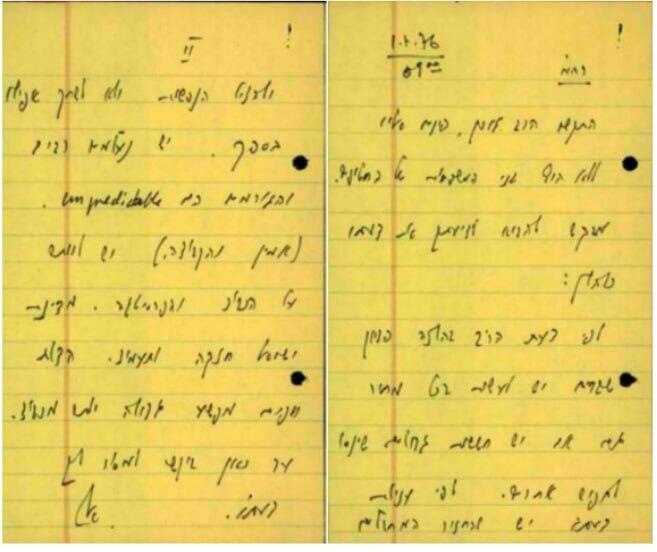
The message from Rabbi Goren to Prime Minister Rabin, handwritten by Eli Mizrahi
(Photo: The State Archives)
On Thursday, Rabin also met with the families of the hostages and told them at the beginning of the meeting: "I don't think words will help, but I will tell you nevertheless that the government has decided it is prepared to enter negotiations and release prisoners in order to save the hostages." One of the family representatives asked the prime minister whether he could update the other families, and Rabin replied, "Please." Rabin was asked whether it was possible that, after the terrorists were released, the hostages would still not be freed. He answered: "Can you rely on Idi to get them out of there once the terrorists have their prisoners? We have never done such a thing where there was no certainty." One of the family representatives said: "We're somewhat relieved to know that the government has decided to move toward releasing prisoners. That's what we've been hoping for all along. We were afraid a decision might be made only when it was already too late."
That same day, Rabbi Shlomo Goren, then Israel's chief rabbi, also appealed to Rabin: "According to the majority opinion in Jewish law, the redemption of captives must be carried out at any cost, even if there are serious concerns that others may later be captured. The terrorists should be returned and lives saved, without gambling even where there is doubt. There are many unknowns, and the parties involved are unpredictable. Prestige and honor must be set aside. The State of Israel is strong and will endure. Saving innocent lives is greater than honor."
'For the first time in history': The operational plan
The following day, the newly released group of hostages reported that the hijackers' treatment of the Israelis was becoming increasingly harsh. The chief of staff then presented the operational plan to the special ministerial team, and Cabinet ministers were subsequently invited to hear it.
On Saturday, Prime Minister Rabin convened the Cabinet and reviewed the decision to enter negotiations, saying: "In terms of the timetable, there had not been, until now, any military alternative that could be carried out. I am convinced the decision was the right one." He explained that, thanks to the time Israel had gained, "examinations have been made to determine whether a reasonable military option exists." In his words, "Additional time, intelligence and study make a military option possible."
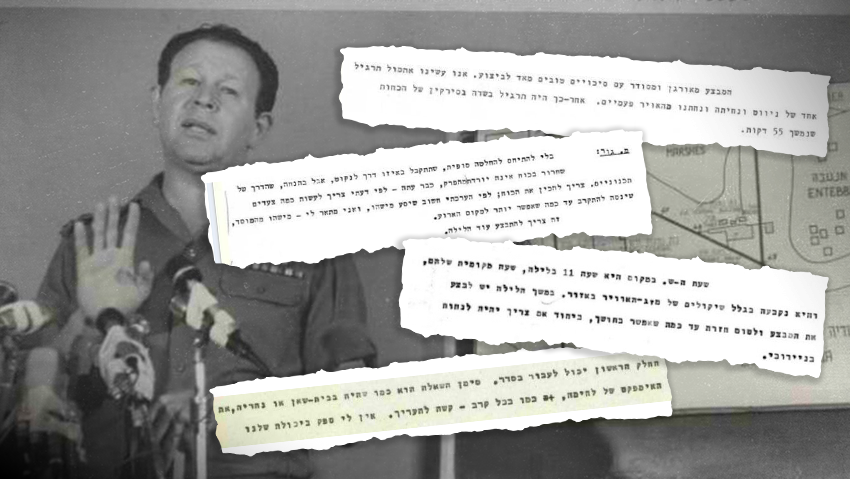
IDF chief Mordechai Gur presents the operation plan
(Photo: The State Archives)
Peres warned against agreeing to the terrorists' demands. "If we surrender, no country will dare fight terrorism again. As a Jew, I see the implications for our people: two Germans standing with drawn pistols in front of Israeli children whose only crime is not that they are children—but that they are Israelis."
Speaking about the operation, he said: "We are not proposing this lightly, because this is an operation unlike anything the IDF has ever attempted—the first in Israel's history outside the borders of the Middle East." Even so, he added: "When we weighed the risks against the outcome, we reached our conclusion. The operation's main advantage is the element of surprise. That is why we postponed the decision until the last possible moment, when we would have the maximum amount of information and the minimum amount of risk."
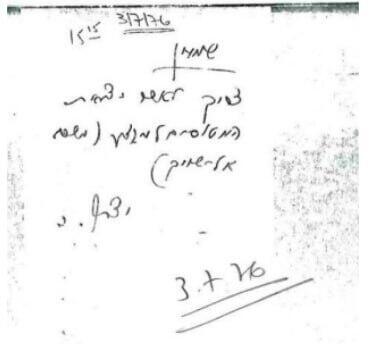
'The aircraft must be cleared for departure' — the note the prime minister handed to the defense minister during Saturday's meeting
(Photo: The State Archives)
The chief of staff presented ministers with the area of Entebbe Airport where the hostages were being held, as well as the nearby Ugandan military camp. "The basic idea is that we fly four Hercules aircraft and land on the new runway," he said. "We deploy a force that takes control of the terminal and frees the hostages, while another force secures the area. An aircraft carrying a medical team will receive the hostages." He added that zero hour had been set for 11 p.m. Uganda time and explained that the operation had to be completed and the force withdrawn "as much as possible under cover of darkness."
The chief of staff said the landing zone was expected to be free of hostile forces, and that the area where the hostages were being held was guarded by an estimated 10 to 12 terrorists and 50 to 60 Ugandan soldiers. "As for the security arrangements around the terminal, there are three main entrances, each guarded by terrorists," he added. "The Israelis are on the ground floor. The Ugandans are on the floor above. The terrorists and the Ugandans are armed with pistols and submachine guns. The Ugandans were trained by Israelis. They're not much of a military force and they have no combat experience." He said they were also slow to open fire and afraid of operating at night, "so in the early stages, they'll be confused."
The chief of staff then laid out the operation step by step. He explained that the first aircraft would carry 36 soldiers and three vehicles that would immediately seize the terminal where the hostages were being held. "A few minutes later, two more aircraft will land, each carrying two armored personnel carriers equipped with machine guns and grenades, along with reserve security forces," he added. After that, he said, the medical aircraft would land to receive the hostages. He explained how the force would operate on the ground and noted that the principal challenge was taking control of the terminal where the hostages were being held.
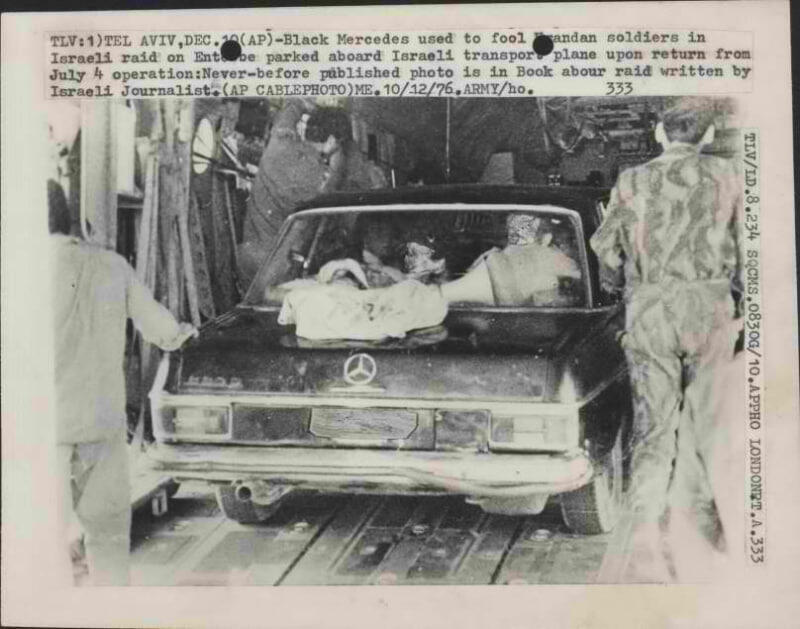
The Mercedes used in the Operation Thunderbolt
(Photo: The State Archives)
According to the chief of staff, the vehicles that would approach the terminal were not expected to arouse suspicion because they matched the airport's vehicles and included Mercedes cars. "We hope it will come as a surprise and allow us to reach the hostages," he said. "Four minutes to get in and load everyone is a long time. It's well within our operational standards."
He added that the biggest question mark was the impact of the fighting, which, "as in every battle, is difficult to assess," and stressed: "I have no doubt about our ability to overcome the terrorists and evacuate the people." At the same time, he noted that reserve aircraft carrying surgical teams would land in Nairobi in case wounded personnel had to remain in the area for medical treatment.
After the chief of staff's presentation, Rabin made it clear that, at Thursday's meeting, the alternative had been to say no "and remain at the mercy of the terrorists," or to say, "We have to release prisoners." In his words, "We had no other alternative. Today, the alternative is either to stay on the same course, which offers a reasonable chance of saving the passengers' lives at the cost of releasing terrorists and paying a price in prestige—or to act militarily." He stressed that there were risks involved, and when ministers asked whether the terminal might be booby-trapped, the chief of staff replied that, according to the available intelligence, it was not—but added: "You can't guarantee it."
Unanimous support—and the diversion tactics
Minister Allon, who was then foreign minister and deputy prime minister, added during the meeting: "When we decided to respond positively to the terrorists' demands, we did so with a heavy heart. We knew the price Israel would pay—not only in terms of prestige itself, but in prestige with political significance, both in the eyes of the terrorists and the Arab world. But we acted responsibly and cautiously, and we made difficult decisions."
He added: "Sometimes the impossible is the most possible. This operation is highly complex, bold and complicated." At the same time, he said, "From a historical and strategic perspective, and without ruling out the possibility of casualties, I would recommend this operation."
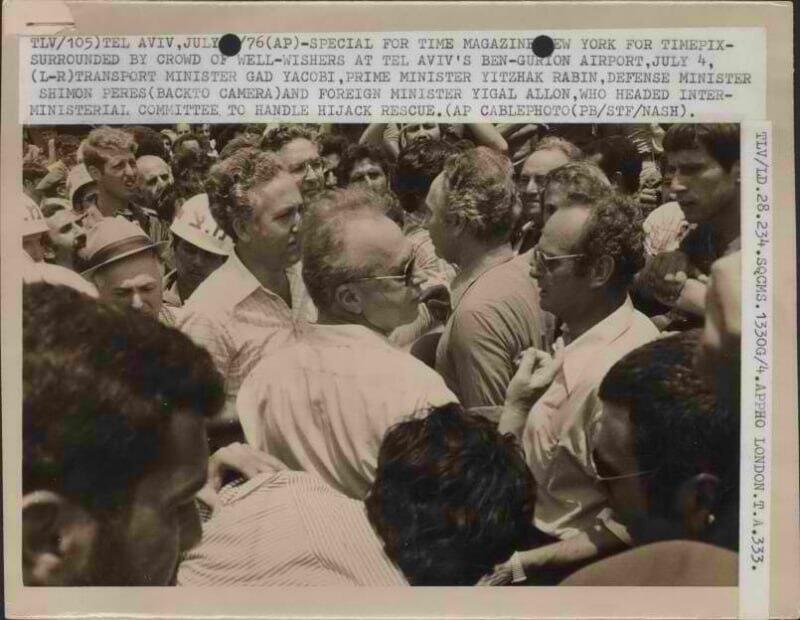
Prime Minister Rabin with ministers Yaacobi, Peres and Allon
(Photo: The State Archives)
Allon also noted that in the coming hours, before the operation began, the political leadership would carry out appropriate diversionary measures "that will not go beyond what is reasonable, because if there is excessive activity it will immediately arouse suspicion." Apart from those diversionary measures, he said, the Foreign Ministry would prepare an international public diplomacy campaign for after the operation and begin contacts with foreign governments to explain what had taken place.
Minister Haim Bar-Lev supported a military operation, saying: "The path we've taken"—the negotiations—"even if it brings the hostages home, will draw us into a grave and negative reality. Tomorrow, a German aircraft could be hijacked and Israel would be asked to release terrorists it is holding, and the Germans would come to us—and rightly so."
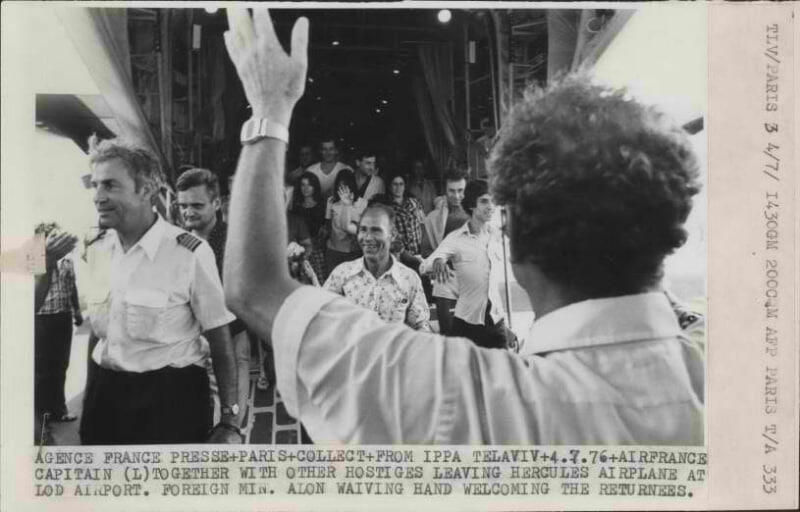
The hostages disembark from the Hercules jet that brought them to Israel
(Photo: The State Archives)
In the end, the ministers unanimously approved launching the operation. Allon noted that opposition leader Menachem Begin had also asked that it be made clear he supported the decision.
Rabin concluded the meeting by stressing that the key to the operation's success was surprise. "The difference between surprise and no surprise is the difference between catastrophe and success," he said. "Any careless act, any telephone conversation about this, puts the operation at risk. No minister is to announce that the government has met. If journalists call—you deny it. In a case like this, it is justified not to tell the truth."
What worried the chief of staff
The ministers then reconvened as the special ministerial team, where the chief of staff said: "The operation is organized and well planned, with very good prospects for success."
He said the forces had already practiced the navigation and landing, followed by another exercise at Sirkin that lasted 55 minutes. "In my opinion, we should be prepared for the operation on the ground to take between an hour and a half and two hours," the chief of staff said, adding that the head of Military Intelligence and the commander of the Israeli Air Force would be aboard the airborne command post.
"One of the weak points is that we won't have up-to-date intelligence until the very last moment. That's what worries me most," Gur concluded. Peres then added that if Israel cooperated with the terrorists and surrendered to their demands, "it would spread across the continent like wildfire."
"A country fights for something that may seem intangible—its dignity," he said. "If the government decides to negotiate, I'll stand behind it—but afterward Israel will look just a little spineless. Its deterrent power and its standing in the international arena will suffer damage unlike anything we've seen before."
He added: "This is one of Israel's boldest operations."
He then spoke of the images that haunted him. "That terrible sight of Israelis being separated from everyone else at the airport. That sight of damn Germans standing with guns pointed at Jews—I can't calm down from it."
Yoni Netanyahu and Dora Bloch
The IDF operation was carried out successfully, and 102 hostages were rescued under the command of Brig. Gen. Dan Shomron, then the IDF's chief infantry and paratroopers officer.
Three of the hostages—Ida Borochovitz, Pasco Cohen and Jean-Jacques Maimoni—were killed, along with Lt. Col. Yonatan Netanyahu, commander of the assault force and the brother of Israel's current prime minister, after whom the operation was later named.
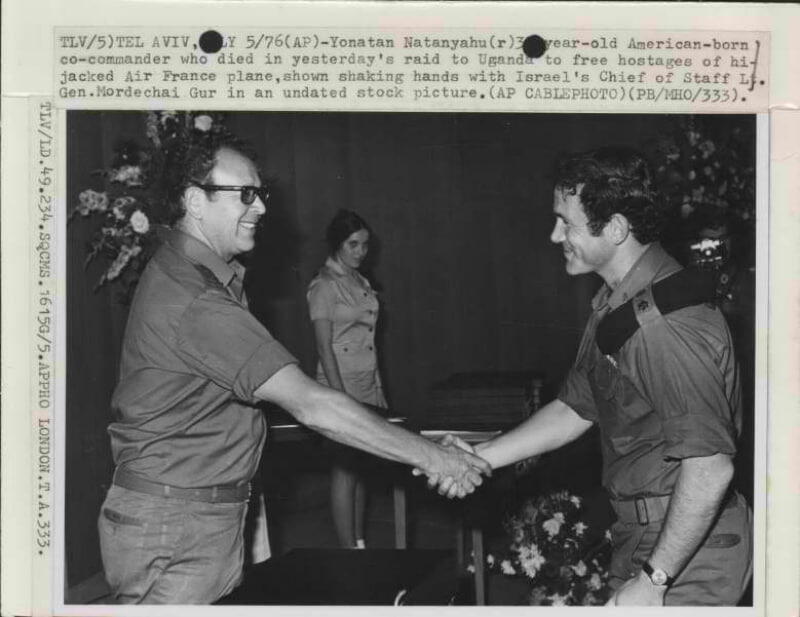
About a year before the Entebbe operation: Lt. Col. Yonatan Netanyahu (right) receives the Medal of Distinguished Service from the IDF chief of staff
(Photo: The State Archives)
At the Cabinet meeting following the operation, Rabin said of him: "His father, Prof. [Benzion] Netanyahu, is now in the United States. He was among the pioneers of the Revisionist movement, a historian and a sociologist. I had the opportunity to have a long conversation with him when he was in Israel." Peres added: "We lost one of the finest fighters the Jewish people have ever had. An extraordinarily brave and exceptionally educated man."
The State Archives also released correspondence concerning Dora Bloch, who fell ill while being held hostage, was taken to a hospital and therefore was not rescued during the operation.
In June 1977, Henry Kyemba, who had served as Uganda's health minister during Operation Entebbe, arrived at the Israeli Embassy in London. A letter sent at the time from the embassy to the Foreign Ministry, and released only now, states that at 8:30 p.m. on July 7, 1976, two vehicles arrived at the rear of the hospital. Two men forcibly dragged Bloch out of her room. Although she tried to resist, they succeeded in abducting her.
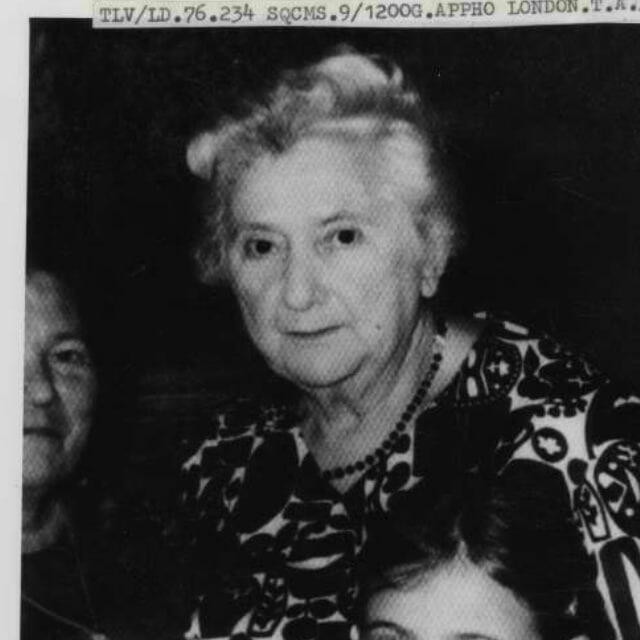
Dora Bloch was murdered in Uganda after the operation
(Photo: The State Archives)
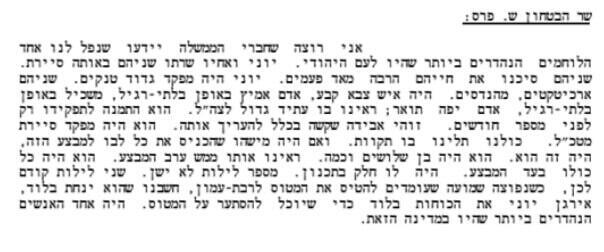
Shimon Peres' remarks about Yonatan Netanyahu
(Photo: The State Archives)
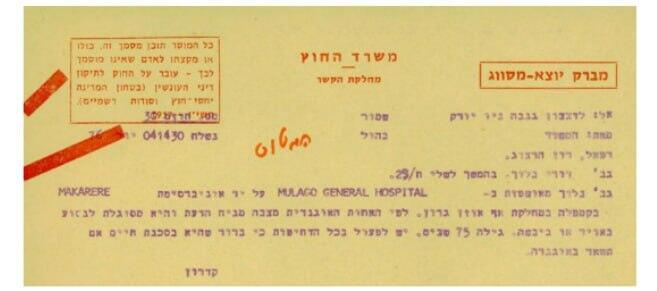
A hospital nurse's testimony that Dora Bloch was alive on July 4, after the hostage rescue operation
(Photo: The State Archives)
The hospital guard was killed, and several of the nurses disappeared afterward. Kyemba called Amin, who told him he would look into the matter. About half an hour later, he called back and said: "It's too late. The woman is dead."
Amin himself gave the order to murder Bloch. Several days later, the body of a woman was found by the roadside after someone had attempted to burn it. "On Amin's instructions, the ward register recorded that she had been discharged from the hospital on July 3," the document states. Dora Bloch's remains were returned to Israel only in 1979, after Tanzanian soldiers discovered her body in a sugar plantation near Kampala during the invasion of Uganda.
Rabin: 'The problem isn't over'
After the operation, Rabin telephoned the chief of staff, congratulating him on "an extraordinary operation."
"What I appreciate most is that, in the early stages, when the necessary information wasn't available, you had the inner strength to say it couldn't be done. And once the information became available, you had the courage to recommend it."
At the Cabinet meeting that same day, Rabin stressed that despite the sense of relief, there should be no illusions. "The problem isn't over, and terrorism continues to operate. It's too early to say what other challenges terrorism will present us with and what further lessons we will have to learn. We've won one battle, but the war continues."
Dozens of world leaders, along with hundreds of private citizens and heads of international organizations, sent letters to Rabin following the operation, congratulating him on the success and on Israel's firm stand against the terrorists.
Among them was a letter from a German citizen, who wrote: "I congratulate you and your government on your courageous decision and on rescuing your fellow citizens in such a bold and brilliantly executed operation. Other governments should show the same determination in the face of international terrorism and blackmail. It is a victory for justice."
Rabin replied to many of the letters he received. In a letter to several children from Jerusalem who had sent flowers to his office, he wrote: "I deeply appreciate the gesture through which you so beautifully expressed the sense of pride and honor felt by the entire House of Israel toward the IDF and the nation as a whole."
Conversations with a dictator
During the days leading up to the operation, while Israel was still exploring different courses of action, Col. Bar-Lev received authorization to establish contact with Idi Amin.
In their second conversation, Bar-Lev told the Ugandan ruler: "God has given you an opportunity to save lives and show the world that everything they have said about you is untrue. If you remember, I always gave you good advice. I never gave you bad advice."
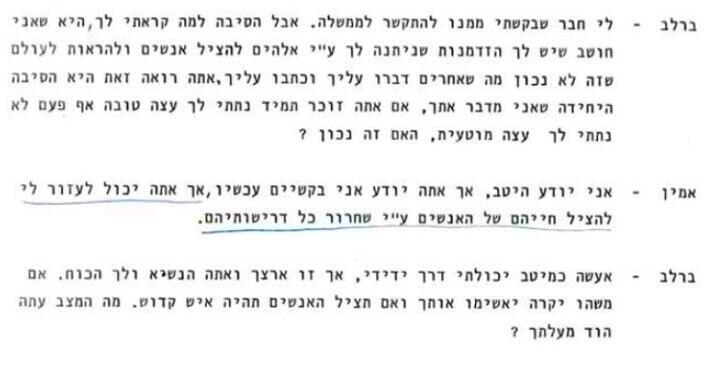
The second conversation between Bar-Lev and Idi Amin, June 30
(Photo: The State Archives)
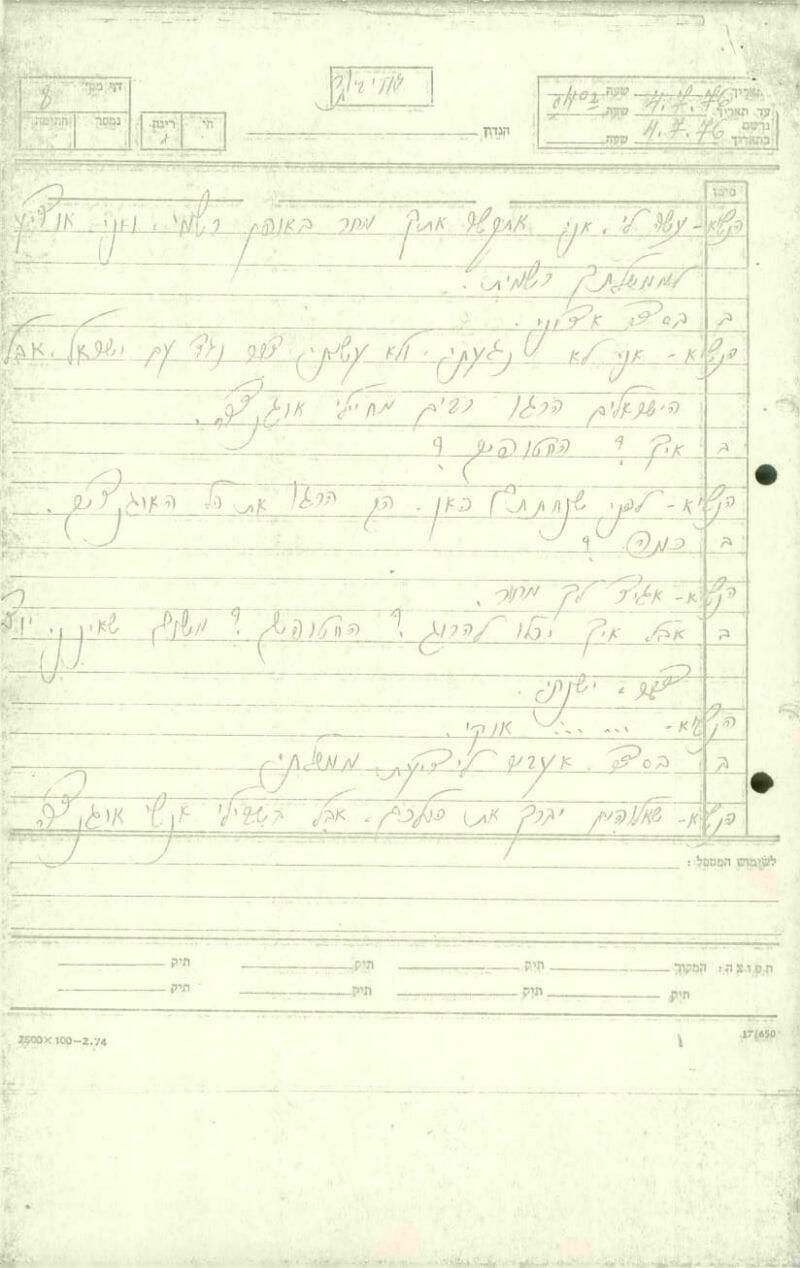
One of the Bar-Lev-Amin conversations before the operation
(Photo: The State Archives)
Uganda's ruler—who in reality played an active role in the hijacking—feigned innocence and replied that he knew that very well. He added: "I'm in trouble now, but you can help me save lives by agreeing to all of their demands."
Bar-Lev said he would do everything he could, but made it clear: "This is your country, and you have the power. If something happens, they will blame you. If you save these people, you will be a holy man." Amin insisted that the hijackers refused to listen to him.
He again claimed that the place where the hostages were being held was booby-trapped—a claim that later proved to be false—and said the only way to resolve the crisis was to accept their demands.
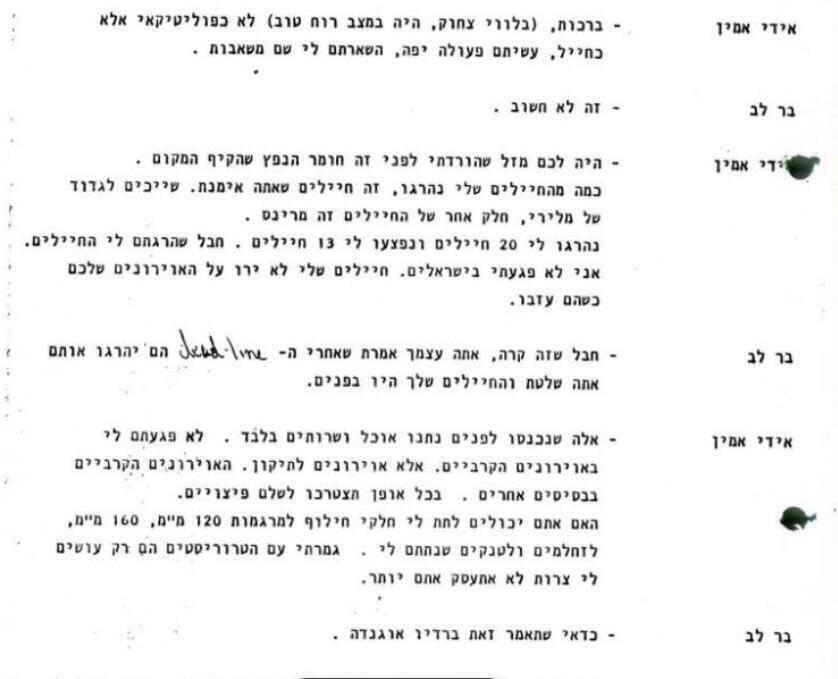
The conversation between Bar-Lev and Amin after the operation
(Photo: The State Archives)
Bar-Lev replied: "The people they are asking to release are murderers who killed children and women." He added: "I don't believe that even you, if someone tried to kill you, would allow him to walk free. It isn't easy to persuade people here to release murderers."
Amin replied: "I agree completely, but the situation is very complicated now." He also claimed that the hijackers had arrived with a large quantity of explosives.
When Bar-Lev asked where they had obtained them, Amin replied: "Possibly from Athens."
Amin's sins
Amin may have continued to feign innocence, but no one in Israel was buying it.
On July 7, 1976, Ze'evi prepared a 13-page document titled "Amin's Sins," detailing the Ugandan ruler's cooperation with Arab terrorist organizations and his role in the hijacking of the Air France flight.
The document includes chapters on Uganda's involvement in the hijacking, Amin's cooperation with Arab terrorist organizations and his anti-Israel statements. "This document is a compilation of information and facts gathered by the General Staff/Intelligence Directorate, the Mossad, the Foreign Ministry and the Office of the Prime Minister's Adviser," it states in its introduction.
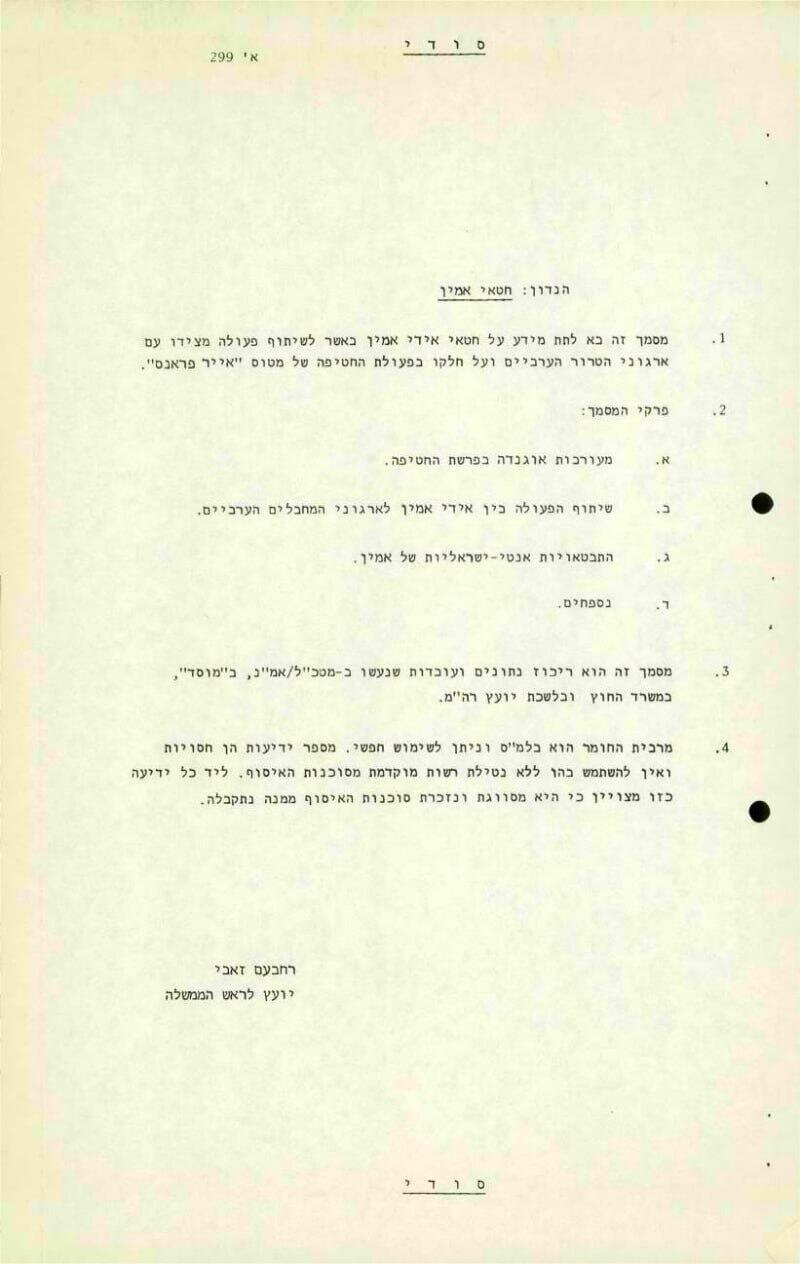
Document prepared by Rehavam Ze'evi a few days after the Entebbe operation
(Photo: The State Archives)
Among other findings, Ze'evi concluded that the cooperation between Amin and the hijackers was the result of prior coordination. "It stemmed from his desire to prove to the Arabs his friendship and to demonstrate his hostility toward Israel through a spectacular operation, in addition to the extensive military and political assistance he provides to the terrorist organizations."
The document details Amin's involvement, some of which remains classified even today, 50 years after the operation. It notes, for example, that the German hijacker knew in advance that the aircraft's destination was Uganda.
It also states that the German female hijacker said upon landing in Entebbe: "Everything is fine. The army is at the airport." According to the document, Ugandan soldiers surrounded the aircraft immediately after it landed.
Alongside them were four or five armed terrorists who embraced the hijackers and later joined them in guarding the hostages and conducting the negotiations. In addition, according to testimony from passengers on the flight: "Amin was waiting for the aircraft to arrive and embraced the hijackers as they disembarked."
The document further states that Amin was later seen in the main hall where the hostages were being held. He shook hands with the hijackers and said he had known they were coming.
Regarding the hostages' captivity, the document states that during the first 24 hours, only Ugandan soldiers were responsible for guarding them. Later, the terrorists arrived and were issued submachine guns. It also states that the hijackers received logistical support and were supplied with weapons and a portable radio. In addition, the commander of the hijackers in Entebbe remained with Amin throughout the ordeal.
After the hostages were rescued, the terrorists killed during the operation were buried with full military honors alongside Ugandan soldiers. The document also cites Amin's anti-Israel statements made before the hijacking.
In October 1975, for example, he declared that: "Special forces of the Ugandan Army are on alert to take part in any new war against Israel." That same year, he also expressed support for the "liberation of Palestine," saying: "Zionism understands only one language—the language of military action. All countries that wish to liberate Palestine, including Uganda, must prepare themselves accordingly."
A legal advisory report prepared by the Military Advocate General's Office stated that while the Ugandan authorities assisted in the release of the non-Jewish passengers, they actively helped the hijackers.
They allowed additional Palestinians to join them in Entebbe, authorized them to receive weapons and explosives, actively participated in guarding the hostages and enabled the hijackers to rest from time to time. "Israel has good reason to believe that the hostages would ultimately have been killed—and Uganda would not have lifted a finger," the report concluded.