

After 16 months of intensive fighting in Gaza, during which she handled dozens of difficult incidents, treated severely wounded soldiers and pronounced the deaths of those who did not survive, Capt. Dr. Sh., the medical officer of the IDF’s 7th Armored Brigade, came full circle. It happened at the Re'im base in the south, where she accompanied Matan Angrest, a brigade fighter, on his return home from Gaza.
“It was an amazing day,” she recalls. “A huge mix of excitement, tension and immense anticipation. I was there first and foremost as a doctor, to provide medical care for Matan and his friends, but it was also a meaningful moment of closure connected to the hostages and their families, for whom we fought.”
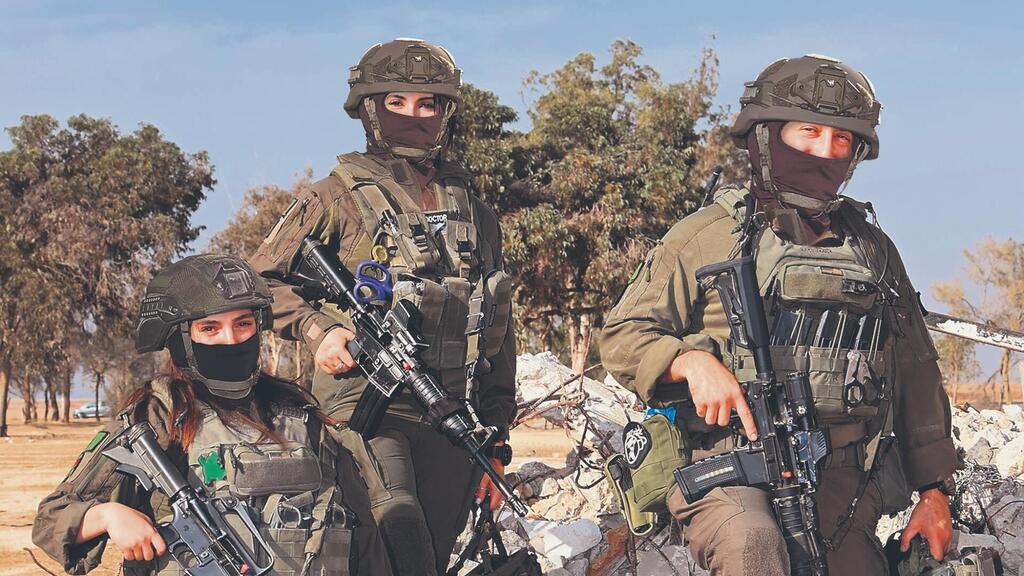
As soon as they arrived in Israel, the returning hostages were met by a doctor who stayed with them closely through their first hours back in the country. For the most recent group, the role was given to brigade medical officers who had fought in Gaza – an Israeli-style gesture, a moment of joy and comfort after long months of blood and hardship.
“When we saw Matan walking toward us, we all felt emotional,” Sh. continues. “It was very moving to connect a face to everything we had heard and known about him.”
The feeling was mutual. “There was a lot of adrenaline. Matan immediately spoke about his tank crew and his team. When I saw him looking at the brigade insignia on my uniform, I handed him my patch and told him, ‘We’re all proud of you.’ Then I gave him the brigade flag as well. I could see in his eyes how moved he was.”
Capt. Dr. T., the medical officer of the 401st Armored Brigade, the first brigade to enter Gaza, was also there on the historic day. “I spent a year and a half in Gaza with the fighters. We went through very painful and difficult events, and the entire time we were fighting to bring the hostages home,” she says. “The night before, I barely slept because of the weight of responsibility. We followed the returnees from the moment they stepped out of the Red Cross jeeps. When we saw them walk through the door, there was a collective sigh of relief from the entire medical team, because they were standing on their feet, because they spoke to us, because they were finally with us. We were all very cautious. Despite all the preparations, we weren’t entirely sure how to approach them. In that meeting, the most moving moment for me was when the hostage I was accompanying made a humorous remark. It was a victory of the spirit. It broke the ice and calmed all of us.”
Sh., the medical officer of the Golani Brigade, who fought in Gaza for a year and four months in his previous role as the doctor of Givati’s Shaked Battalion, tried to maintain professional distance, with partial success. “I checked my gear 20 times to make sure everything was ready. I prepared myself for it the way I prepared my soldiers before entering Gaza. I remember telling them, ‘We are going in for the State of Israel and for the hostages.’ We thought about them every day and every night in the Namer and after every incident. In the moment the hostages returned, two years of tension and pressure fell away, two years of weight on our shoulders. There wasn’t a single moment when I didn’t feel that enormous responsibility.”
What do you remember most from that day?
“There was one moment, right after we finished the medical part, when the family burst into the room. We were supposed to step out before they came in, but they couldn’t wait any longer. In that instant, I saw pure happiness in their eyes, in the truest form, without pretense or anything extra. There was electricity in the air. All the past two years flashed through my mind: the friends I lost, the medics I loved who fell in battle, the incidents I led, everything our fighters gave so everyone could come home, and now here they were, back. All I wanted in that moment was to cry. I told myself, ‘Hold it together, you’re not done yet.’”
Did you manage?
“Not for long. After we finished the job and said goodbye to the hostage and the family at the hospital, I walked outside with my stethoscope still around my neck, and someone asked if I had been with the hostages, while I myself still hadn’t processed what I had just been through. I got into the car, and there I cried for everything from the past two years. The façade was gone.”
The no-choice theory
The hostages’ return was a moment of uplift in a long period of professional and emotional strain for those responsible for the lives of Israel’s fighters. IDF medical officers have fought across every sector over the past two years. These young doctors, some not yet 30, carry enormous responsibility: the brigade medical officer is a key figure in maintaining continuity of combat operations and saving lives, directly shaping the brigade’s operational capability. The officer is responsible for medical planning before battle, from mapping risks and deploying medical teams to setting evacuation routes and assessing team readiness.
During combat, the medical officer manages treatment for the wounded in real time, receives continuous medical updates, allocates rescue and medical teams and ensures that casualties are evacuated quickly. These officers also play a vital role in training troops in the field, enforcing high standards among medics, instilling safety protocols, training fighters in advanced first aid and leading medical reviews after unusual incidents.
“Medical officers have maneuvered shoulder to shoulder with the fighters at the front these past two years,” says the IDF’s chief medical officer, Brig. Gen. Dr. Zivan Aviad-Bar. “Because of them, hundreds of wounded soldiers survived and are here to tell the story. It’s an entire system that works and learns, based on professional protocols written in blood. We all carry both great satisfaction and the understanding that we still have more to learn.”
The three brigade doctors interviewed for the article had only just completed their training in “Tzameret,” the IDF’s elite medical excellence program, when the war erupted. They immediately took charge of medical teams that included experienced reservists decades older than them.
“I started my role as battalion doctor in the West Bank a week earlier than planned, because the battalion commander asked me to come get to know the area,” says Capt. Dr. Sh., 29, of Modi’in. “On Oct. 7, when the phones started ringing, I had no operational experience at all. I was the only doctor in the sector. I got into my Kia Picanto with all my medical gear and planned to drive to the Gaza border. I reached the gate, and the soldiers blocked me. The deputy commander told me, ‘Doctor, you’re in the wrong place, get out of the car, you have a sector here.’”
Sh., who had finished medical school only eight months earlier, was thrown into the deep end. When the ground maneuver began, he was among the first forces to enter Gaza. “It’s hard to describe the sense of responsibility that falls on you when you know the mothers of 650 soldiers are counting on you to save their sons’ lives. It’s brutal, no matter what kind of doctor you are or how much experience you have. I was in Gaza for a year and four months, with no reserve force that could rotate in for me. Usually, I didn’t agree to leave anyway.
“Event followed event. The battalion became my family. When you come to the support company every few days and sit with them for coffee, you fall in love with them. Off the battlefield, they’re sweet kids. I went through many incidents with my soldiers who were wounded, and with medics from the battalion who meant a lot to me. Some gave their lives in this war.”
In the first mass-casualty incident he commanded in Jabalya in northern Gaza on Nov. 19, 2023, Sh. lost his closest friend. “We walked into a classic ambush,” he recalls. “There were eight wounded, and one of them was my best friend in the battalion, Capt. Adir Portugal. The night before, I sat with him on the beach in Gaza, talking heart to heart. He told me his things, I told him mine. Then the incident breaks out, and I start treating the wounded. And suddenly he comes in on a stretcher, and you can’t mistake him because of several unique details only he had.”
“In training,” Sh. says, “they teach you to identify who can be saved and who cannot, but in the moment, it’s much harder. My medic didn’t realize the wounded soldier who arrived was Adir, and he asked me what to do. Everyone around us was shouting, more wounded were arriving, and I understood that, as much as I wanted to, I simply couldn’t save him. I crossed my arms in an X to signal the medic and moved on.
“Only after the evacuation was completed and the adrenaline faded do you suddenly grasp that your best friend will never call you ‘Doc’ again, never laugh with you about the stupid jokes only the two of you found funny. It’s an event that stays with me every day. All the other wounded survived, but I failed at the most important mission I had: to save my best friend.”
How do you recover from something like that?
“I call it the ‘no-choice theory.’ I’m the doctor for these fighters, no one is going to replace me. I don’t have the option of falling apart. You stop, take a deep breath – if you need to cry, you cry; if you need to talk, you talk – and then you lift your head and move forward. You have half an hour to get back to full readiness. You look your people in the eyes and keep going for their sake.”
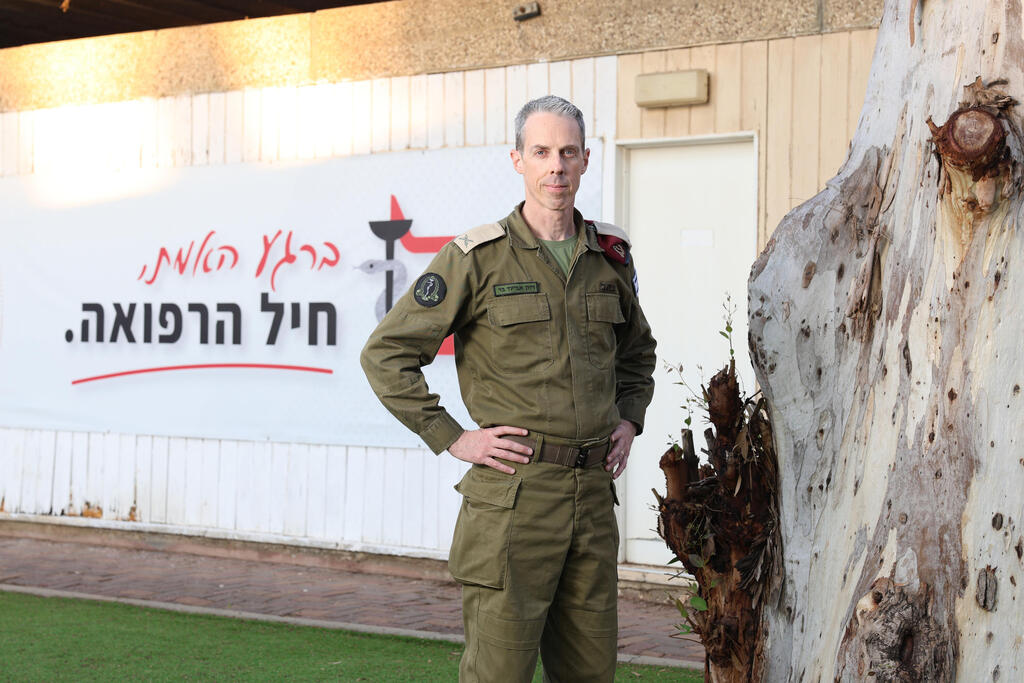
Brigadier General Dr. Zivan Aviad-Bar
(Photo: Dana Kopel)
‘Doctor, stop moving’
“The most important task in incidents like these is to stay in control,” says Sh., 29, from northern Israel. “Two weeks after we entered the fighting, I handled my first mass-casualty incident as a battalion doctor. The battalion launched an attack on a house that was booby-trapped. We heard the explosion and reached the scene within two minutes. Until support forces arrive, you often find yourself relatively alone in a very complex situation, under pressure, unsure how many wounded there are or who you’re about to encounter and, above all, deeply worried about the soldiers you’re treating.
“In a mass-casualty incident with the Egoz unit in Lebanon, one of the soldiers carried his friend in for medical treatment. Unfortunately, there was nothing we could do for him, and we had to pronounce him dead. But the soldier who brought him in, who was wounded himself, refused to accept it and wouldn’t agree to be treated. It broke my heart, but you have to keep calm, because if you panic, the entire team will panic and treatment will suffer.”
What happens when you’re treating people who, just minutes earlier, were having coffee with you? There’s none of the usual distance between doctors and their patients.
“That’s the challenge and the beauty of it. They trust us to be there for them when they’re wounded, to treat them and evacuate them as quickly and professionally as possible. The wounded look at you knowing you’ll do everything for them. That’s what gives fighters confidence, what gives them the motivation to keep fighting.
“In one incident, we treated a critically wounded soldier whose chances of survival were very slim. We used every tool we had and evacuated him first and fast. The fighting continued, so we barely had communication with the outside world, and I didn’t know what happened to him. One day, I received a photo of him being released from rehab. I showed it to my soldiers, and we all cried from emotion. That moment made everything worth it.”
Dr. T., 28, from Ramat Gan, finished medical school in 2022. She was considered relatively experienced, with three months of service, when the war began. “We entered the strip with the vehicles for the ground maneuver on Oct. 27, but it took a long time for the situation to truly sink in. Only during the first incident, with the battalion’s first wounded, did it hit me that we were at war, that there were dead and wounded, and that it affected me too.
“Our capabilities as field caregivers improved dramatically over the course of the fighting. Over time, whole-blood units were introduced at the battalion level, allowing us to return to severely wounded soldiers the blood they’d lost, not just fluids or certain components as was done in the past, which significantly increases survival rates. We provide the highest level of care of any military. Our arrival times to the wounded are measured in minutes. Evacuation times at the brigade level are incredible; within an hour, sometimes less, the wounded soldier is at a hospital. The corps learned and evolved during the fighting. Before the war, a battalion had one doctor and one paramedic. Today, some battalions have three paramedics and a doctor, which lets us deploy resources very effectively. We have a lot to be proud of.”
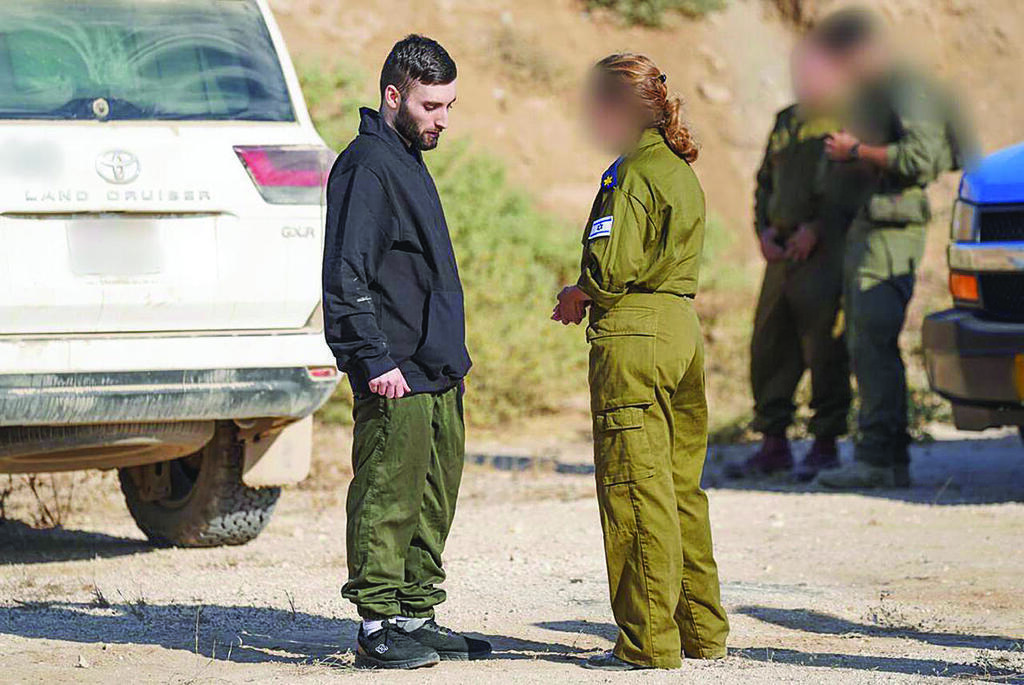
Matan Angrest in Re'im
(Photo: IDF Spokesperson)
In August 2024, T. was part of the medical team that pronounced the deaths of six hostages — Hersh Goldberg-Polin, Eden Yerushalmi, Ori Danino, Alex Lobanov, Almog Sarusi and Carmel Gat — who were murdered by Hamas shortly before an IDF force reached them. “By the time I arrived at the scene, we had an idea of what had happened,” she says. “It was devastating. We had done so much to bring them back alive, but this time it didn’t work. It was very difficult for my soldiers. There was this feeling of, ‘How do we go on from here?’ We’d treated fallen soldiers and wounded soldiers and seen difficult things, but this was different. These weren’t fighters killed in battle, they were helpless people. It was a kind of challenge we had never faced.”
During the prolonged fighting, it wasn’t uncommon for medical teams — medics, paramedics and doctors — to become the wounded themselves. The Medical Corps lost 71 personnel in the war, and its people in battalions and brigades were in danger at every moment. Capt. Dr. Sh. holds an unfortunate record, having been wounded four times. In the second and most serious incident, he was hit by dozens of fragments to his arm and chest from an anti-tank missile strike.
“We were evacuating a soldier when our vehicle was hit. I was in this awkward position, trying to shield the wounded soldier, and all the fragments hit me. But for me, everything was fine, nothing happened,” he says. “My commander saw I was bleeding and asked what was going on, and I shouted back, ‘Everything’s fine.’ When the helicopter arrived, they forced me onto it. On the way to the hospital, I kept telling the team, ‘I’m fine, let me help you treat him,’ until the doctor pushed me down and said, ‘Doctor, stop moving.’”
The next day, he signed a waiver to leave the hospital and went back to Gaza, back to the war. “Maybe I had a fever for a few days, but the battalion is what matters most. For them and for the brigade, you do everything. That’s the spirit of these places.”
That look in their eyes
As caregivers, they also understand the importance of tending to the mind. “It’s something we really need to talk about,” says T. “One of the first things I did when I moved into the brigade medical officer role, which is more based inside Israel, was to start therapy. I’m not depressed, but I told myself, ‘You’re promoting the importance of this to commanders, maybe it’s time to take care of yourself too.’ There’s a term called ‘post-traumatic growth.’ People talk a lot about PTSD and the toll difficult events take, but I think you can also grow from experiences like these if you can channel them into positive places.”
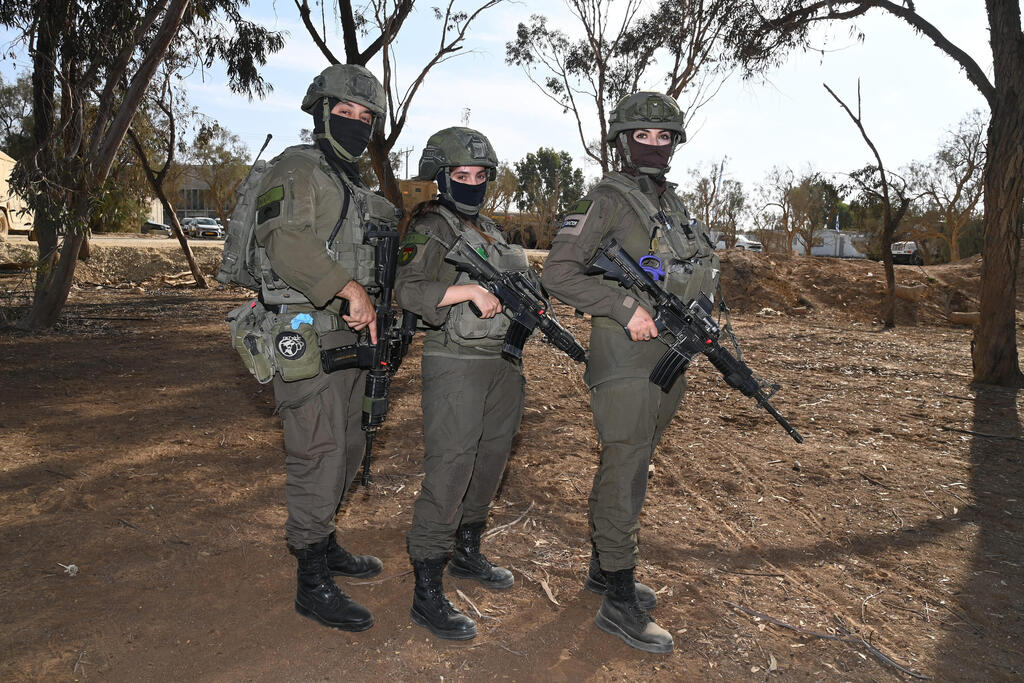
Captain Dr. Sh. from Golani, Captain Dr. Sh. from the 7th Brigade and Captain Dr. T. from the 401st
(Photo: Herzl Yosef)
“The biggest command challenge is the emotional side for the soldiers,” says Sh. “As a commander, I have a responsibility to my people, who have gone through extremely complex situations. I need to protect them, support them, be there for them at all times, push them forward and look after them as they go back in again and again and face such difficult events.”
How do you do that?
“By talking to them as equals. Just being with them and explaining that things are complicated for you too. Talking about the experiences, not putting them aside. A group of friends who have gone through the same things is the best place for that. After an incident, sometimes all it takes is that look in the eyes to know that the doctor who was with you understands exactly what you’re going through. Visiting the wounded you’ve treated and showing them the results of what you’ve done is also important.”
All three are single, with many years of demanding military service ahead of them. If everything goes according to plan, we will meet them in hospitals in 2029. By then, they will be able to choose their areas of specialization. T. is torn between anesthesia and intensive care or ear, nose and throat medicine. Sh. from Golani dreams of becoming an orthopedist or plastic surgeon who develops “sensing” prosthetics to restore the feeling lost in limbs that were amputated.
In a week when renewed fighting in several sectors feels closer than ever, they are using the time to prepare for what comes next. “I’m glad we’re in a period of summing up the war and that all the living hostages are home, but there’s still a part of me that sometimes wants to go back to the field with the fighters,” says T.
“There are people, like my mother, for example, who say, ‘Stop for a moment, take a breath,’ but I’m not like that,” says Sh. “Our mission isn’t over. When I first went home from Gaza and saw people sitting in a café, I asked my father, ‘What’s going on? Where are the terrorists, where are the explosions?’ He told me, ‘You’re doing your job so well that we’re starting to return to normal.’ It was empowering to understand that thanks to brigades like Golani, the State of Israel can keep living its life. That’s why we’re here. And if I can be there at the tip of the spear and give a fighter the medical care he needs in that one critical moment, then I’ve done my part.”