

When Inbar Hayman was taken hostage during the October 7 massacre, her mother, Yifat, knew she was about to embark on a long and painful journey to bring her daughter home. What she didn’t expect was the unlikely partner who would walk that path with her from the very first moment: Nirit Alon-Levy, the mother of Noam, Inbar’s boyfriend.
The two women have faced the harrowing aftermath of the atrocities on that day, side by side, one holding onto hope with fierce optimism, the other quietly admitting that her hope has already shattered.
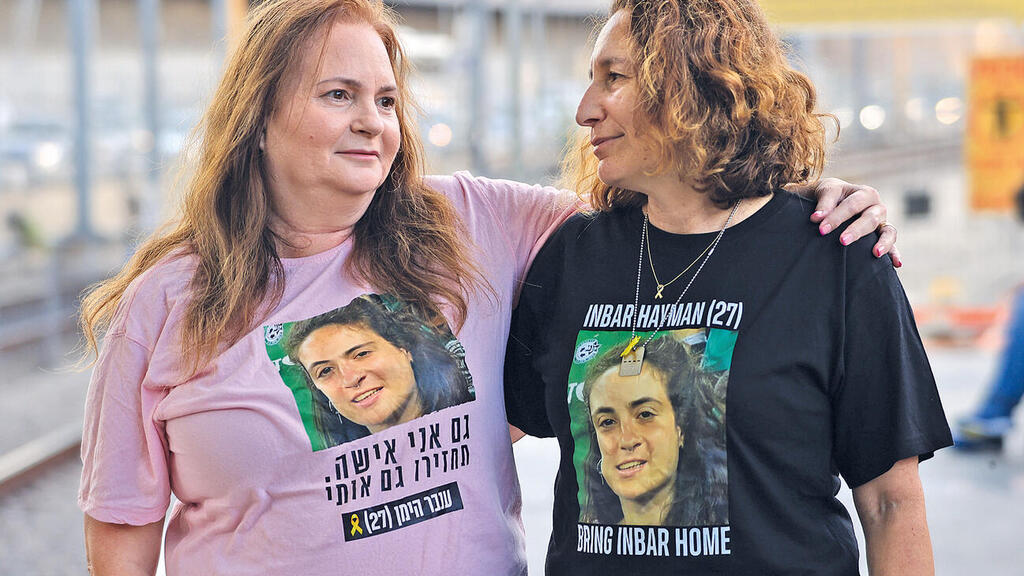
“She’s the last woman still held captive,” Alon-Levy said, her voice steady but somber, while Yifat clings to the image of her daughter walking through the door, alive. “I imagine Inbar entering the house like she always does,” she said
These two mothers, bound together by love and tragedy, represent the emotional toll of the massacre that has scarred families across Israel. Their story is one of resilience, partnership and also the different ways people cope when faced with the unbearable.
Around 9 a.m. on the morning of the Oct. 7 massacre, Noam made a phone call that would change everything. He told his parents, Nirit and Mordi, that he couldn’t reach Inbar, who had gone to work at a Nova music festival in the south.
Nirit immediately drove from Haifa to pick Noam up, and together they began trying to piece together what had happened. Where was she? Who she was with? What was she wearing?
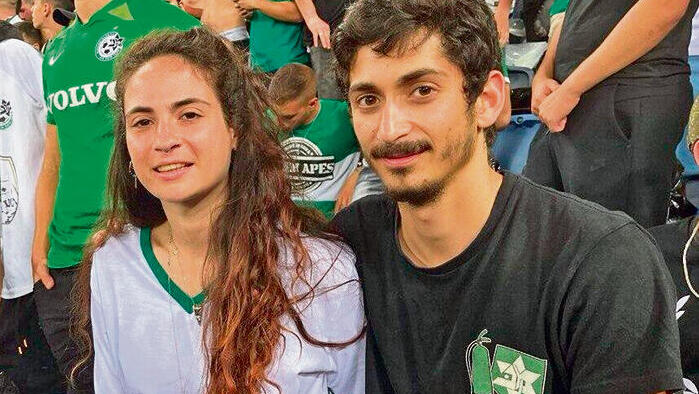
Inbar Hayman and her partner Noam
As fear began to settle in, they made first contact with Yifat and Chaim, Inbar’s parents, marking the beginning of a painful and uncertain chapter that would bind the two families together in their search for answers, and for hope.
When the sirens began to blare and rockets fell, Yifat and Chaim, Inbar Hayman's parents, began a frantic search. After they were unable to reach hospitals, they drove from one to the other, looking for their daughter. But Inbar was nowhere to be found.
Meanwhile, a makeshift operations center began operating at Alon-Levy’s home. “Within minutes, we received a video of Inbar,” Nirit recalled. “It had been censored by Hamas, but we knew it was her because of what she was wearing.”
Yifat nodded, adding quietly, “Yes, those galaxy-print tights.”
Nirit had known Inbar well. She had often visited the apartment Inbar shared with Noam and had spent time with them during family gatherings and trips to the desert. “I loved Inbar very much,” Nirit said. “Sadly, I feel like I’ve come to know her even more now, too late, and for too short a time.”
Yifat echoed the sentiment. “I feel the same about Noam,” she said. “It was all too short.”
Their words reflect not only the depth of personal loss but also the profound bond that has grown between two families united by love, memory, and the unbearable wait for answers.
When Yifat Hayman hears Nirit Alon-Levy speak, her voice breaks. “You’ve really touched my heart,” she says. “This is the first time we’ve spoken so openly.”
A swift response
Even before an official hostages' headquarters was formed, the families sprang into action, printing shirts, making signs, organizing events, and raising funds. Noam was highly involved in the early days. Over time, the emotional toll became too heavy, and he began to struggle. “I worried about him so much,” Nirit said. “I still do.”
Get the Ynetnews app on your smartphone: Google Play: https://bit.ly/4eJ37pE | Apple App Store: https://bit.ly/3ZL7iNv
As the effort grew, so did their involvement. “Noam gave countless interviews, mostly to foreign media,” she recalled. Eventually, the family pitched a tent in Tel Aviv and began sleeping there. “That was it. We moved.”
Yifat offered quiet gratitude. “You did amazing work. Truly. The determination and strength you gave us when we were shattered—it was everything.”
For Yifat, the shock lasted for weeks. “There was a long, hard period when you’re just trying to make sense of it. How could this happen? Inbar was there to help people.”
She recalled the sleepless nights, the days without eating, the paralysis of trauma. “Eventually, we started to come out of the fog. We realized we had to act. But it came at a high cost. My health declined,” she said. “I didn’t even know she had gone to the festival. But once I heard, I knew immediately, she was there.”
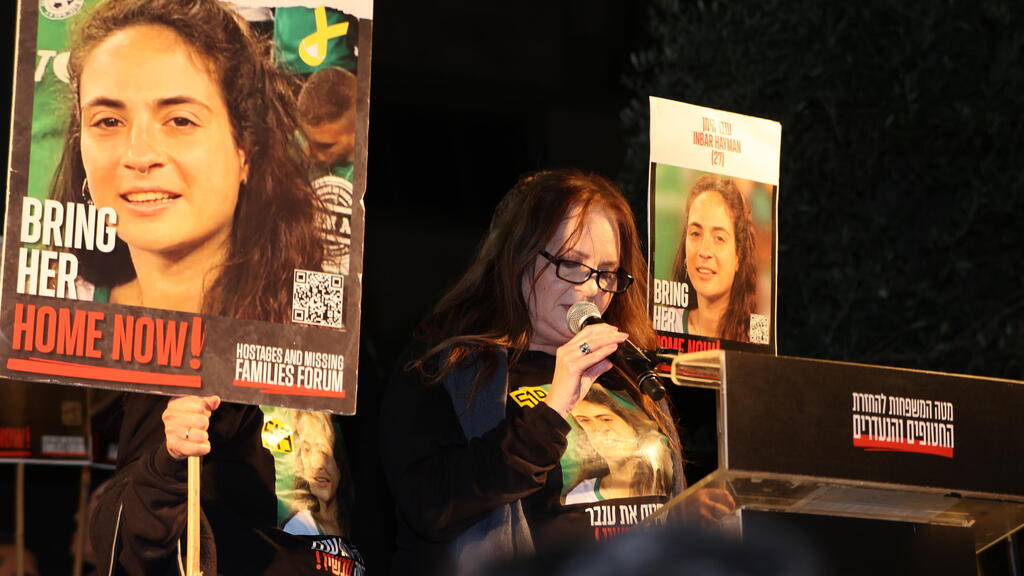
(Photo: Yariv Katz)
Seventy days after the abduction, on a Friday at 4:45 p.m., the news came. “A doctor, a social worker, a police officer, a psychologist, army officers—ten people walked into my house,” she recalled. “I was in the kitchen. I started shouting, ‘Get out! What are you doing here?’”
They told her there were new findings about Inbar’s condition. “I lost it. I don’t remember what happened after that,” she said. “Later, the doctor returned to explain her injuries. Chaim said, ‘Until I see it with my own eyes, I don’t believe it. I need certainty.’”
Yifat’s voice dropped. “If I had known then what I know now, that their determination that she had died was based on videos, I wouldn’t have sat shiva,” she said, referring to the Jewish seven days of mourning. “They told us it was certain. And when they say that to you—and we were among the first to receive such news—you accept it. Now, she’s considered fallen, remotely. I don’t even know how to describe this situation.”
She described haunting visions and deep confusion. “During recent rocket attacks, I felt the need to text her—warn her, tell her to stay safe. I see her, physically feel her. So, how can they say she’s dead? Give me something tangible, not abstract. Until then, there is hope. There’s no grave. She’s somewhere between heaven and earth. We even bought a burial plot, and I pray we’ll never have to use it.”
After receiving the news, the family noticed photos of fallen hostages being removed from public places. “How can that be? Inbar is still there. Alive or not, she’s still alone in Gaza.”
We knew our place
When asked how she felt about Nirit and Mordi stepping in so early, Yifat didn’t hesitate. “We welcomed it. It took us a long time to be able to do anything ourselves.”
Nirit gently added, “We always knew our place—we’re Noam’s parents, not Inbar’s. Everything was done in consultation, through endless conversations.”
A final word
Asked if there’s anything they’d like to say to one another, Yifat responded first. “Nirit, thank you for everything you’ve done. I don’t know how we would have even started this journey without you.”
Nirit looked back at her and said quietly, “Yifat, I want you to know that we are one big family. We want to be here for you—to share, to talk, to listen. That’s why we’re here. For you.”
This article reflects ongoing efforts by families of hostages and fallen victims to seek recognition, justice, and healing in the wake of the Oct. 7 massacre.