

At the forefront of the IDF, they are determined, courageous and unafraid to break barriers. Now, after recently completing a company commanders’ course, they are training the next generation of male and female combat soldiers.
Lt. S., 23, from Kfar Giladi, enlisted as a combat soldier in the Artillery Corps and fought on the front while her family was evacuated from their home. Lt. A., 23, from Beersheba, has come full circle after returning to command the Caracal Battalion’s “Pereh” tank company. Capt. V., 24, from Modi’in, fought under A.’s command on Oct. 7 after being rushed to communities near Gaza during the final stage of officers’ training, and is now preparing to open a new training cycle in the Lions of the Jordan Valley Battalion next month.
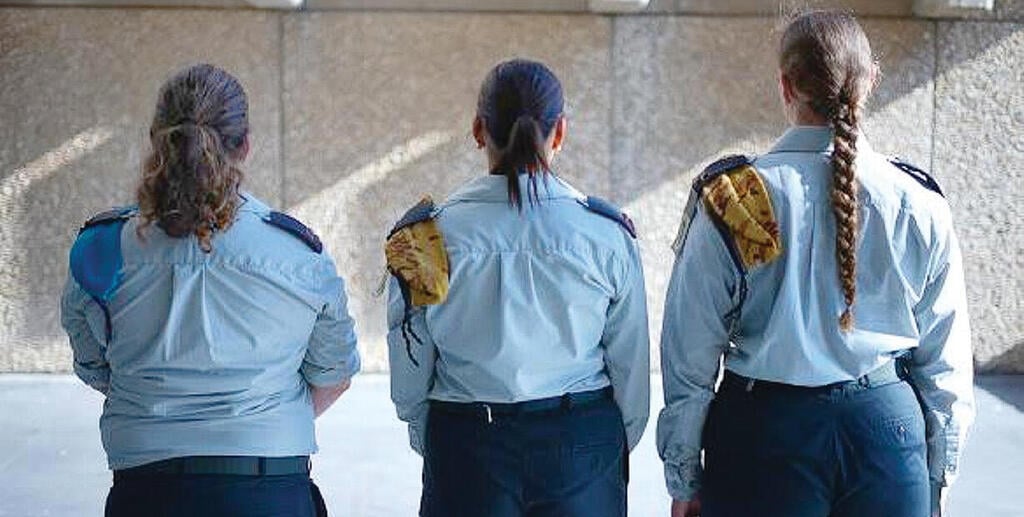
Capt. V. enlisted in November 2021 in a dedicated officer training track as a combat soldier in the Lions of the Jordan Valley Battalion. During officers’ training, she was sent to communities near Gaza and spent a month carrying out security missions in the area.
After completing her role as a platoon commander in the battalion’s training program, she is now serving as commander of a training company and is due to open a new cycle next month.
“We were nearing the end of the corps completion stage in officers’ training when we were sent to Sde Nitzan in the Eshkol Regional Council,” V. recalled. “We began going from house to house to see whether residents were still in their safe rooms. We searched the surrounding area, the orchards and the greenhouses to make sure there were no additional terrorists nearby.
“We stayed there and continued securing the communities for nearly a month. Without a doubt, it was one of the most meaningful months I have experienced. As part of the mission, we also had to evacuate everyone who remained in the communities that had been attacked, and the roads in the south filled with secured convoys.”
After the force completed its mission in the south, V. returned to her post and opened a new training cycle in November 2023. “They understood that despite the war, people still had to be recruited and combat soldiers still had to be trained,” she said.
“It was one of the most intense things imaginable. These were soldiers who had only just enlisted. On the one hand, they had extremely high motivation and wanted to contribute and defend the country. On the other hand, they arrived with mixed feelings because it was a period of uncertainty and there were fears.”
How did you deal with that dissonance?
“We had to explain to them what kind of reality they were entering and what awaited them during their eight months of training. Every stage was designed to make them better and prepare them for the moment when we might really face an attack, from shooting on the range to the ability to hit targets and improve every detail.
“The war was constantly in front of all of us. The soldiers knew very well where they had arrived and, more importantly, where they were going.”
‘There was always a female role model’
As V. advanced along the command track, she encountered many figures who served as examples for her. Most were men, but there was always at least one woman in the background.
“During training, I had an incredible platoon commander,” she said. “Even then, I understood that there was someone to aspire to be. As a combat soldier looking at her commander, I understood that I had somewhere to advance. That was also one of the reasons I wanted to progress in the military, because I realized I could.”
As a commander serving as an example for the younger generation, what do you believe is the right way to integrate women into combat positions?
“They should be assessed professionally and operationally, not through prejudice. Integrating women into combat expands the IDF’s manpower pool and allows women to contribute in meaningful positions. Success depends greatly on proper training, clear standards and maintaining operational fitness.
“Along the way, I have seen women combat soldiers demonstrate leadership, resilience and extremely high operational ability alongside excellent male combat soldiers. Ultimately, what matters is the individual and whether that person is suited to the role, not gender.”
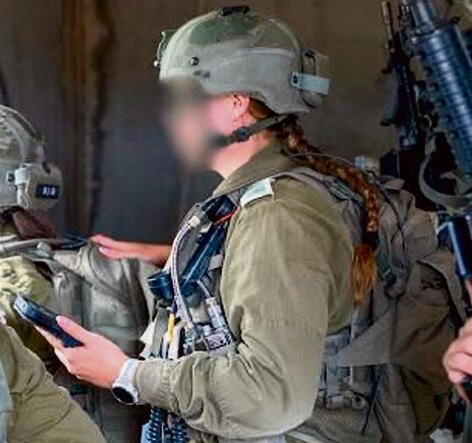
Capt. V.
(Photo: IDF)
‘I wanted to be where I could matter most’
Lt. S., 23, from Kfar Giladi, enlisted in August 2022 and served as a combat soldier in the Artillery Corps’ 334th Battalion. After completing officers’ training, she was assigned as a platoon commander and led the first operational use in Gaza of a new weapon system introduced during the war.
She later advanced along the command track and became commander of an advanced training company at the Shivta training base. “I wanted to be in the place where I felt I was most needed and where I could make the greatest difference,” S. said.
She added that serving during the war was what “made me continue and sign on for more service. It was clear to me that as long as there was a war, I would not feel comfortable being discharged and doing other things. It affected me personally because of home.”
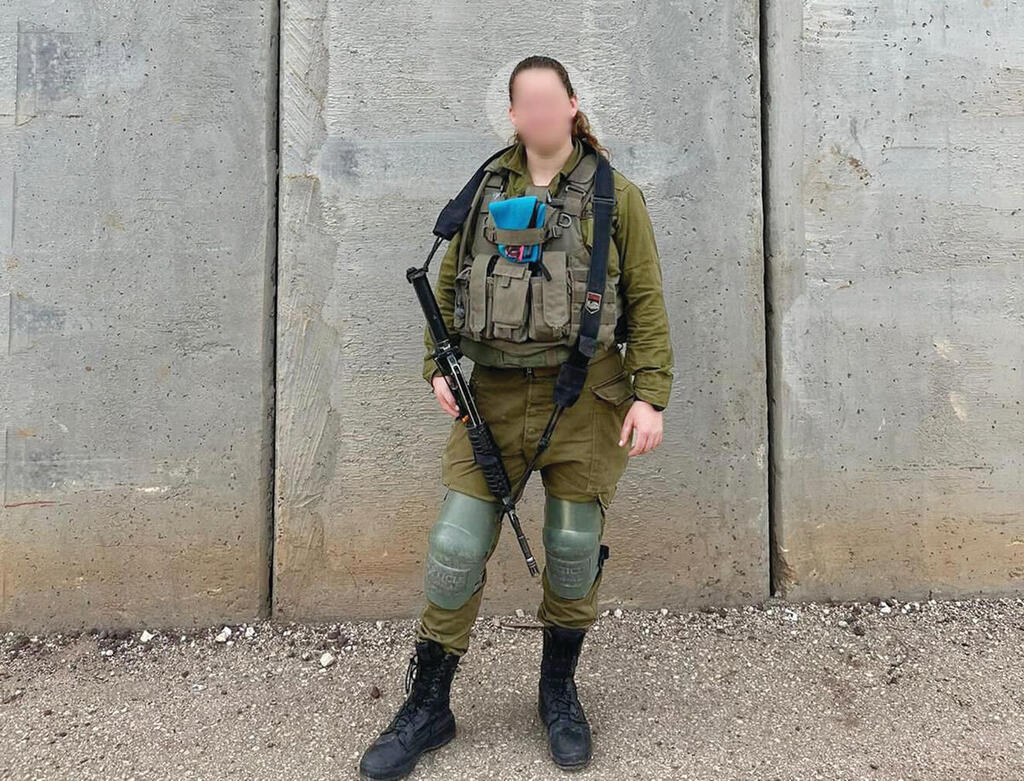
Lt. S.
(Photo: IDF)
Kfar Giladi was evacuated at the beginning of the war. What did that period feel like?
“It was complicated, with mixed emotions. I used it to strengthen the sense of meaning I found in my military service. Despite the security situation, whenever I went home, it was important for me to reach the kibbutz and feel that I was home.”
In the nearly three years since then, residents of northern Israel have endured repeated upheavals. “For me, that period became even more meaningful,” S. said. “For part of it, I served in the north, and as an officer I felt that some residents saw me as someone who represented the military and even expected me to answer questions that I had no way of answering. It was complicated.”
As commander of a mixed force of women and men, S. said integration in the Artillery Corps was working well. “There is nothing I do operationally that I do less well than men, and sometimes I do it better,” she said. “In every role I have held, I have commanded male soldiers as well, and I have never experienced difficulties.
“Even now, despite all the public debate, I do not expect difficulties. More than that, there was enormous anticipation and excitement before the latest training cycle began. This is a new company that has been established, and it is very exciting.”
What are your expectations for the future?
“To return to operational activity. I do not currently have a plan to become a battalion commander, but I am not ruling it out either.”
‘The commanders created a connection to the profession’
Lt. A., 23, from Beersheba, enlisted in March 2022 in Caracal’s “Pereh” tank company. On Oct. 7, she was sent with the company to Kibbutz Holit and fought terrorists who had infiltrated Israel. Last month, she returned to the company as its commander.
“I enlisted in the fourth cycle of Pereh,” she said. “During the screening process for female combat soldiers, I felt it interested me, so I selected it as my first choice. I felt fairly prepared both when I enlisted and during the role itself. Of course I had concerns, but every recruit does.”
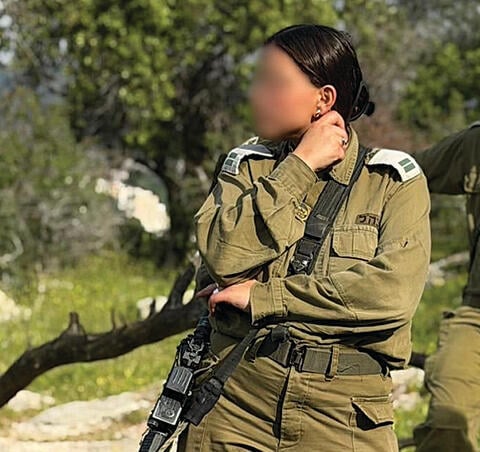
Lt. A.
(Photo: IDF)
She completed her combat training in the company about a year before the war began. “I learned a great deal from the commanders I had, including how important the profession is and how important it is to commit yourself to the process,” she said. “They created interest in the profession itself and made us feel connected to it.”
On Oct. 7, A. and her force were sent to fight terrorists who had infiltrated communities near Gaza.
“We were at the Ketef Nitzana outpost, about 50 kilometers from Kerem Shalom, in what is known as the border triangle,” she said. “Our battalion commander was the first to head out, together with the platoon commander and her team. When we received the order to move from Nitzana toward Kerem Shalom, we took the tank and left. I was the commander.
“We reached Kerem Shalom, linked up with battalion and brigade forces and began fighting along Route 232. Around noon, we received word that terrorists were in Holit and Sufa with hostages. My platoon commander went to Sufa, while I went with the company commander to Holit.
“We fought there until nightfall, while the forces cleared all the homes and evacuated all the residents. Golani reconnaissance troops were with us. They went from house to house while we secured them,” she continued. “At night, we took up positions to ensure no one infiltrated from Gaza. After everything was over, we returned to our sector along the Egyptian border.”
What do you think about the debate over integrating women into maneuvering armored units?
“I understand the complexities surrounding integration within the corps. That is understandable. At the same time, if the women prove themselves, meet the standards and physical requirements and do what is necessary to succeed, then I support it, and there is no reason the pilot program should not work.”
How does it feel now to return and command the company in which you grew as a combat soldier and commander?
“It is extremely exciting. I grew up in this company, and beyond all the roles I held there, it is moving to return as company commander. I am very happy that this is the position I will be serving in.”