

Long before the lion became a symbol of Israel’s 2025 war campaign against Iran in Operation Rising Lion, it had already been etched into the collective imagination of early Zionist culture.
From the legendary figure of Bar-Kokhba to modern Zionist icons like Josef Trumpeldor, Hebrew authors and poets helped elevate the lion into a national symbol—transforming an invented myth into a central tenet of Zionist identity.
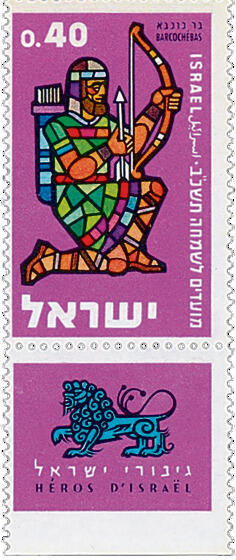
In 1930, the prolific children’s author Levin Kipnis published the poem “Bar-Kokhba” in Gilyones, a journal of the Association of Kindergarten Teachers in Mandatory Palestine.
Set to music by Mordechai Zeira, the song offered a concise, almost cartoonish portrait of Bar-Kokhba as a glowing-eyed, young, heroic leader who fought for freedom and was beloved by his people. At its heart was a dramatic scene: Bar-Kokhba’s battle with a lion—a moment that came to define his image in Israeli popular culture.
But historical evidence for such a fight doesn’t exist. There’s no account of Bar-Kokhba, whose real name was Shimon Bar-Kosiba, ever facing a lion or even being captured by the Romans.
The lion, it turns out, was first introduced in 1840 by a little-known German-Jewish author, Samuel Meyer, in a historical novel for teenagers titled Simon Barcocheba, der Messias-König ("Shimon Bar-Kokhba, the Messiah-King").
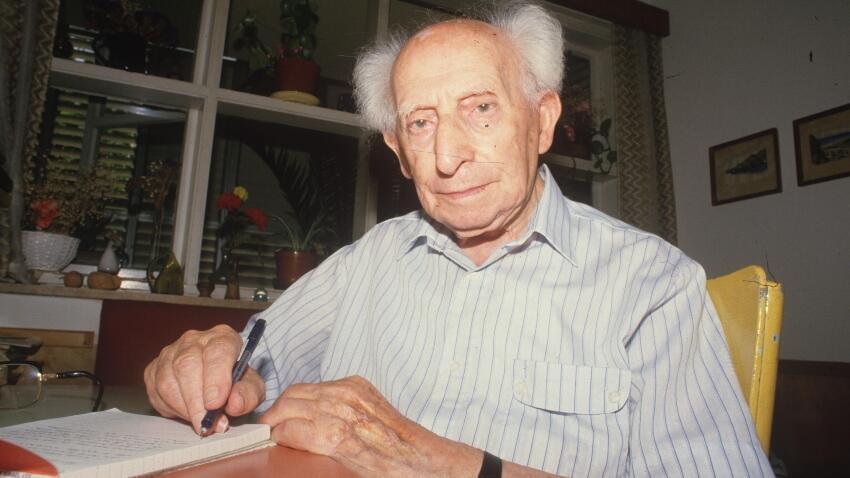
Levin Kipnis
(Photo: Shaul Golan)
In Meyer’s sweeping, fictionalized account, Bar-Kokhba enters a Roman amphitheater unarmed, defeats a raging lion with his bare hands and rides the beast triumphantly out of the arena—securing his mythic stature among Jews and Romans alike.
The novel was part of a broader movement among 19th-century German Jews to create a national Jewish literature in response to their marginalization from German nationalist narratives. Writers used the popular historical novel format to craft stories that connected readers to a glorious Jewish past.
Get the Ynetnews app on your smartphone: Google Play: https://bit.ly/4eJ37pE | Apple App Store: https://bit.ly/3ZL7iNv
Building on this literary foundation, another writer, Kalman Schulman, gave the lion narrative new life. His 1858 Hebrew novel Sefer Harisot Beitar (“The Destruction of Beitar”) retold the Meyer story in rich biblical prose, bringing it to a broader audience. Schulman’s version was widely read and translated and it cemented the image of Bar-Kokhba’s lion fight in Zionist folklore.
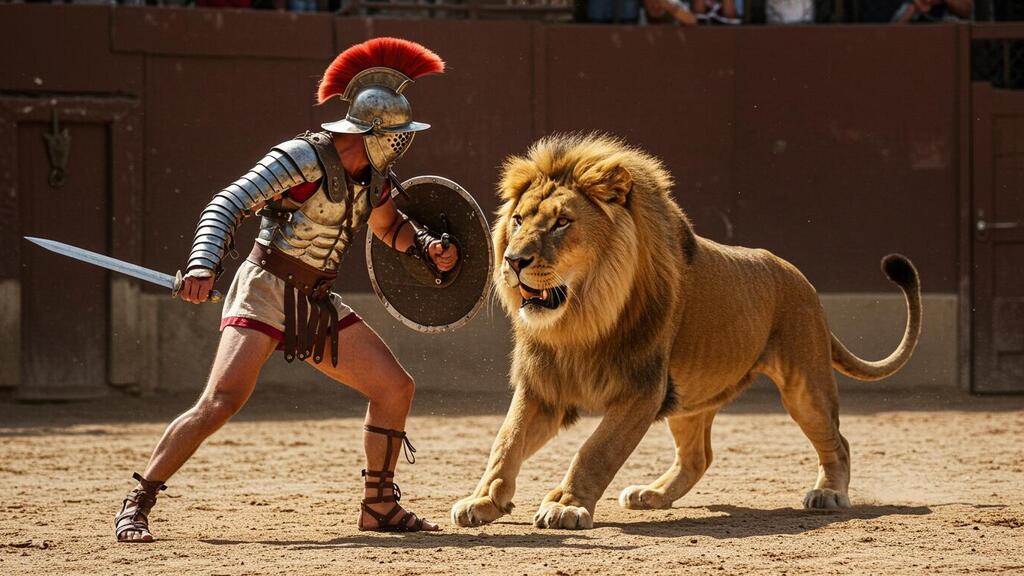
AI-generaed image of a Roman gladiator fighting a lion
(Illutsration: Shutterstock AI)
The motif spread quickly. In 1883, Abraham Goldfaden's Yiddish play "Bar-Kokhba" was a major hit. In 1903, Shaul Tchernichovsky included a brief version of the lion battle in his poem "Beitar."
In 1905, "The Life and Nature", a weekly Hebrew youth journal, published a retelling of Schulman’s novel. By the time Kipnis released his catchy children’s poem in 1930, the image of Bar-Kokhba as a lion-slaying warrior was firmly rooted in Hebrew culture.
But Kipnis didn’t stop there. In a 1943 children’s story published for Tel Hai Memorial Day, he merged the Bar-Kokhba myth with another Zionist hero: Josef Trumpeldor. In the tale, the lion, now roaming the Galilee, searches for a worthy warrior after Bar-Kokhba’s death and finds Trumpeldor, whom he carries into battle—only to turn to stone after Trumpeldor falls.
Through stories like these, Kipnis played a central role in forging a powerful mythos around Bar-Kokhba. Despite lacking any basis in historical sources, the lion fight became one of the most recognizable symbols of Bar-Kokhba in Israeli and Zionist discourse. This illustrates how literature—particularly children’s literature and popular fiction—has shaped national consciousness.
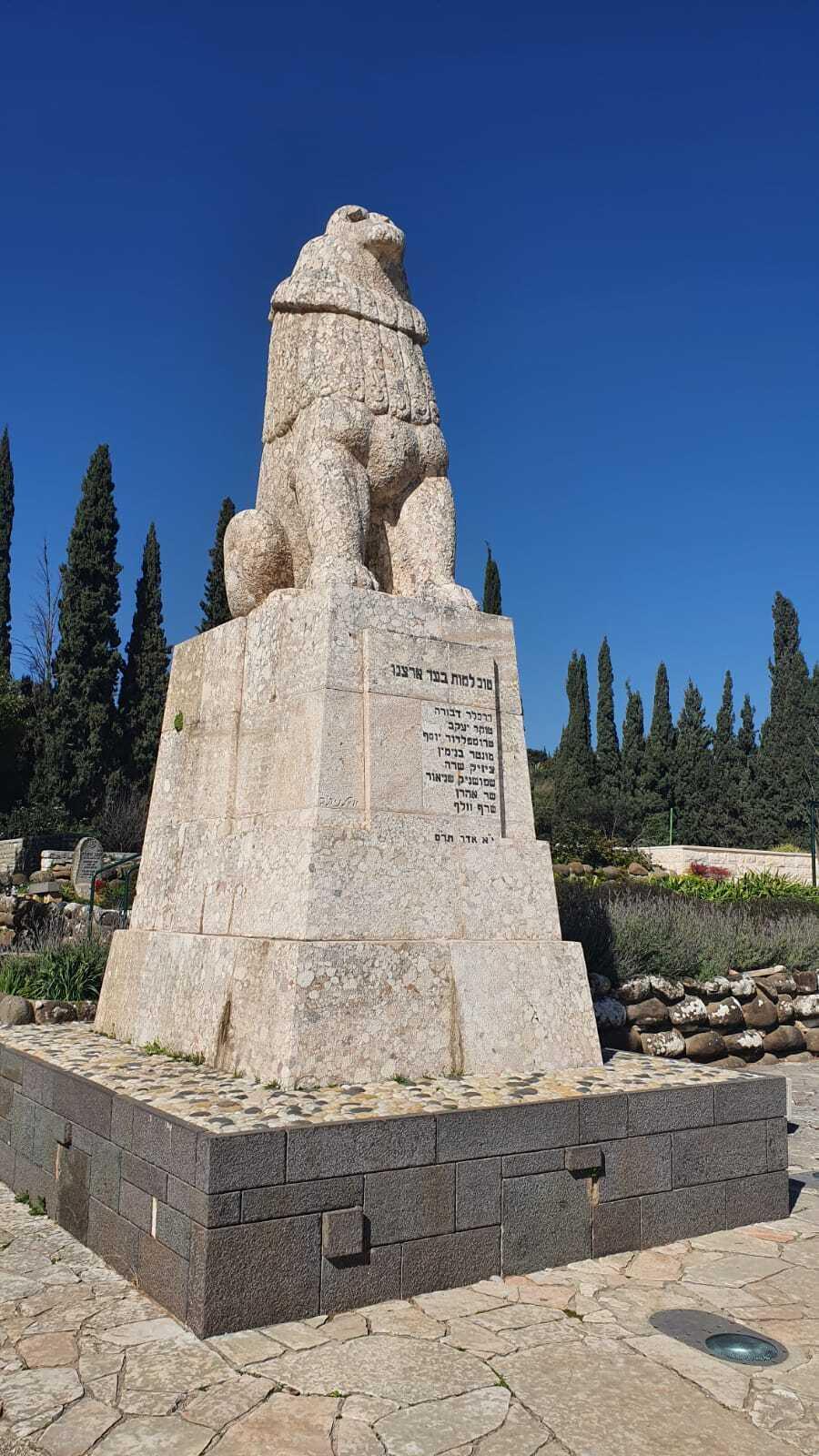
Roaring lion statue in Israel
(Photo: Israel Governement Tourist Corporation)
The transformation of a 19th-century German novel into a foundational story of Zionist heroism reveals a deeper truth about national myths: they’re less about historical accuracy and more about meeting the ideological needs of the present.
Zionism sought to reclaim a continuous Jewish identity rooted in ancient sovereignty and defiance of foreign rule. When historical evidence proved too thin, it invented—or reimagined—stories to fill the gaps.
The roaring lion of Bar-Kokhba, forged in fiction, became not only a national symbol but also a reflection of Zionism’s complex relationship with the Jewish past—at once reclaiming, rewriting and mythologizing it in the past and in modern times.