


In collaboration with Journey to the Horizon
It may be hard to believe, but in Israel, “the day after” the war is beginning to take shape. After two painful years of fighting, a new mission lies ahead for the country’s younger generation — the same one that served and sacrificed on the front lines: to rebuild Israeli society, bridge its internal divides and revitalize the northern and southern border communities.
Throughout the war, young men and women from Israel’s periphery served in the IDF and civic-national service while also caring for their families, many of whom remained in the line of fire. Living under the constant threat of rockets and sirens, they managed to persevere, function and give of themselves for the collective good.
Gallery
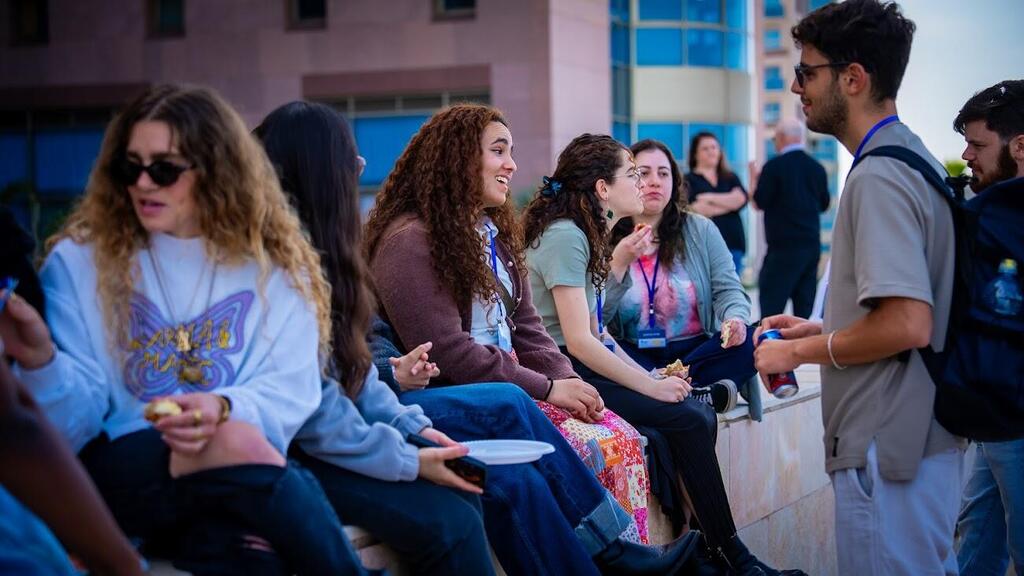
Journey to the Horizon; 'The program gave me a lot of clarity about who I am and what I want'
(Photo: PR)
Three alumni of Journey to the Horizon (Masa El HaOfek) — Rotem Bar Noy from Kiryat Shmona, Chris from Sderot and Aviv Musai from Mabu’im — helped defend Israel’s borders during the war. Today, they say they have found new hope and direction through the chaos, and a renewed belief that Israeli society can be healed from within.
To support young veterans as they transition from military or national service to civilian life, the Journey to the Horizon nonprofit — founded by former Navy commander Vice Admiral (res.) Ram Rutberg and Alan Freeman in cooperation with the Defense Ministry — offers a two-and-a-half-month program providing personal guidance, workshops and practical tools to help participants reflect on their service and build a personal path forward.
'We found out a Hezbollah tunnel shaft was just feet from the school'
Rotem Bar Noy, 21, is a student of special education and psychology at Tel-Hai College. His home sits along the confrontation line in northern Israel. “I’m originally from Kibbutz Kabri, which is just 300 meters beyond the evacuation zone,” he says, referring to the mass evacuation of border communities in the early days of the war. Now living in Kiryat Shmona, he vividly recalls the challenges of daily life during the war. “I started school and stayed with my mom. I’d be in class when a siren went off — I’d run to the shelter while the class continued without me.”
At the same time, Bar Noy was working in an especially demanding role. “I taught at a school for children on the autism spectrum that had to be evacuated because of the war,” he recalls. “We later found out a Hezbollah tunnel shaft was just feet from the school. These children are highly sensitive to noise — the sirens and bombing sounds were terrifying for them. We did daily drills just to help them cope.”
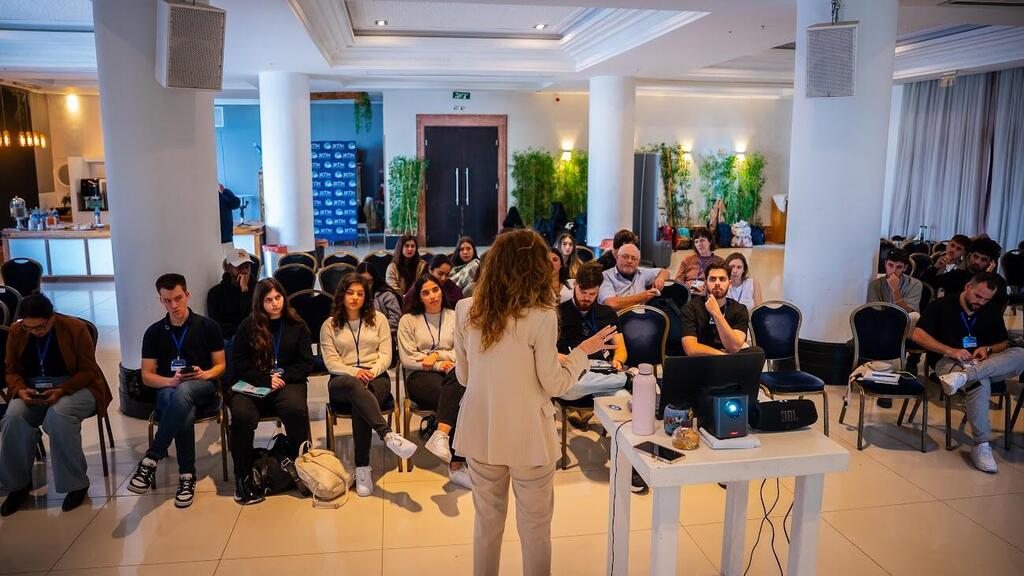
Journey to the Horizon
(Photo: PR)
After his release from military service, Bar Noy joined Journey to the Horizon, where he encountered new opportunities he had never considered, including in the tech sector. “We visited Intel in Jerusalem. I’m not a tech or science person, but I suddenly realized there’s space for everyone in that world.”
“The program gave me a lot of clarity about who I am and what I want, what my values are and the kind of life I want to lead,” he says. One of the most meaningful aspects, he adds, was the bond he formed with other participants. “Thanks to the program, I made lifelong friends — I feel like I’ve known them for ten years. Being in a space where others are just as confused as you are makes that confusion feel okay.”
Today, Bar Noy has a message for the country: “Beyond security, education should be Israel’s top priority,” he says. He also urges greater investment in border communities. “The state needs to help the periphery and our borders grow and thrive. In many ways, that’s the real security of Israeli society.”
'Lone soldiers are not to be pitied'
Christopher Peck, 23, a lone soldier from Sderot, spent his entire military service in combat roles, rising through the ranks to become a platoon commander in the Bardelas Battalion. On October 7, he was at his grandfather’s house in Sderot, where he now lives.
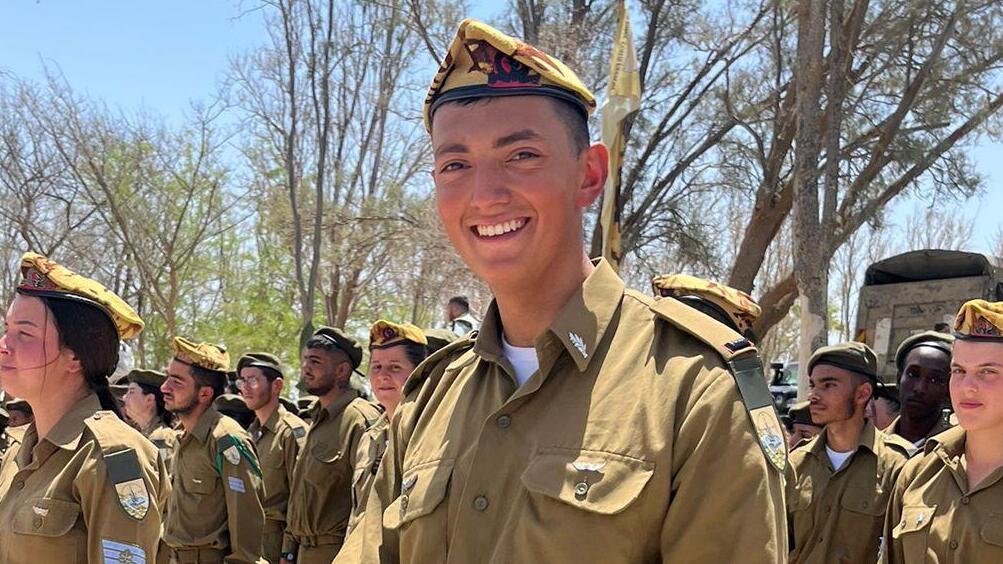
Christopher Peck
(Photo: Courtesy)
“It was total shock,” he recalls. “We didn’t understand what was happening. I’m still processing that day. There was a lot of worry for my family.” He said that during the attack, his grandfather was outside the house and narrowly avoided a face-to-face encounter with a terrorist.
Peck was discharged from the army four months ago, but the psychological toll of the war made it difficult to move forward. “After October 7, I felt this emptiness,” he says. “Something was missing.”
Facing that challenge, Peck transitioned to civilian life and suddenly found himself without a clear framework. For him, the Journey to the Horizon program came at just the right time. “Those first meetings were like a bandage I needed on an open wound,” he says. “Everyone there was from places like Sderot and Netivot — even the staff. We didn’t need to say much because we all shared the same pain. It was exactly the safe space I needed to begin again.”
In that supportive environment, Peck found not only emotional healing but also a new sense of ambition. “That’s exactly what I was looking for — a soft landing into civilian life,” he says. After one meeting with the CEO of a major company, he allowed himself to dream bigger than ever before. “That was the most meaningful moment for me — realizing I can achieve my dreams. I realized I can break through the walls I set for myself. That’s what I want in life — to get into positions of influence and make a difference.”
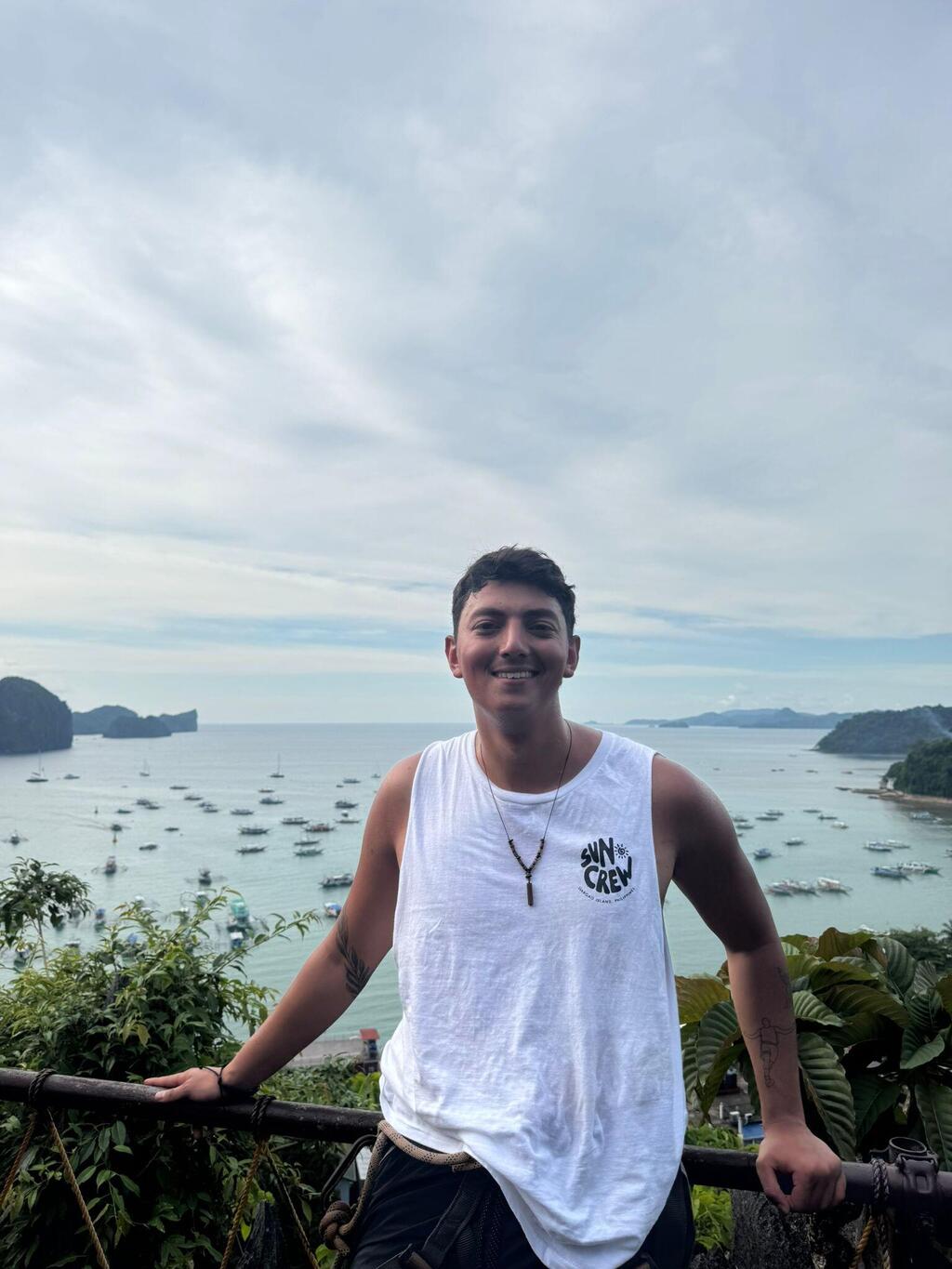
Christopher Peck
(Photo: Courtesy)
Now rebuilding his new life, Peck wants to change public perceptions. “People often view lone soldiers with pity, but that couldn’t be further from the truth,” he says. “If you know a lone soldier, ask how they’re doing, but not out of pity. We’re strong — up to a point. A lot of us won’t ask for help even when we need it.”
'We need to bring opportunity south'
For Aviv Musai, 25, striving for opportunity has been part of her life since childhood. Born in Jerusalem, she moved with her father to southern Israel when the factory he was working at relocated to Moshav Eshel, near Netivot.
By the age of 14, Musai felt a deep urge to realize her potential. Believing that the education system in Israel’s south wasn’t meeting her needs, she chose to enroll in an agricultural boarding school in central Israel.
“I studied biology and theater, and part of our routine was milking cows in the morning,” she recalls. “My mother didn’t love the idea, but I knew that staying in the south wouldn’t open the same doors as studying in the center.” That decision eventually led her to a join a pre-army service year program and a meaningful role in the IDF as a military police investigator.
Journey to the Horizon co-founder Vice Admiral (res.) Ram Rutberg and participant Aviv Musai
(Photo: Courtesy)
Musai joined Journey to the Horizon after completing her military service, at the height of the war. Thanks to the nonprofit’s support, she found the courage to pause and take a step back. Just two weeks after the program ended, she boarded a plane for her long-awaited post-army trip abroad.
“Journey to the Horizon opened the door to a new way of thinking,” she says. “The war period was incredibly hard. After a year at a pre-army service program and three years in the army, I felt I had to travel for myself. Being discharged during wartime is a confusing place to be. This program was a gift for the future.”
One of the boldest decisions Musai made was to turn down a “secure” job offer for a management position — after a conversation with the organization’s co-founder Vice Admiral (res.) Ram Rutberg. “It was the best conversation I’ve ever had,” she recalls. “He told me that life is full of opportunities, and if someone already wants me for a management role, those doors will open again. That gave me the confidence to call my boss and say, ‘I’m choosing myself — I’m going traveling.’ That was a turning point I’ll never forget.”
During the program, Musai underwent a process of self-discovery with her personal coach, Karin Tal. “For the first time, I allowed myself to say out loud what I’m good at, and to be proud of it. To say that I have a positive impact on those around me, that I have strong communication and persuasion skills. It gave me the confidence to name the tools I already had inside me.”
Her connection with Tal, she says emotionally, helped her through difficult times. “My father is an oncology patient, and during the program, he was hospitalized several times. I had plenty of reasons to give up, but she helped me hold on. She gave me quiet confidence, even in the way I spoke to myself. They paired us perfectly, and her openness helped me open up.”
Musai’s larger mission is to create opportunities for young people in Israel’s periphery, and she hopes to inspire others to dream big. “I’d love to help develop these regions so it’s no longer ‘center versus periphery.’ I don’t know if I’ll end up living near the Gaza border, but we need to bring opportunities from the center to the south. It should be obvious that there’s high-tech in Kiryat Shmona. If we build strong industry that provides people with dignified livelihoods, that’s the only real way to strengthen and settle these places.”
In collaboration with Journey to the Horizon