

A seemingly insignificant fashion choice placed Orel Ben Haim, Arbel Mizrahi, Lee Pony and Idan Zauber in the pantheon of Israeli crime.
The offense they committed together in January 2023 became known as the “pink suitcase affair,” a cute name for the smuggling of 12 kilograms of cocaine and 2.2 kilograms of ketamine, worth more than 2 million shekels, into Israel.

“I thought that doing the opposite of what people would expect would attract less attention,” Mizrahi says, explaining the choice of the sugary color that matched the couriers’ innocent appearance but stood in stark contrast to the seriousness of the offense, which sparked an enormous public and media storm.
The case officially came to an end last month when Ben Haim, who received the heaviest sentence of the four, 34 months in prison, completed her sentence. She and Mizrahi, who finished serving her own sentence last September, decided it was time to speak.
“Anyone who does not know the story from the inside might think we were four complete idiots,” Mizrahi says. “And maybe we were four complete idiots, okay? But we also had life circumstances that led to this happening. We want to take responsibility for what we did and also take responsibility for our story. That matters.”
Ben Haim: “I think it is only fair that we also get to say what we have to say.”
Do you remember the image of you that appeared in the media?
Mizrahi: “Blurred faces and breasts. It was very sexist and very cheap.”
Ben Haim: “It was so humiliating.”
Mizrahi: “The intelligence officer took all four of us into a room and showed us both an article and the parody on ‘Eretz Nehederet.’ You have to understand, we had not yet processed that we were in prison. We were going through drug withdrawal after a period of daily use. It was very, very difficult. Our world collapsed at that moment. I felt lower than I had ever felt. Suddenly my face was all over television, and not for anything to be proud of. It was a massive slap in the face.”
Would 22-year-old men smuggling large quantities of drugs have been covered differently?
Mizrahi: “Possibly.”
Ben Haim: “What do you mean, possibly? The day before us, five men and two women were caught with 40 liters of a date-rape drug. They talked about it for a minute.”
So why did your story become so big?
Mizrahi: “I think it was the dissonance between what we showed on the outside, a girls’ vacation in Thailand, parties and fun, and the very serious offense.”
Ben Haim: “Had we been caught today, no one would care. Israel has not been boring since January 2023.”
× × ×
The story has all the ingredients of a thriller: a “girl squad” with no criminal records and Instagram feeds filled with vacations, tan lines and parties takes youthful hubris one step too far by agreeing to smuggle dangerous drugs from Berlin to Israel, exchanging beach cocktails for the canteen at Neve Tirza women’s prison.
Filmmakers Mor Loushy and Daniel Sivan seized on the story, and in the new documentary series “Pink Suitcases,” airing on yes Doco and yes VOD, Mizrahi and Ben Haim speak publicly for the first time. Pony and Zauber chose not to participate.
“We lived a life of partying, with no boundaries and no responsibility,” Mizrahi admits. “I had started a jewelry design business in Tel Aviv. I was incredibly self-absorbed. I trampled over everyone around me in order to be loved by people who were not good for me.”
Ben Haim: “We had mutual interests. I liked her jewelry, and I spent a lot of time in Tel Aviv. There was always a scene at her place, so I would go hang out there. It was not out of love.”
Mizrahi: “It was self-serving. There were people at my place. There were lines of ketamine.”
Ben Haim: “We were 22 or 23, and someone had a great apartment in Tel Aviv and provided everything generously. That is very convenient at that age. Everyone came to her.”
Mizrahi: “For me, it came from being unable to be alone. I knew people were exploiting me and did not really love me, and I let it happen because I wanted to feel that I belonged. I always had something to offer, and when I did not, I made sure I had something to offer. That was a central pattern in my life.”
Mizrahi: “No one likes a snitch anywhere.”
Where did the money for everyone’s drugs come from?
Mizrahi: “I earned money from the jewelry business, and I also asked my parents for money.”
Was the drug use daily?
Mizrahi: “Yes, ketamine. I had an ex who got me deeply into it. It was everywhere, and anyone who did not use had to have a very good reason to be part of my life. Do you understand the mindset? I drew very negative people into my surroundings.”
Were you also using drugs regularly, Orel?
Ben Haim: “My relationship with drugs is a little complicated. I started with Nice Guy, which was fashionable at the time and all my friends were using. I got out of it, then returned to party drugs and LSD, and then the police caught me and I went into rehabilitation.
“I completed three months of rehab and stayed clean for a year. At 20, after the COVID period, I returned to drugs. I felt the world was simply too much for me. I could not handle all the pressure called work, friends and succeeding in life. I was a cook in a restaurant. I was constantly under emotional stress, dealing with failure and disappointment.”
And where was your environment during all those years?
Ben Haim: “They could see I was troubled. They could see I was not doing well. But it is very difficult to approach me when I have a problem.”
And what did your parents know about you, Arbel?
Mizrahi: “Nothing. I wore masks around them. I always made a point of saying that, yes, I went to parties and, yes, I was around people who used drugs, but that I was light-years away from it.
“They believed me and trusted me. I had a good childhood. There was money at home. I lacked nothing, and there was love too. I simply did not want that love. I wanted the love of people outside. I wanted social approval, and I never received it.”
Ben Haim: “My parents immigrated from France with my three siblings, and I was born a year later. They were busy with immigration and financial pressure. It is not that we were poor, but they were parents starting over.
“My mother took me to France a lot because she was studying, and at the same time they became religious. There was a lot of half-and-half. We attended a religious school because it was Chabad, and in France Chabad meant Jewish. At home we were one thing, and at school we were something completely different.
“I did not understand where I belonged. Was I religious or not? Was I French? Were we Israeli? I was the youngest and did not feel connected to my older siblings, while my parents were busy building themselves. There was some confusion, but I am not angry. I can understand it.”
When did you go from drug users to couriers?
Mizrahi: “Someone approached me at a nature party. That is where you get offers like that.”
Ben Haim: “There are lots of offers.”
Mizrahi: “I was recently at a birthday party, and someone told me he had just received an offer. I was horrified. I told him, ‘Do not even think about it. It is not worth the price.’”
What made you agree?
Mizrahi: “The thrill of doing something forbidden.”
Ben Haim: “I had been working since I was 14. I felt I worked very hard. I was working in kitchens, and my body was already worn down, while I saw people around me making easy money. There were people around us who had done it and succeeded, so it was hard to look at them and say, ‘Fine, I will keep working hard.’ From the outside, it looked tempting. I asked Arbel. I told her I wanted to do it too.”
Mizrahi: “I am so glad she said that now.”
Why?
Mizrahi: “Because they made me out to be the ‘head of the snake.’ Let us be honest, the girls begged. They sent messages saying, ‘Please, you have to.’”
How much were you offered?
Mizrahi: “Thirty thousand shekels each.”
Ben Haim: “Nothing is worth that money.”
What makes women aged 22 or 23 say, ‘I am going to become a drug courier and risk my future for 30,000 shekels’?
Mizrahi: “You do not think you will get caught. You do not take that into account. So you say, ‘Why not travel abroad and get 30,000 shekels?’ You see people doing it for years. You see them with lots of designer brands, lots of drugs and lots of money. Everything we wanted.”
But you had money. What were you missing?
Mizrahi: “Status.”
Ben Haim: “I told myself I would not be like my parents, breaking their backs and working themselves to death for a salary. I wanted not to depend on them. It sounds crazy, but I wanted them to be proud that I was not taking money from them.
“We grow up seeing people sitting at home and making money. It is very triggering to work hard in a kitchen, finish a shift smelling like onions, with filthy fingernails, and then look at your bank account and see 7,000 shekels.”
People would tell you to get a degree, then another degree, and earn money the traditional way.
Mizrahi: “They are right. It simply was not in our heads in any way.”
Ben Haim: “I agree that the hard way is far more respected today than making easy money. There is no doubt. I am not blaming anyone or making excuses, but you know, it is the butterfly effect.”
According to the indictment, Mizrahi was recruited by a drug dealer whom the police and prosecution have still not identified. He offered her the job, and she booked the tickets to Berlin for her friends and was responsible for distributing the payment.
All four flew to Berlin on January 12. Two days later, Mizrahi and Ben Haim collected the drugs, which were concealed inside two PlayStation consoles, shampoo bottles and Dead Sea product packages, among other items.
Mizrahi: “The other two girls went to a museum, and we went to an apartment where the products were waiting in bags.”
Ben Haim: “We took everything, and we did not even put on gloves. We are not even worthy of a crime series.”
Mizrahi: “We did not know it was cocaine. We thought it was ketamine. That is what we were told. We did not ask and did not know how much there was. We got into a taxi with everything and divided it among the suitcases. The return was planned on two separate flights. Idan and Orel took the 7 a.m. flight, and Lee and I took the 1 p.m. flight.”
From that point, everything began to unravel. “At customs, they told us to put the suitcases through the scanner,” Ben Haim recalls. “My suitcase came off the conveyor belt, and I heard the customs officers stop Idan’s suitcase.
“I looked at her and walked away. Someone I was dating was waiting outside. He was not involved. He had simply come to pick me up. I told him, ‘Drive, drive.’ I left the suitcase at Arbel’s apartment. I had completed the mission.”
Were you terrified?
Ben Haim: “I was detached. I wanted to believe that, just as I had managed to get through, Idan had managed too. She called me, and we spoke.”
Mizrahi: “She called Orel after they arrested her. In the meantime, they traced Orel’s phone.”
Ben Haim: “They waited for me outside the guy’s house. Ten police officers arrested me in the street in Ramat Gan. They handcuffed my hands and feet, entered his house and arrested him too because they thought he was involved. It was a whole different kind of scene.”
Mizrahi: “Before they arrested her, Orel called me to say Idan had been arrested. We were in duty-free. We had already checked the suitcases onto the plane and were waiting to go to the gate. During that time, I updated the person above me. It began to sink in that it would happen to me too, because I could not leave Berlin and abandon the suitcases.
“Lee and I could not close our eyes during the entire flight because of the anxiety. We held hands. As soon as we left the gate in Israel, Lee said to me, ‘There is the detective.’ We walked a little farther, and they approached us. They asked for our passports and phones.
“I was detached. They already knew what to look for and what they would find. I was so apathetic that I simply said, ‘I am hungry. Bring me a sandwich.’ They learned that the girls were supposed to come to my apartment later and leave the drugs there.
“I wanted to protect Orel. I spoke to the lawyer they brought me that day and asked him to make sure the things she had left at my apartment were removed, along with my dog. I stalled. I said I needed to go to the bathroom because I wanted to give them time to take everything out. The second we arrived, my cousin walked out with my dog and a bag containing the suitcase. Had we arrived one minute later, they would have found nothing.”
Ben Haim: “One more minute in the bathroom, and I would not have been arrested.”
Mizrahi: “Then my mother arrived from Kiryat Ono. She saw me getting into the police van and shouted, ‘Arbeli, what did I ever deny you?’ That broke me. That was when I understood I had hurt people other than myself.”
How do you think they found out about you?
Mizrahi: “A combination of intelligence and stupidity.”
Ben Haim: “Everything was in our WhatsApp messages.”
To this day, neither the police nor the prosecution knows who recruited you, correct?
Both: “Correct.”
Were you pressured to identify him?
Mizrahi: “Yes, with a promise that our sentences would be reduced.”
What made you remain silent?
Mizrahi: “Understanding that it was all bullshit.”
Maybe you were afraid.
Mizrahi: “No. He is not frightening at all.”
Ben Haim: “The police can do a better job.”
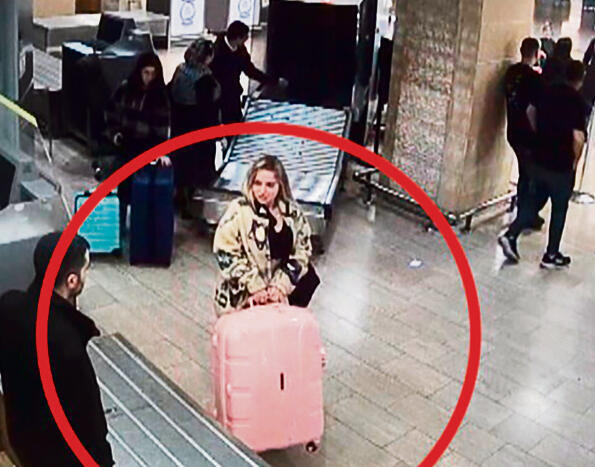
Moments before they were captured
On the one hand, you had no criminal background, and you made mistakes proving you were not experienced criminals, such as discussing the plan on WhatsApp and agreeing to relatively low payment. On the other hand, your silence resembles that of people experienced in crime.
Ben Haim: “Because it is all talk. There is no real protection. Then you are screwed as a snitch, screwed with him, screwed socially and screwed in prison. What do you gain?”
Mizrahi: “No one likes a snitch anywhere.”
Are you angry with him?
Ben Haim: “Yes. He paid no price.”
Did he contact you?
Mizrahi: “We received nothing, if that is what you are asking. Nothing for the suffering, no money, no phone call.”
Ben Haim: “He misled us. He lied to us. He exploited four young women with very little life experience, certainly no experience in crime or the criminal world. It was disgusting, rotten exploitation disguised as a good friend, someone who listens, cares, knows things and promises to stand behind you if anything happens.
“We kept our part of the supposed agreement not to speak, and in the end we were hit from every direction. We were completely screwed, exploited from every direction and punished from every direction.”
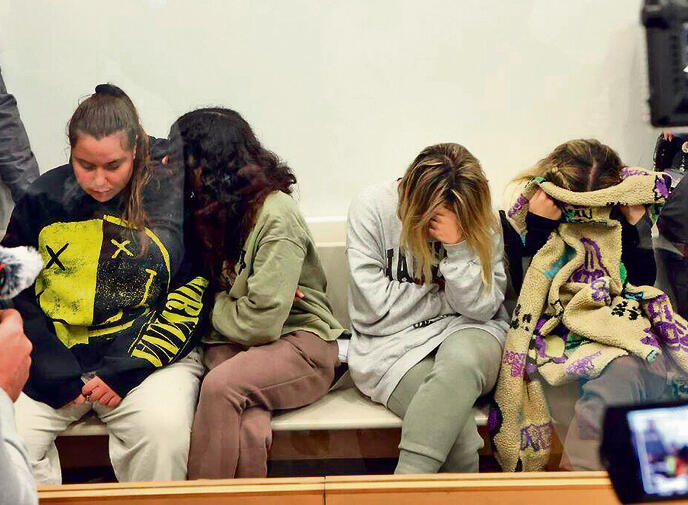
The four women at court
× × ×
Lee Pony and Idan Zauber were sentenced to community service and spent time in rehabilitation programs. Ben Haim was sentenced to 34 months in prison, while Mizrahi received 22 months. They paid dearly for that bad decision.
“I lost three years,” Ben Haim admits. “Relationships were destroyed, and what hurts most is the lost time. I missed three years with my grandparents, who became much older. That is where the pain really shows itself, in the moments and experiences I was not part of, whether weddings, difficult events or not being able to hug my parents in hard moments.”
Mizrahi: “There is a lot of guilt. My mother went through a very difficult period when it happened, and I could not be beside her. On October 7, we were in rehabilitation frameworks. I was at Malkishua, and Orel was in Haifa.
“I learned that friends of mine had been murdered and abducted at the Nova festival: Shani Louk, Yonatan Azulay, Matan Lior, and Michael and Osher Vaknin. They were all close friends of mine. Eliya Cohen, who was abducted, is also a very good friend. Had we not been arrested, we would have been at Nova. So I feel prison saved us from death.”

'Prison saved us from death'
(Photo: Ilya Melnikov)
Ben Haim: “It was extremely difficult. They would not let me see the list at all because they did not want me to lose control, and I did lose control. I did not know who was dead or who had been abducted. These were close friends, and I completely fell apart.”
Did you speak with Eliya?
Mizrahi: “Of course. I also saw him in Thailand. We were both happy, because he knew I had been arrested, and I knew he had been abducted.”
And all of this happened before you even dealt with prison itself.
Mizrahi: “Yes, with women I felt I had nothing in common with, each convicted of something more frightening than the next.”
Did you know Marie Pizem, who was convicted of soliciting the murder of her young daughter, Rose
Ben Haim: “Yes. I did not like her as a person. I spoke to her and ate lunch with her.”
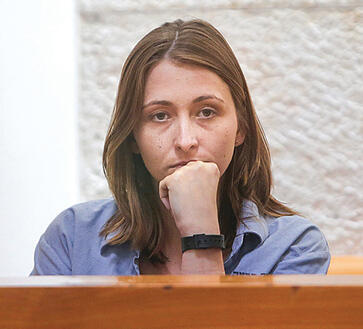
Marie Pizem
People say she has serious status inside Neve Tirza.
Mizrahi: “That is not true. She has no status. No one has status. Listen, you also see the person behind the act there. That does not mean we justify the act in any way.”
Ben Haim: “Compassion emerges because you see a broken person. I heard screams from women crying out over what they had done that will stay with me. You understand that people go through extremely difficult things, that some people were born victims of terrible lives. They reached prison because they went through one thing after another, and then they continue suffering from beginning to end.
“People make very serious mistakes. But you have to look at them with compassion. That is something you learn only there.”
Do prisoners ask one another about their crimes?
Mizrahi: “I always asked, ‘Why did you do it?’ I understood you were not supposed to ask, that it was not considered okay. I asked anyway because I am curious and have no shame. Many answered me and even showed me pictures of the children they murdered.”
God. Is that someone you can then sit with for lunch?
Mizrahi: “Yes. By then it is already forgotten.”
Ben Haim: “It comes up in moments of anger: ‘That murderer.’”
Were there moments when you asked yourselves, what are we doing among these women?
Ben Haim: “Every hour.”
Mizrahi: “It was always there. Why do I have to ask a guard for tweezers because I am not allowed to possess tweezers?”
How do you maintain your femininity there?
Ben Haim: “You invent things. You take the pointed end of a mascara applicator and turn it into eyeliner. Sheet fasteners can become hair ties.”
Mizrahi: “There are no hair ties in the canteen. You make hair-removal wax from sugar and lemon on the stove. Carmel Mauda did our upper lips and eyebrows.”
Seriously?
Mizrahi: “She does an amazing job, with thread.”
Ben Haim: “It is a shame she did not work in that field. It would have saved everyone a lot of suffering. What a cruel path she chose. Such a wrong turn.”
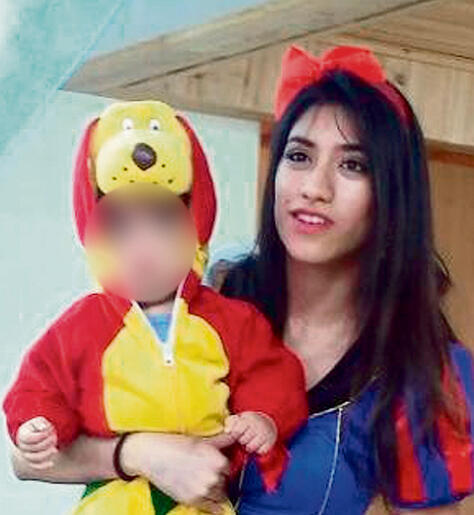
Carmel Mauda, a daycare manager convicted of child abuse
Mizrahi: “She told us the entire story.”
And how do you view your own story? Did your lives also lead you to do what you did?
Mizrahi: “Our susceptibility to influence led us to do it.”
Ben Haim: “I have a lot of compassion for myself. I blamed myself for a long time. For two years, I kept saying, ‘What an idiot. How did I do this?’ It did not move me forward in any way.”
Do couriers have a different status in prison?
Ben Haim: “Yes. The guards looked at us differently. In the end, about 50% of the women in prison have psychiatric problems.”
Mizrahi: “I managed the staff dining room. That is not something they would give to a murderer.”
Did you experience dangerous moments?
Ben Haim: “There are dangerous women, but we did not experience it personally.”
Mizrahi: “For example, one woman slashed another woman’s face because she thought she had killed her cat.”
What has life been like since your release?
Mizrahi: “A life without drugs. It was not easy at first, but I think I adapted well, and I feel amazing. I was afraid I would no longer have anything to offer, but I rediscovered myself, both in rehab and in prison.
“On the day I was released from Neve Tirza, the prison commander asked me, ‘What did you learn about yourself?’ I told her, ‘That not everyone has to love me.’ I also returned to designing jewelry. I have an online store and a studio at home.”
What about parties?
Mizrahi: “I did go to parties. I wanted to see whether I could truly enjoy myself without drugs, and I could. But it is no longer what my life revolves around.”
When you go on a date, do you tell them about your past?
Mizrahi: “It is the first thing I tell them, and the reaction is not always easy.”
Do people recognize you?
Mizrahi: “I worked at a café, and someone came up and asked, ‘Are you the one from the case?’ while I was in the middle of heating his almond croissant.”
At least he did not ask you to arrange something for him, though that would also fit Israeli tact.
Mizrahi: “That happened too. In prison, they kept asking us, ‘What, you did not bring anything?’”
And how are things for you, Orel?
Ben Haim: “Wow, lots of new things. I enrolled in soundtrack studies. I have a boyfriend whom I met through Arbel. There is a desire to make up for lost time, but life is hard. I imagined that once I finished with all this, I would immediately fly somewhere, but there is no money for travel because starting over costs so much. So we go to Sinai.”
What did the experience do to your family dynamic?
Ben Haim: “We became much closer as a family. It was hard. My parents are completely straight. This had nothing to do with their world.
“On one hand, it brought us closer. On the other, my mother can now go several days without calling me. They became used to me not being around.”
Mizrahi: “I had no real relationship with my parents before. It was basically, ‘Dad, money.’ Today it is completely different. I share personal things with them and consult them. No one understands me better than my mother, and she accepts me. My siblings carry resentment toward me and my parents. They tell them, ‘How did you not see it?’”
Did you ever think about the potential consequences of your actions? Hard drugs destroy lives and families.
Ben Haim: “At the time, we were at the height of our addictions. When you are inside the drug cycle, you do not think about its consequences. You do not think about the people harmed, such as teenagers and people with addictions. You see things differently. It is normalized for you. If you want drugs, there are people who bring them. So no, you do not think about the consequences.”
Back to January 2023, just before you agreed to the dubious deal. What would the women you are today tell the women you were then?
Ben Haim: “Would you do it again, Arbel?”
Mizrahi: “Are you serious?”
Ben Haim: “I am genuinely asking.”
Mizrahi: “I would very much hope to reach where I am today without going through that. I do not use drugs today. I have a good relationship with my family. But I went through very difficult things in prison. On the other hand, I do not know how much I want her back, the person I used to be.”
Ben Haim: “That is why I asked. Anything I would tell myself would change the entire picture. The question is whether I truly want to change the picture.”
What do you understand differently today?
Ben Haim: “That what you see on the outside is not always what is happening inside. Even the most broken person may have a lot to give.”
Mizrahi: “Everything about us looked pink and beautiful, but inside we were rotting. We needed help and did not know how to ask for it.”
And now? What are your plans for the future?
Ben Haim: “I want to succeed. I want to become an exceptional person and have a positive impact on people, not an influencer with a discount code, but someone who influences through actions.”
Mizrahi: “I am fine with a discount code. But who would give us one?”
Ben Haim: “By the way, remember that Berry Sakharof was also in prison.”
Mizrahi: “Look it up on Wikipedia. He served eight months after being caught with cocaine at Ben Gurion Airport.”