

There is something almost unsettling about the way Hollywood has managed to turn 60 into an aesthetic brand. At a certain point in the digital age, the eye no longer knows whether it’s looking at reality, a simulation, a lab-engineered product or an older woman who appears to be a refreshed version of her 28-year-old self. The elite absorbed this truth long ago and turned it into a standard.
Elizabeth Hurley, 60, poses on the beach in a flawless bikini and offers tips for perfect lighting. Demi Moore, 63, wears bikinis regularly and leaves her daughters in the dust (sorry, Rumer). Brooke Shields, 60, returns to swimwear as if age were merely a suggestion. Kathy Griffin, 65, uses her feed to show that you can “age” gracefully after a third facelift and a striking figure. And Kris Jenner? She marked 70 with a face that signals a future where the calendar is not a guideline but a fiction.


(Photo: Instagram)
It is stunning. It inspires admiration. It is also the kind of phenomenon that creates deep cultural dissonance. Is this women’s empowerment or a new version of endless aesthetic obligation? Has age 60 become a battleground for ideology, technology and feminism? Will we truly get to rest, as a wise Chinese woman once said, only in the grave?
The growing wave of bikini photos from women in later life sends a message: age may be just a number, but it takes higher numbers in your bank account to meet visual expectations once reserved for the few.

(Photo: Instagram)
The moment a 60-year-old looks like a lost episode of “Baywatch” is not an anecdote but the result of a full aesthetic industry that has undergone such a dramatic technological shift over the past two decades that the impossible is now routine, available in a mall clinic. Treatments once limited to wealthy stars with personal access to Beverly Hills super-doctors have become basic components in a maintenance routine now offered to the broader public. These are no longer extraordinary acts but the final links in a chain of procedures so common it is hard to imagine the era before them.
As technology improves, prices drop, and when prices drop, norms rise. What was once a privilege of the top economic tier gradually becomes something everyone is expected at least to consider. Aesthetic technology wrapped itself in clean, medical, almost neutral language, erasing the line between what is possible and what is appropriate.

Celebrating her birthday in a bikini; Kathy Griffin
(Photo: YouTube screenshot)
Ice baths, spray tans, soft lasers, medical ultrasound, advanced acids and filler injections have become so accessible that even those who never wanted them find themselves facing a new field of force where avoiding them is no longer a neutral stance but a choice that demands justification.
At the same time, a different phenomenon has emerged that seemed as though it would shed a more liberating light on this reality. Women over 40 are finally receiving professional and cultural recognition unseen in Hollywood’s history. Michelle Yeoh won an Oscar at 60, and Jamie Lee Curtis at 61. Nicole Kidman, Viola Davis, Cate Blanchett, Jennifer Coolidge and many others are busier than ever. They appear in complex roles that require depth and years, and they perform them at their peak. Hollywood seems finally to understand that the most interesting faces are not necessarily 20-year-old ones. Mature women are suddenly not a “surprising option” or a casting fig leaf but a legitimate part of center stage.
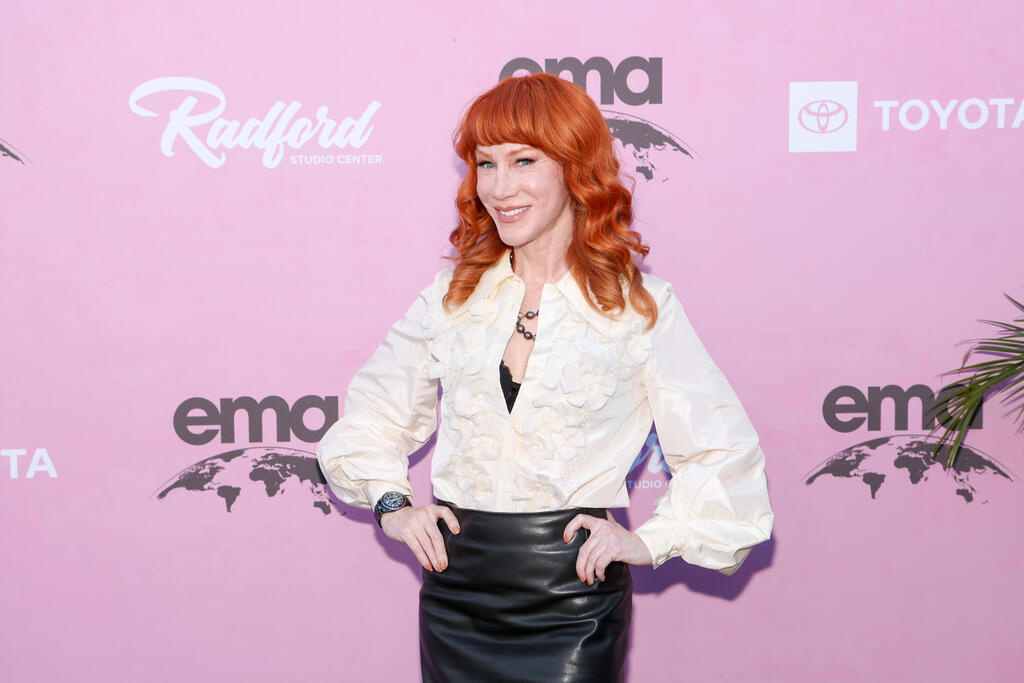
Kathy Griffin
(Photo: Jesse Grant/Getty Images)
Yet this achievement comes with a strange package. The modern image of a “successful woman at 50 or 60” is often an image expected to be imprinted on a body that refuses to show the marks of age. If the demand to look good once ended somewhere in mid-life, today it stretches across an entire lifetime.
The victory, seemingly, is that the social definition of beauty has expanded. The issue is that it has expanded at the expense of everything age is supposed to bring, especially a healthy indifference toward constricting things like bras, heels, thongs and other joy-blocking accessories. It is hard not to ask whether this is truly empowerment or simply a new aesthetic standard that happens to replace the old one.
Is this what we meant when we talked about a world where women can do anything? On one hand, it is remarkable to see older women hold cultural and industrial power while looking incredible in swimwear. On the other, the demand that they resemble upgraded versions of their younger selves weakens that very power.
A woman of 60 who looks like her 30-year-old self is not only a technological triumph but evidence of a system that struggles to allow women simply to exist outside the realm of the gaze. The model is not disappearing, it is merely changing shape.

Demi Moore
(Photo: Instagram)
The idea that feminism is meant to protect every female choice, including aesthetic ones, sounds right in theory. But every choice has a context. The decision to enter an intensive treatment regimen to freeze age does not occur in a vacuum but within a marketing, cultural, consumer and medical system that shapes the image of what is considered finished and correct.
Choosing to avoid external intervention in one’s physical appearance becomes a move that requires explanation, almost like a deviation. And while many will argue that the choice is still free, the space in which that choice is made is growing more and more crowded.
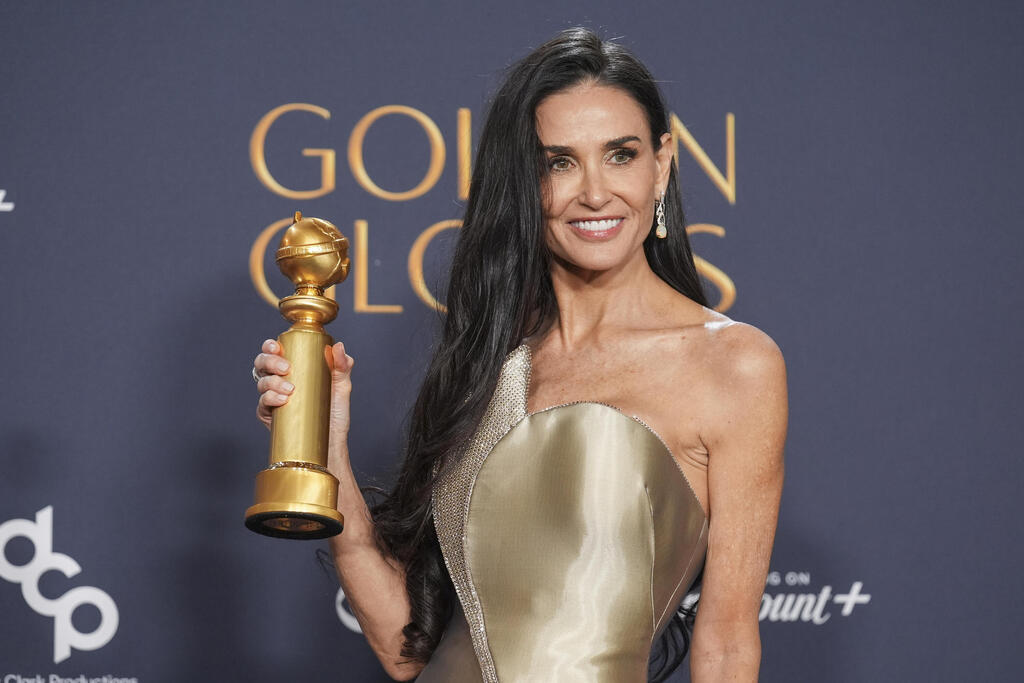
Demi Moore with the Golden Globe she received for 'The Substance'
(Photo: Chris Pizzello/Invision/AP)
This is where the still unresolved legacy of the Me Too movement enters. Only a few years ago, it seemed that the conversation around women in the entertainment industry was about to fundamentally change. Women were driving the narrative, forcing the power structure to look at itself anew, opening new roles, creating dramas, leading productions. Margot Robbie became a prime example of an actor who does not wait for a role but creates it. There was a sense that we were heading into an era in which the gaze would stop being one-directional and women would be able to set the terms.
As always, reality responds to major shifts with subtle counter-movements. In the very place where the conversation about power relations was supposed to deepen, an endless conversation about appearance seeped back in. About how beautiful she is at 60, how she kept herself up, what her secret is, what she has or has not done.
A struggle that began with the right to say “no” turned almost imperceptibly into a struggle over the right to say “yes.” But even a woman who wants to say “yes” cannot pay those sums when pay gaps and other cultural inequalities between men and women — and between the wealthy and the working class — still stand firm. Does being free of Botox and a hot bikini body at retirement age mean looking poor? Not advanced? A simple woman who achieved nothing?
The most troubling question of all is what happens in the moment we see a 60- or 70-year-old woman in a bikini and feel genuine admiration. It is hard to ignore the fact that an entire system of images, trends, examples and market forces is constantly convincing her (and us) what a successful choice is supposed to look like. The model has changed, but the mechanism behind it has not.
One woman’s aesthetic achievement becomes a general expectation, the expectation becomes a project, the project becomes a norm. Even someone with no intention of resembling it will feel its implicit pressure. This is such a deep and unmistakable imprint of the male gaze that, with all due respect to Harvey Weinstein’s imprisonment and Gen Z’s many woke reactions, it will take generations to erase.
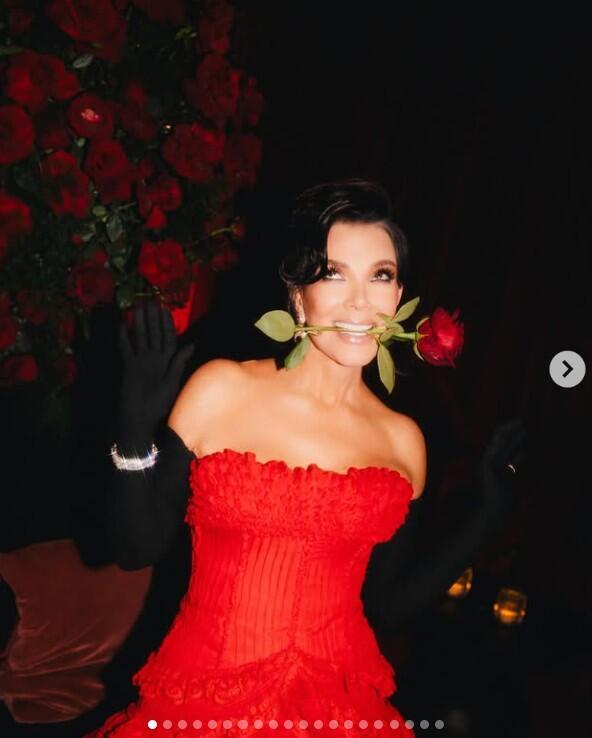
Kris Jenner
(Photo: Instagram)
On a practical level, culture has simply moved up to the next difficulty setting. Alongside the discourse on feminism’s progress, we have learned to speak the same words wrapped in more refined appearances. All to avoid criticizing an individual woman, not to judge the need to look great at any age, yet still judge ourselves for wanting it a little — and knowing we will never look like that.
Maybe the power of this moment lies in the fact that it holds both genuine beauty and unbearable pressure, a role model and a warning sign. In this new and unprecedented landscape, major achievements are mixed with the social costs we are still learning to identify. The struggle for the “free choice” to look however you want has never been so burdened with versions of what counts as the “right” choice.
What is certain is that these questions will continue to occupy us long after our feeds fill with yet another 60-year-old woman in a bikini who leaves us stunned. And for one moment, before the like lands, it may be worth sitting with this simple thought: sometimes freedom looks like victory, and sometimes it is just another test no one asked us to take.
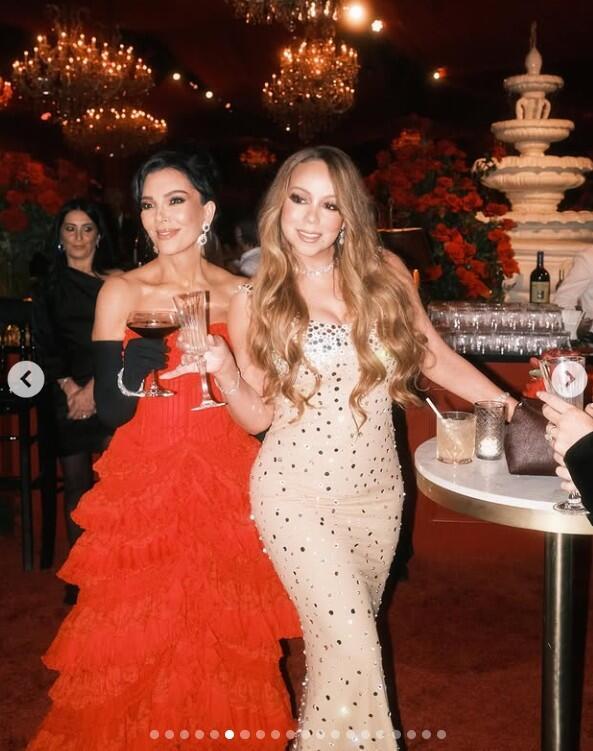
Kris Jenner with Mariah Carey
(Photo: Instagram)