


Forty-four years passed from the last time Yehuda Katz was seen inside his Israeli tank during the Battle of Sultan Yacoub in Lebanon until his remains were finally returned to Israel last week.
Over the decades, investigators sifted through testimony and intelligence reports, questioned Palestinians and repeatedly revisited possible locations. The remains of Zachary Baumel, who disappeared in the same 1982 battle, were returned to Israel in 2019. Those of Zvi Feldman, another soldier missing from the battle, were recovered in 2025.
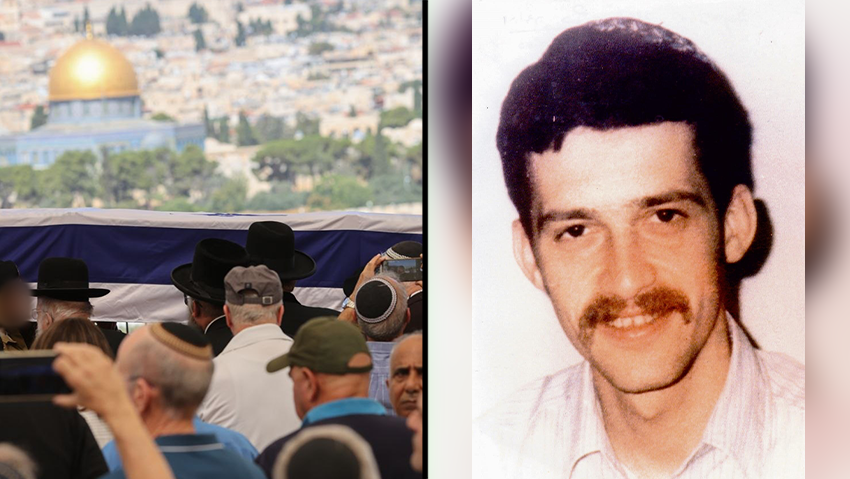
Katz remained unaccounted for until now.
“When people ask how we got to Katz, at least from the intelligence-research perspective, it was a four-decade journey,” said Lt. Col. (res.) Avi Kalo, a former head of the IDF Military Intelligence Directorate’s department for prisoners of war and missing soldiers, who took part in the investigation over the years.
“In an event that stretches over such a long period, there is no single point where everything suddenly opens up. It is a multilayered story.”
The investigation began with the battlefield itself.
The Battle of Sultan Yacoub took place on June 11, 1982, during the First Lebanon War. When Israeli forces withdrew, substantial military equipment was left behind, including tanks that fell into enemy hands.
“Although the incident took place in Lebanon, this was an affair with strong Palestinian dimensions,” Kalo said. “Those who took control of the equipment were a mixture of Palestinian groups. The PLO, Fatah and the Palestine Liberation Army were there.”
He compared what happened after the Israeli withdrawal to “a kind of mini-October 7,” saying both civilians and armed men moved into the battlefield left behind by Israeli forces.
From there, investigators spent years trying to determine who had reached Katz, what had happened to his tank and where it had been taken.
The effort drew on the capabilities of Israeli military intelligence, the Shin Bet domestic security service and the Mossad foreign intelligence agency.
“The battlefield was our starting point,” Kalo said. “Who came into contact with the fallen soldier, which groups were involved and where he could have been taken.”
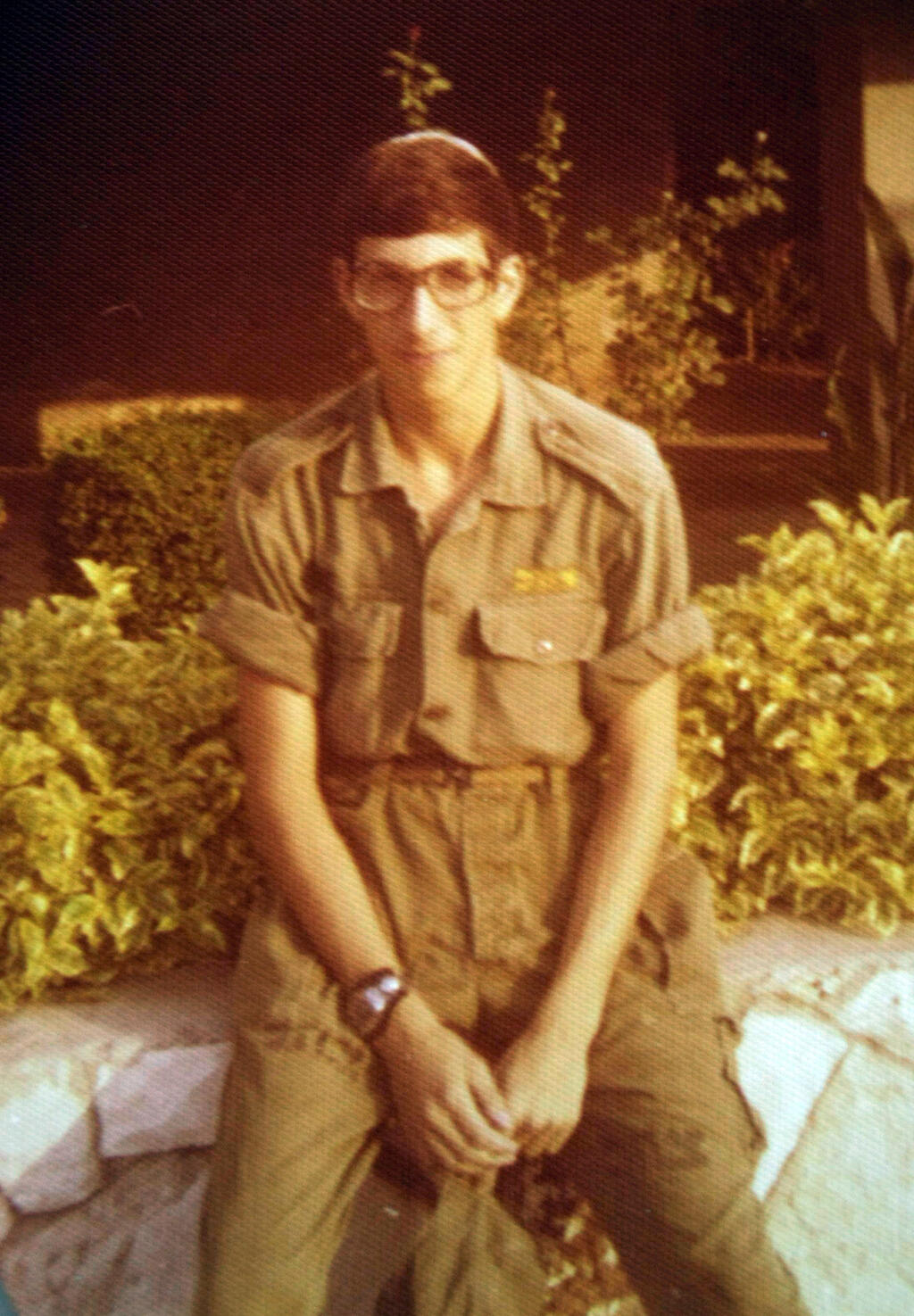
Zachary Baumel
(Reproduction photo: Amit Shaabi)
The recovery of Baumel’s remains in 2019 helped investigators understand that Katz may have followed a different path.
“It created a kind of domino effect, from Baumel to Feldman and then to Katz,” Kalo said.
Investigators had already considered the possibility that Katz’s remains were still connected to the tank in which he had fought. The search then increasingly focused on identifying the specific vehicle.
“We knew we were looking for a Magach tank with a particular military identification number,” Kalo said. “It required verification from several directions, using special capabilities of the Mossad and Military Intelligence.”
Unit 9900, the IDF Military Intelligence Directorate’s visual intelligence unit, also used imagery and other visual-analysis capabilities as part of the effort.
An intelligence official who participated in the search said that once investigators decided to concentrate on the tank, an entirely new line of inquiry opened.
“The first task was to try to locate the tank itself,” the official said.
Finding it did not end the investigation.
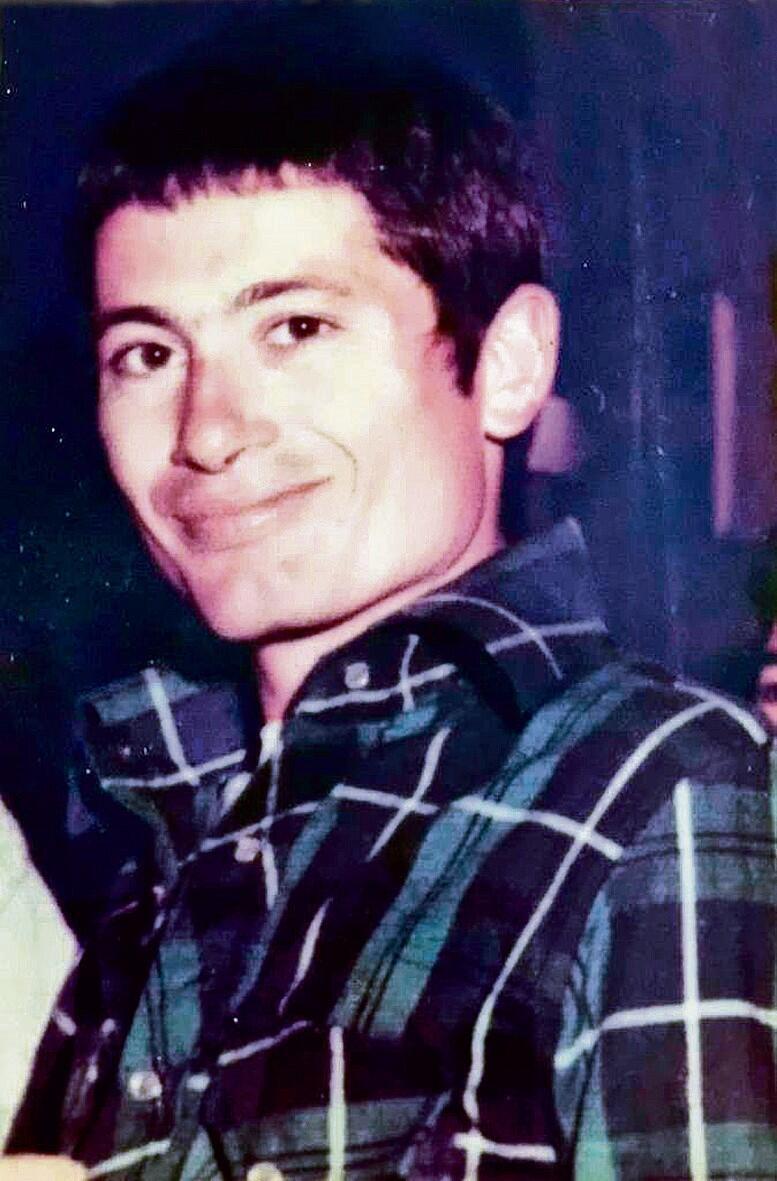
Zvi Feldman
(Photo: Courtesy of the family)
Over several years, according to the official, a series of operations were carried out in enemy territory to answer specific intelligence questions and gradually refine the picture.
“These were not isolated operations, but a single intelligence sequence,” the official said. “Lessons were drawn from every operation, the information was incorporated into the intelligence picture, and that led to changes or helped sharpen the next operation.”
Each unresolved question required a separate intelligence effort.
“We did not go out on an operation simply to collect more information,” the official said. “The purpose was to test hypotheses, verify or rule out indications and try to narrow the gaps in the intelligence picture. In that way, every operation contributed to understanding what the next one needed to be.”
Old intelligence, new meaning
The investigation also demonstrated the value of returning to information that had been collected years or even decades earlier.
“There were cases in which material that had been known to the system for years took on a different meaning once new information accumulated,” the intelligence official said.
“Part of the work was therefore not only collecting new intelligence, but knowing when to return to existing information and ask again what it meant within the updated picture.”
The official said the case showed that intelligence does not necessarily lose its value with time.
“Sometimes it is simply waiting for the point that connects it to something else. Information that appears marginal at one point can become decisive when a new indication emerges years later.”
Kalo said Israel’s ability to operate covertly in hostile territory was also critical because it allowed investigators to learn from each attempt and adjust their approach.
“In the end, this is enemy territory where you need to conduct a clandestine operation,” he said. “That is another expression of the enormous commitment to solving this case.”
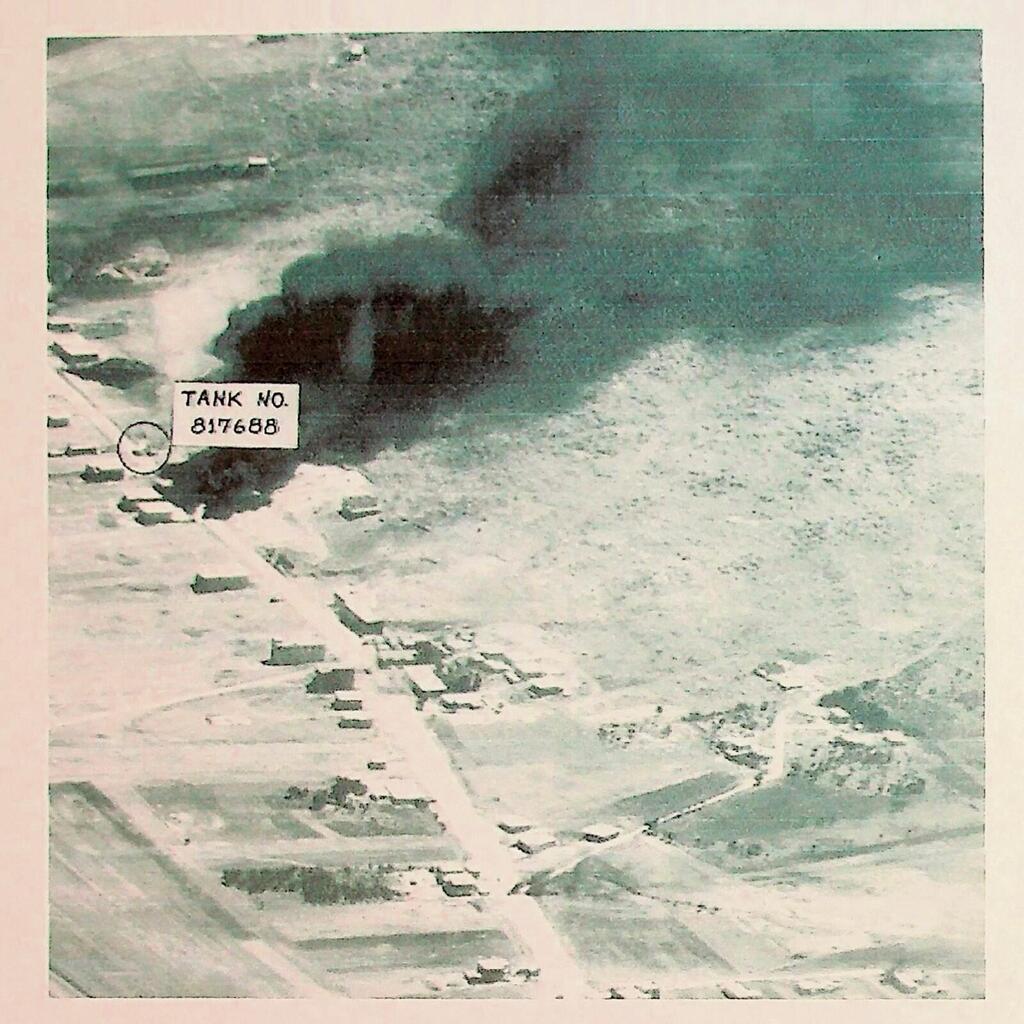
The burning tank in the Battle of Sultan Yacoub
Lt. Col. S., who heads the branch responsible for locating missing personnel in EITAN, the IDF unit tasked with tracing missing soldiers, described such investigations as a puzzle requiring multiple forms of proof.
“It is a complex process made up of several pieces of a puzzle, circumstantial, evidentiary and forensic,” he said.
“You have to convince the family beyond any doubt that this is their loved one. Otherwise, why are we doing this? The most important thing for us is to give the family closure.”
He said investigators pursue even the weakest leads.
“Our people do not let go. Every faint lead is checked. Even when there is just a trace of doubt, they go as far as they can. We would rather turn out to have been wrong than give up, because even if we were wrong, at least we ruled out one possibility, and that too is progress.”
Clues from October 7
The Katz investigation was led by Maj. M., who began working on the team as a Shin Bet representative and continued after retirement as a Military Intelligence representative, together with Maj. N. from the headquarters responsible for prisoners of war and missing soldiers.
But Katz’s case is only one part of a much broader mission.
According to Lt. Col. S., Israel currently still has two missing soldiers as well as a number of fallen service members whose burial places remain unknown. Three such cases have already been resolved since the beginning of 2026.
Alongside decades-old cases, EITAN personnel also work on investigations that develop in real time.
During the war, for example, officers from the unit accompanied forces operating in tunnels in Gaza. In one case, search teams identified pieces of fabric from pajamas worn by female IDF lookouts who were abducted on October 7, 2023.
In recent years, the unit has also expanded its work to locating missing civilians during major national emergencies.
“During the Iranian missile strikes, there could easily have been missing people if the incidents had not been handled properly,” Lt. Col. S. said.
For older investigations, however, the biggest enemy is often time.
“We understand that we are working against the clock,” he said. “Part of the ability to solve these cases depends on reaching witnesses who were there, or resolving the case before the last surviving family member dies.”
In one case solved in 2025, investigators reached a man who had been involved in the original events when he was already over 90 and close to death.
“If we had arrived six months later,” S. said, “that case might have remained a mystery forever.”
After Katz’s remains were recovered, families of other fallen soldiers whose burial places remain unknown contacted the unit.
They were happy for the Katz family, S. said, but also wanted to make clear that the national obligation did not end with the resolution of the Sultan Yacoub cases.
“The families want the public to understand that fallen soldiers whose burial places are unknown are no different from missing soldiers,” he said. “For us, they are the same. We invest exactly the same effort.”