

On the morning of August 16, 1966, at exactly 8 a.m., a foreign fighter jet landed at the Israeli Air Force base in Hatzor. This was no friendly aircraft on a routine visit. The Iraqi Air Force insignia was displayed on its wings and a 30-year-old pilot sat in the cockpit, having voluntarily landed in enemy territory. Within minutes, the significance of the event became clear: Israel had obtained a MiG-21, the Soviet Union’s classified and most advanced fighter jet of the time, a weapon that Western governments were desperate to get their hands on.
Gallery
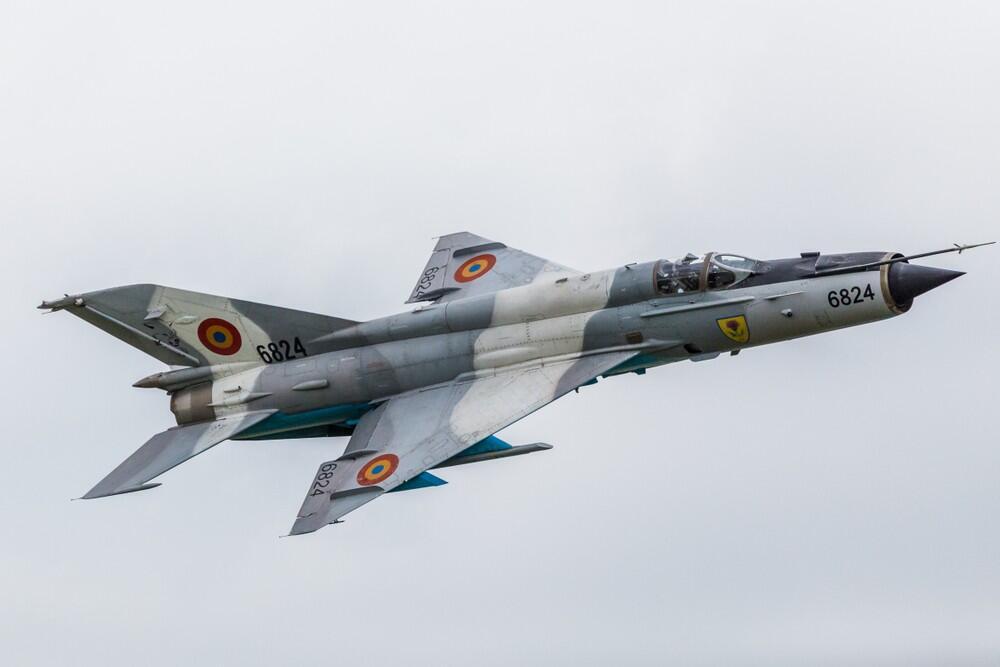
MiG-21, the Soviet Union’s classified and most advanced fighter jet of the time
(Photo: shutterstock)
A plane no one knew
The story began not in Baghdad but in Moscow. In the second half of 1962, Israel received troubling information: the Soviet Union had begun supplying neighboring Arab countries with MiG-21s, a new generation of fast and sophisticated interceptor aircraft whose true capabilities were unknown to the Israeli Air Force and to any of its allies, including NATO countries.
The commander of the Israeli Air Force, Maj. Gen. Ezer Weizman, understood the scale of the threat. In April 1965, he met with Mossad chief Meir Amit and explained that the Air Force needed to know everything about the MiG-21s in Arab hands. He made an seemingly impossible request: obtain a MiG-21 for the Air Force so it could study the aircraft in depth.
The pilot whose religion held him back
Although on paper the mission seemed imaginary and impossible, the Mossad took up the challenge. The solution did not come through technological espionage or breaking into a military base but from something far more human: frustration.
Since the 1950s, the Mossad had maintained a Jewish agent living in Iraq who had close ties to government and military circles. Through him, it managed to identify Munir Redfa, an air force commander in Mosul in northern Iraq — a talented and respected pilot whose rise through the ranks had stalled when he reached the rank of captain.
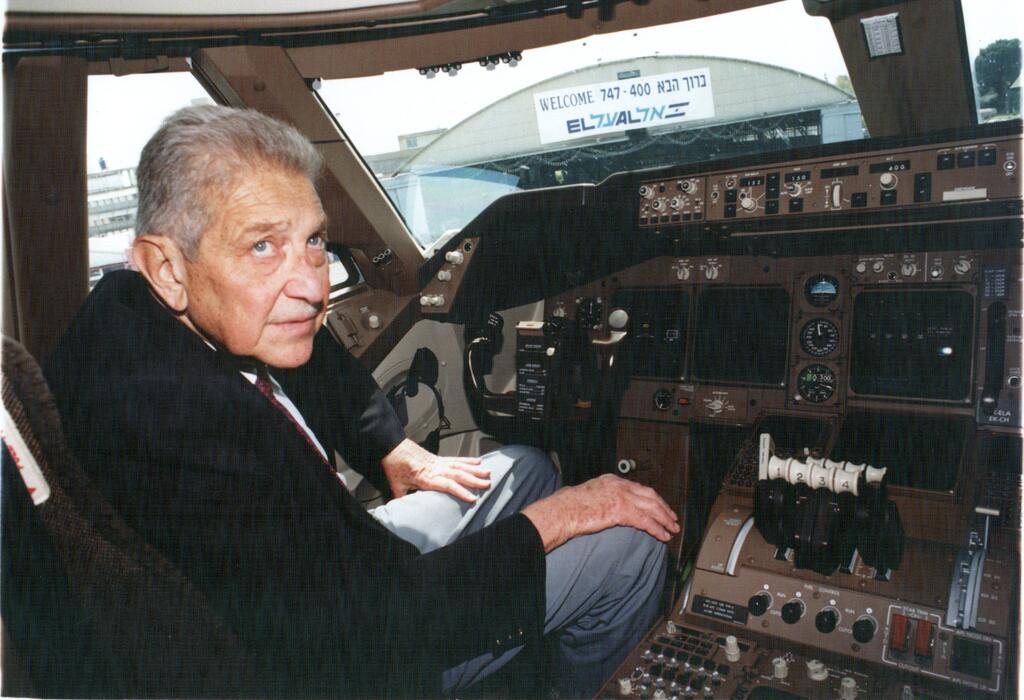
The commander of the Israeli Air Force, Maj. Gen. Ezer Weizman
(Photo: Shaul Golan)
The reason was not professional. Redfa was a Christian, a religious minority in Iraq, and was blocked from promotion despite his abilities.
That frustration, combined with his desire to immigrate to the West, made him the ideal candidate. Mossad operatives established contact with him with great caution. Some of the preparations for the operation took place far from the Middle East — at a cafe in Rome in January 1966. During a meeting between Mossad agents, Redfa and an Air Force officer seconded to the Mossad for the mission, the final details of one of the boldest espionage operations in Israeli history were agreed over an Italian coffee.
At one point, Redfa was even brought to Israel secretly for 24 hours. There, he met with the head of the Air Force Intelligence Branch to prepare for the most complicated stage: accurately identifying the Israeli airfield where he was to land safely without making a mistake and, God forbid, landing at an enemy base.
One of the operational challenges facing the Mossad was finding a way to tell Redfa that everything was ready and that he could go ahead with the plan. Sending a direct message to someone in the heart of Iraq was considered too risky. The solution was an open radio broadcast.
The song “Marhabtayn Marhabtayn” was chosen as the means of communication. Its broadcast on the Arabic-language service of Israel Radio was the agreed signal. When Redfa heard the song playing, he knew the moment had arrived.
The escape: Precise navigation and nerves of steel
On August 16, 1966, Munir Redfa boarded his aircraft and took off from his base — but not for his usual mission. He headed west, covering nearly 2,000 kilometers through the air on a route that required precise navigation and nerves of steel.
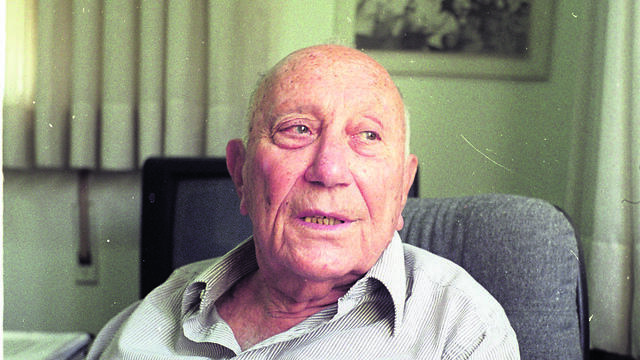
Mossad chief at the time Meir Amit
(Photo: David Rubinger)
Near the Israeli-Jordanian border, two Israeli Air Force Mirage jets located him, intercepted him and escorted him west. Redfa signaled to the Israeli pilots that he intended to land in Israel and they safely guided him to Hatzor Air Base.
The day after the landing, the media reported that an “Iraqi Air Force MiG-21” had landed “yesterday at 8 a.m. at one of the Israeli Air Force bases,” with its pilot “now under interrogation” — without, of course, revealing the full operational background behind the story.
As soon as the aircraft landed at Hatzor, the Israeli Air Force began examining it in depth. The desire was intense: to finally understand exactly what the MiG-21 was capable of. Israeli pilots took off and landed in it repeatedly, testing its performance, limitations and advantages — until its tires were completely worn down and the aircraft was grounded.
But the damage to the tires was insignificant compared with the intelligence gain. The information gathered from examining the aircraft made an enormous contribution to Israel’s understanding of the MiG-21. The knowledge was also shared with Israel’s allies, above all the United States, which gained a rare look at an aircraft that had until then been a mystery to the West.
The legacy
Operation Diamond, also known as “The Blue Bird,” is still considered one of the most notable achievements of Meir Amit’s tenure as Mossad chief. It was not the product of a technological breakthrough but of a deep understanding of human nature — identifying one man’s source of frustration and patiently and carefully cultivating a relationship of trust over nearly three years.
Dozens of Mossad, intelligence and Air Force personnel were involved in the operation. Its impact went far beyond obtaining a single aircraft: it significantly strengthened the Mossad’s international standing as one of the world’s most sophisticated intelligence services.
Munir Redfa himself, who traded his former life in Iraq for a new life under a different identity, became a legendary figure in Israeli intelligence history — a pilot whose religion had prevented him from advancing in one army but opened the door to an entirely new chapter in his life.