

On August 29, former hostage Noga Weiss was on her way to Cyprus with a delegation of young survivors as part of the “Lahoshit Yad” (Lend a Hand) project. Just as she stepped off the plane, the phone call she had waited months for finally came: the body of her father, abducted IDF emergency response deputy Ilan Weiss, had been recovered from Gaza after 693 days.
“They found him an hour before we landed,” she recalls. “While waiting for my suitcase, my sister called and said officers had arrived at home and that I needed to return. There was only an evening flight back, so I went to the hotel with the group, stayed for four hours, and then headed straight back to the airport.”

Ilan, who was 55, was deputy head of the Be’eri kibbutz emergency team. On October 7, he left home to open the armory and fight the Hamas attackers. His wife, Shiri, and daughter, Noga, were taken hostage to Gaza and released after 50 days. For 86 days, he was listed as missing until the family was told in January 2024 that he had been murdered on October 7 and abducted posthumously.
“I was mostly in shock,” Noga says. “As long as he hadn’t been returned, I still hoped maybe it was a mistake and he was alive. The certainty that it wasn’t a mistake was shattering. There’s deep sadness, but also relief. We waited almost two years for this. At least now he has a grave. We’ve closed our personal circle, but we’ll never be whole until all the hostages are home.”
“Not 100 percent healed”
Now 20, Noga grew up in Kibbutz Be’eri with her parents, Ilan and Shiri, and two older sisters, Meital and Maayan. Her parents met in the kibbutz—her mother arrived there as a child, and her father came after his army service.
On the morning of October 7, Noga woke up to the “Red Alert” siren at her parents’ home. Her sisters were in separate apartments in the kibbutz’s youth housing area, which the terrorists never reached. They were rescued by the army around 11 p.m.
“We ran into the shelter and slowly realized something was terribly wrong, especially after my dad was called to open the armory,” she recalls. “Messages started flooding the kibbutz groups: people wrote ‘They’re in our homes,’ ‘They’re killing us,’ and then stopped responding. I knew we were next. It was pure terror.”
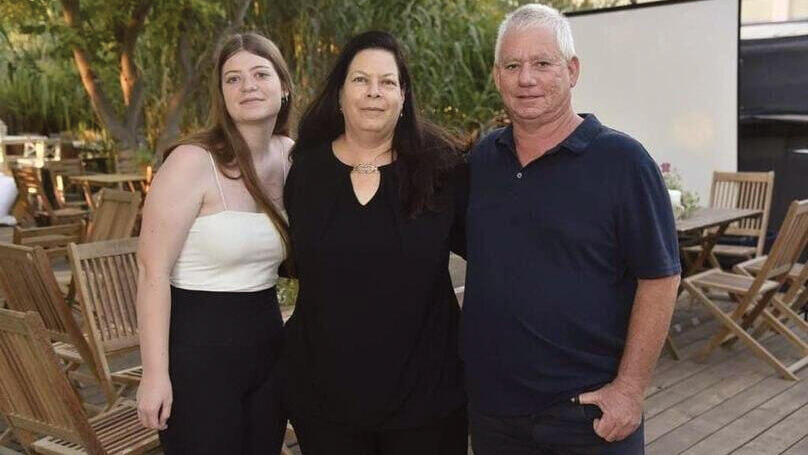
Noga and her parents Shiri and Ilan Weiss
At 10:30 a.m., heavy knocks rattled the door. “They shouted ‘Open, open!’ and after half a minute started shooting until the door broke. They stormed the safe room. My mom told me, ‘Hide under the bed,’ and they didn’t see me—they grabbed her and left. Then they burned the house, leaving the safe room door open. The smoke filled the room. I couldn’t breathe and knew I had to move.”
After an hour, she realized she would suffocate if she stayed. “I told myself, ‘If I’m going to die anyway, I’d rather die from a bullet—faster, less painful.’ I climbed out the window and hid behind a bush. I saw the bodies of people I’ve known since I was a baby. I thought my mom was dead and I’d be next.”
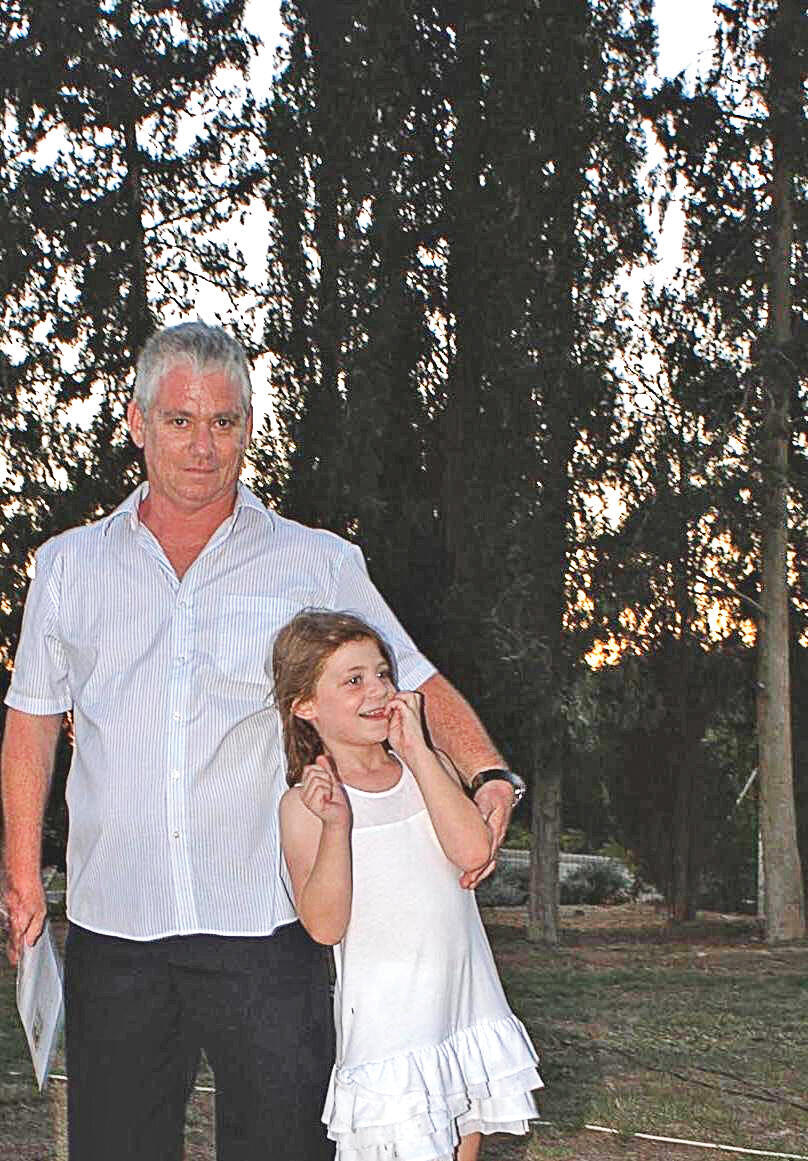
Noga with her father Ilan
A terrorist spotted her minutes later. “He dragged me to the neighbors’ lawn. About 40 of them surrounded me, tied my hands, and started interrogating me—they thought I was a soldier. Then they put me in a car and drove to Gaza. It took 15 minutes, but felt like forever.”
She was taken to a family home in Gaza, where she met another captive—Nova Festival survivor Moran Stella Yanai. “They barely gave us food or water. We were constantly hungry and thirsty. They had water but said Israel had stopped the supply, so we wouldn’t get any either.”
From captivity to command
Fifty days later, Noga and her mother were released. Six months after her release, Noga enlisted in the IDF and graduated with honors from the welfare NCO training course. She served for a year on a closed Nahal Brigade base and recently transferred to Be’er Sheva, near her current home in Kibbutz Hatzerim, so she could continue advocating for the hostages’ return.
“I switched to a daily service schedule to have more time for the fight,” she says. “I never imagined that a year later we’d still be battling for their release—it’s unbelievable.”
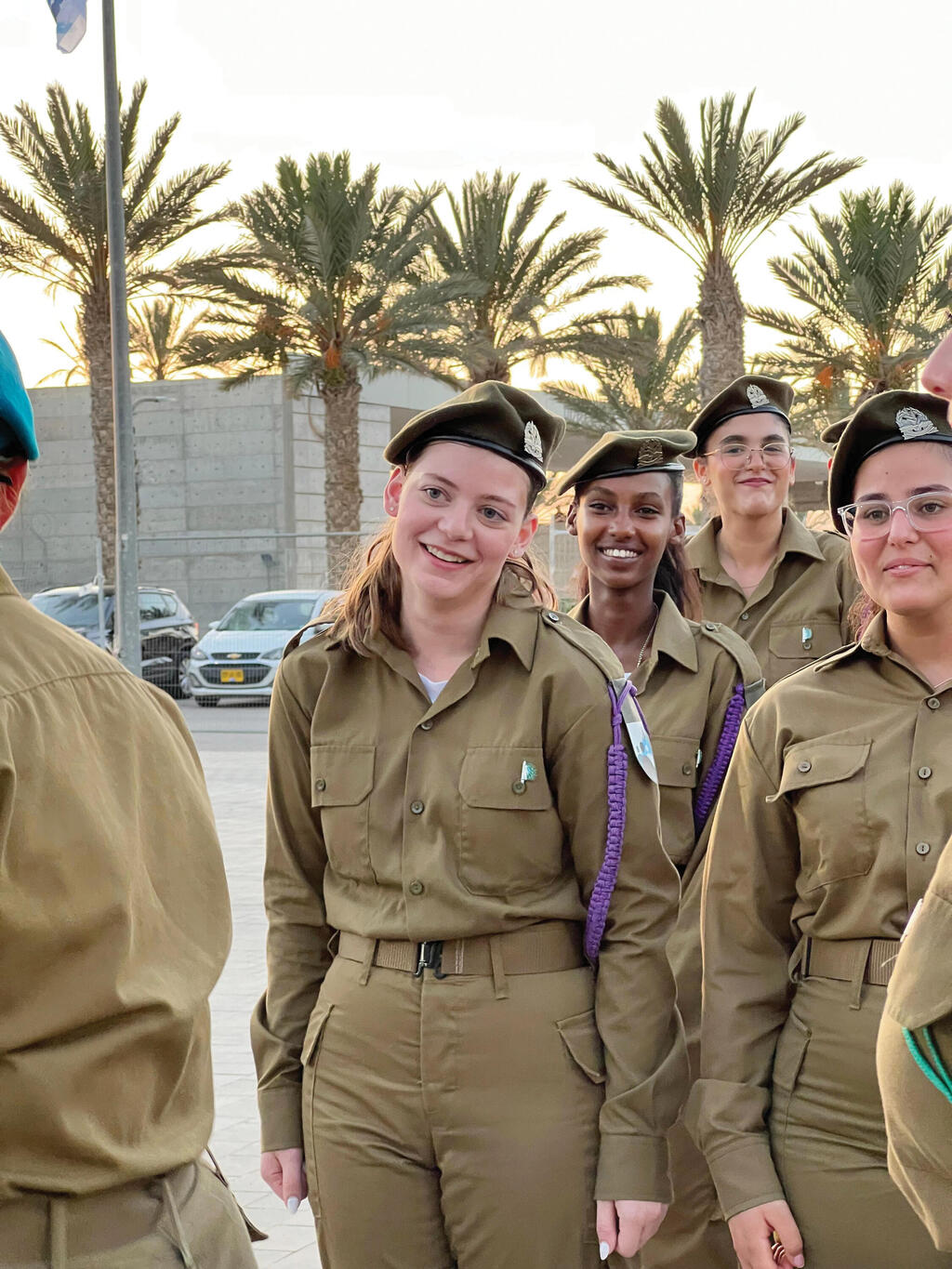
Noga Weiss at the graduation ceremony for the IDF welfare NCO course
(Photo: IDF)
Did she hesitate to enlist after the failures of October 7? “Not for a moment,” she says. “I didn’t think in terms of anger or betrayal. What happened, happened. You can’t change it. All you can do now is help make things better. I’ve always wanted to serve and give back. The army gives me structure, routine, and a sense of purpose—it’s also a kind of distraction.”
She had planned to enlist even before the war. “A month before October 7, I began a year of volunteer service and postponed my enlistment, but I regretted it. I was supposed to call on October 8 to ask to move it up—but I never got the chance.”
“Helping others helps me”
Noga chose to serve as a welfare NCO—her dream role even before the war. “I feel I can make a difference and really help people,” she says. “Helping others helps me too. When I see a soldier grateful because I managed to get them something they needed, it gives me a sense of satisfaction.”
She says her commanders and fellow soldiers treat her with care and respect. “I try to be treated like everyone else, but they’re definitely understanding and flexible if I need to attend something related to the hostages.”

(Photo: Adi Orni)
Two years after her abduction, she still battles trauma. “I can’t stand loud knocks on doors. I struggle hearing Arabic in the street. I can’t bear the smell of fire—it throws me right back under that bed, unable to breathe. Once, just seeing fire on TV made me short of breath. I’m slowly learning to live with it. I grew up fast. I told my mom in Gaza that I felt I’d aged ten years in a week.”
As for returning to Be’eri, she’s unsure. “One day I wake up saying, ‘Of course I’ll go back, it’s my home,’ and the next day I think, ‘No way, I can’t.’ My mom and sisters feel the same. It changes every day.”
Noga lost her uncle Gil Boyum and cousin Inbar Boyum on October 7, as well as many close friends—including her childhood best friend, Tehelet Fishbein, and Noya Shaarabi, the daughter of Eli Shaarabi, also murdered that day.
When asked what she wishes for the new year, Noga’s answer is immediate: “That all the hostages come home. I don’t need anything for myself. Once they’re back, everything else will be okay. Together, we’ll rise again.”