

Ratko Mladić did not commit his crimes in some distant corner of the world, beyond the reach of television cameras or international institutions. He committed them in Europe, in the 1990s, while the continent was still telling itself that genocide and industrial-scale ethnic killing belonged to its past.
That is why the former Bosnian Serb commander, who died at 84 while serving a life sentence in The Hague, occupies such a dark place in modern European history. Mladić commanded the forces responsible for the terror campaign against Sarajevo and was convicted of genocide for the massacre at Srebrenica, where more than 8,000 Bosniak Muslim men and boys were murdered in July 1995.
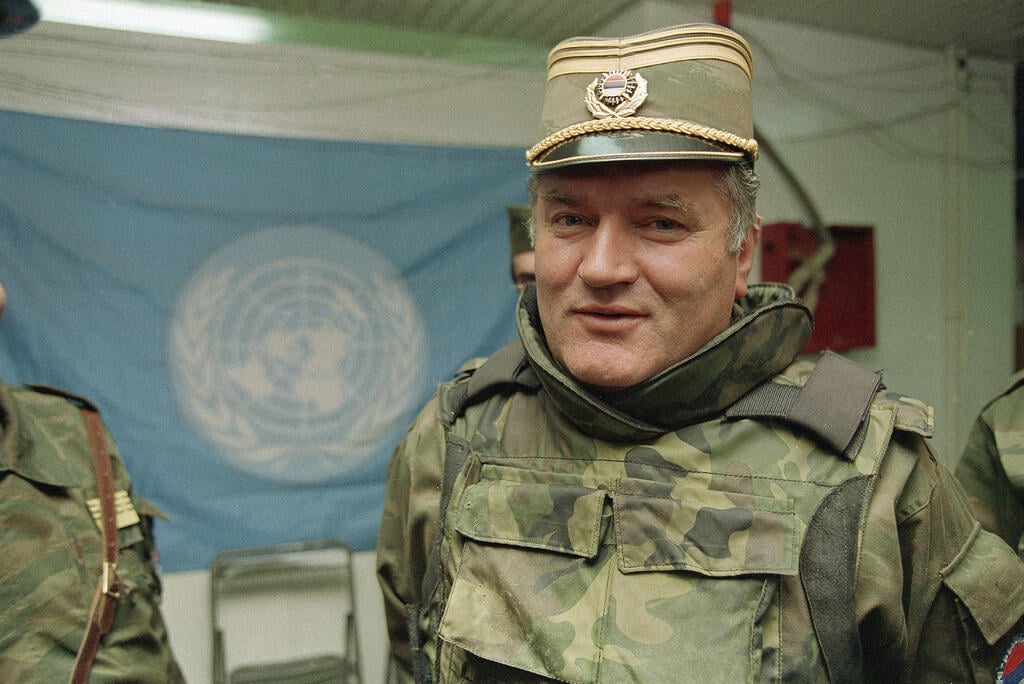
They were among the worst atrocities on European soil since World War II, committed barely half a century after the Holocaust and in full view of an international community that had promised the people of Srebrenica protection.
Mladić became known as the “Butcher of Bosnia,” but before he became synonymous with mass graves, snipers and ethnic cleansing, he was a conventional career soldier.
Born in 1942 in a mountain village near Sarajevo, Mladić lost his father as a young child during World War II. His father had fought with Tito’s Partisans against Nazi-backed Croat forces. The younger Mladić grew up in the socialist Yugoslavia that emerged from that war and entered the Yugoslav People’s Army in the 1960s.
He proved to be ambitious and capable. Over the following decades he rose through the ranks, acquiring a reputation as a hard-driving officer who liked being close to the front. His soldiers admired him for taking risks alongside them, and that image of the fearless commander would later become central to the almost cult-like following he enjoyed among many Bosnian Serbs.
Then Yugoslavia began to disintegrate.
When Croatia declared independence in 1991, Mladić was already a senior Yugoslav army officer. Fighting soon spread into Bosnia, a multiethnic republic inhabited primarily by Bosniaks, Serbs and Croats. In May 1992, Mladić was appointed commander of the newly formed Army of Republika Srpska, the Bosnian Serb military force. He remained its commander throughout the war.
Under the political leadership of Radovan Karadžić and the military command of Mladić, Bosnian Serb forces pursued control over large areas of Bosnia. The international tribunal that later tried Mladić found that he participated in a criminal enterprise aimed at permanently removing Bosnian Muslims and Croats from territory claimed by the Bosnian Serbs, through persecution, murder, deportation and forcible transfer.
The campaign soon acquired a phrase that would become one of the defining terms of the Balkan wars: “ethnic cleansing.”
In practice, it meant people being driven from their homes, communities destroyed, civilians imprisoned and killed, and women subjected to systematic sexual violence. It meant trying to remake mixed territory through fear and force.
A city under siege
Sarajevo became one of the clearest expressions of what that policy looked like.
Bosnian Serb forces surrounded the capital and positioned artillery and snipers on the hills above it. The siege lasted 1,425 days. Residents crossed streets knowing that a sniper could be watching them. Shells landed on homes, markets and crowded public spaces. Water, electricity and basic supplies became uncertain.
This was not merely a military blockade.
The UN tribunal found that Mladić participated in a campaign whose objective was to spread terror among Sarajevo’s civilian population through sniping and shelling. He was ultimately convicted of terror, murder and unlawful attacks on civilians in connection with the siege.
Yet Sarajevo would not become the crime most closely associated with his name.
That happened in Srebrenica.
The genocide Europe failed to prevent
By the summer of 1995, tens of thousands of Bosniak civilians had taken refuge in and around the eastern Bosnian town of Srebrenica. The United Nations had designated it a “safe area,” and Dutch peacekeepers were stationed there.
Then Mladić’s forces arrived.
After Bosnian Serb troops captured the enclave in July, Mladić appeared before television cameras. He walked through the town as a victorious commander. At one point, he was filmed reassuring civilians as his troops began separating men and boys from women and children.
What followed was genocide.
More than 8,000 Bosniak men and boys were taken away, held at various locations and systematically executed. Some were teenagers. Some were elderly. Their bodies were dumped into mass graves, and many were later moved to secondary graves in attempts to conceal the crime.
It was the worst massacre in Europe since World War II.
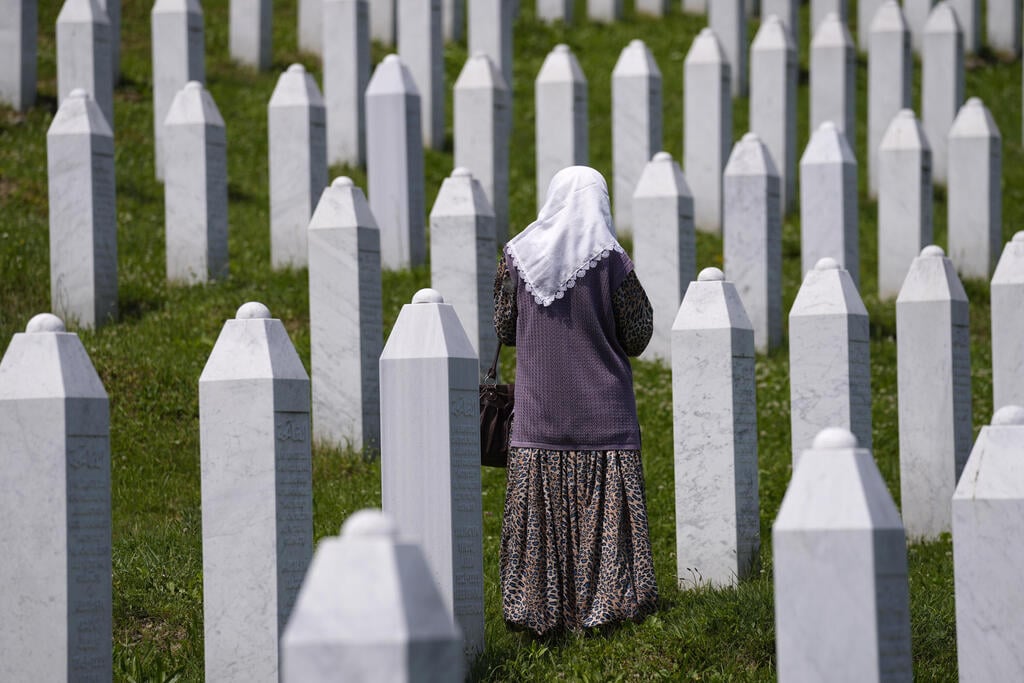
Cemetery for victims of the Srebrenica massacre in Bosnia
(Photo: AP Photo/Darko Bandic, File)
The fact that it happened inside a supposedly protected UN enclave made Srebrenica more than a symbol of Mladić’s brutality. It became one of the great failures of international intervention in the postwar era. The people gathered there because they had been told they were safe. The international community watched the enclave fall and failed to save them.
The Hague tribunal later found that the objective of the Srebrenica criminal enterprise in which Mladić participated was the elimination of Bosnian Muslims in Srebrenica. He was convicted of genocide, a conviction upheld on appeal.
The verdict mattered because it removed any legal ambiguity surrounding his role. Mladić was not simply a general whose soldiers committed excesses in a chaotic civil war. An international court concluded after years of proceedings and thousands of pieces of evidence that he was personally criminally responsible for genocide and a series of crimes against humanity and war crimes.
The general who disappeared
By the time the war ended, Mladić was already an indicted war crimes suspect. Yet for years he remained free.
He returned to Serbia and initially lived with remarkable openness. He was protected by networks inside the security establishment and military and continued to enjoy enormous popularity among Serbian nationalists. Reports placed him at restaurants and sporting events.
Only as international pressure on Serbia increased did he disappear underground.
He spent years moving between safe houses, protected first by loyalists and later largely by relatives. His ability to evade arrest became an international embarrassment for Serbia and an obstacle in its relationship with the European Union.
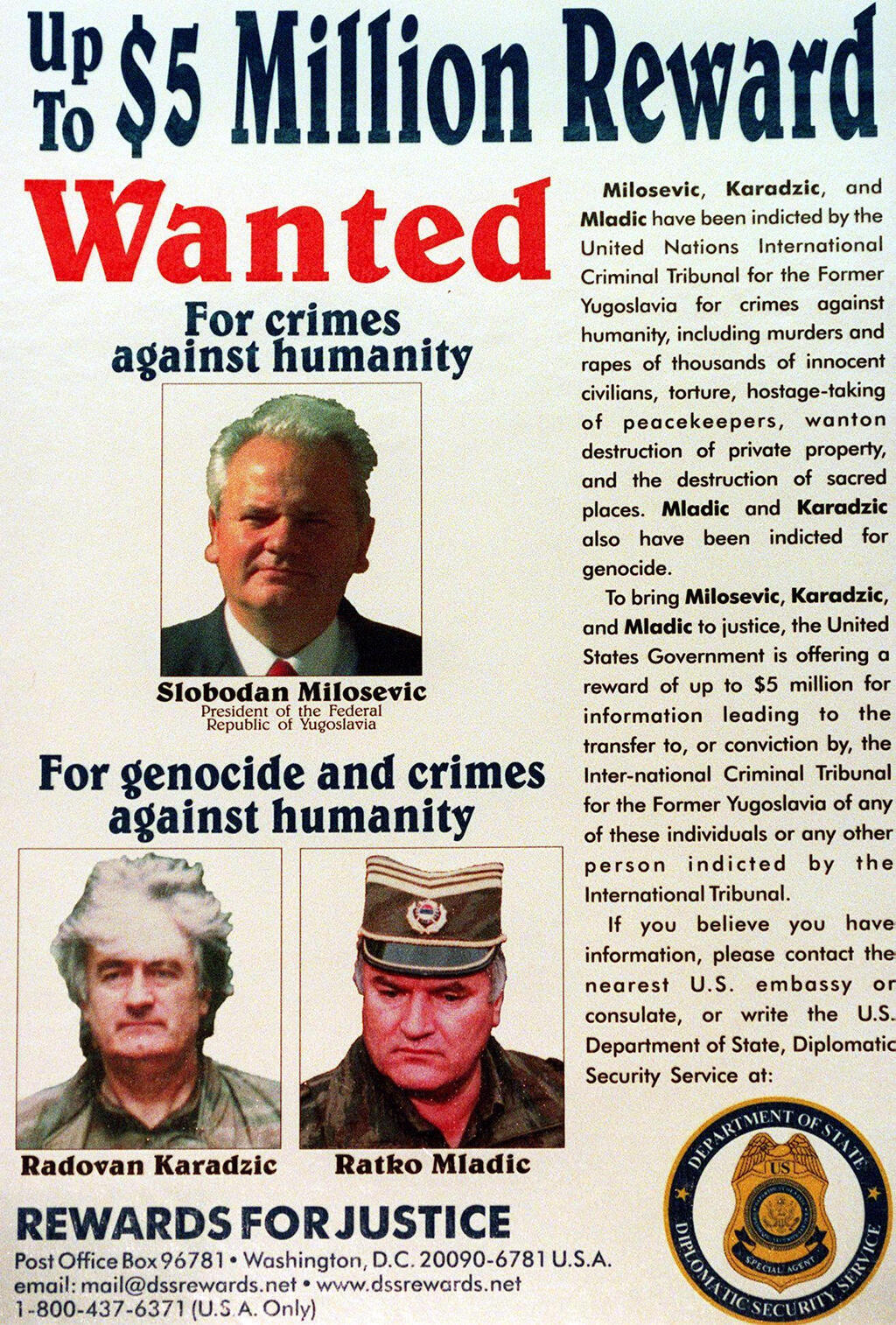
(Photo: GEORGE BRIDGES / AFP)
Meanwhile, the man accused of some of Europe’s worst postwar atrocities was living not in a remote cave or a distant dictatorship but in and around Serbia, only a short flight from the European capitals demanding his arrest.
It took until May 2011 to find him.
Serbian police arrested Mladić at a relative’s house in the village of Lazarevo. By then, the powerful general seen strutting through Srebrenica had become an elderly, visibly ill man who had suffered several strokes.
He was extradited to The Hague days later.
A life sentence, but little remorse
Mladić’s trial began in 2012. It became one of the most important war crimes proceedings since the Nuremberg trials.
Over 530 trial days, the court considered nearly 10,000 exhibits and heard evidence from hundreds of witnesses. In 2017, judges found him guilty of genocide at Srebrenica, persecution, extermination, murder, deportation, forcible transfer, terror, unlawful attacks on civilians and hostage-taking. He received a life sentence.
His appeal was rejected in 2021 and the central convictions were upheld.
Mladić showed little sign of repentance. In court he sometimes smiled and gestured toward the cameras. When the verdict was delivered, he erupted in anger and denounced it.
For survivors, however, his conviction established something more durable than his denials: a judicial record of what happened.
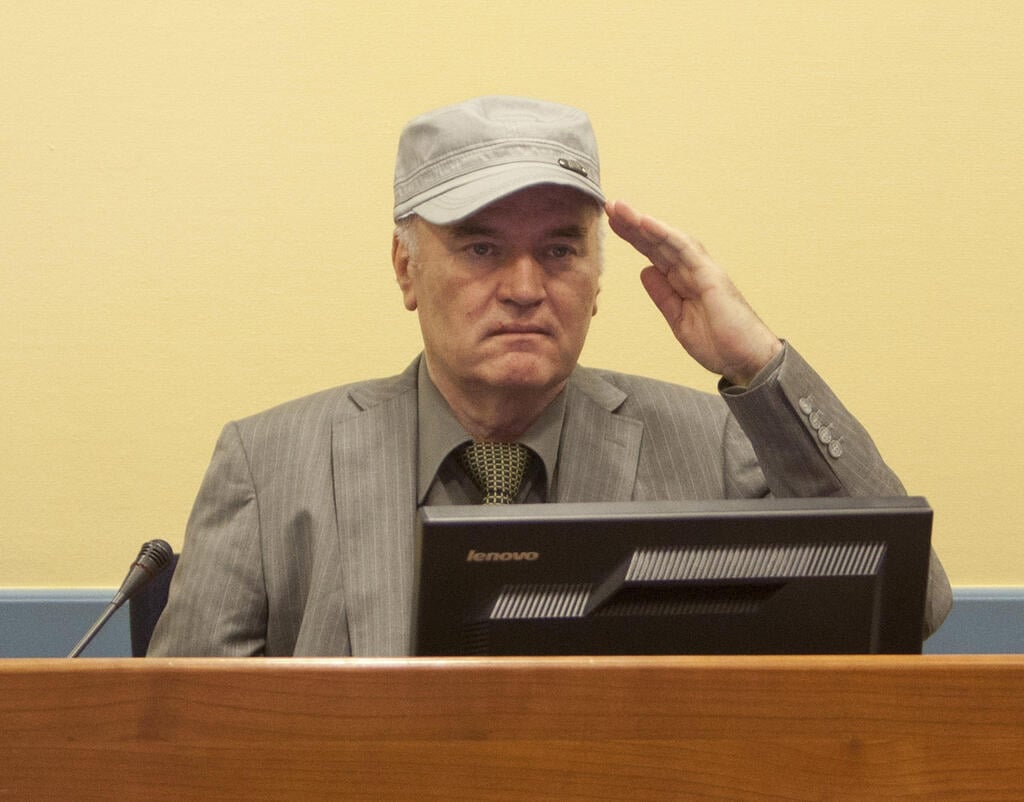
Ratko Mladić makes his first appearance before the International Criminal Tribunal for the former Yugoslavia in 2011
(Photo: Serge Ligtenberg/Getty Images)
Mladić remained a divisive figure until his death. Many Bosniaks saw him as the embodiment of a campaign that murdered relatives, emptied towns and buried thousands in mass graves. Yet among some Serbian nationalists, murals, slogans and tributes continued to portray him as a hero. His death again exposed those divisions.
That continuing glorification is part of what makes his story more than history.
Mladić belonged to a generation raised in a Europe still marked by the memory of World War II. Yet half a century later, under his command, civilians were again selected because of their identity, loaded onto buses, expelled from their homes, imprisoned, hunted and killed. Men and boys were separated from their families and executed in large groups. Their bodies were hidden in mass graves.
And this happened not in the distant past but in 1995, in the heart of Europe.
Ratko Mladić died in prison. The people killed under his command never had the privilege of growing old. His enduring legacy is not the military uniform, the nationalist mythology or the image of the swaggering general.
It is Sarajevo under fire, Srebrenica after it fell, and thousands of graves that proved Europe’s darkest crimes had not disappeared with the 20th century’s earlier horrors.