


This story has all the elements of a thriller: great success, a collapse, a broken love story and a fight to rebuild. Maya Meron says people she knows with Netflix connections are already pushing her to turn her life story into a series. But until that reaches the small screen, let’s go back to where it all began: March 11, 2019.
Meron, 46, a gifted international violinist and mother of three, a 15-year-old daughter and 8-year-old twins, arrived that day for a Pilates class in Hampstead, north London. She was already a longtime client at the well-known chain, whose clientele included Meghan Markle and Victoria Beckham. That month, she had joined a new training program for postpartum women, hoping to strengthen her body after the birth of her twins.
“There were only two women in the class whom I didn’t know, and a substitute instructor I had never seen before,” she recalls in her first interview with an Israeli media outlet. “I got on a machine with my body facing down, strongly stretching my abdominal muscles. I did six repetitions of the exercise, and then suddenly the bar that was supposed to be locked in place came loose.
"The beam collapsed, and I was thrown down with tremendous force. I felt enormous pain in my stomach and heard the elbow in my left arm break, with the sound of the machine crashing in the background. The pain was so intense that I briefly lost consciousness. The next thing I remember is people from the studio coming over, asking if I could walk, then lifting me and taking me to the office so the class could continue.”
Even though you were badly injured?
“I was in excruciating pain. I called my husband at the time to come take me to the hospital, but at the same time I was completely alert and aware of what was happening. I could see the staff were panicking and trying to cover up what had happened. They were on the phone with someone, and it was very clear that they were being instructed not to let me back into the room where the accident happened.
“Despite the intense pain, I was determined to speak to the instructor. I wanted to talk to the women who had been training next to me so I could get their testimony. I wanted to take down the number of the machine I had crashed on. But the staff refused. They said I couldn’t go in and interrupt the class. By then, my husband had arrived to pick me up. I kept arguing with them and told them that, by law, they had to at least write an accident report. Luckily, that is what ultimately saved me. It wasn’t enough, but I had some kind of proof.”
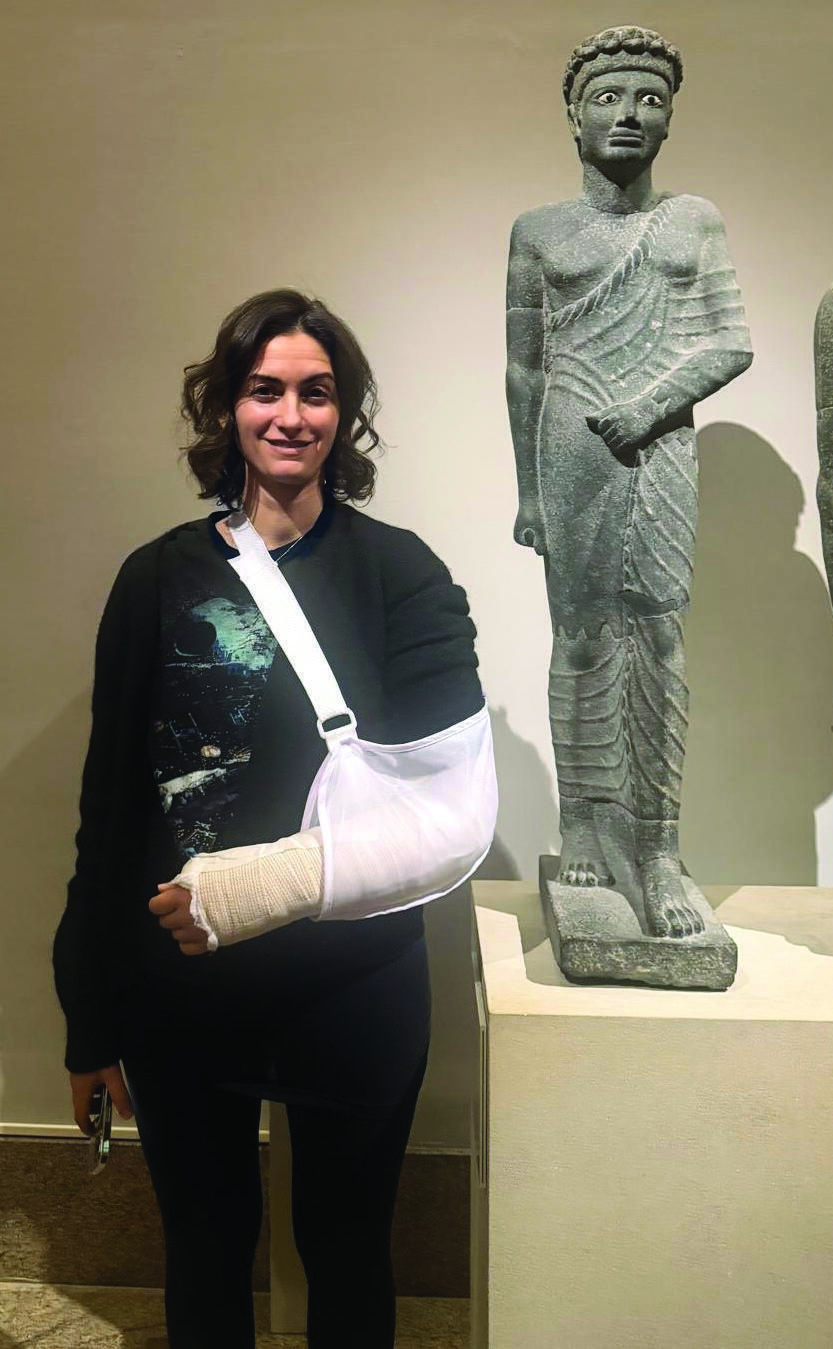
Bandaged after the injury
(Photo: Private album)
What were you told when you got to the hospital?
“Because my body twisted forcefully in the air but nothing hit it directly, there were no visible signs on the outside, not on the elbow and not on the abdomen. When I heard my elbow break during the accident, I immediately thought about my career, but I hoped I had only imagined it.
“Unfortunately, the X-rays immediately showed it was a serious fracture. At that stage, even though I remember my stomach hurting badly during the accident, I didn’t mention it to the doctors. I think even if I had lost a leg, I wouldn’t have paid attention to it then. All I could think about was my elbow and whether I would ever be able to play again.” I didn’t think about anything else. And when they confirmed in the X-ray that my elbow was broken, I broke too.”
A cardiologist father with a violinist’s dream
To understand the scale of the personal rupture, one has to go back to her childhood. She was born in Jerusalem to a cardiologist father and a family physician mother, the second of four siblings. She inherited her love of the violin from her father.
“My father played violin as a child and dreamed of becoming a professional violinist,” she says. “But at 18, he enlisted in the army, which kept him from training consistently for three years. After his discharge, he realized it would be hard to pursue music at a competitive level, so he went to medical school instead.
"At home, we always listened to classical music and went to concerts. My father tried to pass on his love of the violin to all the children, but I was the only one who caught the bug. I started playing at 7 and just wanted to keep playing more and more. No one ever had to tell me to practice.”
When she was 9, she moved with her family to Toronto after both parents began fellowships there. She started competing and winning prizes, including Canada’s national music championship at age 12. The family later returned to Israel. At 15, she studied violin with virtuoso Hagai Shaham at the Jerusalem Academy of Music and Dance, and at 17, she moved to Indiana University in the U.S. on a full scholarship to study with international violinist Miriam Fried.
At 20, she moved to London to study viola at the Royal Academy of Music, and from there her career began to take off quickly. She was invited to play with major orchestras, including at the Sydney Opera House, the London Symphony Orchestra and the Berlin Philharmonic. At 27, during a concert in Austria, she met the man who would later become her husband: a renowned German-born violin maker. Together with their children, they lived between England and Germany.
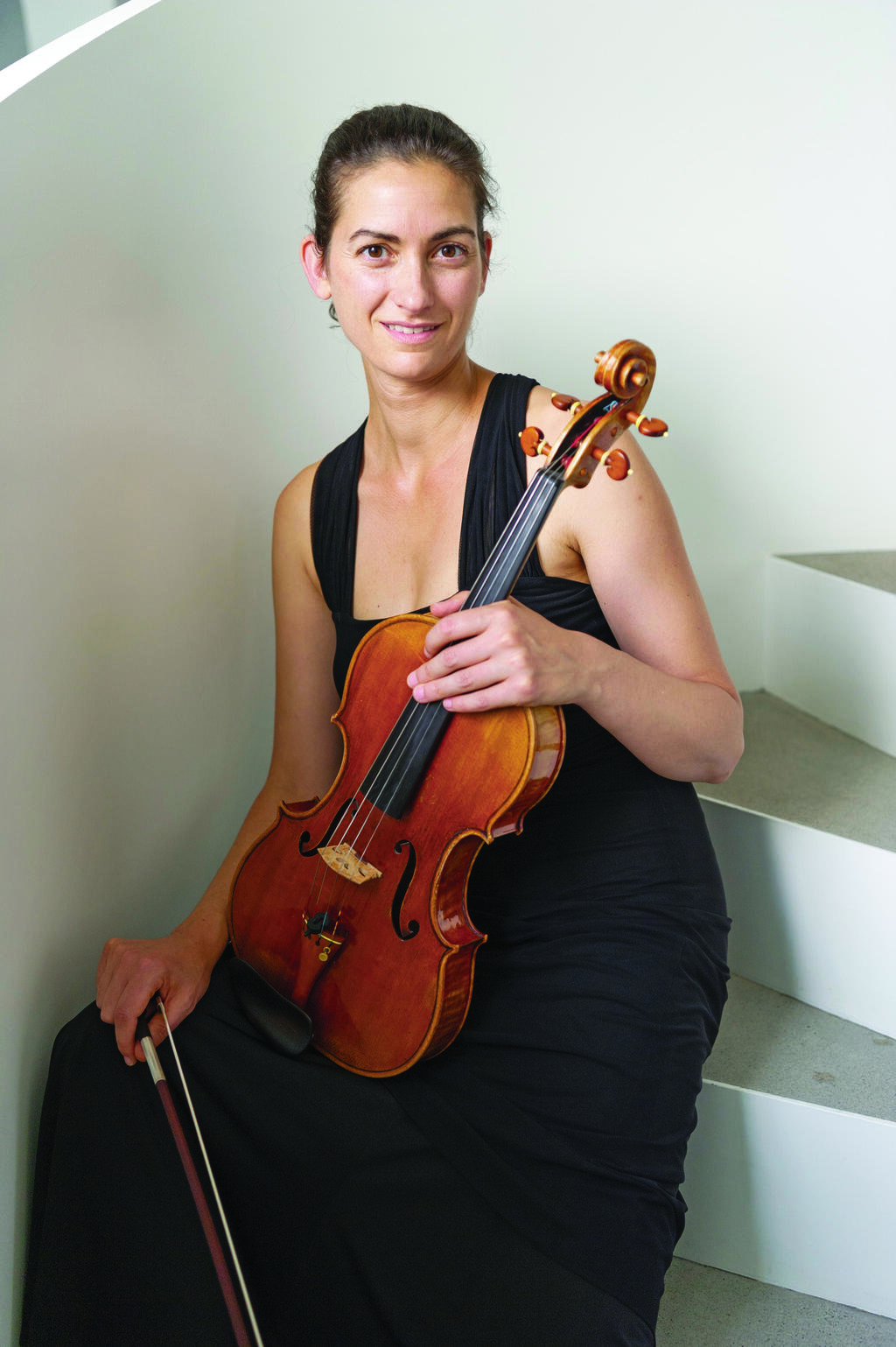
Meron with her viola; 'I started playing at 7 and just wanted to keep playing'
(Photo: Marco Blessano)
“In April 2019, a month after the injury, we moved to Israel for a year. At that point, I thought I would still be able to return to playing, and I wanted to be close to my family while I recovered.”
Several months later, she noticed something strange in her abdomen. The abdominal separation, known as diastasis recti, which had been 1 centimeter wide after the birth of her twins, had suddenly widened significantly. She also developed an umbilical hernia.
“I could put my whole fist into the gap,” she says. “But at that stage I didn’t connect it to the accident at all. I was sure it had to do with the pregnancy. I didn’t know that a condition like that couldn’t suddenly worsen a year after giving birth. In retrospect, maybe I didn’t want to know. It was hard enough dealing with the fact that the accident had ruined my elbow, that the studio refused to take responsibility and that I had to fight them legally. I had surgery with a plastic surgeon and was sure that was the end of it.”
But it was not. “I started having back pain, and when I stood up, my body leaned forward. At first, I assumed these were side effects from the surgery, but it kept getting worse. I couldn’t stabilize my left side, and bulges began appearing on the left side of my abdomen.
"Today I know those were muscles that had torn during the accident. Because they were no longer connected to the nerve, they simply hardened. My abdominal wall shifted sideways and became loose. The nerves that support posture and walking were damaged by the trauma. I understood all of this, unfortunately, only after five years of physical and emotional suffering.”
‘See you in court’
Back to the first hours after the injury at the Pilates studio. After initial treatment at the hospital, Meron was sent home with instructions to continue treatment and follow up with a specialist. Already then, she understood she would have to postpone, at least for the coming months, all the concerts she had scheduled. Later, she would learn that the elbow injury had caused nerve damage and led to what she feared most: the end of her music career.
“Two days after the accident, before I had even filed a lawsuit, I got a phone call,” she says. “On the line was Jess Schuring, the owner of the Pilates chain. She called to say that despite the accident report I had insisted they write for me, she refused to take responsibility and said the accident hadn’t happened at all. She was really shouting and saying it made no sense. I was stunned. I remember saying to her, in this very Hollywood way: 'See you in court'.”
That same day, Meron contacted Jonathan Goldberg, one of Britain’s leading attorneys and the father of one of her close friends. “I owe everything to Jonathan,” she says today. “He stood by me for seven years and did everything without being paid. And when I say everything, I mean daily contact, calls that went on for hours and hours.”
But the legal battle was far from simple. Because it was not Goldberg’s area of expertise, he tried to find a law firm willing to represent her in the case. “Because I had no witnesses, it was very hard to find such a firm,” she explains. “Eventually, one firm agreed to take the case as a favor to Jonathan, but they didn’t make much of an effort.
"For example, the safety engineer was brought to the studio only three years after the lawsuit was filed. We all went to the studio together, and I immediately saw that all the machines in the room had already been replaced. Then I noticed that in a side room, unused, was the original machine I had trained on. Before we left, I told them: ‘This is the machine. Let me show you exactly what happened.’ I locked the bar, applied pressure, and the beam came loose again. But the expert said he couldn’t address it officially because the machine was not in the room where the accident had happened.”
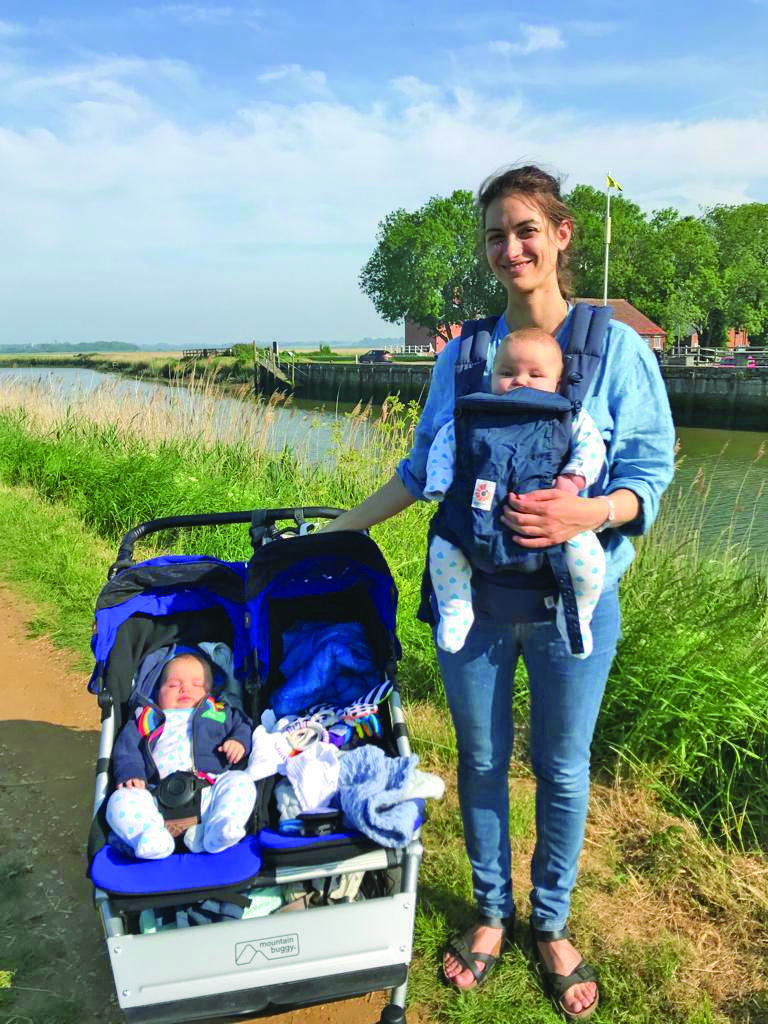
Meron with her twins when they were young
(Photo: Private album)
That was the point at which Meron realized she would have to prove her case almost entirely on her own, or, as she puts it, “become a kind of James Bond, with fake names, sneaking around and secret filming.” She began visiting different branches of the British Pilates chain under different names, searching for various defects.
“Each time, I pretended to be a new trainee,” she says. “I told the instructors I had a scratch on my finger that made it hard for me to do some of the exercises, so I would have an excuse to stand to the side and examine the machines up close.
"Very quickly, I noticed quite a few problems, but I realized that didn’t really help me. To prove them, I needed someone to move the machine and someone else to film it and serve as a witness. So I hired a private investigator, and it was surreal. I found myself standing in a London Underground station, waiting to meet a stranger and explain our mission. Me, the mother of three, who had excelled at violin since age 7 and had always followed the rules.”
Doctors ruled it psychosomatic
In July 2020, she moved with her family to Switzerland to play with the Tonhalle Orchestra in Zurich. “I wanted to push through and keep playing despite the severe pain in my hand,” she recalls. “I took painkillers and gritted my teeth just so I could keep performing, but my condition kept deteriorating. I couldn’t last through an entire concert; I could only play a very specific repertoire because my fingers could no longer reach all the angles needed to produce the sounds. Eventually, I couldn’t play at all.”
By that stage, the abdominal problem had also worsened, and she had difficulty walking. While she was fighting a legal battle in England over the accident, she did not yet know she would have to fight on another front as well: convincing doctors in Switzerland to believe her.
“I made an appointment with the neurology department at Switzerland’s central hospital,” she says. “I waited many months for that appointment. The doctor asked why I had come, and I told her about all the symptoms: the bulges in my abdomen, my inability to stabilize the left side of my body. Without even examining me, she said what I was describing made no anatomical sense, that this was not a place for people like me, and asked me to leave the room.”
Are you serious?
“Yes, exactly. I was in shock, and still, I begged her. I said, ‘Let me lift my shirt for a moment, and you’ll see that what I’m telling you is 100% accurate.’ She flatly refused to examine me and wrote in the medical report that I had a psychosomatic problem.
“Through connections I had, I managed to get an appointment with the head of the department at the same hospital, also a neurologist. He tested my abdominal muscles with EMG and saw that they were not contracting. Then he performed an ultrasound that confirmed a 50% reduction in muscle function on the left side compared with the right. And still, in the medical report, he wrote that I was an extreme case of a psychosomatic patient.”
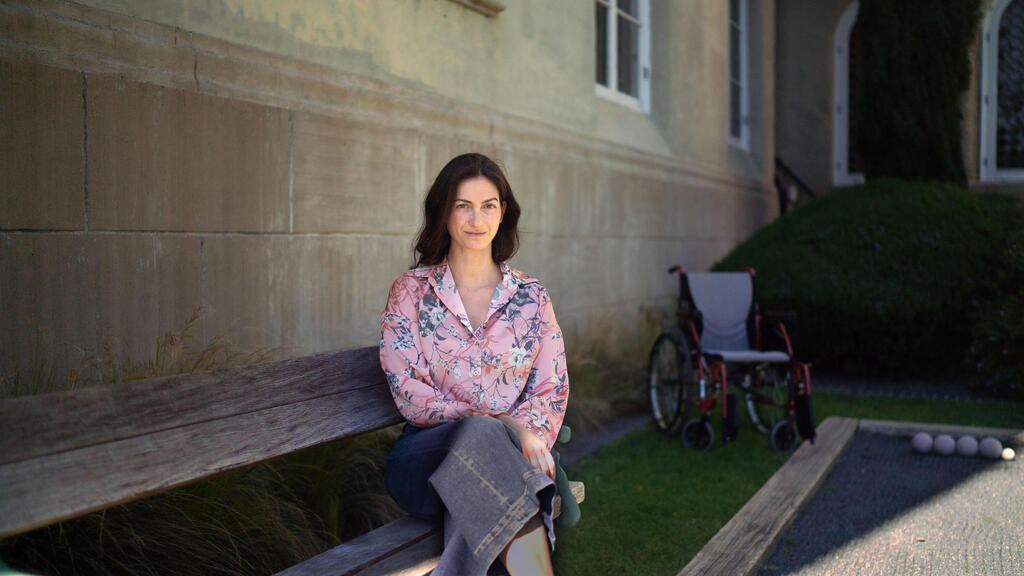
‘The hardest thing was the breakup of my family’
(Photo: Dalia Alkser)
Why?
“In retrospect, I understood that under the Swiss medical system, he couldn’t go against the opinion of someone who worked alongside him. Even though the doctor wrote what she wrote without examining me, he couldn’t contradict her. He did document the findings he discovered in the report. “But in the end, he added that psychiatric hospitalization should be considered. Once that appeared in my file, every door closed to me.”
“I went to dozens of doctors, and they refused to take my case seriously. From the moment the word ‘psychosomatic’ was written in my medical file, they looked at me as an unreliable psychological patient. I wrote emails to that department head. I begged him to change his opinion. He firmly refused.”
And during that time, your marriage also fell apart?
“Yes. My husband said it wasn’t possible that 100 doctors were wrong and I was the only one who was right. He also started to think the problem might be emotional, because of the stress of the lawsuit in England and the fact that I could no longer play.”
"The thing is, I went to several psychiatrists, and they all sided with me, telling me my problem was medical. I had surgeries on my elbow in an attempt to improve function and return to playing. I fought for justice in the legal case. It was certainly hard, but I was never in a state of mental decline.
But you were deteriorating physically.
“Exactly. I told every doctor that if they didn’t help me, I would be in a wheelchair within a few months. And that is what happened. In my view, Switzerland is a country that discriminates against women. I don’t think doctors would have been so quick to decide that a man’s complaints were psychosomatic. In addition, I was a foreign resident, and that didn’t work in my favor either.
“I told my husband I couldn’t fight battles on every front and then come home to another one. More than anything, I needed his support. I needed him to help me fight to be heard. Sadly, that didn’t happen, and we separated.”
“I should say that he became the family’s breadwinner while also cooking and taking care of the children. He was a wonderful husband, an extraordinary father, and he loved me. But the marriage didn’t survive. This tore us apart too. It broke up my family. I wish it had only been a broken elbow.”
That's sad.
“The greatest tragedy is that a few months after we separated, I was diagnosed. I reached Dr. Henry Hoffmann, a surgical specialist in Basel who focuses on abdominal wall hernias. He shared my case in an international forum of nearly 14,000 abdominal wall surgery specialists, and I was eventually referred to Professor David Chen at UCLA in California, one of the world’s leading experts in the field. He believed that beneath the abdominal muscles, in an area imaging can’t show, the nerves had been torn during the twisting motion of the fall.”
A fresh start
Meron flew to the United States, and in late March 2024, on the very day she celebrated her 44th birthday, she underwent surgery at a medical center in Santa Monica. When the abdominal wall was opened, the full extent of the injury was revealed to the surgical team led by Chen: damage to the left abdominal wall, severed nerves in the abdomen, stretching of the upper oblique muscle, a full tear in the transversus abdominis muscle and in the internal oblique muscle, scarred intestinal tissue and more.
“Professor Chen said he had never encountered an injury like mine. He repaired everything he could, but because five years had passed, it was no longer possible to restore the function the muscles had lost. He implanted mesh, and thanks to that, in the first few months, I no longer needed the wheelchair. But as time passed after the surgery, my condition deteriorated again, and since then I have struggled to stabilize myself and walk without help.”
Because of the distress she experienced, Meron felt she could no longer live in Switzerland. She moved with her children to Indiana, where she is developing a new method for teaching string instruments. “I wanted to start over,” she says. “I thought that even if I could no longer continue playing professionally, at least I could remain involved in the world of music.”
Still, she refused to remain silent about the painful experience she went through as a patient and gave interviews to Swiss media, hoping that publicizing her story would prevent other patients from enduring a similar ordeal. “I want to hold accountable all the doctors who classified me as psychosomatic and did not take me seriously,” she told one local newspaper.
At the same time, she filed a lawsuit against the central hospital in Switzerland. “The case has been stuck for a year and a half,” she says. “Switzerland is a small country, and everyone knows everyone. The moment experts hear who they are supposed to testify against, they get cold feet.”

The family in better days in a painting by Andrew Gow; 'It was painted in 2022. By the time the work on it was finished, we were no longer together'
(Photo: Private album)
One victory, however, she can already claim: After seven years, some 400 doctor visits and elbow and abdominal surgeries, Meron settled with the insurance company of the Pilates studio. Because she was required to sign a confidentiality agreement, she is not allowed to disclose the amount of compensation she received. But according to the Daily Mail, which covered the case extensively, such a settlement could amount to millions of pounds when taking into account lost income from the severe injury that destroyed her career.
In an interview with the Daily Mail, her attorney, Jonathan Goldberg, said: "The world of music has lost a violist of international standing, and she has lost the use of much of her body as well as her glittering career, but I believe her extraordinary courage and resilience will help her lead a good and useful life in future nonetheless."
Meron, for her part, prefers to focus on doing. After once again finding herself struggling to walk on her own, she is now working on developing an innovative walking aid. “My problem is not in my legs but in my posture,” she explains. “If someone supported me from the side, I could walk without a problem. For a while, I even paid people to serve as my support.
"The thought of going back to a wheelchair crushed me. Then one day, when I was at my lowest point, I had a crazy idea: take a walking stick and attach it to a skateboard. It gave me constant support without having to lift the stick with every step.”
Through a university acquaintance who connected her with a high school student involved in robotics, the two began developing a new walking device, now in advanced stages of refinement. “The prototype drew attention across campus, and a private donor who saw the device decided to fund its continued development,” she says.
“I was also recently contacted by the MIT Assistive Technology Lab, one of the world’s leading centers in the field, and I am expected to meet with them in June to examine further development.”
Last February, Meron underwent a third surgery on her injured elbow to repair nerve damage. “This accident made me lose my career and my ability to walk, and it left me in pain. But the hardest thing it took from me was the breakup of my family,” she says sadly.
“Still, I insist on remaining optimistic. The surgery was meant to let me return to playing to some extent. Whether that means playing one chamber piece in a concert, sitting in the last row of an orchestra and playing one movement of a symphony, or at least sitting alongside my 8-year-old twins, gifted violin and cello players, and playing together with them.”