

Around a table, several children and teenagers are playing the Israeli word game “Chai–Tzomeach–Domem” (Animal–Plant–Inanimate). One boy turns to me: “Excuse me, we have a dispute, we need you to judge: can you write ‘flower’ under ‘plant’?”
It seems not — the word has to be specific, like “poppy,” “ficus” or “pepper.” “Told you so!” the boy exclaims.
It’s early afternoon and the room is buzzing. On the floor lie giant chess and checkers boards alongside oversized vintage board games. About 30 children are here, none glued to a phone screen.
Gallery
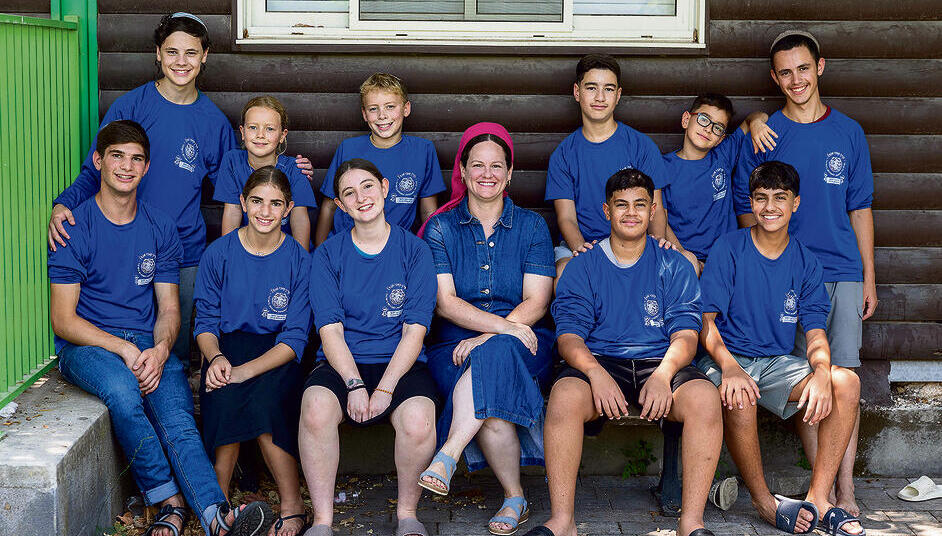
Koby Mandell Foundation CEO Eliana Mandell-Brenner, with kids at Camp Koby
(Photo: Tal Shahar)
At first glance, they appear to have little in common: boys with and without kippot, girls in skirts and in pants, elementary school students and teens nearing military service. But they are bound by threads of pain and longing. Every camper — and many counselors — at the Koby Mandell Foundation’s summer camp has lost a father, mother, brother or sister.
The camp is named for Koby Mandell and Yosef Ish-Ran, both 13, who were murdered on May 8, 2001, while hiking near their home in Tekoa, a West Bank settlement. Their bodies were found the next day in Haritoun Cave, bludgeoned with rocks, in one of the most brutal attacks of the second intifada.

At left, Yosef Ish-Ran; right, the whole Mandell family before Koby's death (Koby is in the bright blue shirt)
(Photo: Courtesy of the family)
But this camp, held this year at the WIZO youth village in Petah Tikva, is not for terror victims’ families or Israel’s war orphans. Here, the children have experienced what might be called “civilian bereavement”: a father felled by a heart attack, a mother who battled cancer to the end, a sibling killed in an accident. There are no heroic war stories — unless one counts moments of bravery inside oncology wards.
“Their loss is completely invisible, especially after October 7,” said Eliana Mandell-Brenner, 34, Koby’s younger sister and the foundation’s CEO. “In daily life, nobody really understands them. Maybe they know one or two kids who’ve gone through something similar. Here, they can be with others who truly get it, who’ve felt what they’ve felt — without anyone pitying them.”
This is also, perhaps, the only place where they can joke about death — even compete over who has it worst. “Last year we ranked whose loss was the most painful,” said Ivri Ben-Menahem, 18, of Tekoa, a five-year camper turned counselor. “One friend’s older brother died while traveling in Thailand, and it took a week to fly his body back. I think he won.”
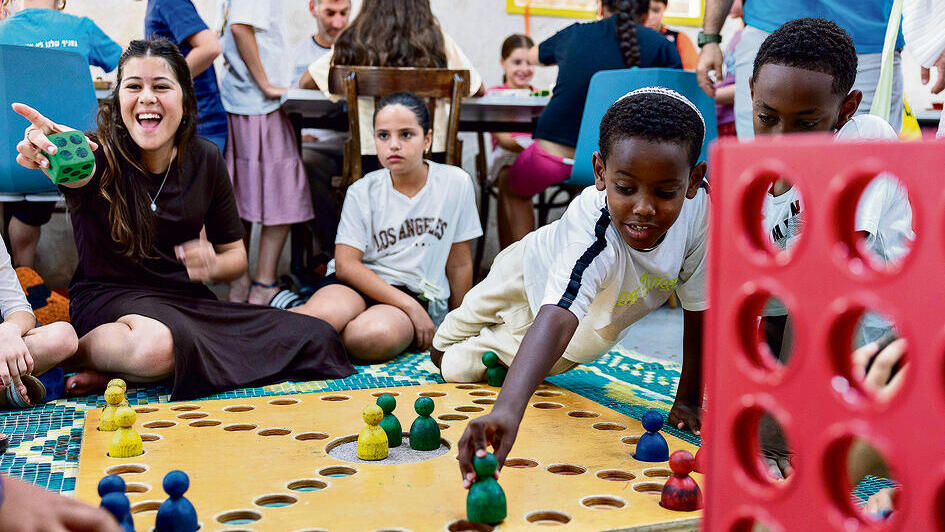
Participating in Camp Koby activities
(Photo: Tal Shahar)
Ivri’s mother, Hadas Rachel Ben-Menahem, died of cancer when he was 12. His younger sister, Ayala, was not yet three. “Last year the girls in my group said, ‘Let’s see who’s the most unfortunate.’ I was the only one whose mother had died. Everyone else had lost a father, brother or sister.”
“And you won?” Ivri asked her.
“Yes,” she replied, “but I’d rather win at something else.”
Two more of their siblings are campers: Elam, 15, and Eitan, 11. In the camp’s WhatsApp group, dark humor also thrives. “Someone wrote, ‘My mom annoys me because she always picks my clothes.’ I told her, ‘Sweetie, my mom’s dead. I’ve had fashion freedom since I was 11.’ Or another: ‘Dying to meet you — Nachman Ambulance, Burial Services.’”
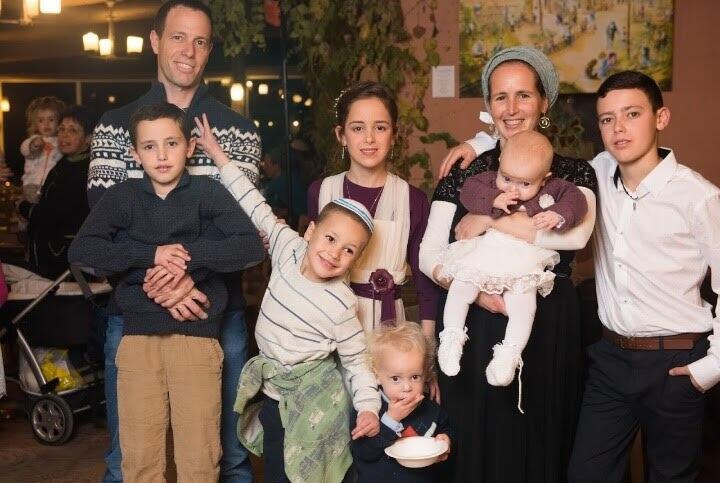
The Ben-Menachem family
(Photo: Courtesy of the family)
Ayala, who was so young when her mother died, remembers little. Elam remembers much more. “The night before she died, my mom was outside on the hammock and asked me for a pillow. I brought her one, and she said thank you. That was the last word she ever said to me.”
Each camper carries a final memory. For 13-year-old Bat-Ami Gigi of Jerusalem, whose brother Ra’anan Shimon died of cancer at 18, that memory is painful.
She was six at the time, the youngest of nine siblings. “Our parents did a farewell Shabbat with him at the hospital because they knew it was the end. Each sibling went in one by one, and I was last. I was scared to get close because he was yellow and didn’t look like himself. I couldn’t hug him or even speak. Then we all sang Shabbat songs together. That was the last time I saw him.”
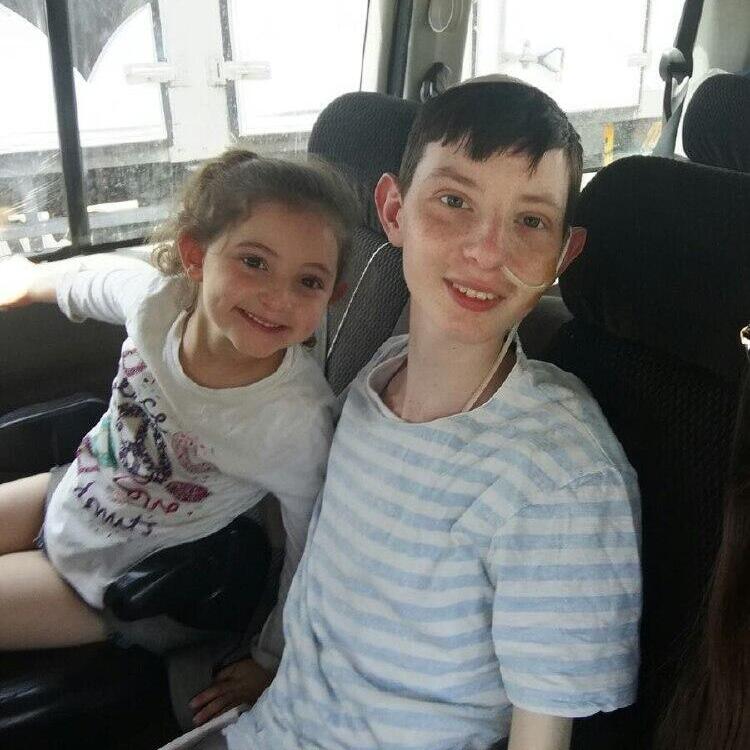
Gigi Bat-Ami with her brother Ra’anan Shimon before his death
(Photo: Courtesy of the family)
Bat-Ami feels the sting of “invisible grief.” “Girls in my class say that losing a father or brother in war is harder. But loss is loss. I lost my brother and I miss him. At school they gave cookies to all the kids whose dads were called to reserve duty. And what about me? My brother was a fighter too. He fought his illness.”
Does it hurt? “I taught myself not to care about comments like that,” she said. “But some kids are really hurt when people act like only war orphans are in pain.”
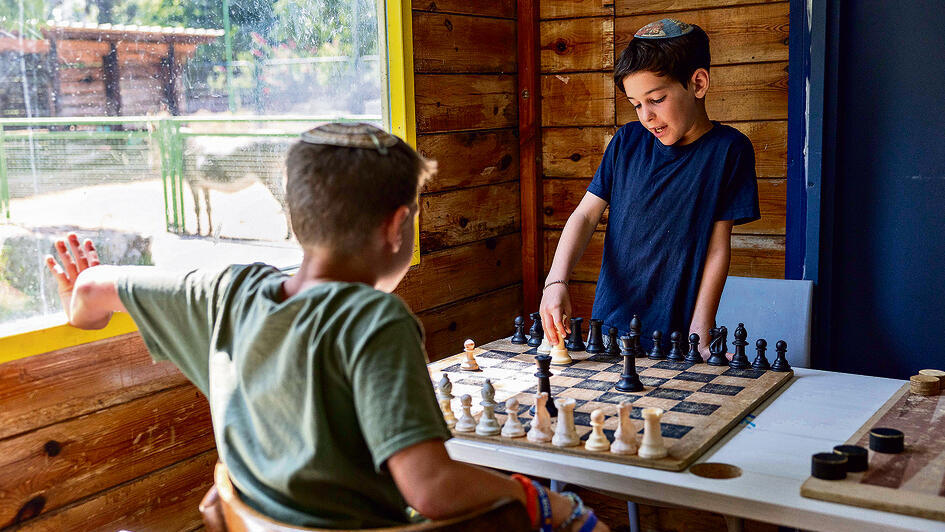
Creating final memories
(Photo: Tal Shahar)
Often, others don’t know how to respond. “One day I fought with a friend,” said Amit Fox, 9, of Jerusalem. “Later someone told me, ‘He said something awful about your dad.’ When that friend walked into class, I jumped on him and started punching and kicking. The teacher caught us fighting on the floor. We both got punished.”
Amit’s father, Tal Menachem Yaakov Fox, died of a heart attack on a work trip to the Netherlands six and a half years ago, at just 37. Amit was three. His older brother, Ben, was seven; their baby sister, Ariel, was only a few months old.
Ben recalls: “I came home and saw my mom and her sister crying. I asked, ‘Why are you crying?’ My mom couldn’t answer. My aunt asked me, ‘Do you know what death is, when someone passes away?’ I said, ‘It’s when someone goes up to the sky and doesn’t come back.’ Then she told me, ‘Your dad died.’”
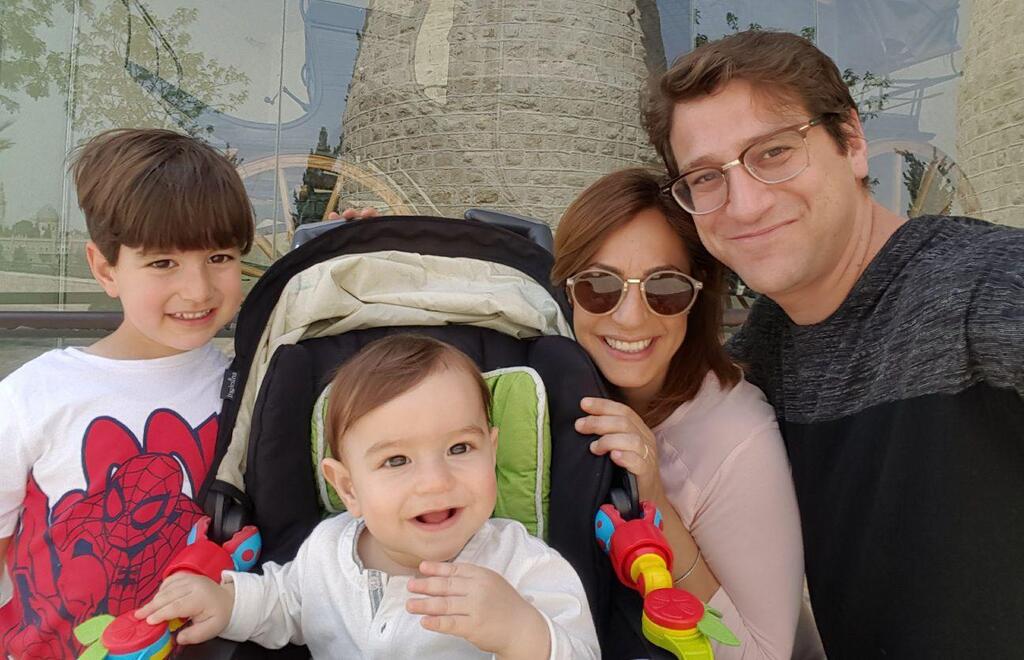
The Fox family
(Photo: Courtesy of the family)
Responses they encounter range from cruel jokes to pity. “Sometimes kids curse our dads or laugh about them. That’s our Achilles’ heel,” Ben said. “But I also don’t like pity, like ‘I’m so sorry’ or ‘If you need anything, I’m here for you.’ Most don’t really mean it. We’re just regular kids. It’s not written on my forehead, ‘My dad died.’”
Teachers, too, often stumble. “One camper told me that after his shiva ended, his principal said: ‘I’m sorry for your loss, but you’re still a student, so pull yourself together,’” said Eliana Mandel-Brenner.
She added: “With military or terror orphans, having a story of heroism behind you can help. But in the end, it’s the same struggle — and the same tactless remarks. A few months after Koby was killed, I had a fight with a friend. I apologized, saying, ‘It’s just that I’m still struggling because of Koby.’ She looked at me and said: ‘We’re all struggling because of Koby. That’s not an excuse.’ When I told my dad, he said: ‘Our kids need help.’”
The family, who immigrated from the United States, drew inspiration from American Jewish “camps.” “One of the hardest parts of grief is loneliness. At camp, kids can put down their heavy load for a while — or carry it together,” Mandel-Brenner said.
Ben Fox gave a recent example: “Last night Amit was missing our dad and mom, and Harel Aryeh, a 15-year-old camper, comforted him. Amit opened up more easily to him than to a classmate who doesn’t know what it’s like to lose a parent. Everyone here understands your sadness.”
Amit added: “Harel told me that at his first camp he called his mom crying every night, just like me.”
Harel was 5½ when his father, Alon Aryeh, died. He first visited his grave before his bar mitzvah — also the first time he said Kaddish. “I never thought I’d be doing that at my age,” he said. He and his two brothers, Omer, 13½, and another who preferred not to be named, have been part of the foundation’s programs for nine years. Omer was 4½ when their father died. “Two weeks later, I was still asking when he’d come home. Then I understood he wasn’t coming back.”
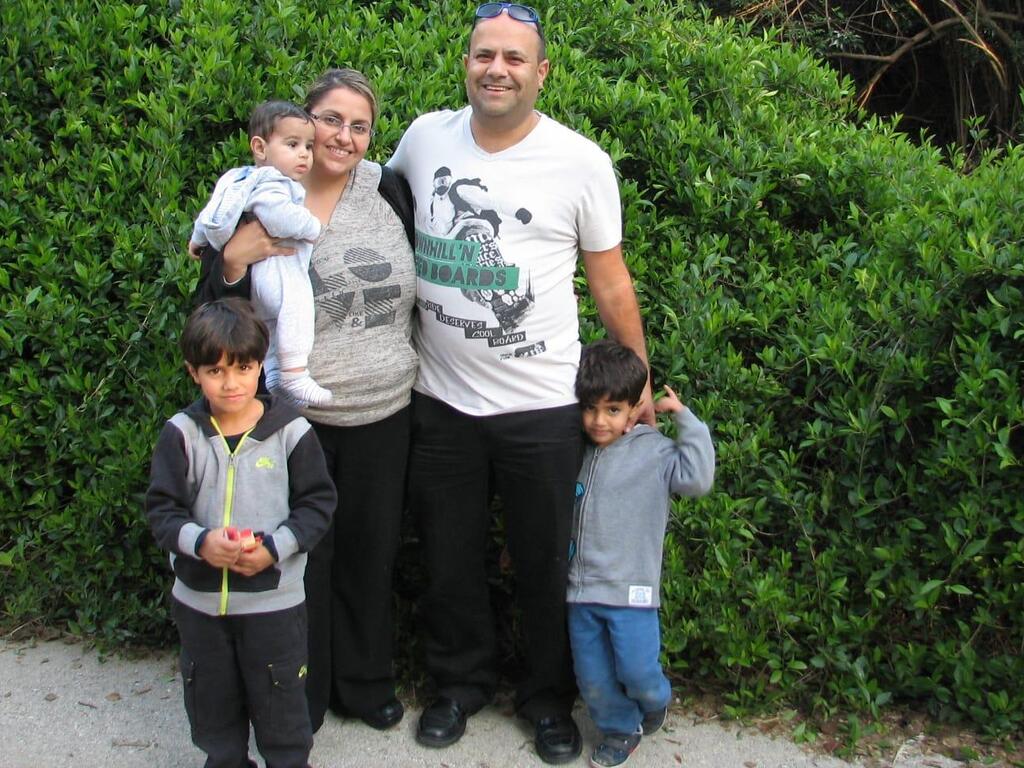
The Aryeh family
(Photo: Courtesy of the family)
Six months ago, Omer celebrated his bar mitzvah. “It was different. Since my dad couldn’t come up to the Torah with me, I went up with my mom and uncles. I spoke about my dad in my speech. It was very emotional. Many friends from camp came.”
About 750 children attend the foundation’s camps, held each summer and during Hanukkah. Since Oct. 7, the foundation has organized three parallel programs: one for “national bereavement” linked to war and terror, and two for civilian loss — one mixed-gender, one separate.
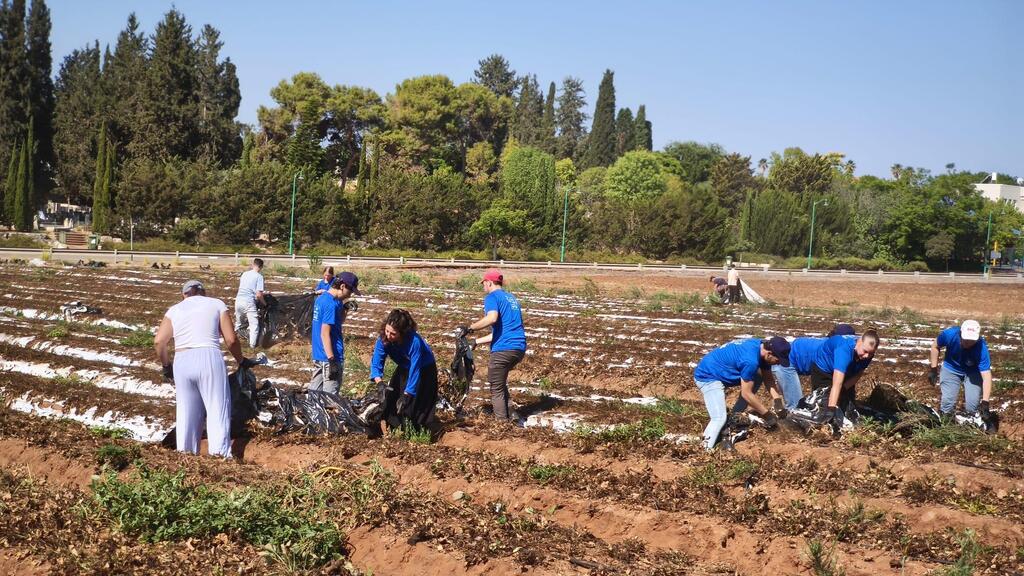
Campers like to volunteer
(Photo: Fourtesy of the Koby Mandell Foundation)
Each six-day sleepaway camp includes group therapy sessions, social games, and outings: younger kids go to amusement parks like Superland, older ones go kayaking at Kfar Blum. Campers also volunteer, helping farmers or spending time with the elderly. “Giving to others builds resilience,” Mandel-Brenner said. “They enjoy being givers, not just receivers.”
Among the counselors is Almog Galim, 18, of Neveh Tzuf, who came with his younger sister Shoval. Their father, Chaim, died of cancer two and a half years ago, leaving behind seven children.
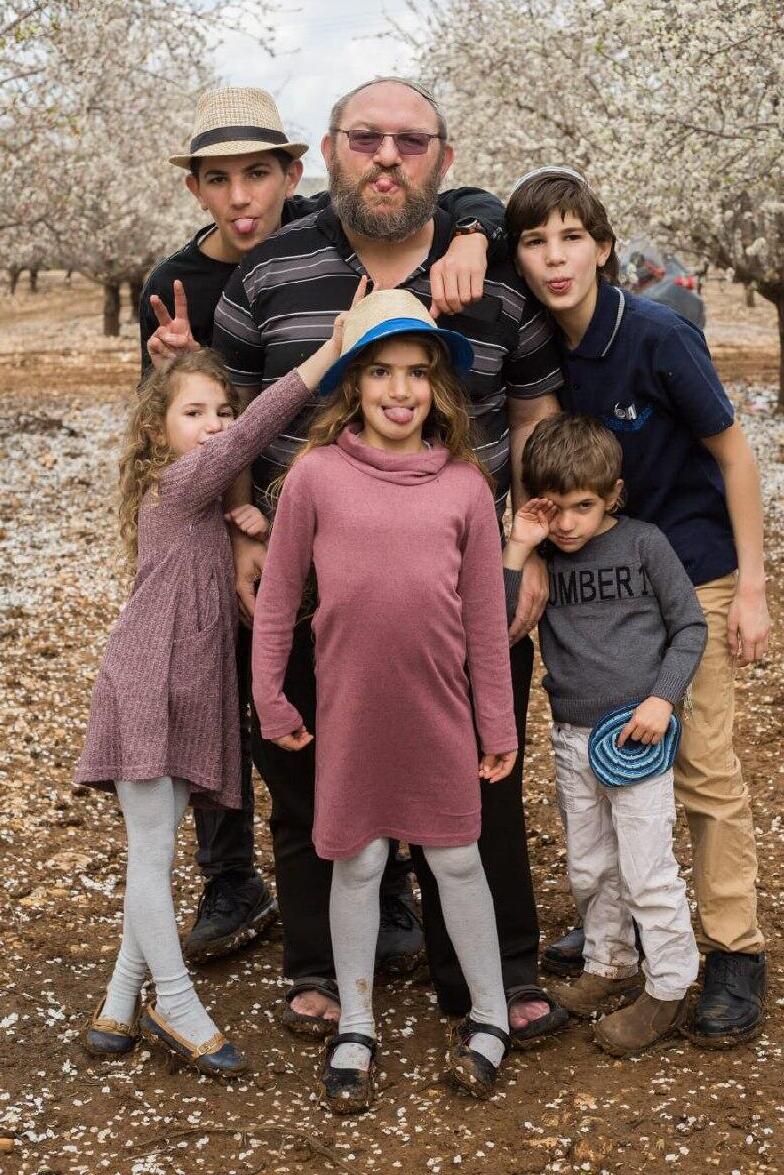
The Galim children with their father, Chaim
(Photo: Courtesy of the family)
This is Almog’s second summer as a counselor. “At first they suggested I come as a camper, but I didn’t want the label of orphan. Then they said they needed counselors, and I thought, ‘Okay, I’ll try.’ I got hooked.”
“Here you feel you belong,” said Shoval, 13½. “At school, whenever they talk about fallen soldiers, everyone looks at me just because my dad also died — even though it was from illness. But here, everyone’s like me.”
Counseling, Almog said, also helps him cope. “A kid hugs you, tells you stories, opens up. One mom told me her son is silent at school, doesn’t speak, doesn’t interact. I told her, ‘That’s not the boy I know. With me he talks, he shares. He plays with his group, even shows leadership.’ She was so moved. For me, that fills me up. What could be better?”