


The tanks were there by chance
On the morning of Hamas’s surprise assault, October 7, 2023, the armored battalions of the 188th Brigade were deployed on operational duty in the West Bank. The brigade’s engineering battalion was stationed on the distant northern border, and most of the brigade’s commanders were away on weekend leave.
But a single decision by then-brigade commander Col. Or Volozhinsky, months before the war broke out, changed the picture for the brigade, the army and the residents of the Gaza envelope. As surprising as it may sound, the disgraceful failure of October 7 — which cost the lives of about 1,200 people and saw 251 kidnapped — could have been even worse.
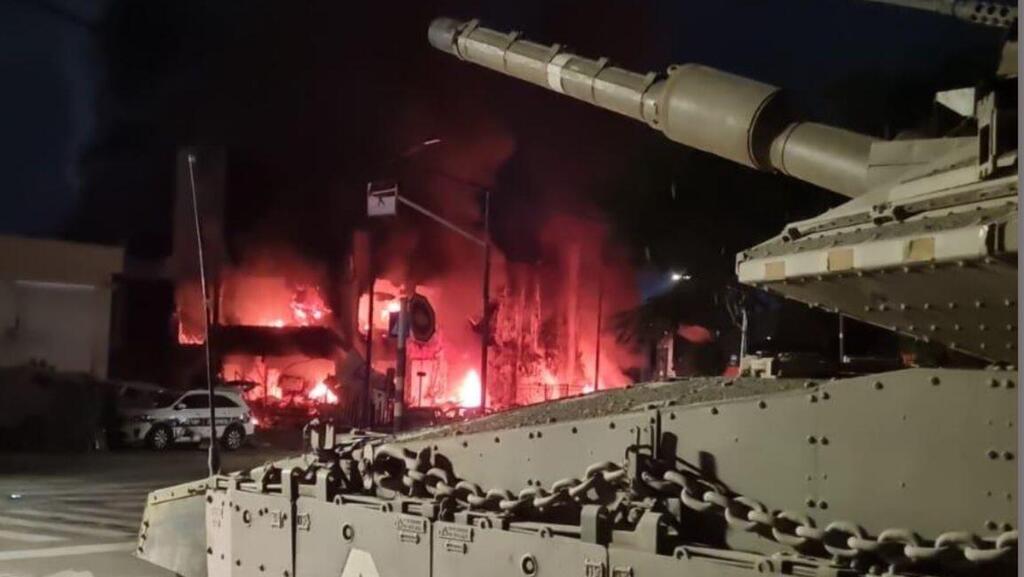
From the moment he assumed command of the 188th Brigade in May 2023, Volozhinsky knew one thing: the brigade needed an operational plan for Gaza — and it had to be relevant for combat there. The plan was written, and just a week before war erupted, officers toured the sector. A few weeks earlier, somewhat by chance and partly due to the brigade’s push, tanks from the 53rd Battalion — then on duty in the West Bank — were stationed at Tze’elim.
On the morning of October 7, Volozhinsky immediately understood: “This is war.” At that moment, tanks of the 77th Battalion from the 7th Brigade were fighting in the Gaza envelope and suffering heavy losses, while the tanks of the 53rd Battalion from the 188th Brigade were the most available force for the battle zones.
Sderot police station on October 7
(Video: Oriel Melamed)


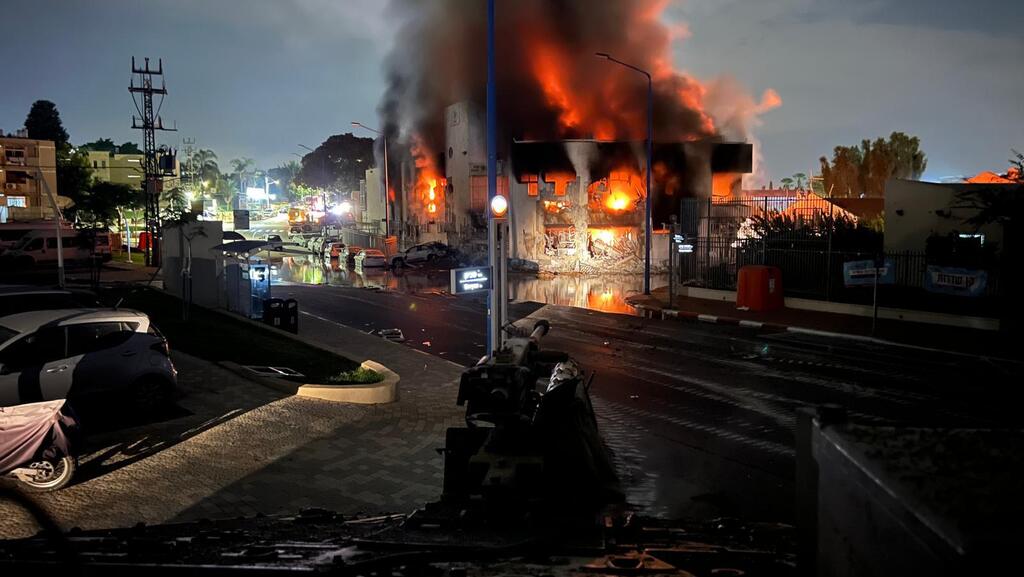
The Sderot police station on October 7
(Photo: Oriel Melamed)
“Yom Kippur. Hamas all-in,” the commander wrote in a WhatsApp message to his chief of staff, Col. (res.) Matan Shefi. After long months of grinding combat, he still remembers those critical moments. “I understood very well this was our hour, and I told myself: you must not fail now. You must save as many people as possible.”
“Panic? Fine. Spit it out.”
Lt. Col. Salman Habaka, the commander of the 53rd Battalion, who later fell in battle in Gaza, was rushed to Tze’elim, where the tanks awaited. At the same time, 74th Battalion Commander Lt. Col. Oren Schindler realized he would not see his own tanks, which were deployed in the north, anytime soon. So he loaded weapons and fighters onto vehicles and drove toward Zikim.
The first tank shell fired in Kibbutz Be’eri
(Video: IDF)
“We’re going to engage,” he answered a company commander who asked where they were headed. The force later split: some began clearing Zikim base, while others fought at Yiftach outpost. They later entered Kibbutz Be’eri.
“We understood fire could come at us from anywhere,” Schindler recalls. “We began going house to house with a Yahalom unit. The sights are better left undescribed.” Together with his troops, he rescued more than 100 civilians by nightfall. Meanwhile, another force from the battalion independently reached Kfar Aza and fought terrorists there.
The tank drives through the Nova area, surrounded by wrecked cars
(Video: IDF)
Meanwhile, in Tze’elim, Habaka and his fighters prepared the tanks. “I trust you. Go in like animals,” the commander told his men in a briefing before heading into the Gaza envelope. “Anyone who still has a bit of stress, a bit of panic — that’s perfectly fine. Spit it out here beyond the dune.”
Daube’s force enters the fight
Around 12:30 p.m., the 188th Brigade commander directed three tanks — known as the Daube Force — toward Nir Yitzhak, Sufa and Holit. The force commander was Lt. Col. Niv Daube, since promoted to colonel. That day, three of his brothers also fought: his younger brother served as staff manager of Battalion 53, one older brother commanded Brigade 300, and another, decorated for valor in the Second Lebanon War, also joined the battles.
Daube’s force maneuvered around the kibbutzim to create a buffer between them and Gaza. In close encounters, the force killed 25 terrorists in just over 24 hours.
Col. Tal Ashur, who on that day replaced Col. Asaf Hamami as southern brigade commander after Hamami fell in battle and his body was taken to Gaza, described the impact of Daube’s force:
“Infantry had already begun bringing in many troops, but what I lacked in the puzzle were forces to push back. We understood we needed strong fists to change the picture — a force to block between the communities and the fence and repel the masses.
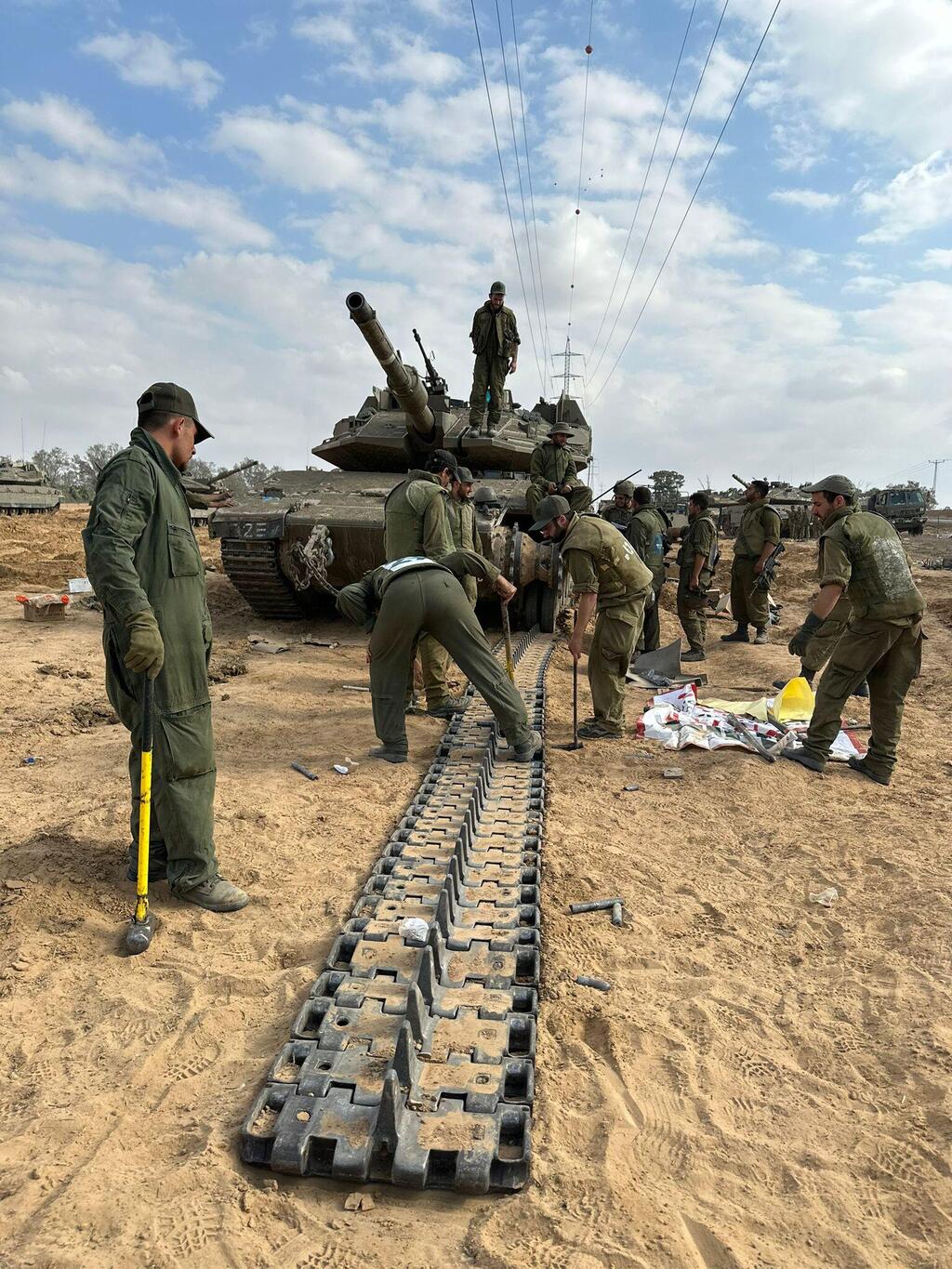
IDF troops preparing tanks to head over to Gaza on October 7
(Photo: IDF)
“There were countless terrorists in the area, and into that template these armored forces entered. I was in the brigade war room when suddenly I heard about a force coming toward me. Then I heard on the radio: ‘This is Daube Force, three tanks, I’m on my way from Tze’elim.’
“Because I knew the sector, I quickly sketched to my men that this was precisely the force that would block between the communities and the fence and repel the crowd. The feeling in the brigade war room was that suddenly there was someone to work with. We moved from a stage where people only brought you problems to a stage where you could provide solutions. This was the card that helped me, communicating and acting inside the sector. There weren’t many such forces — if any — that day.”
'The tanks are here'
At 1 p.m., six more tanks left Tze’elim for the Gaza envelope, this time under Habaka’s command. They moved toward the envelope’s northern sector and split into different combat zones. Habaka went with two other tanks toward Be’eri, where infantry forces were clearing house to house. He provided them with firepower and protection at a time when they were outnumbered and undersupplied, helping decide battles in several kibbutzim.
Eliminating terrorists on October 7
(Video: IDF)
“The moment the first shell was fired inside Be’eri, I’m sure it gave the residents a moment of relief,” Habaka said before he was killed in battle, in remarks published here for the first time. “At the entrance to Be’eri, I saw an infantry force that told me there was a massacre. I saw burned cars and bodies lying in the street and understood we were in an entirely different event.
“The first shell, fired after confirming no civilians were in the house and knowing terrorists were inside, was meant to tell both the terrorists and our forces one thing — the tanks are here.”
Less than two years later, that quote by Habaka became the title of a book describing the heroic battles of the 188th Brigade on October 7 and in the days that followed: The Tanks Are Here.
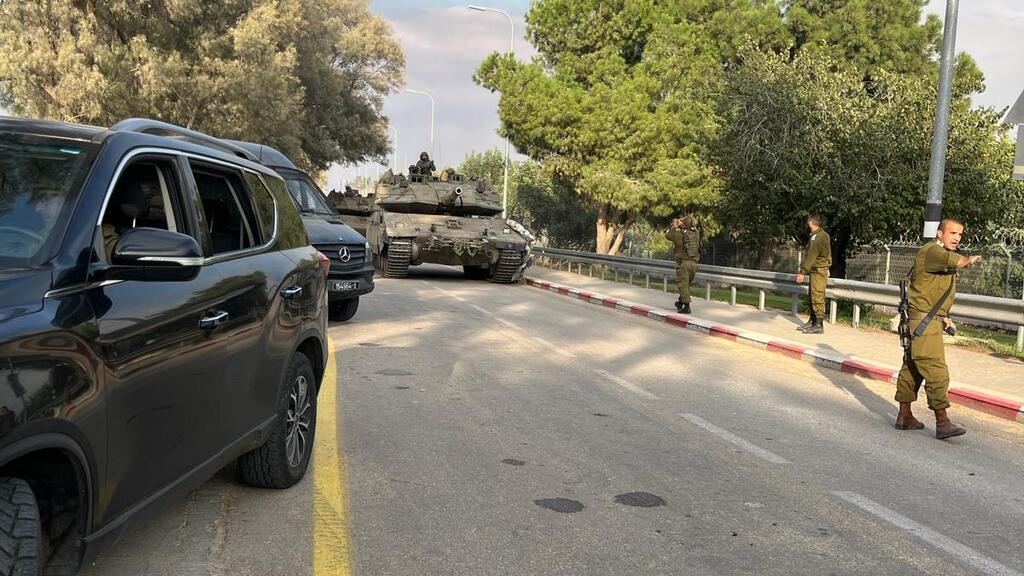
The tank of Lt. Col. Salman Habaka
(Photo: IDF)
The three additional tanks from the 53rd Battalion advanced toward Kfar Aza, where heavy fighting was also underway. “As soon as we arrived, we saw unpleasant things,” recalls then-Capt. Gal Gortler, commander of Company C. “We understood there were terrorists inside the community, and we were the first to enter with tanks to hunt the enemy.”
Three tanks in the middle of the desert
When the tanks left Kfar Aza, they encountered Lt. Col. Tomer Greenberg, then commander of Golani’s 13th Battalion, who later fell in Gaza. He took them with him to blocking battles in the Nahal Oz sector. Less than a day later, they repelled a major Hamas attack. Over the following days of fighting, they killed dozens of terrorists.
Greenberg described: “I had no Namer APCs — they were trapped in outposts or disabled. I told my brigade commander I would carry out the mission assigned to me, but I had no idea how. Then, like finding water in the middle of the desert, I spotted three tanks on the access road to Kfar Aza.
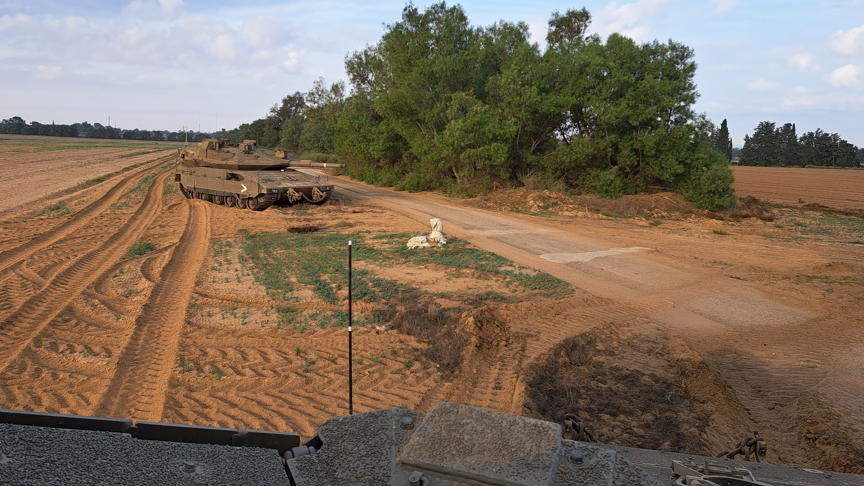
IDF tanks on October 7
(Photo: IDF)
“I asked what those tanks were, no one knew. They said they were from the 188th, rushed from Tze’elim. I approached the company commander there, told him he was with me. He said, ‘Great, what do we do?’ I answered that we had a very important mission — to prevent terrorists from escaping and others from entering.”
At 2 p.m. on October 7, two more tanks from the battalion left Tze’elim. They moved toward Nirim and Kissufim, killing a cell hiding in orchards. Later, they also killed terrorists inside Kibbutz Kissufim. In the afternoon, a tank force under the brigade commander moved toward Kibbutz Sufa, fought terrorists and coordinated with a Hermes drone that also struck from the air.
The Sderot police station
At the same time, a force of five tanks under the deputy commander of the 53rd Battalion moved from Tze’elim toward the northern envelope. The deputy brigade commander of 188 received a call from his brother-in-law, deputy commander of the 401st Brigade, asking if there was a “free tank” to “finish the event” at the Sderot police station, where the Yamam counterterror unit was fighting terrorists who had seized it.

(Photo: IDF)
“I’m sending you one or two tanks,” the deputy commander of the 188th replied. A tank from the deputy’s force took the mission and indeed ended the event by firing shells that destroyed the station.
During the three days after the surprise attack, the 53rd Battalion was deployed across the area from Zikim to Kerem Shalom. The tanks operated nonstop, as did the logistic convoys that arrived one after another. “In four days, the battalion killed about 100 terrorists and fired 250 shells,” Habaka said at the time.
Preserving the legacy
The stories of the 188th Brigade’s battles on October 7 are told in detail in Ronen Wodlinger’s new book, The Tanks Are Here, published by Yedioth Books. The book was produced through the effort of the brigade’s Barak Association, with the aim of preserving the heritage and commemorating the fallen.
According to the author, “The book largely deals with the people who were there that day and fought, including those who are no longer with us — those who fell in battle. Salman Habaka, whose tank appears on the cover and whose words became the title, Tomer Greenberg, and other officers and fighters who fought that day and later fell in the maneuver. The book is dedicated to the memory of the brigade’s fallen and of the attached combat teams who fought under it that day.”
“Ultimately, a battle is a story of people, not only of steel and iron,” Wodlinger adds. “There are stories from inside the tank.”
He describes how many fighters touched him deeply: Yonatan Armoni, who lost both eyes and an arm in Gaza; or a reserve company commander who grew up in the Gaza envelope, fought in central Be’eri, and only afterward realized his cousin who lived in the community had been murdered.
All proceeds from the book will be donated to the Barak Association.