

“Take care of yourself, and take care of my team.” Those were the words Capt. Elad Siman-Tov said to his medic as he was being evacuated from the Lebanese village of Aita al-Shaab, mortally wounded in combat against Hezbollah militants. Even in those final moments, Elad managed to take down a terrorist and guide his unit over the radio to help them continue the fight.
Siman-Tov, who served as a platoon commander in the Golani Brigade’s reconnaissance unit, fell in battle at the age of 23, just over a year ago, on October 16, 2024. Four other soldiers were killed alongside him: Maj. Ofek Bachar, a platoon commander, Staff Sgt. Elyashiv Eitan Wieder and two members of Siman-Tov’s team - Staff Sgt. Yaakov Hillel and Staff Sgt. Yehudah Dror Yahalom. May their memories be a blessing.
Gallery
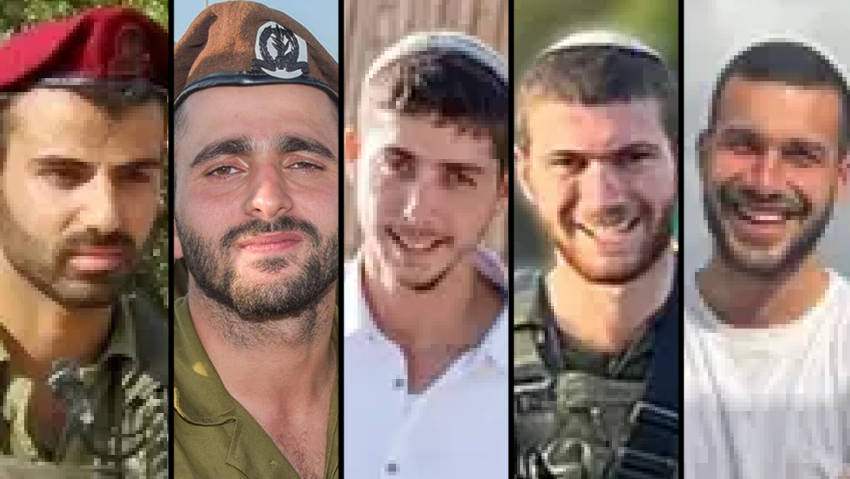
Maj. Ofek Bachar, Capt. Elad Siman-Tov, Staff Sgt. Yehudah Dror Yahalom, Staff Sgt. Elyashiv Eitan Wieder, Staff Sgt. Yaakov Hillel
On the same day the five were killed, top Hamas commander Yahya Sinwar was eliminated in Gaza. “Even in Elad’s death, things somehow happened as they did in his life, quietly and modestly, without seeking attention,” says his brother Adir. “In his characteristic way, he left us on a day when the media spotlight was somewhere else."
This year, on the anniversary of Siman-Tov’s death, Israeli hostages were returned. “That was a recurring theme with Elad,” says Adir. “He always put others before himself."
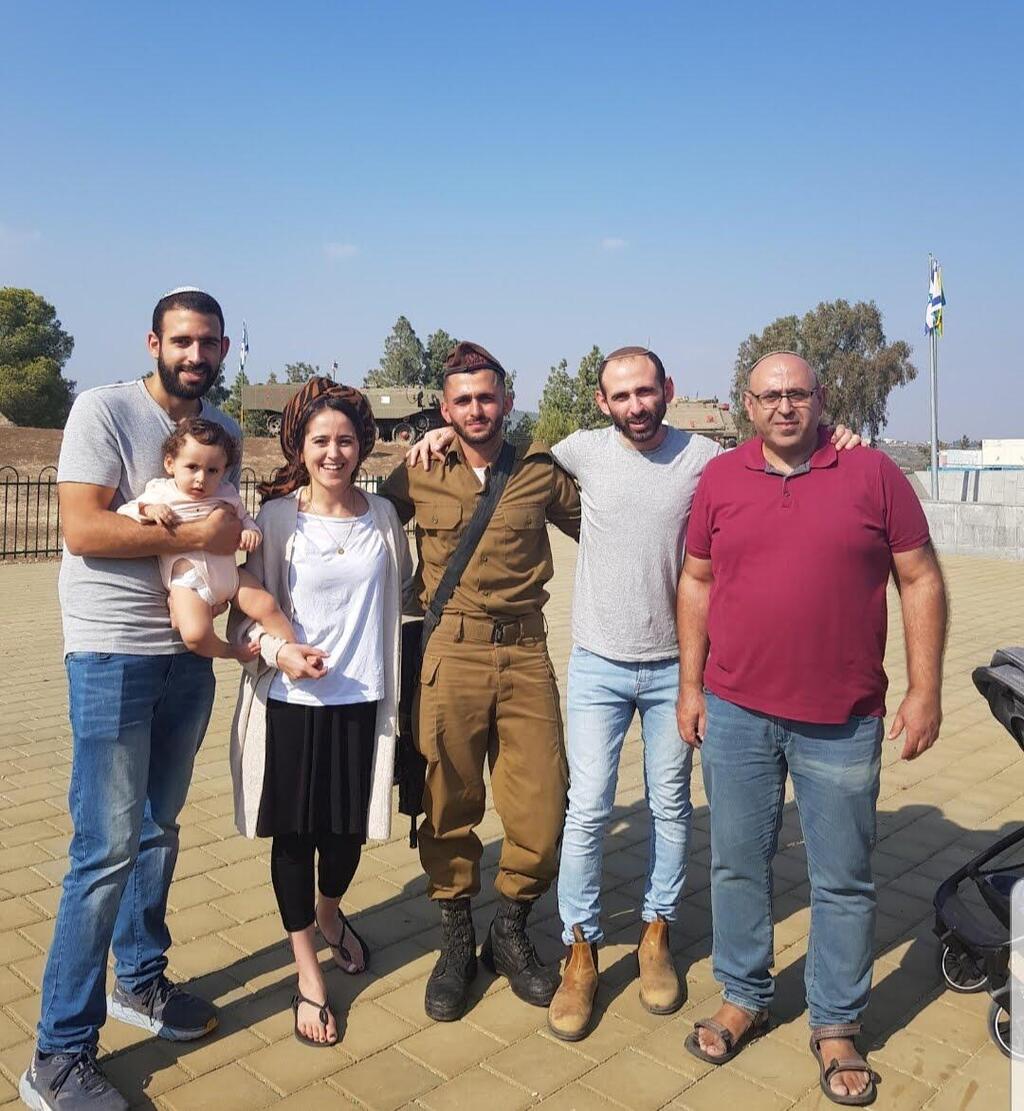
Siman-Tov family with Elad
(Photo: Courtesy of the family)
The brave soldier who knew no fear would likely be surprised to learn that his final words in southern Lebanon would become a lasting mission for his family. Adir left his job five months ago, and the entire family has been investing their time and resources into establishing a therapeutic farm in Samaria, not only for soldiers returning from combat, but also for the “second circle,” those left behind in the shadow of loss with no support or recognition.
How did the idea to honor Elad through a therapeutic farm come about?
Adir: “It began during the shiva. We saw people collapsing, not just close family, but Elad’s childhood friends, his grandparents and discharged soldiers. That’s when we realized the wound was much deeper than we thought.
“Then came our sister Ayala’s wedding, Elad’s twin. It was supposed to be a moment of pure joy, but Elad’s closest friends from the neighborhood said they couldn’t come. They just couldn’t bring themselves to do it.
"That’s when it hit us; there’s this significant ‘second circle’ of grief that isn’t being addressed, such as the friend from the neighborhood who lost his best friend, the grandparents who lost a grandson, all those living in the shadow of loss without any support, simply because they’re not considered immediate family."
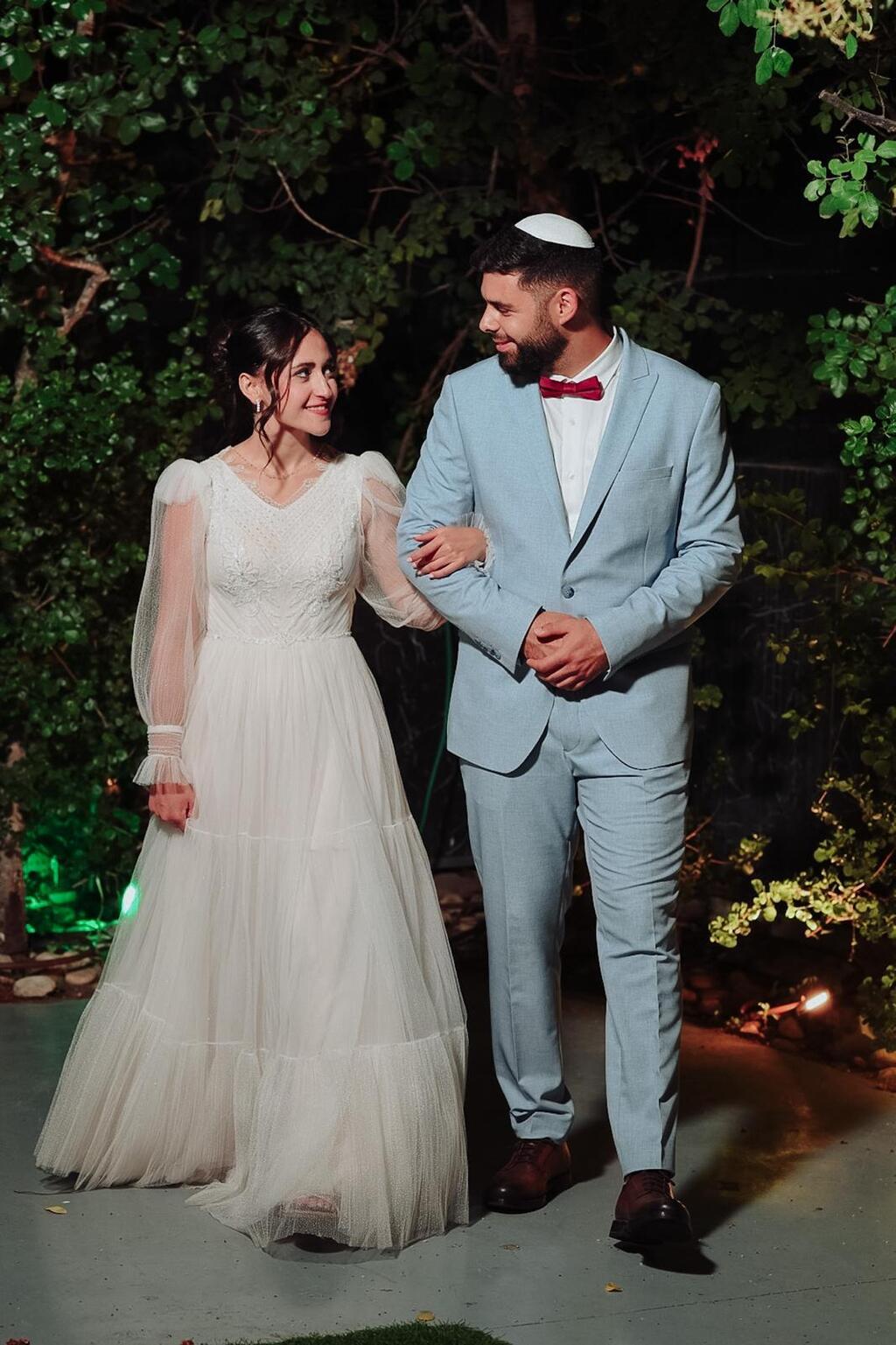
Ayala, Elad’s twin sister, at her wedding to Ohad: 'It felt like the transition from Remembrance Day to Independence Day'
(Photo: Ehud Golan)
Adir emphasizes that the farm will be open to everyone: “To combat veterans returning from the front, to bereaved families and to anyone who is dealing with the loss of a loved one, even without a blood relation, and needs support."
Turning pain into hope
The farm will be called Siman’s Farm, named for Elad Siman-Tov, and will be the first of its kind in Samaria. " It will not be another bureaucratic institution, Adir explains, but a true home for anyone in need. “When you hear the name Siman’s Farm,” he says with emotion, “you’ll know it’s the place where pain becomes hope. A place where no one is left alone."
The location was carefully chosen, just off Highway 6, 15 minutes from Kfar Saba and the town of Tzofim, where Siman-Tov was born and raised. It’s easily accessible to residents of the central region, the Sharon and Samaria.
“To us, this is not a project,” Adir emphasizes. “It’s a will. We believe that what began with that sentence, ‘Take care of my team,’ moments before Elad drew his final breath, will grow into a broader movement that takes care of all of us."
The therapeutic program will include agricultural work, carpentry and art workshops, and group therapy sessions led by top professionals. But sometimes, Adir adds, “just breathing together is already therapy.” The goal is to create a calming space that offers quality time, primarily for the soul.
“With this farm, we are reaching out to the soldier who just came back from Gaza and lost his best friends, to the reservist who served for two years and barely saw his family, to the grandmother who lost her beloved grandson and hides her grief so as not to burden others, and they are all invited to join us.
"There’s a community here that understands what you’re going through. Come breathe for a moment, process the pain and loss, so you can return to your life without feeling disconnected, anxious and alone.’”
In the past two years, many therapeutic and rehabilitation centers have been established. Why establish another therapy farm?
“We simply cannot stand by,” Adir replies. “Right now, Siman-Tov’s team is being discharged, it's an incredible group that has supported us from the day he fell, through the hardest days of the war and until now.
"These are 19- and 20-year-olds who are now returning to civilian life after two brutal years. They lost their commander, lost friends, witnessed horrific scenes and were rarely home. I don’t need to explain what it means to be in a constant state of battle-readiness for two years without a break."
“The story of Siman-Tov’s team is the story of many small teams and fighters. The battle for the soul is the longest one. And when everyone comes home from the front, they’ll need a safe place, a home that gives hope. That’s our national mission as a family."
From Remembrance Day to Independence Day
Among the soldiers who evacuated Siman-Tov and were with him in his final moments was his cousin, Itamar Siman-Tov. The two were close in age and lifelong friends, both having served in the Golani reconnaissance unit. Elad had actually followed in the footsteps of another cousin, Shilo Siman-Tov, who served in the same unit and was killed in February 2018.
“The family bond was incredibly strong in Elad’s final moments,” Adir says. “All that’s left for us now is to share his story and continue the brave, value-driven path he lived by."
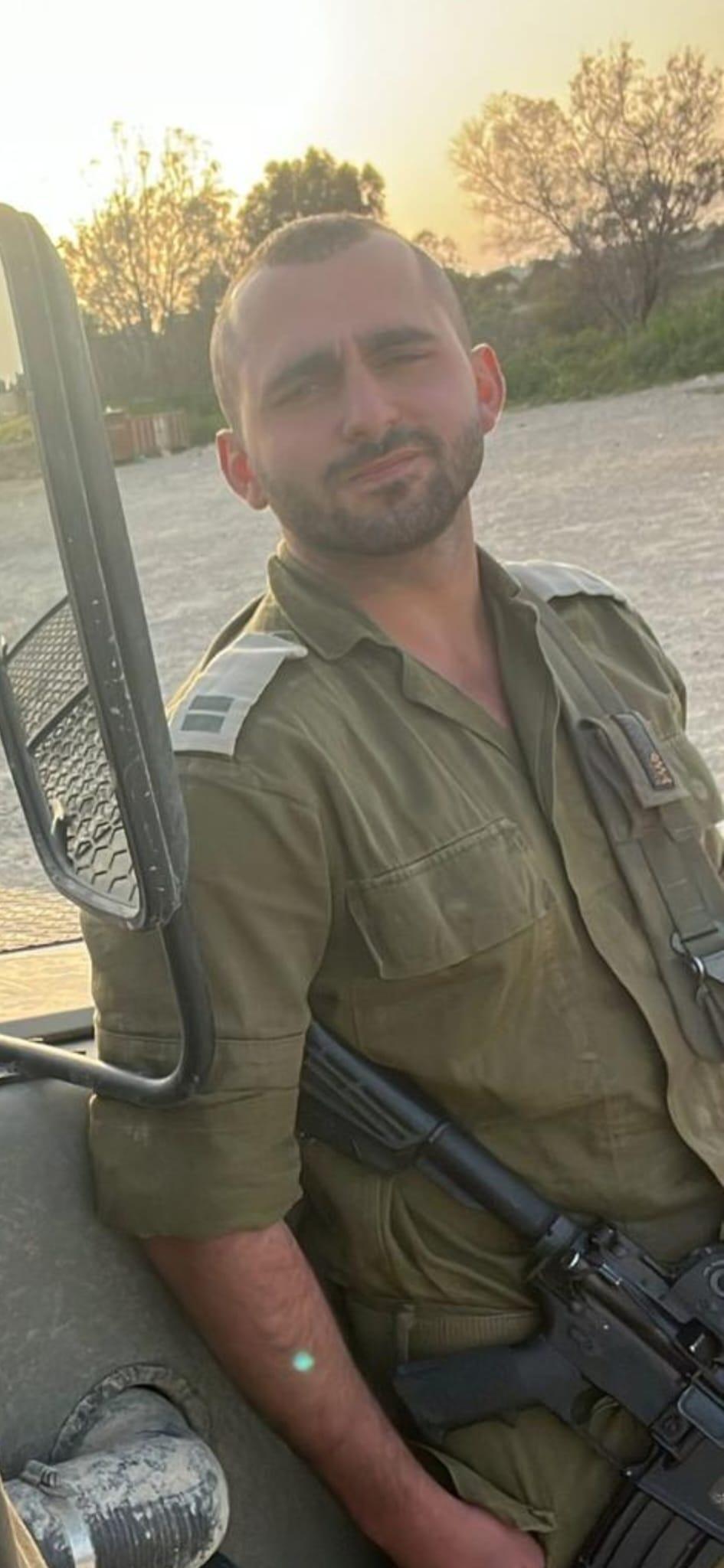
(Photo: Courtesy of the family)
Elad was drafted in March 2021, completed officers’ training and became a team commander. On the morning of October 7, 2023, while still a cadet at the IDF Officers’ School, he was called to action by a teammate.
Without hesitation, he put on his uniform, took his weapon and drove south. The two grasped the magnitude of the event after entering one of the reinforced shelters in the area, encountering the bodies of dozens of young men and women who had been massacred by the terrorists.
Later that day, Siman-Tov and his friend fought against the terrorists who had infiltrated the area, and in the evening, they joined their company and continued fighting. In the following days, they helped clear the region of terrorists and went on to serve hundreds of days in both southern and northern Israel.
“In the past year,” Adir says, “every new detail we learn about Elad reinforces the picture of who he was and the values he lived by. I see him standing in the front row of Israel’s heroes I was raised on, like Eitan from the ‘Ammunition Hill’ battle.”
Pvt. Eitan Nave was a 23-year-old paratrooper who was killed in the heroic 1967 battle at Ammunition Hill during the Six-Day War, while running exposed to protect his comrades and allow them to continue advancing through the trench.
Eitan Nave was survived by his wife Shalva and their nine-month-old son, Doron. He was posthumously awarded the Medal of Valor and immortalized in the song "Giv'at HaTachmoshet' (“Ammunition Hill”) by Israeli poet Yoram Taharlev.
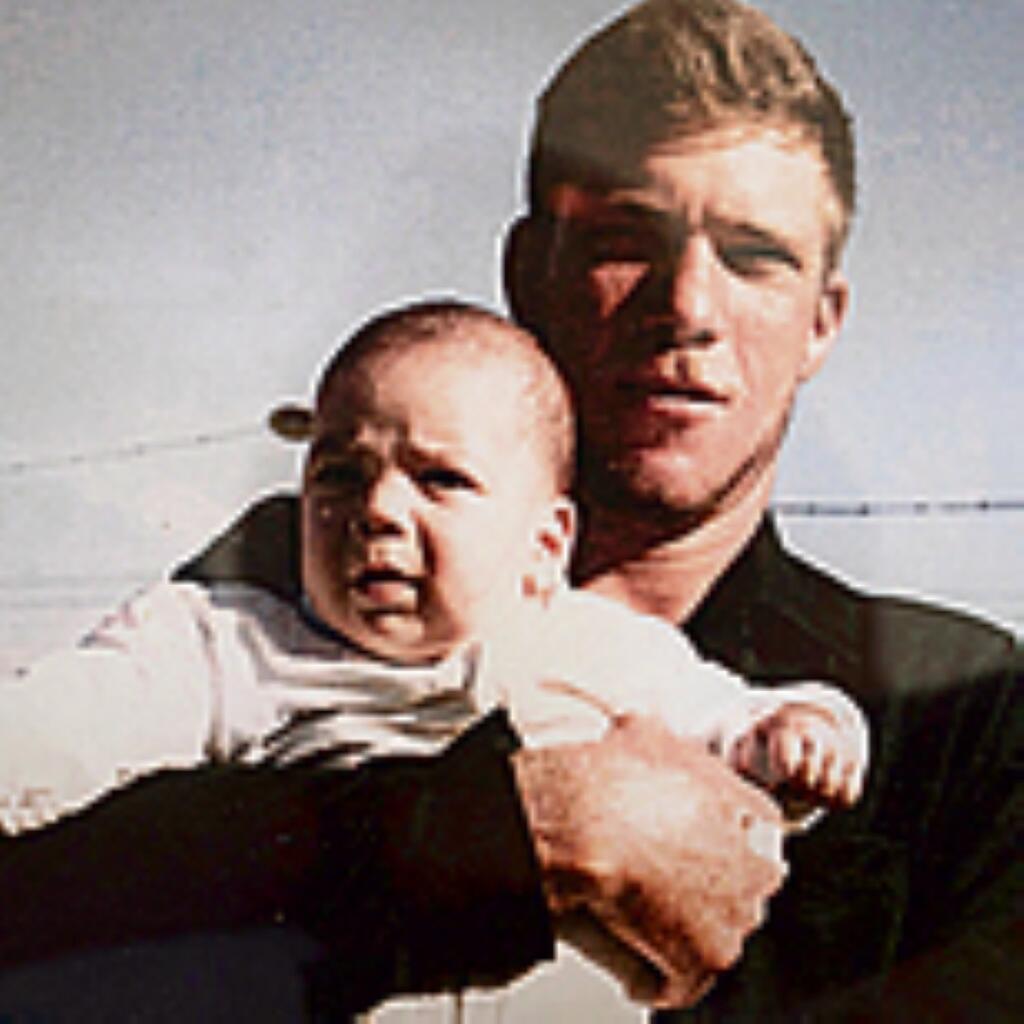
Pvt. Eitan Nave. Sacrificed himself to save others.
But alongside the pride, this past year has been one of deep emotional conflict. Siman-Tov’s twin sister Ayala’s wedding took place amid a year of mourning and a brutal war. The memorial service marking a year since his death fell on the exact day when 20 Israeli hostages were returned alive from Hamas captivity after two years.
“This year was filled with overlapping emotions,” Adir reflects. “A bit like the transition from Remembrance Day to Independence Day, like our country itself since its founding. The return of the hostages was incredibly moving. There’s this enormous desire to rejoice and be part of the national spirit. And alongside that, the realization that Elad will never return, it’s soul-crushing.”
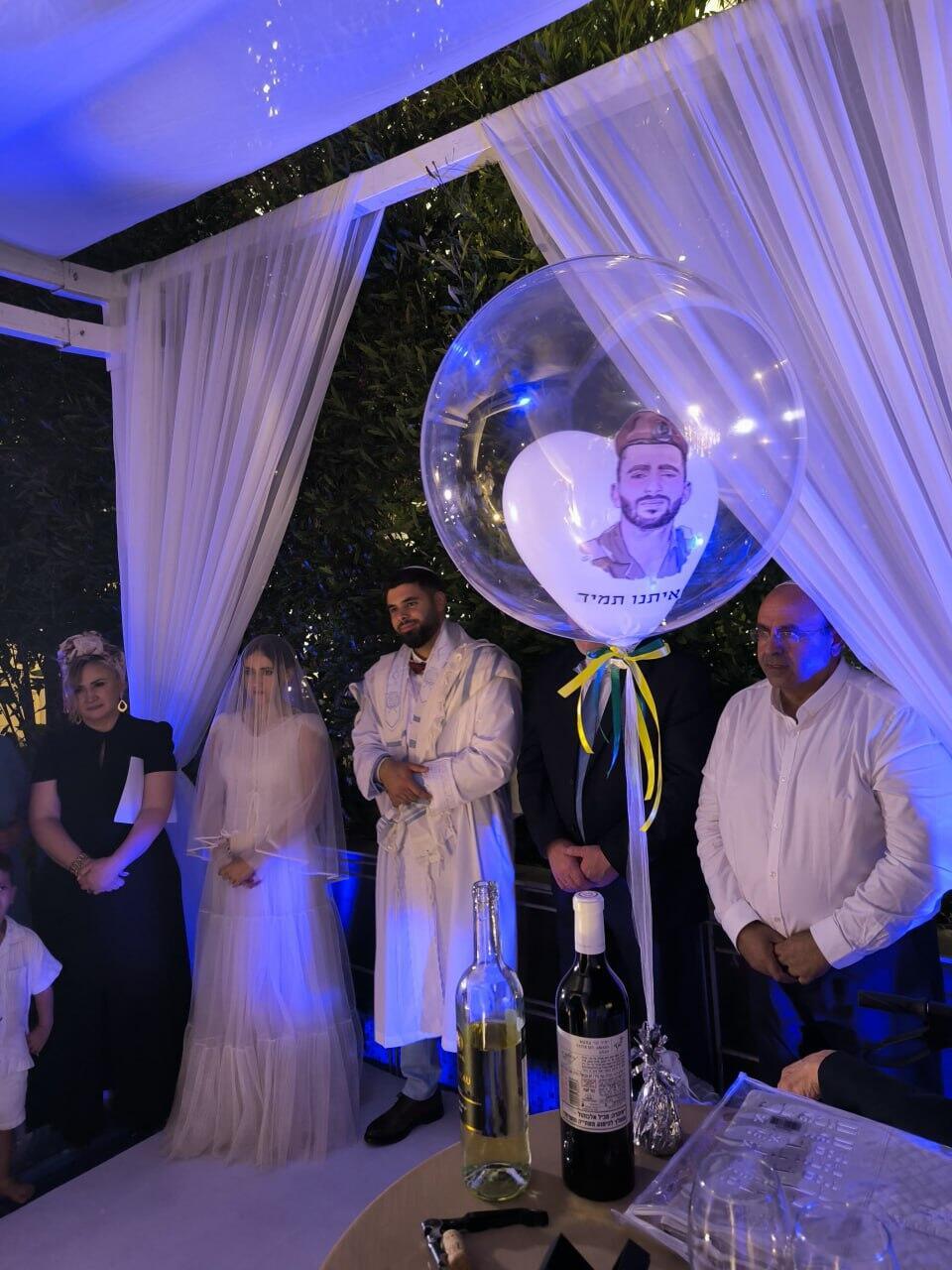
Ayala's wedding
(Photo: Zion Hadad)
How do you cope with these conflicting emotions?
“It’s not easy, and we’re torn inside. In many ways, our personal story is a microcosm of what’s happening in Israeli society. Many bereaved families I’ve spoken to were deeply moved by the hostages’ release, but it also made them want even more so to embrace the loved ones who are dead."
“In the midst of all this endless pain, my family and I chose to take part in the national story and build something redemptive through the farm.
"We must never forget that we are here today thanks to the fallen, thanks to Elad and to all the soldiers returning from the front. We can’t leave them alone now, nor the loved ones who paid the heaviest price."