

It was a Friday in late April. Troops from the Border Police undercover unit Yamas had been inside the Hamas stronghold of Shejaiya for nearly 40 hours. Disguised and undetected, they were hunting snipers who had fired on IDF troops at the edge of the neighborhood. By that time, they had already killed three terrorists without being discovered. But at around 4:30 p.m., everything changed.
Sergeant Neta Yitzhak Kahana, 19, the unit’s Machine gunner, spotted a suspicious movement: a gunman suddenly emerged from a narrow tunnel shaft. The team had been exposed. Kahana fired first, but the gunman managed to shoot as well. Kahana was hit in the head and critically wounded.
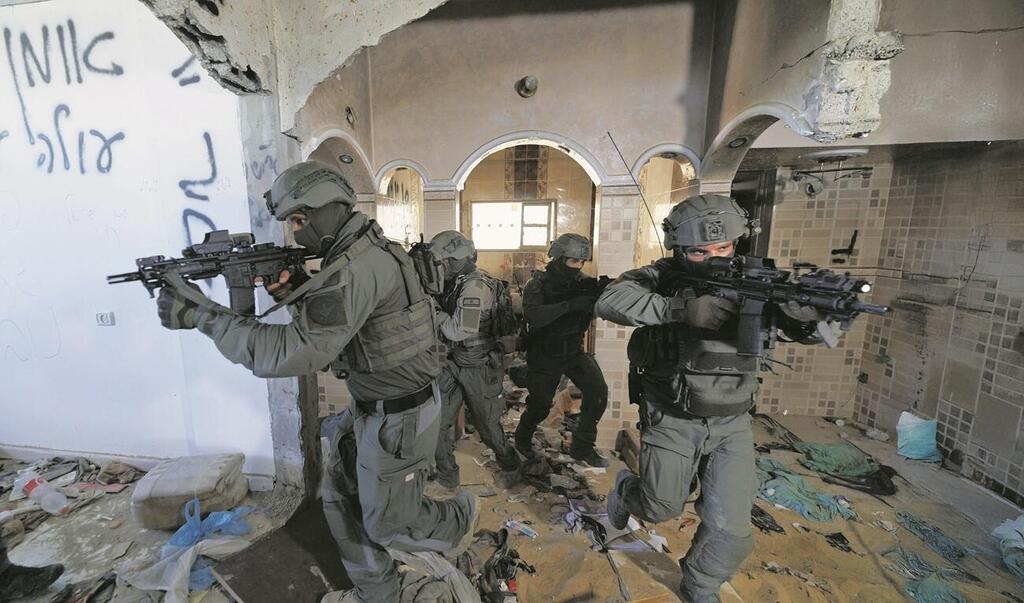
His comrades rushed to help him, only to encounter more terrorists coming out of the tunnel. A fierce battle broke out. A rescue force dispatched to help was also met with heavy fire, including grenades and an anti-tank missile. In that clash, armored corps officer Capt. Ido Volach was killed, and three others were wounded. The firefight lasted nearly five hours. By the end, the undercover fighters received the devastating news: Kahana had been killed.
When the unit’s commander, identified only as Superintendent S., recalls that day, he instinctively glances at his wrist. There, he and every fighter now wear a silver bracelet given to them by Kahana’s family, inscribed with the words: “I’ve got your back.” “That was Neta’s motto,” the commander says. “Since then, it has become ours.”
Kahana’s death revealed to the public what had been a tightly kept secret: Border Police has been operating an undercover unit inside Gaza. Most of their missions remain classified. But in this first interview, the fighters of the southern undercover unit share glimpses of their work in the heart of Hamas territory.
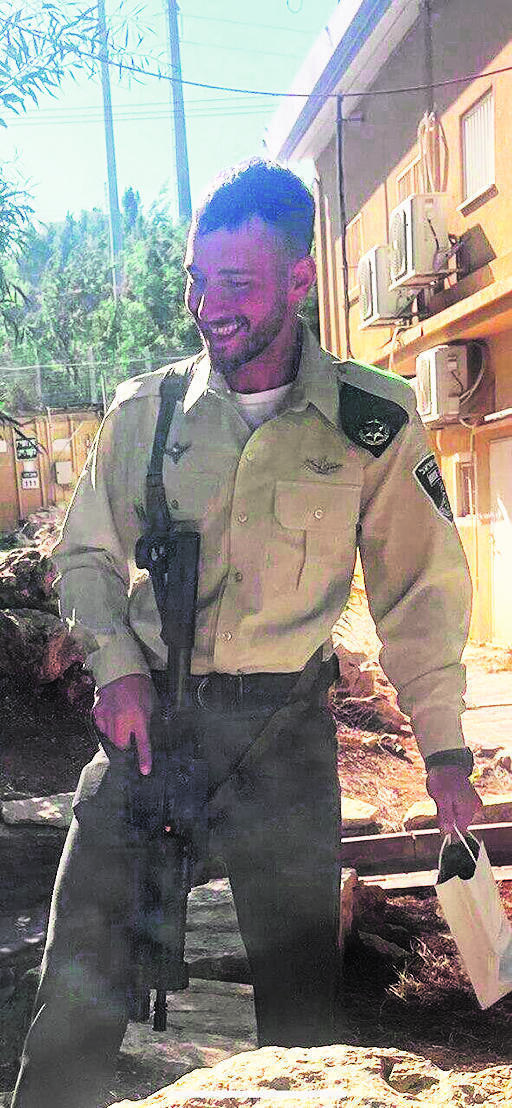
The late Sergeant Neta Yitzhak Kahana
(photo provided by family)
So why, in addition to all the special forces already operating in Gaza, is there also a need for the undercover unit?
Deputy Commander D., the unit’s operations officer, explains: “We bring our unique advantage - the ability to operate in small, flexible teams. Each team includes specialists: snipers, breachers, climbers trained for urban combat, and more. We can reach a point beyond enemy lines without raising suspicion, blend into hostile populations to gather intelligence, and handle riots or demonstrations without being exposed.”
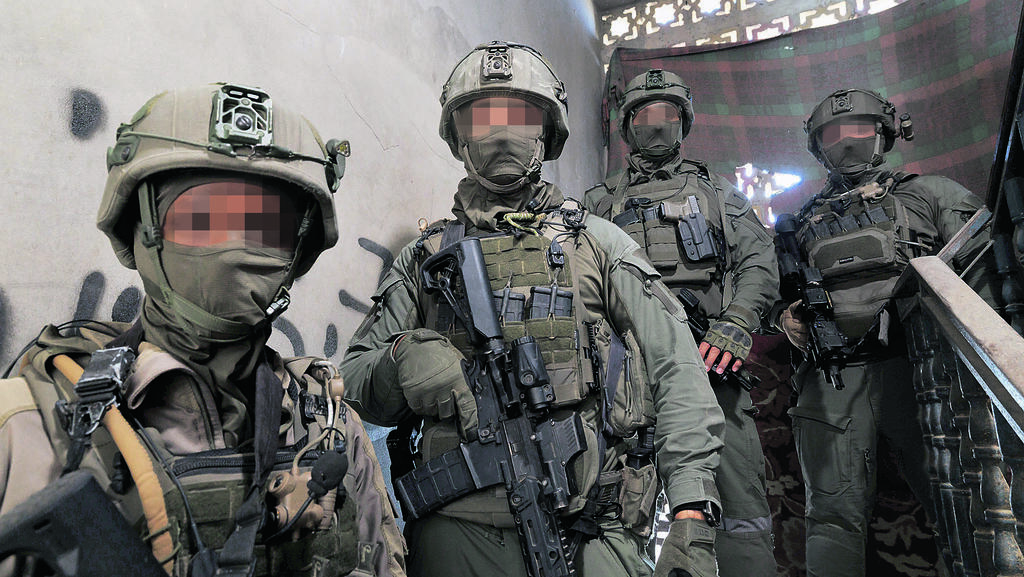
The Yamas troops in Gaza
(Photo: Ziv Koren)
Superintendent S. adds: “Our availability is also high. In theory, command can call us tomorrow and we’ll be ready to carry out a mission immediately. We enter Gaza as an undercover combat unit - that’s our role. We’re a standing, permanent force, experienced and cohesive, operating all year round. That continuity is what makes us unique.”
One example of their specialization, D. says, is when Hamas fighters embed among civilians. “A regular military force can’t act without risking civilian lives. But we can infiltrate, identify the target, neutralize it quietly, and leave without being discovered. That’s what we call a ‘penetration zone.’
Dep. Cmdr. D.: “We always think outside the box: how not to be seen when we arrive, how not to be identified when we operate, how to blend into the terrain or the heart of a hostile camp. The army faces many challenges, and it needs a unit that can carry out quiet operations where, in the end, no one even knows a force was there.”
"It’s an area usually isolated from the rest of the army. In other words, if the IDF operates only up to a certain line, we go further in, ahead of them, without being exposed, and help them carry out their mission safely.”
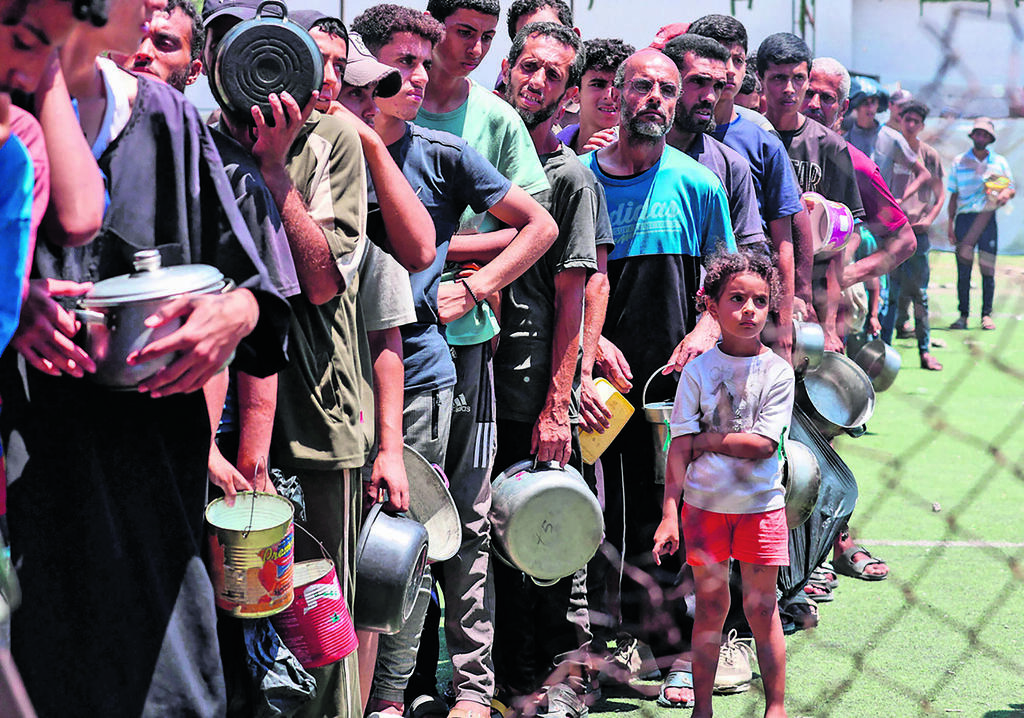
Aid center in Gaza
(Photo: Ramadan Abed/Reuters)
The unit has also been tasked with hostage-related missions, though commanders remain guarded. “We were involved in an operation connected to locating and rescuing hostages,” D. acknowledges. “That’s all we can say.”
Do you wear civilian dress when you operate in Gaza?
Superintendent S.: “No. "The green fighters" (Border Police troops) don’t operate in undercover clothing that would put them at risk there; they wear tactical uniforms.”
Is there no danger of being exposed?
Superintendent S.: “We can reach a target, conduct an operation, and strike the enemy without being exposed. That’s our advantage.”
So how do you blend in?
Dep. Cmdr. D.: “The unit has a special modus operandi I can’t detail. But keep in mind: we always think outside the box, how not to be seen when we arrive, how not to be identified while we operate, how to blend into the terrain or into the heart of a hostile camp. The army faces many challenges and needs a unit that can carry out quiet operations that leave no trace. We work without leaving footprints.”
Until October 7, the unit’s primary role was combating weapon smuggling, drug trafficking, and crime in the Negev, particularly in Bedouin communities. But on that Saturday morning, 11 of its fighters were at Kibbutz Nahal Oz when Hamas infiltrated. They immediately joined local security teams and helped repel waves of attackers. At least 180 terrorists stormed the kibbutz. The undercover fighters prevented a greater massacre, but one of them, Sgt. Maj. Yaakov Krasninski was killed.
After Israel launched its ground offensive, the unit was placed under IDF Southern Command and began conducting dozens of clandestine missions inside Gaza.
Some of the unit’s operations are highly sensitive. They were sent, for example, to neutralize terrorists who were firing at civilians collecting food at an aid center inside Hamas-controlled territory.
Inspector A.: “We identified figures who moved differently from the rest. The moment we saw them shooting at people, we acted. They fell one after another — ‘bam, bam, bam’ We neutralized five terrorists.”
Many of their missions remain under wraps. In one, they discovered Hamas snipers disguised as civilians moving toward IDF positions. “We tracked them, identified weapons hidden on their backs, and eliminated them,” D. says. “All this happened while nearby IDF forces had no idea what was going on above them.”
In another case, they intercepted a Hamas cell planning to attack an IDF outpost and potentially kidnap soldiers. “We were deployed along their route,” D. recalls. “The moment they entered our range, we opened heavy fire. They didn’t even have a chance to react.”
Some of these operations are particularly sensitive. One involved reaching an aid center for civilians south of Gaza.
Superintendent S.: “We received intelligence that armed Hamas operatives were moving among the civilian population at the aid center and firing at people searching for food. The army cannot neutralize them without risking civilians. That’s why this is a surgical job suited only to us, the undercover unit.”
Why exactly?
“Because there are places you can’t reach with aircraft or heavy vehicles like tanks and Humvees, and others don’t have the skills and advantages we do.”
The mission was assigned to Inspector A.’s team; he had just managed to squeeze in a short leave at his home in the south that weekend. “My plan was to rest and spend time with my partner,” he says. “But I hadn’t even taken my gear off when I was ordered back to the unit.”
How do you prepare for such a mission?
“We study the sector thoroughly in advance. Assaults don’t begin only with infiltration. You must know the terrain, tailor your camouflage, memorize every detail of civilian movement and learn escape routes. Everything must be engraved in your memory before you go out.”
Inspector A. (smiling): “And as a kippah-wearer, a travel prayer is also essential to the mission’s success.”
“At 2300 hours, the commander and I lead the team under the cover of darkness. We approach the forward dividing line between us and them, cross it, take up an observation post facing the aid center, and wait for the gunmen.”
“We began to see a large number of people there. I’m talking about at least several hundred, searching for food in the dark and picking up useful items from the ground. While scanning the crowd, we were looking, using our equipment, for anyone carrying a weapon or threatening the population.”
The sensitivity of the mission went far beyond military considerations. The world’s eyes were on aid centers, and Hamas was using the starvation campaign as a diplomatic weapon. At the same time, if in total darkness the undercover unit were to hit an uninvolved family, the whole operation would backfire on Israel.
One of the unit’s missions was to recover the bodies of hostages. Superintendent S.: “Intelligence told us that hostages, or possibly the bodies of missing soldiers, were being held in the area we were sent to. They called us because we are a small, skilled force able to reach a point quietly, even in the heart of a hostile civilian population, and operate without being exposed.” The unit says the operation succeeded.
Dep. Cmdr. D., who monitored developments from the command post, recalled: “After the team slipped into a concealed ambush point and took position, they identified a shaft from which armed terrorists emerged toward the crowd. That shaft was a surprise for us, a scenario we did not know about when we were given the mission.”
How do you deal with that unexpected threat?
Inspector A.: “We identify figures who move differently from the rest, with deliberate, tense motions. One of them approached a group of women collecting flour from a torn sack, and we saw him brandish something. A rifle. He fired a warning shot, the women scattered in panic. He shouted something in Arabic and aimed the rifle at them. A whole family threw down the food they had collected and fled. Four other gunmen opened sporadic fire in all directions, aiming at the civilians gathering food. The moment we saw them shooting at people, we engaged the threat and neutralized the gunmen inside the crowd. They fell one after another: tak, tak, tak. We neutralized five terrorists.”
How did the civilians react?
“In panic. They had no idea what was happening or where it came from. They only saw people falling beside them, and once they realized those people were being killed, they ran and scattered in every direction.”
So the mission succeeded, and then what?
Dep. Cmdr. D.: “We stayed there for a reasonable period. We set a deadline: if by that time we did not identify any more armed terrorists and the area remained quiet, we would withdraw.”
Going deep into the heart of danger sounds frightening
“Fear is always there. We use it to sharpen our focus on the mission.”
When they returned from the aid center, the next mission was already waiting. The al-Bureij refugee camp, by Gaza standards one of the most densely packed places on earth, is exceptionally congested. The houses are tightly spaced, and from an urban-warfare perspective, the whole area is a single, vast nightmare. But this was the mission, and it touched the raw nerve of every Israeli.
Superintendent S.: “Intelligence we received indicated that hostages, and possibly the bodies of fallen soldiers, were being held in that area. We also knew that some of the hostages released in the most recent deal had been freed from this vicinity. They called us because we are a small, skilled force that can reach a specific point quietly, even in the heart of a hostile civilian population, and operate there without being exposed.”
And then?
“We launched an assault alongside maneuver forces from Brigade 16 of Southern Command to verify the intelligence.”
Did it go smoothly?
“Not really. On the way to those search points our team and the army ran into an engagement. One tank in the convoy hit an explosive device the terrorists had emplaced. Fortunately, the damage to that tank was superficial, so the army force continued its operation.”
What can you say about what happened there?
“We succeeded in carrying out the task we were given. Without going into specifics, we executed a move that effectively created the conditions for IDF forces to follow up. They went in, did what they needed to do, recovered the bodies of fallen hostages, and withdrew without harm.”
Did you later check which fallen hostages were involved?
“No. We never ask or check. We focus only on the mission we were assigned. The army conducts different missions every day. We keep working and move on.”
Within what is publishable, did you take part in other missions to rescue hostages or recover bodies?
“I can say that some of the unit’s operations, and our integration with certain IDF activities, were connected to rescuing hostages from captivity. And no, I’m not referring to live hostages. Without offering details, we did have an indirect role in recovering the bodies of fallen hostages, for their families and to bring them to burial in Israel.”
One night the unit received intelligence about a Hamas cell planning to attack a building where IDF soldiers were posted, and possibly to abduct soldiers from there.
Dep. Cmdr. D. recalls, “We deployed along the route where their cell was expected to move. We identified five armed terrorists advancing toward the building. As soon as they came into our range we opened heavy fire. They had no chance to understand what was happening.”
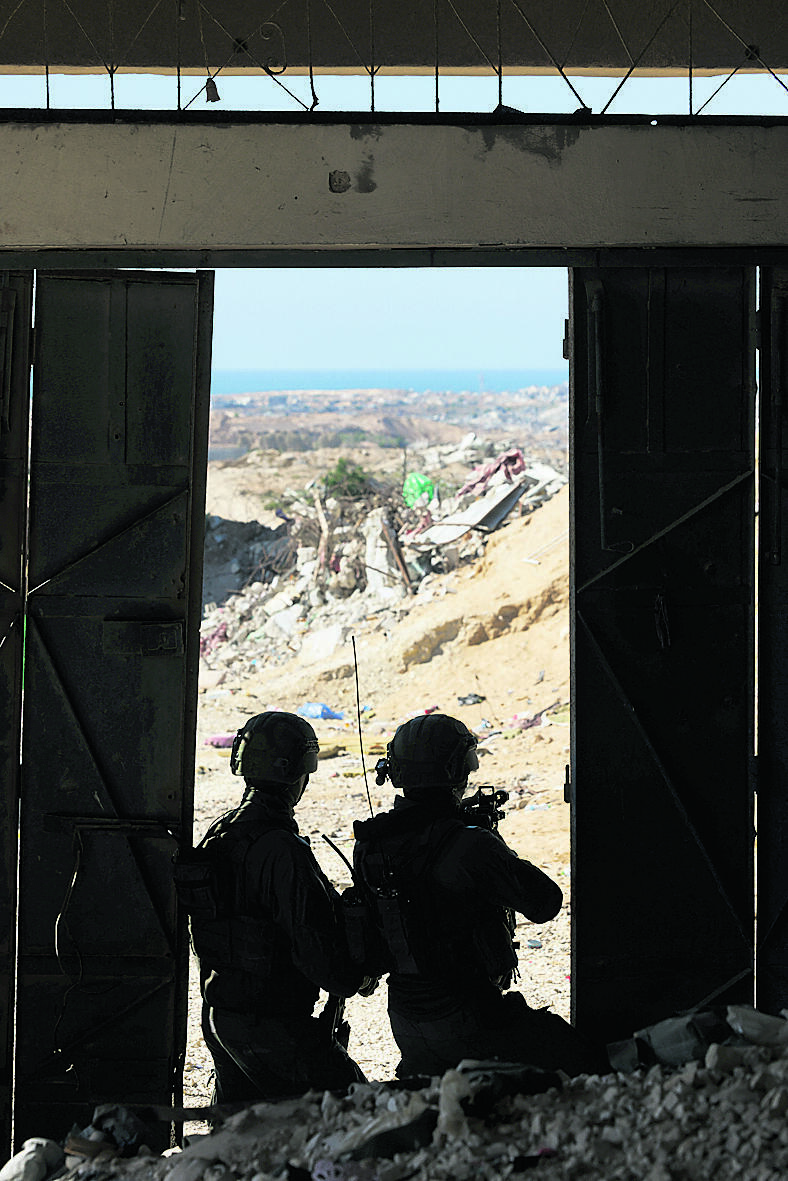
The Border Police undercover unit
(Photo: Ziv Koren)
The operation in which Sgt. 1st Class Kahana fell began on April 23 at about 3 a.m., when a southern undercover unit force entered the Shejaiya neighborhood. “Command gave us a significant challenge,” Dep. Cmdr. D. says, “to infiltrate the forward line in Shejaiya in east Gaza. There was a specific sector from which terror activity and sniper fire targeted IDF forces operating openly south of the neighborhood. The mission was to locate those armed terrorists and neutralize them.”
How did you get in?
”Commander M.: “By stealth, under cover of darkness, with air support above us. After we positioned ourselves and embedded in the area with all our equipment, we tried to locate the enemy snipers.”
Did you succeed?
“On the first night nothing unusual happened. But on the morning of our second day there we identified two armed terrorists who tried to attack IDF forces. We fired at them and neutralized them quickly. Another night passed, and on Friday morning we identified and neutralized a third terrorist. That was the third terrorist taken down by our precise fire.”
The next day, Friday, Kahana was hit by fire from a terrorist who suddenly emerged from a shaft. “I was the commander of the forward squad,” Commander M. says. “When we heard the initial fire we knew there was an engagement. We moved the force toward the gunfire. Kahana was lying there, critically wounded. We extracted him quickly and a medical team treated him on site. At the same time, A., our unit commander, called for support from Brigade 16, and at that moment heavy fire opened on us from all directions. More gunmen emerged from that same shaft.”
Superintendent S.: “In hindsight it turned out there were three more terrorists there.”
Commander M.: “At that point we returned fire and killed two more terrorists.”
When did help arrive?
“In roughly ten minutes, the brigade’s rescue force arrived under the brigade commander himself, accompanied by tanks, Humvees and other vehicles. They loaded Kahana onto a stretcher and onto a Humvee, but around 5 a.m., as they tried to leave in convoy, they came under fire. The first Humvee was hit by an RPG. The soldiers dismounted quickly; one was moderately wounded and others sustained minor injuries. They moved fast to a second Humvee where Kahana’s stretcher was and continued on.”
More Hamas forces streamed into the area and the battle escalated. Superintendent S.: “Everything happens in seconds: anti-tank fire at the forces, grenades thrown at them, shooting.”
During the fighting, as noted, armored officer Capt. Ido Volach was also killed. After a battle of roughly five hours, during which an estimated ten terrorists were killed, the area was declared clear.
“I waited at Nahal Oz for the Humvee with Kahana to arrive. I received him,” Inspector A. said. “The whole way I prayed he was only seriously wounded and would pull through, but in hindsight we understood his death had already been decided on site.”
“Neta told us he wanted to serve somewhere meaningful, so he came to us,” Commander M. said. “He was a teammate. He was our brother in arms who fell. A tragic event. But as fighters we are expected to lift our heads and carry on. There is no choice. This is war. People are wounded and killed.”
“It’s important for me to say we embrace the families, and they embrace us in return,” Superintendent S. said. “We maintain a personal, ongoing relationship with them. They strengthen us no less. In Kahana’s case it is a religious, Zionist, principled family that lost its greatest treasure. The company and the brigade fought there like lions.”
“They are a close-knit, remarkable family with enormous strength,” Dep. Cmdr. D. said. “They embrace and support us, including with the commemorative bracelets they gave the unit.”
So, what was the outcome of your mission in Shejaiya? Was the threat removed?
“Let’s say our unit’s mission was achieved.”
Gaza has its own rules, and many times an undercover operation that begins with a single objective, branches out and becomes more complex on the ground. That is what happened to the southern undercover fighters about six months earlier in the Shati camp. They cannot speak about what they did there. “A mission better kept silent, carried out as part of an intelligence operation with the "Shin Bet" (Israel’s internal security service),” Superintendent S. concedes.
But the disguised fighters in the field reported something else entirely: an “unusual identification,” as the unit calls it. The IDF was operating openly south of the camp. The undercover team identified that Hamas had sent snipers there dressed in civilian clothes. If those snipers had reached the area where the IDF was operating, they could have struck soldiers.
How were the snipers identified if they were wearing civilian clothes?
Dep. Cmdr. D.: “We saw them from our observation post carrying a large backpack, and one of them even had a weapon slung on his back. They did not walk on the main path but used the terrain, hid behind the cliff and advanced quietly toward the forces operating north of them.”
What did you do? You were on a different mission
“After we confirmed they were terrorists, we closed on them to a point where my sniper had a firing solution. He fired and neutralized the armed man, the terrorist with the concealed weapon on his back, but the two other terrorists tried to flee.”
Did they get away?
“No. With guidance from the air force that covered us from above the whole time, we were able to catch up and eliminate them as well. All this happened while nearby IDF forces felt nothing, heard nothing and knew nothing about what had happened above them.”
Superintendent S.: “From there, we continued the covert operational activity for which we had deployed.”
On another occasion the unit foiled a major attack on an IDF force that could have ended with captured soldiers. “This happened several months ago, south of Gaza City,” Dep. Cmdr. D. says. “We reached a certain point in the field after receiving a concrete alert in the middle of the night and precise intelligence.”
What did Intelligence say?
“That a Hamas terror cell was planning to attack a building where our fighters were stationed. Their intent was clear: to break in, carry out a massacre, cause as many casualties as possible and perhaps take captives.”
So, what did you do?
“Immediately after receiving the alert, our assault company went into action. We reached the building the terrorists intended to attack and deployed along the route where the cell was expected to move. We waited there on alert, and exactly at the time the intelligence predicted, they arrived. We identified five armed terrorists advancing toward the structure. As soon as they came into our range, we opened heavy fire and killed them. It was a swift, precise and highly effective strike. All the terrorists were killed on the spot. None of them even managed to fire. They had no chance to understand what was happening. It was a clean, sharp operation that saved lives.”
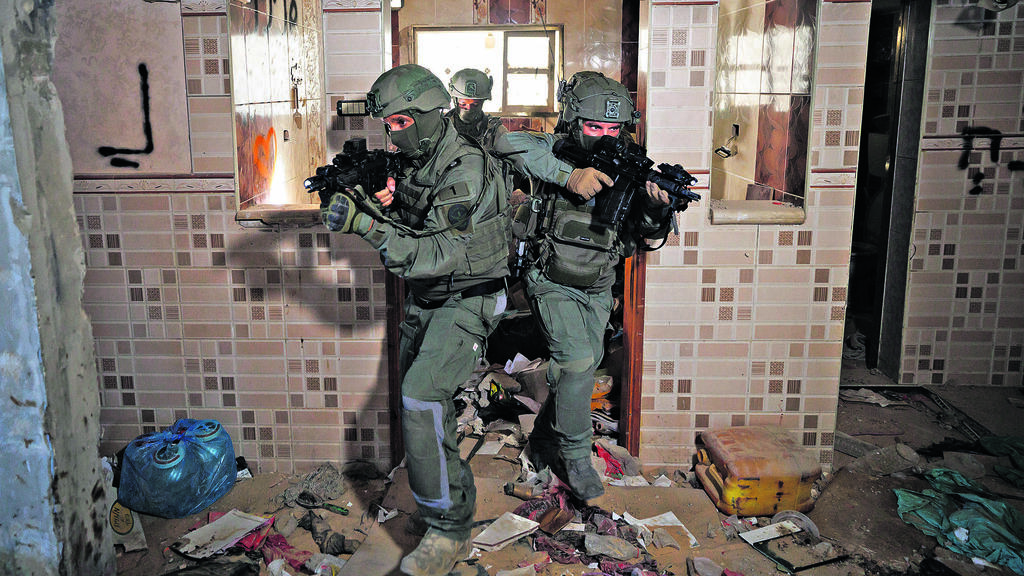
The Border Police undercover unit
(Photo: Ziv Koren)
“Today, at any given moment, they can ask us to carry out a mission in Gaza,” Superintendent S. sums up. “It can be a short combat procedure, a half-day mission. It can also be a long combat procedure that spans a week or even two weeks."
Why are there no women in the unit? After all, there are women in the Border Police tactical assault unit
“We tried to bring women into the unit in the past, but it did not work,” S. says.
Why?
“A female assaulter has advantages for intelligence gathering and blends better into civilian populations. A female assaulter is better suited to urban activity. Less so for Gaza.”
You’re about to leave your post as unit commander soon. Will you miss it?
“I can certainly sum it up by saying these were the three most challenging and meaningful years of my life professionally, in commanding a complex unit during wartime. As commander of the southern undercover unit, I lost two fighters in the unit (Krasninski and Kahana) and that was a defining moment for me as a commander and as a person. We operated deep in enemy territory, under fire, on highly sensitive and secret missions, and time after time proved why this unit is critical to the country’s security.”