

Of all the smuggling cases we examined in depth over the past week, the one that unfolded in July 2024 along the Jordanian border stands out above the rest, both in its level of sophistication and in what it exposes.
It is not only a story about criminal ingenuity. It is also a story about an ongoing failure, one that did not begin with this operation and did not end with it. It is a story about borders left porous, lessons unlearned and expectations repeatedly disappointed.
This took place deep into the war that began nine months earlier with Hamas’ surprise attack on Israeli communities near the Gaza Strip. That attack included the breaching of the border fence at dozens of points simultaneously and the infiltration of thousands of terrorists and Palestinian civilians into Israeli territory.
After such a catastrophic failure, one might reasonably expect a tightening of border security. One might expect accelerated construction of fences where none exist, increased patrols, expanded surveillance and a heightened sense of urgency. At the very least, one might expect alertness.
None of that happened.
A smuggling operation planned like a military mission
Fuaz Altouhi, a resident of Bir Hadaj in the Negev and now a 29-year-old inmate, was already known to police for weapons and drug offenses. The war did not interrupt his activity. In the summer of 2024, he struck a deal with a Jordanian citizen to smuggle weapons into Israel through the Jordanian border.
The method they chose was unfamiliar even to veteran law enforcement officials.
Altouhi was instructed to send an associate to Jordan, entering legally through one of the land border crossings. From there, the associate would be collected and driven into the Jordanian Arava. He would then be transferred into a jeep loaded with weapons, cross into Israel at a predetermined point and meet Altouhi and his men near the border, where the weapons would be unloaded.
In exchange for the weapons, Altouhi agreed to supply the Jordanian side with 150 kilograms of hashish. The drugs would be loaded onto the same jeep, which would return across the open border. The associate would then drive back and re-enter Israel legally through the official crossing.
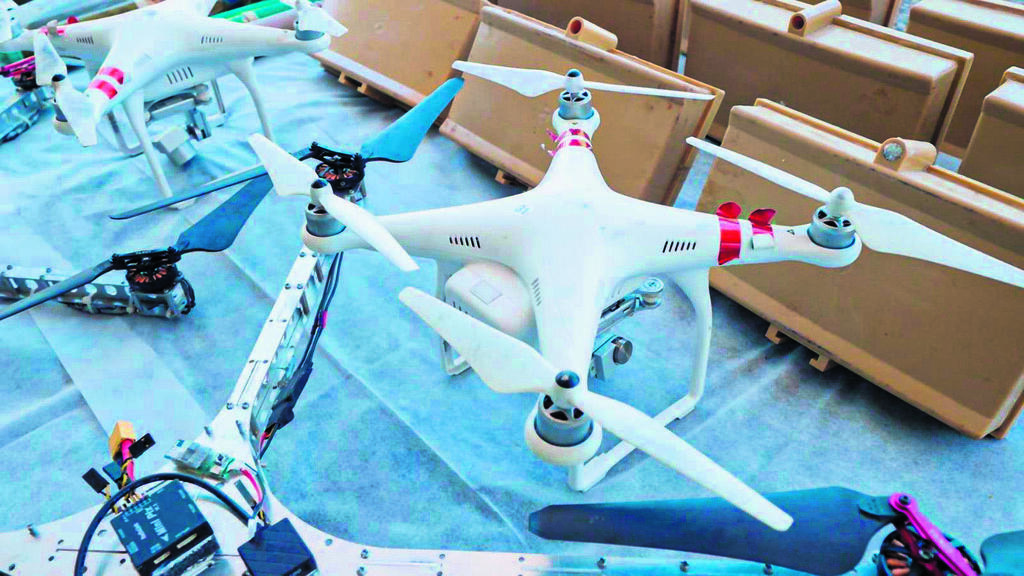
Drones used for smuggling
(Photo: Shin Bet)
Going through the details, it is hard not to be struck by the precision. This was not an improvised crime. It was an operation with an orderly plan, defined roles and advance reconnaissance.
Altouhi recruited Salim Gdifi, Fouad Abu-Ma’if, Mohammed Arjan and Zahir Abu-Rakiq, all residents of Bir Hadaj. Gdifi and Abu-Ma’if were assigned as lookouts. Abu-Rakiq, an experienced operator in the smuggling world with an instinct for anticipating trouble, was brought in to manage the border transfer. Arjan was tasked with traveling to Jordan.
Before the operation itself, Altouhi, Abu-Rakiq, Gdifi and Abu-Ma’if drove to the smuggling point along the Jordanian border, roughly opposite the Kushi Rimon Inn, to observe the movement of IDF and Jordanian forces.
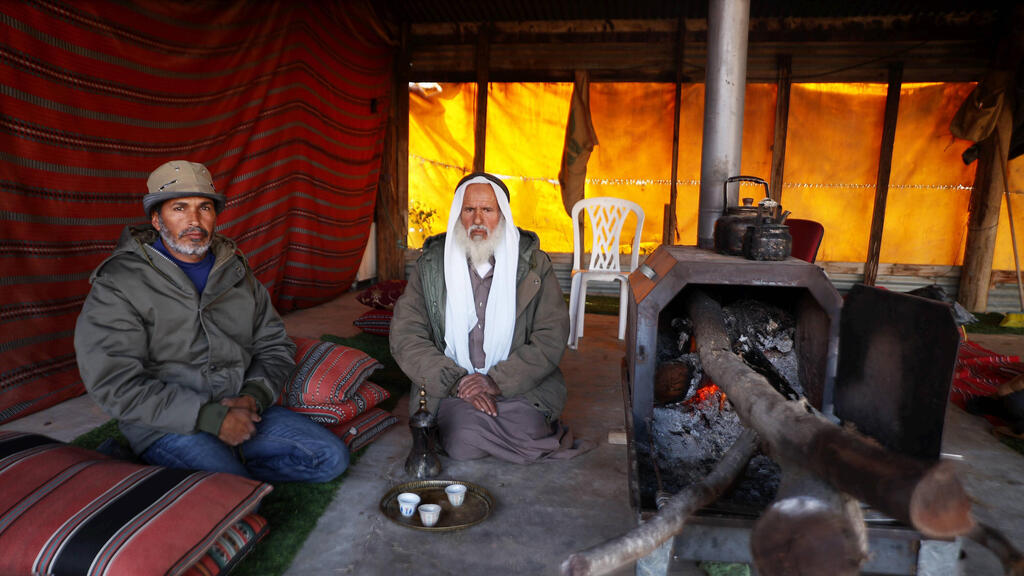
Mohammed and Salama Altouhi in the family tent
(Photo: Gadi Kabalo)
Two days before the transfer, Altouhi received a phone call from his Jordanian partner instructing him to drive to the parking lot at Golda Park in Beersheba. There, a courier handed him the package of hashish.
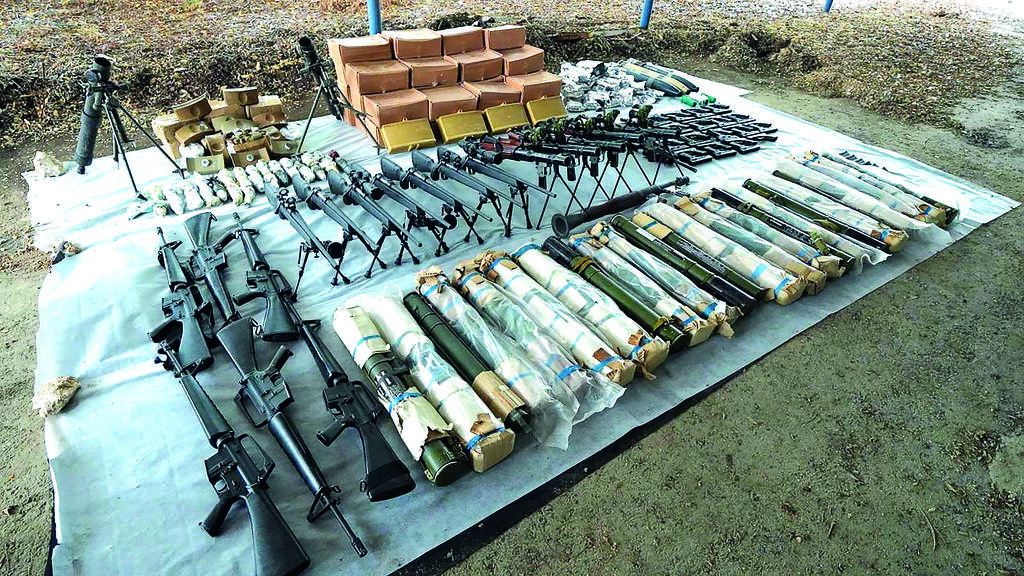
On July 17, at 2:30 p.m., Arjan stamped his passport at the Jordan River crossing near Beit She’an. On the Jordanian side, he was handed a Land Cruiser loaded with 55 pistols, 13 M16 rifles, two Kalashnikovs, magazines and 28 spare M16 parts, including barrels and receivers. He then drove south into the Jordanian Arava.
Meanwhile, Altouhi and the rest of the group waited at the Tzihor junction. They arrived in separate vehicles and waited for the signal.
Late that evening, no one could later recall the exact time, the call arrived from the Jordanian side. The area was clear. The transfer could proceed.
Abu-Rakiq drove toward the border to confirm the area was empty. Gdifi and Abu-Ma’if positioned themselves as lookouts. Arjan approached the border from the Jordanian side, guided by Altouhi over a radio.
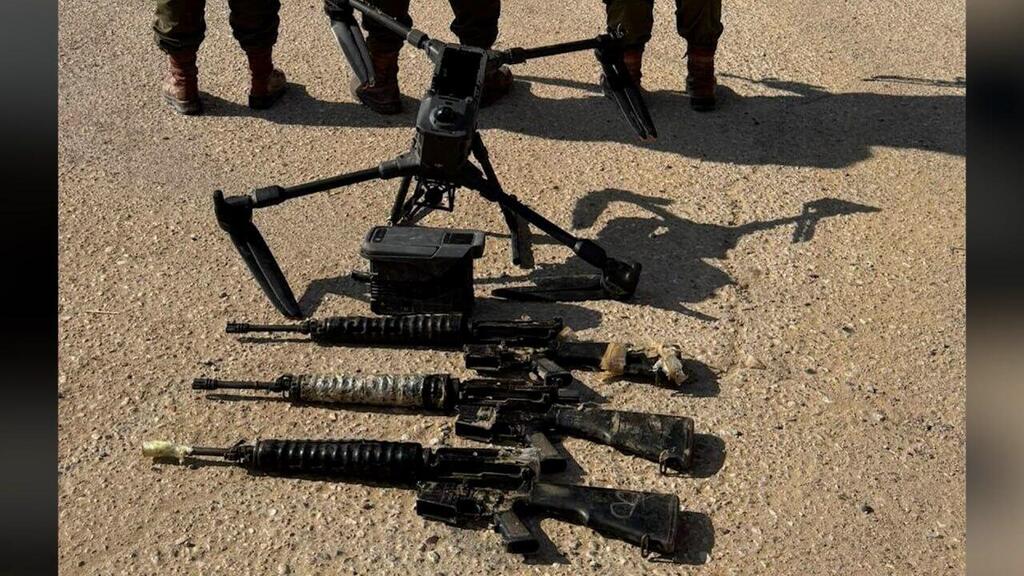
(Photo: IDF)
During interrogation, Arjan was asked whether he crossed the border by driving over the fence. His answer was simple: There was no fence.
On the Israeli side, Abu-Rakiq and Altouhi were waiting. They began unloading the weapons.
The second phase of the deal, transferring the drugs, went wrong when the lookouts detected movement by Jordanian forces nearby. The hashish was buried in the field. The Jordanian vehicle’s license plates were replaced with Israeli ones, and the entire group drove back to Bir Hadaj, including Arjan, who according to Population Authority records was supposed to be abroad.
Only days later did Arjan drive the jeep back to Jordan through the same unfenced area, the drugs in the trunk. He then returned legally to Israel on July 24 via the Jordan River crossing.
Everyone was satisfied.
Altouhi earned 250,000 shekels. Arjan received 170,000 shekels. Gdifi received 23,000 and Abu-Ma’if 40,000. Abu-Rakiq, the most experienced among them, took his payment in kind: 25 pistols. On the black market, a clean pistol sells for about 30,000 shekels.
Only six months later was the group arrested, and that was in connection with a different case entirely. During Shin Bet interrogations, they revealed this operation. Until then, no one in the security establishment had any knowledge it had taken place. Not the army. Not the Shin Bet. Not the police.
When drones replaced smugglers
As early as 2020, the military and police identified Israel’s borders with Egypt and Jordan as emerging routes for weapons smuggling. At first it was sporadic. In 2021, the number of incidents increased. In 2022, the quantities doubled. By 2023, more than 200 weapons had been smuggled into Israel through these borders.
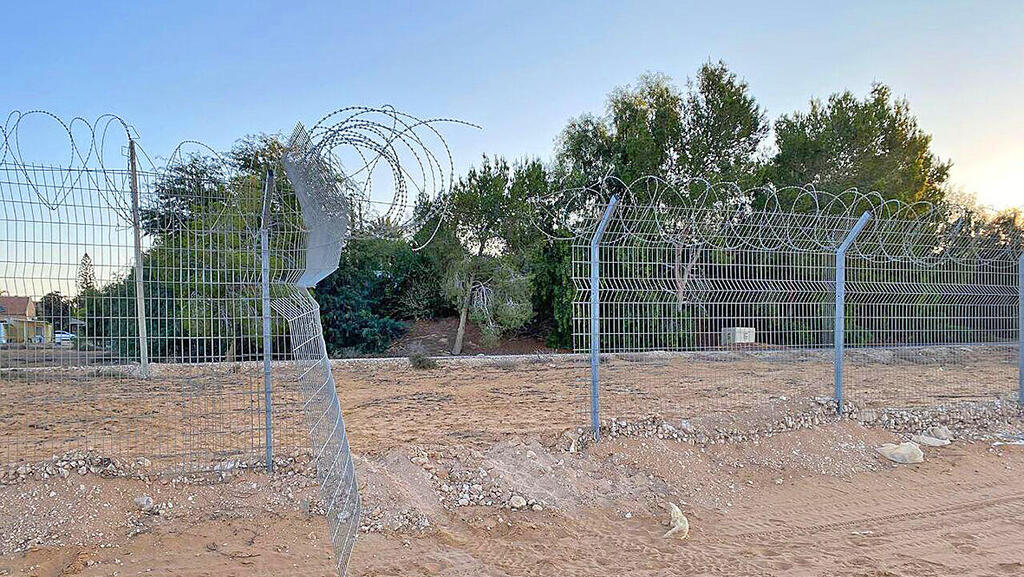
The border fence with Egypt
(Photo: Yoav Zitun)
After the war broke out on October 7, the phenomenon intensified dramatically.
The year 2024 marked a turning point. After the outbreak of war, the IDF banned access within 800 meters of the Egyptian border on both sides. Smugglers adapted quickly. They switched to giant drones.
On October 20, 2024, a drone crossing the border was intercepted for the first time. Inside its cargo box were eight pistols and dozens of magazines. Ten days later, another drone was stopped, this one carrying four assault rifles and a pistol. Since then, hundreds of weapons smuggled by drones have been seized along the border.
At some point, security officials realized that Israel was not always the final destination.
That realization came on January 3, 2025.
At 4:55 a.m., Younes Amitel, a 40-year-old resident of Bir Hadaj, arrived near the Israel-Gaza border by Kibbutz Nir Yitzhak driving a Jeep Rubicon. Two others arrived in a Land Cruiser. Amitel removed a drone from his vehicle, attached a package and flew it into Gaza.
What was in the package remains unknown, for a simple reason: The drone never returned.
An IDF observation post spotted the drone entering Gaza. Forces were dispatched in a heavily armored vehicle. Amitel and his companions fled. Near Nir Yitzhak, Amitel made a sharp U-turn, drove directly at the armored vehicle and rammed it head-on. His partners escaped. Amitel’s jeep flipped several times and landed on its side. Soldiers were unharmed. Amitel was arrested.
Another drone was found in his vehicle, attached to a package containing 60 slabs of hashish weighing 5.45 kilograms.
This was only the beginning.
From criminal offense to national security threat
In April 2025, another smuggling case involving drones and Gaza emerged. Indictments detailed how smugglers coordinated with contacts in Sinai, conducted advance reconnaissance of IDF patrols, flew drugs into Gaza and left the drones behind.
Prosecutors began to understand that treating these cases as routine drug offenses was no longer tenable.
At the end of December, a high-level meeting was held at the office of Attorney General Gali Baharav-Miara, attended by senior officials from the Shin Bet, the IDF, the police and the State Attorney’s Office. Shin Bet chief David Zini described the drone smuggling phenomenon as a “continuing catastrophe that poses a strategic threat to Israel.”
Security officials said that in the past year alone, thousands of drones had crossed into Israeli territory, carrying rifles, pistols, ammunition and explosive devices.
“What we intercept,” one official admitted, “is only a drop in the ocean.”
The flood has driven prices down and increased availability. An M16 rifle that once sold for more than 100,000 shekels now sells for 70,000 to 80,000. A Glock pistol that once cost 50,000 to 60,000 shekels now sells for about 30,000.
At least two deadly attacks were carried out using smuggled weapons, including the killing of Border Police officer Shira Haya Soslik in Beersheba and the killing of police officer Adir Kedosh on Route 4.
A border that has become a killing zone
The intensified enforcement has turned the area near the Egyptian border into a lethal zone. In the past two years, six Bedouin civilians suspected of smuggling have been shot dead there.
The most recent was Ayoub Altouhi, 20, a resident of Bir Hadaj.
“My son was not killed,” his father said. “He was murdered.”
Five days after his death, residents of Bir Hadaj held a protest. Salama Abu-Adisan, head of the Neve Midbar Regional Council, said the Bedouin community had been abandoned in every possible way.
“We are abandoned in budgets, in infrastructure, in education, in welfare,” he said. “Now our lives are abandoned too.”
He added that throughout his decades of service as a tracker and officer along the Egyptian border, the rules were clear: Fire only when there is an immediate threat to life.
“That was not the case here,” he said.
The borders remain porous. The smuggling continues. And the cost, both in security and in human life, keeps rising.