


The dashboard of Noga Erez’s career after Oct. 7 looked like Wall Street after the collapse of Lehman Brothers. The screens were red and the domino effect was immediate. Major festivals were canceled, performances stopped, producers stopped answering emails, follower counts dropped, streaming exposure plunged and the abuse directed at her intensified. For the first time, Erez asked herself whether the world was closing in on her career.
“For a long time, we felt and thought, that’s it, it’s over,” she says. “I started getting used to some kind of new reality in my head, where this thing was bigger than me and I had no control over it. I was starting to accept that this was it, it had been good, I was glad it happened and thank you very much. Because I really did fulfill dreams.”
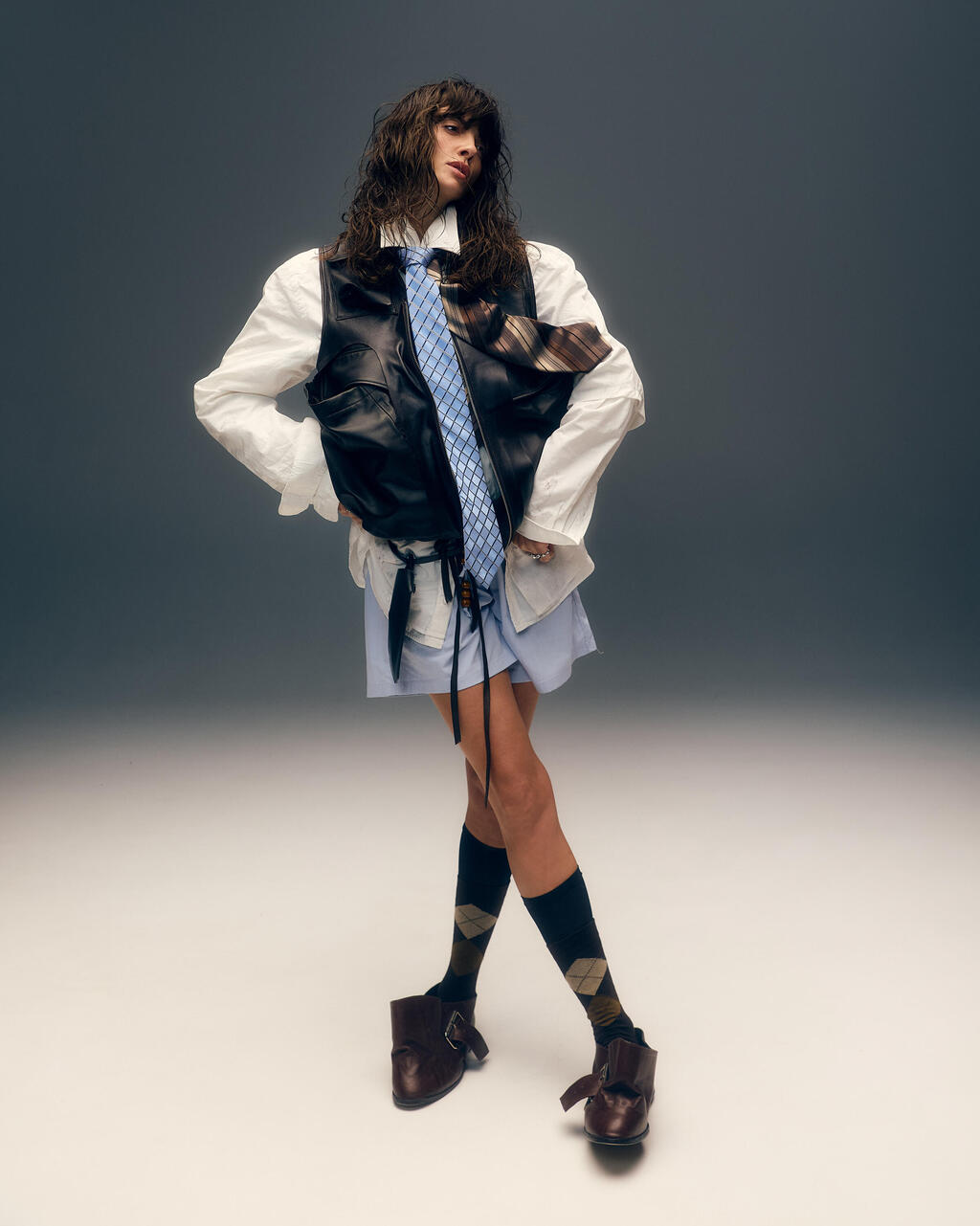
As if all that were not enough, Erez found herself caught squarely between the hammer and anvil of a bloody reality. Whatever she said abroad about the war would not be sufficiently patriotic for Israelis and would not be sufficiently critical of Israeli policy for foreigners. For pro-Palestinians, she was someone to hate in any case. From deep inside this frustrating no-win situation, against all odds, Erez managed to get back on her feet.
The sun came out this past April. Coachella, California, the rarefied universe of global music, a summit that artists like Beyoncé or Lady Gaga prepare for over many months. Coachella does no one any favors. Erez had nearly touched the dream three years earlier, but the war in 2023 deprived her of that fantastic achievement in America. Coachella tested the waters and decided to invite her again, despite the political controversies still hanging in the air.
When the smoke machines at Coachella cleared, Erez stood there emotional after devouring the stage with an infectious passion. Her team was beside her, as was her partner in life and music, Ori Rousso, and with them little Toni, born to the couple during the war. The crowd in front of them was still going wild.
“Coachella is one of those places that gave up on us and came back,” she says. “When the possibility of performing at the festival came up again, I thought: When the chance to play the festival came up again, I thought: On the one hand, it had already been in the works. But on the other, here we were playing Coachella after we’d thought our story was going to end very differently. I realized that meant something significant — that we’d overcome something. Not because anything had changed in the political reality or in the way people looked at us. The only thing that changed was that I sold enough tickets. Then they said, ‘Oh, OK.’ In the end, money talks. If you know how to bring in a crowd, people don’t cancel you quite so easily.”
I assume you’ll reject the word “victory” as overly dramatic.
“I didn’t bend for anyone. I didn’t say something more correct or less correct. I just kept doing what I do and I managed to do it. So yes, actually, there is a sense of victory in that.”
When you get to Coachella, is it just another stage where you have to put on a polished show, or does it really feel different, like a secular temple of music?
“Everyone comes to Coachella to put on their biggest show and financially bleed themselves dry, except maybe Justin Bieber. From the biggest artists to the smallest, everyone comes there to invest. It’s not a show you go to in order to make money. Everyone films themselves watching the show, films themselves on the way to the show. I don’t think it’s a temple of music, but you can’t help feeling that you’re part of something influential and significant. We’d already won just by having our name printed on the lineup.”
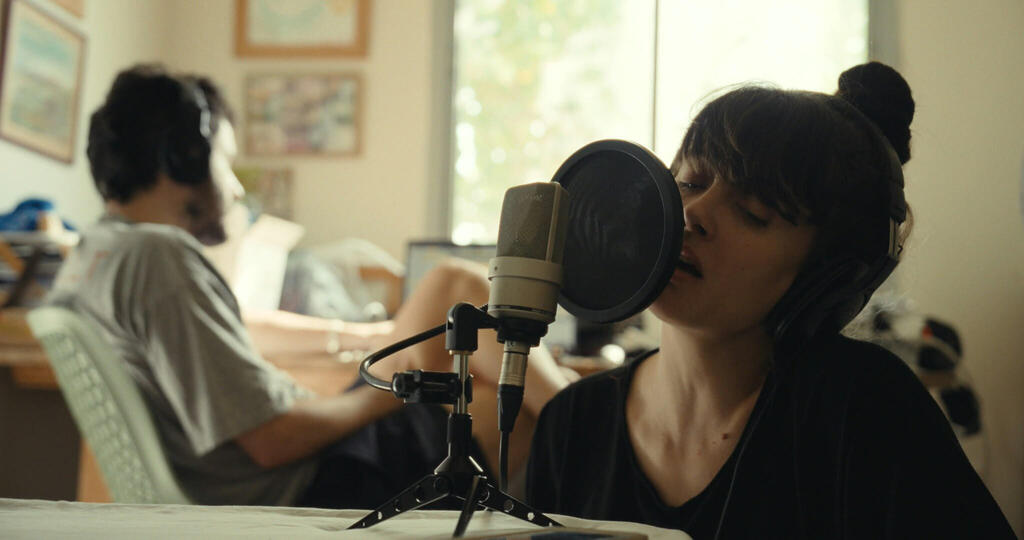
Noga Erez and Ori Rousso
(Photo: Roei Morad, courtesy of yes)
They arrived at Coachella with a new video production and eight dancers, a setup they had previously managed to stage only at shows in Israel. The next album was already embedded in the performance: its flavor, its concept, the next stage for Erez and Rousso. At a festival where simply having their name on the lineup was an achievement, a career milestone, they also wanted to show where they were headed next.
But getting to Coachella this time was an ordeal. Instead of a relaxed business trip, it turned into something of a military operation under the shadow of the Iranian threat. All of Erez and Rousso’s regular crew members were in Israel and they did not want to replace their photographer, drummer, bassist and sound engineer at the last minute with local hires who had not been through the journey with them.
“Everyone practically killed themselves figuring out how to make this happen,” Rousso says. “And in the end, that image at Coachella, with the entire crew standing in one line with Toni, was born out of those days. We felt so much like a family inside that nightmare.”
The skies were closed. What strings did you pull?
Erez: “Every string in the world. We were very lucky. And it cost a lot of money.”
And threats?
“We got some nasty messages beforehand, but that’s routine by now and it really doesn’t scare anyone anymore.”
“Coachella is one of those places that gave up on us and came back. I understood that it meant something very significant. The only thing that changed was that I sold enough tickets. Then they said, ‘Oh, OK.’ In the end, money talks. If you know how to bring in a crowd, people don’t cancel you quite so easily.”
Behind the home run at Coachella remained Erez’s bitter memories of the first months of the war, when it was unclear whether there would be anything for her to return to.
“After Oct. 7, Ori and I saw the easiest thing to see: a crazy drop in the numbers that just wouldn’t stop. Streaming, social media, AirPlay, everything was headed sharply downward. Our management team was very worried and concerned. Along with the decline, we got very harsh comments and very unpleasant messages. I don’t even remember the wording, just the feeling. I think maybe my brain has turned it all into mush. Deliberately. It blurs it.”
Rousso: “There were also people writing to artists we’d worked with saying, ‘Don’t work with them, don’t collaborate with them.’ Some things were so absurd that we even shared them on social media.”
Did you think about what you would do if the international chapter really was over?
Erez: “We lived off our savings. My whole life, I thought this career was the most important thing and I worked at it as though it were life or death. Then I realized it wasn’t. There are other things that really are life or death. It put my life in perspective. I started thinking about other things that make up a life. Family, maybe other directions.”
Singing in Hebrew, building a career in Israel?
“I didn’t take it that far. I thought, ‘Then maybe I just won’t be anything for a while.’ It’s not necessarily that you were one thing and you replace it with something else. I always think it’s healthy to question things, and I do. I’m not always sure I should be a musician.”
Rousso distills the uncertainty that gave rise to those thoughts.
“It was genuinely confusing. What you mainly see is the media and social media, and there you hear that we’re finished. You have no idea what’s actually happening out there.”
In hindsight, the first crack in the narrative of their cancellation had already appeared on the 2024 calendar. In June, Erez performed at the Hurricane and Southside festivals in Germany. In November, she twice opened for P!nk, in Dallas and Tulsa. Those were not yet the numbers that would come later, but her international career had begun moving again.
“We were all living in a kind of delusion that was largely created by the media and social media,” she says. “Then came the day we put tickets on sale for a new tour, and I realized I was in a completely different movie. I thought I was a pariah artist, but the numbers told me I was a sold-out artist.”

Noga Erez, from 'NOGA'
(Photo: Roei Morad, courtesy of yes)
How worried were you when it came time to put the tickets on sale? It was essentially a make-or-break test for your career without anyone calling it that.
“The day we announced the tour, we were terrified. We were like, ‘Wow, this is going to be such a flop. What are we doing?’ We were incredibly nervous. Our knees were shaking. Really. We were bracing ourselves for humiliation.”
Meaning?
“Everyone around us was afraid and said, ‘Let’s aim really low,’ meaning smaller venues, for example. It turned out we had to add shows in almost every city.”
Then came the hard numbers. No fewer than 23 dates on Erez’s North American schedule in fall 2025 were marked SOLD OUT, from Brooklyn and Toronto to Chicago, Seattle, Los Angeles and Austin. Europe followed with another 12 dates where fans snapped up tickets and packed the venues, including Berlin, London, Paris, Barcelona, Munich, Warsaw and Prague, a postcard spread that would have seemed unimaginable not long before.
What did you learn?
“I thought my music wasn’t strong enough in this equation to compete with what was happening on social media and in the media generally. I was wrong.”
It was at that point, as ticket sales began to tell a very different story from what she had been seeing online, that Erez decided the problem wasn’t just what people were saying about her on social media, but what social media was doing to her.
On Oct. 9, two days after the massacre, she stepped away from social media and hasn’t returned since. Content is still posted to her accounts, but someone else manages them.
You really haven’t gone on since then?
“No. There’s a team, there’s Ori, I’m involved in the content, but I’m not exposed to what’s happening there. During the first two days, I read things and understood that, regardless, I was consuming a reality from there that my psyche was in no condition to handle. I thought I was leaving temporarily, until I recovered mentally, and I simply discovered that it was healthy for me.”
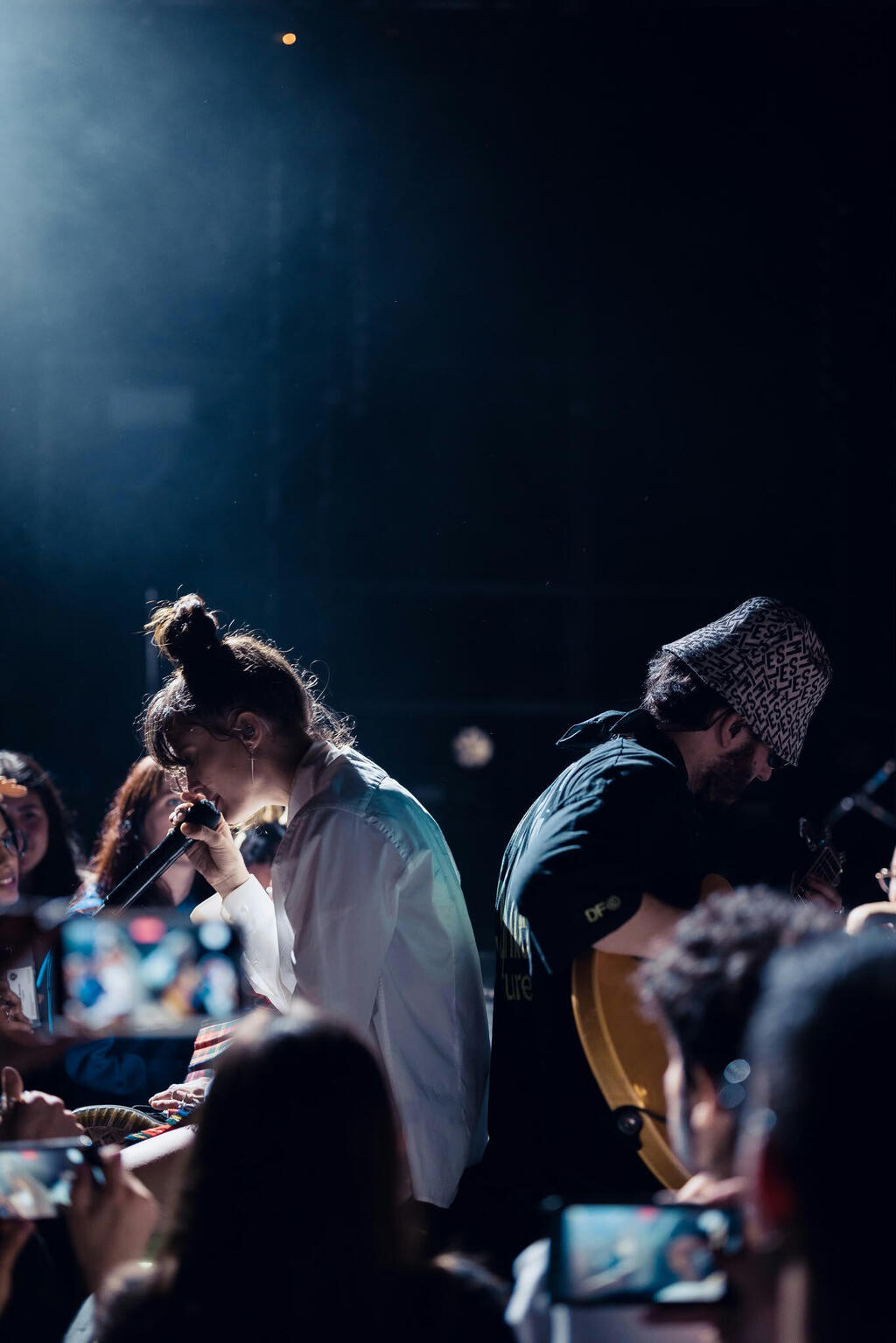
Noga Erez and Ori Rousso
(Photo: Bar Kushnir, courtesy of yes)
As if to complicate her relationship with the social media monster even further, the algorithm decided to reward her. “Views,” a song released in February 2020, suddenly exploded again. The followers who had disappeared were replaced by others and hundreds of thousands of new ones arrived. Instead of seeing it as some historic correction, Erez learned a very different lesson.
“You feel the dopamine. You feel that drug. Then you understand that both those highs and those lows are fiction.”
What isn’t fiction to you?
“If someone buys a ticket to your show, that’s not fiction. If someone physically comes to a show, that’s not fiction. Only then could we say, OK, we felt some relief and maybe the beginning of a sense of victory over this current cycle.”
Since the closing stretch of 2024, the picture has steadily become clearer for Erez. She spent summer 2026 moving between festivals in Europe. In early October, she is scheduled to perform during both weekends of Austin City Limits, a festival attended by about 75,000 people a day, with shows in Houston and another Austin venue in between. By spring 2027, Erez’s tour will move up to larger venues in Denver, Boston, Washington, New York and elsewhere. In May and June 2027 alone, more than 25 European performances await her.
That sounds like good news. So what still worries you most?
“I’m very anxious about the next tour we’re selling tickets for. They’ve taken some very big bets on the sizes of the clubs and venues. We’re playing in Paris in May, in an arena for the first time. Everything has gotten much bigger.”
Erez’s public persona is now gaining another dimension with the documentary “Noga,” which had its world premiere at the Tribeca Festival in New York and is now coming to "yes" streaming platform. Austrian filmmakers Jono and Benji Bergmann were given access to Erez’s life over the past several years, though she was initially hesitant about how much to reveal and how quickly.

Noga Erez
(Photo: Or Danon)
Behind the scenes, less photogenic things were happening, including a three-month separation between Erez and Rousso that was kept completely secret until now.
First, the name on the poster requires some unpacking. “Noga Erez” sounds like a one-person project. In practice, almost every sentence she begins with “I” eventually becomes “we.” Rousso is her romantic partner, creative partner and producer, the person beside her onstage and behind the scenes and, eventually, Toni’s father.
Two people built an act together, then gave it the name and face of only one of them. It was a successful career move, but it sometimes created a life in which it was difficult to know where Noga ended and Ori began.
The film opens with your relationship and partnership. Was it important to you to make clear that this whole thing belongs to Ori too?
“Yes. To represent the truth. We made a strange choice at the beginning. We took a project that belonged to two people and named it after me. We put my face on it. We made that decision to increase the chances of the thing succeeding. We didn’t believe in this product called a duo. We still don’t. We made a good choice for the brand, but the story is mostly mine.
“There are situations where I’m being interviewed and someone asks me, ‘What were you thinking when you produced the song?’ and I have to say, ‘I didn’t produce it.’ I’m constantly speaking in the plural. At first, people would ask why I answered questions with ‘we.’ Nobody asks anymore.”
They separated for three months during the COVID-19 pandemic, at one of the high points of Erez’s career. The two lived apart, almost without anyone knowing, while continuing to arrive at the studio together, work, perform and maintain their joint brand in public.
If most couples can get away from one another to understand what they are missing, Erez and Rousso tried to separate while their calendar continued bringing them together every morning.
“Aviad, who’s been with us for six years or more, said to us afterward, ‘You bastards, you weren’t together during the Menora show?’” Rousso says with a laugh, referring to Tel Aviv’s Menora Mivtachim Arena.
What actually happened?
Rousso: “Maybe ‘separateness’ is an annoying word, but psychologically it’s very accurate. We had already become so intertwined, everything was mixed into everything else, that we didn’t know what it meant to be apart. We needed to see what that was even like.”
But even when you separate, you’re still working together. How can you really test anything that way?
Erez: “I think that’s why the period stretched to three or even close to four months rather than one month. That’s what kept delaying things. We conducted a few human experiments on our relationship. We put a lot of weight on it. We’re a couple, we work together, when we’re not a couple but still working together we’re best friends and now we’re also parents.
“Even before parenthood, how much can you expect there to still be romance in the air between these two people? To have that feeling of: Hey, I’m me and you’re you, and each of us has our own views, opinions and thoughts.”
Global success added to that intensity.
“There was a breakthrough and suddenly we had to grow from nothing into something meteoric,” Erez says. “Those growing pains entered our home and all our relationships. Together with our couples therapist, we decided we would take a month and each breathe our own air. It kept getting extended because we never really managed to spend time apart. We kept seeing each other. We felt we had taken a very significant step but couldn’t actually implement it.”
When did you want to get back together?
“I got sick of the whole thing very early on. I missed him like crazy. I missed what we’d had before. I didn’t want this change. Something in me resisted it.”
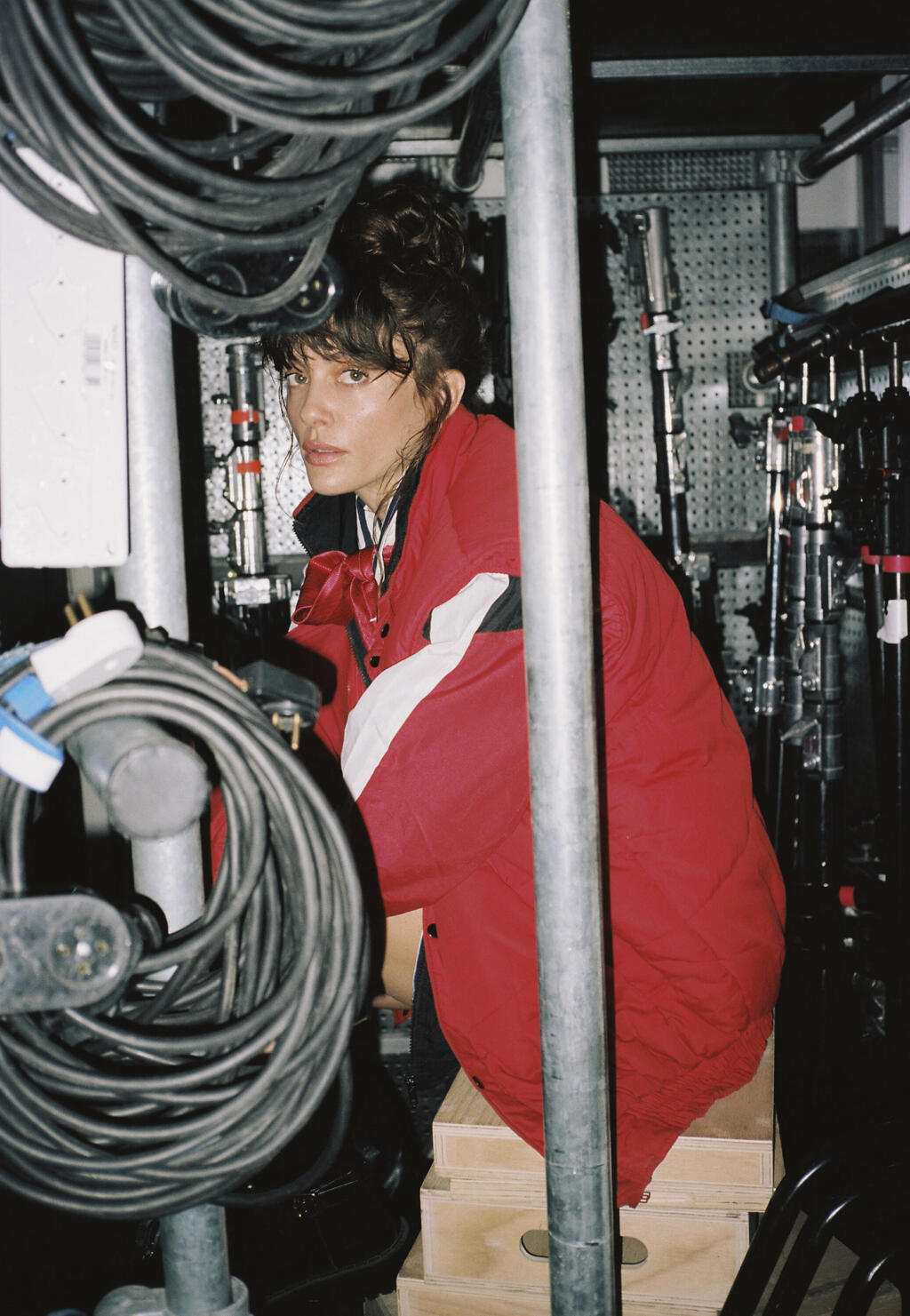
Noga Erez
(Photo: Or Danon)
So how did it actually end?
“I told Ori, ‘I’m not willing to do this anymore. If we’re going on tour now and you don’t want us to do the tour officially as a couple, then you get your own room and I’ll get my own room.’”
What did he say?
Erez: “‘Fine. OK. Then we’ll save money.’”
Very romantic.
Rousso: “Financial considerations.”
What did you learn from those three months apart?
“It’s very hard to explain in words. You can get to know yourself a little on your own and still choose to be together, but from a slightly different place. We couldn’t have understood that without going through a period like that.”
Do you agree?
Erez: “Yes.”
Why did you choose to make a documentary? You don’t need a film for people to know who you are or to sell tickets.
“At first, I didn’t want to do something like this. I was persuaded for artistic reasons. I love documentaries. I love watching documentaries about artists I love. And I thought that if there was anywhere I could be open, honest and vulnerable, it wasn’t anywhere else but in a 90-minute feature film.”
Social media, in her view, demands the opposite: intimacy condensed into a minute, something brief enough to scroll past.
“Everywhere else tells me, ‘Be more open on social media.’ Not when I have one minute. Not when everything gets flattened like that. With 90 minutes, I can say, ‘But wait, listen for a second.’ Yes, there’s a desire to invite people in, but on my terms.”
The camera follows Erez to an initial pregnancy checkup, where she is asked about medications she takes and tells the doctor about medication for depression.
That isn’t a simple thing for an artist like you to reveal. Maybe it’s even brave.
“I think that in 2026, saying, ‘I was depressed and I take medication’ isn’t really that brave anymore.”
During the first month of filming, she says, the directors did not know 90% of what was happening. They did not even know that the couple they were making a film about were no longer a couple at the time.
“They didn’t know we’d broken up. We thought, we’ll make a documentary and shape it the way we want. It took about a month to understand that showing something partial was too difficult a task. It wasn’t worth it.
“In the end I said, if I’m already doing this, and if I’m already an artist, then know who I am. What my story is. Where I come from. There’s something I can’t manage to do on the other platforms, and it was important for the picture to be complete.”
She has also described her internal crisis in songs, including “A+” from the album “The Vandalist,” “which is about the depression and how I took the depression on tour, which is not a good combination. Touring is the least depression-friendly lifestyle. You constantly have to be doing something, pick yourself up, move yourself. You have to take care of yourself relentlessly because touring invites you to get lazy, drink, consume things and not sleep.”
“Threats? The show in Mexico was the first time I experienced something like that with a baby. I felt afraid. I thought, ‘Why did I bring her here?’ They picked us up from the plane and took us straight to the hotel, which we didn’t leave. We took the elevator down to the parking garage after they had swept it. Outside, there was graffiti with my face on it. People came into the show covered in red paint that had been thrown at them.”
In January 2025, someone bigger than their careers entered their lives. Toni was born out of what might have seemed the least rational time to decide to have a child. Before the war, Erez had not even been sure she wanted to be a mother. It was precisely when the world got worse that something inside her changed.
“The strange thing is, I’d always wondered: Why bring a child into such a shitty world? But then the world got so shitty that I felt I needed to. I had to.”
What changed your mind?
“Like the other artists in Israel, we spent a few months going around hospitals and visiting evacuees. For a while, Ori and I would go to sleep crying. Me more, Ori a little less. It was such a traumatizing period. You encounter things, hear stories in minute detail, then carry them with you and have to somehow process them.
“Ori and I became a super, super, super-strong unit because of the war. We became incredibly reliant on each other. Then suddenly something very intuitive emerged in me: I want something else to take care of. I want us to take care of something together and for it to be ours. I want us to have a life project together. It became an obsession.”
So there was a board meeting over coffee and you decided to have a child?
Rousso laughs. “We went to our couples therapist and asked what she thought. We said there are medications and so on. She said, ‘Go for it. There’s never a good time.’ We said, ‘OK, time to get to work.’”
They had previously undergone fertility preservation as a kind of insurance policy in case they wanted children later in life. Once they made the decision, they did not need fertility treatments.
“It happened on the second try,” Erez says.
Now Toni travels with them almost everywhere: flights, tour buses, backstage, Coachella.
What changed in your work after she was born?
Rousso: “We can’t afford the loops we used to get stuck in before Toni. She’ll be back any second and we have to finish. So you decide: Is the song good enough or not? We still make very good things, but our ability to make decisions has changed.”
For Erez, the change borders on extrasensory. At a festival in Germany, she took the stage before 20,000 people. During the second song, she spotted Toni in the crowd with her caregiver. One of the baby’s protective earmuffs was not sitting properly over her ear. Instead of being absorbed in the performance, Erez’s brain immediately shifted to her daughter’s ear.
“I’m onstage and start thinking: What do I do to get the caregiver’s attention? Do I talk to the technician? No. Ori? He’s playing. The best option was for all 20,000 people to hear me tell her, ‘Put Tonton’s earmuff back on.’ Before I managed to say anything, she noticed and fixed it.
“It felt like the perfect image. I’m in a situation where I can’t not be a mother. It mutes everything else. My brain sees it even through everything happening onstage.”
Their attention is now turning to the next album, “Duck Season,” whose title track has already made a successful stage debut at Coachella. Gilad Kahana wrote two songs for the new project, while other tracks sample Israeli singers Shlomi Shabat, performing a traditional vocal improvisation on Rivka Michaeli’s television show, and Arik Lavie.
“Duck Season” sounds exactly like Israel after Oct. 7.
Rousso: “Right, you can’t ignore that. In the song we say: ‘It’s the wild wild west, but we are from the Middle East.’ In the end, we can talk about our lives, and this is our life. There’s no escaping it.”
A new album means more performances, of course, but also another round of something Erez has learned to approach cautiously: interviews abroad. She was heartbroken after comments she made in the past about BDS were distorted in Israel to the cheers of right-wing rapper and activist The Shadow and his supporters. Abroad, meanwhile, she discovered that an interview ostensibly about music could be spent almost entirely discussing the Israeli-Palestinian conflict.
When you’re interviewed abroad, are you constantly thinking that you have to be careful with every sentence?
“You have to be careful. Everyone has to watch what they say, and I’m in a very particular position where I have to be many times more careful. I think there’s a certain climate right now. It has to do with me and it doesn’t have to do with me. I suffer from it and pay a price for it, like anyone who chose to be in the public eye.”
And what about that supposed old quote people keep bringing up in Israel?
“The quote was taken from an interview, cut, taken out of context and used to create tension between us. I don’t play that game anymore. I don’t engage. I let people who want to keep holding onto that story keep holding onto it. It belongs to them. There are people I won’t be able to convince and people I won’t be able to win over, and that’s OK.”
The tenor of Erez’s interviews abroad is very clear. She says that in some of them, 90% or 95% of the time is devoted to Israel and only the remainder to music.
“At the end of the day, if I come from a country with baggage and someone else does too, but I’m asked about my country and they’re not, then you have to wonder whether there’s a double standard. That’s when you start to wonder.”
Don’t you sometimes tell interviewers, “Why aren’t you asking about the music too?”
“I have, yes. There was an interviewer who asked me about the song ‘Come Back Home’ and said there was politics in it. I answered, ‘Does it seem reasonable to you to call something like that political?’ People confuse the term ‘political’ with things that are much more personal, much more human. Sometimes I get angry about it and sometimes I tell interviewers, ‘I don’t think that’s an appropriate question.’”
In Israel, there’s an expectation that an artist or athlete who succeeds abroad will also act as an ambassador, someone like Deni Avdija. Do you feel that’s your responsibility?
“Who am I to be anyone’s ambassador? That’s a heavy weight and it isn’t meant for my shoulders. I’m sorry. I can only represent myself.”
“We decided with our couples therapist to take a month and each breathe our own air. I got sick of it early on. I missed him like crazy. I said, ‘I’m not willing to do this shit anymore. If we’re going on tour now and you don’t want us to do the tour officially as a couple, then you get your own room and I’ll get my own room.’”
Since Toni was born, a threat that once felt more abstract has also taken on a physical dimension. Erez says the sound of air raid sirens stays with her even when they are not actually sounding.
“That sound terrifies me, both when it’s there and when it isn’t, when it’s only in my head. A motorcycle drives by and I jump.”
After people in her professional circle began worrying about threats to her life, she was assigned personal security.
“A company specializing in security checked what was happening online and recommended it.”
How did it feel suddenly having a bodyguard?
“Very important and big. I wasn’t scared. He was the world’s most expensive luggage carrier.”
At a show in Mexico in November 2025, however, there was no room for jokes. In the days before her arrival, harsh messages began pouring in, including explicit death threats. Outside the venue, the team was met with curses and attempts to physically attack them.
“The show in Mexico was the first time I’d experienced something like that when I had a baby with me. I felt afraid. I thought, ‘Why did I bring her here?’”
Guilt?
“Yes. And constant fear. In situations like that, you don’t really know how to assess things correctly. They picked us up from the plane and took us straight to the hotel, which we didn’t leave. We took the elevator down to the parking garage after they’d swept it and they evacuated us from there. Outside was some bad graffiti with my face on it. People came into the show covered in red paint that had been thrown there.”
And yet they still didn’t go home.
“They came into the show and screamed every word of the songs while under this sense of threat. I probably wouldn’t do that as an audience member, no matter how much I loved the artist. It’s absolutely not something to take for granted.”
Rousso: “They told us in Mexico, ‘Don’t leave the hotel.’ The night before, Noga read some of the comments and became very afraid, also because Toni was with us and wasn’t even a year old yet. At the show itself, there were about 100 protesters outside throwing red paint at people going in. There were a lot of police. And in the end, it was one of our top three shows ever. The crowd was so into it.”
They encountered the true glitter of celebrity at the film’s screening at the Tribeca Festival, when they stood in line for photos at the after-party. Julia Louis-Dreyfus was in front of them, Katie Holmes behind them and in between stood two Israelis who were still not entirely convinced that someone would not ask to see their invitations and show them the way out.
“The artists and actors at the center of the films were invited, so needless to say we were the least famous people there. We were standing in line for the red carpet, and then it was my and Ori’s turn to come get photographed. Then the producer there says, ‘Wait a second, someone else is coming.’
“A car pulls up and Robert De Niro gets out. You hear click-click-click-click. He walks toward us, turns to the photographers, raises both hands with his middle fingers up and shouts, ‘Fuck Trump,’ with Ori and me behind him. So the paparazzi shot from the event ended up being De Niro making his gesture, with two Israelis behind him.
“That’s us. We accidentally got an entry ticket into this world. We don’t belong in it.”
For all that global travel, they currently have no permanent home anywhere. Over the next three years, Erez says, they will spend so much time abroad that the arrangement almost makes sense. In effect, they are Israeli citizens without a fixed address. But for Rousso, Israel remains “the base we always come back to when the tour ends.”
When Erez is asked where they go at the end of every tour, she answers without hesitation: “There’s no question.”
What kind of country would you like to see here after the election?
“I’m dying to see this country recover, a country rising from the ashes. That can happen in all kinds of ways.”
Is there a chance of healing the divisions among the people?
“There has to be. Those divisions are being deliberately amplified. I think a lot of it will depend on a change in government. It comes from the top.”