

Shining cooking stations, a colorful pantry overflowing with ingredients, a strict examiner watching the clock, and plenty of pressure around the pots.
Forget everything you thought you knew about military food. The final exam of the Israel Defense Forces cooking course looks and feels exactly like a particularly dramatic episode of a culinary reality show.
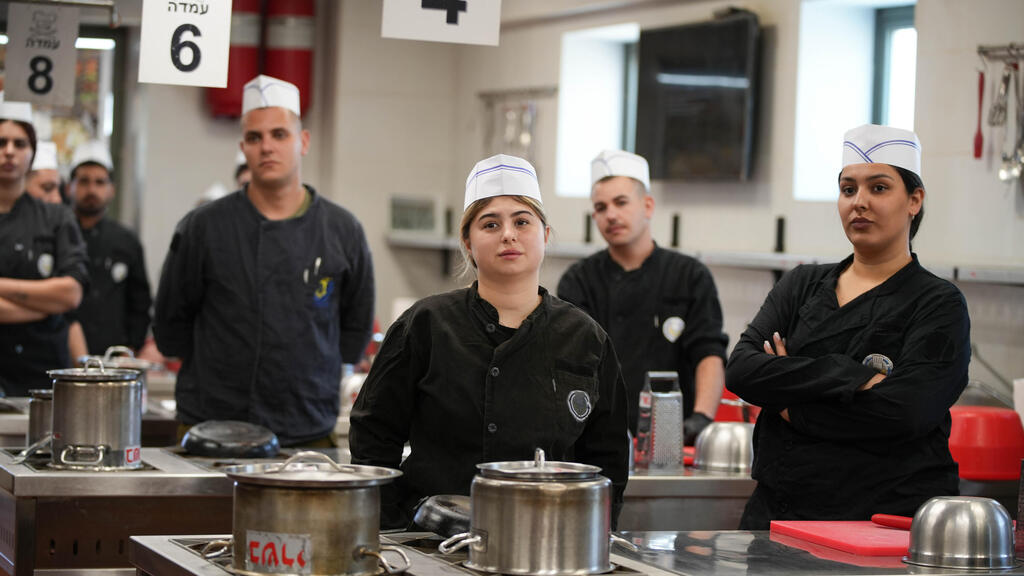
ynet reporters received a rare behind-the-scenes look inside Training Base 6, the IDF’s logistics school, to experience up close the action and flavors created by the soldiers who are about to feed the entire army.
From the outside, the base looks like any other military installation. But once you enter its “pit,” a kitchen that resembles a television studio set, a different world emerges.
Beyond the doors are orderly cooking stations, a stopwatch dictating the pace, and a pantry packed with ingredients. This is the practical exam for Stage 09 of the IDF’s culinary arts course, the moment when nutrition NCOs, just before transitioning from regular service to career service, must prove what they can do under time pressure.
We arrived shortly before the outbreak of the war with Iran to see the test firsthand. The atmosphere inside felt less like a military dining hall and more like the set of a cooking competition.
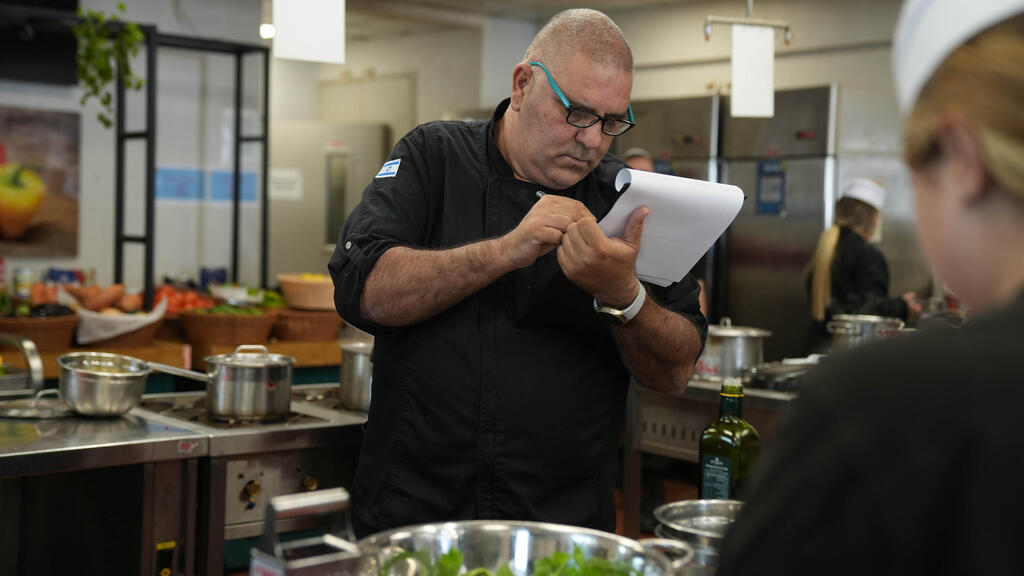
Rating the food
(Photo: IDF)
We met cooks who see their mission as providing motivation to combat soldiers through food. Moving between the pots, we watched how the military kitchen operates, heard about the challenges of cooking in some of the army’s most classified units, and tasted everything ourselves. Some dishes, frankly, would not look out of place on a restaurant menu.
‘You wouldn’t know if it’s a military kitchen or a five-star hotel’
Our first stop was the people running the show and setting the standards.
Nadav Nachmani, 49, a senior instructor in the culinary arts program who is now completing 30 years of service in the IDF, explained that the exam is only one part of a broader training program.
“The first 25 years of my service were mostly in the field,” he recalled. “I served in battalions. I started in the Bedouin Reconnaissance Battalion and later managed the Tze’elim training facility. For the past five years I’ve been here instructing. It’s a role that lets you breathe a little and mentor the younger generation.”
The course itself lasts three weeks.
(Photo: IDF)
“In the first week they receive mainly leadership tools,” Nachmani said. “They even go through simulations based on real incidents in the army and learn how to manage them.”
In the second week they are temporarily assigned to different units.
“For example, we might have a trainee from the Navy whose job is to run a kitchen on a submarine,” he said. “Then suddenly I place him in a large unit of 4,000 soldiers. For him, it’s a completely different world.”
The third week is the practical exam.
“They have to prepare a starter and a main course.”
When asked about the resemblance to a cooking reality show, Nachmani smiled.
“Yes, it’s kind of like ‘MasterChef.’ It’s important to note that everything you see in the pantry here consists of ingredients they encounter every day. The army has made an incredible upgrade. Today you can walk into a kitchen and not know whether it’s a five-star hotel or a military kitchen.”
And despite the gourmet abundance around him, when asked about his favorite dish, Nachmani immediately returned to something much simpler.
“The sofrito my mother used to make on Saturdays,” he said, referring to a slow-cooked meat and potato dish. “She’s already passed away. That’s a dish you can’t make here, and it’s what I remember most from her.”
Training the army’s kitchen leaders
Today about 600 kitchen and nutrition NCOs serve in the IDF.
Their training lasts just three weeks. During the first two they qualify as Stage 09 nutrition NCOs, and in the third they are certified as workplace safety supervisors.
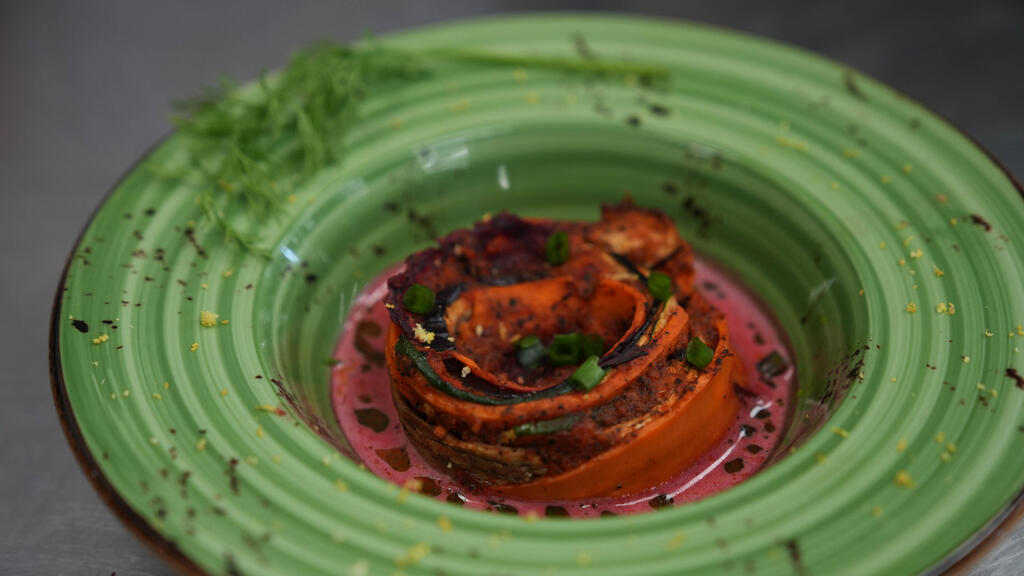
A dish made by one of the cooks
(Photo: IDF)
The course aims to prepare them for leadership roles while teaching the directives of the IDF’s chief logistics officer and the army’s health regulations.
All of this prepares them for Stage 10, when they receive professional civilian training as kitchen NCOs.
And if you are wondering which dish appears most often in all those kitchens, the answer, not surprisingly, is schnitzel.
“They receive chef and sous-chef certificates that cost a lot of money in the civilian sector,” said Ben Aspair, a commander in the training program. “Many famous and excellent chefs began their careers in the army.”
Aspair himself completed the highest professional level.
“I’m a graduate of level four,” he said. “In civilian terms that means a chef who could run a high-level hotel or restaurant with an international certificate.”
For him, the role carries a deeper meaning.
“Being a military cook today means giving your whole soul to the fighters,” he said. “From here they move on to a civilian college and receive chef and sous-chef certificates that cost a lot in the civilian sector. When you see a soldier coming back from Gaza getting a hot meal with a smile and motivation to keep going, that’s the best reward you can get.”
‘I’m cooking for my friends’
The exam itself is no easy task.
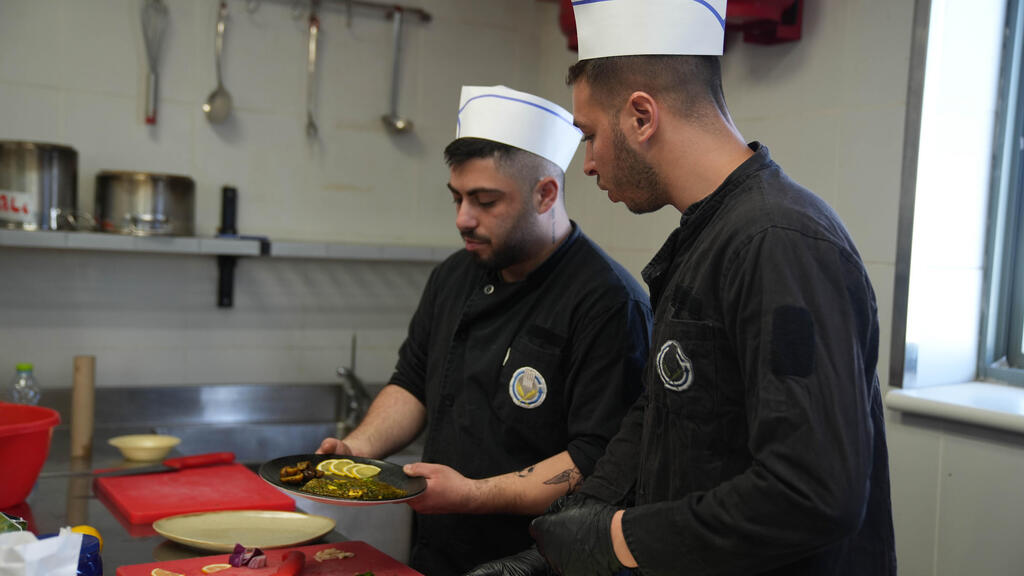
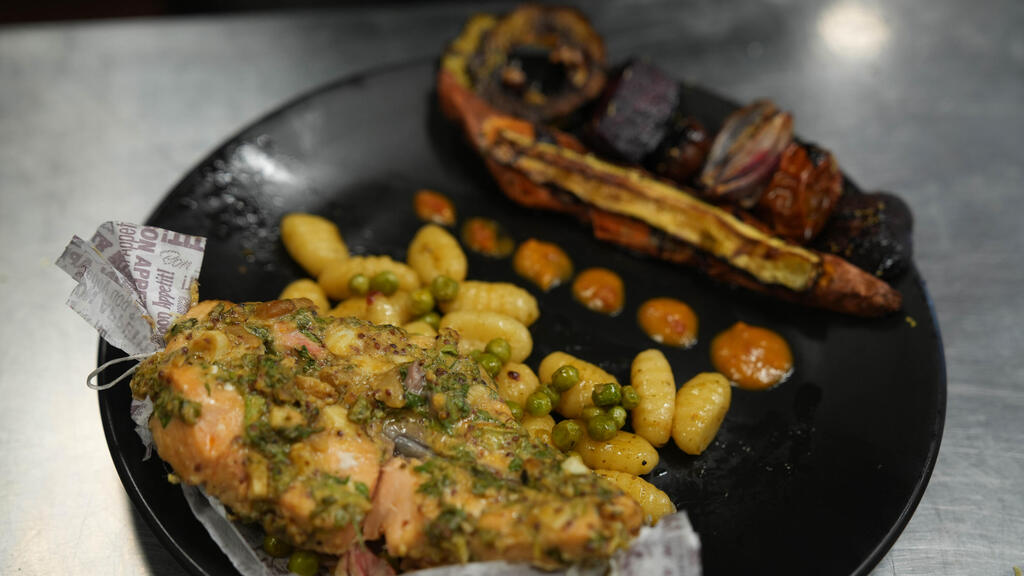
Each NCO must prepare two dishes under strict time pressure. A starter, hot or cold, and a main course that must include protein, carbohydrates and vegetables.
But the real test goes beyond taste.
Throughout the cooking process, examiners monitor every move to ensure strict compliance with procedures, kosher regulations and the army’s health directives.
(Photo: IDF)
Only after completing the entire process are the cooks evaluated on flavor and presentation.
Staff Sgt. G., who serves in a classified Navy unit, prepared a beet carpaccio on a bed of mushrooms with sweet potato and chestnut puree.
Asked about the pressure, he rated it “three out of ten,” noting he is used to far more complex conditions.
“It’s not easy cooking on a missile boat, especially during long voyages,” he said, describing the contrast between the spacious kitchen at the training base and the miniature galley on a ship.
“I know a day in advance what the sea conditions will be and adjust accordingly. It’s smaller, but sometimes the difficulty pushes you to grow. I manage to produce wonderful dishes. I’m also used to adapting to vegans and food allergies, and everything works out great.”
When asked whether he ever catches fish at sea and cooks them on board, he laughed.
“No. They’re pretty toxic. We thought about it once and gave up very quickly.”
Instead, the dishes he and the sailors love most are much simpler.
“The easiest is mashed potatoes, schnitzel and meat burekas. The fighters and I both go crazy for it,” he said. “In the end, I’m cooking for my friends, not for fighters. I love them like family.”
Breaking the stereotype of army food
At a nearby station, we met Chen Hashuryan, a cook and pastry chef from the IDF officers’ training school, who had just finished preparing salmon-filled arancini balls.
In her daily job, she cooks for the army’s future officers.
“They’re actually very humble diners,” she said.
As for the stereotypes about military food, she rejects them outright.
“They’re completely wrong,” she said. “I don’t know why people think that, but the food in the IDF is really good. A high level.”
Just before the time limit for the exam expired, we stopped by the station of Eden Ohayon, a kitchen NCO serving in the 80th Division.
Despite the ticking clock, she appeared completely calm while plating a fish cigar served on sweet potato cream alongside stuffed chicken with nuts.
“I cook for my family and friends at home too,” she said with a smile. “I just love the culinary world.”
Her calm, it turns out, comes from daily experience in the field.
“This is something really fun and exciting, and it’s something we also serve in our kitchens,” Ohayon said while working, emphasizing that the high standard is not limited to the exam.
“It’s important for us to show that we don’t only invest this effort because of the test. We prepare food like this for the soldiers in our kitchens as well. There’s enormous satisfaction in it, and truly a sense of mission like no other.”