

“Take the hot soup carefully, so it does not spill.” It is a funny sentence, but it carries inside it responsibility and concern for the fate of the world, and for our own lives, so they do not spill either.
Who said it? My mother, once, when I was carrying soup she had made to the neighbor across the hall.
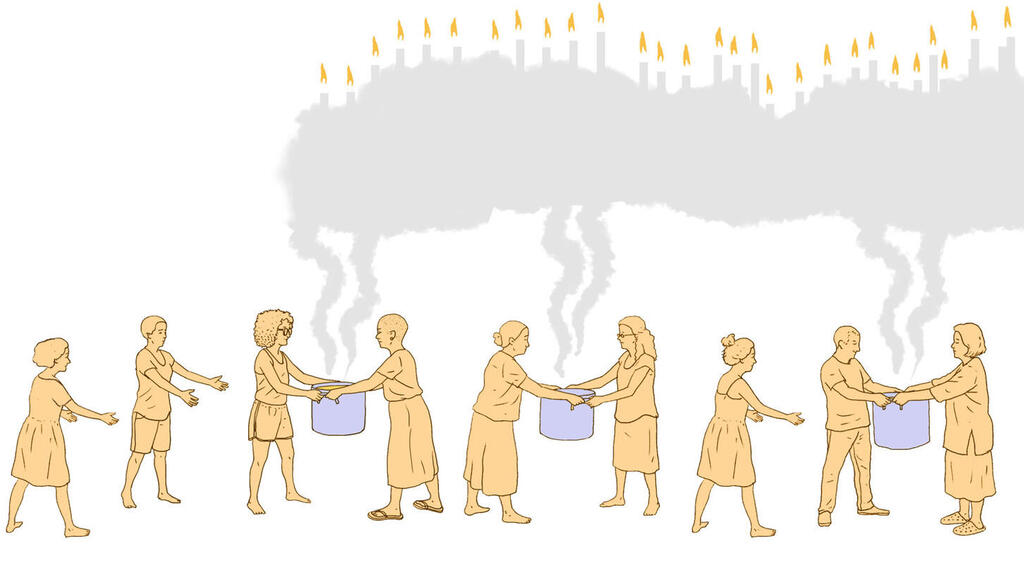
That is exactly how we pass life from one person to another. It is hot, boiling, full, held inside a large pot. If we run too fast or swing the pot carelessly, everything spills.
That is where we are now, here in the land of surprises, the place where you make plans in the morning and by evening you are already living inside a different reality.
Nineteen years after the invention of the iPhone, which changed our lives, we are already living through a dark period of gunfire and bombs alongside sponsored music and political fake news. At the entrance to the rest of our lives, Suno and Claude, two AI characters, are waiting impatiently for us like Max and Moritz, the aunt and the uncle.
With Suno, we are already working on music, and that clever Claude is making clips. Truthfully, I am curious about them. I do not dismiss them.
But alongside our steaming lives, the climate crisis is sending danger signals and heating Europe toward boiling point. People in tank tops are burning in Paris, and at the World Cup, privileged teams like the Netherlands and Germany are being knocked out in favor of the new decision-makers, Morocco and Paraguay.
On the excellent program “The Arabists” with Zvi Yehezkeli, I rub my eyes at the description of the Islamization process Europe is undergoing, all while “Hatzi Hinam yeah yeah” plays in the background, or Hanania and Amos do “Kazablan” for El Al.
It is becoming sad, with soldiers falling, and exhausting and one-dimensional, with the news.
The weather of politics in our lives
My father, Yitzhak, was a local politician. He traveled by bus to the Knesset because he believed that was how a public servant should behave.
I think that since our father was alive, politics in our lives has become a kind of weather vane. Meaning? It is everywhere, from the kitchen to Shabbat dinner, forcing us to choose a side before we have listened to one another and to react before we have understood.
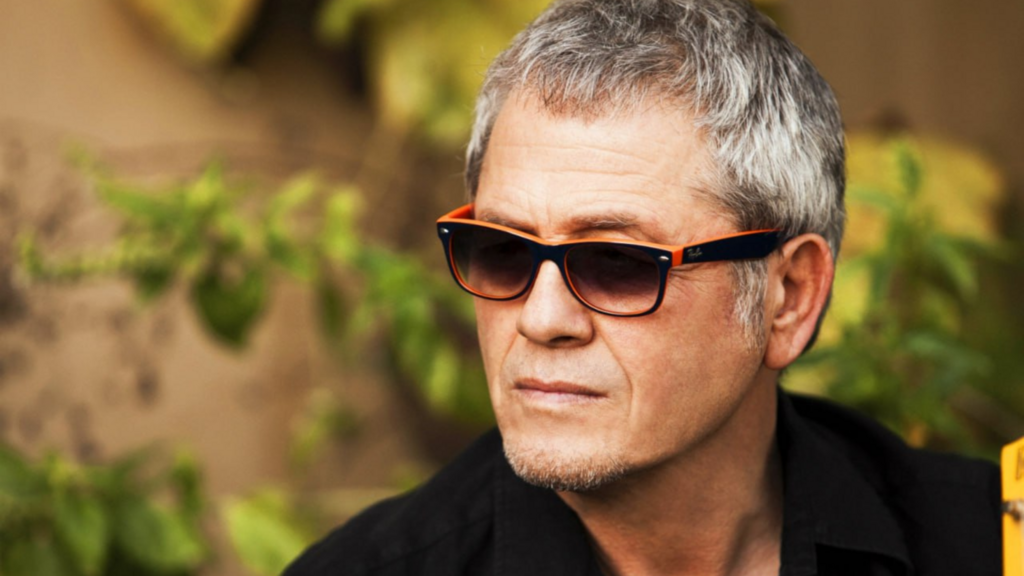
(Photo: Izhar Cohen)
The great tragedy is that politics sometimes takes the place of life itself. Instead of asking, “How are you?” we now ask, “Which side are you on?”
At night, I understand that the madness is here. But in the morning, Toni, a sweet girl who lived with us for a while, came and stuck a flower tattoo on my arm. Of all human demands, that made me sigh with relief.
Canceling a memorial station
Canceling a memorial station, or refusing to watch the two most talked-about episodes of “Fauda” about the October 7 disaster, is like trying to sew up a hole in our heart.
You cannot close something that has torn so deeply into the soul. In the end, memory is not an inscription, a wall or a film. It lives in hearts. And the heart, as we know, does not repair the hole inside it by erasing the sign outside.
Hello, is this you? From the Andalusians?
“Hi Shlomo,” someone wrote to me. “Since you are involved in the new album that came out about two weeks ago, ‘Shlomo and the Andalusians,’ I wrote something carefully, as an inner reflection. Could you publish it in your column?”
I said: I feel uncomfortable. People will think I am advertising.
He said: “Never mind, everyone advertises.”
I explained: It is indeed an album I am connected to, though I was passive because it was entirely the idea of musical producer Patrick Sebag, a creator of ideas, a connector and inventor of countries, born in Ashdod and from the Moroccan community.
He wrote back: “Patrick took your songs, detached them from the original playback tracks and let the Andalusian Orchestra of Ashdod bring them back to life through its own arrangements. That is what I want to write about, and please publish it.”
Before the first note
This is what he wrote: “There are places where the music does not begin with the first note. It begins long before that, in an inner courtyard in Fez, in an alley in Seville, in a synagogue in Marrakech or in a small living room in Ashdod, where a grandfather plays and a grandson listens.
“‘Shlomo and the Andalusians,’ in my eyes, is not only the name of a music album. It is first of all a bridge between a past that did not want to disappear and a present that asks to listen, music of exile that became home.
“There is something moving in the fact that these sounds crossed seas and deserts, survived expulsions, wanderings and changing languages, and in the end found themselves in a small country where there is no victory of one style over another, but an attempt at reconciliation.
“As if someone took the road dust of al-Andalus, mixed it with the sea breeze of Ashdod and the spirit of your songs, and gave it a Hebrew name. That is all, and thank you,” he ended, adding, “with an Andalusian, Ashdod, Tel Aviv tear in my eye.”
Truthfully, I was very moved.
The blink
This is how Amos Harel’s important book about that terrible morning of October 7, “06:29,” which I bought this week, begins:
“The first time Yael Laibushor, an observation soldier, arrived at the Nahal Oz military base, she fainted from the pressure. When Gili, her mother, asked why she thought it had happened, her daughter answered: ‘I understood.’ What did she understand? ‘I understood what I am guarding. I blink at the post and a soldier is killed at the fence. I blink, and children are murdered in the kibbutz.’ In her wisdom, the mother says, it took her daughter ten minutes to grasp the scale of the danger waiting beyond the border.”
One second, I will return to the book soon.
Oh, Eeva Kilpi
About a week ago, Eeva Kilpi, one of Finland’s great poets, died after managing to live to the age of 98.
How does one reach such an age? Perhaps because in her poems she did not raise her voice. She whispered, and still she was heard from far away. Here is proof: I heard her here, in my room in Israel.
I would put down her book “The Butterfly Crosses the Road,” read lines from it and take comfort in the thought that snow preserves footprints even after a person forgets where he was going, that love does not seek to defeat time but only to walk beside it, and that old age is not defeat.
Here is a poem by Eeva Kilpi that feels especially suitable for us:
“I like people whose minds are open,
people who can say: What? Really? My goodness?
I had no idea, that never occurred to me.
An open door is more than wisdom, more than being right,
more than ‘I told you so’ or ‘I already knew that back in...’”
How do you reach 100?
Two years older than Eeva, still alive and kicking like a horse in burning saddles, is the American filmmaker Mel Brooks.
When people ask a life survivor like him how one reaches 100, Mel’s answer is original: “I survived because I laughed.”
What did you laugh at, Mel?
“Everything,” he answers. “From crazy Trump to the global cacophony, because if life and the world are a joke, then it is probably worth knowing how to tell that joke again and again so we do not fall into unnecessary panic.”
A confused awakening
Here is another passage from the book about October 7: “If the farmer working the land near the border on the other side changed into a different colored shirt, she noticed. If he looked right when he usually looked left, she asked herself what had changed there.”
But you know what happened. No one listened. Then 6:29 arrived.
“The awakening from the holiday slumber was slow, gradual and above all confused.”
A lower song, beauty
From the left side of the neighborhood at night came the screams of the “Big Brother” hosts.
Why are they shouting? What happened? I asked.
“It is over,” they told me.
Almost at the same time, within a single day, cars exploded, one after another. Five people were murdered at the start of the week, and only one child survived.
“The land is too beautiful for it to be sad if it is destroyed. Nothing can defeat beauty; against beauty, weapons have no chance,” Eeva Kilpi wrote.
Well, she lived in Finland and we live here. Long live the difference.
And back to the beginning: Slowly, slowly, I carried the soup to the neighbor, who passed it to another neighbor, who passed it to yet another neighbor.
The soup did not spill, because we were careful.